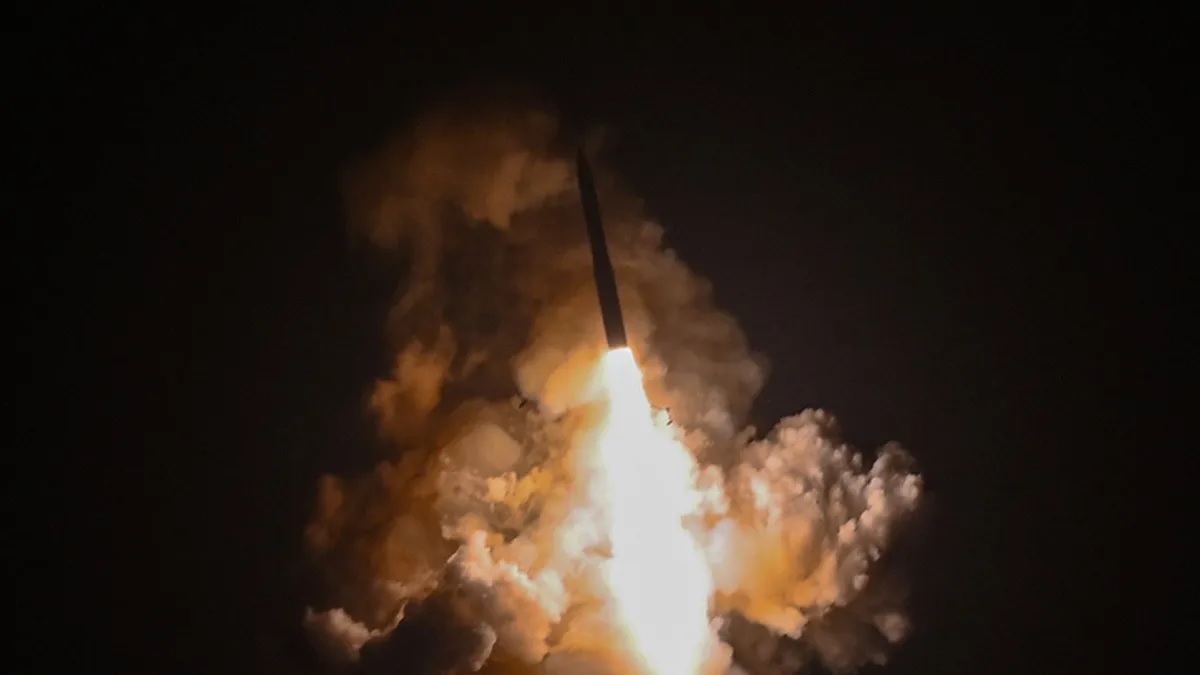
MINOT AIR FORCE BASE, N.D., June 24, 2026 — Airmen assigned to the U.S. Air Force’s 91st Missile Wing at Minot Air Force Base successfully completed a Simulated Electronic Launch Minuteman (SELM) test on June 3, 2026, validating the operational readiness of the United States’ land-based nuclear deterrent force.
The evaluation was conducted in partnership with the 377th Test and Evaluation Group (TEG) and the 576th Flight Test Squadron from Vandenberg Space Force Base, California. The exercise assessed the wing’s ability to carry out its strategic mission under realistic conditions while testing personnel proficiency, command-and-control procedures, and the performance of critical support systems.
Evaluating the U.S. Land-Based Nuclear Deterrent
The 91st Missile Wing operates one of the largest intercontinental ballistic missile (ICBM) complexes in the United States, covering approximately 8,500 square miles across northwestern North Dakota. The wing is responsible for maintaining 150 hardened underground launch facilities and 15 missile alert facilities that support the Minuteman III missile force.
As a key component of the U.S. nuclear triad, the Minuteman III force provides the United States with a continuous, land-based strategic deterrent capability alongside nuclear-powered ballistic missile submarines and strategic bombers.
During the SELM test, Airmen executed the full sequence of launch procedures without launching an actual missile. The exercise replicated an operational environment, beginning with crews in an alert status and progressing through all required steps leading to the simulated ignition of a Minuteman III first-stage booster.
Launch control center operators carried out launch sequences, while teams followed command-and-control protocols and communication procedures designed to mirror real-world operations.
Comprehensive Assessment of Personnel and Systems
The exercise focused on the coordination and performance of personnel across multiple mission areas, including launch control center crews, missile maintainers, communications specialists, and security forces.
Airmen from the 91st Missile Maintenance Squadron conducted critical component verifications and final readiness checks throughout the evaluation. Missileers, maintainers, and defenders responded to simulated launch directives while maintaining secure and reliable communications and adhering to established operational procedures.
The test also evaluated the functionality of launch control centers, missile alert facilities, and the integration of support systems that enable continuous 24-hour deterrence operations.
Leadership Highlights Importance of SELM Testing
According to U.S. Air Force officials, SELM tests are a key component of maintaining readiness across the ICBM enterprise. These evaluations are conducted periodically to verify that personnel, procedures, and systems can perform effectively under operational conditions.
“SELM testing is a critical assessment of our readiness and precision within the nuclear enterprise. It ensures that every link in the launch chain, from operators to command and control, performs exactly as designed under realistic conditions,” said Col. Jimmy Schlabach, commander of the 91st Missile Wing.
“By rigorously executing SELM evaluations, we sustain a credible, safe and effective nuclear force that underpins national security and reinforces deterrence every day,” he added.
Role of the 377th Test and Evaluation Group
Personnel from the 377th Test and Evaluation Group worked directly alongside 91st Missile Wing Airmen to plan, execute, and assess the exercise. The organization provides independent operational testing and evaluation support across the U.S. Air Force’s ICBM enterprise, ensuring systems and procedures perform as intended.
The group plays an important role in assessing current Minuteman III operations while supporting future modernization efforts, including preparations for the next-generation LGM-35A Sentinel ICBM program.
Maj. Anastasia Peterson, assistant director of operations for the 91st Missile Wing Operations Support Squadron, emphasized the value of the partnership during the evaluation.
“The partnership between the 91 MW and the 377 TEG reflects the highest standards of integration and mission focus across the nuclear enterprise,” Peterson said. “The teamwork demonstrated throughout this test shows how operational expertise and test and evaluation come together to strengthen readiness.”
Supporting Long-Term Strategic Deterrence
The successful completion of the SELM test provided the 91st Missile Wing an opportunity to demonstrate disciplined execution of operational procedures and sustained mission proficiency. Data collected during the evaluation will contribute to continuous improvement efforts and help maintain high standards across the U.S. Air Force’s ICBM force.
As one of the U.S. Air Force units responsible for operating the Minuteman III weapon system, the 91st Missile Wing remains a foundational element of the United States’ strategic nuclear deterrent. The wing maintains continuous alert status and stands ready around the clock to support U.S. national security objectives, mission assurance, and global stability.
——— End of Article ———