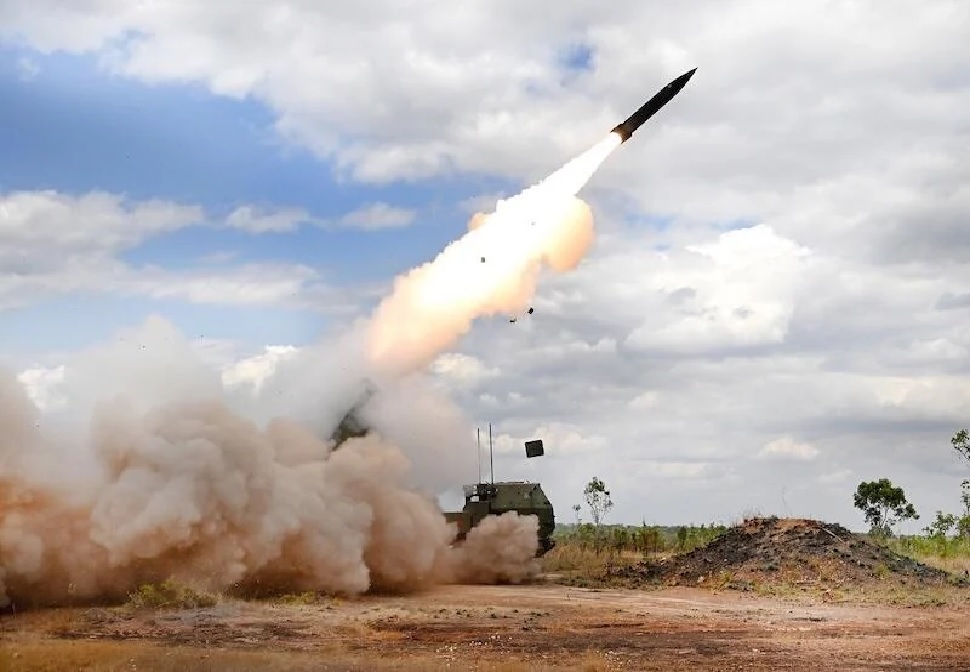
WASHINGTON, June 24, 2026 — The U.S. Army has awarded Lockheed Martin an $8.4 billion contract modification to significantly expand production of the Precision Strike Missile (PrSM), the service’s next-generation long-range precision strike weapon. The agreement, signed on June 23, 2026, increases the total value of the PrSM contract to approximately $13.3 billion and extends production planning through the end of fiscal year 2032.
The contract is being administered by the U.S. Army Contracting Command at Redstone Arsenal, Alabama, with the majority of the work to be carried out at Lockheed Martin’s missile production facility in Grand Prairie, Texas.
The contract modification supports increased manufacturing capacity, procurement of early operational capability missiles, follow-on production lots, continued development activities, and long-term obsolescence management to ensure the missile system remains operationally relevant over the coming decade.
Expanding Long-Range Precision Fires Capability
The Precision Strike Missile (PrSM) is being developed as the replacement for the MGM-140 Army Tactical Missile System (ATACMS), which has served as the Army’s primary long-range ground-launched missile since the early 1990s. While ATACMS demonstrated its effectiveness in multiple conflicts, including operations in the Middle East and Ukraine, the Army sought a successor capable of delivering greater range and increased firepower.
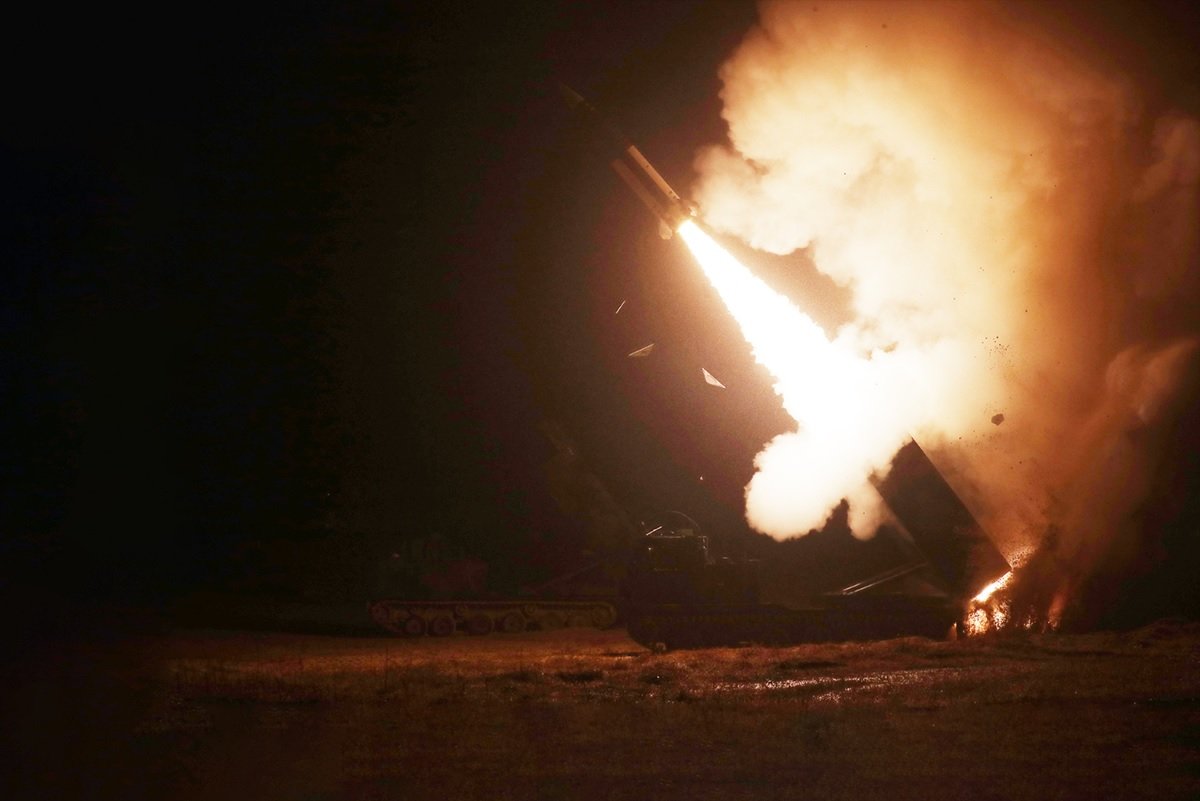
One of the key advantages of the PrSM is its compatibility with existing launch platforms. The missile can be fired from both the M142 High Mobility Artillery Rocket System (HIMARS) and the M270 Multiple Launch Rocket System (MLRS) without requiring modifications to launch vehicles or supporting infrastructure.
Each HIMARS launcher can carry two PrSM missiles in a launch pod, compared to a single ATACMS missile. Likewise, an M270 launcher can carry four PrSM rounds, effectively doubling the number of precision strike weapons available to artillery units while maintaining the same launcher footprint.
Greater Range and Future Growth Potential
PrSM Increment 1 has a publicly stated range exceeding 499 kilometers (310 miles), a significant improvement over the approximately 300-kilometer range of the most advanced ATACMS variants. The increased range enables commanders to engage targets deeper inside contested areas while reducing exposure of friendly forces.
Future versions of the missile are expected to deliver even greater capability through upgrades to propulsion systems, seeker technologies, and targeting functions. The missile’s open systems architecture is designed to facilitate future enhancements and integration of emerging technologies.
The PrSM program received Milestone C approval in July 2025, authorizing full-rate production. Since then, the Army and Lockheed Martin have worked to accelerate manufacturing output, including previous efforts aimed at substantially increasing annual production capacity.
Strengthening U.S. Munition Stockpiles
The scale and duration of the contract reflect broader U.S. efforts to rebuild and expand precision-guided munition inventories. Defense planners have emphasized the importance of sustaining large missile stockpiles following lessons learned from recent conflicts, where advanced weapons were consumed at a faster rate than anticipated during high-intensity combat operations.
By extending the production horizon through September 30, 2032, the Army is providing industry with long-term stability to support workforce expansion, supply chain investments, facility modernization, and increased production rates. Specific work requirements and funding allocations will continue to be issued through individual task orders, allowing flexibility to adjust procurement levels as operational requirements evolve.
Combat Debut During Operation Epic Fury
The production expansion follows the missile’s first operational use earlier this year. On March 4, 2026, U.S. Central Command (CENTCOM) confirmed that the Precision Strike Missile was employed during Operation Epic Fury, a large-scale campaign launched on February 28 against Iranian military infrastructure, missile facilities, and nuclear-related targets.
According to CENTCOM, PrSM missiles were launched from HIMARS systems as part of a broader multidomain operation that also included air strikes and naval cruise missile attacks. The command described the missile as providing “an unrivaled deep strike capability” during the operation.
Admiral Brad Cooper, then commander of CENTCOM, praised the successful deployment of the system and its contribution to long-range precision strike operations.
Long-Term Modernization Effort
The contract underscores the Army’s commitment to modernizing its long-range fires portfolio while ensuring sufficient production capacity for future operational requirements. PrSM Increment 1 employs a unitary warhead and is designed to engage high-value and time-sensitive targets in contested environments.
With production now planned through 2032, the Army aims to field larger quantities of the missile while continuing development of future increments that will further extend range and expand mission capabilities. The agreement also provides Lockheed Martin with a stable framework for sustaining production and supporting the Army’s long-term modernization objectives.
The $8.4 billion contract modification represents one of the largest recent investments in U.S. ground-launched precision strike weapons and is expected to play a central role in expanding the Army’s long-range strike capacity over the next decade.
——— End of Article ———