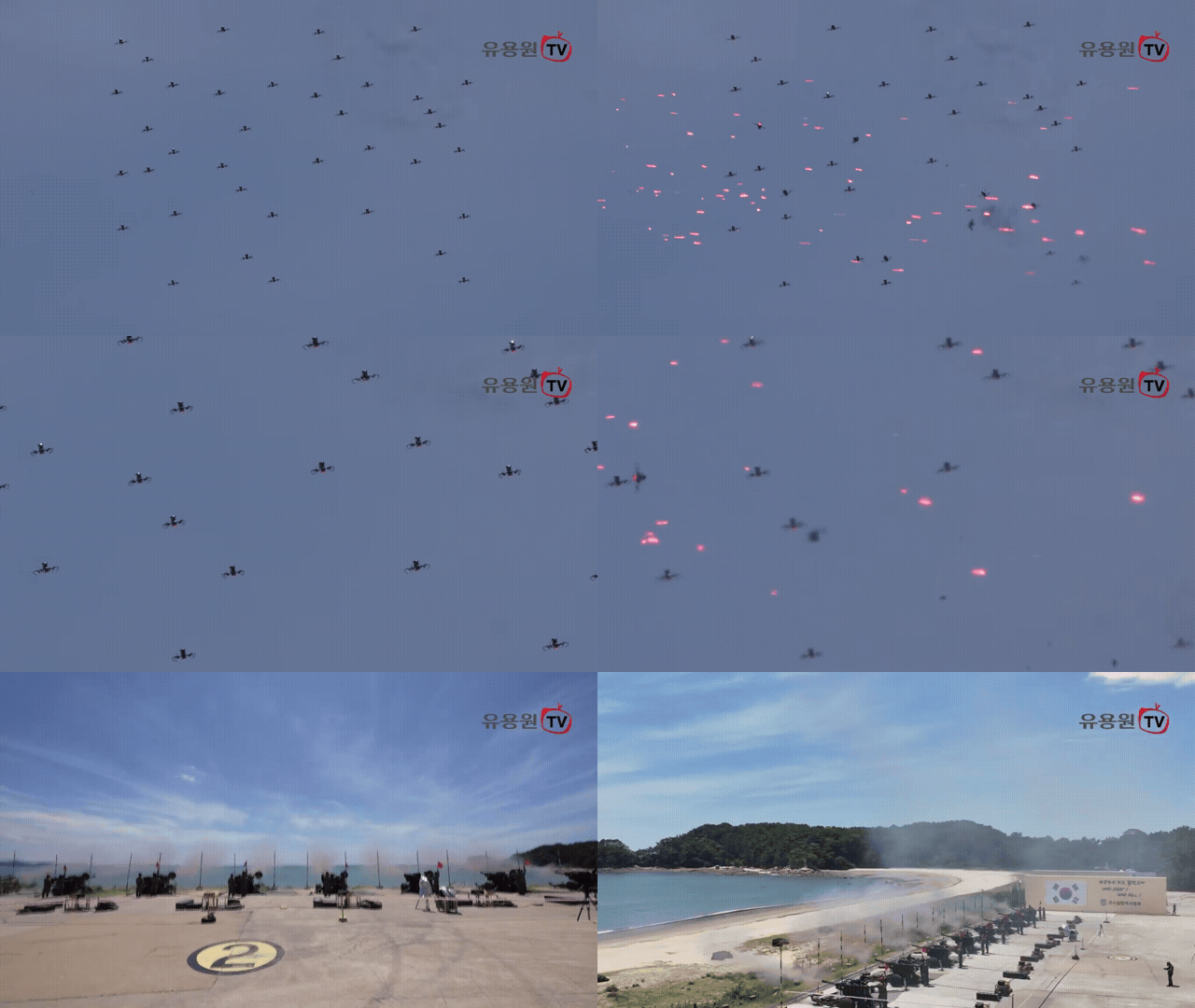
SEOUL, June 24, 2026 — The South Korean Air Force has successfully completed its first live-fire exercise designed to counter drone swarms, marking a significant step in strengthening defenses against emerging aerial threats.
The exercise was conducted on June 23 at a military training range along South Korea’s west coast and was organized by the Air Force Missile Defense Command. The drill aimed to evaluate the military’s ability to defend key facilities against coordinated low-altitude drone attacks using equipment already in service.
During the exercise, a swarm of 50 drones approached the training area from a distance of approximately one kilometer. To intercept the targets, operators simultaneously fired eight Vulcan 20mm anti-aircraft cannons, creating a concentrated defensive barrier that successfully destroyed 44 drones.
The remaining six drones that penetrated the initial defense layer were engaged using a portable laser system and five shotguns, resulting in the complete neutralization of all simulated targets.
Colonel Nam Hyung-joo, chief of intelligence and operations at the Air Force Missile Defense Command, said the exercise was the first of its kind focused on defending against drone swarms using existing military assets. He added that lessons learned from the drill would support the continued development of South Korea’s counter-drone capabilities.
The exercise reflects growing concern over the threat posed by small, low-cost drones, which have increasingly been used in modern conflicts to target military facilities, ammunition depots, air bases, fuel storage sites, and command centers. Due to their small size, mobility, and ability to operate at low altitudes, such drones can be difficult to detect and intercept using conventional air defense systems.
South Korea has been expanding its focus on counter-drone technologies and layered air defense solutions. The latest exercise demonstrated the effectiveness of combining traditional kinetic systems such as Vulcan cannons with newer technologies, including portable laser weapons, to counter mass drone attacks.
Officials said data collected during the drill will be used to refine tactics, operational procedures, and future investments aimed at improving protection against evolving drone threats.
——— End of Article ———