
World
WRIGHT-PATTERSON AIR FORCE BASE, Ohio — March 12, 2026 : The U.S. Air Force Research Laboratory (AFRL) and aerospace propulsion company Ursa Major have successfully carried out a flight test of the Affordable Rapid Missile Demonstrator (ARMD), a prototype vehicle designed to validate new approaches for rapidly developing and producing missile systems. The demonstrator, powered by Ursa Major’s Draper liquid rocket engine, achieved supersonic speeds during the test, confirming the viability of a throttleable liquid-propulsion system for tactical missile applications. The flight represents a key milestone in a program focused on accelerating missile development timelines while lowering production costs and enabling scalable manufacturing. AFRL officials stated that the ARMD initiative progressed from contract award to a fully integrated, flight-ready vehicle and propulsion system in approximately eight months, illustrating a compressed development cycle intended to support rapid fielding of future defense technologies. The test vehicle was staged for launch on January 27, 2026, using a specialized air-log cart for transport before being loaded onto a Transportable Target Launcher for the demonstration flight. During the mission, the vehicle validated the integration of the Draper engine within a tactical missile-type platform and demonstrated operational concepts associated with liquid propulsion in rapidly deployable weapons systems. Program Structure and Industry Partnership The ARMD program operates as a technology demonstration platform that allows AFRL to evaluate propulsion technologies, system integration methods, and production models aimed at enabling rapid and affordable missile manufacturing. The project is part of broader U.S. Air Force efforts to accelerate defense innovation through public-private partnerships with commercial aerospace firms. Ursa Major served as the lead vehicle integrator for the demonstrator under a $28.6 million contract awarded by AFRL in 2025. As the prime integrator, the company was responsible for incorporating the Draper propulsion system into the flight vehicle and overseeing system integration. Prior to the flight demonstration, the ARMD propulsion system completed a full-duration static fire test in late 2025, which verified the performance of the bipropellant propulsion system across the full mission cycle. The static test validated engine start-up, sustained thrust generation, and shutdown procedures before the system progressed to flight testing. Brig. Gen. Jason Bartolomei, Commander of AFRL and the Air Force Technology Executive Officer, said the project demonstrates how changes in acquisition models can accelerate technology delivery. “This project proves that we can transform and leverage our acquisition models to rapidly deliver critical technology advancements to deter and win in a future conflict,” Bartolomei said. “We are not just building a single missile; we are forging a new path toward a cost-effective, mass-producible deterrent for the nation.” Draper Liquid Rocket Engine Central to the ARMD demonstration is the Draper liquid rocket engine, a throttleable propulsion system designed to provide greater operational flexibility compared with traditional solid rocket motors used in most tactical missiles. The Draper engine builds on the architecture of Ursa Major’s earlier Hadley liquid rocket engine, incorporating design improvements to support missile and hypersonic applications. The engine produces approximately 4,000 pounds of thrust and uses storable bipropellant propellants — hydrogen peroxide and kerosene. Unlike cryogenic propellant systems used in many launch vehicles, Draper uses non-cryogenic, storable propellants, allowing the engine to remain ready for extended periods without specialized storage infrastructure. This approach aims to combine the long-term storability typically associated with solid rocket motors with the control advantages of liquid propulsion. Approximately 60 percent of the Draper engine components are manufactured using additive manufacturing (3D printing), a design choice intended to reduce production time, lower costs, and simplify supply chains. Liquid propulsion systems differ from solid rocket motors in several key operational aspects. In a solid rocket motor, fuel and oxidizer are combined into a single solid propellant grain that burns once ignited, producing a fixed thrust profile that cannot be adjusted during flight. In contrast, liquid rocket engines store propellants separately and mix them during operation. This configuration enables throttleable thrust, allowing a missile or flight vehicle to adjust power levels, start or stop the engine during flight, and perform more flexible maneuvering profiles. Such capabilities could support new operational concepts in missile design, including adaptable flight trajectories and improved terminal maneuverability. Operational and Technology Objectives AFRL officials stated that the ARMD program was designed not only to validate propulsion technology but also to test the speed at which missile systems can move from concept development to flight testing. Dr. Javier Urzay, Chief of the AFRL Rocket Propulsion Division, described the program as part of a broader effort to develop scalable propulsion technologies for future defense systems. “ARMD represents a key milestone in our efforts to develop revolutionary, affordable and scalable liquid rocket engine technologies to win the wars of tomorrow,” Urzay said. The program also explores production concepts aimed at supporting high-volume manufacturing of missile systems, a capability considered increasingly important in modern military planning where large inventories of affordable weapons may be required. Future Development and Applications Following the successful supersonic flight demonstration, Ursa Major remains under contract with AFRL to continue testing and characterization of the Draper engine in operational flight environments. Additional flight tests are planned to collect further performance data and refine system integration concepts. The Draper engine has been designed for a range of potential applications beyond the ARMD demonstrator. According to program information, the propulsion system is being evaluated for use in tactical hypersonic systems, missile defense interceptors, in-space propulsion systems, and space-based interception platforms. Ursa Major has also developed related concepts building on ARMD technology, including the HAVOC hypersonic missile concept, which incorporates the Draper propulsion system for potential medium-range strike applications. Chris Spagnoletti, Chief Executive Officer of Ursa Major, said the demonstration highlights the speed at which new propulsion technologies can transition from design to flight. “This flight proves that you can get a vehicle with a safe, storable and throttleable liquid engine in the air quickly and affordably,” Spagnoletti said. “We went from contract to flight-ready of an all-up round and propulsion system in just eight months.” With the successful ARMD test flight completed, AFRL and its industry partners plan to continue expanding testing to further evaluate the capabilities of liquid propulsion in future missile platforms while refining rapid development models intended to shorten timelines for next-generation defense technologies.
Read More → Posted on 2026-03-12 17:25:42
World
RIYADH — March 12, 2026 : Saudi Arabia has begun redirecting a substantial share of its crude oil exports from the Persian Gulf to its Red Sea facilities after Iranian military strikes and the ongoing regional conflict effectively halted commercial tanker traffic through the Strait of Hormuz, one of the world’s most critical energy transit routes. According to shipping and industry data, between 25 and 30 very large crude carriers (VLCCs)—commonly known as supertankers—are currently sailing toward the Saudi Red Sea port of Port of Yanbu to load crude oil. Under normal conditions, the terminal handles only about two tanker loadings per month, making the current traffic surge a significant operational shift. The move is part of Saudi Arabia’s effort to maintain export flows to global markets despite the disruption of shipping through the Strait of Hormuz, which normally carries around 20% of global daily oil consumption and handles the majority of crude exports from Gulf producers. Pipeline Network Enables Westward Export Shift To sustain exports without relying on Persian Gulf shipping routes, Saudi Arabia is utilizing its East‑West Pipeline (Petroline), a major cross-country pipeline system linking the kingdom’s eastern oil fields to Yanbu on the Red Sea coast. The pipeline has a maximum capacity of approximately 7 million barrels per day (bpd). Of this total: About 2 million bpd normally supply domestic refineries located along Saudi Arabia’s western coast. Roughly 5 million bpd can potentially be redirected for export via Yanbu. Saudi Aramco has indicated that it intends to utilize the pipeline at or near full capacity in order to sustain deliveries to international customers while the Hormuz route remains unavailable. Shipping data show that crude exports from Yanbu have already increased sharply. Loadings in early March 2026 averaged about 2.2 to 2.5 million bpd, up from approximately 1.1 million bpd in February and substantially higher than historical averages. If current tanker arrivals proceed as planned, analysts estimate that March exports from Yanbu could exceed 4 million bpd, potentially reaching record levels. However, port infrastructure and terminal logistics are expected to limit effective loading capacity to roughly 4–4.5 million bpd across the port’s export terminals. Hormuz Closure Forces Major Export Rerouting Before the disruption, most Saudi crude shipments departed from eastern Persian Gulf terminals such as Ras Tanura, which typically handled about 5.5 to 6 million bpd of Saudi crude exports. The conflict involving Iran has led to a near-complete halt of tanker transits through the Strait of Hormuz, forcing Saudi Arabia to redirect flows westward through the Petroline system. While the alternative Red Sea route bypasses the Persian Gulf chokepoint, it introduces new logistical and security considerations. Ships departing Yanbu must pass through the Bab al‑Mandab Strait, a narrow waterway linking the Red Sea with the Gulf of Aden and onward to global markets. Maritime Security Risks in the Red Sea Corridor The Bab al-Mandab Strait has experienced multiple attacks on commercial shipping over the past two years, primarily linked to Houthi militants operating from Yemen. These incidents have included missile strikes, drone attacks, and small-arms engagements targeting vessels transiting the corridor. Although such attacks had decreased in frequency prior to the current regional escalation, the shipping lanes remain within the operational range of Iranian missile systems, creating ongoing risk for tanker operators. As a result, freight rates for crude cargoes loading at Yanbu have more than doubled, and some shipowners have reportedly cancelled charter agreements or hesitated to send vessels into the region due to insurance and security concerns. Regional Oil Producers Face Storage Constraints The suspension of shipping through the Strait of Hormuz has also created significant logistical pressure across the broader Gulf energy system. With export tankers unable to load at Persian Gulf ports, onshore storage facilities across the region quickly reached maximum capacity, forcing several Gulf producers to reduce output. Iraq has implemented the largest reduction, cutting approximately 2.9 million bpd of production after storage capacity at its southern export terminals filled within days. The United Arab Emirates has lowered output by between 500,000 and 800,000 bpd. Some of its remaining exports are being redirected through the Habshan‑Fujairah Pipeline, which transports crude from inland fields to the Emirate of Fujairah on the Gulf of Oman, bypassing the Strait of Hormuz. Kuwait has also reduced production by around 500,000 bpd and declared force majeure on crude and refined product exports after domestic storage facilities reached capacity. Export Replacement Remains Limited Despite Saudi Arabia’s ability to reroute exports through the Petroline system, industry analysts note that the Red Sea route cannot fully replace the pre-conflict export volumes normally shipped through the Persian Gulf. Limitations include pipeline throughput constraints, port loading capacity, and maritime security risks, all of which restrict the scale at which Yanbu can handle diverted crude shipments. Saudi Aramco has continued supplying customers using the Red Sea route and has reportedly offered additional crude on the spot market to manage contractual obligations during the disruption. The situation highlights the strategic importance of alternative export infrastructure for Gulf oil producers as regional tensions continue to affect the world’s most critical energy shipping corridor.
Read More → Posted on 2026-03-12 17:14:52
World
Europe — March 12, 2026 : European NATO members are increasingly focused on a critical operational issue in modern air and missile defence: sustaining defensive operations during prolonged high-intensity conflicts. Recent multinational exercises and analytical assessments indicate that while allied forces possess significant detection and interception capabilities, maintaining those capabilities over extended periods presents a growing strategic challenge. In response to this evolving operational environment, Israeli defence technology firm Omnisys has presented its artificial intelligence-driven BRO (Battle Resource Optimization) platform as a software-based solution designed to improve the management of interceptor inventories and mission planning in complex air defence operations. The system’s air defence-focused module, known as BRO-AD, is designed to support Ballistic Missile Defence (BMD) and Integrated Air and Missile Defence (IAMD) missions across large-scale conflict scenarios. NATO Exercises Highlight Sustainability Concerns Insights from multinational NATO training events in Europe have highlighted the scale of the challenge. During recent exercises, including the early-2026 iteration of Dynamic Front 26, allied forces evaluated their ability to operate in high-density threat environments involving large numbers of incoming targets. Dynamic Front 26 was conducted primarily in Romania and involved multiple NATO members, including the United States. The exercise focused on integrating multi-domain fires, improving artillery interoperability, and testing command-and-control coordination across distributed battlefields. Live-fire drills and operational simulations were used to replicate large-scale combat scenarios involving simultaneous threats across multiple domains. Exercise data and independent assessments indicate that allied systems demonstrated the ability to detect, track, and engage up to 1,500 targets within the first 24 hours of a simulated conflict. Within that engagement volume, air defence units were required to intercept approximately 600 to 1,200 threats, including ballistic missiles, cruise missiles, and unmanned aerial vehicles (UAVs). While these results demonstrate significant sensor and engagement capacity, analysts note that such high engagement rates could rapidly deplete interceptor inventories during sustained operations. Interceptor Inventory Depletion Risk Operational modelling from the exercises suggests that under continuous large-scale attacks, interceptor stocks could be exhausted within a matter of days. In these scenarios, the rate at which defensive missiles are used may exceed standard replenishment capabilities. As a result, the issue has shifted from purely technological capability—such as detection and interception—to long-term operational endurance. The ability to maintain effective defensive coverage beyond the first waves of attacks depends heavily on how efficiently available interceptor resources are allocated. This dynamic is particularly relevant for NATO’s layered air defence networks that combine multiple interceptor systems designed for different threat types and engagement ranges. Managing the use of these interceptors efficiently becomes essential in high-intensity environments involving ballistic missiles, cruise missiles, and UAV swarms. Omnisys BRO System and BRO™-AD Module To address this operational challenge, Omnisys has developed the BRO system, a suite of mission optimization tools designed to support planning, execution, and post-mission analysis across multiple defence domains. The company reports more than 25 years of experience in defence mission optimization and decision-support systems. Within the BRO architecture, the BRO-AD module is specifically tailored for air defence missions. The platform operates as a vendor-agnostic software layer, meaning it can work with equipment from different suppliers without requiring hardware replacement. The system creates a physics-based digital twin of the operational battlespace, modelling several critical variables simultaneously, including: Available interceptor inventories Weapon performance parameters Environmental and weather conditions Terrain limitations Real-time threat behavior and trajectories Using these inputs, the platform’s AI-driven optimization engine continuously evaluates engagement scenarios and generates decision-support recommendations for commanders. AI-Based Decision Support Across the Kill Chain BRO-AD provides real-time analytical outputs across multiple stages of the air defence engagement process. These include recommendations on: Prioritization of defended assets Selection of appropriate interceptors for each threat Sequencing of engagements within layered defence networks Allocation of interceptor resources across multiple sectors The objective of the system is to reduce unnecessary expenditure of high-value interceptors and improve the efficiency of engagement decisions during high-volume attack scenarios. By optimizing how interceptors are used, the system aims to preserve munitions for later phases of a conflict and extend overall defensive endurance. For multinational operations involving multiple NATO countries and cross-border coordination, the system can also provide continuously updated decision support that reflects the combined resources and threat environment across participating forces. Integration With Existing C4I Systems Omnisys states that BRO-AD is designed to integrate directly with existing command networks rather than requiring new hardware procurement. The platform can connect with current sensors, interceptors, and command systems used by NATO forces. This includes compatibility with established C4I architectures—Command, Control, Communications, Computers, and Intelligence systems—, which form the backbone of modern air defence networks. The vendor-agnostic design also allows the modelling of mixed fleets of interceptors and sensors from multiple manufacturers, a common situation in NATO’s multinational defence architecture. At the same time, the system is designed to preserve sovereign control over sensitive performance data, enabling national forces to maintain confidentiality regarding classified system parameters. Applications for Long-Term Force Development In addition to real-time operational support, the BRO-AD platform can be used for simulation-based planning and capability development. Through its digital twin modelling and AI analysis tools, defence planners can test different air defence architectures and evaluate the operational impact of various procurement options. These simulations can help quantify trade-offs between interceptor inventories, system performance, and long-term sustainability. Such modelling allows defence authorities to assess air defence effectiveness not only in terms of interception success rates but also in terms of endurance and resource sustainability during extended conflicts. Industry Perspective According to Omnisys leadership, the shift toward endurance-focused planning reflects the changing nature of modern missile warfare. “Future air defence will be measured not only by interception capability, but by the ability to sustain defensive performance over time,” said Alfred (Fredi) Tzimet, Deputy CEO of the company. Tzimet stated that BRO-AD is intended to help commanders manage interceptor resources more efficiently, preserve high-value munitions, and maintain operational effectiveness during prolonged high-intensity attacks. Growing Importance of Resource Optimization As missile and drone threats increase in volume and complexity, defence analysts increasingly view resource optimization as a core requirement of modern air defence systems. High-volume attacks involving mixed threats can place significant pressure on interceptor inventories, particularly during the early stages of a conflict. Technologies designed to optimize the use of existing assets—rather than relying solely on increased interceptor stockpiles— are therefore becoming an increasingly important element of military planning within NATO and other allied defence networks.
Read More → Posted on 2026-03-12 17:05:25
World
KYIV — March 12, 2026 : The Ukrainian Ministry of Defence is procuring domestically produced anti-aircraft missiles to meet operational air defense requirements amid continuing Russian aerial attacks. The procurement program includes both newly manufactured Ukrainian munitions and the modernization of existing missile inventories. The purchases were confirmed by Arsen Zhumadilov, director of Ukraine’s Defence Procurement Agency (DPA), in an interview with the defense outlet Militarnyi. According to Zhumadilov, Ukrainian manufacturers are producing a range of anti-aircraft missiles that are being supplied to the armed forces. “Yes, there is such a product range, it is produced by our manufacturers,” Zhumadilov said while confirming the procurement of locally produced missiles. Modernization of Missile Inventory Zhumadilov did not specify whether the missiles being acquired are entirely new Ukrainian developments or upgraded versions of Soviet-era designs. He noted that legacy systems undergo extensive modernization before deployment. “This is not the same product that existed during the Soviet era. It is still being refined and improved. It undergoes appropriate testing and modernization,” he said. According to Zhumadilov, the modernization cycle applies to the entire range of missile systems used by the Ukrainian military, including both Soviet-era designs and systems developed domestically after Ukraine’s independence. He also confirmed that the Ministry of Defence is procuring complete anti-aircraft systems in addition to individual missile munitions, although he did not indicate whether those systems are domestically produced or sourced from foreign suppliers. Shershen Multi-Caliber Air Defense System One domestic project under development is the Shershen multi-caliber air defense system, developed by the National Association of Defence Industries of Ukraine. According to developers, the system has been tested with five types of interceptor missiles, including Soviet-era missiles, foreign interceptors, and new Ukrainian missile designs. Images and models of the system show launch pads configured for R-73 and R-27 missiles. These missiles were originally designed for air-to-air combat but are adapted in the Shershen system for ground-based air defense roles. Technical Design and Deployment The Shershen launcher uses a modular deployment concept. The system incorporates a multilift mechanism that allows the launcher module to be removed from its transport vehicle and deployed on the ground as a separate operational unit. The concept is similar to the configuration used by the Israeli Barak air defense system. The system is not tied to a specific radar station. Instead, it uses a separate antenna post and can integrate with different radar sources for target detection. Shershen is designed to operate with Ukraine’s Krechet command-and-control system, allowing it to receive targeting information from external sensor networks. Missile Range The engagement range of the system depends on the missile type used. For example, the R-27ET1 missile variant with a thermal homing seeker provides an engagement range of up to 20 kilometers. Ukraine’s procurement of domestically produced missiles and development of systems such as Shershen is intended to support the country’s layered air defense network through a combination of modernized legacy weapons and new domestic technologies.
Read More → Posted on 2026-03-12 16:06:28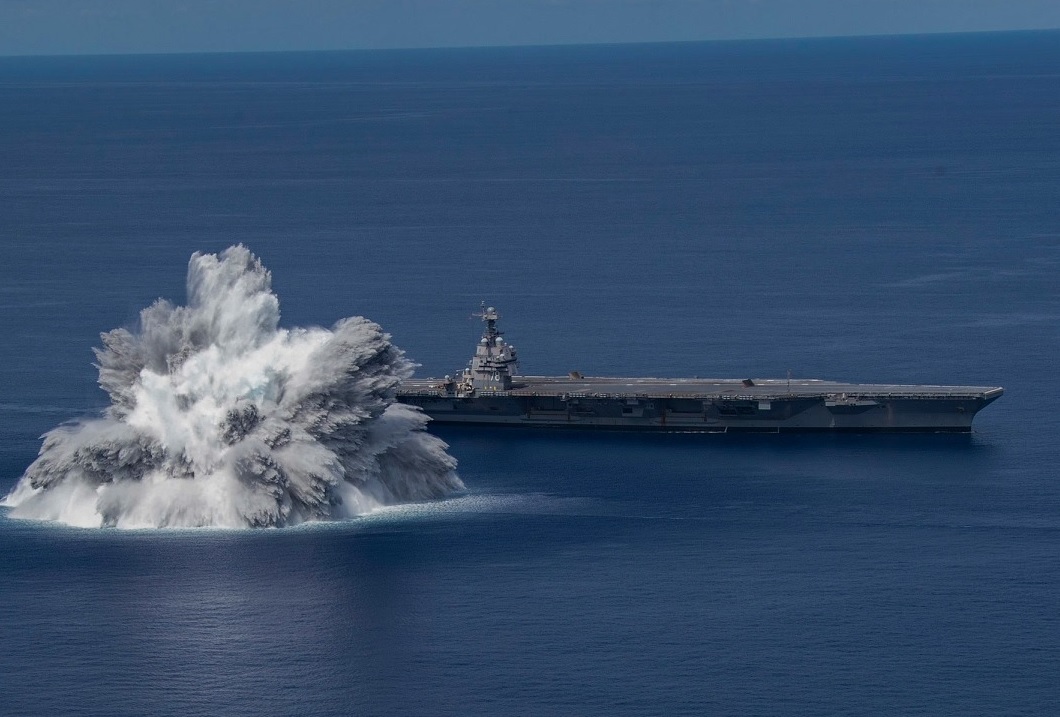
World
MANAMA, Bahrain — March 12, 2026 : A non-combat fire occurred aboard the USS Gerald R. Ford (CVN-78) while the aircraft carrier was operating in the Red Sea, according to a statement released by the U.S. Navy’s 5th Fleet headquartered at Naval Support Activity Bahrain. The incident originated in the ship’s main laundry spaces and was contained by crew members. U.S. Naval Forces Central Command confirmed that two sailors sustained injuries during the incident. Both personnel received medical treatment for non-life-threatening injuries and are currently reported to be in stable condition. Military officials stated that the fire did not affect the vessel’s critical systems. The propulsion plant, which powers the carrier through A1B nuclear reactors, sustained no damage. The U.S. Navy confirmed that the ship remains fully mission capable and continues normal operations. The USS Gerald R. Ford is the lead vessel of the Ford-class nuclear-powered aircraft carriers. The ship measures approximately 1,092 feet (333 meters) in length and has a full-load displacement of about 100,000 long tons, making it the largest class of aircraft carriers in service with the United States Navy. The vessel is powered by A1B nuclear reactors, which provide energy for propulsion as well as the carrier’s advanced onboard systems. The carrier is currently deployed with the Gerald R. Ford Carrier Strike Group within the U.S. 5th Fleet area of responsibility. Its last reported operational location was the Red Sea, where it is supporting U.S. military operations under Operation Epic Fury. According to the U.S. Navy’s statement, the fire was limited to the ship’s laundry area and was brought under control by onboard firefighting teams. No additional damage to other sections of the carrier has been reported. The U.S. Navy stated that standard post-incident assessments are underway to review the circumstances surrounding the fire. Further details regarding the cause of the incident have not yet been released. Operations aboard the carrier continue without interruption.
Read More → Posted on 2026-03-12 15:52:33
World
ISTANBUL — March 12, 2026 : NATO has deployed a second Patriot air and missile defense system to eastern Turkey as part of expanded measures to strengthen the protection of allied military infrastructure during the ongoing regional conflict involving Iran and U.S.-led coalition forces. The Turkish Ministry of National Defense confirmed that the Patriot system has been transferred to Malatya province, where it is currently being prepared for operational readiness. The deployment is intended to reinforce Turkey’s air and missile defense posture after recent Iranian ballistic missile and drone strikes targeted military infrastructure across the region. In an official statement, Turkish authorities said NATO had expanded protective measures in coordination with Turkey’s national defense efforts. “In addition to the national measures we have implemented, NATO has enhanced air and missile defense measures. Within this framework, a Patriot System has been deployed to Malatya and is being prepared for operational readiness to support the protection of our airspace.” Patriot System Deployed From NATO Command in Germany The newly deployed Patriot battery was dispatched from NATO’s Allied Air Command headquarters in Ramstein, Germany, which coordinates allied air operations and integrated missile defense activities across the alliance. Visual confirmation of the deployment emerged on March 11 when a local television crew in Malatya recorded video footage showing an Oshkosh HEMTT A4 M983A4 Patriot tractor and trailer unit traveling on a public road. The transporter vehicle is used to move Patriot launch components and associated equipment between operational sites. Military officials indicated that the battery will be positioned near the Kürecik radar base, a strategically important installation located outside the city of Malatya. Protection of NATO’s Kürecik Missile Defense Radar The Kürecik installation hosts a U.S.-operated AN/TPY-2 forward-based missile defense radar, one of the most important early-warning sensors within NATO’s Ballistic Missile Defense (BMD) architecture. Turkey agreed in 2011 to host the radar as part of the alliance’s wider missile defense network designed to monitor ballistic missile activity originating from the Middle East. The AN/TPY-2 radar, operating in the X-band frequency, provides high-resolution tracking and discrimination of ballistic missile threats during the early phase of flight. The radar can detect and track missiles shortly after launch and transmit precise trajectory data into NATO’s Integrated Air and Missile Defense System, allowing interceptors deployed across the alliance to engage incoming threats. Because of its early-warning capability against Iranian ballistic missiles, the Kürecik radar site is considered a high-priority asset within NATO’s regional defense structure. Existing Patriot Deployment at İncirlik Air Base Turkey already hosts a separate Patriot air defense system deployed by Spain, which has been stationed at İncirlik Air Base near Adana since 2015 under NATO’s ongoing collective defense arrangements. That system was originally deployed to strengthen Turkey’s defenses against potential ballistic missile threats from Syria and other regional actors. The newly arrived battery in Malatya represents an additional reinforcement specifically focused on protecting strategic sensors and military infrastructure in eastern Turkey. Technical Configuration of the Patriot System The Patriot system deployed by NATO is the MIM-104 surface-to-air missile platform, designed for integrated air and missile defense operations. A typical Patriot battery includes several major components: AN/MPQ-53 or AN/MPQ-65 phased-array radar for target detection and tracking Engagement Control Station (ECS) that manages targeting and interceptor launches Electric power plant units Up to eight launchers mounted on M983A4 Heavy Expanded Mobility Tactical Trucks (HEMTT) Command, communications, and support vehicles For ballistic missile defense missions, the system is equipped with PAC-3 and PAC-3 MSE interceptors, which are designed to engage short- and medium-range ballistic missiles through hit-to-kill kinetic interception. The Patriot platform can also intercept cruise missiles and aircraft within its engagement envelope. Deployment Linked to Regional Escalation The reinforcement of Turkey’s air defense network comes amid the ongoing U.S. and Israeli military campaign against Iran known as Operation Epic Fury. During the first week of the operation, Iranian forces conducted missile and drone strikes targeting forward-based missile defense radar systems in Jordan, Saudi Arabia, and the United Arab Emirates, according to military assessments. The attacks raised concerns about the security of early-warning sensors that support allied missile defense networks across the region. Missile Threats Toward Turkish Territory NATO officials have indicated that the threat environment affecting Turkey remains active. Since the beginning of the current conflict, two Iranian ballistic missiles launched toward Turkish territory were intercepted by NATO air defense systems, according to military officials familiar with the operations. While Turkish authorities have confirmed the arrival of the new Patriot battery in Malatya, they have not released further information regarding the exact interceptor configuration, engagement coverage area, or the timeline for the system to reach full operational status. NATO headquarters in Brussels and Allied Air Command in Ramstein have also not provided additional operational details beyond confirming that alliance air defense assets are being positioned to support Turkey’s airspace protection requirements.
Read More → Posted on 2026-03-12 15:46:19
World
MAHENDRAGIRI, Tamil Nadu — March 12, 2026 : The Indian Space Research Organisation (ISRO) has successfully conducted a sea-level ground hot test of its CE-20 cryogenic engine at an uprated thrust level of 22 tonnes, marking a key milestone in the effort to enhance the payload capability of India’s heavy-lift launch vehicle, the Launch Vehicle Mark‑3 (LVM3). The test was carried out on March 10, 2026, at the ISRO Propulsion Complex (IPRC) in Mahendragiri, Tamil Nadu, and lasted 165 seconds. The engine operated with a Nozzle Protection System (NPS) and a multi-element igniter, allowing engineers to validate performance parameters required for future flight operations at the higher thrust level. Engine Role and Technical Characteristics The CE-20 is an indigenously developed cryogenic upper-stage engine designed by Liquid Propulsion Systems Centre, a major propulsion development center of ISRO. The engine powers the cryogenic upper stage of the LVM3 launch vehicle and operates using a gas-generator cycle with liquid oxygen (LOX) and liquid hydrogen (LH2) as propellants. In its baseline configuration, the CE-20 produces a vacuum thrust of approximately 186.36 kilonewtons, equivalent to about 19 tonnes, and delivers a specific impulse of about 442 seconds. In the uprated configuration tested during the recent campaign, the engine reaches approximately 216 kilonewtons of thrust, corresponding to 22 tonnes. The propulsion system consists of several major subsystems, including a thrust chamber, gas generator, LOX and LH2 turbopumps, ignition systems, mixture-ratio control mechanisms, thrust control systems, start-up systems, control components, and pyro valves. Supporting the C32 Cryogenic Upper Stage The thrust upgrade is associated with the development of the C32 cryogenic upper stage, a reconfigured version of the existing C25 stage currently used on LVM3 missions. The C32 stage is designed to carry increased propellant loading, enabling the launch vehicle to carry heavier payloads and support more demanding missions. Operating the CE-20 engine at 22 tonnes of thrust is a key requirement for the C32 stage. The increased thrust allows the launch vehicle to place larger satellites into orbit and supports future missions involving heavier payloads and deep-space exploration objectives. As part of this transition, flight acceptance testing of CE-20 engines must now be conducted at the higher 22-tonne thrust benchmark. Previous Qualification and Test Campaign Before the current upgrade effort, the CE-20 engine was qualified at a nominal thrust level of 19 tonnes, which supported six operational LVM3 missions. The engine was later qualified for 20-tonne thrust operation to support the Gaganyaan human spaceflight programme. The latest qualification programme for the 22-tonne configuration involved a sequence of ground tests conducted on the E13 engine hardware. These included: An engine tuning hot test lasting 50 seconds A long-duration hot test of 720 seconds A flight-duration test of 670 seconds at full 22-tonne thrust The recently completed 165-second sea-level hot test represents the final stage of the ground qualification campaign required for flight use at the upgraded thrust level. Sea-Level Testing Challenges and Engineering Measures Testing a cryogenic engine designed for high-altitude or vacuum conditions at sea level introduces significant engineering challenges. The CE-20 engine uses a high area-ratio nozzle optimized for operation in near-vacuum environments, where the exhaust exit pressure is around 50 millibar. When fired at sea level, the higher atmospheric pressure can cause flow separation within the nozzle, potentially generating severe vibrations, thermal loads, and mechanical stress. To mitigate these risks, ISRO engineers integrated a Nozzle Protection System (NPS) into the test configuration. The system allows the engine to maintain stable flow conditions and protects the nozzle structure during sea-level operation. During the recent test, the engine functioned normally throughout the full 165-second duration, with all parameters remaining within expected limits. Durability of Test Hardware The CE-20 engine unit used in the current campaign has undergone 20 successful hot tests, representing the highest number of firings for a single engine hardware set in the programme. Using the same engine for multiple trials enabled engineers to validate several technologies and operational features. These tests supported the evaluation of multi-element ignition systems, ignition margin demonstrations required for the Gaganyaan programme across a wide range of propellant tank pressures and pre-ignition chamber conditions, and bootstrap-mode engine start capability, which allows in-flight restart without an external auxiliary start system. Additional work during the campaign also included the qualification of indigenous turbopump bearings and sensor systems, contributing to improved reliability and greater domestic content in the propulsion system. Readiness for Future LVM3 Missions With the completion of the latest ground hot test, ISRO has confirmed that the CE-20 engine is qualified for single-start operation across a thrust range from 19 to 22 tonnes. The qualification process has included vacuum ignition trials, sea-level hot tests, and bootstrap-mode start demonstrations under simulated high-altitude conditions. The successful test enables integration of the uprated CE-20 engine into the C32 cryogenic stage planned for future missions of the Launch Vehicle Mark-3, India’s heaviest operational launch vehicle. The CE-20 remains the only indigenous cryogenic upper-stage engine currently used in the LVM3 configuration, supporting India’s independent capability for heavy-lift space launch missions.
Read More → Posted on 2026-03-12 15:32:10
World
KERMAN, Iran — March 12, 2026 : United States Central Command (CENTCOM) released official footage on Thursday showing a strike targeting aircraft positioned at Ayatollah Hashemi Rafsanjani Airport in southeastern Iran. The imagery confirms that several Iranian military aircraft parked on the airport apron were struck, including an Iranian-operated Ilyushin Il-76 heavy transport aircraft, a Lockheed C-130 Hercules transport aircraft, and a Lockheed P-3 Orion in its Iranian P-3F configuration. The footage shows the aircraft positioned on the apron area of the airport at the time of the strike. CENTCOM stated that the operation targeted assets associated with Iran’s military logistics infrastructure. The strike occurred on or around March 10, 2026, according to U.S. officials. Aircraft Identification and Strike Assessment Initial analysis of low-resolution frames from the released footage suggested that markings visible on the vertical stabilizer of the Il-76 resembled the Russian tricolor. Subsequent examination of higher-resolution imagery and detailed analysis of the paint scheme and cockpit markings confirmed that the aircraft carried Iranian national insignia, identifying it as an Iranian-operated platform rather than a Russian aircraft. The Il-76 was parked alongside a C-130 Hercules transport aircraft and a P-3F Orion maritime patrol aircraft at the time of the strike. The aircraft were positioned in the airport’s apron area, where military and dual-use aircraft are commonly stationed. CENTCOM stated that the strike formed part of broader operations intended to degrade Iranian military capabilities during the ongoing conflict. No additional operational details regarding the weapons used in the strike were released. Iranian authorities acknowledged that aircraft and infrastructure at the airport were damaged but stated that the affected aircraft were older platforms and not operational. No casualty figures have been reported. Iran’s Il-76 Fleet and Wartime Losses Due to longstanding international sanctions restricting access to Western heavy transport aircraft such as the Boeing C-17 Globemaster III or Airbus A400M Atlas, Iran relies heavily on the Il-76 as its primary heavy airlift platform. Prior to the current conflict, Iran was estimated to operate approximately 12 Il-76 aircraft, primarily the Il-76TD and Il-76MD variants. These aircraft are distributed among the Islamic Republic of Iran Air Force, the Islamic Revolutionary Guard Corps, and state-affiliated cargo airlines that operate within Iran’s military logistics network. The strike at Kerman represents at least the second confirmed wartime loss of an Iranian Il-76 during the current conflict. Satellite imagery and battle damage assessments previously indicated that an Il-76MD transport aircraft was destroyed at Shiraz Shahid Dastgheib International Airport on February 28, 2026, during earlier strikes. Other assessments referenced by defense analysts have suggested additional losses at Tehran Mehrabad Airport, though these have not been formally confirmed in official statements. Il-76 Development and Design The Il-76 was developed by the Soviet Ilyushin design bureau as a heavy military transport aircraft capable of operating across remote and undeveloped regions. The aircraft conducted its first flight on March 25, 1971, and entered operational service in June 1974. More than 900 airframes were produced, primarily at the Tashkent Aviation Production Association in present-day Uzbekistan. The aircraft uses a high-wing configuration and T-tail design, allowing engines and landing gear to remain elevated above rough or unprepared runways. This configuration reduces the risk of foreign object damage and improves performance during operations from austere airfields. Multiple-wheel landing gear bogies distribute weight across the runway surface, enabling operations from semi-prepared strips. The wing incorporates full-span leading-edge slats and double-slotted flaps, providing short takeoff and landing capability. Il-76 Baseline Technical Specifications Specification Detail Engines 4 × Soloviev D-30KP turbofan engines Thrust ~12,000 kgf per engine Payload Capacity 40–48 tonnes depending on configuration Maximum Takeoff Weight ~170 tonnes Cruise Speed 750–800 km/h Maximum Range Up to ~5,000 km with heavy cargo Cargo Compartment Dimensions 24.5 m length × 3.45 m width × 3.4 m height Cargo Volume Approximately 180 cubic meters Internal Equipment Reinforced cargo floor, tie-down points, roller conveyors, overhead hoists The Il-76TD variant used by Iran incorporates extended fuel capacity, allowing longer-range cargo missions while maintaining payload capability. Operational Role in Iran Within Iran’s military logistics network, the Il-76 performs long-range heavy cargo transport missions. The aircraft is capable of carrying armored vehicles, missile components, engineering equipment, and palletized cargo. The aircraft’s modular cargo systems allow operators to reconfigure the interior for troop transport, humanitarian relief missions, or standardized cargo operations. These capabilities have made the Il-76 the primary strategic airlift platform available to Iranian military forces. Because of sanctions limiting procurement of Western aircraft, Iran continues to rely on the Il-76 platform for missions that require large payload capacity and long operational range. Maintenance and Sustainment Under Sanctions Maintaining Iran’s Il-76 fleet presents significant logistical challenges. Many aircraft in Iranian service were produced in the 1980s, and sanctions have limited direct access to manufacturer support and spare parts. Iran sustains the fleet through a combination of domestic overhaul facilities, cannibalization of grounded aircraft, and international procurement networks. Major maintenance work is conducted at facilities associated with Mehrabad International Airport in Tehran, where technicians perform structural inspections, avionics refurbishment, and engine overhauls. Iranian technicians are capable of performing wing box structural inspections, refurbishment of onboard avionics systems, and overhaul of the D-30KP turbofan engines without direct assistance from the original manufacturer. Previous Iranian AEW Modification Program Iran previously explored adapting the Il-76 platform for specialized missions. During the 1980s, Iraq modified several Il-76MD aircraft under the Adnan-2 program, installing a French TRS-2105 Tiger-G radar inside a dorsal rotodome to create an airborne early warning aircraft. During the Gulf War in 1991, one of these Iraqi aircraft was flown to Iran to avoid destruction. Iranian engineers later integrated a domestically developed radar system into the rotodome, reportedly capable of detecting aerial targets at distances approaching 1,000 kilometers. The aircraft entered Iranian service in April 2008 under the name Simorgh. The program ended on September 22, 2009, when the Simorgh collided mid-air with an Iranian fighter aircraft during a military exercise. The crash destroyed the aircraft and eliminated Iran’s only Il-76-based airborne early warning platform. Following the loss, Iran returned the remaining Il-76 aircraft in its inventory to standard cargo and logistics roles. Current Operational Context The strike at Kerman Airport represents another incident in a series of attacks targeting Iranian military infrastructure during the ongongoing conflict. CENTCOM stated that the destruction of aircraft and logistics assets is intended to reduce Iran’s operational air transport capability. Iranian officials have acknowledged that aircraft and infrastructure at the airport were damaged but did not provide detailed information about the condition of the aircraft involved. No additional information regarding follow-on strikes or further operational assessments has been released by U.S. or Iranian authorities.
Read More → Posted on 2026-03-12 15:15:16
World
COLUMBIA, South Carolina — March 12, 2026 : FN America has received a $9.9 million contract from the U.S. Department of Defense to deliver additional M240B 7.62×51 mm NATO medium machine guns for the U.S. Army and the U.S. Navy, continuing production of one of the longest-serving infantry support weapons in the American military inventory. The contract, announced in early March 2026, ensures ongoing manufacturing of the M240 platform at FN America’s production facility in Columbia, South Carolina, where the company has produced firearms for the U.S. military since 1981. The award reflects continued demand for the M240B variant as part of the U.S. military’s broader management of its medium machine-gun capability across multiple services. System Design and Technical Characteristics The M240B is a belt-fed, gas-operated medium machine gun chambered for the 7.62×51 mm NATO cartridge. It fires from the open-bolt position, a configuration intended to reduce heat accumulation during prolonged firing and minimize the risk of cartridge cook-off under sustained fire conditions. The weapon uses fixed headspace and timing, eliminating the need for adjustment during operation and simplifying maintenance procedures for troops in the field. The system incorporates a machined steel receiver, a quick-change cold hammer-forged barrel with a hard-chromed bore, and a single-port gas regulator to manage the cycling rate. The gun features a composite polymer trigger grip, a machined steel front sight assembly, and MIL-STD-1913 Picatinny rails to allow mounting of optics and other accessories. A hydraulic recoil buffer integrated into the buttstock, combined with the weapon’s overall mass, improves controllability during sustained bursts and reduces recoil impulses transmitted to the operator. Performance Specifications The M240B is designed for sustained suppressive fire in infantry support roles. Its principal technical characteristics include: Caliber: 7.62×51 mm NATO Operating System: Belt-fed, gas-operated, open-bolt Rate of Fire: 550–650 rounds per minute Muzzle Velocity: Approximately 2,750–2,800 feet per second Barrel Length: 21.7 inches Overall Length: 48.5 inches Height: Approximately 11.6 inches Weight (Gun Only): About 27.1–27.4 pounds Weight (Complete System): Approximately 47.4 pounds including spare barrel case, tripod, pintle, and traversing-and-elevating mechanism Operational range parameters include: Effective Range (Point Targets): 800 meters Effective Range (Area Targets): 1,800 meters Grazing Fire: Up to 600 meters Maximum Range: 3,725 meters (about 12,221 feet) The quick-change barrel system allows crews to replace overheated barrels during extended firing sequences, maintaining operational readiness during sustained engagements. Tactical Role in Infantry Operations Within U.S. infantry formations, the M240B serves as a medium machine gun bridging the capability gap between lighter 5.56 mm squad automatic weapons and heavier .50-caliber heavy machine guns. The system provides long-range suppressive fire, increased penetration, and sustained firing capability, supporting maneuver operations at the platoon and company level. When deployed with its integrated bipod, the M240B functions as a mobile support weapon accompanying maneuver elements. Mounted on a tripod equipped with a traversing-and-elevating mechanism, the weapon becomes a deliberate fire-control system capable of precisely managing beaten zones and engaging pre-planned targets across defensive sectors. Although heavier than lighter automatic weapons due to its steel receiver and robust barrel design, the weight contributes to durability, thermal management, and stability during sustained fire. Procurement Background and Variant Use The $9.9 million award is part of a broader U.S. Department of Defense procurement framework maintaining multiple variants of the M240 machine-gun family. Different versions of the system are fielded based on operational requirements: M240B:Retained as the primary medium machine gun in many units where durability, reliability, and logistical commonality take priority. M240L:A lightweight variant designed for dismounted infantry mobility, featuring a titanium receiver that reduces the weapon’s weight by approximately five pounds (about 18 percent) while maintaining the same ballistic performance and range. Recent Procurement Activity Recent defense contracts related to the M240 platform include: July 2025: U.S. Army contract valued at $4.9 million for additional M240L lightweight machine guns. March 2025: Defense Logistics Agency contract worth up to $39.6 million for replacement barrels for M240 and M249 machine guns. June 2021: U.S. Army contract valued at up to $92.1 million covering multiple M240-series variants and spare receivers, with production scheduled through 2026. These procurement actions indicate continued lifecycle support for the M240 platform and sustained logistics planning around 7.62 mm ammunition commonality across multiple U.S. military branches. Production History The M240 platform has been in U.S. military service since the late 1970s, evolving from earlier designs into multiple variants tailored to infantry, vehicle-mounted, and aviation roles. The original M240 program was FN America’s first major U.S. military contract and the first weapons program manufactured at the company’s South Carolina facility. Since then, the Columbia plant has served as a long-term production and support center for several U.S. military small-arms systems. According to FN America, continued contracts for the M240 series reflect the platform’s established role in providing reliable medium-machine-gun capability for U.S. ground forces. Delivery and Operational Support Weapons produced under the current $9.9 million contract will be supplied to both U.S. Army and U.S. Navy units, supporting operational requirements for force protection, expeditionary operations, and sustained infantry fire support. The award ensures continued production of the M240B as part of the U.S. military’s mixed fleet of medium machine guns, maintaining capability for range, endurance, and sustained volume of fire within infantry formations.
Read More → Posted on 2026-03-12 14:55:57
World
COBLENZ / FRIEDRICHSHAFEN, Germany — March 12, 2026 : Germany’s Federal Office of Bundeswehr Equipment, Information Technology and In-Service Support, BAAINBw, has awarded a development contract to Rolls‑Royce Power Systems and the German technology group ZF Friedrichshafen AG to design a hybrid propulsion system for the next-generation European armored platform known as the Main Ground Combat System (MGCS). The companies confirmed that the project will deliver the world’s first parallel-hybrid drive system specifically designed for heavy tracked military vehicles. The propulsion package is intended for the MGCS family of combat vehicles that will eventually replace the Leopard 2 and Leclerc currently operated by several European armed forces. Rolls-Royce Power Systems will act as the general contractor for the complete powerpack, while ZF will develop the electrified transmission and hybrid mobility architecture. MGCS Programme and System Concept The Main Ground Combat System is a joint European defense programme led by Germany and France, aimed at creating the next generation of armored combat capabilities for European forces. Instead of a single replacement tank, the project is being developed as a networked combat system integrating a central vehicle platform with advanced weapon systems, sensors, digital command-and-control networks, and new communication architectures. The concept is intended to deliver improved mobility, survivability, automation, and battlefield networking compared with current main battle tanks. The MGCS platform is also designed to provide significantly greater electrical power generation capacity to support sensors, electronic warfare equipment, active protection systems, and other future digital combat technologies. Development timelines indicate that prototype systems will be tested before the end of the 2020s, with potential series production expected during the early 2030s. Hybrid Powerpack Developed by Rolls-Royce Under the BAAINBw contract, Rolls-Royce Power Systems will design and supply the complete hybrid powerpack for the MGCS platform. The propulsion package will produce more than 1,400 kilowatts (kW) of total system output. The core mechanical component is a newly developed 10-cylinder engine based on the mtu Series 199 platform, designated the 10V 199. The engine provides approximately 1,100 kW of mechanical output and functions as the primary power source within the parallel-hybrid architecture. The design incorporates optimized combustion processes, improved thermal efficiency, and increased power density compared with earlier variants. Engine development also focuses on meeting the high electrical power demands of modern combat platforms. A hybridized cooling system has been integrated to maintain stable performance while supporting additional onboard electrical consumers. The engine is engineered to handle extreme load changes and demanding operational conditions typical of military vehicles. It incorporates modern electronic control systems designed to remain reliable in battlefield environments. Fuel flexibility is another major design requirement. The power unit uses a robust pump-line-nozzle (PLD) injection system that allows operation with multiple fuel types, including lower-quality fuels often encountered during deployed operations. Rolls-Royce stated that the engine follows a Military-Off-The-Shelf (MOTS) development approach to ensure supply chain resilience and scalability. The mtu Series 199 engine family already has more than 4,500 units deployed globally, and the MGCS engine shares technical commonality with existing variants such as the 8V 199, simplifying logistics and maintenance support. ZF Electrified Transmission System The hybrid drivetrain architecture is centered on ZF’s eLSG 5000 electrified powershift steering transmission, which integrates several vehicle mobility functions within a single system. The transmission combines drive, braking, and steering control through by-wire technologies, enabling precise vehicle handling and simplified mechanical complexity. The system features a continuously variable superimposed steering mechanism with an electromechanical design, which improves maneuverability and operational efficiency. A key feature of the eLSG 5000 is its energy recuperation capability, allowing the drivetrain to recover energy during operation and redistribute it within the hybrid system. The design also supports boosting and energy management functions that enhance acceleration and vehicle agility. ZF has also introduced a high-efficiency fan drive concept intended to reduce auxiliary power consumption. This improvement can increase operational range and overall drivetrain efficiency. The transmission’s integrated generator capacity allows the vehicle to power high-voltage onboard systems without relying solely on the combustion engine. This capability supports extended “silent watch” operations, in which sensors, communications systems, and other electronics can remain active while the main engine is shut down to reduce acoustic and thermal signatures. Industrial and Strategic Significance Executives from both companies emphasized the broader industrial and strategic implications of the MGCS propulsion programme for European defense manufacturing. Dr. Jörg Stratmann, Chief Executive Officer of Rolls-Royce Power Systems AG, stated that the propulsion system is designed to support Europe’s long-term defense capabilities and strengthen the technological base of the continent’s defense industry. Andreas Moser, a member of the management board of ZF Friedrichshafen AG, said the MGCS programme represents a long-term investment in advanced defense technology and mobility systems for future European combat platforms. Development Timeline According to the companies involved, the hybrid propulsion system will undergo prototype testing before the end of the decade, supporting the broader MGCS development schedule. If development proceeds as planned, initial production systems could become available in the early 2030s, aligning with the expected timeline for the introduction of the MGCS combat platform intended to succeed current European main battle tanks.
Read More → Posted on 2026-03-12 14:32:22
World
BASRA, Iraq — March 12, 2026 : Two commercial oil tankers were attacked late Wednesday night in Iraqi territorial waters near the southern port of Basra while conducting ship-to-ship cargo transfer operations, resulting in fires aboard both vessels and the death of one Indian crew member. The incident occurred on the night of March 11, 2026, approximately five nautical miles south of Basra near Khor Al Zubair Port and the Basrah Oil Terminal, according to Iraqi maritime authorities and the Indian Directorate General of Shipping. Attack During Ship-to-Ship Cargo Transfer The vessels involved were the Marshall Islands-flagged crude oil tanker Safesea Vishnu (IMO 9327009) and the Malta-flagged chemical and oil tanker Zefyros (IMO 9515917). At the time of the attack, the two ships were conducting a ship-to-ship (STS) cargo loading operation. Preliminary investigation reports indicate that a white unmanned speedboat carrying explosives approached the starboard side of the Safesea Vishnu and rammed into the vessel, triggering a powerful explosion and a large onboard fire. During the same incident, the Zefyros was struck by an unidentified projectile, which also ignited a fire aboard the vessel. Maritime security sources and Iraqi port officials reported that the attack was likely carried out by explosive-laden unmanned boats, while Iran’s state broadcaster IRIB and the Islamic Revolutionary Guard Corps stated that the operation involved an “underwater drone attack.” Iraqi authorities have not issued a final attribution and investigations remain ongoing. Vessel Specifications and Cargo The Safesea Vishnu is a 73,976-deadweight-tonne (dwt) crude oil tanker built in 2007, measuring 228.6 meters in length with a beam of 32.57 meters and a gross tonnage of 42,010. The vessel is beneficially owned by the U.S.-based Safesea Group and was sailing under the Marshall Islands flag. At the time of the incident, the tanker was carrying approximately 48,000 metric tonnes of naphtha. It had been chartered by an Iraqi company working with the State Organization for Marketing of Oil (SOMO). The Zefyros is a combined chemical and oil tanker built in 2013, with a capacity of approximately 50,155 to 50,200 deadweight tonnes. The vessel was transporting condensate products from Basra Gas Company and was scheduled to load additional naphtha cargo at Khor Al Zubair. Casualties and Crew Evacuation The Safesea Vishnu carried a crew of 28 seafarers, consisting of 16 Indian nationals and 12 Filipino nationals. Authorities confirmed that one Indian crew member was killed in the explosion. The remaining 27 crew members were evacuated safely. The Zefyros had 23 crew members onboard, including Georgian nationals. All personnel aboard the vessel were evacuated without injuries. According to Iraqi maritime officials, six rescue and firefighting vessels were deployed, and crew members from both ships abandoned the vessels before being rescued and transported to Basra. In total, 38 seafarers from both ships were rescued and taken ashore. Firefighting and Environmental Concerns Iraqi Coast Guard units and port emergency teams deployed firefighting tugs to the scene. The fires on both vessels were brought under control by the morning of March 12. Video footage circulating locally showed burning fuel leaking into nearby waters, though Iraqi authorities stated that no confirmed environmental damage has yet been officially reported. Diplomatic Response The Indian Embassy in Baghdad confirmed the death of the Indian sailor and stated that it is coordinating with Iraqi authorities regarding the repatriation of the deceased and assistance for the surviving crew members. The embassy added that the remaining Indian seafarers have been moved to a safe location while further arrangements are made. Impact on Iraqi Oil Operations Iraq’s State Organization for Marketing of Oil (SOMO) confirmed the attack and described it as a threat to maritime navigation and Iraq’s economic infrastructure. Following the incident, operations at nearby Iraqi oil ports and terminals were temporarily suspended as a precaution. Maritime Security Alert The United Kingdom Maritime Trade Operations (UKMTO) issued a maritime advisory following the attack, warning ships operating in the northern Persian Gulf to exercise caution and report suspicious activity. The attack occurred amid a series of reported strikes targeting commercial shipping in Gulf waters over the previous 24 hours, raising renewed concerns about the security of tanker traffic and energy supply routes in the region. Investigations by Iraqi authorities and maritime security agencies remain ongoing as officials continue to collect evidence from the vessels and surrounding waters.
Read More → Posted on 2026-03-12 13:52:21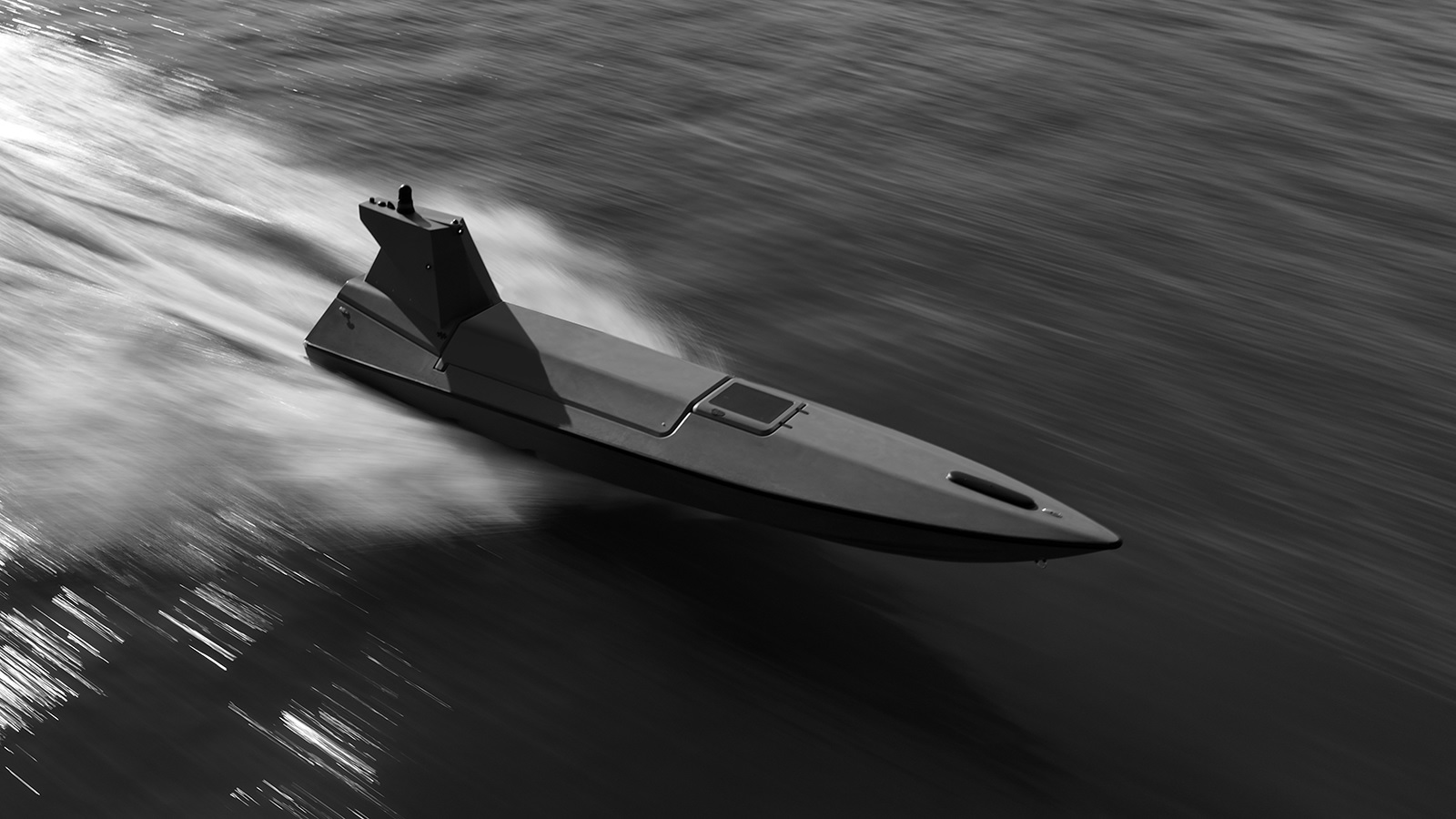
World
LONDON / FAREHAM — March 12, 2026 : The UK Ministry of Defence has awarded a £12.3 million contract to Fareham-based Kraken Technology Group to manufacture and deliver 20 uncrewed surface vessels (USVs) for the Royal Navy. The procurement forms part of the service’s autonomous maritime development program under Project Beehive, an initiative aimed at integrating uncrewed systems into the Royal Navy’s future hybrid fleet concept. The contract, valued at £10.25 million excluding VAT, was finalized on March 5, 2026 following a competitive tender process that received 12 submissions. Under the agreement, Kraken Technology Group will design, manufacture and deliver the vessels while also supporting Royal Navy training, tactical experimentation and warfare development activities. Project Beehive and Hybrid Fleet Development Project Beehive, first outlined by the Royal Navy in November 2025, is intended to serve as a proving ground for technologies that combine crewed naval platforms with autonomous and remotely operated systems. The initiative is managed within the Royal Navy’s Surface Flotilla (SURFLOT) structure and is designed to accelerate the integration of uncrewed platforms into operational maritime missions. The 20 vessels will be assigned to the Royal Navy’s Coastal Forces Squadron and 47 Commando Royal Marines. Their primary role will be experimentation, tactical development and operational training, allowing the Royal Navy and Royal Marines to explore how uncrewed systems can operate alongside conventional warships and other autonomous platforms. Testing, integration and operational development activities are expected to take place primarily in the south and south-west regions of the United Kingdom. Contract completion is scheduled for March 31, 2027. Royal Navy officials say the vessels will provide a near-term operational capability while simultaneously functioning as developmental platforms for evaluating future technologies that could be integrated across the service’s surface fleet. Vessel Design and Technical Specifications The uncrewed vessels are based on Kraken Technology Group’s Medium K3 Scout design. Each platform measures approximately 8.4 meters in length, with a beam of 1.9 meters and a draft of 0.8 meters. The vessels are constructed using composite materials to reduce weight while maintaining structural durability in maritime operations. Propulsion is provided by an inboard diesel engine coupled with a stern drive system, enabling a maximum speed of approximately 55 knots. At a cruising speed of around 25 knots, the vessels can operate for a range of approximately 650 nautical miles. Depending on the mission configuration and operational profile, endurance may reach up to 30 days. Each USV can carry a payload of approximately 600 kilograms, allowing the integration of a wide variety of mission equipment. The vessels are designed to operate either autonomously or under remote control depending on operational requirements. Modular Architecture and Mission Flexibility A central feature of the Kraken USV design is its Modular Open Systems Architecture (MOSA). The architecture is incorporated from the initial design stage and allows the Royal Navy to integrate and replace sensors, communication systems and mission modules without requiring major modifications to the vessel. The modular payload configuration enables rapid installation of different mission systems including: Electro-optical and infrared sensors Surface search radar Sonar equipment Command, control, communications, computers, intelligence, surveillance and reconnaissance (C4ISR) modules This flexible configuration supports multiple mission types including maritime surveillance, electronic warfare support, counter-uncrewed system operations, and maritime security missions. Unlike earlier experimental platforms focused primarily on observation or surveillance tasks, the Project Beehive vessels are intended to evolve into platforms capable of supporting operational fleet missions as additional capabilities are integrated over time. The vessels will be delivered at Technology Readiness Level (TRL) 4 to 5, meaning they will serve as active developmental systems used to evaluate technologies rather than finalized operational products. The open architecture also supports spiral development, allowing new sensors, communications systems and mission technologies to be incorporated throughout the vessels’ service life. Integration with Existing Autonomous Programs The Royal Navy has previously conducted trials with smaller remotely operated surface craft and autonomous systems. These include the 7.2-meter Rattler uncrewed surface vessels as well as experimentation conducted using the Royal Navy’s innovation ship XV Patrick Blackett. These experiments build on the service’s broader experience with autonomous underwater vehicles and mine countermeasure technologies such as the Mine Hunting Capability program. Officials say the introduction of a fleet of 20 modular USVs will enable the Royal Navy to conduct more complex operational testing scenarios involving multiple autonomous platforms operating alongside crewed ships. Kraken Technology Group and International Collaboration Kraken Technology Group, founded in 2020 and headquartered in Fareham in southern England, is a privately owned defence technology company focused on autonomous maritime systems and modular naval platforms. The company has conducted demonstrations with NATO programs including NATO Task Force-X in the Baltic region and has participated in multiple innovation cycles with the United States Special Operations Command. Kraken recently received an Other Transaction Authority (OTA) award from USSOCOM for development work in similar maritime environments, highlighting interoperability between UK and U.S. autonomous naval technologies. The company has received financial backing from several defence investment initiatives including: NATO Innovation Fund National Security Strategic Investment Fund SmartCap Kraken is also expanding its joint venture with European shipbuilder Rheinmetall Naval Systems and plans to announce additional licensed manufacturing agreements and international partnerships in 2026. Official Statements UK Minister for Defence Readiness and Industry Luke Pollard stated that the contract supports the Royal Navy’s transition toward autonomous maritime capability while strengthening domestic defence industry development. Pollard said autonomous vessels will complement the Royal Navy’s warships, help protect UK waters and support sailors during global deployments. He also emphasized that the technology is being developed and built domestically by a British company. Second Sea Lord Vice Admiral Paul Beattie described the program as an important step toward the Royal Navy’s hybrid fleet concept, noting that integrating autonomous technology with existing capabilities will help maintain maritime innovation and operational effectiveness. Captain Adam Ballard stated that Project Beehive enables lessons learned by the Royal Navy’s Disruptive Capabilities team to be applied directly to operational forces. He added that the open architecture design of the Kraken vessels will allow rapid integration of new capabilities to maintain technological advantages. Kraken Technology Group founder and chief executive officer Mal Crease said the contract represents a validation of the company’s maritime systems and confirms the firm’s role in developing next-generation autonomous naval technologies. He stated that Kraken will continue to iterate its technology to support the United Kingdom and allied forces as operational requirements evolve. Future Development Once delivered, the 20 uncrewed vessels will allow the Royal Navy to conduct sustained experimentation with autonomous maritime operations. The program is intended to inform the development of future uncrewed systems capable of operating in coordination with conventional naval platforms as part of a distributed and hybrid maritime force. The Royal Navy expects that the lessons learned from Project Beehive will influence the design of future autonomous naval systems and help define how uncrewed vessels will be incorporated into frontline fleet operations in the coming years.
Read More → Posted on 2026-03-12 13:40:21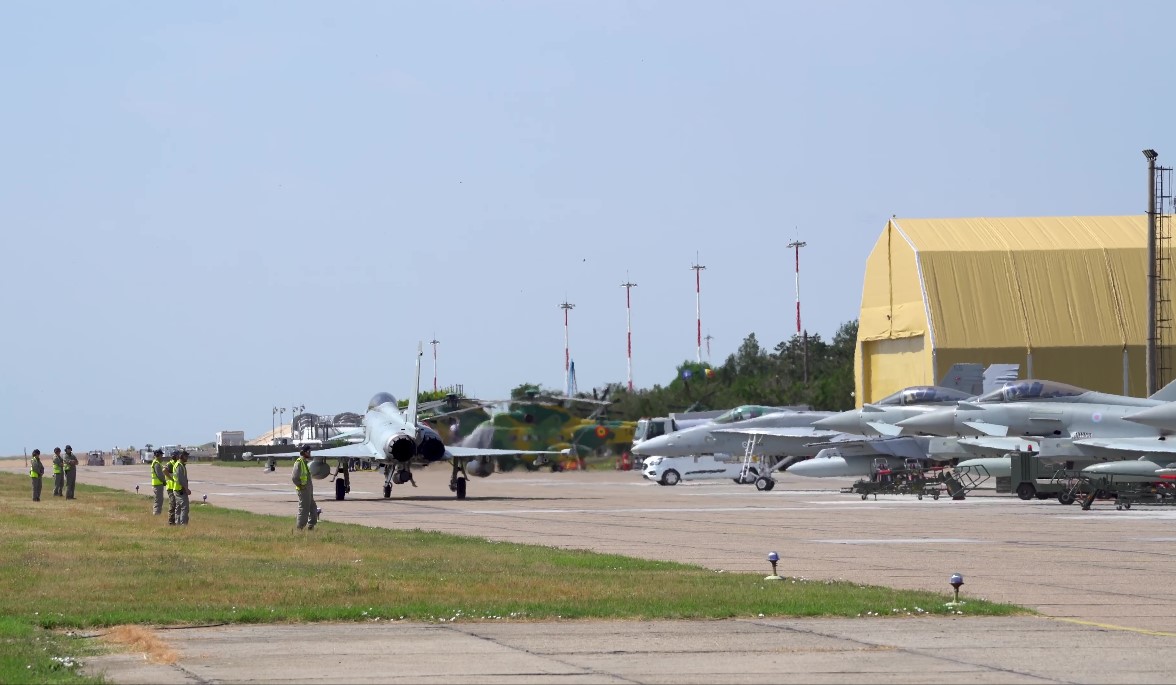
World
UCHAREST — March 11, 2026 : Romania has approved a United States request to temporarily utilize the Mihail Kogălniceanu Air Base to support ongoing military operations connected to the conflict in the Middle East. The authorization was granted following a meeting of Romania’s Supreme Council of National Defence (CSAT) on Wednesday and was announced by Romanian President Nicușor Dan. The decision allows the United States to deploy up to 500 military personnel along with logistical and communications equipment at the Black Sea coastal installation, located in Constanța County. The Mihail Kogălniceanu facility is currently the largest NATO military base in Europe and serves as a key operational hub for alliance activities in the Black Sea region. Deployment Framework and Duration According to the Romanian Presidential Administration, the approved deployment will initially remain in place for a period of 90 days. Any extension beyond this timeframe will require additional authorization from the Romanian government. Under the approved arrangement, the United States is permitted to station several categories of support assets at the base. These include aerial refueling aircraft, satellite communications infrastructure, and monitoring systems designed for intelligence collection and observation activities. The aerial refueling platforms are expected to support U.S. and allied fighter aircraft conducting long-range missions related to operations in the Middle East by extending their operational range and endurance. The satellite communications equipment will be integrated into broader regional command and communications networks. Romanian officials indicated that the systems are compatible with NATO infrastructure, including the Aegis Ashore ballistic missile defense installation located at the Deveselu Military Base in southern Romania. Up to 500 American service members will be deployed to operate, maintain, and secure the equipment during the approved deployment period. Additional Support Locations While Mihail Kogălniceanu Air Base will serve as the primary location for the deployment, Romanian defense sources indicated that the Câmpia Turzii Air Base in central Romania may also be utilized. This facility could host additional observation drones and refueling aircraft that cannot be accommodated at the main Black Sea installation due to space or operational constraints. Both bases have previously supported U.S. and NATO aircraft during alliance exercises and rotational deployments. Parliamentary Authorization and Government Position Although the Supreme Council of National Defence (CSAT) has approved the request, Romania’s Constitution requires final legislative approval by a joint plenary session of the Romanian Parliament before the deployment can proceed. Once parliamentary authorization is granted, the arrival of U.S. personnel and equipment is expected to take place gradually over the coming weeks. President Nicușor Dan emphasized during a press briefing following the CSAT meeting that the deployed equipment does not include weapons systems. “I emphasize that these are defensive systems and that they are not equipped with weaponry; in technical terms, they are referred to as non-kinetic equipment,” Dan stated. Romanian officials said the arrangement falls within the framework of the longstanding strategic partnership between Romania and the United States as well as the country’s commitments as a NATO member. The president also stated that the temporary deployment does not present any security risks to Romania and reaffirmed that the country remains stable and secure. Background: U.S. Force Posture Changes The request to utilize the Romanian base represents a shift from the U.S. military posture announced in Eastern Europe in late 2025. In October 2025, the United States reduced its troop presence at Mihail Kogălniceanu by withdrawing approximately 1,000 soldiers from a combat brigade previously stationed at the facility. At the time, the reduction was part of a broader repositioning of U.S. military resources that prioritized domestic border operations and the Indo-Pacific region. However, the escalation of military operations in the Middle East—particularly those involving Iran—has led the Pentagon to seek additional logistical hubs capable of supporting long-range air operations and command infrastructure from Europe. Romanian defense officials said the country’s geographic position and existing NATO infrastructure make Mihail Kogălniceanu a suitable location for such support activities. Role of the Mihail Kogălniceanu Base The Mihail Kogălniceanu Air Base has undergone significant expansion in recent years through joint U.S. and NATO infrastructure projects. The facility supports rotational deployments of allied aircraft and ground forces and serves as a transit and logistics hub for NATO operations in Eastern Europe and the Black Sea region. The base currently hosts around 1,000 U.S. military personnel as part of ongoing NATO rotational deployments following the partial troop reduction in 2025. Its location near the Black Sea allows for rapid access to operational areas in Eastern Europe, the Mediterranean, and the Middle East, making it an important support node for alliance military planning. Diplomatic and Regional Context The U.S. request for temporary access to the Romanian base also comes amid reports that Spain declined authorization for American forces to use Spanish military bases for launching or supporting operations targeting Iran. The Romanian facility therefore provides an alternative logistical location within NATO territory for supporting air operations and communications networks linked to Middle East missions. During Wednesday’s CSAT meeting, Romanian officials also discussed the wider implications of the Middle East conflict for the country. Government leaders reviewed the economic impact of rising global oil prices and assessed the broader security situation. Authorities also reported progress in evacuation efforts for Romanian nationals in the region. According to government figures, approximately 5,700 Romanian citizens have been safely returned from conflict-affected areas. Romanian officials described the decision to grant temporary access to the base as a response to a formal request from the United States aimed at strengthening operational support capabilities for ongoing military activities in the Middle East while remaining consistent with Romania’s obligations within NATO.
Read More → Posted on 2026-03-11 18:05:53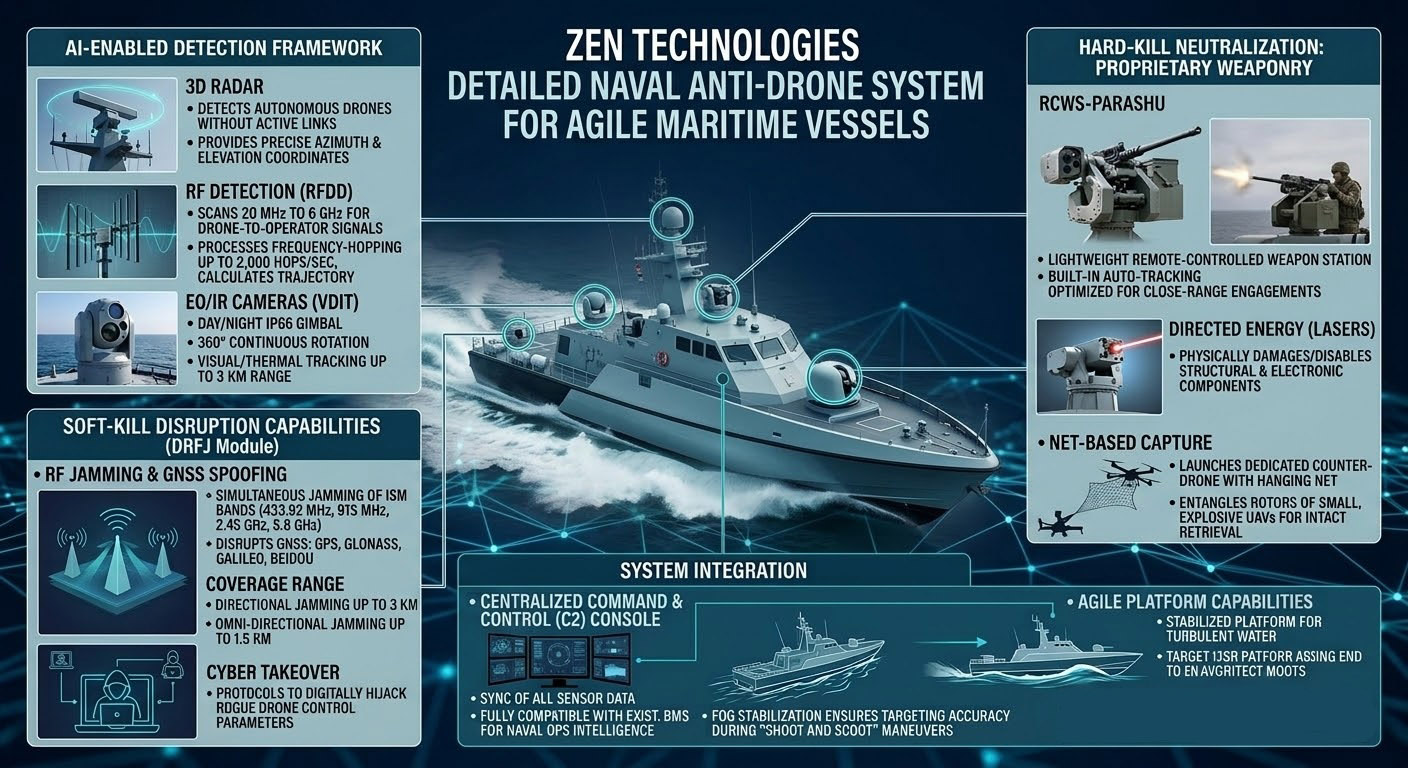
World
HYDERABAD, India — March 11, 2026 : Indian defense technology company Zen Technologies has detailed the architecture and operational capabilities of its Naval Anti-Drone System, a maritime counter-UAV solution designed for deployment on fast attack craft and patrol vessels operating in complex coastal and open-sea environments. The system combines artificial intelligence-based detection, electronic warfare disruption, and kinetic interception capabilities into a compact defense architecture tailored for agile maritime platforms. According to the company, the system has been engineered specifically for vessels where space, weight, and stability constraints limit the integration of conventional large-scale air defense systems. AI-Enabled Detection and Command Integration At the core of Zen Technologies Naval Anti-Drone System is an AI-enabled multi-sensor detection and tracking framework designed to identify and classify unmanned aerial vehicles (UAVs) in real time. Sensor data is processed and synchronized through a centralized Command and Control (C2) console, allowing operators to maintain continuous situational awareness of the surrounding airspace. The command interface is compatible with existing naval battlefield management systems, enabling integration with wider maritime operational networks and intelligence feeds. The detection architecture incorporates three primary subsystems: 3D Radar Surveillance : The radar component uses an X-band 2D/3D radar configuration capable of detecting and tracking small aerial objects, including autonomous drones operating without active communication signals. The radar system provides spatial positioning information including azimuth, range, and elevation, allowing early identification of incoming UAV threats. Because it operates independently of radio-frequency communication links, the radar module is designed to detect drones that rely on pre-programmed flight paths or autonomous navigation. Radio Frequency Detection and Direction Finding : The Radio Frequency Detection and Direction Finding (RFDD) module scans electromagnetic spectrum bands between 20 MHz and 6 GHz, identifying drone control links and telemetry signals transmitted between UAVs and their operators. The system is designed to process complex frequency-hopping communication signals at speeds of up to 2,000 hops per second, enabling it to identify modern encrypted or adaptive drone control networks. By analyzing these signals, the RFDD module calculates the direction of arrival and predicts the trajectory of incoming UAV threats. Electro-Optical and Infrared Tracking : Visual confirmation and target tracking are performed by a combined Electro-Optical/Infrared camera module known as VDIT. The camera system supports both daylight and thermal imaging and carries an IP66 environmental rating, allowing continuous operation in maritime weather conditions. Mounted on a stabilized platform, the camera system provides 360-degree continuous rotation and maintains target tracking at distances of up to 3 kilometers, enabling operators to visually confirm radar and RF-detected targets. Electronic Warfare and Soft-Kill Countermeasures Once a drone threat is confirmed, Zen Technologies Naval Anti-Drone System can employ electronic disruption techniques to neutralize the UAV without physical destruction. This capability is provided by the Drone RF Jammer (DRFJ) module, which performs targeted electromagnetic interference against drone control and navigation systems. RF Jamming and GNSS Signal Disruption : The DRFJ module simultaneously disrupts the most commonly used drone communication frequencies, including the industrial, scientific, and medical (ISM) bands at 433.92 MHz, 915 MHz, 2.45 GHz, and 5.8 GHz. In addition to communication jamming, the system interferes with satellite navigation signals from major Global Navigation Satellite Systems (GNSS), including: GPS (United States) GLONASS (Russia) GALILEO (European Union) BEIDOU (China) By interfering with positioning signals and control links simultaneously, the system can cause hostile drones to lose navigation stability, alter course, or enter fail-safe landing modes. Jamming Coverage : The electronic warfare module provides 360-degree azimuth coverage and 70-degree elevation coverage around the host vessel. Directional jamming can be applied to targets at distances of up to 3 kilometers, while omnidirectional disruption covers a range of approximately 1.5 kilometers. Cyber Takeover Capability : In addition to jamming, the system incorporates digital exploitation protocols designed to take control of a hostile drone’s command interface. Through this cyber takeover mechanism, operators can override external commands and assume control of the UAV’s flight parameters. This capability allows forces to redirect or safely land captured drones, enabling intelligence analysis or forensic examination of recovered systems. Hard-Kill Neutralization Systems If electronic countermeasures are insufficient or if the drone carries explosive payloads requiring immediate neutralization, Zen Technologies Naval Anti-Drone System integrates multiple kinetic interception methods. RCWS-Parashu Remote Weapon Station : One of the primary hard-kill options is the RCWS-Parashu, a lightweight remote-controlled weapon station developed by Zen Technologies. The system supports 7.62 mm or 5.56 mm caliber smart ammunition and includes automated target tracking algorithms optimized for engaging small aerial targets at close ranges. Operators control the system remotely through the C2 console, reducing crew exposure during engagements. Directed Energy Laser System : Zen Technologies Naval Anti-Drone System also integrates directed-energy laser weapons capable of damaging drone airframes or disabling onboard electronics. Laser engagement provides a precise interception method that does not rely on conventional ammunition. Directed energy systems are particularly suited for countering small UAVs due to their rapid response time and low collateral risk. Net-Based Capture Mechanism : For certain threat scenarios, Zen Technologies Naval Anti-Drone System deploys a dedicated counter-drone equipped with a suspended net system. The interceptor UAV approaches the hostile drone and releases the net, which entangles the target’s propellers and causes it to lose lift. This method allows the drone to be captured intact, enabling intelligence recovery while neutralizing potential explosive payloads. Stabilized Operations on High-Speed Maritime Platforms The system has been designed specifically for installation on fast attack craft, patrol boats, and other agile maritime vessels where space and weight limitations restrict the deployment of larger air defense systems. Because small vessels experience significant motion in open water, Zen Technologies integrated Fiber Optic Gyro (FOG) stabilization across the system’s optical sensors and hard-kill weapon platforms. FOG stabilization compensates for vessel pitch, roll, and yaw, ensuring that the radar, cameras, and weapon systems maintain targeting accuracy during high-speed maneuvers or rough sea conditions. According to the company, the system’s detection, tracking, and interception capabilities remain operational whether the vessel is stationary or conducting rapid maneuvering operations. System Role in Maritime Drone Defense The increasing use of small unmanned aerial systems in maritime conflict environments has created new protection requirements for naval vessels, particularly smaller patrol and coastal security craft that traditionally operate without integrated air defense systems. By combining sensor fusion, electronic warfare disruption, and multiple interception methods within a compact platform, Zen Technologies Naval Anti-Drone System is designed to provide layered protection against reconnaissance drones, loitering munitions, and small explosive-laden UAVs. Zen Technologies stated that the architecture allows modular upgrades as drone technologies evolve, enabling additional sensors or countermeasure modules to be integrated into the system in the future.
Read More → Posted on 2026-03-11 17:48:18
World
TAIPEI — March 2026 — Combat losses of U.S. unmanned aerial vehicles during ongoing military operations in the Middle East are expected to place additional pressure on American production capacity and could affect export delivery timelines for allies, including Taiwan’s pending acquisition of MQ-9B SkyGuardian drones. Military analysts and defense sources in Taipei indicate that the U.S. Department of Defense is likely to prioritize replacing equipment lost in current operations before accelerating deliveries tied to foreign military sales agreements. Drone Losses During Iran Operations Since the beginning of U.S.-led military operations against Iran in late February 2026, the United States has lost multiple MQ-9 Reaper drones during combat missions. Available reporting indicates that at least 11 MQ-9 Reapers have been destroyed, representing equipment losses valued at more than $330 million. These losses follow an earlier pattern of drone attrition in the Middle East. Beginning in October 2023, U.S. forces operating against Ansar Allah (Houthi) forces in Yemen also experienced sustained MQ-9 losses, with more than 10 aircraft destroyed during those operations. Imagery and video material released from Iran has shown wreckage identified as downed MQ-9 Reapers. Additional footage has indicated losses of Israeli Heron unmanned aerial vehicles, which perform intelligence, surveillance, and reconnaissance missions similar to the MQ-9. Israel has operated alongside the United States during portions of the ongoing regional military campaign. The cumulative attrition of these systems has increased demand for replacement aircraft within U.S. inventories. Taiwan’s MQ-9B Procurement Program Taiwan approved the purchase of four MQ-9B SkyGuardian drones in 2020 as part of a broader effort to expand long-range intelligence and reconnaissance capabilities. The Republic of China Ministry of National Defence allocated 21.7 billion New Taiwan Dollars (approximately $684 million) for the program, with funding distributed between 2022 and 2029. When including associated equipment and support infrastructure, the procurement represents an average cost exceeding $171 million per aircraft. The original delivery schedule projected the first drones arriving in 2025. However, production and logistical adjustments shifted the timeline to 2026–2027. Under the revised schedule: Two MQ-9B aircraft are planned for delivery in the third quarter of 2026 Two additional units are scheduled to arrive in 2027 According to Taiwan’s Ministry of National Defence budget submissions to the legislature, the MQ-9B fleet will serve several operational roles. During peacetime, the aircraft will conduct maritime surveillance, land-based monitoring, and intelligence collection around Taiwan and its surrounding waters. In wartime conditions, the drones are intended to support tactical reconnaissance missions, providing real-time imagery transmission and battlefield surveillance to support operational decision-making. The system is also expected to assist with tracking adversary movements and supporting defensive coordination across Taiwan’s armed forces. Operational Survivability Concerns The operational losses experienced by MQ-9 aircraft in the Middle East have prompted renewed discussion among analysts regarding the platform’s survivability in heavily contested environments. The MQ-9 family was originally designed for long-endurance intelligence and strike missions in low-to-medium threat environments. Recent engagements in Yemen and the Iran conflict have demonstrated that the aircraft can be vulnerable when operating within range of modern air defense systems or advanced electronic warfare capabilities. Defense observers in Taiwan note that the Taiwan Strait environment would likely involve integrated air defense networks and dense electronic warfare activity, conditions that could limit the operational freedom of large unmanned systems such as the MQ-9B. These considerations have led some analysts to question the degree of impact such drones could have during a high-intensity conflict scenario. Impact on U.S. Defense Supply Chains The ongoing Middle East conflict has also produced broader logistical effects across U.S. military supply chains. Due to the high rate of munition expenditure and equipment attrition during current operations, the United States has reportedly requested that several allied countries return surface-to-air missile stocks originally provided under defense cooperation agreements. The aim is to replenish U.S. inventories while production capacity expands. South Korea has experienced several adjustments related to these logistical shifts. Reports indicate withdrawals or redeployments involving: Patriot air defense systems THAAD missile defense batteries guided aerial bombs AH-64 Apache attack helicopters, which were removed from South Korea in early January 2026. Defense analysts have linked some of these movements to preparations for U.S. operations in the Middle East. Existing Arms Delivery Backlogs The current operational demands are compounding pre-existing delays within the U.S. Foreign Military Sales (FMS) program, which had already accumulated significant delivery backlogs prior to the Iran conflict. According to data released by the Taiwan Arms Sales Backlog Tracker in December 2025, undelivered U.S. defense equipment destined for Taiwan had reached a total value of more than $21.45 billion. Japan has also experienced delays. In January 2026, Japan’s Board of Audit reported that military equipment valued at approximately 1.1 trillion yen (about $6.9 billion) purchased from the United States more than five years earlier remained undelivered under the FMS framework. These delays reflect broader constraints affecting the U.S. defense industrial base, including production capacity limits and the need to meet urgent operational requirements. Official Position From Taiwan Despite the operational losses in the Middle East and concerns about supply chain pressures, Taiwan’s defense authorities state that the MQ-9B acquisition program remains formally unchanged. Statements released by Taiwan’s Ministry of National Defence and the Republic of China Air Force in early March 2026 indicated that no official notification has been received from the United States regarding changes to the delivery schedule. According to these briefings, the first two MQ-9B aircraft are still expected to arrive in 2026, consistent with the previously revised procurement timeline. Taiwanese officials also noted that no U.S. request has been made to redirect or reprioritize equipment allocated to Taiwan. Outlook While official schedules remain unchanged, the combination of combat equipment losses, operational demands, and existing foreign military sales backlogs is expected to continue placing pressure on U.S. defense production capacity. For Taiwan and other U.S. defense clients, the pace at which American industry can replenish equipment lost in active operations may play a significant role in determining the timelines for future arms deliveries.
Read More → Posted on 2026-03-11 16:36:38Search
Top Trending in 24 Hours
-
 President Trump Pauses Plans to Expand U.S. Strikes on Iran Amid Concerns Over Air Defense Missile Stocks
-
 Russia Builds 500-Ton Unmanned Warship For Anti-Submarine Warfare, Plans New 9,500-Ton Warship, Navy Chief Says
-
 U.S. Awards Bell Textron $33.64 Million Contract for Next Phase of Marine Corps AH-1Z and UH-1Y Helicopter Upgrades
-
 DRDO Developing Long-Range Air-Launched Ballistic Missile for Su-30MKI, Rudram-4 Seen as Likely Candidate
-
 Unreleased Footage Reveals Why Lindsey Graham Dropped Plan to Push Trump on Hezbollah Strikes
-
 U.S. Military Selectively Intercepts Iranian Missiles to Preserve Shrinking Air Defense Stocks : Report
-
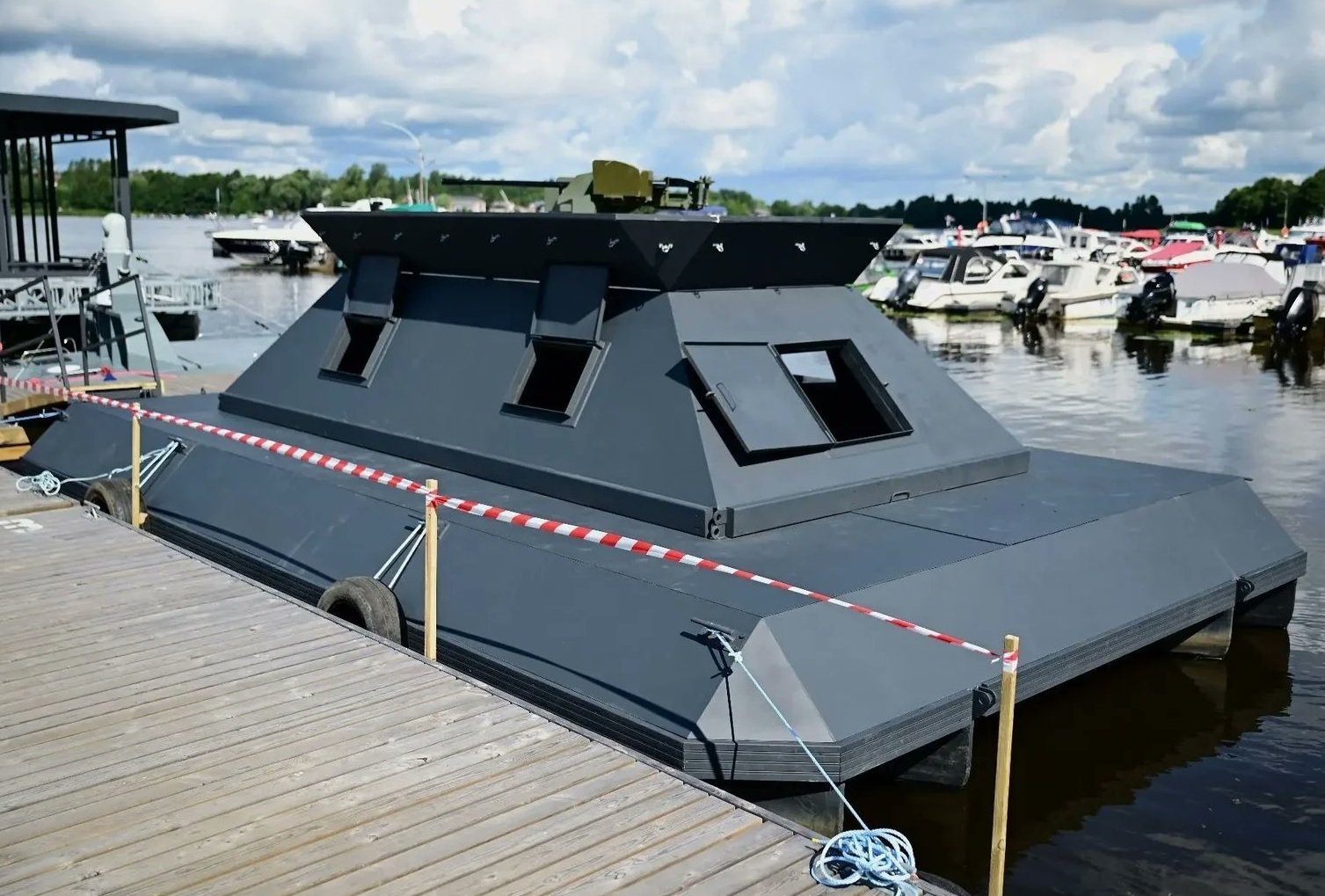 Russia Unveils Experimental Plot-40 Floating Defense Platform to Counter Drone and USV Threats
-
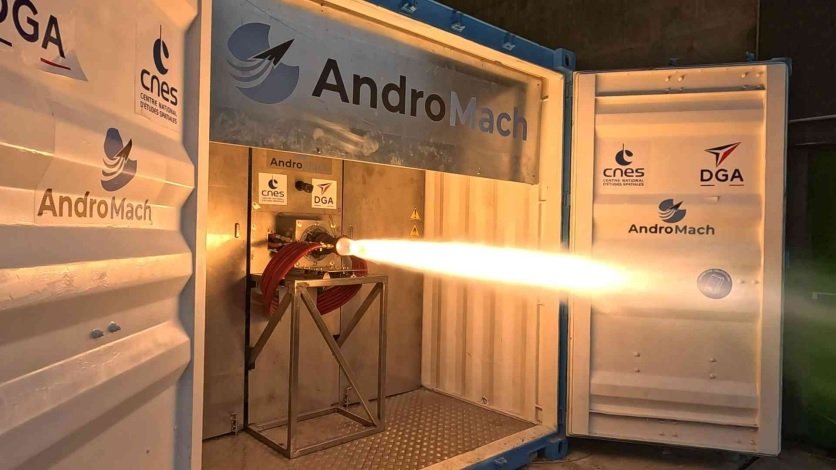 French Startup AndroMach Successfully Tests Reusable Rocket Engine 21 Times for Hypersonic Drone
Top Trending in 4 Days
-
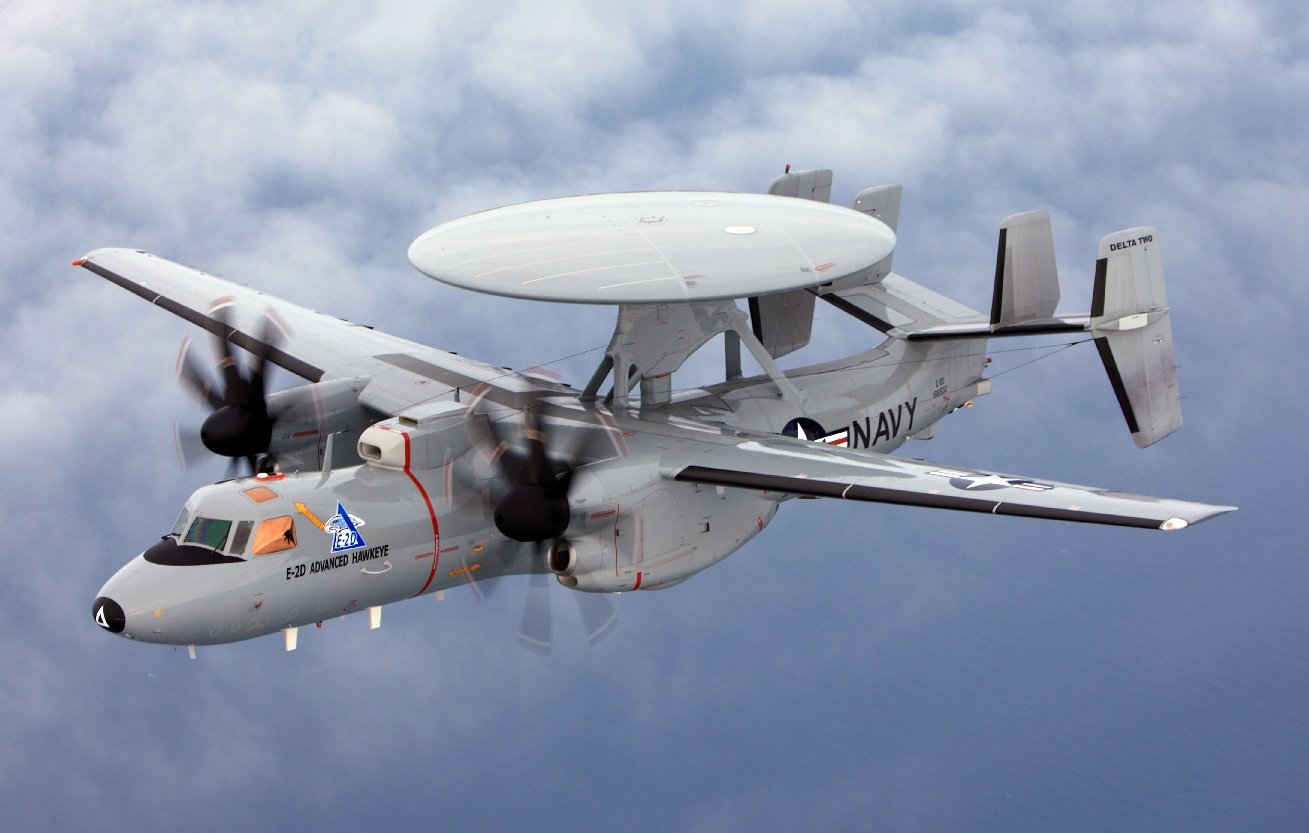 U.S. Navy Awards Northrop Grumman $1.2 Billion Deal for Three New E-2D Advanced Hawkeyes
-
 U.S. Airstrikes Target IRGC Missile Base Near Taft as Overnight Strikes Hit Central Iran
-
 Kuwait and Bahrain Reportedly Launch First Joint Direct Airstrikes on Iran Since War Began : Report
-
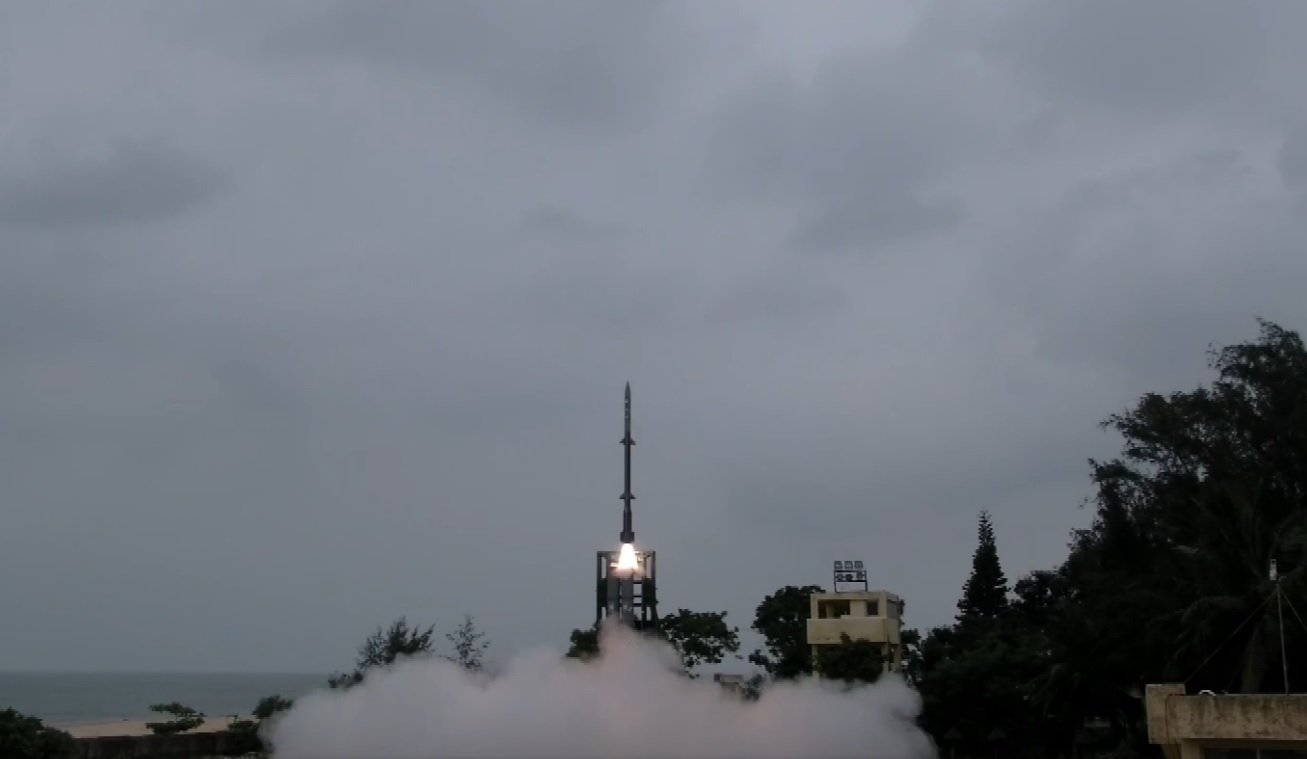 DRDO Successfully Conducts Maiden Flight Test of 150-km-Range Kusha M1 Air Defence Missile
-
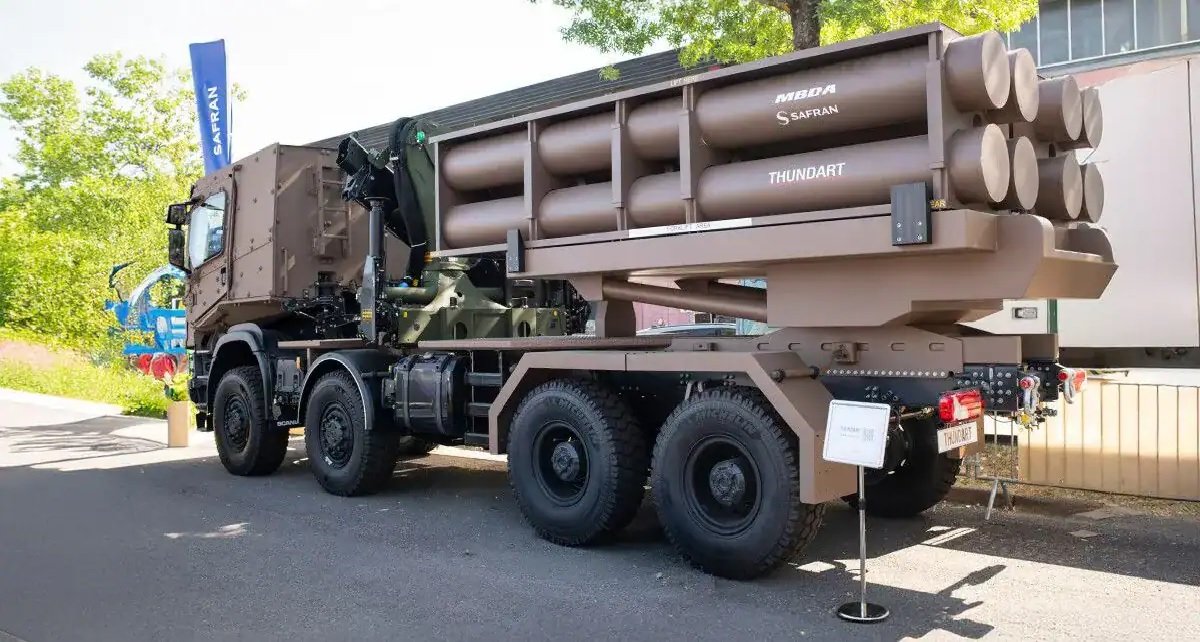 France's THUNDART Long-Range Rocket System May Undergo Prototype Combat Testing in Ukraine
-
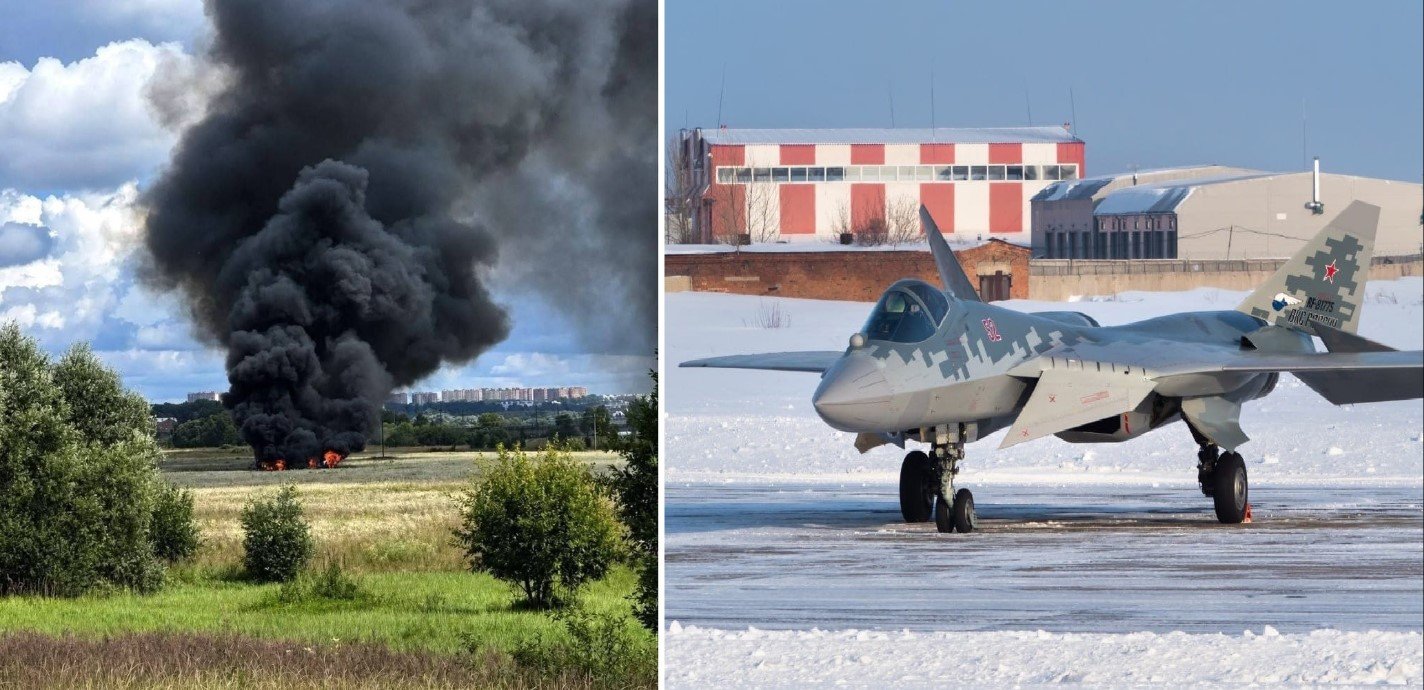 Russian Su-57 Stealth Fighter Crashes During Training Flight Near Moscow, Pilot Ejects Safely
-
 Australia Commits Additional AUD 4.6 Billion to Expand Osborne Shipyard for AUKUS Submarines
-
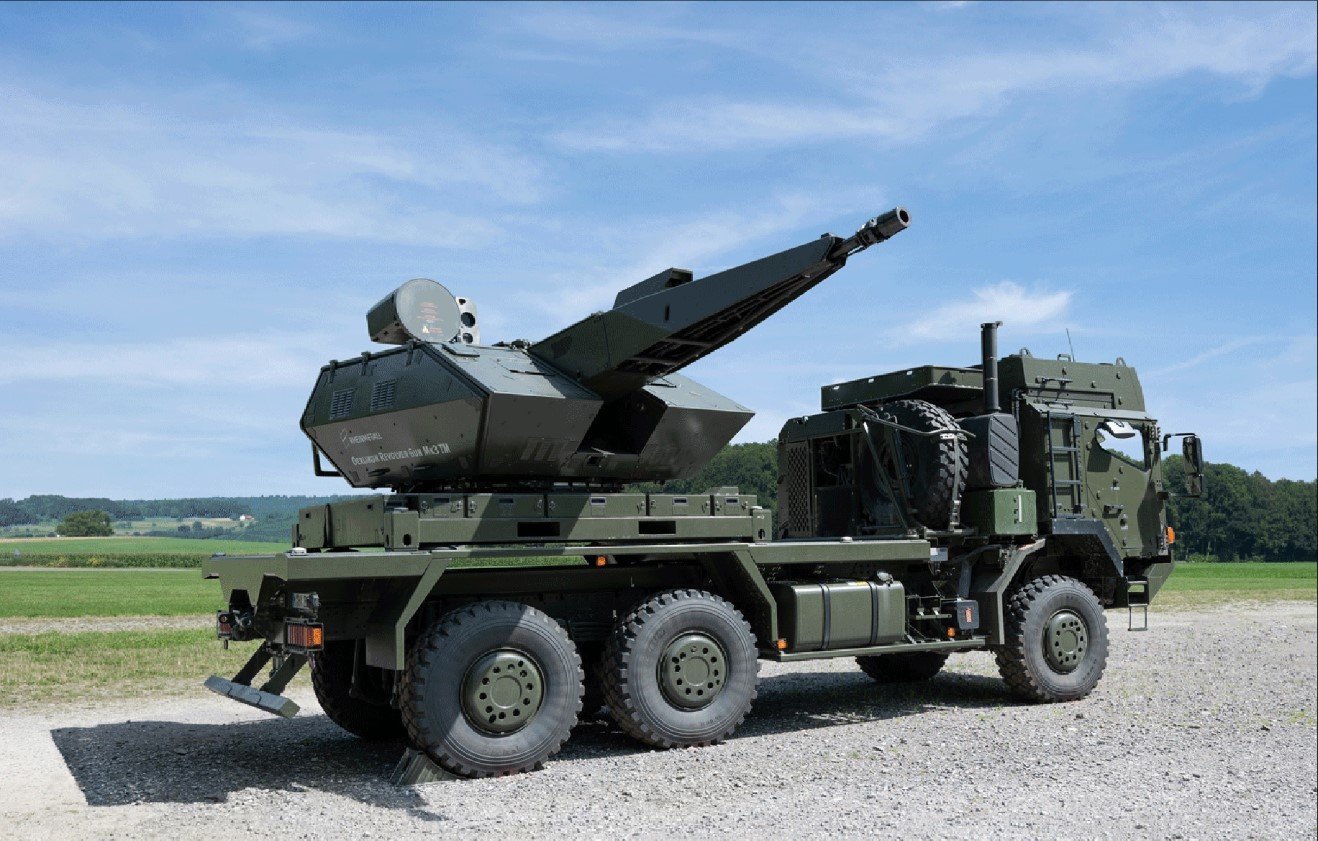 China Imposes Dual-Use Export Ban on 14 European Entities After EU's Russia Sanctions