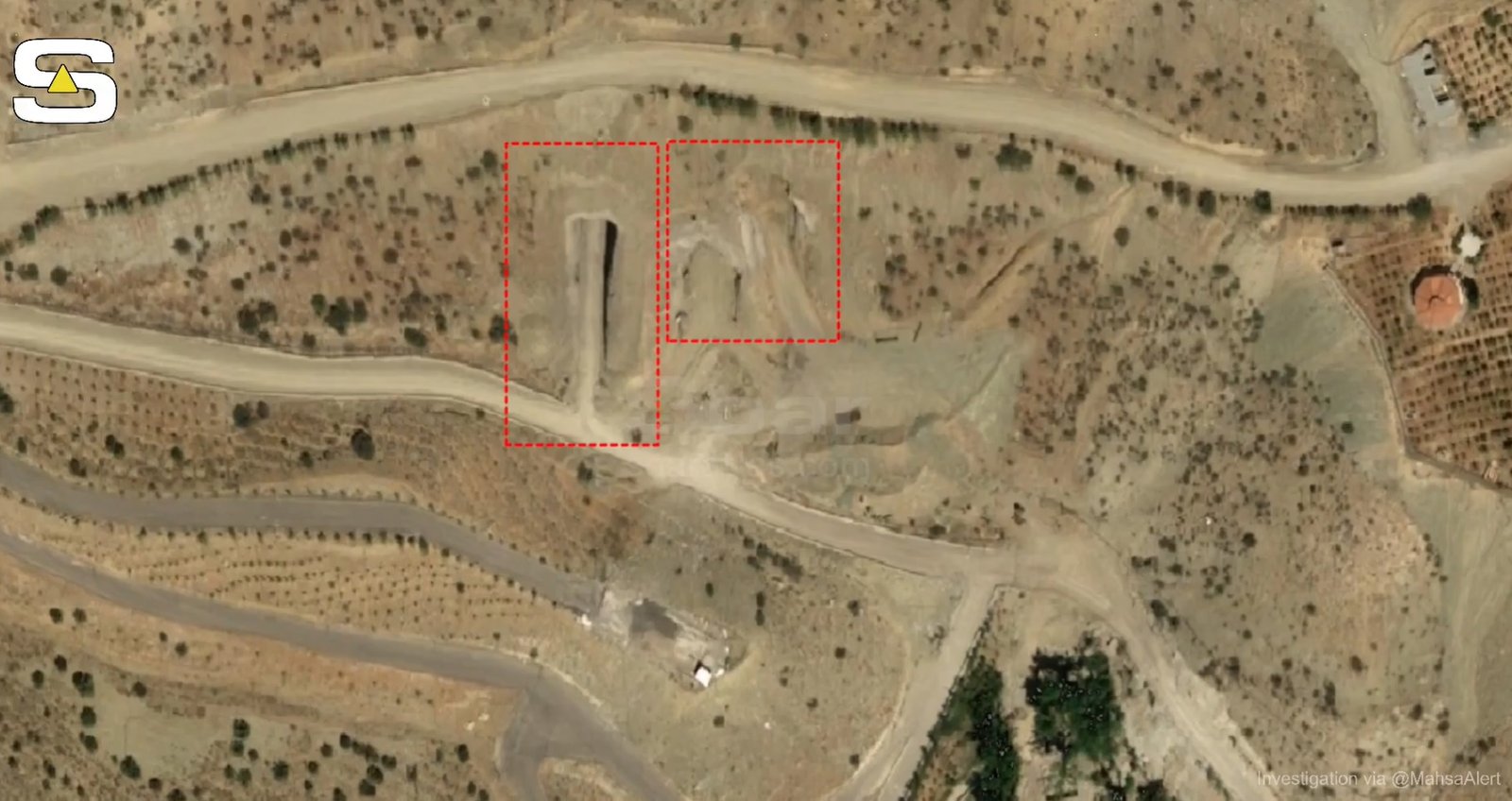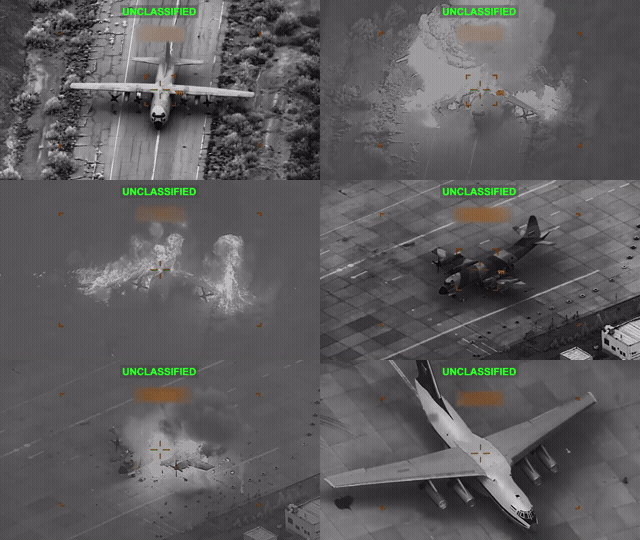
KERMAN, Iran — March 12, 2026 : United States Central Command (CENTCOM) released official footage on Thursday showing a strike targeting aircraft positioned at Ayatollah Hashemi Rafsanjani Airport in southeastern Iran. The imagery confirms that several Iranian military aircraft parked on the airport apron were struck, including an Iranian-operated Ilyushin Il-76 heavy transport aircraft, a Lockheed C-130 Hercules transport aircraft, and a Lockheed P-3 Orion in its Iranian P-3F configuration.
The footage shows the aircraft positioned on the apron area of the airport at the time of the strike. CENTCOM stated that the operation targeted assets associated with Iran’s military logistics infrastructure. The strike occurred on or around March 10, 2026, according to U.S. officials.
Aircraft Identification and Strike Assessment
Initial analysis of low-resolution frames from the released footage suggested that markings visible on the vertical stabilizer of the Il-76 resembled the Russian tricolor. Subsequent examination of higher-resolution imagery and detailed analysis of the paint scheme and cockpit markings confirmed that the aircraft carried Iranian national insignia, identifying it as an Iranian-operated platform rather than a Russian aircraft.
The Il-76 was parked alongside a C-130 Hercules transport aircraft and a P-3F Orion maritime patrol aircraft at the time of the strike. The aircraft were positioned in the airport’s apron area, where military and dual-use aircraft are commonly stationed.
CENTCOM stated that the strike formed part of broader operations intended to degrade Iranian military capabilities during the ongoing conflict. No additional operational details regarding the weapons used in the strike were released.
Iranian authorities acknowledged that aircraft and infrastructure at the airport were damaged but stated that the affected aircraft were older platforms and not operational. No casualty figures have been reported.
Iran’s Il-76 Fleet and Wartime Losses
Due to longstanding international sanctions restricting access to Western heavy transport aircraft such as the Boeing C-17 Globemaster III or Airbus A400M Atlas, Iran relies heavily on the Il-76 as its primary heavy airlift platform.
Prior to the current conflict, Iran was estimated to operate approximately 12 Il-76 aircraft, primarily the Il-76TD and Il-76MD variants. These aircraft are distributed among the Islamic Republic of Iran Air Force, the Islamic Revolutionary Guard Corps, and state-affiliated cargo airlines that operate within Iran’s military logistics network.
The strike at Kerman represents at least the second confirmed wartime loss of an Iranian Il-76 during the current conflict. Satellite imagery and battle damage assessments previously indicated that an Il-76MD transport aircraft was destroyed at Shiraz Shahid Dastgheib International Airport on February 28, 2026, during earlier strikes.
Other assessments referenced by defense analysts have suggested additional losses at Tehran Mehrabad Airport, though these have not been formally confirmed in official statements.
Il-76 Development and Design
The Il-76 was developed by the Soviet Ilyushin design bureau as a heavy military transport aircraft capable of operating across remote and undeveloped regions. The aircraft conducted its first flight on March 25, 1971, and entered operational service in June 1974.
More than 900 airframes were produced, primarily at the Tashkent Aviation Production Association in present-day Uzbekistan.
The aircraft uses a high-wing configuration and T-tail design, allowing engines and landing gear to remain elevated above rough or unprepared runways. This configuration reduces the risk of foreign object damage and improves performance during operations from austere airfields.
Multiple-wheel landing gear bogies distribute weight across the runway surface, enabling operations from semi-prepared strips. The wing incorporates full-span leading-edge slats and double-slotted flaps, providing short takeoff and landing capability.
Il-76 Baseline Technical Specifications
| Specification | Detail |
|---|---|
| Engines | 4 × Soloviev D-30KP turbofan engines |
| Thrust | ~12,000 kgf per engine |
| Payload Capacity | 40–48 tonnes depending on configuration |
| Maximum Takeoff Weight | ~170 tonnes |
| Cruise Speed | 750–800 km/h |
| Maximum Range | Up to ~5,000 km with heavy cargo |
| Cargo Compartment Dimensions | 24.5 m length × 3.45 m width × 3.4 m height |
| Cargo Volume | Approximately 180 cubic meters |
| Internal Equipment | Reinforced cargo floor, tie-down points, roller conveyors, overhead hoists |
The Il-76TD variant used by Iran incorporates extended fuel capacity, allowing longer-range cargo missions while maintaining payload capability.
Operational Role in Iran
Within Iran’s military logistics network, the Il-76 performs long-range heavy cargo transport missions. The aircraft is capable of carrying armored vehicles, missile components, engineering equipment, and palletized cargo.
The aircraft’s modular cargo systems allow operators to reconfigure the interior for troop transport, humanitarian relief missions, or standardized cargo operations. These capabilities have made the Il-76 the primary strategic airlift platform available to Iranian military forces.
Because of sanctions limiting procurement of Western aircraft, Iran continues to rely on the Il-76 platform for missions that require large payload capacity and long operational range.
Maintenance and Sustainment Under Sanctions
Maintaining Iran’s Il-76 fleet presents significant logistical challenges. Many aircraft in Iranian service were produced in the 1980s, and sanctions have limited direct access to manufacturer support and spare parts.
Iran sustains the fleet through a combination of domestic overhaul facilities, cannibalization of grounded aircraft, and international procurement networks.
Major maintenance work is conducted at facilities associated with Mehrabad International Airport in Tehran, where technicians perform structural inspections, avionics refurbishment, and engine overhauls.
Iranian technicians are capable of performing wing box structural inspections, refurbishment of onboard avionics systems, and overhaul of the D-30KP turbofan engines without direct assistance from the original manufacturer.
Previous Iranian AEW Modification Program
Iran previously explored adapting the Il-76 platform for specialized missions. During the 1980s, Iraq modified several Il-76MD aircraft under the Adnan-2 program, installing a French TRS-2105 Tiger-G radar inside a dorsal rotodome to create an airborne early warning aircraft.
During the Gulf War in 1991, one of these Iraqi aircraft was flown to Iran to avoid destruction. Iranian engineers later integrated a domestically developed radar system into the rotodome, reportedly capable of detecting aerial targets at distances approaching 1,000 kilometers.
The aircraft entered Iranian service in April 2008 under the name Simorgh.
The program ended on September 22, 2009, when the Simorgh collided mid-air with an Iranian fighter aircraft during a military exercise. The crash destroyed the aircraft and eliminated Iran’s only Il-76-based airborne early warning platform.
Following the loss, Iran returned the remaining Il-76 aircraft in its inventory to standard cargo and logistics roles.
Current Operational Context
The strike at Kerman Airport represents another incident in a series of attacks targeting Iranian military infrastructure during the ongongoing conflict. CENTCOM stated that the destruction of aircraft and logistics assets is intended to reduce Iran’s operational air transport capability.
Iranian officials have acknowledged that aircraft and infrastructure at the airport were damaged but did not provide detailed information about the condition of the aircraft involved.
No additional information regarding follow-on strikes or further operational assessments has been released by U.S. or Iranian authorities.
——— End of Article ———