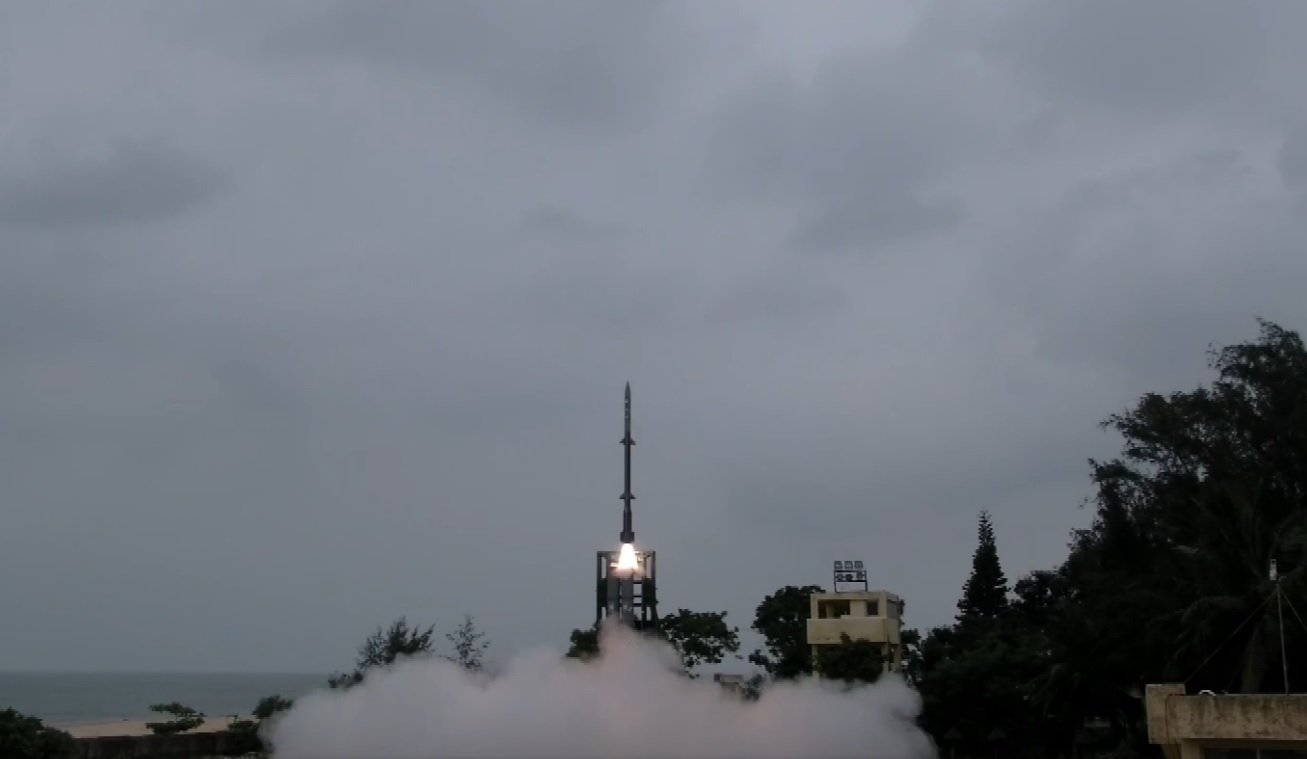
WRIGHT-PATTERSON AIR FORCE BASE, Ohio — March 12, 2026 : The U.S. Air Force Research Laboratory (AFRL) and aerospace propulsion company Ursa Major have successfully carried out a flight test of the Affordable Rapid Missile Demonstrator (ARMD), a prototype vehicle designed to validate new approaches for rapidly developing and producing missile systems. The demonstrator, powered by Ursa Major’s Draper liquid rocket engine, achieved supersonic speeds during the test, confirming the viability of a throttleable liquid-propulsion system for tactical missile applications.
The flight represents a key milestone in a program focused on accelerating missile development timelines while lowering production costs and enabling scalable manufacturing. AFRL officials stated that the ARMD initiative progressed from contract award to a fully integrated, flight-ready vehicle and propulsion system in approximately eight months, illustrating a compressed development cycle intended to support rapid fielding of future defense technologies.
The test vehicle was staged for launch on January 27, 2026, using a specialized air-log cart for transport before being loaded onto a Transportable Target Launcher for the demonstration flight. During the mission, the vehicle validated the integration of the Draper engine within a tactical missile-type platform and demonstrated operational concepts associated with liquid propulsion in rapidly deployable weapons systems.
Program Structure and Industry Partnership
The ARMD program operates as a technology demonstration platform that allows AFRL to evaluate propulsion technologies, system integration methods, and production models aimed at enabling rapid and affordable missile manufacturing. The project is part of broader U.S. Air Force efforts to accelerate defense innovation through public-private partnerships with commercial aerospace firms.
Ursa Major served as the lead vehicle integrator for the demonstrator under a $28.6 million contract awarded by AFRL in 2025. As the prime integrator, the company was responsible for incorporating the Draper propulsion system into the flight vehicle and overseeing system integration.
Prior to the flight demonstration, the ARMD propulsion system completed a full-duration static fire test in late 2025, which verified the performance of the bipropellant propulsion system across the full mission cycle. The static test validated engine start-up, sustained thrust generation, and shutdown procedures before the system progressed to flight testing.
Brig. Gen. Jason Bartolomei, Commander of AFRL and the Air Force Technology Executive Officer, said the project demonstrates how changes in acquisition models can accelerate technology delivery.
“This project proves that we can transform and leverage our acquisition models to rapidly deliver critical technology advancements to deter and win in a future conflict,” Bartolomei said. “We are not just building a single missile; we are forging a new path toward a cost-effective, mass-producible deterrent for the nation.”
Draper Liquid Rocket Engine
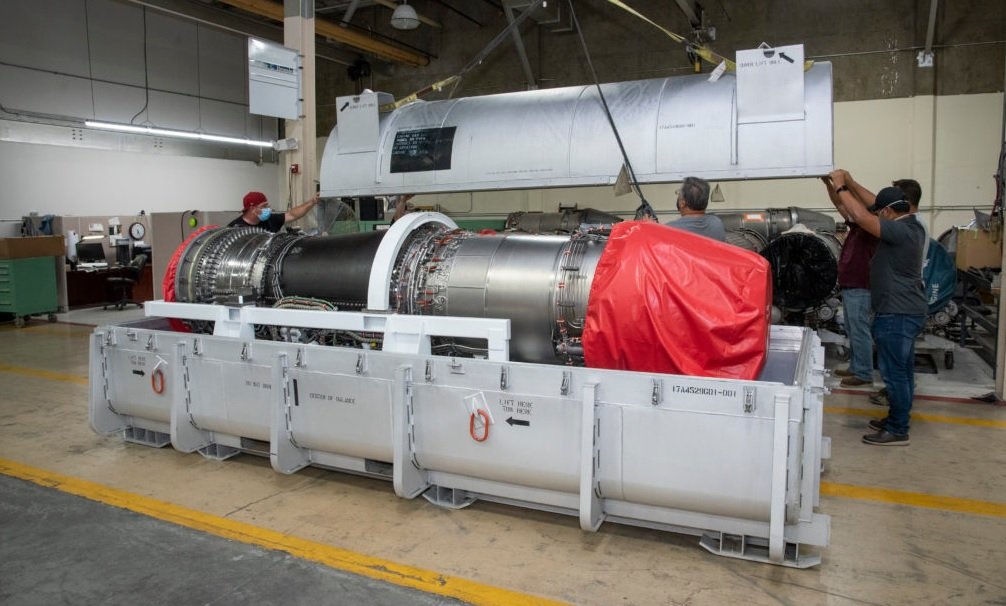
Central to the ARMD demonstration is the Draper liquid rocket engine, a throttleable propulsion system designed to provide greater operational flexibility compared with traditional solid rocket motors used in most tactical missiles.
The Draper engine builds on the architecture of Ursa Major’s earlier Hadley liquid rocket engine, incorporating design improvements to support missile and hypersonic applications. The engine produces approximately 4,000 pounds of thrust and uses storable bipropellant propellants — hydrogen peroxide and kerosene.
Unlike cryogenic propellant systems used in many launch vehicles, Draper uses non-cryogenic, storable propellants, allowing the engine to remain ready for extended periods without specialized storage infrastructure. This approach aims to combine the long-term storability typically associated with solid rocket motors with the control advantages of liquid propulsion.
Approximately 60 percent of the Draper engine components are manufactured using additive manufacturing (3D printing), a design choice intended to reduce production time, lower costs, and simplify supply chains.
Liquid propulsion systems differ from solid rocket motors in several key operational aspects. In a solid rocket motor, fuel and oxidizer are combined into a single solid propellant grain that burns once ignited, producing a fixed thrust profile that cannot be adjusted during flight.
In contrast, liquid rocket engines store propellants separately and mix them during operation. This configuration enables throttleable thrust, allowing a missile or flight vehicle to adjust power levels, start or stop the engine during flight, and perform more flexible maneuvering profiles. Such capabilities could support new operational concepts in missile design, including adaptable flight trajectories and improved terminal maneuverability.
Operational and Technology Objectives
AFRL officials stated that the ARMD program was designed not only to validate propulsion technology but also to test the speed at which missile systems can move from concept development to flight testing.
Dr. Javier Urzay, Chief of the AFRL Rocket Propulsion Division, described the program as part of a broader effort to develop scalable propulsion technologies for future defense systems.
“ARMD represents a key milestone in our efforts to develop revolutionary, affordable and scalable liquid rocket engine technologies to win the wars of tomorrow,” Urzay said.
The program also explores production concepts aimed at supporting high-volume manufacturing of missile systems, a capability considered increasingly important in modern military planning where large inventories of affordable weapons may be required.
Future Development and Applications
Following the successful supersonic flight demonstration, Ursa Major remains under contract with AFRL to continue testing and characterization of the Draper engine in operational flight environments. Additional flight tests are planned to collect further performance data and refine system integration concepts.
The Draper engine has been designed for a range of potential applications beyond the ARMD demonstrator. According to program information, the propulsion system is being evaluated for use in tactical hypersonic systems, missile defense interceptors, in-space propulsion systems, and space-based interception platforms.
Ursa Major has also developed related concepts building on ARMD technology, including the HAVOC hypersonic missile concept, which incorporates the Draper propulsion system for potential medium-range strike applications.
Chris Spagnoletti, Chief Executive Officer of Ursa Major, said the demonstration highlights the speed at which new propulsion technologies can transition from design to flight.
“This flight proves that you can get a vehicle with a safe, storable and throttleable liquid engine in the air quickly and affordably,” Spagnoletti said. “We went from contract to flight-ready of an all-up round and propulsion system in just eight months.”
With the successful ARMD test flight completed, AFRL and its industry partners plan to continue expanding testing to further evaluate the capabilities of liquid propulsion in future missile platforms while refining rapid development models intended to shorten timelines for next-generation defense technologies.
——— End of Article ———