TAIPEI — March 2026 — Combat losses of U.S. unmanned aerial vehicles during ongoing military operations in the Middle East are expected to place additional pressure on American production capacity and could affect export delivery timelines for allies, including Taiwan’s pending acquisition of MQ-9B SkyGuardian drones.
Military analysts and defense sources in Taipei indicate that the U.S. Department of Defense is likely to prioritize replacing equipment lost in current operations before accelerating deliveries tied to foreign military sales agreements.
Drone Losses During Iran Operations
Since the beginning of U.S.-led military operations against Iran in late February 2026, the United States has lost multiple MQ-9 Reaper drones during combat missions. Available reporting indicates that at least 11 MQ-9 Reapers have been destroyed, representing equipment losses valued at more than $330 million.
These losses follow an earlier pattern of drone attrition in the Middle East. Beginning in October 2023, U.S. forces operating against Ansar Allah (Houthi) forces in Yemen also experienced sustained MQ-9 losses, with more than 10 aircraft destroyed during those operations.
Imagery and video material released from Iran has shown wreckage identified as downed MQ-9 Reapers. Additional footage has indicated losses of Israeli Heron unmanned aerial vehicles, which perform intelligence, surveillance, and reconnaissance missions similar to the MQ-9. Israel has operated alongside the United States during portions of the ongoing regional military campaign.
The cumulative attrition of these systems has increased demand for replacement aircraft within U.S. inventories.
Taiwan’s MQ-9B Procurement Program
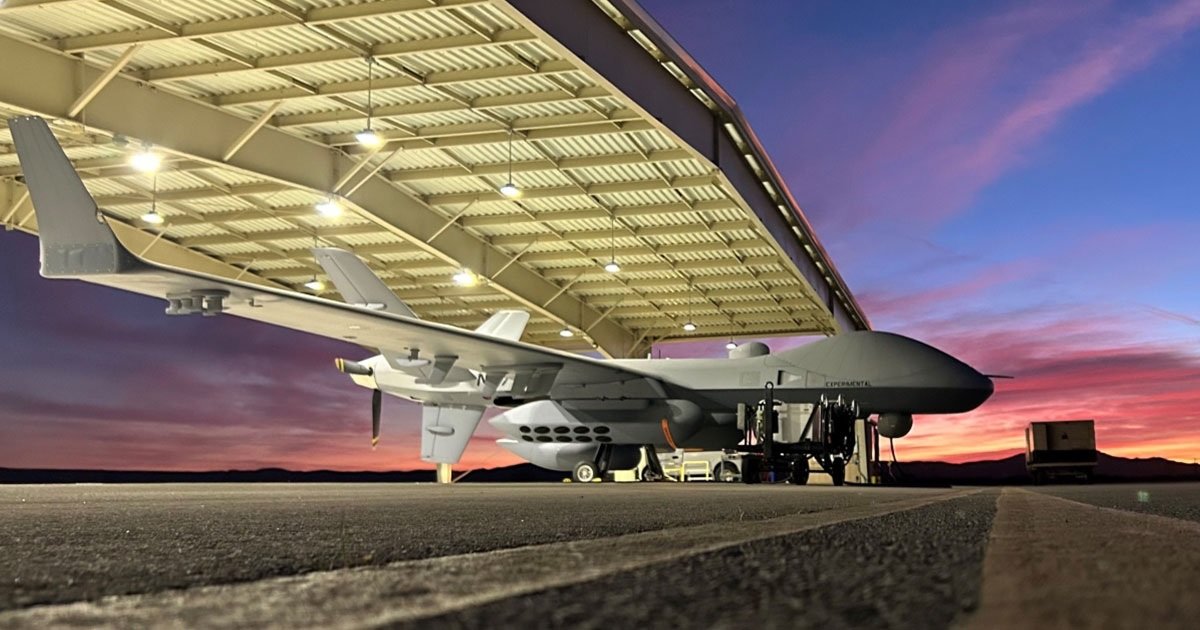
Taiwan approved the purchase of four MQ-9B SkyGuardian drones in 2020 as part of a broader effort to expand long-range intelligence and reconnaissance capabilities.
The Republic of China Ministry of National Defence allocated 21.7 billion New Taiwan Dollars (approximately $684 million) for the program, with funding distributed between 2022 and 2029. When including associated equipment and support infrastructure, the procurement represents an average cost exceeding $171 million per aircraft.
The original delivery schedule projected the first drones arriving in 2025. However, production and logistical adjustments shifted the timeline to 2026–2027.
Under the revised schedule:
-
Two MQ-9B aircraft are planned for delivery in the third quarter of 2026
-
Two additional units are scheduled to arrive in 2027
According to Taiwan’s Ministry of National Defence budget submissions to the legislature, the MQ-9B fleet will serve several operational roles.
During peacetime, the aircraft will conduct maritime surveillance, land-based monitoring, and intelligence collection around Taiwan and its surrounding waters.
In wartime conditions, the drones are intended to support tactical reconnaissance missions, providing real-time imagery transmission and battlefield surveillance to support operational decision-making. The system is also expected to assist with tracking adversary movements and supporting defensive coordination across Taiwan’s armed forces.
Operational Survivability Concerns
The operational losses experienced by MQ-9 aircraft in the Middle East have prompted renewed discussion among analysts regarding the platform’s survivability in heavily contested environments.
The MQ-9 family was originally designed for long-endurance intelligence and strike missions in low-to-medium threat environments. Recent engagements in Yemen and the Iran conflict have demonstrated that the aircraft can be vulnerable when operating within range of modern air defense systems or advanced electronic warfare capabilities.
Defense observers in Taiwan note that the Taiwan Strait environment would likely involve integrated air defense networks and dense electronic warfare activity, conditions that could limit the operational freedom of large unmanned systems such as the MQ-9B.
These considerations have led some analysts to question the degree of impact such drones could have during a high-intensity conflict scenario.
Impact on U.S. Defense Supply Chains
The ongoing Middle East conflict has also produced broader logistical effects across U.S. military supply chains.
Due to the high rate of munition expenditure and equipment attrition during current operations, the United States has reportedly requested that several allied countries return surface-to-air missile stocks originally provided under defense cooperation agreements. The aim is to replenish U.S. inventories while production capacity expands.
South Korea has experienced several adjustments related to these logistical shifts. Reports indicate withdrawals or redeployments involving:
-
Patriot air defense systems
-
THAAD missile defense batteries
-
guided aerial bombs
-
AH-64 Apache attack helicopters, which were removed from South Korea in early January 2026.
Defense analysts have linked some of these movements to preparations for U.S. operations in the Middle East.
Existing Arms Delivery Backlogs
The current operational demands are compounding pre-existing delays within the U.S. Foreign Military Sales (FMS) program, which had already accumulated significant delivery backlogs prior to the Iran conflict.
According to data released by the Taiwan Arms Sales Backlog Tracker in December 2025, undelivered U.S. defense equipment destined for Taiwan had reached a total value of more than $21.45 billion.
Japan has also experienced delays. In January 2026, Japan’s Board of Audit reported that military equipment valued at approximately 1.1 trillion yen (about $6.9 billion) purchased from the United States more than five years earlier remained undelivered under the FMS framework.
These delays reflect broader constraints affecting the U.S. defense industrial base, including production capacity limits and the need to meet urgent operational requirements.
Official Position From Taiwan
Despite the operational losses in the Middle East and concerns about supply chain pressures, Taiwan’s defense authorities state that the MQ-9B acquisition program remains formally unchanged.
Statements released by Taiwan’s Ministry of National Defence and the Republic of China Air Force in early March 2026 indicated that no official notification has been received from the United States regarding changes to the delivery schedule.
According to these briefings, the first two MQ-9B aircraft are still expected to arrive in 2026, consistent with the previously revised procurement timeline.
Taiwanese officials also noted that no U.S. request has been made to redirect or reprioritize equipment allocated to Taiwan.
Outlook
While official schedules remain unchanged, the combination of combat equipment losses, operational demands, and existing foreign military sales backlogs is expected to continue placing pressure on U.S. defense production capacity.
For Taiwan and other U.S. defense clients, the pace at which American industry can replenish equipment lost in active operations may play a significant role in determining the timelines for future arms deliveries.
——— End of Article ———