LONDON / FAREHAM — March 12, 2026 : The UK Ministry of Defence has awarded a £12.3 million contract to Fareham-based Kraken Technology Group to manufacture and deliver 20 uncrewed surface vessels (USVs) for the Royal Navy. The procurement forms part of the service’s autonomous maritime development program under Project Beehive, an initiative aimed at integrating uncrewed systems into the Royal Navy’s future hybrid fleet concept.
The contract, valued at £10.25 million excluding VAT, was finalized on March 5, 2026 following a competitive tender process that received 12 submissions. Under the agreement, Kraken Technology Group will design, manufacture and deliver the vessels while also supporting Royal Navy training, tactical experimentation and warfare development activities.
Project Beehive and Hybrid Fleet Development
Project Beehive, first outlined by the Royal Navy in November 2025, is intended to serve as a proving ground for technologies that combine crewed naval platforms with autonomous and remotely operated systems. The initiative is managed within the Royal Navy’s Surface Flotilla (SURFLOT) structure and is designed to accelerate the integration of uncrewed platforms into operational maritime missions.
The 20 vessels will be assigned to the Royal Navy’s Coastal Forces Squadron and 47 Commando Royal Marines. Their primary role will be experimentation, tactical development and operational training, allowing the Royal Navy and Royal Marines to explore how uncrewed systems can operate alongside conventional warships and other autonomous platforms.
Testing, integration and operational development activities are expected to take place primarily in the south and south-west regions of the United Kingdom. Contract completion is scheduled for March 31, 2027.
Royal Navy officials say the vessels will provide a near-term operational capability while simultaneously functioning as developmental platforms for evaluating future technologies that could be integrated across the service’s surface fleet.
Vessel Design and Technical Specifications
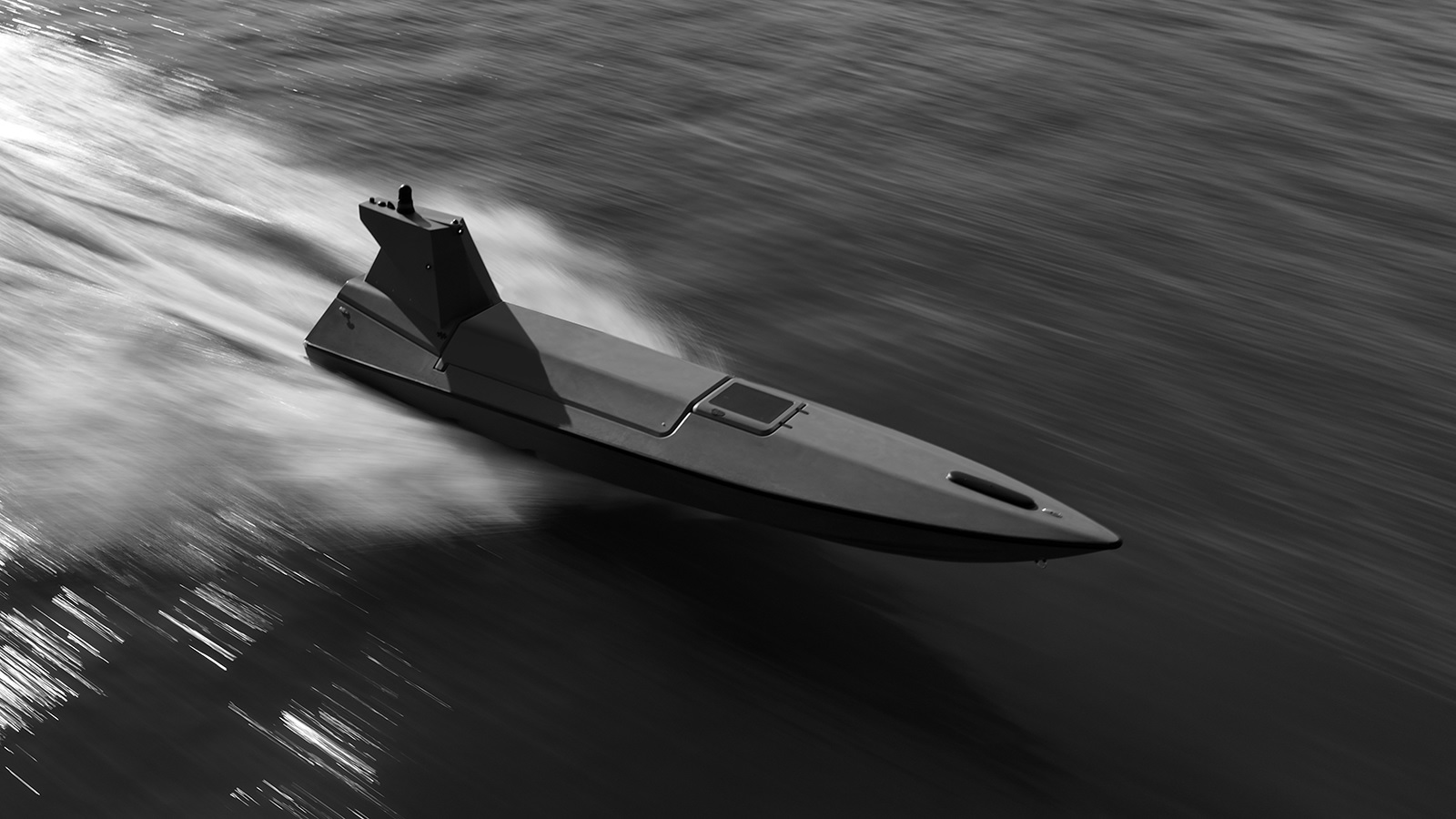
The uncrewed vessels are based on Kraken Technology Group’s Medium K3 Scout design. Each platform measures approximately 8.4 meters in length, with a beam of 1.9 meters and a draft of 0.8 meters. The vessels are constructed using composite materials to reduce weight while maintaining structural durability in maritime operations.
Propulsion is provided by an inboard diesel engine coupled with a stern drive system, enabling a maximum speed of approximately 55 knots. At a cruising speed of around 25 knots, the vessels can operate for a range of approximately 650 nautical miles. Depending on the mission configuration and operational profile, endurance may reach up to 30 days.
Each USV can carry a payload of approximately 600 kilograms, allowing the integration of a wide variety of mission equipment. The vessels are designed to operate either autonomously or under remote control depending on operational requirements.
Modular Architecture and Mission Flexibility
A central feature of the Kraken USV design is its Modular Open Systems Architecture (MOSA). The architecture is incorporated from the initial design stage and allows the Royal Navy to integrate and replace sensors, communication systems and mission modules without requiring major modifications to the vessel.
The modular payload configuration enables rapid installation of different mission systems including:
- Electro-optical and infrared sensors
- Surface search radar
- Sonar equipment
- Command, control, communications, computers, intelligence, surveillance and reconnaissance (C4ISR) modules
This flexible configuration supports multiple mission types including maritime surveillance, electronic warfare support, counter-uncrewed system operations, and maritime security missions.
Unlike earlier experimental platforms focused primarily on observation or surveillance tasks, the Project Beehive vessels are intended to evolve into platforms capable of supporting operational fleet missions as additional capabilities are integrated over time.
The vessels will be delivered at Technology Readiness Level (TRL) 4 to 5, meaning they will serve as active developmental systems used to evaluate technologies rather than finalized operational products. The open architecture also supports spiral development, allowing new sensors, communications systems and mission technologies to be incorporated throughout the vessels’ service life.
Integration with Existing Autonomous Programs
The Royal Navy has previously conducted trials with smaller remotely operated surface craft and autonomous systems. These include the 7.2-meter Rattler uncrewed surface vessels as well as experimentation conducted using the Royal Navy’s innovation ship XV Patrick Blackett.
These experiments build on the service’s broader experience with autonomous underwater vehicles and mine countermeasure technologies such as the Mine Hunting Capability program.
Officials say the introduction of a fleet of 20 modular USVs will enable the Royal Navy to conduct more complex operational testing scenarios involving multiple autonomous platforms operating alongside crewed ships.
Kraken Technology Group and International Collaboration
Kraken Technology Group, founded in 2020 and headquartered in Fareham in southern England, is a privately owned defence technology company focused on autonomous maritime systems and modular naval platforms.
The company has conducted demonstrations with NATO programs including NATO Task Force-X in the Baltic region and has participated in multiple innovation cycles with the United States Special Operations Command.
Kraken recently received an Other Transaction Authority (OTA) award from USSOCOM for development work in similar maritime environments, highlighting interoperability between UK and U.S. autonomous naval technologies.
The company has received financial backing from several defence investment initiatives including:
- NATO Innovation Fund
- National Security Strategic Investment Fund
- SmartCap
Kraken is also expanding its joint venture with European shipbuilder Rheinmetall Naval Systems and plans to announce additional licensed manufacturing agreements and international partnerships in 2026.
Official Statements
UK Minister for Defence Readiness and Industry Luke Pollard stated that the contract supports the Royal Navy’s transition toward autonomous maritime capability while strengthening domestic defence industry development.
Pollard said autonomous vessels will complement the Royal Navy’s warships, help protect UK waters and support sailors during global deployments. He also emphasized that the technology is being developed and built domestically by a British company.
Second Sea Lord Vice Admiral Paul Beattie described the program as an important step toward the Royal Navy’s hybrid fleet concept, noting that integrating autonomous technology with existing capabilities will help maintain maritime innovation and operational effectiveness.
Captain Adam Ballard stated that Project Beehive enables lessons learned by the Royal Navy’s Disruptive Capabilities team to be applied directly to operational forces. He added that the open architecture design of the Kraken vessels will allow rapid integration of new capabilities to maintain technological advantages.
Kraken Technology Group founder and chief executive officer Mal Crease said the contract represents a validation of the company’s maritime systems and confirms the firm’s role in developing next-generation autonomous naval technologies.
He stated that Kraken will continue to iterate its technology to support the United Kingdom and allied forces as operational requirements evolve.
Future Development
Once delivered, the 20 uncrewed vessels will allow the Royal Navy to conduct sustained experimentation with autonomous maritime operations. The program is intended to inform the development of future uncrewed systems capable of operating in coordination with conventional naval platforms as part of a distributed and hybrid maritime force.
The Royal Navy expects that the lessons learned from Project Beehive will influence the design of future autonomous naval systems and help define how uncrewed vessels will be incorporated into frontline fleet operations in the coming years.
——— End of Article ———