
World
OTTAWA — May 31, 2026 : The Canadian government has entered formal negotiations with Swedish defence company Saab to acquire the GlobalEye Airborne Early Warning and Control (AEW&C) aircraft as part of a wider effort to strengthen Arctic surveillance, modernize NORAD contributions, and support domestic aerospace manufacturing. Prime Minister Mark Carney announced the decision on May 27 during the CANSEC defence exhibition in Ottawa, confirming Saab as the preferred supplier for the programme. The Department of National Defence is expected to acquire six GlobalEye aircraft in a project valued at more than C$5 billion, covering aircraft procurement, infrastructure, training, and long-term support. A final contract has not yet been signed. The GlobalEye was selected following a competition involving Boeing’s E-7 Wedgetail and L3Harris’ Aeris X platform. Both GlobalEye and Aeris X are based on the Toronto-built Bombardier Global 6500 business jet, while Boeing offered the U.S.-built E-7 platform. Arctic Security and NORAD Modernization Canadian officials said the procurement responds to growing security requirements in the Arctic, where large distances and limited infrastructure create challenges for continuous monitoring. Government officials noted that Russia has expanded military infrastructure in northern regions, including radar stations, airfields, naval facilities, missile defence systems, and sites supporting long-range bomber operations. China has also increased its Arctic presence through scientific research, satellite infrastructure, shipping routes, and dual-use technologies. The GlobalEye fleet is intended to improve surveillance over Canada’s northern approaches by providing mobile sensor coverage alongside fixed radar systems. Officials said the aircraft will strengthen Canada’s role in the North American Aerospace Defense Command (NORAD) and improve early warning capabilities. According to the Canadian government, the aircraft will help detect threats such as cruise missiles, hypersonic weapons, and long-range unmanned systems earlier than ground-based systems alone, providing additional response time. Aircraft Capabilities The GlobalEye is built on the Bombardier Global 6000/6500 long-range business jet manufactured in Toronto and equipped with Saab’s Erieye Extended Range radar, an Active Electronically Scanned Array (AESA) system. The aircraft can simultaneously monitor air, sea, and land activity and track objects and signals at distances of up to 650 kilometres. Its sensor package includes electro-optical systems, electronic support measures, maritime surveillance radar, and command-and-control systems capable of sharing real-time information with military headquarters, naval forces, fighter aircraft, and allied networks. Officials said the AESA radar provides faster target updates, improved resistance to jamming, and better detection of low-flying and low-observable targets. The GlobalEye is intended to replace the operational role traditionally associated with older airborne warning aircraft such as the Boeing E-3 Sentry AWACS while offering a lower-maintenance and more fuel-efficient platform. Industrial Impact Prime Minister Carney stated that at least one-third of an estimated GlobalEye production pipeline of around 40 aircraft over the next 15 years, including expected allied orders, will be manufactured in Canada. The government estimates the programme will support approximately 3,000 jobs in Canada’s aerospace and defence sector, including engineering, technical, and manufacturing roles. Following the announcement, Saab CEO Micael Johansson said Saab plans to establish an industrial collaboration hub in Canada alongside Bombardier to support production and long-term programme requirements. The acquisition aligns with Canada’s Defence Industrial Strategy, which outlines approximately C$180 billion in defence procurement opportunities and C$290 billion in defence-related capital investment over the next decade. Defence Partnerships and Timeline Defence Minister David McGuinty said the programme reflects Canada’s effort to diversify defence partnerships and reduce long-term reliance on U.S.-controlled supply chains by working with technologically advanced allied countries. The GlobalEye platform is already in service or on order with countries including the United Arab Emirates and Sweden, while France announced plans in 2025 to procure the aircraft. The selection also represents an accelerated timeline for Canada’s airborne surveillance programme. In late 2025, the government expected programme requirements to begin in 2032, with initial deliveries planned for 2037 or 2038. No timeline has been announced for final contract signing with Saab.
Read More → Posted on 2026-05-31 17:17:19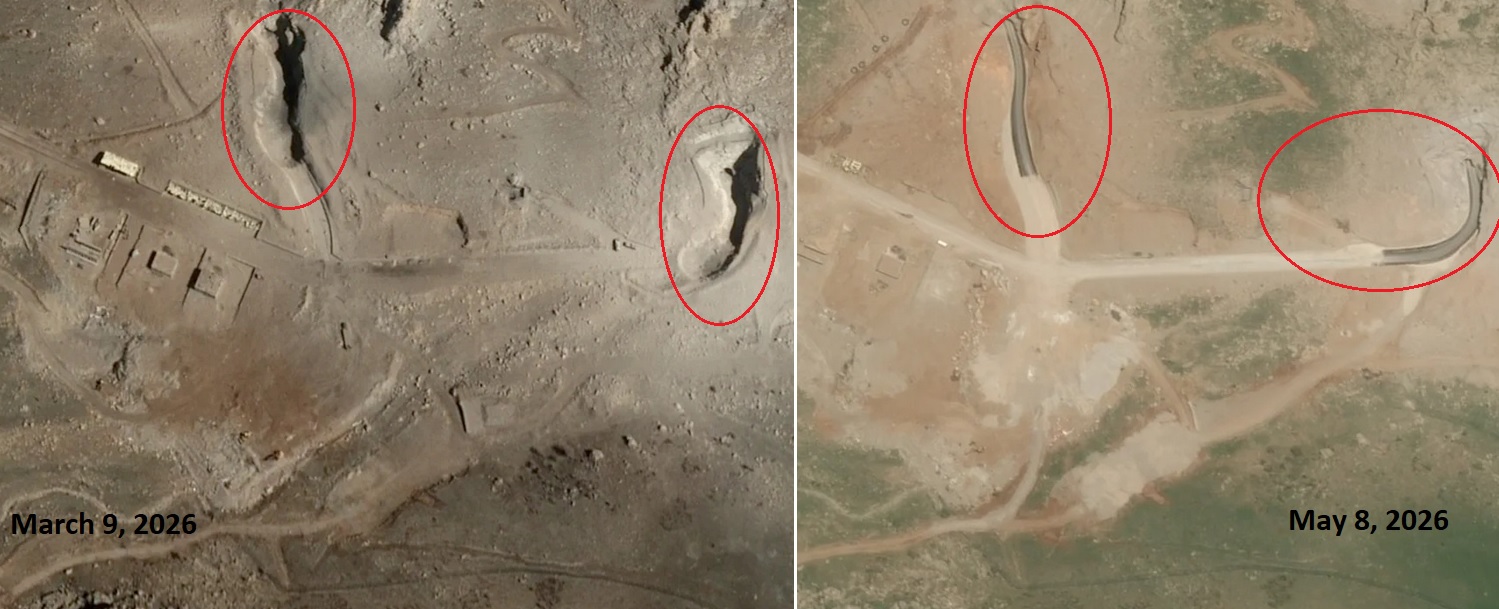
World
WASHINGTON — May 31, 2026 : Iran has restored access to most of the underground missile facilities targeted during recent strikes by the United States and Israel, according to a CNN analysis of commercial satellite imagery, indicating a faster-than-expected recovery of critical military infrastructure following the conflict. Satellite imagery reviewed by CNN and provided by Airbus Defence and Space shows that Iran has reopened 50 of 69 tunnel entrances struck at 18 underground missile facilities since a ceasefire was declared more than seven weeks ago. The images suggest Tehran has accelerated efforts to repair access routes, clear debris, and restore access to missile sites damaged during the campaign. Tunnel Entrances Reopened Across Missile Sites The recovery work has been visible across multiple underground missile bases, where heavy engineering equipment has been deployed to remove rubble and reopen blocked entrances. Satellite imagery showed bulldozers, excavators, front-end loaders, dump trucks, and debris-clearing vehicles operating near tunnels sealed during bombing. At a missile base in Dezful, satellite imagery captured on May 12 showed that four of the facility’s five underground entrances had been reopened, leaving only one access point blocked. Similar activity was documented near Khomein and Isfahan, where trucks were observed clearing debris from tunnel entrances damaged during the strikes. Roads damaged during bombing operations have also largely been repaired, with satellite imagery showing access routes restored to near pre-conflict condition. The images further indicate that nearly all bomb craters along roads leading to missile facilities have been filled, allowing movement to resume at several military locations. At some bases, additional repair work was visible, suggesting continued efforts to restore operational readiness. Focus of the US-Israeli Air Campaign During the conflict, US and Israeli forces concentrated attacks on tunnel entrances, access roads, and supporting infrastructure rather than attempting to destroy underground storage areas directly. Military planners targeted surface-level infrastructure to trap missile launchers and stockpiles underground by sealing entrances and cutting off access routes. Analysts note that many of Iran’s missile facilities are deeply buried inside granite mountains and protected beneath hundreds of meters of solid rock, making direct destruction through airstrikes significantly more difficult. Because of this underground design, the military campaign relied heavily on blocking entry points and disrupting operations instead of penetrating fortified storage complexes. Questions Over Long-Term Effectiveness The speed of Iran’s recovery has renewed discussion among military analysts over the long-term effectiveness of surface strikes against deeply buried missile infrastructure. Experts say the strikes disrupted missile operations during the conflict and slowed launch activity but may not have caused major damage to underground arsenals. During the fighting, Iran reportedly continued excavation efforts even as US and Israeli strikes targeted engineering equipment used to reopen blocked access routes. Despite operating at reduced launch rates, Tehran continued missile launches during the conflict while attempting to restore damaged facilities. According to assessments cited in the report, Iran is believed to retain approximately 1,000 missiles stored inside underground facilities. Before the conflict, Tehran was estimated to possess around 2,500 medium-range ballistic missiles, with intelligence assessments now suggesting that more than 1,000 remain available. Experts Say Missile Capability Remains Sam Lair, a research associate at the James Martin Center for Nonproliferation Studies at the Middlebury Institute of International Studies, told CNN that Iran could continue launching missiles as long as it maintains launchers and trained crews, even if missile production slows. According to Lair, Iran’s underground missile system was designed to absorb attacks, restore access, and continue operations after strikes. He said the recovery pattern seen in satellite imagery aligns with the operational structure of Iran’s “missile cities.” Lair also noted that ceasefires generally create opportunities for both sides in a conflict to restore damaged military systems and rebuild operational capacity. Timur Kadyshev, a senior researcher at the Institute for Peace Research, said Iran had spent decades preparing for a conflict involving attacks on strategic military infrastructure, contributing to the pace of current recovery efforts. Recovery Faster Than Initial Intelligence Estimates US intelligence assessments cited in the report suggest Iran’s military recovery is progressing faster than initially expected. Four sources familiar with intelligence evaluations said Iranian forces had surpassed earlier timelines related to the restoration of missile sites, launchers, and operational infrastructure. One assessment reportedly increased estimates of surviving missile launchers to around two-thirds of pre-conflict levels, partly because the ceasefire period allowed Iran to excavate launchers buried during earlier strikes. Officials also believe Tehran is replacing missile launchers and rebuilding weapons production capabilities faster than expected, increasing concerns over Iran’s ability to restore military readiness in the near term. Drone Production Resumes During Ceasefire In addition to missile recovery efforts, US intelligence agencies reportedly assess that Iran has restarted parts of its drone production network during the ceasefire period that began in early April. According to the latest estimates, Tehran could restore its drone strike capability within roughly six months, supported by existing technical expertise, manufacturing infrastructure, and continued access to dual-use commercial components. A March 2026 Atlantic Council report noted that Iran retains established production systems and technical capabilities that could support the rebuilding of missile and drone-related programmes. Broader Strategic Situation The ceasefire announced by US President Donald Trump in April paused fighting between Iran, the United States, and Israel, but several broader objectives linked to the military campaign remain unresolved. Among the stated goals were preventing Iran from acquiring nuclear weapons capability, degrading its missile programme, and weakening broader military infrastructure. However, satellite imagery and intelligence assessments suggest Iran continues to rebuild access to key underground facilities while restoring elements of its missile and drone capabilities.
Read More → Posted on 2026-05-31 16:22:52
World
KUALA LUMPUR — May 31, 2026 : Malaysia has formally demanded approximately $251 million (RM1 billion) in compensation from Norwegian defense company Kongsberg Defence & Aerospace after Norway revoked export approvals for the Naval Strike Missile (NSM) system intended for the Royal Malaysian Navy, a decision that has triggered diplomatic concerns and disrupted a key naval modernization effort. Malaysian officials said the cancellation has damaged trust in international defense cooperation and raised concerns about the reliability of long-term procurement agreements after major payments and integration work had already been completed. Contract Cancellation Disrupts Naval Modernization Program The dispute stems from a 2018 agreement between the Royal Malaysian Navy and Kongsberg Defence & Aerospace for the delivery of NSM anti-ship missile systems to arm Malaysia’s Littoral Combat Ships (LCS) under the country’s long-term maritime modernization strategy. The missile package was intended for six Littoral Combat Ships, with additional systems reportedly planned for two future vessels. The NSM was selected to strengthen Malaysia’s maritime strike capability and improve operational readiness in coastal waters. The contract was valued at approximately €124 million to €145 million ($145 million to $147 million). According to Malaysian Defence Minister Mohamed Khaled Nordin, Kuala Lumpur had already paid around €126 million, equivalent to nearly 95 percent of the contract value, before Norway revoked export licenses in March 2026, days before scheduled deliveries. Malaysia Demands Compensation for Direct and Indirect Losses Following the cancellation, Malaysia issued a formal notice of demand to Kongsberg Defence & Aerospace, seeking compensation exceeding RM1 billion ($251 million). The claim covers both direct and indirect financial losses resulting from the failed procurement. A major portion of the claim includes reimbursement of nearly $146 million already paid for missile systems and launcher components that were never delivered. Malaysian officials said additional costs stem from work already carried out to integrate the missile system into naval platforms. These expenses include dismantling missile mounting equipment installed aboard Littoral Combat Ships, replacing infrastructure designed around the NSM system, retraining naval personnel, and integrating an alternative weapons platform into the navy’s operational structure. The cancellation has also affected integration timelines for Malaysia’s Littoral Combat Ship program, which had been configured around the Norwegian missile system to improve naval strike capabilities. Norway Cites Export Control Restrictions Norwegian authorities defended the decision by citing revised export control regulations and national security considerations. Under updated restrictions, Norway reportedly limits exports of certain advanced defense technologies to NATO members and its closest strategic partners. Norway’s foreign ministry declined to discuss specific details of the case, citing confidentiality obligations under the country’s Export Control Act. During a bilateral meeting on the sidelines of the Shangri-La Dialogue security forum in Singapore on May 31, 2026, Norwegian Defence Minister Tore O. Sandvik formally apologized to Malaysian Defence Minister Mohamed Khaled Nordin for the disruption. While expressing regret, Sandvik confirmed that Norway’s decision to revoke export approval would remain permanent. Malaysia Raises Concerns Over Trust and Consistency Malaysia’s leadership criticized the decision, arguing that unilateral policy changes after years of contractual compliance undermine confidence in international defense partnerships. Prime Minister Anwar Ibrahim described Norway’s action as unilateral and unacceptable, stating that Malaysia had fulfilled its contractual obligations since 2018 and expected the same commitment from its defense partners. Speaking during the Shangri-La Dialogue, Defence Minister Khaled Nordin said the incident raised wider concerns regarding confidence in long-term strategic agreements. He warned that withdrawing from legally binding commitments after payments and preparations have been completed risks weakening trust in rules-based international cooperation. Khaled also questioned what he described as unequal standards in global defense arrangements, arguing that smaller developing nations often bear financial and operational burdens when export restrictions are introduced after agreements have already been finalized. Why the Naval Strike Missile Was Important to Malaysia The Naval Strike Missile (NSM) had been chosen for Malaysia’s Littoral Combat Ship fleet because of its suitability for maritime and coastal operations. The missile is a stealthy, sea-skimming anti-ship system with a range exceeding 185 kilometers. It uses inertial navigation, GPS guidance, terrain contour matching, and an imaging infrared seeker for terminal targeting. Defense analysts suggested the cancellation may involve concerns linked to foreign-supplied components, including U.S.-origin technologies such as gyroscopes used in missile guidance systems. However, the United States denied direct involvement in the cancellation and said it had supported Malaysia’s acquisition efforts. Malaysia Reviews Replacement Missile Options With the NSM deal cancelled, Malaysia has begun evaluating alternative missile systems to maintain operational readiness and avoid delays to its naval modernization plans. Defence Minister Khaled Nordin confirmed that the United States has offered an alternative missile system to replace the cancelled Norwegian platform. Malaysian officials are also reviewing proposals from South Korea. At the same time, Kuala Lumpur continues to examine possible legal options related to the cancelled contract and potential breaches. No resolution has been reached regarding the compensation claim, while Malaysia continues efforts to secure replacement systems for its Littoral Combat Ship fleet. The case highlights challenges in international defense procurement, particularly when export policies change after contracts are signed, payments completed, and integration work has already taken place.
Read More → Posted on 2026-05-31 16:08:16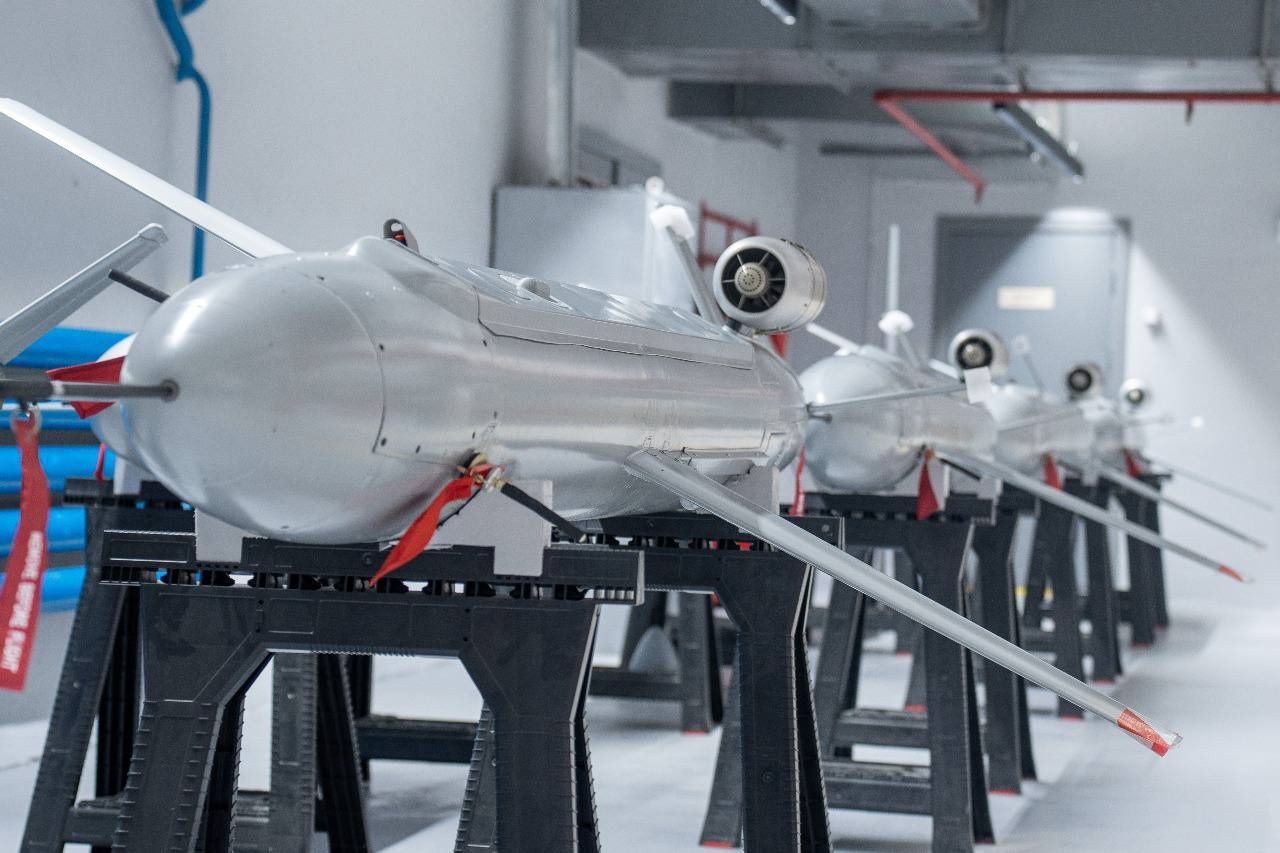
World
KYIV — May 31, 2026 : The Defense Intelligence of Ukraine (DIU) has officially integrated the domestically produced Peklo jet-powered kamikaze drone into its operational arsenal, marking a further expansion of Ukraine’s long-range strike capabilities. Recent photographs published by Associated Press photojournalist Efrem Lukatsky provide visual confirmation of the system’s deployment, showing Ukrainian military personnel preparing the drones for operations at an undisclosed location in Ukraine. The images, taken on May 28, 2026, show launch equipment and airframes for five Peklo drones positioned alongside the An-196 “Lyutyi” (Fierce) long-range strike unmanned aerial vehicle (UAV). The presence of both systems highlights Ukraine’s continued use of domestically developed strike platforms intended for operations against targets located far from the frontline. The Peklo, translated as “Hell,” is a jet-powered loitering munition that functions more similarly to a compact cruise missile than a conventional propeller-driven drone. Unlike slower one-way attack UAVs, the Peklo is powered by a turbojet engine, enabling it to reach subsonic speeds of up to 700 kilometers per hour, equivalent to approximately Mach 0.57. According to available specifications, the system has an operational strike range of up to 700 kilometers, allowing Ukrainian forces to target objectives deep inside adversary-controlled territory. Guidance and navigation are conducted through an autonomous inertial navigation system supported by GPS satellite correction to improve strike accuracy during flight. Defense analysts estimate the Peklo carries a warhead weighing between 30 and 50 kilograms. Its payload capacity is considered limited by the aerodynamic design and size of the airframe, though it remains suitable for attacking logistical infrastructure, support facilities, and lightly protected targets. The system was developed by Ukroboronprom and officially introduced to the public in December 2024 during a presentation by President Volodymyr Zelenskyy. At the time, Ukrainian officials announced the delivery of the first batch consisting of several dozen Peklo systems to the country’s Defense Forces. Officials stated that approximately 70 percent of the drone’s components are produced domestically, reflecting Ukraine’s broader effort to strengthen sovereign defense manufacturing and reduce dependence on foreign-supplied systems. Ukrainian authorities have increasingly focused on expanding local production of long-range strike systems as part of efforts to sustain military operations. According to developers, the Peklo is also designed to remain cost-efficient in production despite its jet-powered configuration. Ukrainian sources reported that manufacturing costs are lower than those of the propeller-driven An-196 Lyutyi kamikaze drone, which was estimated to cost approximately $200,000 per unit in early 2024. Lower production costs could support larger-scale procurement and sustained operational use. Although official photographs of the system in DIU service have only recently emerged, the Peklo has reportedly been used in combat since its initial delivery. The first known evidence of the drone’s battlefield use appeared in June 2025 after Russian military sources reported strikes in occupied territory. According to Russian reports, a coordinated strike targeted a crossing over the Aidar River along with a nearby pumping station. Initial assessments from Russian forces incorrectly identified the incoming munition as an An-196 Lyutyi drone. However, recovered debris from the strike area reportedly included fragments of a tail section fitted with a jet-powered engine, later confirming the munition as a Peklo system. Russian sources reported that the attack caused structural damage to the pumping station and destroyed the river crossing. Defense analysts assessing the reported damage noted that, given the Peklo’s estimated 30–50 kilogram payload, the targeted crossing was likely a light pontoon structure rather than a reinforced concrete bridge. The Peklo operates alongside the An-196 Lyutyi, also referred to as Liutyi, a propeller-driven long-range one-way attack drone developed by Antonov ASTC in cooperation with Ukroboronprom. The Lyutyi reportedly has a range exceeding 1,000 kilometers, with some reports indicating operational employment at distances of up to 2,000 kilometers. It carries a larger estimated warhead of between 50 and 75 kilograms and features a distinctive V-shaped tail configuration designed for long-range strike missions. The concurrent deployment of both systems indicates Ukraine’s continued reliance on a combination of high-speed jet-powered munitions and longer-range propeller-driven drones to support deep-strike operations. While the Peklo provides faster strike capabilities against selected targets, the Lyutyi offers extended range and greater payload capacity. Ukrainian officials have not disclosed the exact number of Peklo drones delivered to the DIU or detailed future operational plans. However, the integration of the system reflects Ukraine’s ongoing effort to expand domestically produced long-range unmanned strike capabilities for sustained military operations.
Read More → Posted on 2026-05-31 15:57:07
World
FRANKLIN, La. — May 31, 2026 : Defense technology company Saronic has launched its first Marauder Medium Unmanned Surface Vessel (MUSV), introducing a new autonomous maritime platform designed for both defense and commercial operations in offshore environments. The launch marks the beginning of on-water trials for the vessel at the company’s shipyard in Franklin, Louisiana, while additional hulls are already progressing through production. The first Marauder moved from initial design to launch in less than one year, a development pace Saronic says reflects an integrated production model combining ship design, manufacturing, and autonomy development under one structure. “I’m incredibly proud of our team for achieving this milestone. Designing, building, and launching an entire new class of ships in under a year is a feat the American shipbuilding industry hasn’t seen in generations,” said Dino Mavrookas, Co-Founder and Chief Executive Officer of Saronic. “It’s what happens when design, production, and manufacturing are fully integrated under one roof. With multiple hulls already underway and our shipyard continuing to grow, this is what revitalizing American shipbuilding actually looks like — autonomous ships delivered at speed and scale, with the production capacity to back it up.” Vessel Designed for Long-Range Autonomous Operations Built for sustained missions far from shore, the 180-foot Marauder is designed to perform operations that traditionally place heavy logistical burdens on ships or expose crews to elevated operational risks. The vessel can operate fully autonomously or under remote human supervision, eliminating the need for a permanent onboard crew. Saronic stated that the vessel is capable of top speeds exceeding 25 knots and has an operational range of up to 5,400 nautical miles, enabling long-distance deployment across maritime regions. A key feature of the platform is its 150-metric-ton payload capacity and modular mission design. The vessel can carry up to four 40-foot ISO containers or eight 20-foot ISO containers, allowing payloads to be adapted without changing the core platform. According to the company, the vessel can support missions including logistics support, maritime domain awareness, marine research, persistent intelligence, surveillance and reconnaissance (ISR), transport operations, and other autonomous maritime activities. Shipyard Expansion and Production The Marauder is being built at Saronic’s shipyard in Franklin, Louisiana, a facility previously operated as Gulf Craft that the company acquired to support autonomous vessel manufacturing. The company said the shipyard uses modern aluminum shipbuilding methods, including modular construction, manufacturing-optimized subassemblies, and production sequencing intended to improve efficiency. The second Marauder hull, flipped in March 2026, is currently being outfitted with mechanical, electrical, and autonomy systems and is progressing 25 percent faster than the first hull. Construction is also underway on the third and fourth hulls, reflecting plans for scalable production. To support larger-scale manufacturing, Saronic is investing $300 million to expand the Franklin shipyard, with completion expected by the end of 2026. The expansion will add more than 300,000 square feet of production space, including a dedicated large-vessel assembly line, three new slips, and expanded warehouse capacity. Once completed, the facility is expected to produce up to 20 Marauder vessels annually and create approximately 1,500 direct jobs. Software-Based Fleet Intelligence Platform Alongside vessel production, Saronic has developed a software-based fleet intelligence platform to provide operators with real-time oversight through a human-on-the-loop control system. According to the company, onboard systems continuously provide telemetry, vessel condition, subsystem status, and operational performance data. The platform includes logging, alerting, diagnostics, historical data replay, monitoring, and remote actuation capabilities, enabling remote intervention when required. U.S. Navy MUSV Program The launch comes as the U.S. Navy advances efforts to expand unmanned maritime capabilities. Saronic was recently selected as one of seven companies participating in the Navy’s MUSV Marketplace program, which will conduct at-sea demonstrations from June through October 2026. Each selected company is expected to receive $15 million to support testing and demonstrations. Platforms that successfully complete evaluations may become eligible for larger follow-on production contracts for missions involving ISR, logistics support, maritime sensing, modular transport, and distributed naval operations. With the first Marauder now in water trials and multiple additional hulls under construction, Saronic is positioning the platform for scalable autonomous vessel production. The company did not announce specific delivery schedules or production contract awards alongside the launch.
Read More → Posted on 2026-05-31 15:27:02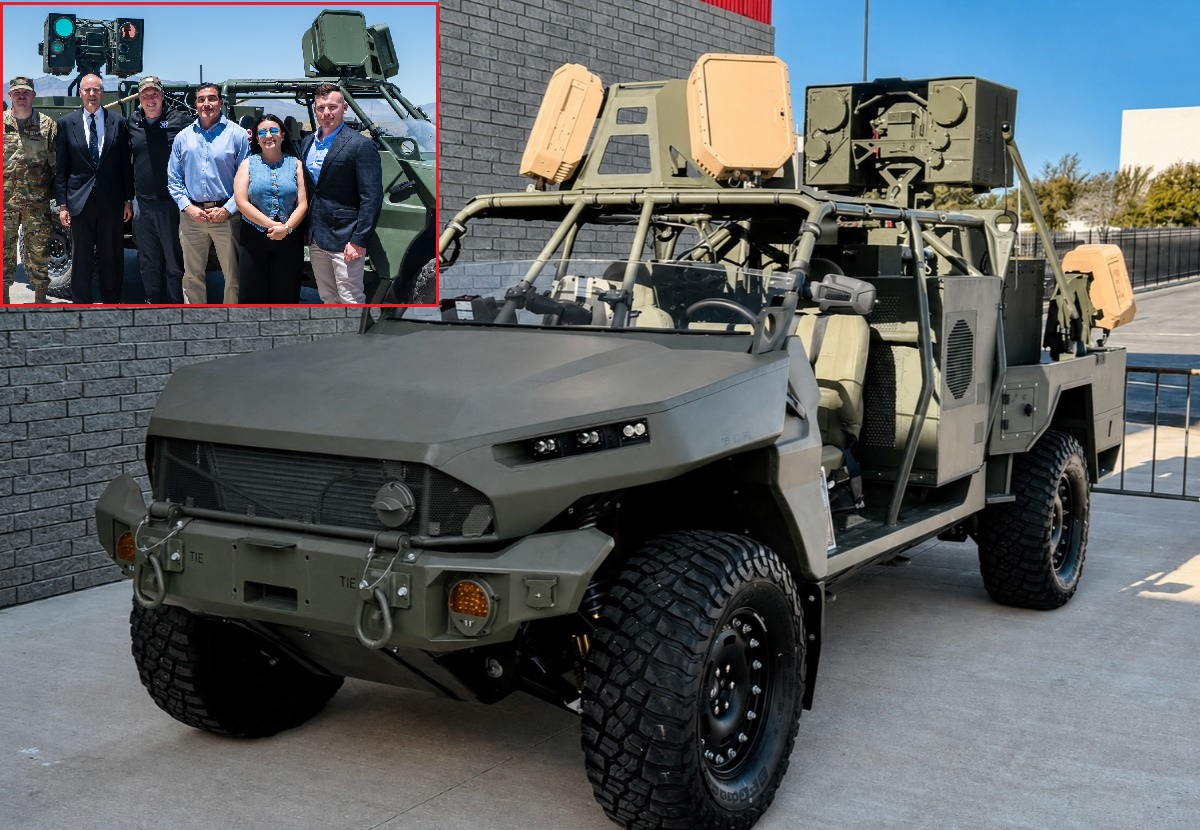
World
WHITE SANDS MISSILE RANGE, New Mexico — May 31, 2026 : The U.S. Army is expanding testing of directed-energy weapons to strengthen counter-drone defenses, with the Army Multi-Purpose High Energy Laser (AMP-HEL) program moving toward fieldable operational capability through accelerated prototyping and live testing. On May 27, 2026, Secretary of the Army Dan Driscoll visited White Sands Missile Range and personally operated the AMP-HEL system during a demonstration involving a drone target. Mounted on a General Motors Defense Infantry Squad Vehicle (ISV), the system used AeroVironment’s LOCUST laser weapon system to engage an unmanned aerial system (UAS) target. Following the demonstration, Driscoll highlighted the role of White Sands Missile Range in evaluating technologies intended to address evolving battlefield threats. “Today I visited White Sands Missile Range to see firsthand the technologies reshaping modern warfare,” Driscoll stated. “The scale of their airspace allows the U.S. Army to test UAS and counter-UAS capabilities at scale, making this one of the most important proving grounds in the world.” AMP-HEL Program and Army Testing The AMP-HEL program is overseen by the Army’s Rapid Capabilities and Critical Technologies Office (RCCTO), which is managing an accelerated prototyping effort designed to shorten traditional acquisition timelines and move directed-energy technologies toward operational use. The system is intended to provide mobile counter-UAS capability for brigade- and division-level formations, allowing maneuver forces to defend against drone threats using existing tactical vehicle platforms. The program originated through an Other Transaction Authority award issued in 2023. White Sands Missile Range remains a key testing location due to its large restricted airspace and infrastructure supporting UAS and counter-UAS experimentation. Army evaluations focus on system reliability, mobility, engagement performance, and integration with layered air defense systems. LOCUST Laser System and Technical Capabilities The AMP-HEL system integrates AeroVironment’s LOCUST (Laser on Universal Combinable Ultra-light System Technology) laser weapon system, designed to counter small drones through sustained high-energy laser engagement. The baseline LOCUST system generates approximately 20 kilowatts of continuous laser power, sufficient to heat structural materials on small drones to the point of physical failure within seconds of sustained illumination. During the demonstration, the laser system was integrated onto a General Motors Defense Infantry Squad Vehicle (ISV), a nine-seat light tactical platform based on the Chevrolet Colorado ZR2 pickup truck. The Army has also expanded integration to the Oshkosh Joint Light Tactical Vehicle (JLTV), which features a larger beam director aperture intended to improve engagement effectiveness at longer ranges. AeroVironment delivered the first two ISV-mounted LOCUST systems in September 2025, followed by two JLTV-mounted systems in December 2025 as part of the ongoing prototyping effort. The upgraded LOCUST X3 system offers a scalable laser output ranging from 20 to more than 35 kilowatts and incorporates artificial intelligence-enabled functions with AV_Halo PINPOINT software to automate target detection, tracking, and engagement. The system follows a Modular Open Systems Approach (MOSA), allowing compatibility across multiple military vehicle platforms and supporting future upgrades and production requirements. Mary Clum, Senior Vice President of AeroVironment’s Space and Directed Energy Group, stated in 2025 that the AMP-HEL effort represented a major step toward fieldable directed-energy capabilities and that the LOCUST system demonstrated reliability for counter-UAS missions. Cost Challenges Driving Directed-Energy Adoption The Army’s investment in laser weapons is partly driven by the economics of countering low-cost drone threats. Traditional short-range air defense interceptors can cost between $50,000 and $400,000 per shot, while many adversary drones, including variants derived from Iranian-designed Shahed systems, are estimated to cost between $20,000 and $50,000. This cost imbalance raises concerns about relying solely on kinetic missile interceptors during large-scale drone attacks. Speaking during an interview with 60 Minutes, AeroVironment CEO Wahid Nawabi said a Patriot missile battery costs approximately $1 billion to procure, while interceptor launches may cost around $4 million per engagement. By comparison, LOCUST laser engagements are estimated to cost roughly $3 per shot, while the upgraded LOCUST X3 reportedly operates at under $5 per engagement, depending primarily on available electrical power rather than missile stockpiles. Safety Testing and Civilian Airspace Validation In March 2026, the Joint Interagency Task Force 401 (JIATF 401), working with the Federal Aviation Administration (FAA), conducted safety demonstrations involving the AMP-HEL system at White Sands Missile Range. The evaluations validated whether the laser system could safely operate without endangering civilian aviation or friendly aircraft. According to program assessments, automated hardware and software safety interlocks prevent the laser from firing if directed toward protected “keep-out” zones or if friendly aircraft are identified within the integrated air picture. The laser beam is designed to focus energy at a controlled distance, concentrating destructive effects at the engagement point before dispersing and losing intensity beyond the target area to reduce unintended hazards. Operational Limitations and Layered Defense Role Despite progress in testing, Army officials describe directed-energy systems as one component of a broader layered counter-drone architecture rather than a replacement for traditional air-defense systems. Recent naval live-fire exercises involving a palletized version of the laser system reportedly achieved a 100 percent success rate during drone engagements aboard an aircraft carrier. However, laser weapons face operational limitations. A single laser system can generally engage one target at a time, reducing effectiveness against coordinated drone swarm attacks. Environmental conditions including dust, smoke, humidity, and rain may reduce effectiveness by degrading beam quality, reducing range, and limiting energy transfer. Adversaries, including Russia, have reportedly experimented with reflective coatings and aerosol dispersants intended to reduce laser effectiveness. To address these limitations, the Army is integrating AMP-HEL into a layered air defense framework that includes radar systems, electronic warfare and jamming equipment, kinetic interceptors, proximity-fuzed rocket systems, and other counter-UAS technologies. Production Outlook The Army has not announced formal fielding timelines beyond the current prototyping phase, though the Enduring High Energy Laser program is expected to reach a production decision in the fourth quarter of fiscal year 2026. Army planning identifies an initial requirement for 24 systems, with AeroVironment positioning the LOCUST X3 architecture for scalable production and compatibility across tactical vehicle fleets, including the ISV and JLTV. The AMP-HEL program continues to support the Army’s effort to expand mobile counter-drone capabilities and integrate directed-energy systems into broader layered air defense operations.
Read More → Posted on 2026-05-31 15:04:40
World
WASHINGTON — May 31, 2026 : The U.S. Navy has selected seven industry-developed designs to advance into the at-sea testing phase of its Medium Unmanned Surface Vessel (MUSV) program, marking a major step in efforts to expand autonomous maritime capabilities and increase fleet capacity through unmanned systems. The move is part of a broader modernization effort aimed at integrating autonomous platforms into future naval operations. The MUSV initiative, supported by multi-billion-dollar funding, is expected to play a central role in the Navy’s future force structure planning. The seven selected companies are Sea Machines, Leidos, Saronic Technologies, Galliano Marine Services, PacMar Technologies, Birdon, and Huntington Ingalls Industries (HII). Each company will receive an additional $15 million to support prototype development and at-sea testing activities. Testing is scheduled to begin in June 2026 and continue through October 2026. During the roughly four-month assessment period, the Navy will evaluate operational readiness, endurance, autonomy, mission flexibility, and technical performance of each proposed vessel design. Designs that meet requirements and successfully complete testing will become eligible for follow-on production. Marketplace Procurement Model The MUSV initiative is being developed under a marketplace procurement strategy that transfers a significant share of research, development, and initial production risks to private industry. Rather than relying on government-led development of limited prototypes, the Navy requires participating companies to deliver mature, operationally relevant designs capable of meeting standardized performance requirements. This model is intended to accelerate acquisition timelines, encourage industrial competition, and broaden participation among established defense contractors and emerging technology firms. Program officials stated that the seven finalists were selected from more than two dozen submissions. The current MUSV program evolved from the earlier Modular Surface Attack Craft (MASC) effort introduced in 2025, reflecting a restructuring of Navy priorities toward scalable autonomous vessels capable of supporting distributed maritime operations. Standardized Operational Requirements To ensure interoperability and mission effectiveness, the Navy established common performance standards for all MUSV designs. Selected vessels are required to achieve a range of 2,500 nautical miles, carry a 25 metric ton payload, sustain operations in Sea State 4 conditions, and maintain speeds of up to 25 knots. Each design must also include autonomous operational capability, enabling missions with minimal direct human involvement. A key feature of the program is the requirement for modular, containerized payload systems, allowing rapid mission adaptation without extensive redesign. Under current planning, MUSVs are expected to support missions including strike operations, intelligence, surveillance and reconnaissance (ISR), logistics support, and transport functions. By using interchangeable payload systems, the Navy aims to improve flexibility while reducing integration complexity. Industry Development and Prototype Progress Several participating firms have already demonstrated progress ahead of the formal testing period. Saronic Technologies recently launched its first Marauder MUSV and transitioned the vessel to on-water trials less than one year after beginning development. The approximately 150-foot platform incorporates a large flatbed mission area designed to support modular payload arrangements and multiple operational profiles. According to available program information, the Marauder significantly exceeds baseline Navy payload requirements, supporting up to 150 metric tons and accommodating as many as four 40-foot or eight 20-foot ISO containers, depending on mission configuration. Other participants have also introduced vessel concepts aligned with MUSV requirements. Huntington Ingalls Industries has proposed its Romulus design, while Sea Machines has advanced the STEAM RACER concept. Although detailed specifications for all seven submissions have not been publicly disclosed, Navy officials confirmed that each selected design includes autonomous capabilities and modular payload architecture. Budget Commitments and Procurement Timeline The Navy has committed substantial resources to establish unmanned maritime systems as a core component of future fleet operations. In the Fiscal Year 2026 budget cycle, approximately $1.95 billion has been allocated to the MUSV program. A further $3 billion is planned over the next five years to sustain testing, procurement, and production activities. Current procurement plans call for the acquisition of 81 MUSVs by Fiscal Year 2031. According to the projected schedule, the Navy intends to acquire 36 vessels in FY2026, 3 in FY2027, 10 in FY2028, 10 in FY2029, 12 in FY2030, and 12 in FY2031. Strategic Role in Future Naval Operations Senior military leadership has emphasized the growing importance of robotic and autonomous systems in military operations. Admiral Brad Cooper, Commander of U.S. Central Command (CENTCOM), said robotic autonomous systems provide commanders with flexible operational tools adaptable to varying mission requirements. “I’ve observed firsthand how Robotic Autonomous Systems deliver a wide array of capabilities that swing the advantage in conflict,” Cooper stated. “The Commander’s ability to tailor these forces to meet unique security demands is essential.” Looking ahead, the Navy projects a total of 83 unmanned vessels—including MUSVs, smaller unmanned surface vessels (USVs), and unmanned underwater vehicles (UUVs)—to be in service by FY2031. Navy planning documents indicate that by FY2030, the number of unmanned vessels will exceed traditional auxiliary ships in service. The MUSV effort also aligns with the Navy’s broader “Golden Fleet” initiative, which seeks to increase fleet mass through a combination of crewed and autonomous systems while controlling procurement and sustainment costs. Following completion of at-sea evaluations in October 2026, the Navy is expected to review testing data and determine which designs will advance toward production, shaping the future composition of its expanding unmanned fleet.
Read More → Posted on 2026-05-31 14:21:51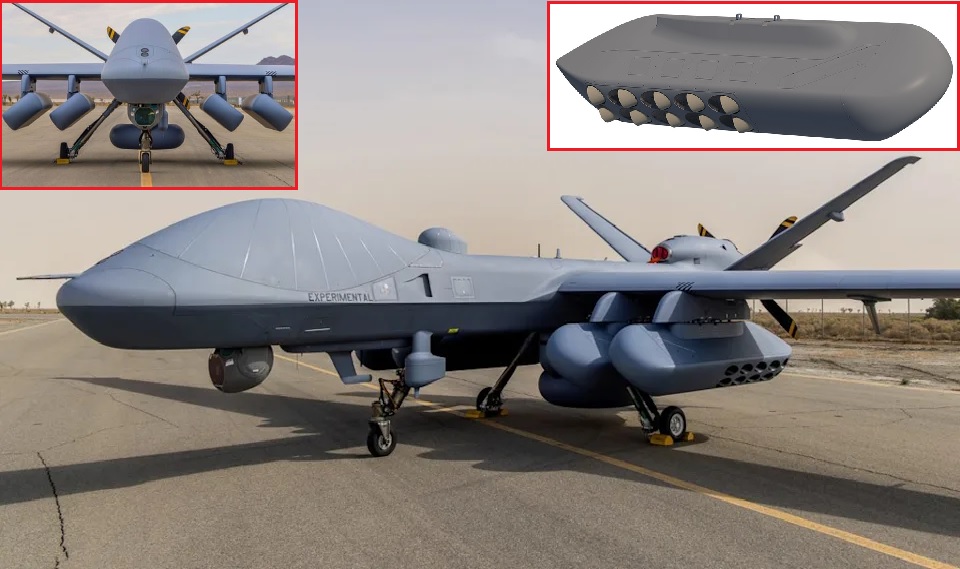
World
OTTAWA — May 31 2026 : General Atomics Aeronautical Systems, Inc. (GA-ASI) has unveiled an expanded anti-submarine warfare (ASW) configuration of its MQ-9B SeaGuardian Remotely Piloted Aircraft (RPA), displaying the unmanned platform equipped with four Sonobuoy Dispensing System (SDS) pods during the Canada Security (CANSEC) 2026 defence exhibition held from May 27 to May 28. The new aircraft configuration, revealed through imagery released at CANSEC 2026, marks a development in the SeaGuardian’s maritime warfare role. Earlier public renderings, promotional material, and testing imagery had largely shown the aircraft carrying only two SDS pods. The newly displayed arrangement doubles the number of pods and expands the aircraft’s sonobuoy deployment capacity for anti-submarine missions. Expanded Sonobuoy Payload for Maritime Surveillance The MQ-9B SeaGuardian displayed at CANSEC 2026 features four Sonobuoy Dispensing System (SDS) pods mounted diagonally beneath its wings. In addition to the sonobuoy payload, the aircraft carries a centerline pod capable of hosting maritime surveillance radar systems, enabling simultaneous surface and subsurface monitoring during naval operations. According to GA-ASI, the centerline payload position can integrate maritime search multi-mode radar systems including the Leonardo Seaspray 7500E V2 and the Raytheon SeaVue radar. These systems are designed to improve maritime situational awareness by detecting and tracking vessels, monitoring sea traffic, and supporting naval surveillance operations. The addition of four SDS pods effectively doubles the sonobuoy payload previously demonstrated by the platform. Each pod can carry up to 10 U.S. Navy standard “A” size sonobuoys or 20 smaller “G” size sonobuoys. As a result, the aircraft can carry a total of 40 “A” size sonobuoys or 80 “G” size sonobuoys in a single mission configuration. GA-ASI states that an empty Sonobuoy Dispensing System pod weighs approximately 132 kilograms, while a fully loaded pod can weigh roughly 340 kilograms depending on payload configuration. Combined with the centerline radar pod, the four-pod arrangement represents one of the heaviest maritime mission loadouts publicly shown for the MQ-9B SeaGuardian. Sonobuoy Monitoring and Control System Integration The Sonobuoy Dispensing System (SDS) operates alongside the Sonobuoy Monitoring and Control System (SMCS), enabling operators to remotely deploy, monitor, and manage acoustic sensors during anti-submarine warfare operations. The integrated system allows operators to dispense sonobuoys, process underwater acoustic information, and generate submarine target tracks, including estimated speed, heading, and depth. Through this capability, the MQ-9B SeaGuardian can extend maritime surveillance beyond surface monitoring to include persistent subsurface tracking. By combining long-endurance flight capability with remote acoustic monitoring, the aircraft is designed to maintain submarine surveillance over wide maritime areas without continuous deployment of crewed aircraft. December 2025 Flight Testing Expanded ASW Capability The increased sonobuoy configuration was previously employed during a December 2025 flight test conducted in cooperation with the U.S. Navy. During the trial, the MQ-9B SeaGuardian became the first unmanned aircraft to successfully deploy Multi-static Active Coherent (MAC) sonobuoys, specifically the AN/SSQ-125 underwater sensing system. Although imagery released from the testing period publicly showed only two visible sonobuoy pods, GA-ASI indicated that the trial involved a larger sonobuoy loadout than previous demonstrations, reflecting the aircraft’s expanded ASW capability. Multi-static Active Coherent (MAC) technology is intended to improve submarine detection across broader operational areas while reducing the number of sonobuoys required. The system works by coordinating acoustic signals between multiple deployed sensors, improving underwater detection and tracking performance. Multiple Sonobuoy Types Tested for ASW Missions In addition to the AN/SSQ-125 MAC sonobuoys, GA-ASI has completed testing involving several other sonobuoy systems compatible with the MQ-9B SeaGuardian’s SDS payload. These include the AN/SSQ-36 Bathythermal sonobuoy, which provides underwater temperature profile measurements to improve sonar performance assessment; the AN/SSQ-53G Directional Frequency Analysis and Recording (DIFAR) passive sonobuoy for acoustic submarine detection; and the AN/SSQ-62F Directional Command Activated Sonobuoy System (DICASS), an active sonobuoy used for underwater target localization. Testing conducted through January 2025 and later evaluations supported the integration of these systems into the SeaGuardian’s mission architecture, expanding the aircraft’s capability to support submarine search and monitoring operations. Endurance and Payload Trade-Offs The MQ-9B SeaGuardian offers an endurance ranging from approximately 24 to 40 hours depending on mission profile, payload weight, and operating conditions. However, carrying four SDS pods alongside a centerline maritime radar pod may reduce range and flight endurance because of increased weight and power requirements. Even with such trade-offs, the aircraft’s long-duration flight capability remains central to its operational concept, enabling prolonged maritime surveillance missions across large sea areas. Expanding Role in Maritime Operations The development of the MQ-9B SeaGuardian for anti-submarine warfare reflects a broader shift toward employing uncrewed systems in specialised maritime missions. Unlike operations in highly contested airspace where unmanned aircraft may face increased survivability risks, anti-submarine warfare missions are often conducted over open water, friendly territory, maritime chokepoints, and shipping lanes, allowing aircraft to operate farther from hostile engagement zones. GA-ASI states that the SeaGuardian’s ASW mission configuration is intended to reduce personnel requirements, operational costs, equipment burdens, and mission risk compared with relying exclusively on crewed platforms. In operational deployment, the SeaGuardian is designed to function as a networked asset alongside crewed maritime systems rather than replace them. The platform can operate in coordination with the P-8A Poseidon maritime patrol aircraft and MH-60R naval helicopters, extending surveillance coverage and deploying sonobuoy fields while crewed systems conduct response activities. Broader Mission Expansion and Cost The SeaGuardian’s anti-submarine warfare adaptation comes alongside broader mission expansion efforts. In a related development, GA-ASI and Saab recently announced the first flight of an MQ-9B equipped with Airborne Early Warning and Control (AEW&C) pods, indicating continued efforts to diversify the platform’s operational roles. Depending on configuration, sensors, and payload systems, a single MQ-9B SeaGuardian is estimated to cost between approximately $16 million and $30 million. The four-pod configuration showcased at CANSEC 2026 highlights ongoing development of the MQ-9B SeaGuardian as a long-endurance maritime surveillance platform capable of supporting anti-submarine warfare operations, although GA-ASI has not announced a timeline for operational deployment of the expanded sonobuoy arrangement.
Read More → Posted on 2026-05-31 14:08:37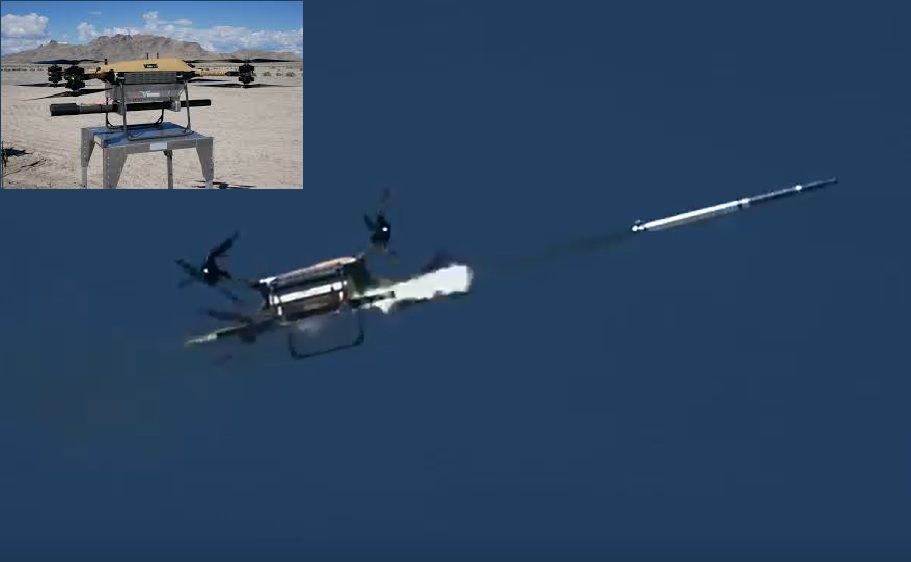
World
FORT RUCKER, Alabama — May 31, 2026 : Defense industry partners, alongside multiple U.S. Army aviation and development organizations, successfully tested a three-shot rocket launcher integrated onto a TRV 150 logistics drone during a live-fire event at Fort Rucker on May 20, aiming to extend precision-strike capabilities to lower-echelon formations, including the battalion level. The test combined the TRV 150 tactical resupply drone, manufactured by Survice Engineering Company, with a three-pack Advanced Precision Kill Weapon System (APKWS) launcher developed by BAE Systems FalconWorks. The system fires 70 mm laser-guided rockets derived from standard Hydra rockets fitted with APKWS guidance kits, adding a precision engagement capability to a platform primarily designed for logistics and resupply missions. The demonstration was supported by the Program Executive Office–Maneuver Air, Aviation Future Concepts Directorate, U.S. Army Combat Capabilities Development Command (DEVCOM) Armaments Center, Capability Program Executive Aviation, and the U.S. Army Aviation Center of Excellence. According to Survice Engineering, the project was an industry-led and self-funded initiative, rather than a government requirement. Clark Dutterer, vice president of business development for Survice Engineering, said the company identified a potential operational capability and moved forward without waiting for formal Army requirements. “Normally, industry waits for requirements to come out of the government, and they meet that requirement,” Dutterer said. “In this case, we saw that there was something that we could prove out, a new capability, and we didn’t want to wait for a requirement. We self-funded this to go ahead and do that.” The project has been supported through internal research and development funding since January 2025, focusing on integrating existing fielded technologies rather than developing a new weapons system. Platform and Weapon Integration The TRV 150 is currently fielded as a logistics and resupply platform and serves as a program of record with both the U.S. Army and Marine Corps. Developed in collaboration with Malloy Aeronautics and derived from the Malloy T-150 copter, the aircraft is an electric vertical take-off and landing (eVTOL) drone designed for logistics resupply operations. The platform has a payload capacity of up to 150 pounds (68 kilograms), allowing it to carry the three-shot APKWS launcher and munitions. Each APKWS-guided 70 mm rocket weighs approximately 15.8 kilograms, remaining within the drone’s carrying limits when integrated with launcher hardware. Rob Baltrusch, chief engineer at Survice Engineering, described the drone as the “pickup truck” of the sky, noting that it provides power, data connections, and expansion interfaces for different payloads. The TRV 150 operates through an interface based on the Android Tactical Assault Kit (ATAK) and uses simplified encrypted communications to reduce operator workload. “It calculates all of the range estimation and takes a lot of the pilot duties away from the Soldier, to where they can literally give it a grid coordinate, wait, and it tells you if it can make it there, delivers the payload, and calculates the route,” Baltrusch said. Flight Testing and Safety Evaluation Testing at Fort Rucker focused on evaluating the drone’s flight-control software and physical response during rocket launches. Engineers assessed yaw and impulse compensation, particularly when firing from the outboard tubes of the horizontally mounted launcher. Because multirotor drones can experience instability during weapon release, maintaining airborne stability and safe weapons deployment was a primary objective. Tristan Decker, a system safety engineer with the DEVCOM Armaments Center, said Fort Rucker’s safety protocols for unmanned aerial systems helped streamline testing and operational procedures. Expanding Precision Strike to Lower Echelons The integration of APKWS onto the TRV 150 aims to move precision-guided strike capability closer to frontline formations. APKWS rockets are currently deployed from platforms such as the AH-64 Apache and other higher-tier aviation systems. Integrating the same munition onto the TRV 150 could make precision engagement capabilities available at the battalion level and below, increasing expeditionary flexibility. “APKWS is currently deployed from Apache and other more exquisite assets, so core and above deployment,” Dutterer said. “With that same effect on a TRV 150, you’re bringing it down to potentially battalion and below, and making it more expeditionary. You can wrap different [concepts of operations] around it for different units, depending on what their needs may be.” The effort also aligns with senior military guidance requiring unmanned aerial vehicles to include a lethal payload option using existing inventory wherever possible. Previous Demonstrations and Future Testing The Fort Rucker demonstration followed an earlier single-shot test at Dugway Proving Ground in May 2025, which included an air-to-air engagement against a Group 2 fixed-wing drone and two air-to-ground engagements. The May 20 test marked the first successful flight and firing using a three-shot launcher, expanding payload and testing capability beyond the earlier demonstration. Both the TRV 150 and APKWS rockets are currently in service with Ukraine’s defense forces, highlighting the operational relevance of the capability in modern conflict environments. The system is scheduled for further evaluation during Joint Readiness Exercises (J-REX), including tier-two experimentation at White Sands Missile Range in June 2026 and Eglin Air Force Base in September 2026. Future tests will evaluate the system in base defense, air defense, and counter-unmanned aerial system (counter-UAS) roles, including its ability to defeat one-way attack drones. Officials said the effort is intended to provide expeditionary units with a more adaptable precision-strike capability using mature technologies already in service, though no formal program of record for the armed configuration has been announced.
Read More → Posted on 2026-05-31 13:54:22
World
OTTAWA — May 31, 2026 : Ottawa-based defence technology startup Dominion Dynamics has secured major private investment and government support to develop what could become Canada's first domestically produced Autonomous Collaborative Platform (ACP), an uncrewed combat aircraft designed to operate alongside crewed fighter jets in long-range and high-risk missions, particularly across the Arctic region. Founded by Canadian-born former Anduril Industries executive Erik Pence, Dominion Dynamics is developing a sovereign Canadian "loyal wingman" aircraft intended to operate alongside the Royal Canadian Air Force (RCAF)'s future fleet of Lockheed Martin F-35A fighter aircraft. Funding Supports Development Programme To support the initiative, Dominion Dynamics has secured advisory services and up to C$500,000 in funding from the National Research Council of Canada Industrial Research Assistance Program (NRC IRAP), alongside C$21 million in seed funding led by Toronto-based venture capital firm Georgian. Additional participation in the investment round came from Bessemer Venture Partners and the British Columbia Investment Management Corporation (BCI). Speaking during the CANSEC defence exhibition in Ottawa, Dominion Dynamics Head of Growth Robert Waye said the company plans to complete a subscale prototype of a long-range, weaponised Autonomous Collaborative Platform within 18 months. Waye said the aircraft is being designed around Canada's northern defence requirements and Arctic operational conditions. "We saw there's market opportunity to build an airframe that meets the requirements of the RCAF in their Northern mandates, so that's the aircraft that we're designing for," Waye said. Aircraft Optimised for Arctic Operations Internally referred to as "Scout," the Autonomous Collaborative Platform is being developed for long-range operations into Canada's Arctic frontier. The aircraft is expected to operate from southern Canada while retaining the ability to launch from short and unimproved runways, enabling deployment into remote northern regions. Dominion Dynamics said the aircraft must be capable of flying thousands of miles into the Arctic while carrying a heavy weapons payload, supporting missions including surveillance, strike coordination and electronic warfare. Airframe Design and Engine Discussions A concept rendering released in March depicts the aircraft as a large delta-wing platform equipped with two embedded turbofan engines, reflecting requirements for long range, endurance and payload capacity. Dominion Dynamics is currently in discussions with several engine manufacturers, including Pratt & Whitney Canada, regarding potential integration of the PW800 engine. The aircraft's larger size is intended to support extended operations and the ability to carry multiple weapons simultaneously. Operating Alongside the F-35 Although the Royal Canadian Air Force has not publicly released formal requirements or announced a programme of record for an Autonomous Collaborative Platform, Dominion Dynamics is proceeding with development using a combination of private investment and government support while consulting with RCAF officials. The ACP is designed to operate alongside the Lockheed Martin F-35A, supporting missions through surveillance, electronic warfare, strike support and extended operational reach. Autonomy and Arctic Communication Challenges Dominion Dynamics anticipates that while the aircraft will generally operate alongside crewed fighters, Arctic missions may sometimes place the platform beyond the communication range of a pilot in a crewed aircraft. In such situations, the ACP would be supervised by ground-based operators through satellite communications links, allowing continued operations over long distances while maintaining human oversight. Simulation and Digital Testing As part of its development efforts, Dominion Dynamics is developing a simulation engine to digitally test combat scenarios, mission profiles and operational concepts before physical manufacturing begins. The work is being supported through advisory services and up to C$500,000 in funding from NRC IRAP. The digital environment is being developed in partnership with AI computing provider Denvr, enabling engineers to evaluate autonomy functions, mission planning and operational coordination in a virtual environment. The company stated that the aircraft will feature a modular architecture designed for interoperability with NATO and Five Eyes command-and-control networks. Manufacturing Expansion and Future Production On June 1, Dominion Dynamics plans to relocate to a 35,000-square-foot facility near Ottawa, which will support prototype manufacturing, systems integration, testing and future aircraft production. The ACP programme also builds upon Dominion Dynamics' broader defence technology portfolio, including Auranet, a distributed and attritable mesh network currently deployed to monitor remote Arctic airstrips. While the Royal Canadian Air Force has not announced a formal acquisition programme for a collaborative combat aircraft, Dominion Dynamics is continuing prototype development with the aim of delivering a platform tailored to Canada's geography, Arctic operational environment and long-range defence requirements.
Read More → Posted on 2026-05-31 13:37:55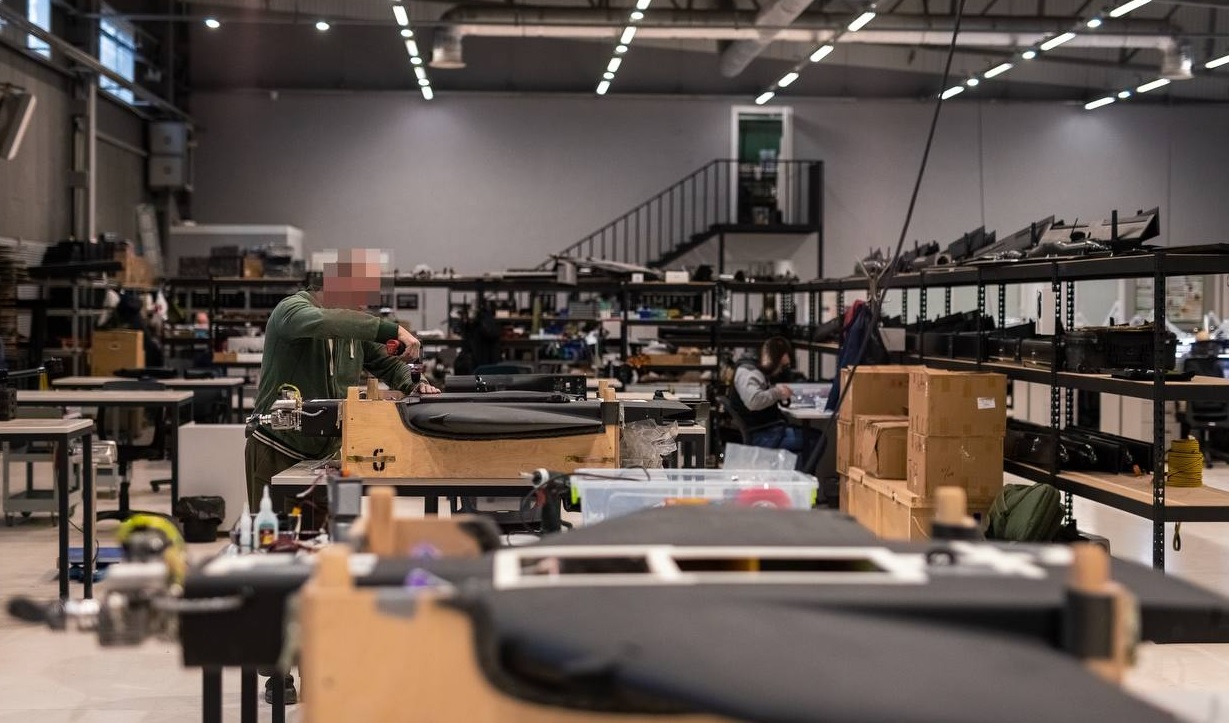
World
OTTAWA — May 31, 2026 : Canada and Ukraine have finalized a government-to-government agreement to manufacture Ukrainian-designed uncrewed aerial systems (UAS) in Canada, integrating Ukraine’s drone production capabilities into the North American defence industrial ecosystem. The arrangement, signed on May 29, 2026, during the CANSEC defence exhibition in Ottawa, establishes a 50-50 joint venture named Airlogix-Sentinel to support the Armed Forces of Ukraine and strengthen allied production capacity. The agreement was signed by representatives of Canada’s Department of National Defence and Ukraine’s Ministry of Defence, marking expanded defence-industrial cooperation between the two countries. Airlogix-Sentinel Joint Venture The newly established Airlogix-Sentinel joint venture brings together Ukrainian defence technology company Airlogix and Sentinel Research and Development, a Hamilton, Ontario-based uncrewed systems manufacturer. The partnership will oversee production of Ukrainian-designed drones in Canada, with systems supplied to the Armed Forces of Ukraine. Under the agreement, Sentinel will manufacture drone airframes through an intellectual property licensing arrangement with Airlogix, enabling Canadian facilities to produce Ukrainian-designed systems. Airlogix is known for the GOR tactical reconnaissance drone, designed for battlefield surveillance, intelligence gathering, operational planning, and reconnaissance missions. Sentinel’s manufacturing portfolio includes the Rekam fixed-wing system, Rekam Ascent vertical-takeoff drone, and Rekam Echo jet-powered system. Although officials have not disclosed production volumes, timelines, or delivery schedules, the joint venture’s initial focus will be on reconnaissance drones intended to support intelligence collection and battlefield awareness. Dmytro Piatrin, Chief Commercial Officer of Airlogix, stated the immediate objective is to deliver operational planning and intelligence-support systems to frontline units as rapidly as possible. Expanding Drone Production Outside Ukraine Ukraine’s defence industry currently produces a broad range of combat-tested uncrewed systems, including first-person-view (FPV) attack drones, long-range strike drones, reconnaissance drones, loitering munitions, and naval surface drones. Ukrainian officials report domestic drone production has expanded to several million units annually, though manufacturing remains vulnerable to Russian long-range missile and drone strikes, supply-chain disruptions, component shortages, and production bottlenecks. By transferring part of drone manufacturing to Canada, Ukraine seeks to improve industrial resilience and reduce wartime vulnerabilities. Manufacturing outside Ukraine provides geographical security, removes production infrastructure from the range of Russian strikes, and creates industrial redundancy through an additional supply line. The arrangement also gives Ukraine greater access to North American suppliers, components, and industrial manufacturing capabilities capable of supporting production at scale. Canadian Defence Commitments and Military Assistance The manufacturing agreement supports an August 2025 commitment by Canadian Prime Minister Mark Carney to invest in drone systems, counter-drone capabilities, and electronic warfare through international industrial partnerships. Alongside the announcement at CANSEC, Canadian Minister of National Defence David J. McGuinty confirmed approximately $2 billion in military assistance for Ukraine during the 2026–2027 fiscal year, continuing Canada’s financial and military support. Implications for Canada and NATO For Canada, the Airlogix-Sentinel partnership provides access to combat-tested drone technologies refined in contested battlefield conditions. Ukrainian systems have been modified to operate in environments affected by GPS interference, spoofing, jamming, and electronic warfare, offering lessons for Canadian defence modernization. The partnership supports Canada’s Defence Industrial Strategy, domestic manufacturing activity, industrial modernization, workforce development, and expertise in uncrewed and autonomous systems. The agreement also reflects growing NATO interest in distributed and decentralized defence production models designed to improve industrial resilience and accelerate procurement by combining allied manufacturing capacity with combat-tested technologies. Long-Term Industrial Cooperation Officials from both countries stated that drones produced under the Airlogix-Sentinel joint venture will be transferred to the Armed Forces of Ukraine under existing Canada-Ukraine defence cooperation frameworks. At this stage, no production targets, exact quantities, timelines, or additional drone models beyond reconnaissance-focused capabilities have been publicly disclosed. Officials described the arrangement as an initial step toward long-term industrial cooperation in uncrewed systems, counter-drone technologies, and autonomous military capabilities.
Read More → Posted on 2026-05-31 13:28:09
Space & Technology
GREENBELT, Md. — May 30, 2026 : NASA is preparing an unprecedented commercial spacecraft-servicing mission to extend the operational life of the Neil Gehrels Swift Observatory, a scientific satellite facing increasing orbital decay after more than two decades in low Earth orbit. The mission, scheduled for launch no earlier than June 2026, will attempt to raise Swift’s orbit before atmospheric drag forces the spacecraft to re-enter Earth’s atmosphere, potentially ending one of NASA’s most important astrophysics programs dedicated to observing short-lived cosmic events. The operation is being conducted in partnership with Arizona-based Katalyst Space Technologies, which will deploy a robotic servicing spacecraft known as LINK to rendezvous with and reposition the observatory. NASA officials view the mission as both an operational effort to preserve an active scientific platform and a demonstration of emerging commercial satellite-servicing capabilities intended to support long-term sustainability of spacecraft operating in orbit. Swift Observatory remains operational despite growing orbital challenge Launched on Nov. 20, 2004, the Neil Gehrels Swift Observatory was developed to detect and study gamma-ray bursts, among the most energetic electromagnetic explosions in the universe. The spacecraft was designed to rapidly identify these brief but powerful cosmic events and immediately reposition itself to collect follow-up observations. Over the last 21 years, Swift has become a major component of NASA’s astrophysics fleet, contributing to research involving gamma-ray bursts, neutron star mergers, supernovae, black holes, active galaxies and other transient astronomical events. The observatory carries three primary scientific instruments capable of observing the universe across multiple wavelengths, including gamma-ray, X-ray, ultraviolet and visible light. Its Burst Alert Telescope is responsible for detecting gamma-ray bursts and triggering rapid spacecraft targeting, while onboard follow-up instruments help astronomers analyze newly detected cosmic activity. Despite remaining fully operational, Swift is facing an increasingly serious orbital problem. The spacecraft was originally placed in low Earth orbit at an altitude of roughly 600 kilometers but was launched without an onboard propulsion system, meaning it cannot independently raise or maintain its orbit. Solar activity accelerates orbital decay Since launch, atmospheric drag has gradually lowered Swift’s orbital altitude. However, NASA reported that orbital decay accelerated significantly following increased solar activity associated with the recent solar maximum cycle, which peaked in 2024. Solar activity heats and expands Earth’s upper atmosphere, increasing atmospheric density at higher altitudes and producing greater drag on spacecraft operating in low Earth orbit. According to NASA, this process caused Swift’s altitude to steadily decline to approximately 370 kilometers. Orbital projections conducted during 2025 indicated that, without intervention, the spacecraft could re-enter Earth’s atmosphere and burn up by mid-to-late 2026 or potentially before the end of the year depending on atmospheric conditions. Because Swift lacks propulsion capability, NASA determined that external assistance would be required to preserve the observatory and extend scientific operations. NASA awards Katalyst contract for robotic servicing mission To prevent the loss of the spacecraft, NASA awarded a $30 million contract in September 2025 to Flagstaff, Arizona-based Katalyst Space Technologies to conduct a commercial orbital-servicing mission. Under the agreement, Katalyst will launch its 400-kilogram robotic servicing spacecraft, LINK, which is specifically designed to autonomously rendezvous with, inspect and maneuver satellites in orbit. The mission is scheduled to launch no earlier than June 2026 aboard Northrop Grumman’s Pegasus XL launch vehicle. Unlike conventional rockets launched from fixed ground pads, Pegasus XL is deployed from a modified Stargazer L-1011 aircraft during flight, allowing increased flexibility for orbital insertion and improved access to mission-specific trajectories. NASA selected Pegasus partly because Swift operates in an orbital inclination that can be reached efficiently through the air-launched system. LINK spacecraft faces complex capture operation Once deployed into orbit, LINK will begin autonomous rendezvous and proximity operations to intercept the observatory. The servicing spacecraft is equipped with lidar imaging systems, navigation sensors and three robotic arms designed to support spacecraft inspection and capture. Engineers face a significant challenge because Swift was never designed for in-orbit servicing. Unlike more recently designed satellites that may include docking mechanisms or servicing interfaces, Swift lacks dedicated docking ports, grappling fixtures and standardized attachment hardware. To address those limitations, LINK will first perform a detailed flyby inspection to evaluate spacecraft condition, confirm orientation and identify structural attachment points. Following inspection, robotic grippers are expected to attach to one of Swift’s load-bearing structural flanges originally designed for launch integration rather than servicing operations. After securing the observatory, LINK will activate onboard Hall-effect thrusters to conduct an orbital reboost maneuver intended to move Swift into a safer and more stable orbit above approximately 300 kilometers. Mission planners expect the maneuver to significantly extend Swift’s operational life and allow continued scientific observations before the robotic spacecraft detaches following completion of the boost. NASA modifies Swift operations to preserve altitude The mission is progressing under a compressed development timeline. While satellite-servicing missions typically require years of planning and systems integration, NASA and Katalyst advanced the project from contract award to launch preparation in roughly eight months due to the urgency created by Swift’s declining altitude. To increase the probability of mission success, NASA temporarily adjusted Swift’s operations during early 2026 to reduce atmospheric drag and preserve altitude. Controllers suspended portions of the observatory’s science activities, powered down the Burst Alert Telescope and halted rapid spacecraft-targeting maneuvers that normally allow Swift to quickly reposition toward new gamma-ray burst detections. NASA also placed the spacecraft into a low-drag orientation designed to minimize atmospheric resistance and conserve onboard power while engineers continued orbital tracking and mission planning. Flight dynamics teams at NASA’s Goddard Space Flight Center continue generating updated orbital forecasts and weekly assessments to ensure Swift remains above approximately 300 kilometers, a threshold considered important for maximizing the likelihood of a successful servicing mission. Environmental testing completed ahead of launch As preparations continue, LINK recently completed a series of environmental and systems tests at NASA’s Goddard Space Flight Center in Maryland. Testing included vibration evaluations, thermal-vacuum assessments, robotic arm deployment checks, propulsion verification and spacecraft systems validation intended to confirm launch readiness and operational reliability during orbital servicing. NASA officials stated that successful completion of these milestones supports final launch integration efforts ahead of the June 2026 launch opportunity. Mission could influence future orbital infrastructure planning Beyond preserving Swift, the mission is being closely watched as a demonstration of commercial robotic satellite-servicing technology. If successful, the operation would become the first known instance of a privately developed robotic spacecraft autonomously rendezvousing with, capturing and boosting an operational U.S. government scientific satellite that was not originally designed for servicing. Government agencies and commercial aerospace firms are increasingly investing in technologies capable of satellite inspection, orbital repositioning, refueling, component replacement, debris management and mission-life extension as operators seek alternatives to replacing expensive spacecraft prematurely. For NASA, the mission provides an opportunity to preserve a still-functional observatory that continues producing valuable astrophysics data more than 20 years after launch. During its operational lifetime, Swift has detected thousands of gamma-ray bursts and played a major role in time-domain astronomy through rapid observations of short-duration cosmic phenomena. The mission also reflects broader cooperation between government agencies and commercial aerospace providers in maintaining orbital infrastructure. Rather than replacing an aging but operational observatory, NASA is attempting to preserve an existing spacecraft through robotic servicing — an approach that may influence how future scientific satellites are designed, operated and maintained. NASA and Katalyst Space Technologies are continuing final mission readiness activities ahead of the planned June 2026 launch window as teams complete preparations for one of the agency’s most significant robotic spacecraft-servicing demonstrations in low Earth orbit.
Read More → Posted on 2026-05-30 17:42:24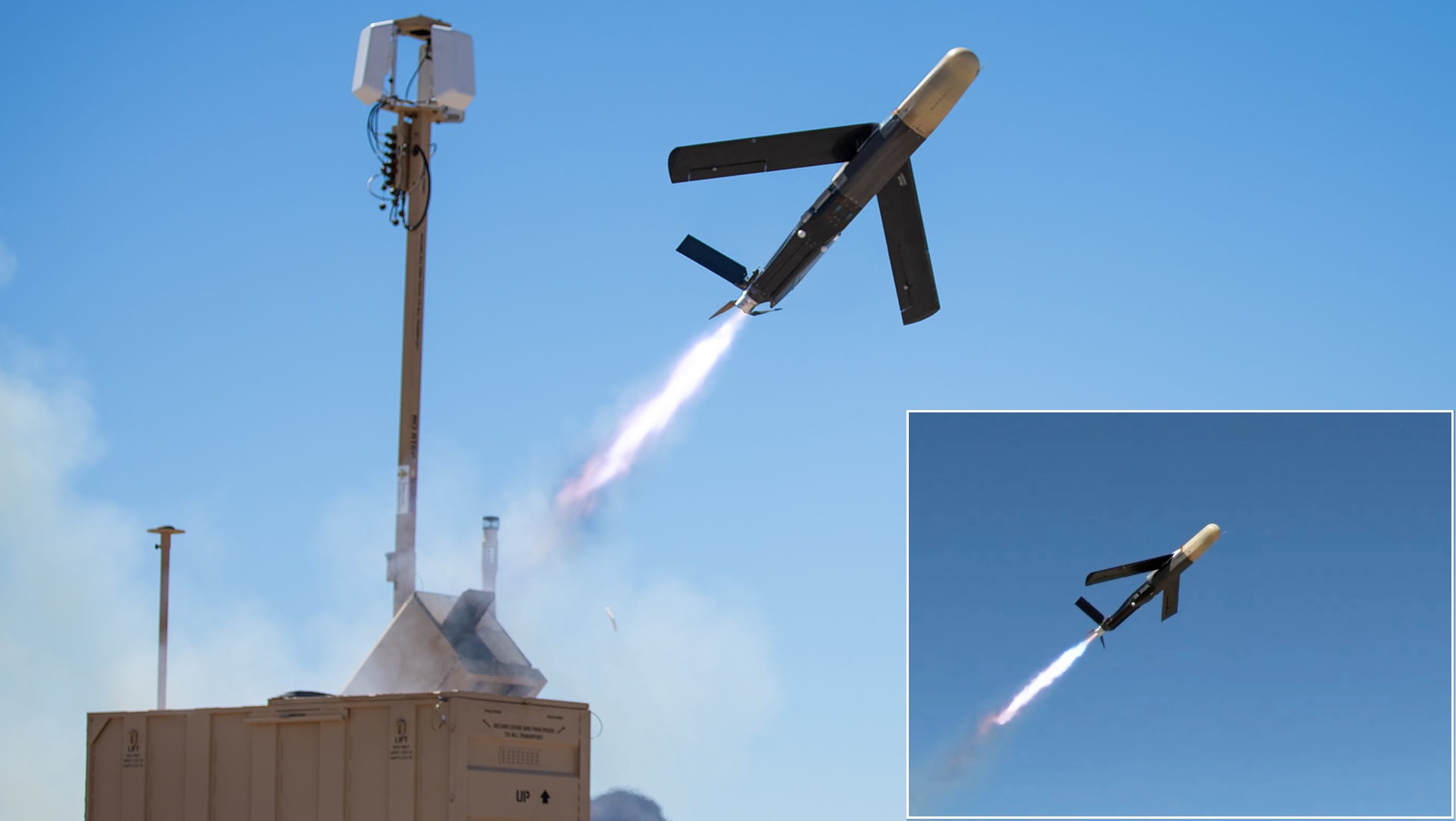
World
WASHINGTON — May 30, 2026 : Raytheon, an RTX business, has successfully demonstrated its reusable Coyote Block 3 Non-Kinetic (3NK) counter-drone system during a recent U.S. Army test, validating a new capability designed to counter increasingly complex drone swarm threats while reducing operational costs and limiting collateral damage. According to Raytheon, the Coyote Block 3NK successfully completed its full operational cycle during the demonstration, including launch, airborne loitering, threat detection, swarm interception, and safe recovery after mission completion. The system reportedly defeated multiple drone swarms during the exercise, confirming its ability to remain operational after engagements rather than being expended like traditional interceptors. Unlike conventional kinetic counter-drone interceptors that rely on explosive warheads or direct-impact destruction, the Block 3NK employs a non-kinetic payload intended to disable hostile unmanned aerial systems without physical collision. While Raytheon has not publicly disclosed the system’s exact mechanism, defense analysts suggest the interceptor may use electronic warfare effects, radio-frequency disruption, or directed-energy technologies to interfere with drone navigation, communications, or control systems. The non-kinetic approach is intended to reduce risks to nearby personnel, military infrastructure, civilian areas, and friendly forces by avoiding explosive fragmentation and debris commonly associated with conventional interceptors. During demonstration footage released by the company, targeted drones were observed losing control and falling from the sky without visible explosions or direct impact. A major feature of the Coyote Block 3NK is its recoverable and reusable design. After completing an engagement, the interceptor can be returned, refurbished, and redeployed for future operations, addressing a growing challenge faced by air-defense planners as relatively inexpensive drones increasingly force defenders to rely on costly missile interceptors. The reusable concept is intended to improve sustainability and provide a more cost-effective response to large-scale drone attacks. Originally developed as a small tube-launched unmanned aerial system capable of deployment from land, sea, and air platforms, the Coyote family has evolved into a modular counter-drone platform supporting surveillance, reconnaissance, electronic warfare, and air-defense operations across several U.S. military programmes. Raytheon stated that both kinetic and non-kinetic variants of the Coyote system are designed to defeat small and larger unmanned aerial systems at extended ranges and higher altitudes than many comparable systems in their class. The company has also introduced upgrades aimed at improving launch speed, engagement range, flight performance, and operational flexibility against heavier payload threats. The Coyote interceptor forms a key component of the U.S. Army’s Low, Slow, Small-Unmanned Aircraft Integrated Defeat System (LIDS), a layered counter-drone architecture designed to detect, track, identify, and neutralize aerial threats using radar, electronic warfare systems, command-and-control networks, and interceptors. The system integrates with Raytheon’s Ku-band Radio Frequency System (KuRFS) radar, which provides targeting data and guidance for engagements against incoming drones. Raytheon’s role in the Army’s counter-drone efforts has expanded significantly in recent years. The company was awarded a major counter-UAS contract valued at up to $5 billion through 2033 under the Army’s LIDS programme, covering Coyote interceptors, launch systems, fixed and mobile configurations, and KuRFS radar systems. Tom Laliberty, president of Land & Air Defense Systems at Raytheon, said the Coyote system is designed to provide warfighters with a cost-effective defence against both individual drones and swarm attacks while maintaining an affordable operational advantage against evolving unmanned threats. The successful demonstration reflects continuing efforts by the U.S. military to field reusable, scalable, and sustainable counter-drone systems capable of defending forces against increasingly coordinated unmanned aerial threats.
Read More → Posted on 2026-05-30 17:23:51
World
KYIV — May 30, 2026 : Ukraine’s Main Intelligence Directorate (GUR) of the Ministry of Defense has confirmed a major expansion in its long-range unmanned strike capability, announcing that its drone division is now operating systems capable of reaching distances of up to 3,500 kilometers. The disclosure was made by the commander of the GUR’s long-range drone unit, known by the call sign “Vector,” who stated that the increased operational reach places all regions of European Russia and territories extending as far as the Krasnoyarsk region in Siberia within potential strike range. According to Vector, Ukrainian forces are now capable of reaching areas across Russia up to the Ural Mountains, marking a significant increase in operational depth. The announcement reflects a substantial evolution in Ukraine’s long-range strike capability. Earlier in the conflict, Ukrainian unmanned systems primarily operated within a range of approximately 1,000 kilometers. Vector noted that long-range UAVs are now being launched in higher numbers as part of systematic strike operations intended to disrupt military-related infrastructure deep inside Russian territory. Long-Range Drone Fleet Expands According to military operators, one of the primary platforms used for deep-strike missions is the domestically developed Liutyi strike drone. The UAV is reported to routinely cover distances between 1,500 and 1,700 kilometers depending on operational and weather conditions while carrying payloads estimated at 50 to 70 kilograms. Ukraine has also introduced a jet-powered strike platform known as Peklo, which operators describe as functioning similarly to a cruise missile. The system reportedly flies at speeds ranging between 700 and 1,000 kilometers per hour and has already been employed in precision strikes against selected infrastructure targets, including facilities in the Moscow region. The reported 3,500-kilometer capability suggests continued expansion beyond previously disclosed systems. In March 2025, Ukrainian President Volodymyr Zelenskyy stated that a Ukrainian-developed long-range drone capable of flying 3,000 kilometers had successfully completed testing, describing it as an important milestone in the country’s indigenous defense-industrial program. Operational Planning and Air Defense Penetration Vector stated that deep-strike operations rely on a structured planning process designed to improve survivability against Russian air defense networks and electronic warfare systems. According to the GUR commander, intelligence teams first identify the positioning of Russian air defense assets, including Pantsir and Tor surface-to-air missile systems, while simultaneously mapping areas affected by electronic warfare intended to disrupt UAV navigation. Flight routes are then programmed to exploit identified gaps in radar and missile coverage. To increase strike effectiveness, Ukrainian operators also deploy unarmed decoy drones aimed at saturating enemy radar systems and occupying defensive resources. These decoys are intended to improve the likelihood that armed UAVs successfully reach their assigned targets. Vector stated that repeated strike operations have gradually reduced the effectiveness of some layered Russian air defense sectors, creating operational corridors for drone formations. Advances in Navigation and Drone Production The expansion of long-range strike capabilities coincides with rapid growth in Ukraine’s domestic drone industry. Since the start of Russia’s full-scale invasion in 2022, Ukraine has transitioned from relying largely on commercial drone components to producing increasingly sophisticated military-grade systems domestically. Recent defense assessments estimate Ukraine’s total annual drone production capacity has expanded to approximately 10 million UAVs across multiple operational classes, ranging from frontline tactical systems to long-range strike platforms. Newer generations of Ukrainian drones have also received upgrades intended to improve resistance against electronic warfare and GPS jamming. Military operators report that long-range UAVs increasingly rely on inertial navigation systems, ground triangulation, and visual navigation technologies to maintain route accuracy in electronically contested environments. Drones Become Central to Ukraine’s Military Strategy Unmanned aerial systems have become a central component of Ukraine’s military planning, with operational estimates indicating drones are currently used to engage approximately 80 to 85 percent of frontline targets. Officials argue that long-range UAV operations are intended to disrupt logistics networks, reduce pressure on frontline units, target military-industrial facilities, and force Russia to distribute air defense assets across a wider geographic area. The newly confirmed 3,500-kilometer operational range is expected to significantly expand Ukraine’s ability to target logistics hubs, air bases, ammunition depots, transport infrastructure, defense manufacturing facilities, and military support sites located deep inside Russian territory as Kyiv continues to prioritize domestically produced long-range strike systems.
Read More → Posted on 2026-05-30 17:10:40
World
PARIS — May 30, 2026 : General Dynamics European Land Systems (GDELS) and KNDS Germany have partnered to develop a next-generation wheeled self-propelled artillery system that integrates the fully automated 155 mm Artillery Gun Module (AGM) onto the newly introduced PIRANHA Heavy Mission Carrier (HMC) 10x10 armored chassis. The platform, first unveiled during the Future Artillery Conference in Paris earlier this year, is designed to provide NATO and allied militaries with a highly mobile, protected, and long-range artillery capability suited to modern high-intensity warfare. The joint development comes as NATO member states and allied armed forces continue to accelerate artillery modernization efforts following lessons from recent conflicts. Modern battlefields increasingly expose artillery systems to persistent drone surveillance, counter-battery radars, loitering munitions, and precision-guided strikes, creating growing demand for platforms capable of executing rapid “shoot-and-scoot” operations while maintaining high levels of protection and operational mobility. At the center of the new artillery platform is the KNDS Artillery Gun Module (AGM), an unmanned and fully automated turret armed with a NATO-standard 155 mm/L52 cannon. The automated loading mechanism significantly reduces crew workload while enabling a high rate of fire and Multiple Rounds Simultaneous Impact (MRSI) capability, allowing multiple projectiles fired on different trajectories to strike a target simultaneously. Depending on ammunition type, the system can engage targets at ranges exceeding 40 kilometers, while extended-range and rocket-assisted projectiles can further increase engagement distance. The artillery module supports conventional ammunition, precision-guided munitions, and future long-range projectiles, while also retaining the ability to conduct both indirect and direct fire missions against moving land and maritime targets when required. The AGM is mounted on the newly introduced PIRANHA HMC 10x10 platform developed by GDELS specifically to support heavy mission payloads beyond the capability of conventional wheeled armored vehicles. The chassis incorporates a reinforced automotive structure and multi-link suspension system designed to carry heavy combat systems while preserving operational mobility across both road networks and off-road terrain. The vehicle has a gross weight of up to 40 tonnes and payload capacity of approximately 17 to 18 tonnes. The platform features five axles, four of which are steerable, allowing improved maneuverability and a turning radius of less than 18 meters despite the vehicle’s size. This mobility profile enables long-distance operational redeployment without the transport burden typically associated with tracked artillery systems. One of the system’s key engineering characteristics is its ability to fire without deploying stabilizing outriggers or vertical supports, a requirement commonly associated with many truck-mounted artillery platforms. Instead, the PIRANHA HMC chassis absorbs recoil forces directly through its structural design and suspension system. This configuration enables 360-degree firing capability while significantly reducing setup and withdrawal times during artillery missions. The absence of external stabilizers improves responsiveness and survivability by allowing artillery crews to relocate quickly after firing, reducing exposure to counter-battery attacks and surveillance systems. Automation plays a central role in the platform’s operational design. According to GDELS and KNDS, the system can be operated by a standard crew of only two personnel without restrictions, supported by advanced robotics, automated ammunition handling, and digital fire-control technologies. Space remains available for an optional third crew member or additional ammunition and mission equipment. The integrated digital architecture supports autonomous navigation, fire-control calculations, targeting, and command functions, enabling artillery formations to shorten sensor-to-shooter timelines. The system is designed to receive target information from drones, surveillance systems, radars, and battlefield management networks and rapidly execute fire missions within minutes. The PIRANHA HMC 10x10 occupies a distinct operational category between lighter wheeled artillery systems and heavier tracked self-propelled howitzers. While tracked systems often require heavy transporters for long-distance movement, the wheeled platform can rapidly redeploy using existing road infrastructure while retaining armored protection and cross-country mobility. The system is already entering procurement pathways. In November 2024, Switzerland’s procurement agency armasuisse selected the AGM mounted on the PIRANHA IV 10x10 chassis as the future backbone of the Swiss Army’s motorized artillery force, replacing aging M109 tracked self-propelled howitzers that have remained in service for more than 50 years. By leveraging the globally operated PIRANHA vehicle family, GDELS and KNDS seek to provide existing operators with commonality in logistics, maintenance, spare parts, and training infrastructure. KNDS also offers the AGM integrated onto the BOXER 8x8 platform, known as the RCH 155, alongside tracked variants, supporting interoperability and standardization across NATO artillery forces. The partnership between GDELS and KNDS Germany reflects broader European defense industrial cooperation aimed at delivering mature, scalable, and interoperable artillery systems to meet growing operational requirements. As NATO members continue to invest in long-range precision fires and protected mobile artillery, the PIRANHA HMC 10x10 AGM platform is positioned as a new option for future artillery modernization programs.
Read More → Posted on 2026-05-30 17:00:04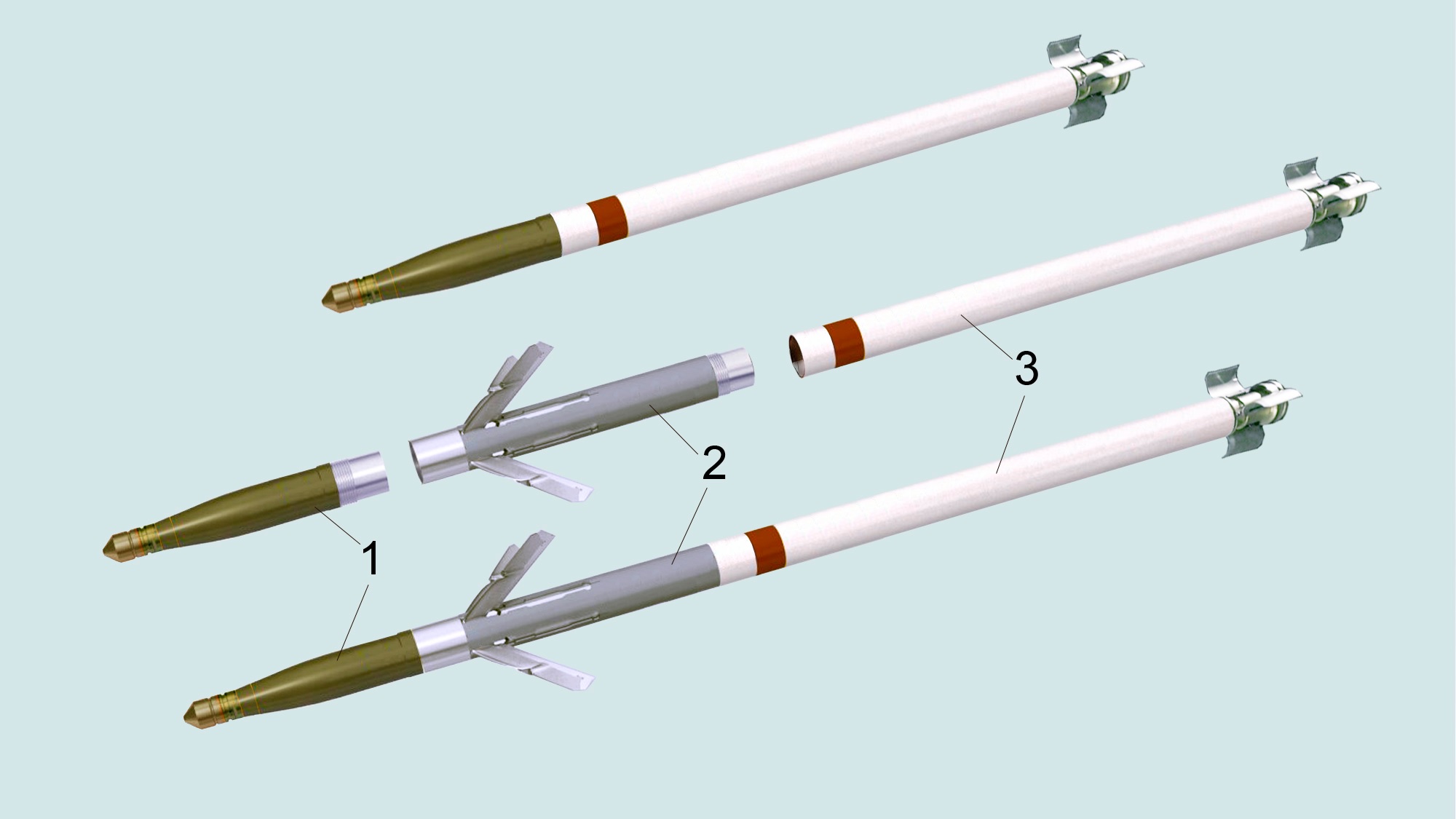
World
WASHINGTON — May 30, 2026 : The U.S. Department of Defense has awarded L3Harris Technologies a $48.5 million contract to produce proximity fuzes for the Advanced Precision Kill Weapon System (APKWS), supporting efforts to improve counter-drone and cruise missile defense capabilities. The contract was issued by the Naval Surface Warfare Center Indian Head Division and awarded to L3Harris Fuzing and Ordnance Systems in Cincinnati, Ohio. If all contract options are exercised, the agreement could reach approximately $98.4 million, with production continuing through September 2028. Funding reflects adoption across multiple military branches, with approximately 68 percent coming from U.S. Air Force ammunition procurement accounts and around 28 percent from the Navy and Marine Corps. The contract follows prototype development completed under a separate Other Transaction Agreement and was awarded directly to accelerate fielding of the capability. APKWS Adapted for Air-to-Air Drone Intercepts The APKWS is a 70-millimeter (2.75-inch) precision-guided rocket developed from the Hydra 70 rocket family. Originally designed as a low-cost precision strike weapon for ground targets, the system uses a laser-guidance kit produced by BAE Systems that converts unguided rockets into guided munitions. The upgraded proximity fuze expands the rocket’s air-to-air role. Developed using radio-frequency sensor technology from Technology Service Corporation (TSC) and integrated with an L3Harris safe-and-arm device, the fuze detonates when the rocket passes near a target rather than requiring a direct hit. This enables fragmentation to engage drones and cruise missiles more effectively, improving interception success against fast-moving or maneuvering aerial threats. Testing and Combat Use The Pentagon’s Joint Counter-Small Unmanned Aircraft Systems Office validated the fuze during testing at Yuma Proving Ground, Arizona. During evaluations, the system demonstrated a reported 100 percent effectiveness rate against Group 3 drones, which typically operate above 1,200 meters (3,940 feet) and at speeds exceeding 185 kilometers per hour (115 miles per hour). The upgraded air-to-air APKWS variant, designated AGR-20F, achieved its first combat intercepts in 2024 when U.S. Air Force F-16 aircraft operating over the Red Sea used proximity-fuzed rockets to shoot down Houthi drones. Lower-Cost Counter-Drone Capability An APKWS round costs an estimated $20,000 to $30,000, compared with roughly $400,000 for an AIM-9X Sidewinder missile, providing a lower-cost option for counter-drone operations. The system also increases aircraft magazine capacity. Because APKWS rockets use standard 70-millimeter launcher pods, an F-16 equipped with six seven-tube launchers can carry up to 42 guided rockets, offering significantly greater engagement capacity than conventional air-to-air missile loadouts. Continued Development and Wider Integration In February 2026, BAE Systems received a contract worth up to $145 million under the Fixed Wing, Air Launched, Counter-Unmanned Aircraft Systems Ordnance (FALCO) program to develop a dual-mode APKWS variant for counter-drone missions. The upgraded configuration combines laser guidance with a Long Wave Infrared (LWIR) seeker, allowing the rocket to continue tracking targets after launch and reducing the need for continuous laser designation. The Marine Corps is also integrating the air-to-air APKWS variant onto legacy F/A-18C/D Hornet aircraft under Aviation Plan 2026 to expand counter-drone capacity while preserving higher-cost missile inventories. The proximity fuze technology has additionally been adapted for ground-based defense through L3Harris’ Vehicle-Agnostic Modular Palletized ISR Rocket Equipment (VAMPIRE) system, which combines sensors and APKWS launchers into a mobile counter-drone platform. VAMPIRE systems deployed to Ukraine in 2023 have been used against Russian drone attacks using the same proximity-fuzed rocket concept.
Read More → Posted on 2026-05-30 16:12:27
World
WASHINGTON, — May 30, 2026 : The U.S. Air Force has lifted the fleet-wide operational pause for the T-38 Talon trainer aircraft following the completion of inspection procedures developed after a training mishap involving the platform earlier this month. The pause officially ended on May 28, allowing inspected aircraft to gradually return to flying operations in the coming days. The operational stand-down was imposed on May 20 and affected approximately 546 T-38 aircraft assigned across four major Air Force commands: Air Education and Training Command (AETC), Air Combat Command (ACC), Air Force Materiel Command (AFMC), and Air Force Global Strike Command (AFGSC). The measure was introduced after a May 12 crash involving a T-38 assigned to Columbus Air Force Base in Mississippi, with the Air Force temporarily suspending operations to support safety assessments and engineering reviews. According to the Air Force, collaborative engineering and maintenance teams across the joint force finalized detailed inspection procedures to ensure aircraft safety before returning individual airframes to service. Aircraft that complete mandatory inspections and any required maintenance are expected to resume flying incrementally, while affected commands continue efforts to minimize disruptions to training pipelines, operations, and readiness. The May 12 mishap occurred at approximately 12:00 p.m. during a routine training mission involving a T-38 assigned to the 14th Flying Training Wing at Columbus Air Force Base, which operates under AETC’s 19th Air Force. The aircraft crashed in rural Lamar County, Alabama, near the Mississippi border. Both crew members ejected safely, and no fatalities or serious injuries were reported. A Safety Investigation Board continues to examine the cause of the incident, with the operational pause initially intended to allow investigators to locate and assess evidence from the crash site. During the temporary grounding, aircrews and student pilots across affected commands increased simulator-based training to maintain operational proficiency and meet flight currency requirements. The pause also affected international training activities, temporarily halting flying operations for Canadian pilots participating in fighter lead-in training through the Euro-NATO Joint Jet Pilot Training (ENJJPT) program at Sheppard Air Force Base in Texas. The T-38 Talon, a twin-engine supersonic trainer designed and produced by Northrop Corporation, entered service with the U.S. Air Force in 1961 and became the world’s first supersonic trainer aircraft. More than 70,000 Air Force pilots have trained on the platform since its introduction. Nearly 1,200 aircraft were produced between 1961 and 1972, with approximately 500 remaining in operational service today. Beyond AETC training duties, the aircraft is also used by ACC for fighter lead-in training, AFGSC for bomber pilot preparation, and NASA as a proficiency and companion trainer for astronauts. Columbus Air Force Base has experienced previous T-38-related incidents in recent years. In November 2022, a T-38C crashed roughly 20 miles from the installation, with the pilot ejecting safely and sustaining non-life-threatening injuries. Two weeks later, another T-38C experienced an in-flight emergency that resulted in a gear-up landing. As the Air Force works to sustain pilot training capacity, it is continuing the transition toward the Boeing-Saab T-7A Red Hawk, the planned replacement for the aging T-38 fleet. In April 2026, the service approved low-rate initial production after the program achieved Milestone C and placed an initial order for 14 aircraft valued at $219 million. Initial Operational Capability for the T-7A remains scheduled for 2027, with procurement plans calling for 23 aircraft in fiscal year 2027, followed by 36 in 2028 and 42 in 2029. The aircraft is intended to prepare pilots for fourth- and fifth-generation combat platforms, including the F-15EX, F-35A, F-22, B-21 Raider, and future systems such as the F-47.
Read More → Posted on 2026-05-30 15:55:48
World
WASHINGTON, — May 30, 2026 : U.S. intelligence and defense officials are investigating the April downing of an American F-15E Strike Eagle over southwestern Iran after evidence indicated the aircraft was likely struck by a Chinese-manufactured shoulder-launched missile system, according to officials familiar with the matter. The incident, which occurred on April 3 in Iran’s Kohgiluyeh and Boyer-Ahmad province, marked the first known combat loss of a U.S. crewed aircraft during the recent conflict and the first time in decades that a U.S. fighter jet was reportedly brought down by hostile enemy fire. U.S. officials believe the aircraft was likely hit while operating at lower altitude during combat operations. Rescue Operation After Shootdown Both crew members aboard the F-15E successfully ejected after the strike and established communication using onboard systems following the aircraft’s loss. According to Pentagon officials, the pilot was rescued within several hours during an initial recovery mission. During that operation, Iranian forces struck a U.S. Black Hawk helicopter involved in the rescue effort, wounding crew members, although the helicopter remained operational and was able to continue flying. The weapons systems officer avoided capture after taking cover in the foothills of the Zagros Mountains. U.S. forces recovered the officer alive on April 5 during a nighttime combat search-and-rescue mission involving dozens of aircraft, specialized commando personnel, and extensive air cover. Suspected Chinese-Made Missile Under Investigation U.S. intelligence agencies are investigating indications that the F-15E was struck by a Chinese-manufactured man-portable air defense system (MANPADS), a shoulder-fired missile designed to target low-flying aircraft. Such systems are typically around seven feet long, weigh approximately 40 pounds, and are designed to engage helicopters and fixed-wing aircraft operating at lower altitudes. Officials have not determined whether the suspected missile system was recently transferred to Iran or drawn from military stockpiles acquired years earlier. Investigators have not reached a final conclusion regarding the specific weapon involved, and intelligence reviews remain ongoing. Questions Over Chinese Radar Support In addition to the missile investigation, U.S. officials are examining whether China supplied Iran with a YLC-8B UHF-band long-range early-warning radar system capable of detecting low-observable aircraft. Developed by China’s Nanjing Research Institute of Electronics Technology, the YLC-8B is designed to detect targets with a radar cross-section of roughly one square meter at ranges between 270 and 330 kilometers and may track aircraft beyond 200 kilometers under certain conditions. The radar operates in the UHF frequency band, which analysts say can reduce the effectiveness of radar-absorbent materials commonly used on stealth aircraft. Defense analysts note that such systems could strengthen Iran’s layered air-defense architecture by improving long-range detection capabilities against advanced aircraft, including the F-35 Lightning II and B-2 Spirit. The system is also designed for rapid deployment and dismantling, reportedly requiring less than 30 minutes to become operational or relocated. However, U.S. intelligence agencies have not confirmed whether the radar was fielded or operational during the recent conflict. U.S. Assessment and Chinese Response A U.S. official familiar with the matter said Washington remains aware of Chinese support to Iran but assessed that such assistance “was not significant” and had “no decisive operational impact” on the overall course of hostilities. Military planners and intelligence analysts continue reviewing operational data from the shootdown to evaluate how foreign-made missile systems, sensor networks, and defense supply chains could influence future U.S. aerial operations and regional military planning. China’s embassy in Washington rejected allegations of direct involvement, stating that Beijing exercises strict oversight of military exports, complies with international obligations, and acts responsibly in defense-related cooperation. Chinese officials described claims surrounding assistance to Iran as unfounded. Broader Concerns Over Chinese Support to Iran The investigation comes amid wider scrutiny of alleged Chinese support to Tehran during the conflict. Earlier, the U.S. State Department imposed sanctions on three Chinese satellite companies — The Earth Eye, Meentropy Technology (Hangzhou), and Chang Guang Satellite Technology — accusing them of providing imagery and geospatial intelligence that enabled Iranian forces to identify and monitor American military facilities during Operation Epic Fury. The sanctions formed part of a broader package targeting 11 entities and three individuals in Iran, China, Belarus, and the United Arab Emirates. Beijing rejected those allegations. The incident also adds complexity to U.S.-China relations as the Trump administration continues diplomatic efforts related to ceasefire negotiations with Iran while preparing for discussions with Chinese leadership. Previous U.S. intelligence assessments cited by media reports suggested China had explored supplying additional air-defense systems to Tehran, while some officials believed portions of that intelligence were publicly disclosed to expose or discourage such transfers.
Read More → Posted on 2026-05-30 15:46:45
India
SINGAPORE, — May 30, 2026 : India has officially finalized an agreement to export the BrahMos supersonic cruise missile system to Vietnam in a deal valued at approximately ₹60 billion ($629 million), marking a major development in defence cooperation between the two countries and strengthening India’s growing role as a military exporter in Southeast Asia. The agreement was publicly confirmed by Defence Secretary Rajesh Kumar Singh during the Shangri-La Dialogue in Singapore, Asia’s leading defence and security summit. Speaking during a session on “Building Defence Industrial Resilience,” Singh said the agreement with Vietnam had already been signed, although it had not been formally announced earlier. “My understanding is that with both Indonesia and Vietnam, the deal is in the final stages. In fact, for Vietnam, I understand that it has already been signed — probably not publicly announced, but it's already been signed,” Singh said while responding to a question from a Vietnamese delegate. Under the agreement, Vietnam will procure the BrahMos Block 3 land-based coastal defence variant, designed primarily for shore-based anti-ship operations to strengthen maritime border security. The package includes an Integrated Logistics Support (ILS) framework, operator training, and technical instruction for Vietnamese maintenance personnel to ensure long-term operational readiness and sustainment capability. The BrahMos missile, jointly developed by India’s Defence Research and Development Organisation (DRDO) and Russia’s NPO Mashinostroyeniya, is capable of speeds between Mach 2.8 and Mach 3.0. The Block 3 variant has a strike range of up to 290–300 kilometres, can carry a 300-kilogram warhead, and is equipped with sea-skimming flight capability as low as 10 metres above sea level along with steep-dive terminal attack capability. The missile can be launched from land, naval vessels, submarines, and aircraft, although Vietnam’s current acquisition is focused on land-based coastal batteries. Reports also indicate Hanoi has shown long-term interest in air-launched variants. The deal makes Vietnam the second Southeast Asian country to acquire the BrahMos missile system after the Philippines, which signed a $375 million agreement in January 2022 for three shore-based anti-ship batteries, becoming India’s first BrahMos export customer. Deliveries to the Philippines began in April 2024, followed by the arrival of a second battery in April 2025, while training programs for Philippine personnel were conducted in India. The agreement also places Vietnam among confirmed international BrahMos operators as India continues expanding defence exports to regional partners. Singh stated that negotiations with Indonesia for a similar BrahMos procurement agreement are in the final stages. Indonesia reportedly signed a $300 million contract in December 2025 for three coastal defence batteries with a projected 36-month delivery schedule, in a configuration similar to the Philippine package. The BrahMos export agreement aligns with India’s broader objective to expand domestic defence manufacturing and raise defence exports to ₹50,000 crore by 2030, with BrahMos positioned as a flagship export platform. To support increasing domestic and overseas demand, India established a dedicated BrahMos production facility in Lucknow, Uttar Pradesh. The missile agreement also reflects expanding defence and strategic engagement between New Delhi and Hanoi. Earlier this month, Defence Minister Rajnath Singh held talks in Hanoi with Vietnamese Defence Minister General Phan Van Giang focused on maritime security, defence industry cooperation, and regional stability. The discussions coincided with the 10th anniversary of the India–Vietnam Comprehensive Strategic Partnership, recently elevated to an Enhanced Comprehensive Strategic Partnership during Vietnamese President To Lam’s state visit to India. During the Shangri-La Dialogue, Singh emphasized that India considers ASEAN member states trusted partners for defence cooperation and advanced military technology sharing, highlighting New Delhi’s continued focus on strengthening defence ties across Southeast Asia.
Read More → Posted on 2026-05-30 15:28:30
World
WARSAW — May 30, 2026 : Poland has finalized a major package of defense procurement contracts valued at 60 billion PLN (approximately €14.18 billion) with domestic manufacturer Huta Stalowa Wola (HSW), financed through the European Union’s Security Action for Europe (SAFE) initiative. The SAFE mechanism, valued at €150 billion, is intended to help European Union member states modernize military capabilities through defense-related financing. The contracts were expedited by Poland’s Armaments Agency ahead of the May 2026 deadline for signing unilateral procurement agreements under the SAFE framework. Under the terms of the agreements, all contracted equipment is scheduled for delivery to the Polish Armed Forces by 2030, supporting Warsaw’s ongoing ground force modernization program. Expansion of the Borsuk Infantry Fighting Vehicle Program A central element of the procurement package is an executive order for 146 additional Borsuk Infantry Fighting Vehicles (IFVs), valued at approximately 7.5 billion PLN ($2.07 billion). The contract follows an earlier March 2025 agreement worth 6.6 billion PLN for 111 vehicles, increasing Poland’s confirmed Borsuk orders to 257 units. The current acquisition package is expected to equip four mechanized infantry battalions, while 25 vehicles will be reserved for training purposes. The procurement also forms part of a broader framework agreement signed in 2023, covering the potential acquisition of nearly 1,400 tracked vehicles built on the Universal Modular Tracked Platform. Developed domestically to replace Soviet-era BMP-1 infantry fighting vehicles, the Borsuk weighs 28 metric tons and carries a crew of three alongside six infantry troops. The platform is powered by an MTU 8V199 turbo diesel engine and retains an open-water amphibious crossing capability, allowing mobility across rivers and water obstacles. The vehicle is equipped with the ZSSW-30 unmanned turret, jointly developed by HSW and WB Group. The system integrates a 30mm Mk44S Bushmaster II autocannon alongside two Spike-LR anti-tank guided missiles, providing anti-armor and infantry support capabilities. To meet expected production requirements, HSW introduced a dual-shift manufacturing model in the third quarter of 2025 and is targeting an output capacity of approximately 100 Borsuk vehicles annually by mid-2026. Artillery, Mortars, and Support Systems Beyond the Borsuk procurement, the 60 billion PLN package includes a broad range of artillery systems and supporting equipment manufactured by HSW. The agreements include 96 AHS Krab 155mm self-propelled howitzers, intended to form four Regina modular artillery battalions. The Krab system combines a modified South Korean K9 Thunder chassis with a turret derived from the British AS-90M Braveheart design and can fire extended-range projectiles at distances of up to approximately 40 kilometers. Poland has also approved procurement of more than 1,000 support vehicles for the Homar-K multiple launch rocket system (MLRS) fleet. The Homar-K is Poland’s domestically integrated variant of the South Korean K239 Chunmoo system, mounted on Jelcz 8×8 vehicles and designed to provide long-range rocket artillery capabilities. Additional support vehicles will be acquired for six K9PL-equipped artillery battalions, complementing Poland’s wider artillery modernization effort under the K9 program. Further contracts include 64 RAK-120 self-propelled mortars, accompanied by support vehicles for eight mortar companies. The 120mm mortar system, mounted on the Rosomak armored platform, is capable of delivering rapid indirect fire support. The procurement package additionally covers 11 Bobak-K mine-laying systems, dozens of Waran armored personnel carriers designated for artillery support roles, and refinancing arrangements for existing Rosomak wheeled armored vehicles integrated with the ZSSW-30 turret, shifting those contracts under the SAFE financing structure rather than creating new procurement orders. Poland’s SAFE Financing and Domestic Industrial Policy Poland has emerged as the largest beneficiary of the EU SAFE initiative, securing approximately €43.7 billion (around 190 billion PLN) in defense-related loans. Warsaw has directed that roughly 90 percent of SAFE funding be spent domestically, supporting the national defense industry and an estimated 10,000 companies across Poland’s supply chain network. HSW, a subsidiary of the state-owned Polska Grupa Zbrojeniowa (PGZ) defense group, is expected to play a central role in delivering the systems covered by the agreements. The acquisitions are intended to strengthen Poland’s broader military modernization effort by improving integration between mechanized infantry, armored formations, artillery systems, and battlefield support capabilities, complementing recently acquired platforms including K2 main battle tanks, HIMARS launchers, Homar-K systems, and K9PL self-propelled artillery.
Read More → Posted on 2026-05-30 15:17:46Search
Top Trending in 24 Hours
-
 North Korea Tests AI-Powered Missile Capable of Changing Flight Path
-
 NASA Develops Humanoid Robots for Future Moon and Mars Missions
-
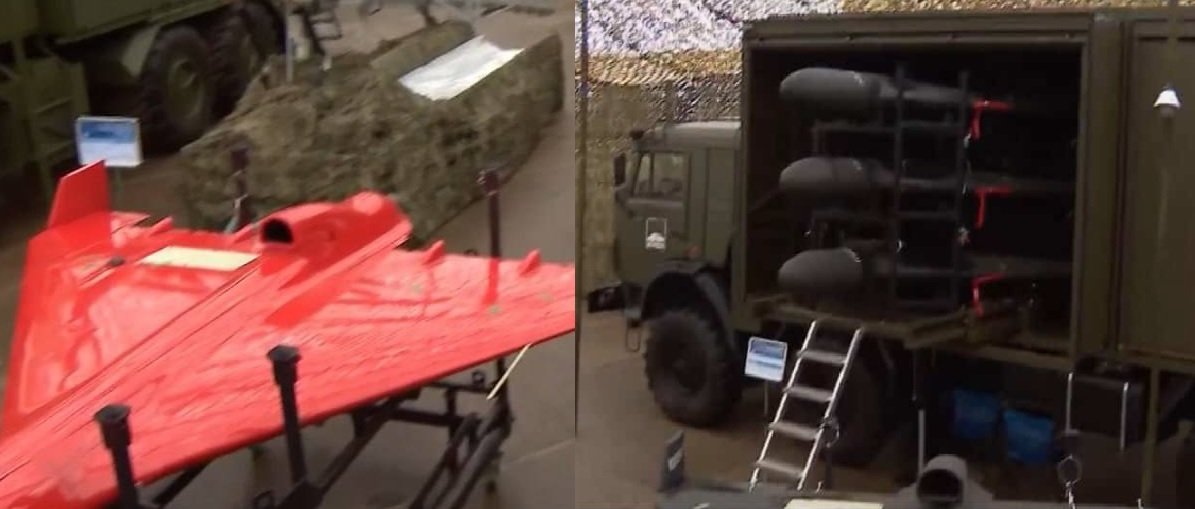 Russia Reveals Jet-Powered Harpy Attack Drones and Mobile Launchers
-
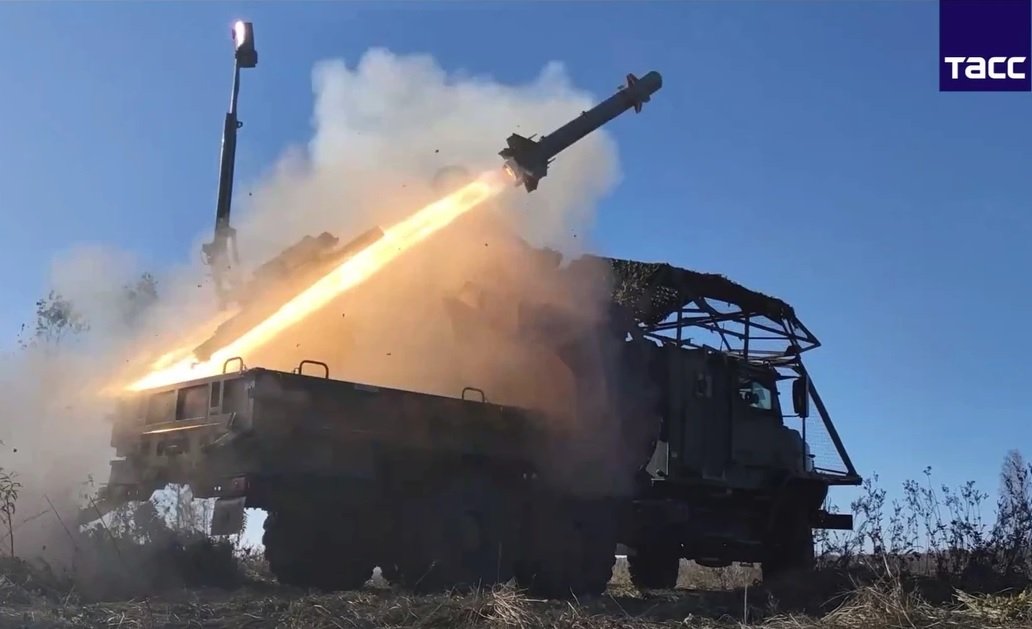 Russia Demonstrates Truck-Mounted LMUR Missile System During Tsentr-2026
-
 IG Defence Successfully Tests Two Solid Rocket Motors for JWALA Micro-Missile
-
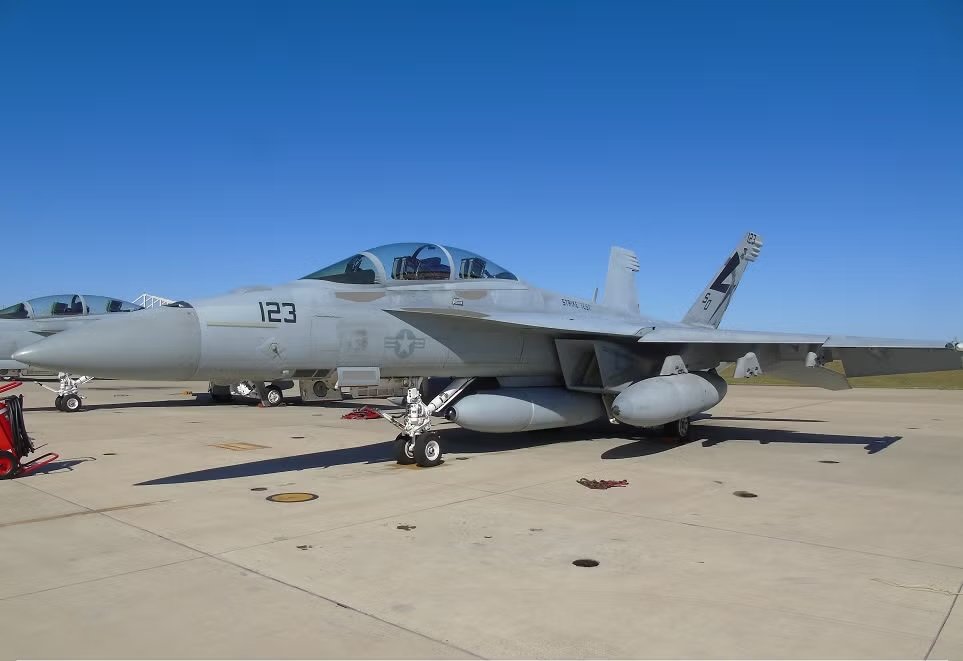 Lockheed Martin Secures $245 Million Contract for F/A-18 Super Hornet IRST Systems
-
 U.S. Navy Swaps Homeports of USS Wyoming and USS Pennsylvania Ahead of Columbia-Class Transition
-
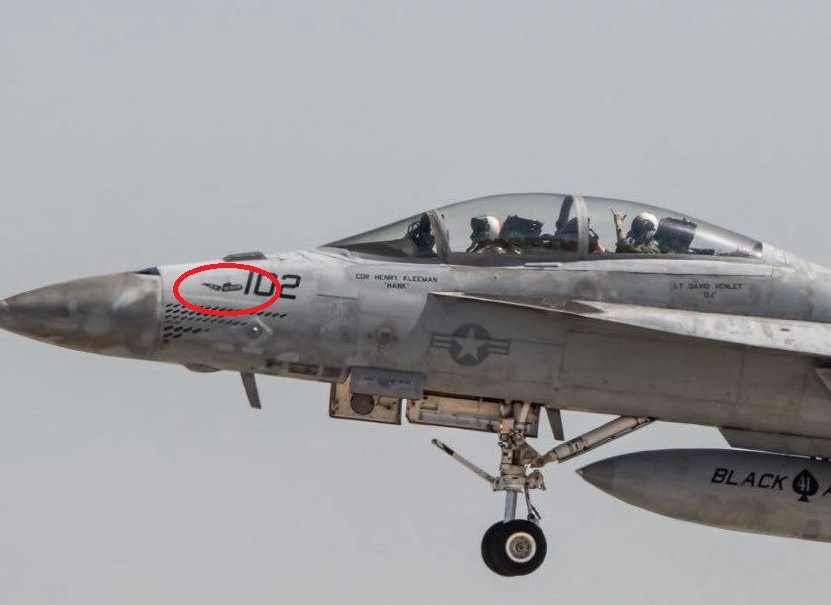 U.S. Navy F/A-18 Super Hornet Returns from 'Operation Epic Fury' Sporting 'Sub Buster' Kill Mark
Top Trending in 4 Days
-
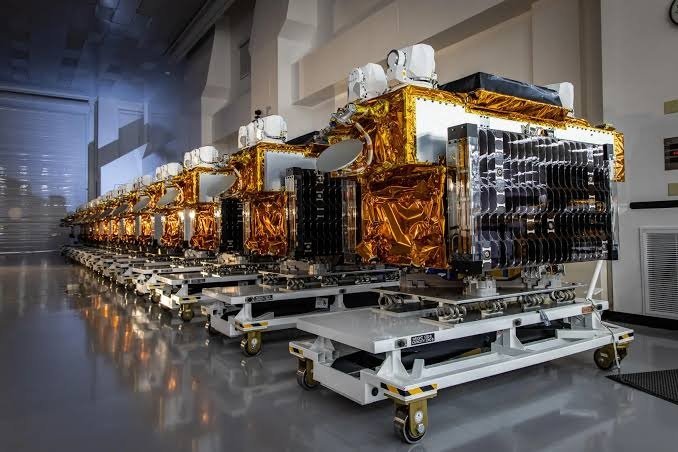 Northrop Grumman Delivers First 21 Satellites for Pentagon’s Next-Generation Military Network
-
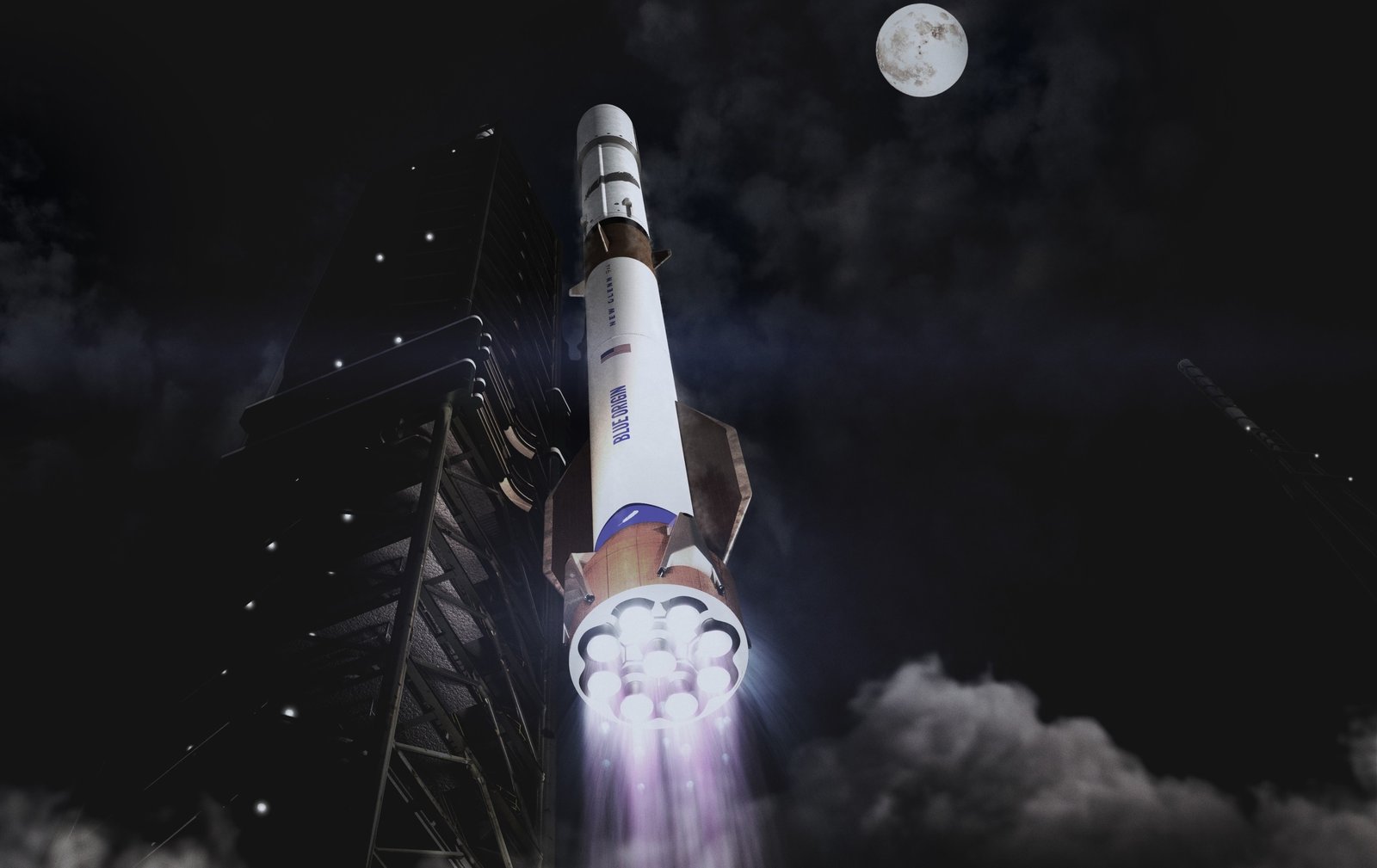 NASA Adds Blue Origin’s Upgraded New Glenn 9×4 to Launch Services Contract
-
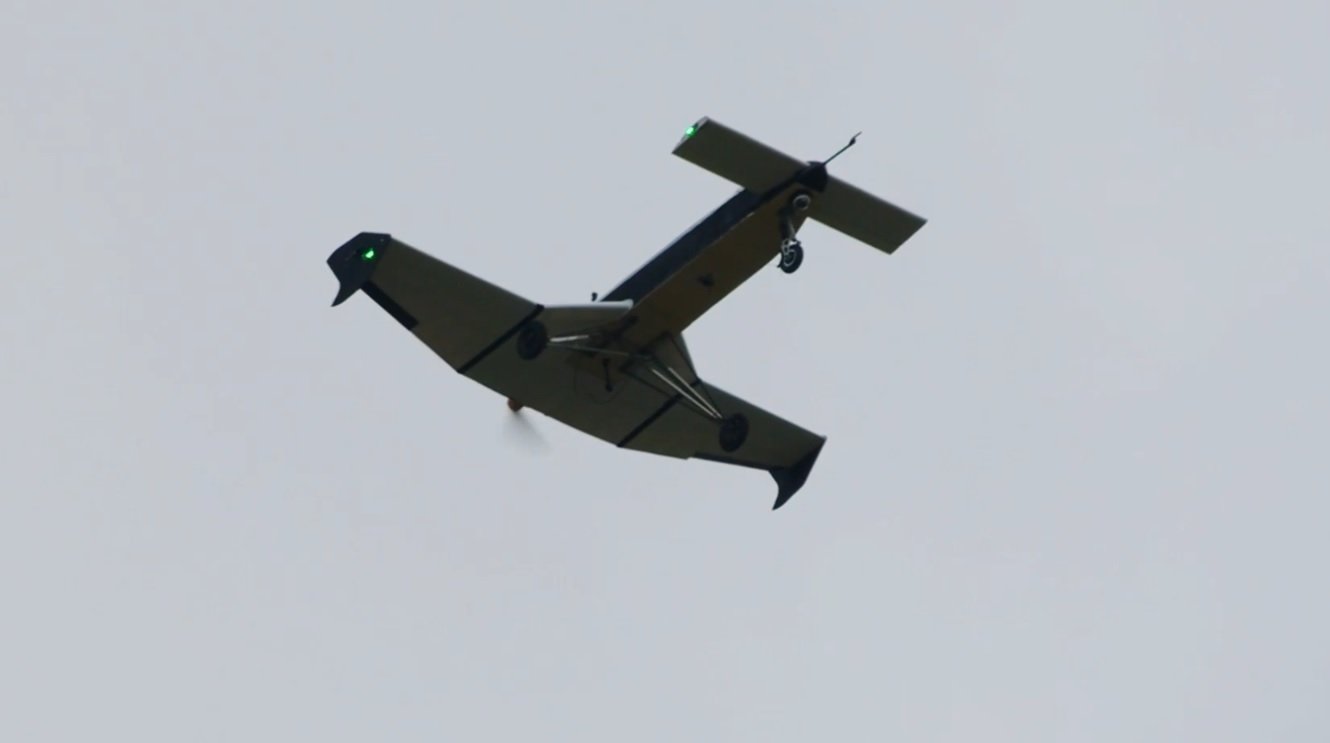 Ukraine’s SkyFall Unveils Thor Hammer Strike UAV With Up to 600-Km Range
-
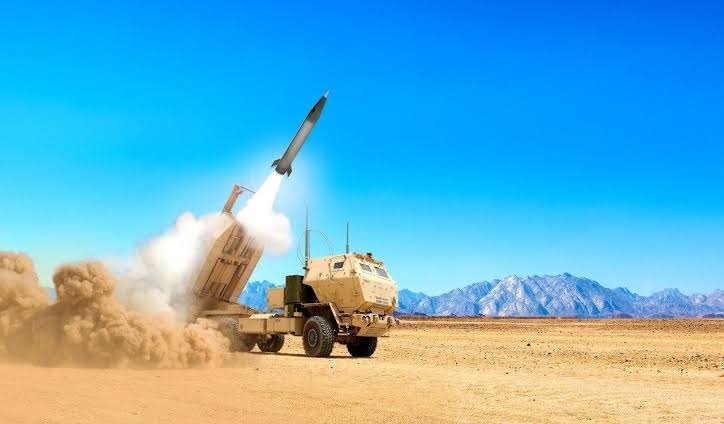 U.S. Army Selects Five Companies to Develop 1,000-Km Precision Strike Missile Prototypes
-
 Boeing Wins $20 Billion U.S. Navy Contract for F/A-XX Sixth-Generation Fighter
-
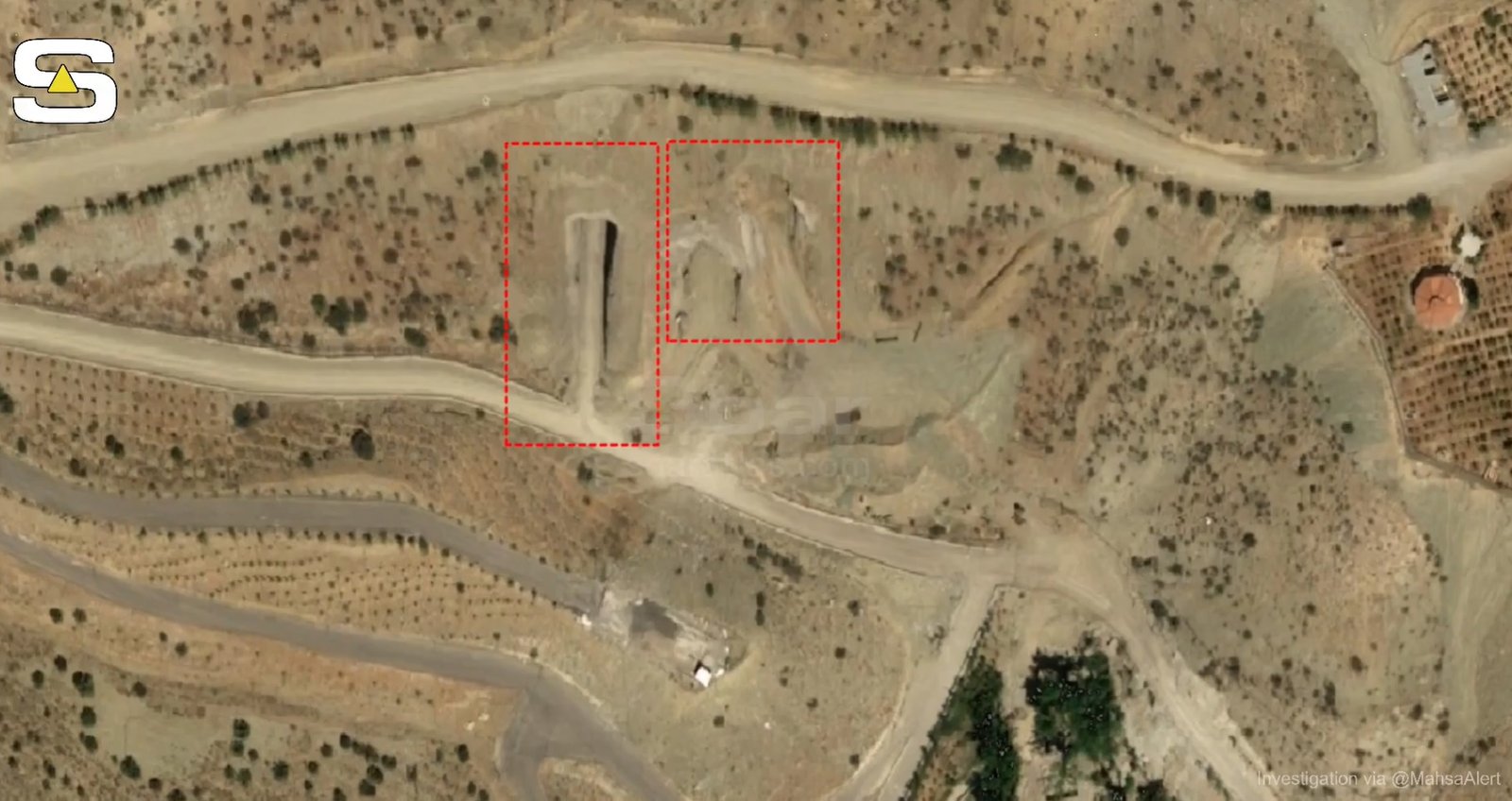 Satellite Imagery Shows Construction Changes at Hillside Site Linked to Iran’s Supreme National Security Council
-
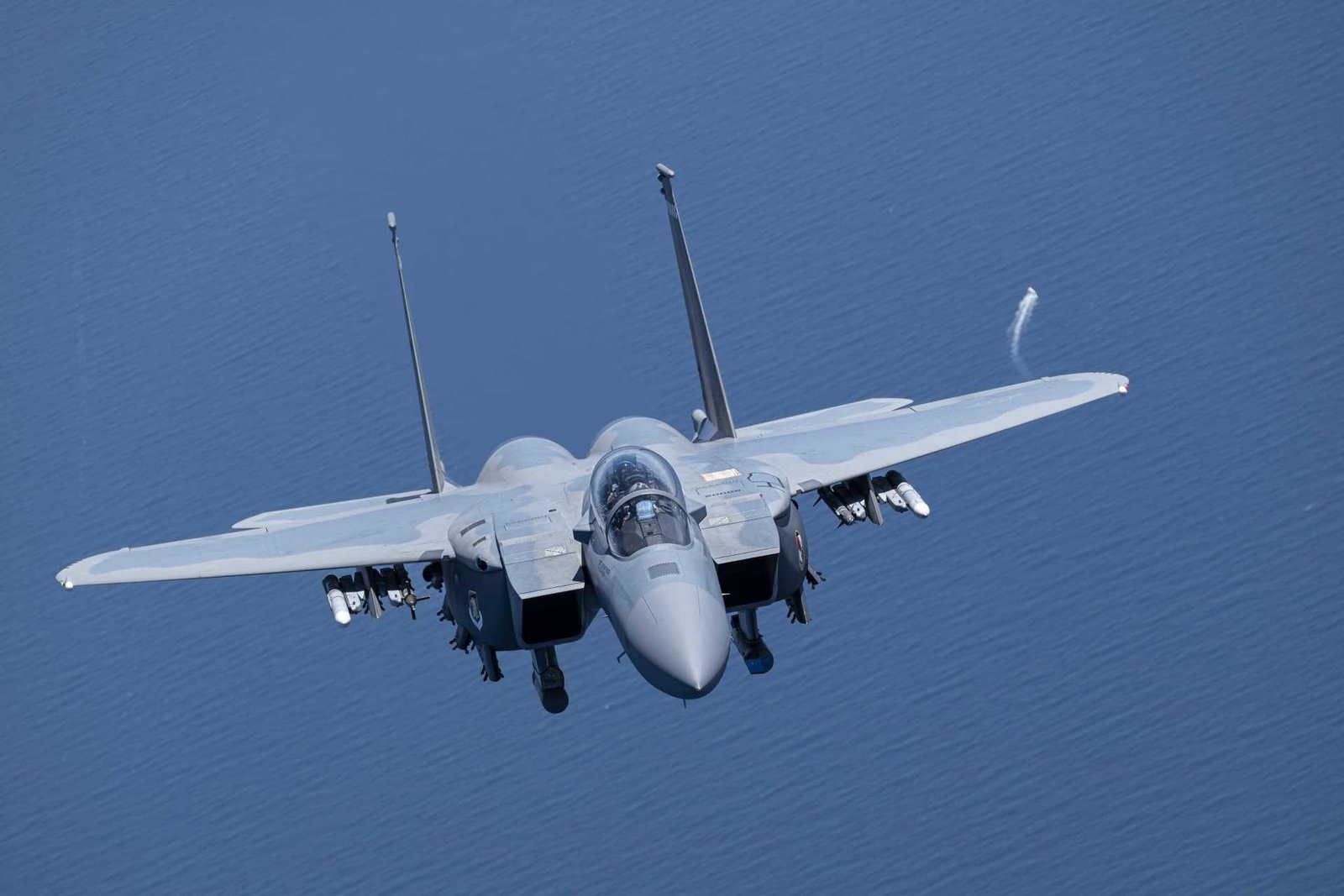 U.S. Air Force Seeks Missile Warning System for F-15EX Fleet
-
 NASA Awards Modulate Space $38 Million Contract to Develop Lunar 5G and Wi-Fi Network
