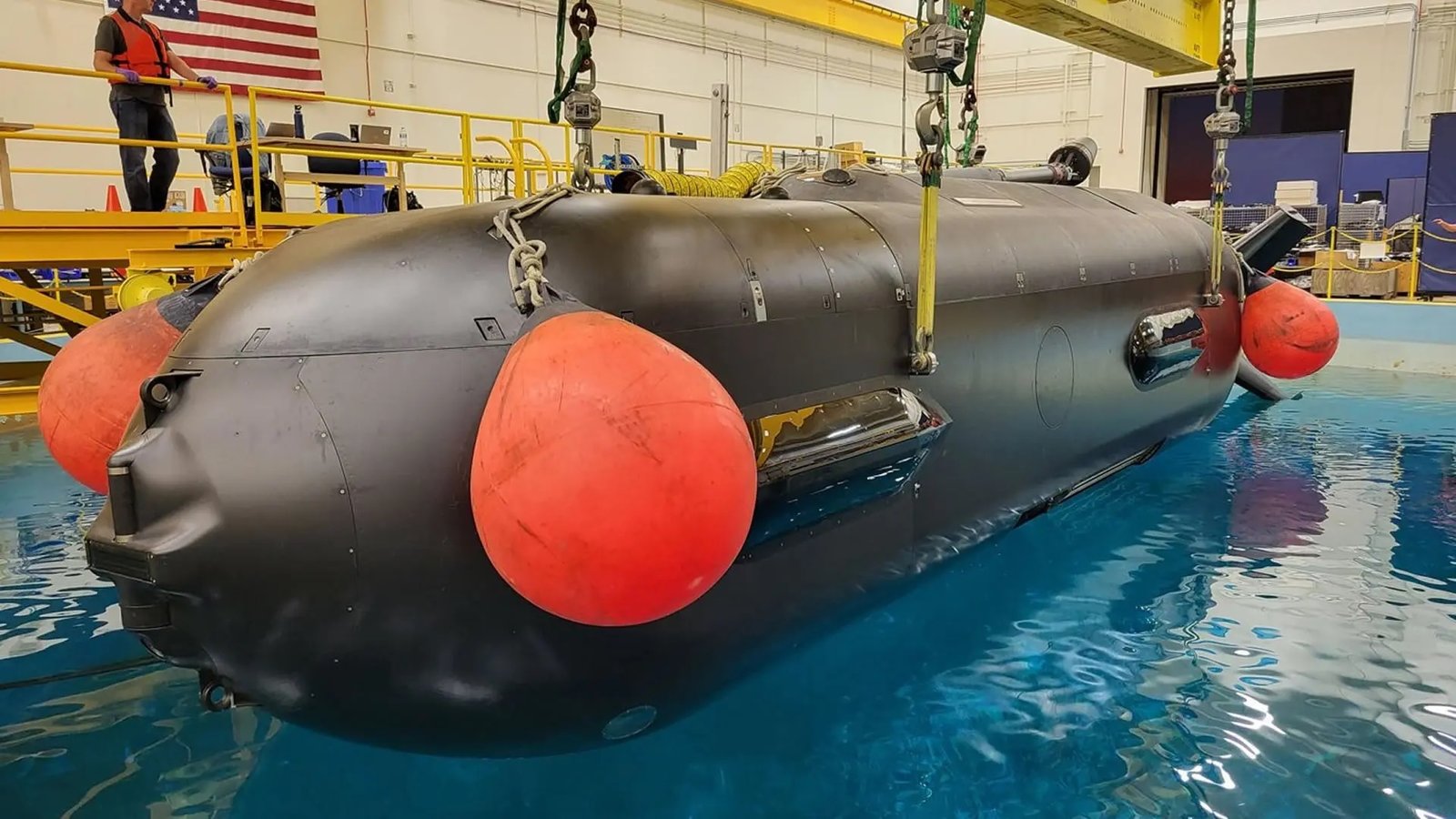
EAST PACIFIC — The U.S. Navy completed its first 1,000-nautical-mile transit with an Orca Extra Large Uncrewed Undersea Vehicle (XLUUV) in July 2026, marking the first time the system has completed a patrol of that distance in the program’s history.
The uncrewed submarine, developed by Boeing and Huntington Ingalls Industries, traveled more than 1,000 nautical miles across the East Pacific during the mission. Teams from the Navy’s Program Executive Office for Unmanned and Small Combatants supported the operation.
Rear Admiral Chris Cavanaugh, Commander of the U.S. Submarine Force, Pacific Fleet, confirmed the milestone and highlighted the Navy’s continued investment in unmanned undersea systems.
“The operational environment in the Pacific continues to evolve with the rapid development of technological advancements in the undersea domain,” Cavanaugh said. “The Pacific Submarine Force is heavily investing in unmanned capabilities to augment our manned submarines and preserve our undersea advantage across the full spectrum of submarine operations.”
Orca Designed for Long-Endurance Undersea Missions
Orca is among the largest uncrewed undersea vehicles operated by the U.S. Navy. The system supports mission requirements identified in a Joint Urgent Operational Need focused on the Pacific theater.
Its planned mission areas include intelligence, surveillance and reconnaissance (ISR), mine warfare, seabed warfare and expeditionary support. The vehicle is designed to operate independently for extended periods and can launch and recover from a pier without requiring a dedicated support ship.
Orca uses a hybrid diesel-electric propulsion system. Its reported range is about 6,500 nautical miles, allowing missions that can extend over periods measured in months.
The basic hull is about 51 feet long without the payload section. When the modular payload section is installed, the overall length reaches roughly 85 feet, with a displacement of about 80 to 85 tons.
The payload bay is approximately 34 feet long and can carry up to 8 tons of equipment. Navigation uses an inertial navigation system supported by Doppler velocity logs and depth sensors, allowing the vehicle to operate without GPS.
Latest Orca Vehicle and Earlier Testing
The latest vehicle, designated XLE2, was commissioned earlier in 2026 at Boeing’s facility in Huntington Beach, California.
Earlier vehicles include XLE0, a test asset delivered to the Navy in December 2023, and XLE1. Testing of the Orca system has been conducted off the southern California coast, with risk-reduction work beginning in 2024.
The July transit provides the Navy with an additional demonstration of the vehicle’s ability to conduct extended autonomous operations over long distances in the Pacific.
Hunter Payload and Other Planned Capabilities
The Navy is also working to integrate additional capabilities into the Orca fleet. One of these is the Hunter payload, developed under a Defense Advanced Research Projects Agency (DARPA) program.
Hunter is focused on delivering advanced undersea payloads from extra-large uncrewed vehicles for expeditionary mining in contested environments. DARPA describes the effort as a concept for delivering payloads from XLUUVs.
The acquisition strategy for Hunter is expected to be formalized in late 2027 or early 2028. Budget documents show design and integration work beginning around fiscal year 2026.
Orca is also linked to a standoff heavyweight torpedo deployment system that is preparing to transition to the Navy’s PMS 406 Unmanned and Small Combatants office. The development timeline for the Hunter module depends on this system.
In 2024, the Navy fitted a roughly 10-meter payload module with large vertical opening hatches. Analyst H.I. Sutton noted that the hatches on the top, and possibly the bottom, are consistent with configurations for mine-laying missions. Other possible configurations include side doors for launching and recovering smaller underwater vehicles.
Orca Moves Toward Program of Record
In May 2026, the Navy shifted Orca from experimental development toward a planned program of record in its shipbuilding plan.
Funding covers two vehicles in fiscal year 2027 and a total of 16 vehicles through fiscal year 2031. About $135.8 million was requested for the near term, while roughly $1.13 billion is included across the future-years defense plan.
The planned expansion reflects the Navy’s effort to develop uncrewed undersea systems that can operate alongside crewed submarines and support a wider range of undersea missions.
Next-Generation XLUUV Development
A separate next-generation effort is also underway through the Defense Innovation Unit’s Combat Autonomous Maritime Platform (CAMP) project.
Competitors include Anduril with its Dive-XL system, which is designed for long-range operations, effector launch and deployment of seabed ISR nodes.
In July 2026, the Defense Innovation Unit selected Kongsberg and Oceaneering for concept-definition work on a CAMP vehicle intended to have a range of more than 1,000 nautical miles and operate below 200 meters in GPS-denied conditions.
The Orca’s July transit demonstrates the Navy’s progress in using large autonomous undersea vehicles for extended operations and supports its broader effort to expand uncrewed capabilities alongside crewed submarine forces in the Pacific.
——— End of Article ———