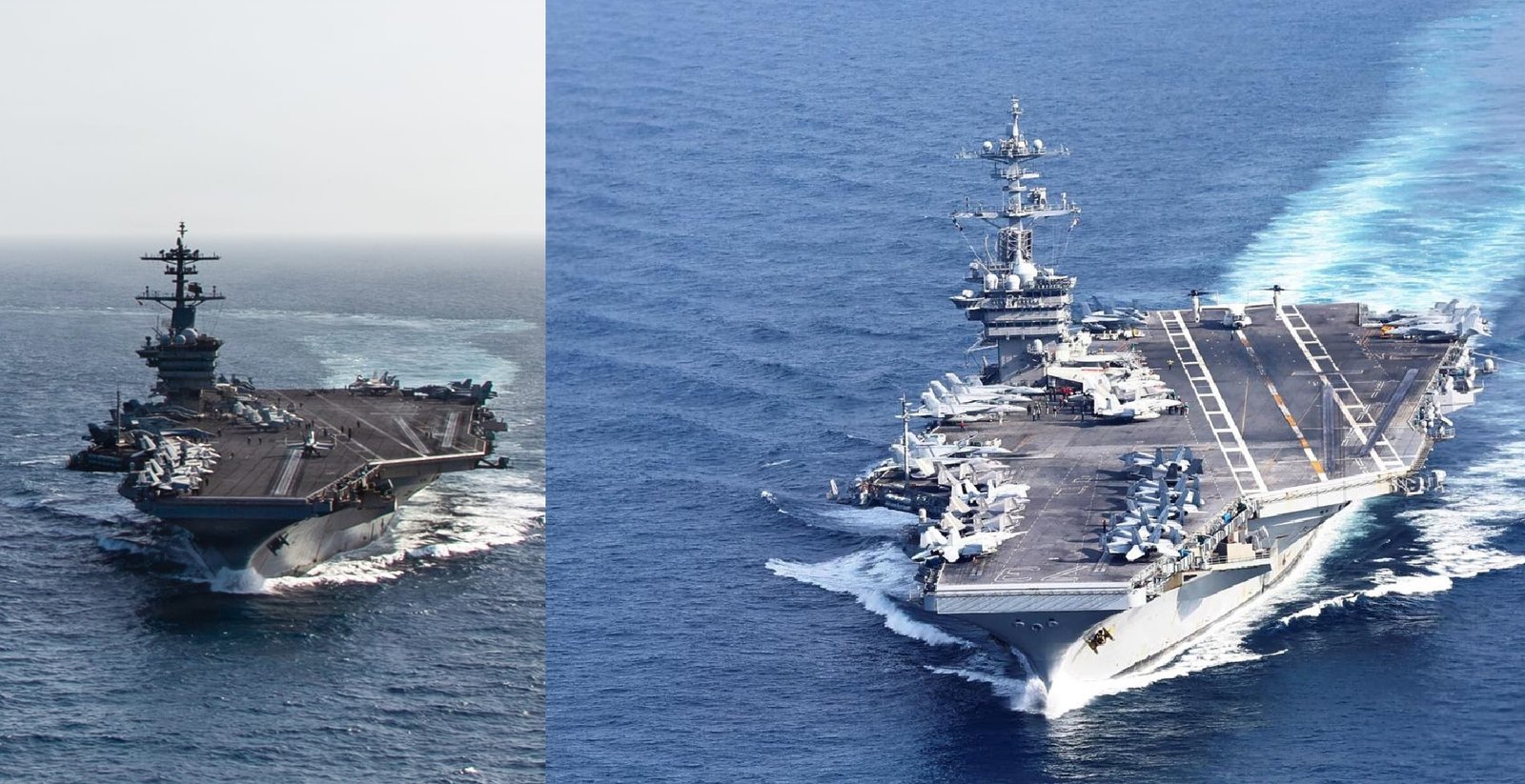
WASHINGTON — The U.S. Navy is preparing to deploy the aircraft carrier USS George Washington to the Middle East to relieve the USS Abraham Lincoln, which has remained on an extended deployment supporting U.S. military operations in the region.
The Lincoln left its home port in San Diego on November 21, 2025, for what was initially expected to be a roughly seven-month deployment in the Indo-Pacific. The carrier was redirected to the Middle East in January 2026 ahead of U.S. military operations involving Iran. Its deployment has since been extended several times, with no public return date announced as of mid-August. Recent reporting says the carrier has spent more than 250 days deployed, including a lengthy period continuously underway.
The deployment was originally scheduled to end in May 2026, but it was extended amid the ongoing conflict involving Iran. The more than 5,000 sailors and Marines aboard the carrier have reportedly had only two days on land during the deployment, in Guam in December and Oman in July.
Extended Deployment
The Abraham Lincoln Carrier Strike Group has been operating in the U.S. 5th Fleet area while supporting ongoing operations. The extended deployment has limited opportunities for the crew to spend time ashore.
The carrier made brief stops in Guam in December 2025 and Oman in July 2026. Reports from families and sailors have described the deployment as physically and mentally difficult, with concerns about long working periods and repeated extensions.
In April, reports of conditions aboard the carrier generated public criticism after photographs emerged showing poor-quality and rationed food. Other reports cited water shortages, moldy showers and broken laundry machines.
The Navy has previously confirmed that the Lincoln has continued conducting operations in the region. In March, U.S. Central Command said a sailor was injured during flight operations aboard the carrier in the Arabian Sea and was taken ashore for additional medical care.
Reports of Conditions and Mental Health Concerns
Recent reports from Military Times, Navy Times, Stars and Stripes and other outlets have highlighted concerns raised by sailors' families about conditions aboard the carrier.
Families have described problems including broken toilets and plumbing, mold in showers, limited hot water, laundry equipment problems, disruptions to mail and care packages, and periods of food shortages or rationing.
Representative Mike Levin, a Democrat from California, has described reports of moldy showers, broken toilets, laundry being out of service for weeks, long periods without hot water, reduced meals and shortages of basic hygiene products.
Mental health concerns have also been raised. Families told news organizations that some sailors had experienced severe exhaustion, low morale and thoughts of self-harm. Reports have also described incidents in which sailors allegedly attempted or prepared to go overboard.
Military families and members of Congress have raised concerns about what they describe as an intensifying mental health crisis aboard the carrier.
Navy Times and Stars and Stripes have reported multiple incidents involving sailors attempting to jump overboard during the current deployment.
One sailor's spouse, Annabelle Loma, told Military Times that her husband, a sailor with about 13 years of service, attempted to go overboard after the deployment was repeatedly extended and was later placed on medical hold. She said he was concerned that his actions could result in a dishonorable discharge and affect his military career.
Another sailor's wife told the publication that her husband was involved in a separate incident in which he prevented a fellow crew member from jumping by grabbing the sailor and bringing them back onto the deck.
At an emotional town hall meeting in San Diego, around 200 family members raised concerns with Navy leaders about the length of the deployment and the conditions faced by their relatives aboard the carrier. The meeting was attended by Acting Navy Secretary Hung Cao and other senior officials.
One spouse told Cao that the Navy had “broken trust between us and the leadership.” Another family member said her husband had sent her a message saying he hoped he would not wake up the following day.
A U.S. official also told CNN that a sailor went overboard from the Lincoln earlier in August. The sailor was rescued within about an hour, medically evaluated and transferred from the ship for further care. The official did not say whether the incident was treated as a suicide attempt.
Navy Response
Navy officials have acknowledged the strain associated with the extended deployment but have disputed some of the more serious claims.
The Navy has said it has not identified a statistical increase in reported suicidal ideation or suicide attempts aboard the Lincoln based on the information available to it. Officials have also said that medical and mental health personnel, chaplains and deployment-resilience counselors are available to the crew.
The Navy said that extended deployments can place significant strain on service members and their families and that the health and well-being of Lincoln sailors remain a priority.
Defense Secretary Pete Hegseth described reports of extreme shortages and poor morale as “completely misrepresented.” In earlier comments, Hegseth also dismissed the accounts as “more fake news.”
Officials said disruptions to traditional supply hubs caused by combat operations contributed to some shortages and mail delays.
The Navy has maintained that the carrier has access to clean water, functioning air conditioning and healthy meals. A Navy official said current reports from the ship confirmed continuous access to those resources.
Lawmakers Seek Answers
The reported conditions have also prompted questions from members of Congress.
Senator Richard Blumenthal wrote to senior Navy officials seeking information about deployment extensions, supply problems, water and plumbing issues, mental health support, deck safety and mail disruptions.
Representative Mike Levin has also publicly raised concerns about reports of moldy showers, broken toilets, laundry problems, reduced meals and shortages of basic hygiene supplies.
Levin criticized Hegseth's response to the reports, saying service members should have access to basic necessities including hot water, working toilets and adequate meals.
Representative Jason Crow, a Democrat from Colorado and former Army Ranger who served in Afghanistan and Iraq, has also warned that the strain on service members and their families aboard the Lincoln is building week by week.
Families of sailors and Marines have raised similar concerns directly with Navy officials during meetings in San Diego.
Mental Health Challenges Among Deployed Sailors
The concerns surrounding the Lincoln come amid broader research into mental health challenges faced by active-duty Navy personnel.
A study published last year examined stress factors experienced by sailors during deployments. The research identified factors including loud noise, lack of rest, and inadequate mental and physical healthcare.
Researchers surveyed deployed sailors and found that almost half reported that they were not receiving adequate help in coping with stress while at sea.
The study concluded that, given the high rates of military suicide, including within the Navy, improving access to healthcare aboard ships was an urgent need.
USS George Washington Heads West
The Navy is now moving the USS George Washington toward the Middle East as the planned relief carrier for the Abraham Lincoln.
The George Washington is a nuclear-powered aircraft carrier that normally operates in the western Pacific from Yokosuka, Japan. It recently completed a port visit in Da Nang, Vietnam, and is moving west toward the Indian Ocean through the Strait of Malacca. The Associated Press reported that the carrier is heading toward the Middle East as part of the planned rotation.
U.S. officials have described the deployment of the George Washington as part of a scheduled rotation rather than an emergency response to the reports surrounding the Lincoln.
The exact timing of the George Washington's arrival has not been publicly disclosed.
Once the relief process is completed, the Abraham Lincoln will be able to leave the Middle East and begin its return journey. The rotation will also temporarily reduce the U.S. Navy's forward-deployed aircraft-carrier presence in the Pacific.
For the Abraham Lincoln's crew, the relief will mark the end of one of the Navy's longest recent carrier deployments. Navy officials have said the health and well-being of the sailors and Marines remain a priority while the carrier continues its current mission.
——— End of Article ———