World
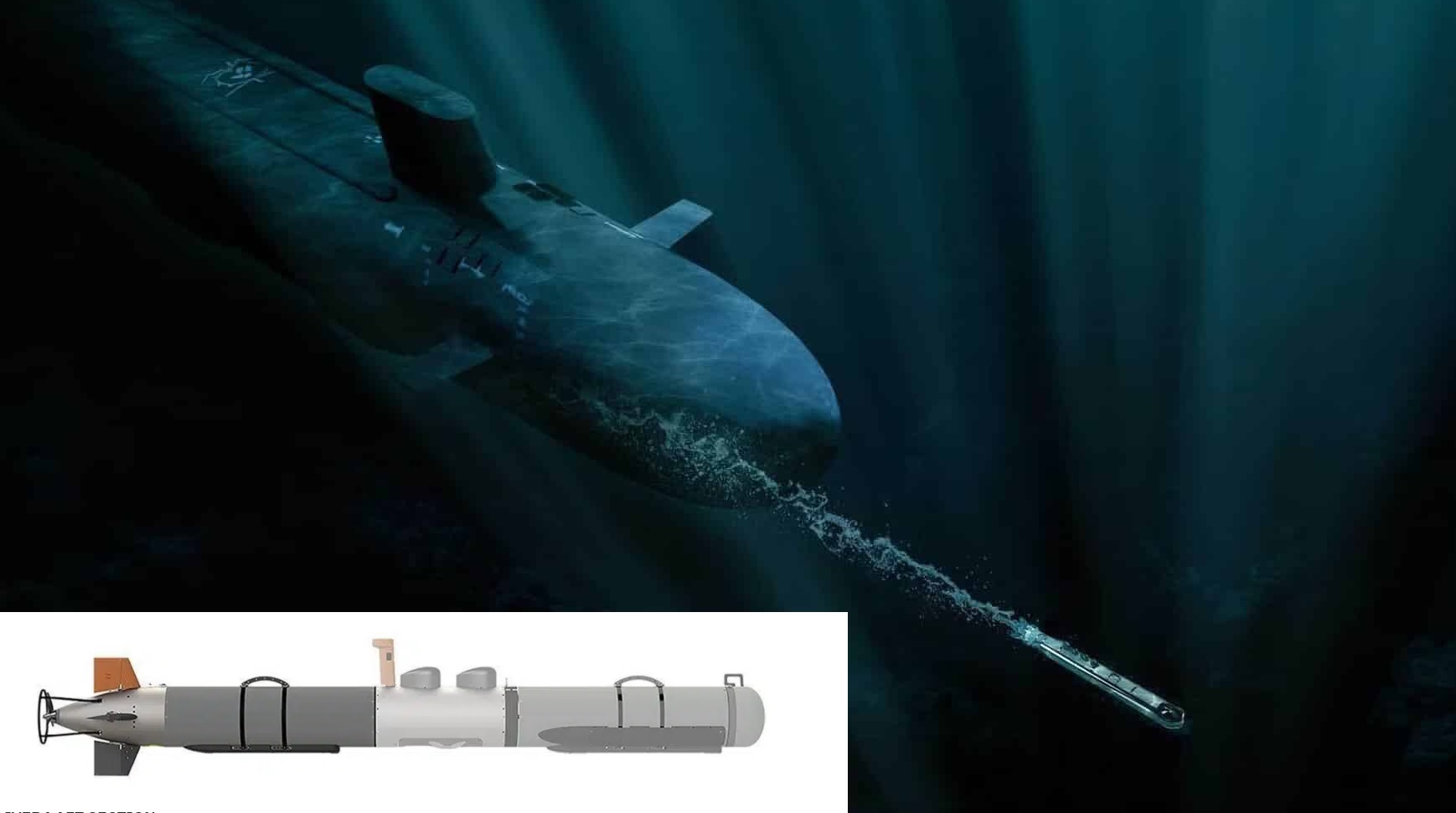
NATIONAL HARBOR, Maryland — May 27, 2026 : L3Harris Technologies is advancing production and operational integration of its Iver4 900 autonomous underwater vehicle (AUV) for the U.S. Navy’s attack submarine fleet under a Defense Innovation Unit (DIU) program designed to enable torpedo tube launch and recovery of unmanned underwater systems. The effort aims to provide submarines with an organic unmanned capability for intelligence gathering, mine warfare, and seabed mapping missions while reducing risks to crews operating in contested environments. The company received an Other Transaction Authority (OTA) contract from the DIU to deliver a Torpedo Tube Launch and Recovery (TTLR) system capable of deploying and autonomously recovering the Iver4 900 through standard submarine torpedo tubes. Announced on March 25, 2026, the contract supports the U.S. Navy’s broader effort to expand manned-unmanned teaming and launched effects for undersea warfare operations. The Iver4 900 is intended to function as an underwater “loyal wingman” for attack submarines, supporting forward intelligence, surveillance, reconnaissance (ISR), mine countermeasure operations, seabed mapping, and other undersea missions without exposing the host vessel to higher-risk areas. Operating untethered and autonomously, the vehicle extends a submarine’s sensing and operational reach while remaining integrated into existing fleet infrastructure. TTLR System Designed for Existing Submarine Infrastructure At the center of the DIU initiative is the TTLR system, which enables the launch and recovery of the Iver4 900 while submarines remain submerged and underway. The system uses a specialized enclosure known as the Shock and Fire Enclosure (SAFECAP), which fits inside a standard torpedo tube. The vehicle launches from the enclosure, conducts assigned missions independently, and autonomously navigates back into the SAFECAP upon completion. Because the system uses existing torpedo tubes, submarines do not require structural modifications to their hulls or dedicated permanent storage space inside torpedo rooms. This approach allows the capability to be integrated across multiple submarine classes while preserving operational flexibility and stealth. L3Harris President of Maritime, Space & Mission Systems Nino DiCosmo stated that the capability is already intended to meet operational requirements rather than remain in a developmental phase. “The Torpedo Tube Launch and Recovery system is not a future capability, it’s answering combatant commander needs today,” DiCosmo said. “Our system is the first to successfully launch and recover AUVs from a submarine, providing commanders flexibility for persistent undersea operations and maintaining essential stealth.” Operational Role and Fleet Integration According to L3Harris, the Iver4 900 is designed to serve as an organic extension of submarine sensor systems and forms part of the Navy’s launched effects portfolio intended to improve targeting, intelligence collection, and mission endurance. The vehicle can perform forward ISR, seabed mapping, mine warfare tasks, and other classified operational missions typically associated with submarine deployments. During the Sea Air Space 2026 Symposium in National Harbor, Maryland, JR Gear, Vice President and General Manager of Integrated Systems and Encryption at L3Harris, described the operational rationale behind integrating autonomous systems into submarine missions. “When a diver is out there in the ocean, a lot of times they have a dive buddy for safety,” Gear said. “Unmanned systems are really good for the dull, dirty, and dangerous business. So you think of all those things together—what’s the dive buddy that a submarine has?” The system is currently undergoing operational evaluation through at-sea exercises involving Virginia-class submarines, where the U.S. Navy and L3Harris are refining concept-of-operations procedures and testing how submarines can employ autonomous systems in contested or denied environments. These exercises are also being used to validate deployment, recovery, and mission workflows before broader operational implementation. Modular Design Supports Multiple Mission Sets The Iver4 900 incorporates a modular, open-architecture design intended to support a wide range of mission requirements. Payload sections in the nose, tail, and side compartments are removable and field-swappable, enabling crews to rapidly configure the vehicle for different operational tasks. The system supports third-party sensors, autonomy software, sonar systems, ISR payloads, and mine countermeasure technologies. Available configurations include interferometric synthetic aperture sonar such as Northrop Grumman’s µSAS, multiple-aperture sonar systems, 3D underwater lidar for detailed seabed mapping and mine detection, and forward-looking echo sounders used for object avoidance and underwater navigation. L3Harris said the platform’s open architecture allows continued payload development with external industry partners, enabling future capability upgrades without redesigning the vehicle itself. Technical Specifications and Endurance The Iver4 900 measures approximately 2.5 meters in length, features a 9-inch diameter titanium and carbon-fiber pressure housing, weighs less than 230 pounds, and is rated for operations at depths of up to 300 meters. The AUV can travel at speeds exceeding three knots during transit and more than five knots in sprint operations. Mission endurance varies depending on payload configuration and battery type. The platform uses the first submarine- and aviation-approved lithium-ion battery technology certified for Navy AUV operations, supporting hot-swappable battery replacement. In a lithium-ion configuration, the system can operate for over 40 hours and travel approximately 80 nautical miles under mission-minimal payload conditions. Standard nickel-metal hydride (NiMH) battery packs provide more than 20 hours of endurance and roughly 40 nautical miles of range. Supporting Manned-Unmanned Undersea Operations The DIU program is focused on reducing sailor workload by leveraging autonomous navigation and automated launch-and-recovery procedures. Rather than directly piloting the vehicle, operators are intended to focus on mission execution, data exploitation, and threat analysis. “Let’s let the sailor do the mission and concentrate on the threat,” Gear said. “Let’s not have the sailor worry about how to fly, drive, or steer.” The system has also undergone testing on multiple submarine platforms, including evaluations by the United Kingdom’s Royal Navy on Astute-class submarines under Project SCYLLA, supporting interoperability efforts associated with AUKUS Pillar 2 advanced defense technology cooperation. L3Harris continues to expand the Iver family’s payload ecosystem through third-party partnerships while manufacturing the systems at its facility in Fall River, Massachusetts. The company and the DIU have not disclosed contract value details or a production delivery timeline.
Read More → Posted on 2026-05-27 14:30:59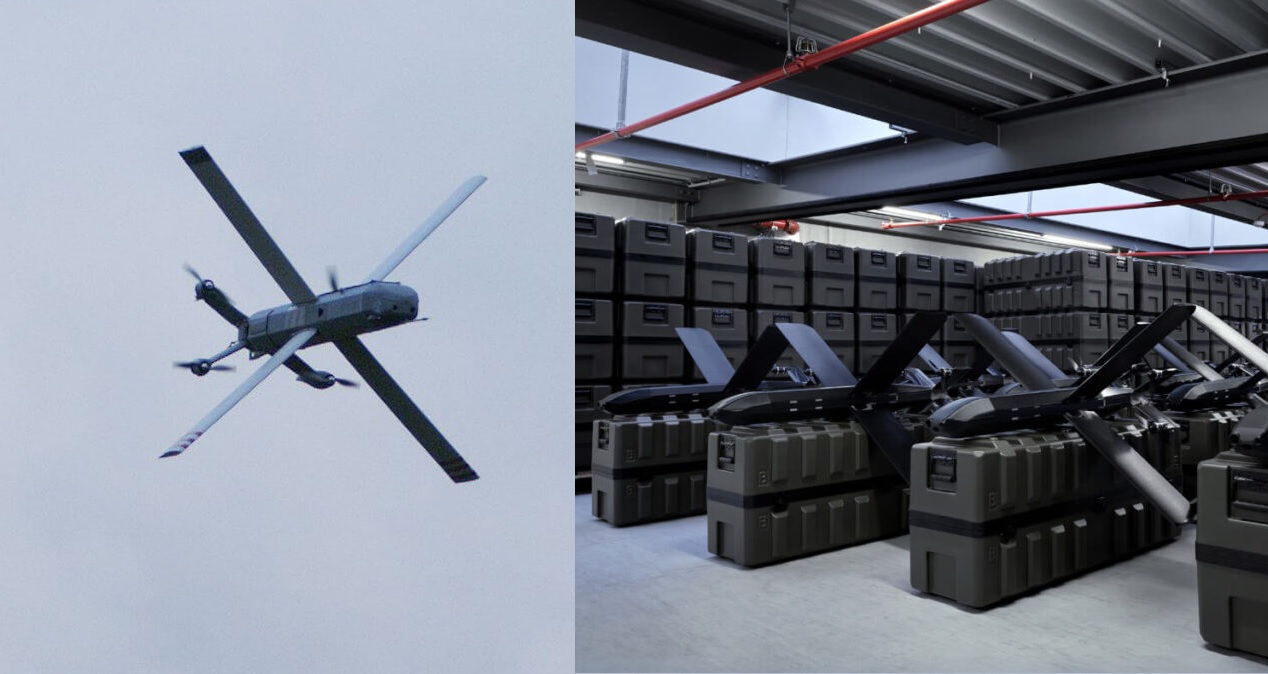
World
TOKYO — May 27, 2026 : The Japan Ground Self-Defense Force (JGSDF) has reached an initial agreement to procure the HX-2 loitering munition system from Helsing, marking an early step in Japan’s effort to expand advanced unmanned strike capabilities and integrate autonomous systems into its military structure. The agreement, facilitated through a local intermediary partner, comes as Japan accelerates investment in artificial intelligence-enabled defense technologies and unmanned warfare capabilities. The HX-2 is a software-defined, electrically propelled X-wing loitering munition designed for beyond-line-of-sight precision strikes against artillery systems, armored vehicles, defensive positions, and other military targets. Unveiled in December 2024, the system combines reconnaissance and strike capabilities in a single platform, enabling operators to monitor an area before conducting a precision attack. According to available technical specifications, the HX-2 weighs approximately 12 kilograms, can reach speeds of up to 220 kilometers per hour, and has an operational range of up to 100 kilometers. The system supports multiple payload configurations, including anti-tank and anti-structure munitions, and can carry warheads of up to five kilograms depending on mission requirements. A key feature of the HX-2 is its artificial intelligence-assisted operating system, which enables target recognition, tracking, and navigation in contested environments. The munition employs machine vision and stored mapping data to navigate in GPS-denied conditions and is designed to continue operating even when communications are disrupted by electronic warfare. While the system incorporates autonomous functions, Helsing states that it remains under human-on-the-loop oversight for engagement decisions. The HX-2 is integrated into Helsing’s Altra reconnaissance-strike software platform, allowing coordinated operations with other unmanned and manned systems. The platform is intended to support synchronized targeting, reconnaissance, and swarm-style operations involving multiple loitering munitions and battlefield assets. Japan Expands Unmanned Warfare Capabilities Japan’s procurement effort forms part of a broader military modernization strategy focused on unmanned systems and artificial intelligence. In April 2026, the JGSDF established two specialized offices within the Ground Staff Office — the Unmanned Defense Capability Promotion Office and the Unmanned Systems Office — to oversee the development and operational integration of autonomous capabilities. These organizations are tasked with developing doctrine for the deployment of loitering munitions alongside manned tanks, coastal artillery systems, and wider land-based defense operations. Japanese defense planners increasingly view autonomous systems as force multipliers capable of improving battlefield effectiveness while addressing manpower limitations. Japanese Defense Minister Shinjiro Koizumi has also launched a national public-private roadmap aimed at strengthening Japan’s domestic loitering munition and small unmanned aerial vehicle industry. The initiative seeks to support Japanese technology startups in developing low-cost, AI-enabled, mass-producible systems while reducing long-term dependence on foreign suppliers. At the same time, Japan plans to procure mature foreign systems to address immediate operational requirements until domestic production capabilities are sufficiently developed. The agreement with Helsing therefore represents both a near-term acquisition effort and part of a wider industrial transition strategy. The move also reflects personnel pressures within the JGSDF. The force has reported a personnel sufficiency rate of 89.1 percent, increasing interest in technologies that can supplement manpower requirements. Japan’s defense budget is expected to significantly expand spending on unmanned capabilities, including coastal defense systems such as the Shield architecture, which incorporates loitering munitions and other uncrewed platforms. Germany Expands HX-2 and Loitering Munition Procurement Japan’s agreement comes amid a broader expansion of loitering munition procurement across Europe. In March and April 2026, Germany placed orders for a five-digit number of loitering munitions from Helsing, Stark Defence, and Rheinmetall, with deliveries scheduled for the following year. The associated framework agreements permit expansion to a six-digit total in subsequent years, contingent upon contractor performance and production benchmarks. Germany’s initial procurement tranche for the HX-2, signed in February 2026, was valued at approximately €300 million under a larger framework agreement potentially worth up to €1 billion. Similar contracts valued between approximately €268 million and €300 million were also awarded to Stark Defence for its Virtus loitering munition system as part of Germany’s broader effort to diversify procurement and expand precision-strike drone inventories. The Bundeswehr has already begun integrating loitering munitions into operational formations. Field exercises conducted by the Loitering Ammunition Battery of Artillery Battalion 455 reportedly included tests against moving armored targets, including Leopard 2 tanks, as part of wider military evaluations. Combat Use in Ukraine The HX-2 is currently the only German-developed loitering munition system deployed on a large scale in Ukraine. Thousands of systems have reportedly been delivered to Ukrainian forces, where multiple frontline units are operating the munition in combat conditions. Ukrainian officials have publicly cited positive operational feedback regarding the system. Serhii Beskrestnov, an adviser involved in Ukraine’s digital transformation and defense technology initiatives, has shared footage showing successful strike missions using the HX-2. Russian military reporting has also referenced the system’s operational accuracy in battlefield assessments. According to Helsing, military testing conducted in Germany, the United Kingdom, and Kenya demonstrated hit rates approaching or reaching 100 percent under controlled testing conditions. The company continues to supply several hundred HX-2 systems per month to Ukraine while expanding manufacturing through resilience-focused production facilities in Europe designed to maintain supply continuity. Growing International Interest Japan’s agreement with Helsing adds to growing international interest in the HX-2, which has undergone testing and evaluation in Germany, France, Sweden, and the United Kingdom. Loitering munition systems are increasingly viewed as cost-effective precision-strike platforms capable of operating in contested environments while complementing traditional artillery and conventional airpower. No details regarding procurement quantities, delivery schedules, or the total financial value of Japan’s agreement with Helsing have been disclosed.
Read More → Posted on 2026-05-27 14:19:24
World
HAIFA, Israel — May 27, 2026 : Elbit Systems Ltd.’s subsidiary FUSE has completed the acquisition of 100% of the shares of Blue White Robotics Ltd. (Bluewhite), an Israeli developer of AI-powered off-road autonomy solutions, expanding its portfolio of autonomous systems across air, land, and indoor operational domains. Financial terms of the transaction were not disclosed. Founded in 2017 and headquartered in Tel Aviv, Bluewhite develops OEM-agnostic off-road autonomy technology that enables conventional vehicles to be converted into autonomous systems without replacing entire fleets. Initially focused on agricultural automation in permanent-crop environments such as orchards and vineyards, the company has adapted its technologies for defense, homeland security, and industrial applications operating in rugged and unstructured terrain. Bluewhite’s core offering consists of two integrated systems: the Pathfinder autonomy kit and the Compass fleet management platform. Pathfinder retrofits existing vehicles with sensors, onboard computing hardware, and control systems to support autonomous operations, allowing manned vehicles to perform missions with limited human intervention. Compass functions as a cloud-based operational platform designed for planning, supervision, coordination, and remote monitoring of multiple autonomous vehicles simultaneously. Unlike road-focused autonomous systems that depend on structured infrastructure, Bluewhite’s platform is designed for challenging off-road environments where terrain conditions are unpredictable and GPS access may be degraded or unavailable. The company states that its autonomy stack incorporates physical AI and sensor fusion capabilities, enabling operations in GPS-denied environments while maintaining vehicle navigation and mission execution. According to Elbit Systems, Bluewhite has accumulated more than 100,000 cumulative autonomous operating hours across agricultural and defense platforms. Its ground autonomy technology has reached Technology Readiness Levels (TRL) 8 to 9, indicating systems that have progressed beyond testing and demonstration phases and are considered mature for operational deployment. Integration into FUSE’s Multi-Domain Ecosystem FUSE, formerly known as Flying Production, operates under Elbit Systems’ C4I and Cyber division and specializes in the development of AI-enabled autonomous combat systems, unmanned aerial platforms, and swarm technologies. The acquisition introduces an additional ground robotics layer into FUSE’s existing autonomy portfolio, supporting more coordinated operations between aerial, land-based, and indoor robotic systems. The integration is intended to strengthen FUSE’s ability to provide unified autonomous capabilities under a single command-and-control framework, enabling robotic systems across different operational environments to coordinate more efficiently during defense and security missions. “Autonomy and robotics are reshaping how defense forces operate today,” said Eyal Dahan, Chief Executive Officer of FUSE. “The world is changing rapidly, and modern battlefields require vast adoption of robotics capabilities. The integration of Bluewhite’s technologies into FUSE’s multi-domain ecosystem enhances our ability to deliver unified autonomous solutions across air, land, and indoor domains. This step enhances FUSE’s autonomous robotics capabilities, positioning the company to effectively address the growing global demand for scalable, AI-powered autonomy.” Focus on Manned-Unmanned Teaming and Operational Roles The acquisition supports growing military requirements for manned-unmanned teaming (MUM-T), a concept in which personnel supervise and coordinate fleets of robotic systems rather than conducting high-risk or repetitive activities directly. Bluewhite’s technologies could support military and security missions including logistics support, reconnaissance, perimeter security, cargo transportation, route clearance, and communications relay operations in difficult terrain. The company’s retrofit-based approach also offers defense operators the ability to modernize selected vehicles already in service instead of replacing complete fleets. This approach may simplify adoption timelines while lowering integration complexity for organizations seeking incremental deployment of autonomous systems. Bluewhite Leadership and Expansion Strategy Ben Alfi, Chief Executive Officer of Bluewhite, said the acquisition provides an opportunity to scale the company’s autonomy technologies into broader operational sectors. “Our mission has always been to bring practical autonomy to the field. By joining forces with FUSE and Elbit Systems, we gain a unique platform to bring our AI-driven ground autonomy technology to scale across defense, security and industrial applications,” he said. Founded by Ben Alfi, Yair Shahar, and Aviram Shmueli, Bluewhite had previously raised approximately $89 million in investment funding, including a $39 million Series C financing round announced in January 2024 backed by Insight Partners, Entrée Capital, and Peregrine Ventures. No specific military customers, vehicle platforms, delivery schedules, or deployment timelines connected to the acquisition have been announced. However, the transaction aligns with Elbit Systems’ broader strategy to integrate specialized autonomy technologies aimed at accelerating the deployment of operational robotic systems capable of supporting coordinated missions across multiple domains.
Read More → Posted on 2026-05-27 14:04:26
World
WASHINGTON, — May 27, 2026 : The U.S. Space Force has awarded SpaceX a $2.29 billion firm-fixed-price contract to develop the Space Data Network (SDN) Backbone, a proliferated low Earth orbit (pLEO) satellite constellation designed to provide resilient, high-capacity and low-latency military data transport worldwide. The award, announced by Space Systems Command (SSC) on May 26, was issued under an Other Transaction Authority (OTA) agreement as part of the Space Force’s effort to build a hybrid space-based communications architecture capable of rapidly transferring operational data between military systems. Previously known as MILNET, the SDN Backbone is a joint initiative between the Space Force and the National Reconnaissance Office (NRO), aimed at moving information from sensors to operational shooters worldwide by integrating military and commercial satellite capabilities. According to Space Systems Command, the SDN Backbone will serve as an integrated network providing robust, resilient, high-capacity and low-latency data transport while supporting worldwide tactical communications and broadband services. The system is intended to function as a core communications layer connecting satellites, sensors, command systems and weapons platforms to enable near real-time data movement during military operations. SpaceX to Deliver Operational Prototype by 2027 Under the agreement, SpaceX is required to provide a fully operational prototype capability by the end of 2027. The service, however, has not confirmed whether the effort will involve launching newly built satellites or leveraging spacecraft already operating in orbit. The architecture is based on SpaceX’s Starshield satellites, a militarized version of the Starlink platform developed for national security applications. The constellation will operate in proliferated low Earth orbit and function as an optically interconnected mesh network, allowing data to move across multiple satellites efficiently and securely. The SDN Backbone is expected to become the foundational backhaul layer of the broader Space Data Network architecture. Satellite Procurement and Budget Expansion Space Force budget documents indicate the service plans to procure 13 satellites for the Space Data Network in fiscal year 2026, followed by 21 satellites in fiscal year 2027 as part of the initial deployment phases. Earlier planning documents for the MILNET program referenced a potential constellation of approximately 480 satellites, although current efforts remain focused on early procurement tranches and operational capability. Funding allocated to the program reflects a significant expansion in investment. While the fiscal year 2026 budget allocated approximately $277 million for MILNET, the fiscal year 2027 request includes nearly $1.5 billion for SDN Backbone research and development and approximately $1.6 billion for procurement activities, indicating a larger push toward proliferated low Earth orbit communications infrastructure. The broader Space Data Network will also include a Mission Operations Center responsible for managing the hybrid transport constellation and coordinating operational data movement across the system. Competitive Contracting and Industrial Base Expansion Space Systems Command stated the SpaceX award was made through a competitive process but did not immediately confirm whether additional bids were submitted. A Space Force spokesperson previously stated that the service intends to strengthen the U.S. industrial base to meet future proliferation requirements and continues efforts to identify additional contractors capable of building SDN satellites and supporting architecture components. Lt. Col. Jeffrey Fry, SDN Backbone system program manager, said competition remains central to the acquisition strategy. “Our acquisition strategy is designed to foster competition and broaden our industrial base,” Fry stated. “We aren’t trading speed for scale; we are demanding both. By using rapid prototyping and Other Transaction Authorities, we are ensuring our advanced solutions are integrated and delivered to the warfighter as fast as possible.” Integration With Wider Defense Space Architecture The SDN Backbone will operate alongside the Space Development Agency’s Transport Layer, with both systems intended to create a unified and open architecture supporting current and future Department of Defense missions. Together, the systems are expected to provide resilient global connectivity for military data transport requirements. To support interoperability across the constellation, the Space Force is also advancing the Enterprise Space Terminal (EST) program. Contractors including CACI, General Atomics and Viasat are developing standardized long-range laser communication terminals designed to implement common waveforms and enable crosslink compatibility between satellites across the network. Col. Ryan Frazier, acting Portfolio Acquisition Executive for Space-Based Sensing and Targeting, said the SDN Backbone will strengthen the Space Force’s ability to maintain continuous, global and secure communications between military systems. “The SDN Backbone leverages the best of commercial innovation and delivers a strong foundation for the SDN mission set,” Frazier stated. “The SDN Backbone supports the broader SDN, which acts as a core communications layer for the U.S. Space Force warfighting systems, ensuring our sensors and shooters are connected continuously, globally and securely.” Space Systems Command, which oversees a $15.6 billion annual space acquisition portfolio, is responsible for acquiring, developing and delivering the SDN Backbone through its Portfolio Acquisition Executive for Space-Based Sensing and Targeting as the broader architecture continues development.
Read More → Posted on 2026-05-27 13:52:14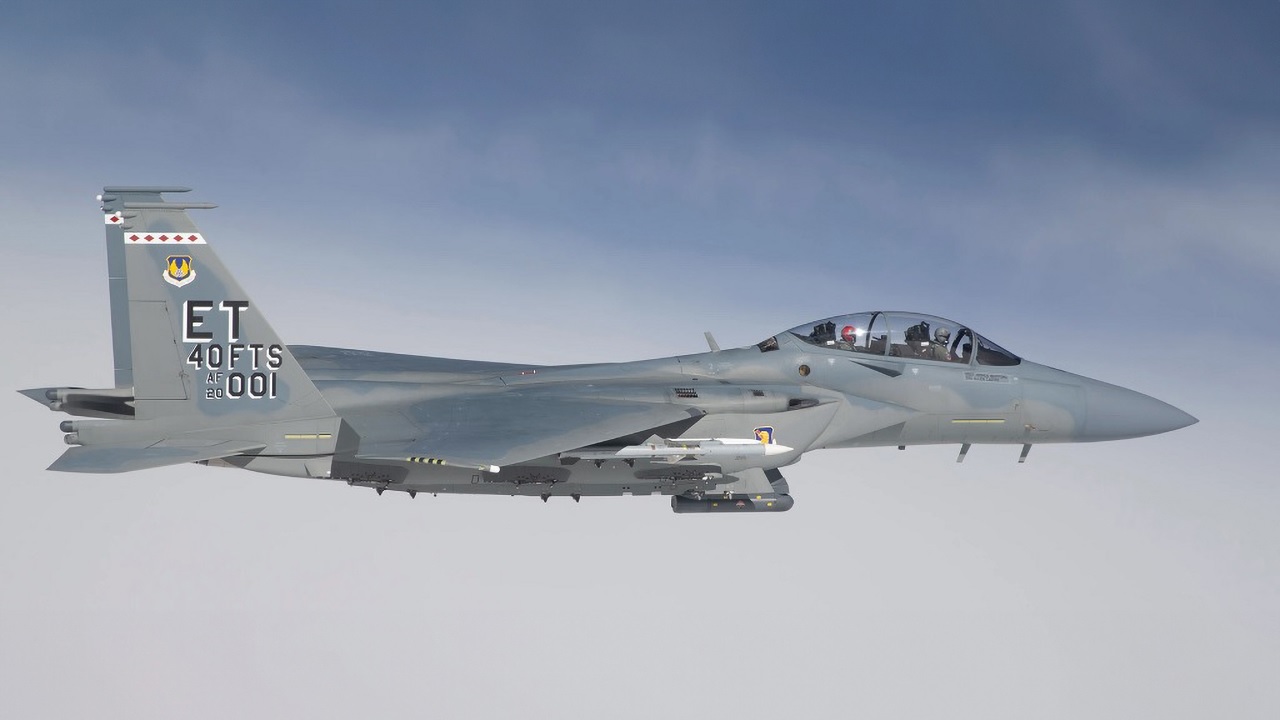
World
ROBINS AIR FORCE BASE, Georgia — May 27, 2026 : The U.S. Air Force has established a dedicated installation pathway to accelerate integration of the AN/ALQ-250 Eagle Passive Active Warning Survivability System (EPAWSS) across the F-15E Strike Eagle fleet, separating the advanced electronic warfare upgrade from routine maintenance schedules to speed delivery to operational squadrons. Announced by the Air Force Life Cycle Management Center (AFLCMC) on May 26, 2026, the new EPAWSS “Speedline” at the Warner Robins Air Logistics Complex in Georgia will begin receiving F-15E aircraft for modification in June 2026. The independent installation line is designed to operate separately from the aircraft’s standard Programmed Depot Maintenance (PDM) process, enabling aircraft not yet scheduled for depot work to receive the survivability upgrade earlier. Dedicated Installation Line to Speed Fielding Historically, EPAWSS integration was conducted during scheduled PDM cycles at Warner Robins, a process that consolidated maintenance but restricted installation rates because upgrades could only occur when aircraft entered depot maintenance. A 2025 Government Accountability Office assessment noted that linking modifications to PDM timelines delayed broader fleet fielding of the system. The newly established Speedline removes this limitation by creating a dedicated pathway exclusively for EPAWSS modifications. According to AFLCMC, the separation provides flexibility to install the system on aircraft that may not be scheduled for depot maintenance for another five to seven years. “The newly established Speedline resolves this limitation and operates entirely independent of the standard PDM line,” AFLCMC said. “This vital separation provides the program with the necessary flexibility to complete installations of this critical defensive system on aircraft that may not be due for PDM for another five to seven years.” Lt. Col. Matthew Heil, EPAWSS Materiel Leader for the F-15 Program Office, said the upgrade is essential to maintaining the Strike Eagle’s effectiveness in modern combat environments. “The F-15E Strike Eagle remains a cornerstone of our tactical airpower and deep strike capabilities,” Heil said. “We are not merely extending the life of this platform; we are aggressively expanding its lethality and survivability to ensure it dominates the modern battlespace.” Program Timeline and Fleet Implementation EPAWSS completed Initial Operational Test and Evaluation (IOT&E) for both the F-15E Strike Eagle and F-15EX Eagle II in early 2024 before entering full-rate production in January 2025. Boeing, serving as prime integrator, received a $615.8 million contract to support procurement and installation activities through 2030, while BAE Systems manufactures the system and develops its software architecture. The Air Force plans to retrofit 99 F-15E Strike Eagles with EPAWSS, while the system is installed as standard equipment on all new-production F-15EX aircraft. Before broader operational fielding, installations were limited to developmental and operational test aircraft assigned to Eglin Air Force Base, Florida, and Nellis Air Force Base, Nevada. Operational integration began with aircraft assigned to the 48th Fighter Wing at RAF Lakenheath in the United Kingdom. Modification work on the first operational F-15E started in May 2023, and the first two EPAWSS-equipped aircraft were delivered to the wing in January 2025. AN/ALQ-250 EPAWSS Capabilities Manufactured by BAE Systems and integrated by Boeing, the AN/ALQ-250 EPAWSS is a fully digital self-protection system designed to detect, identify, locate, deny, degrade, disrupt, and defeat airborne and surface-to-air threats in contested electromagnetic environments. According to the Director of Operational Test and Evaluation, EPAWSS functionally replaces three legacy Tactical Electronic Warfare System components: AN/ALR-56C Radar Warning Receiver AN/ALQ-135 Internal Countermeasures Set AN/ALE-45 Countermeasures Dispenser Set The system integrates with the F-15’s AN/APG-82(V)1 Active Electronically Scanned Array radar and the Advanced Display Core Processor II mission computer, improving threat detection, situational awareness, and survivability in electronically contested environments. EPAWSS is smaller and lighter than previous F-15 electronic warfare systems due to its digital architecture while providing broad instantaneous bandwidth and high-speed scanning to counter modern radio-frequency threats, including low-probability-of-intercept signals and agile emitters. Expanded Countermeasure Capacity and Cognitive EW A visible external feature of EPAWSS-equipped aircraft is the addition of two tail fairings positioned outboard of each engine, housing electronic warfare components and additional expendable countermeasure dispensers. The upgrade increases the F-15’s chaff and flare capacity by 50 percent through four added dispensers, bringing the aircraft total to 12 dispensers capable of carrying up to 360 cartridges. The expanded capacity enables greater use of defensive expendables in modern combat environments, including against shoulder-fired missile threats. EPAWSS also supports cognitive electronic warfare processing, enabling the system to analyze previously unencountered electromagnetic threats and optimize countermeasure techniques in real time. The capability was demonstrated during the Northern Edge 2023 exercise, where the system processed in-mission data to generate new techniques and adapt waveforms against unfamiliar threats. “EPAWSS is a leap in technology, improving the lethality and combat capabilities of the F-15E and F-15EX in contested, degraded environments against advanced threats,” said Maj. Bryant “Jager” Baum, EPAWSS Test Director for the Air Force Operational Test and Evaluation Center. “EPAWSS has set the baseline for EW within the fighter community.” BAE Systems officials said the system was designed for rapid software updates and future capability insertion through agile development methods. While EPAWSS is not currently integrated with the AN/AAR-57A(V) Common Missile Warning System for infrared missile detection, its architecture allows future integration with additional sensors, and the F-15EX retains mounting provisions for potential expansion. The establishment of the dedicated EPAWSS Speedline is expected to increase the pace of fleet modernization by enabling the Air Force to install the survivability suite outside standard depot maintenance schedules while sustaining long-term upgrades to the F-15E Strike Eagle fleet.
Read More → Posted on 2026-05-27 13:27:24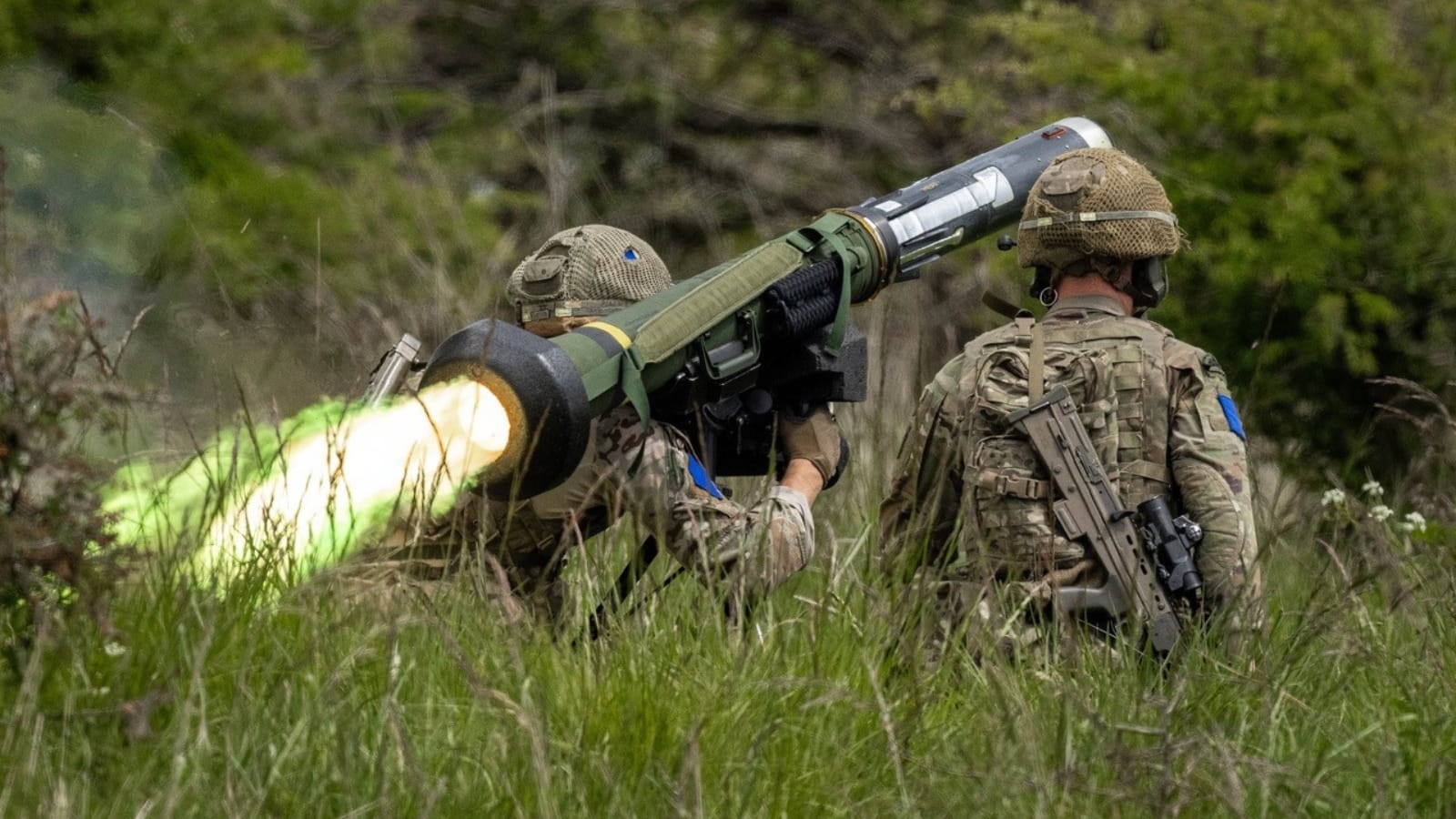
World
TUCSON, Arizona — May 26, 2026 : The Javelin Joint Venture (JJV), a partnership between Raytheon—an RTX business—and Lockheed Martin, has delivered the first Lightweight Command Launch Units (LWCLU) to the U.S. Army, marking the beginning of a modernization effort aimed at replacing the legacy command launch unit used with the Javelin anti-tank missile system. The LWCLU is designed as a next-generation launcher that will fully replace the existing Javelin command launch unit while maintaining compatibility with all past, current and future variants of the missile system. The launcher is intended to modernize how soldiers operate the weapon in combat environments while preserving interoperability across existing inventories. Enhanced Detection, Optics and Battlefield Capability According to the Javelin Joint Venture, the LWCLU introduces several operational improvements over the legacy system, including a significant increase in target acquisition performance. The new launcher provides twice the target detection and recognition range, enabling soldiers to identify threats from greater distances and improving battlefield awareness. The upgraded sight unit includes enhanced optics that maximize surveillance capability and support high-resolution engagement in both day and night conditions. In addition to missile-launch operations, the LWCLU is capable of supporting stand-alone intelligence, surveillance and reconnaissance missions due to its improved visual systems. The system also extends Javelin engagement range to approximately 4 kilometers, compared with 2.5 kilometers on the previous Block I Command Launch Unit, further improving operational flexibility for infantry formations. Reduced Weight and Improved Mobility Engineers redesigned the LWCLU to reduce the physical burden placed on soldiers operating the system. Compared with the legacy launcher, the new unit is approximately 30% smaller and 25% lighter, changes intended to improve mobility, reduce fatigue and increase survivability for troops operating in combat environments. The lighter design is expected to improve portability for infantry personnel while maintaining the precision engagement capability that has defined the Javelin system since its introduction. Production Expansion and Manufacturing Investment To support the transition to the new launcher, Raytheon invested $22 million to modernize its LWCLU production facility in Tucson, Arizona. The investment focused on upgrading manufacturing infrastructure, increasing production speed and expanding factory capacity as demand for the system grows. The Tucson facility is currently ramping annual production output in coordination with the U.S. Army to support fielding requirements and future operational demand. The first deliveries follow two production contracts worth $267 million awarded to the Javelin Joint Venture by the U.S. Army in October 2024. The agreements covered both full-rate production and low-rate initial production of the LWCLU and support U.S. Army requirements alongside Foreign Military Sales for Estonia, Latvia and Lithuania. Low-rate initial production of the launcher began following a contract awarded in June 2022, with first deliveries originally scheduled for 2025. Production work is performed in Tucson, while completion of the current contracts is expected in 2026 and 2028. Company and Program Statements “Delivering the first LWCLUs to the U.S. Army reflects the Javelin Joint Venture’s commitment to continuously advancing technology for service members,” said Jenna Hunt Frazier, president of the Javelin Joint Venture and Javelin program director at Raytheon. “Our investments in modernization and production capacity ensures soldiers receive this cutting-edge capability faster.” “The production and delivery of the LWCLU marks a pivotal step in modernizing the Javelin system for today’s warfighter,” said Rich Liccion, vice president of the Javelin Joint Venture and Javelin program director at Lockheed Martin. “Its innovative design enhances mobility and survivability while preserving the precision firepower that users rely on.” Long-Term Modernization of the Javelin System The Javelin weapon system is jointly developed and produced by Raytheon in Tucson, Arizona, and Lockheed Martin in Orlando, Florida. The medium-range “fire-and-forget” anti-armor missile system uses automatic infrared guidance, allowing operators to lock onto targets and seek cover immediately after launch instead of maintaining continuous line-of-sight guidance. The system entered full-rate production in 1994 and operational service in 1996. To date, more than 50,000 missiles and over 12,000 command launch units have been delivered. With ongoing modernization efforts, the Javelin system is projected to remain in service with the U.S. military through at least 2050.
Read More → Posted on 2026-05-26 17:48:32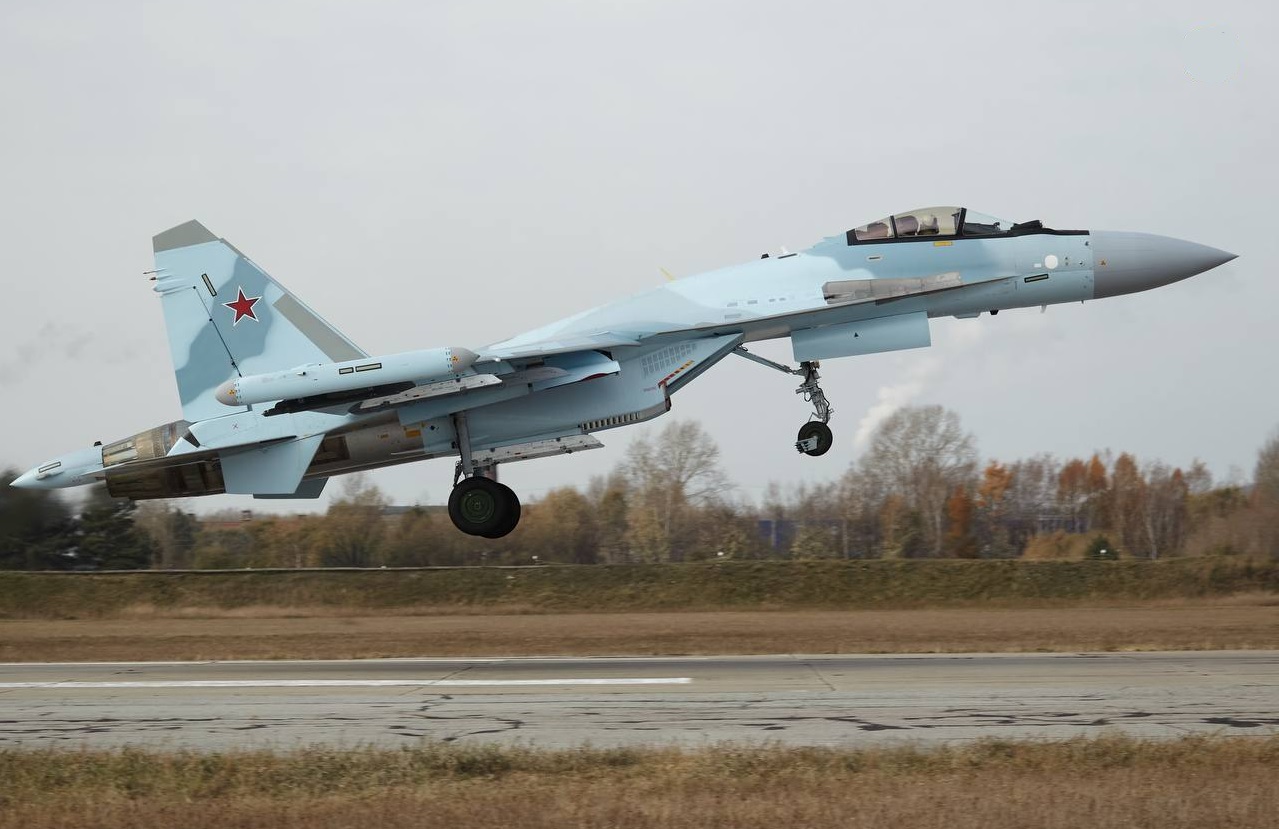
World
MOSCOW, — May 26, 2026 : The Russian Aerospace Forces (VKS) have officially received a new batch of Su-35S long-range air superiority fighters from the state-owned United Aircraft Corporation (UAC), marking the second publicly confirmed delivery of the aircraft in 2026 following an earlier transfer in mid-April. The handover underscores Russia’s continued effort to sustain tactical aviation production despite international sanctions, wartime pressures and expanding export commitments. Production Continues Despite Sanctions The Su-35S is manufactured at the Komsomolsk-on-Amur Aviation Plant (KnAAZ) named after Yuri Gagarin, one of Russia’s principal combat aircraft production facilities. Continued manufacturing at the plant reflects Moscow’s effort to preserve output for its tactical aviation fleet despite restrictions affecting supply chains and access to foreign technology. The latest transfer follows a sustained rise in production activity. Industry estimates indicate KnAAZ delivered seven batches of Su-35S fighters to the Russian Aerospace Forces during 2025, amounting to approximately 17 to 20 aircraft, compared with roughly 15 aircraft delivered across four batches in 2024. The first publicly confirmed batch of 2026 was transferred in mid-April, with the latest handover arriving in late May. Continuous deliveries since the aircraft entered operational service in 2014 have expanded the operational Su-35S fleet to an estimated more than 150 aircraft, up from roughly 135 units one year earlier. The fighter has increasingly become a key component of Russia’s tactical combat aviation fleet, supporting air superiority, interception and strike missions. Combat Operations and Expanding Operational Role The Su-35S first gained extensive operational experience after deployment to Syria in late 2015, where it provided air cover for Syrian government operations and monitored regional military activity involving Turkey, Israel and NATO member states operating in nearby airspace. Since then, the aircraft has become one of Russia’s most combat-tested post-Cold War fighter platforms in air-to-air operations. In the ongoing Ukrainian theater, the Su-35S has been used for long-range combat air patrols, escort missions, strike support, reconnaissance and interception tasks. Russian sources attribute the aircraft with the destruction of several Ukrainian Air Force MiG-29 and Su-27 fighters, in addition to an F-16 reportedly shot down in mid-May 2026. The aircraft has also continued to interact with Western military aviation in international airspace. In early March, Royal Norwegian Air Force F-35A fighters intercepted Su-35S aircraft escorting Tu-95MS strategic bombers over the Barents Sea during a long-range aviation mission. During the latest delivery, a Russian Aerospace Forces pilot outlined the fighter’s mission profile, describing the Su-35S as a manoeuvrable multirole aircraft used for long-range interception, protection of strike groups and ground facilities, destruction of unmanned aerial vehicles, precision-guided strikes against ground and maritime targets, and reconnaissance missions identifying enemy positions deep behind frontline areas. Technical Capabilities and Limitations Russia classifies the Su-35S as a “4++ generation” fighter, combining long operational range, multirole capability and high maneuverability. Powered by twin thrust-vectoring engines, the aircraft is designed for enhanced agility during close-range engagements and has an unrefuelled combat radius exceeding 2,000 kilometres. However, the fighter lacks low-observable stealth technologies found on fifth-generation aircraft such as the American F-35 and China’s J-20. Its avionics suite relies on the Irbis-E passive electronically scanned array (PESA) radar rather than the active electronically scanned array (AESA) systems increasingly fielded by modern competitors. For beyond-visual-range combat, the aircraft primarily employs R-77-1 and R-27 air-to-air missiles, both older designs relative to newer Western and Chinese systems. Russia integrated the more advanced R-77M missile onto the Su-35S in 2025, though procurement levels remain limited. In short-range engagements, the aircraft uses the R-74 missile, which analysts assess as having a more restricted high-angle targeting capability compared with systems such as the AIM-9X Block 2 and PL-10. Although the Su-35S remains a highly capable platform for long-range interception and tactical operations, analysts continue to assess limitations in stealth, sensor technologies and weapons integration when compared with the most advanced U.S. and Chinese fighter aircraft. Foreign Components and Supply Chain Concerns Despite being assembled domestically, the Su-35S programme remains dependent on imported electronic components. A recent investigation conducted by the International Partnership for Human Rights (IPHR) and the Independent Anti-Corruption Commission (NAKO), based on the wreckage of downed Russian aircraft, identified 889 foreign-made components produced by 138 international companies inside Su-35S avionics systems. According to the investigation, the components were sourced primarily from the United States, alongside suppliers in Japan, the European Union, Switzerland, Taiwan and South Korea. Researchers stated that procurement networks involving intermediary firms and shell companies are believed to facilitate access to restricted technologies despite Western export controls. Export Orders Expand Production Demands Before 2025, the Su-35S had achieved limited export success, with China remaining the aircraft’s only confirmed foreign operator after purchasing 24 fighters. Export demand expanded significantly after an unannounced delivery of 18 aircraft to Algeria beginning in February 2025. Leaked Russian government documents later indicated that Iran ordered 48 fighters to modernize its air force, while Ethiopia placed an order for six aircraft. Combined with previous sales to China and Algeria, confirmed export commitments have increased to 96 aircraft across four international customers. Production for Iran’s order reportedly began in late 2025, leading to questions over how export obligations may influence future delivery rates to the Russian Aerospace Forces as KnAAZ balances domestic procurement and international contracts. Industry observers have additionally suggested that Moscow may attempt to market the aircraft to North Korea amid expanding defence ties, although Russia’s more advanced Su-57 fifth-generation fighter — which recorded its first export delivery to Algeria in November 2025 — is expected to attract greater long-term attention from potential foreign operators. Continued Role in Russian Tactical Aviation The latest delivery reinforces the Su-35S’s position as one of the Russian Aerospace Forces’ principal tactical fighter platforms. The aircraft continues to support long-range interception, strike escort, reconnaissance, unmanned aerial vehicle interception and precision-guided strike missions, while production efforts continue under sanctions, expanding export obligations and sustained operational demand.
Read More → Posted on 2026-05-26 17:45:48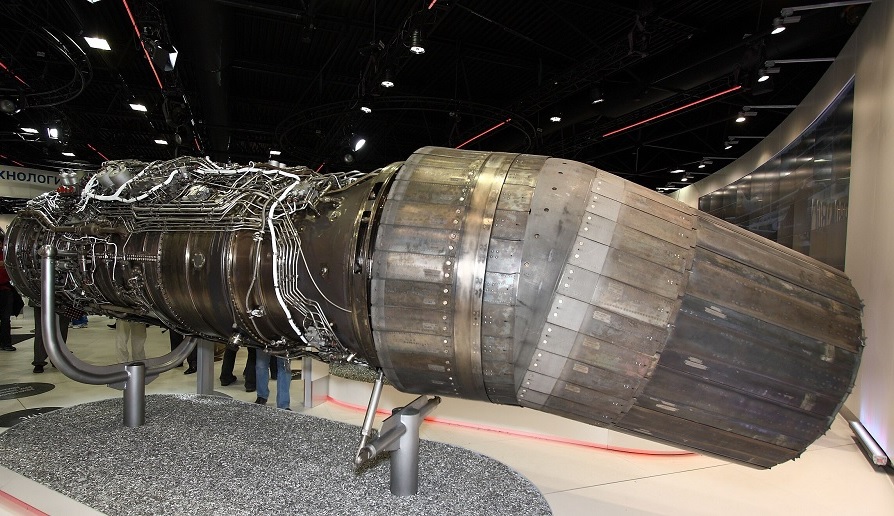
India
BENGALURU — May 26, 2026 : Hindustan Aeronautics Limited (HAL) is developing a digital twin of the GTDE-117 gas turbine starter, a critical subsystem used to initiate the AL-31FP engines powering every Su-30MKI fighter aircraft operated by the Indian Air Force (IAF). The initiative is intended to support the gradual replacement of Russian-origin components with Indian alternatives as indigenisation efforts for the country’s frontline combat aircraft continue to expand. The GTDE-117 functions as a gas turbine drive engine responsible for starting the AL-31FP thrust-vectoring turbofan engine installed on the Su-30MKI. Produced originally by Russian manufacturers, including Klimov Corporation and Krasny Octyabr, the GTDE-117 is a compact turboshaft engine with a free turbine that acts as an auxiliary power unit during engine start-up. It provides the mechanical shaft power necessary to rotate the AL-31FP engine to self-sustaining revolutions per minute (RPM) required for ignition and stable operation. Since each Su-30MKI is powered by two AL-31FP engines, the reliability of the starter system remains directly linked to aircraft availability and operational readiness. Digital Twin to Support Testing, Maintenance and Indigenous Manufacturing A digital twin is a virtual replica of a physical system that reproduces its performance, operational behaviour and mechanical characteristics in a simulated environment. HAL’s digital model of the GTDE-117 is expected to replicate thermodynamic properties, fluid dynamics, structural loads and operating parameters in real time, allowing engineers to assess system performance without repeated physical testing. The platform will enable HAL to simulate engine start-up sequences, analyse performance under different operational and environmental conditions and monitor component behaviour during stress cycles. Engineers will also be able to evaluate wear patterns, identify possible failure points and forecast maintenance requirements before degradation occurs in physical hardware. The use of a digital twin is expected to reduce dependence on repeated prototype development and shorten validation timelines for subsystem modifications. It will also provide HAL with the capability to conduct virtual testing of replacement parts, allowing performance and compatibility checks before physical integration into the engine system. Entry Point for Replacing Russian-Origin Components The GTDE-117 project is being viewed as a practical entry point for reducing dependence on Russian supply chains supporting the Su-30MKI fleet. By digitally replicating the starter engine’s specifications, performance limits and operating tolerances, HAL can support the design, validation and certification of Indian-manufactured replacement parts for components currently imported from Russia. The capability is expected to assist HAL in addressing spare-part availability challenges, improving overhaul planning and ensuring long-term sustainment of the Su-30MKI fleet. Virtual validation of components through simulation may also reduce maintenance downtime and improve lifecycle support efficiency. HAL’s Expanding AL-31FP Manufacturing Base The AL-31FP engine, developed by Saturn (Lyulka) in Russia, has been licence-produced by HAL at its Engine Division in Koraput, Odisha, since the early 2000s. The facility currently undertakes assembly, manufacturing, testing and overhaul of the engine and its modular systems for the IAF’s Su-30MKI fleet. As of 2026, HAL has manufactured nearly 1,000 AL-31FP engines at Koraput, reflecting a steady increase in indigenous production capability over the past two decades. In September 2024, the Ministry of Defence signed a contract valued at approximately ₹26,000 crore with HAL for the production of 240 additional AL-31FP engines to sustain the Su-30MKI fleet. The programme began with an indigenous content level of about 54 per cent and is targeted to reach 63 per cent by the end of the eight-year delivery schedule, under which HAL is expected to manufacture around 30 engines annually. Wider Su-30MKI Indigenisation Programme The digital twin initiative aligns with HAL’s broader effort to increase self-reliance in aero-engine technologies and critical aircraft subsystems. HAL has also established partnerships, including a Centre of Excellence in Digital Twin Technology with the University of Hyderabad, to advance simulation-based engineering, predictive maintenance and lifecycle management technologies across aerospace platforms. The effort forms part of India’s larger Su-30MKI modernisation and localisation programme, which includes upgrades to avionics, radar systems, weapons integration and structural improvements. Officials associated with the programme have stated that increasing indigenous content in propulsion systems and accessories is expected to improve fleet availability, reduce supply-chain dependence and lower long-term maintenance costs. For HAL, the GTDE-117 digital twin represents a focused technical effort aimed at improving the reliability, maintainability and domestic support ecosystem of a critical subsystem directly tied to Su-30MKI engine start-up and aircraft readiness.
Read More → Posted on 2026-05-26 17:37:18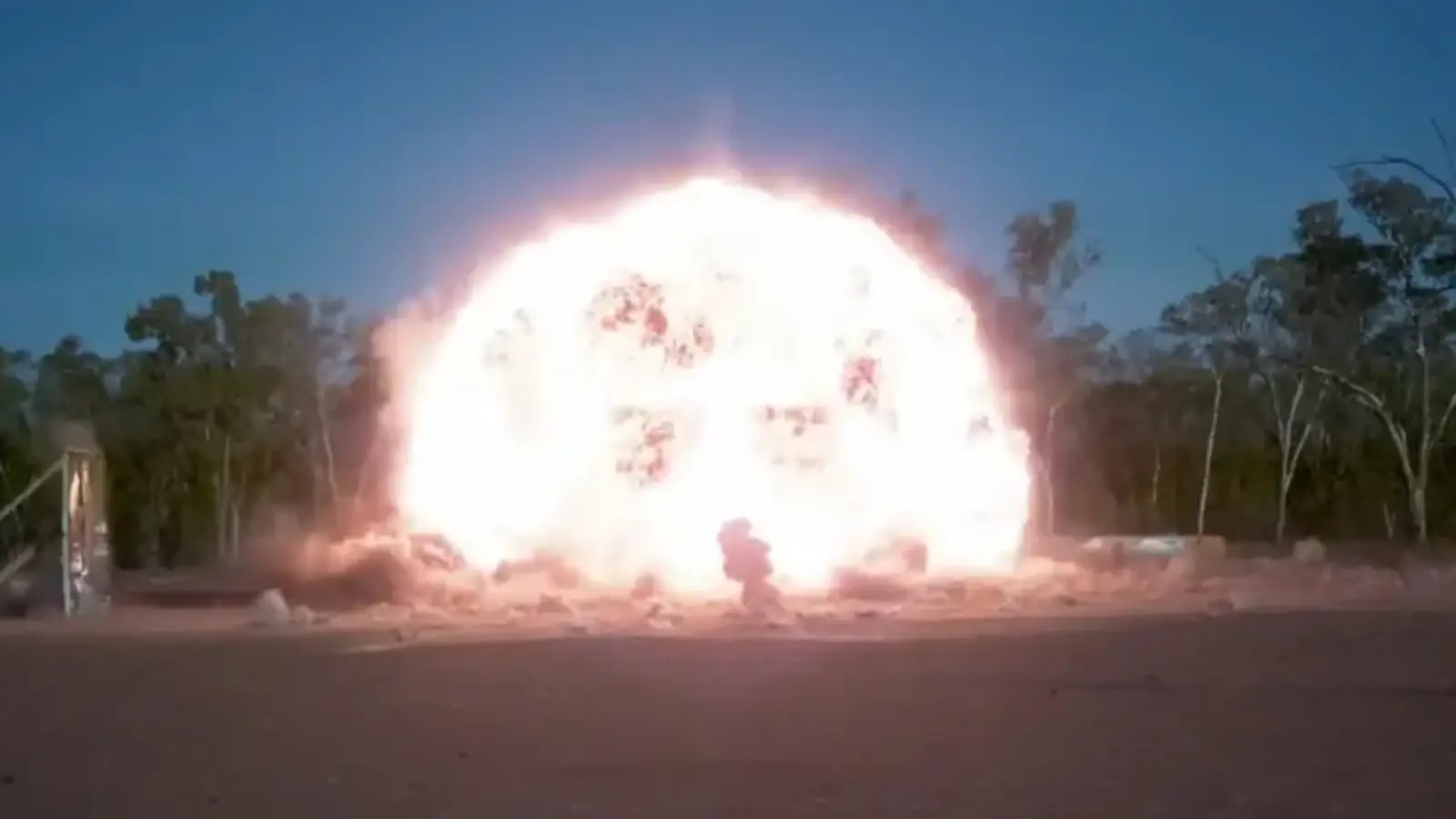
World
BOURKE, NEW SOUTH WALES — May 26, 2026 : A consortium of defense companies has successfully completed the test detonation of a locally co-produced warhead near Bourke, New South Wales, marking a further step in Australia’s effort to establish sovereign guided weapons manufacturing capability under the Guided Weapons and Explosive Ordnance (GWEO) enterprise. The project, completed in just 11 weeks, brought together Lockheed Martin Australia, Northrop Grumman Australia and Thales Australia to demonstrate Australia’s ability to rapidly design, manufacture and test production-quality warhead technologies domestically using existing industrial resources and facilities. Accelerating Australia’s Sovereign Guided Weapons Capability The tested warhead, manufactured by Northrop Grumman with industrial support from Thales Australia, is designed for integration into Lockheed Martin’s Guided Multiple Launch Rocket System (GMLRS), a precision-guided munition used by the Australian Army’s High Mobility Artillery Rocket System (HIMARS). GMLRS is capable of striking targets at ranges exceeding 70 kilometers and forms a key component of Australia’s emerging long-range precision strike capability. According to the companies, the demonstration was intended to establish a rapid and low-risk pathway toward domestic warhead production while supporting the Australian Government’s broader GWEO strategy, which seeks to expand sovereign guided weapons and explosive ordnance manufacturing capacity. The 11-week timeline highlighted an accelerated approach to engineering, manufacturing and testing, reflecting efforts among allied defense industries to improve production responsiveness and strengthen supply chain resilience for precision-guided munitions. Jeremy King, Chief Executive of Lockheed Martin Australia and New Zealand, said the demonstration showed the strength of cooperation across Australia’s defense industry and represented progress toward meeting the Commonwealth’s GWEO objectives. He stated that the partnership supports the development of GMLRS-related warheads required to establish a sovereign guided weapons capability for the Australian Defence Force. Building on Earlier GMLRS Production Milestones The Bourke detonation test follows another recent milestone in Australia’s guided weapons program. In April 2026, the Australian Army conducted the first live-fire test of an Australian-assembled GMLRS missile at the Woomera Test Range in South Australia. Those missiles were assembled at Lockheed Martin Australia’s facility in Port Wakefield, demonstrating an early stage of domestic GMLRS assembly capability and supporting the next phase of local production. Lockheed Martin Australia has also established a dedicated GMLRS production facility in Australia as part of its role in the GWEO enterprise, aimed at strengthening sovereign missile manufacturing and reducing reliance on overseas supply chains. Strategic Industrial Collaboration and Supply Chain Development Executives from the partner companies emphasized that the program relies on existing domestic industrial infrastructure and collaboration between industry, government and local suppliers to improve long-term supply certainty. Jeff Connolly, Chief Executive of Thales Australia and New Zealand, said the effort demonstrates the ability of industry partners to establish in-country manufacturing and support the Australian Defence Force with sovereign capabilities. He noted that Lockheed Martin has established a GMLRS factory in Australia, while Northrop Grumman serves as the original equipment manufacturer of the selected warhead system, with Thales contributing industrial support to expand domestic production. Rob Denney, Country Executive for Northrop Grumman Australia, said the company’s manufacturing expertise, program planning and production experience are intended to help accelerate sovereign warhead manufacturing in Australia. He added that cooperation between Lockheed Martin, Thales Australia, the Commonwealth and local suppliers is focused on creating a scalable, affordable and effective long-range guided weapons capability. Supporting Future Domestic Defense Manufacturing The companies stated that results from the Bourke warhead detonation exceeded expectations and positioned the partnership for future production of more complex systems. Beyond defense capability, the program is expected to support local employment, industrial development and economic activity as Australia expands domestic guided weapons manufacturing under the GWEO framework.
Read More → Posted on 2026-05-26 17:25:36
World
LONDON — May 26, 2026 : British analysts writing for The Telegraph have projected that the Global Combat Air Programme (GCAP), the joint sixth-generation stealth fighter initiative involving the United Kingdom, Japan, and Italy, may encounter financial, industrial, and operational challenges based on the historical performance of previous British-led multinational combat aircraft programmes. The assessment argues that the programme, intended to deliver a next-generation fighter designated Tempest in British service by 2035, risks placing substantial pressure on defence budgets while potentially affecting investment in other aerial warfare priorities. Analysts warned that the multibillion-pound programme could absorb resources required for complementary capabilities, including affordable unmanned systems and supporting air combat infrastructure. GCAP was formally established through a trilateral treaty in December 2023, integrating the United Kingdom’s BAE Systems-led Tempest programme with Japan’s Mitsubishi F-X initiative, while Italy joined as a full partner. The programme is designed to replace the Eurofighter Typhoon fleets operated by the UK and Italy and succeed Japan’s Mitsubishi F-2 fighter during the mid-2030s. The initiative is managed through a trilateral government structure alongside an industrial partnership established in June 2025 under the name Edgewing, with equal participation from BAE Systems, Leonardo, and Japan Aircraft Industrial Enhancement. A demonstrator aircraft is expected to fly before 2027, while full operational service remains targeted for 2035. Concerns Over the Multinational Development Model According to the assessment, GCAP may struggle to avoid the procurement and development issues experienced by earlier British collaborative fighter programmes. Analysts questioned whether the multinational development structure can maintain schedule discipline, control costs, and deliver an aircraft capable of remaining competitive against rapidly evolving combat aviation technologies. The Telegraph assessment argued that Britain’s previous multinational fighter projects — the Panavia Tornado and Eurofighter Typhoon — experienced prolonged development cycles, cost overruns, and capability compromises that weakened value for money and delayed operational effectiveness. The article concluded: “First, we built a jet called Tornado in collaboration with Italy and Germany; which resulted in an expensive, prolonged disaster. Then we developed a jet called Typhoon in collaboration with Italy and other nations. This led to an even more expensive and even more prolonged disaster. Now once again, Britain is preparing to embark on a multinational collaboration, building a jet called the Tempest with Italy and Japan. What do we think the result will be?” Tornado Cited as an Example of Past Procurement Problems To illustrate concerns surrounding multinational combat aircraft development, analysts highlighted the Panavia Tornado, developed during the Cold War by the United Kingdom, West Germany, and Italy. The assessment stated that Tornado’s primary operational concept — flying at low altitude and high speed to avoid enemy radar — ultimately proved vulnerable under combat conditions. During the 1991 Gulf War, eight Royal Air Force Tornados were reportedly lost from a deployed force of 48 aircraft. Analysts further argued that later Tornado fighter variants attracted criticism regarding operational effectiveness while procurement and sustainment costs increased due to the aircraft’s complex variable-geometry “swing-wing” configuration. By the time Tornado entered widespread service, competing fighter programmes in the United States, Soviet Union, and France had largely transitioned toward fixed-wing aircraft that offered greater efficiency in maintenance and combat performance. Eurofighter Typhoon’s Delays and Cost Concerns The assessment applied similar criticism to the Eurofighter Typhoon, jointly developed by the United Kingdom, Germany, Italy, and Spain. According to the analysis, the Typhoon entered Royal Air Force service in 2007 following a lengthy and expensive development period. British defence officials reportedly classified early Tranche 1 aircraft as “early fourth-generation” in capability, while the United States had already introduced the fifth-generation F-22 Raptor into operational service two years earlier. The report further highlighted that early Tranche 1 Typhoon aircraft, which initially formed a large portion of the British fleet, were retired before reaching half of their intended service life because upgrading them to newer operational standards was considered financially impractical. Financial concerns also featured prominently in the assessment. Analysts argued that Typhoon procurement costs exceeded those of the U.S. F-22 stealth fighter, while sustainment costs reportedly ranged between £45,000 and £48,000 per flight hour. This figure was assessed as significantly higher than the estimated operating costs of the more advanced F-35 Lightning II, reported at approximately £31,000 per hour. Questions Over GCAP Capability and Timeline Beyond financial concerns, the assessment questioned whether GCAP can successfully deliver a sixth-generation aircraft capable of matching or exceeding advanced “5+ generation” variants of the U.S. F-35 and China’s J-20 stealth fighter if programme delays and budget pressures continue. The report noted that delays affecting early programme development have already generated frustration among Japanese officials, raising speculation that Tokyo could consider increasing procurement of additional F-35 aircraft should GCAP timelines slip further. Additional uncertainty has emerged following delays to a major trilateral design and development agreement reportedly linked to the United Kingdom’s postponed defence investment planning process. Concerns over programme execution have also intensified after reports that the UK’s National Infrastructure and Strategy Authority assigned GCAP a “RED” programme rating, citing the project’s scale, complexity, and early-stage maturity. Funding and Programme Execution Under Scrutiny As the United Kingdom approaches future defence spending reviews and projected budgetary pressures later in the decade, analysts argue that GCAP will remain under close financial and operational scrutiny among all three partner nations. The assessment concludes that unless structural procurement challenges observed in earlier multinational fighter programmes are addressed, GCAP risks repeating a pattern of elevated costs, schedule delays, and capability trade-offs that affected previous British-led combat aviation projects.
Read More → Posted on 2026-05-26 17:11:23
World
LONDON, — May 26, 2026 : The United Kingdom’s Royal Air Force (RAF) is continuing to strengthen its electronic warfare and suppression capabilities through the operational integration of the StormShroud unmanned aerial vehicle (UAV), the first platform in a new family of Autonomous Collaborative Platforms (ACP). Designed to operate alongside crewed combat aircraft including the F-35B Lightning and Eurofighter Typhoon, StormShroud carries Leonardo UK’s BriteStorm electronic warfare payload to support operations in contested environments and enhance aircraft survivability. The platform is intended to support Suppression of Enemy Air Defences (SEAD) missions by disrupting hostile radar systems and degrading an adversary’s ability to detect, track and engage allied aircraft. Operating ahead of high-value crewed platforms, StormShroud is designed to suppress enemy air defence networks and provide greater operational freedom for RAF fighter aircraft operating in high-threat airspace. StormShroud Platform and Technical Specifications StormShroud is based on the Tekever AR3 tactical uncrewed aerial system, a lightweight platform featuring a wingspan of 3.5 metres, a length of 1.9 metres and a payload capacity of approximately four kilograms. The system supports both vertical take-off and landing (VTOL) and fixed-wing configurations, allowing operational flexibility depending on mission requirements. In fixed-wing mode, the UAV can remain airborne for up to 16 hours and operate at a service ceiling of around 3,600 metres above mean sea level. The platform’s endurance and deployable configuration enable persistent operations in support of RAF strike packages and electronic warfare missions. BriteStorm Electronic Warfare Payload At the core of StormShroud’s mission capability is Leonardo UK’s BriteStorm payload, a low Size, Weight and Power (SWaP) stand-in jammer weighing approximately 2.5 kilograms. Derived from Leonardo’s BriteCloud countermeasure technology, the payload employs Digital Radio Frequency Memory (DRFM) technology to detect, record and manipulate hostile radar signals in real time. The system is designed to suppress and deceive integrated air defence systems (IADS) by generating false radar returns and disrupting radar tracking functions through digital jamming techniques. BriteStorm can create deceptive “ghost” targets on enemy radar systems while interfering with surveillance, early warning and target-tracking radars operating across A–J frequency bands. Integrated onto uncrewed platforms and launched effects, BriteStorm is intended to provide stand-in jamming support ahead of crewed aircraft, helping RAF combat aircraft maintain operational freedom in contested electromagnetic environments. Operational Role and RAF Integration StormShroud entered operational service with the RAF on May 2, 2025, becoming the first operational system within the service’s Autonomous Collaborative Platforms family. The capability is operated by RAF 216 Squadron with support from the RAF Regiment and personnel drawn from the Regular RAF, the Royal Auxiliary Air Force and specialist reservists with industry expertise. The system is designed with an open software architecture that enables operators to rapidly update mission software and electronic countermeasure packages between sorties using newly gathered intelligence, allowing adaptation to evolving threat systems. The RAF classifies StormShroud as an “attritable” platform, meaning the system is considered expendable within acceptable operational limits if its deployment helps protect higher-value crewed aircraft and contributes to mission success. Development and Industry Collaboration Development of StormShroud progressed rapidly from an Urgent Capability Requirement (UCR) to operational deployment within approximately one year. The accelerated timeline reflected lessons observed from the conflict in Ukraine, where uncrewed systems and electronic warfare capabilities have demonstrated increasing battlefield importance. The programme was developed through collaboration between the RAF Rapid Capabilities Office, the Defence Equipment & Support (DE&S) organisation, the Defence Science and Technology Laboratory (Dstl), Tekever and Leonardo UK. Although Tekever is headquartered in Portugal, the AR3 air vehicles used for StormShroud are manufactured in West Wales and Southampton in the United Kingdom. Leonardo UK produces the BriteStorm payload at its facility in Luton. Prior to RAF adoption, the Tekever AR3 platform accumulated more than 10,000 operational flight hours supporting Ukrainian operations, contributing to the system’s operational maturity. Testing, Exercises and Capability Development Following its introduction into RAF service, StormShroud has undergone continued operational testing and integration activities. During late 2025 and early 2026, RAF 216 Squadron conducted dynamic exercises at training locations including RAF Spadeadam and Salisbury Plain, demonstrating coordinated operations involving multiple StormShroud platforms and validating integration alongside wider RAF operational concepts. The RAF plans additional domestic and international exercises throughout 2026 as the service continues refining the capability and expanding operational experience with autonomous collaborative systems integrated into crewed combat operations.
Read More → Posted on 2026-05-26 16:26:14
World
SEOUL, — May 26, 2026 : South Korea is accelerating the development of indigenous jet engines for future combat drones and next-generation fighter aircraft as part of a broader national effort to strengthen aerospace self-sufficiency, secure domestic propulsion supply chains, and reduce long-term dependence on foreign engine technology. The initiative is focused on two key areas of military aviation: unmanned Cooperative Combat Aircraft (CCA) and next-generation manned fighter jets. Multiple state-backed programs are advancing simultaneously, with government agencies and domestic defense companies coordinating efforts to establish full-cycle indigenous propulsion capabilities. KASA Launches Combat Drone Engine Program On Tuesday, the Korea AeroSpace Administration (KASA) formally launched a state-funded next-generation dual-use aircraft engine program during a joint kickoff briefing in Sacheon, South Gyeongsang Province. The project is being led by Hanwha Aerospace in partnership with the Korea Aerospace Research Institute (KARI), universities, and domestic subcontractors, with approximately 900 billion won in government funding allocated between 2026 and 2029. The immediate objective is to develop a 4,500-pound-force (lbf) high-bypass turbofan engine designed primarily for future unmanned aerial vehicles and collaborative combat aircraft while maintaining dual civil and military applications. South Korean authorities are targeting operational deployment by 2029. A major technical focus of the program is the integration of a starter-generator directly into the engine’s rotating shaft. Unlike externally mounted systems, the embedded design is intended to reduce weight while producing up to 100 kilowatts of electrical power to support advanced onboard systems. Officials say the high power output will be essential for future CCAs operating artificial intelligence computing, advanced sensors, radar systems, and electronic warfare equipment. Indigenous Fighter Engine for the KF-21 Block III Alongside the unmanned engine effort, South Korea is advancing a longer-term program aimed at achieving propulsion independence for future manned combat aircraft. Working with the Defense Acquisition Program Administration (DAPA), Hanwha Aerospace is leading the Advanced Aviation Engine Development Project to produce an indigenous turbofan engine in the 15,000–16,000 lbf thrust class for future variants of the KF-21 Boramae fighter and potential sixth-generation combat aircraft. The fighter engine development initiative is scheduled to run from 2027 to 2040 and is backed by approximately $3.4 billion in government investment. The project is being conducted in partnership with Doosan Enerbility and supported by the Agency for Defense Development (ADD). The domestically developed engine is intended for the KF-21 Block III configuration, replacing foreign propulsion systems currently used in earlier aircraft variants. Officials have indicated that the same core propulsion technologies may later support future sixth-generation fighter concepts. Transitioning Beyond Licensed Production The KF-21, South Korea’s indigenous 4.5-generation multirole fighter, entered serial production earlier this year and is expected to begin frontline service with the Republic of Korea Air Force in 2026. Current Block I aircraft and the upcoming Block II configuration continue to rely on F414 turbofan engines manufactured domestically under licensing agreements with GE Aerospace. An indigenous engine for the Block III variant would mark a major milestone in South Korea’s effort to achieve end-to-end domestic combat aircraft production, including engine research, prototype development, testing, manufacturing, and platform integration. The transition from licensed manufacturing to indigenous design represents a significant technological step for South Korea’s aerospace sector. Military turbofan engines remain among the most complex aerospace systems and are produced by only a small number of countries and companies worldwide. Hanwha Aerospace recently marked production of its 10,000th military engine after decades of manufacturing propulsion systems under license and supplying components to major aerospace firms, including GE, Pratt & Whitney, and Rolls-Royce. The company is also upgrading domestic facilities to support future research, testing, and large-scale engine manufacturing requirements. Expanding Indigenous UAV Propulsion Programs In addition to the 4,500 lbf-class combat drone engine, South Korea is expanding indigenous propulsion programs for other unmanned aerial systems. Ongoing efforts include development of a 5,500 lbf-class engine intended for the LOWUS stealth wingman drone and a 1,400-horsepower turboprop engine for a domestically developed medium-altitude long-endurance (MALE) unmanned aircraft. The MALE UAV engine is targeted for operational service by 2028. These projects build on earlier efforts to develop multiple indigenous military propulsion systems and form part of a wider aerospace industrial strategy overseen by KASA, DAPA, the Ministry of Trade, Industry and Energy, and ADD through an interagency task force established in late 2025. Strategic and Industrial Objectives Government and industry officials say indigenous propulsion capability is intended to strengthen national defense supply resilience, reduce vulnerability to external supply disruptions, and improve export competitiveness for domestically developed aircraft. South Korea also views proprietary engine technology as a strategic requirement for long-term participation in the expanding global military aviation market. Industry projections indicate that more than 3,000 collaborative combat aircraft could be operational worldwide by the 2040s, creating growing demand for advanced unmanned combat aviation technologies and associated propulsion systems.
Read More → Posted on 2026-05-26 16:17:30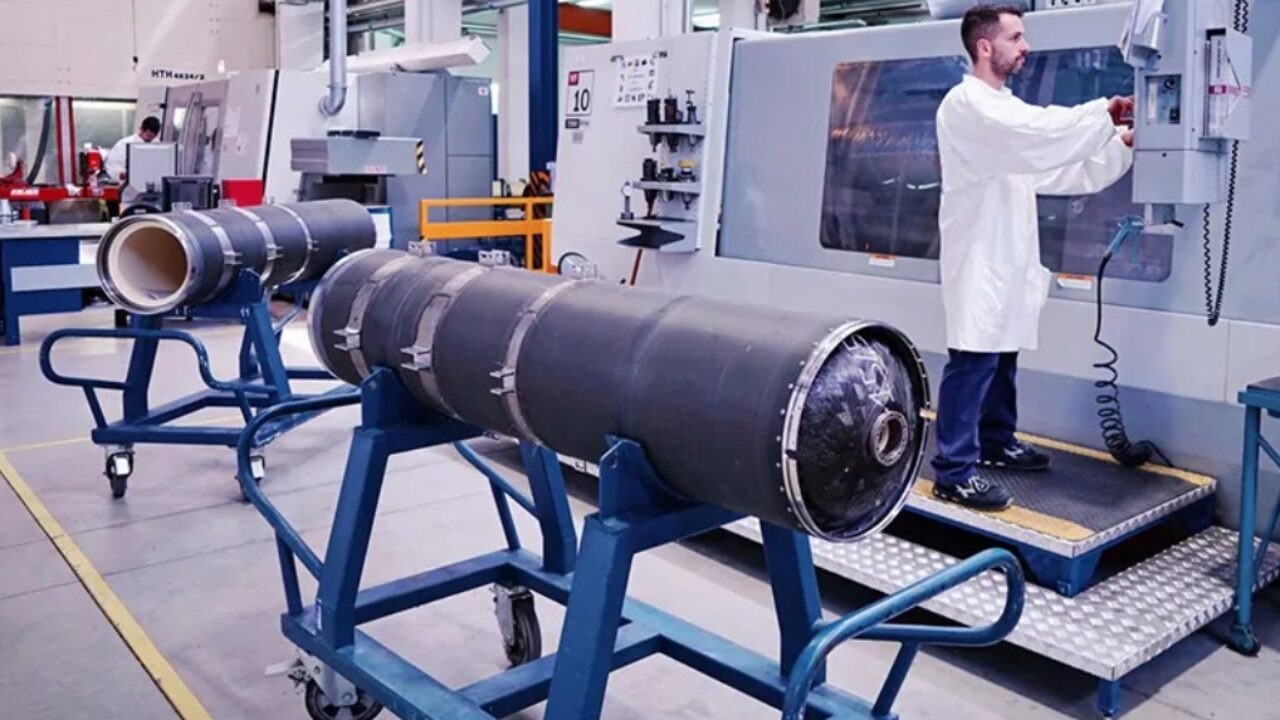
World
ARLINGTON, Va., May 26, 2026 : Raytheon, a business unit of RTX, has been awarded a phase two contract by the Defense Advanced Research Projects Agency (DARPA) to continue development of adaptable solid rocket motor (SRM) technology under DARPA’s Burn n’ Go program, a project aimed at improving flexibility, scalability, and manufacturing efficiency in missile propulsion systems. The programme is being conducted in collaboration with Northrop Grumman and Luna Innovations, with Raytheon serving as the prime contractor. The initiative seeks to move solid rocket motors away from traditional single-use designs by developing a “composable” propulsion system capable of adjusting thrust after manufacturing to meet different operational requirements. Burn n’ Go Programme Focuses on Flexible Rocket Motor Design DARPA’s Burn n’ Go programme is designed to enable a common solid rocket motor architecture that can support multiple missions and weapon systems through tailorable thrust control. Unlike conventional motors designed for a single mission profile, the new concept aims to allow propulsion systems to be adapted after production, reducing dependence on mission-specific motor designs. The approach is intended to improve operational flexibility for military users by allowing a single motor configuration to support different weapon requirements, while also enabling more efficient procurement, production, and stockpiling of missile systems. According to DARPA, the programme uses advances in materials science to alter the burn surface area of solid rocket motors after manufacturing, enabling post-production thrust modification. The concept is also expected to streamline quality control timelines associated with ignition systems and propellant casting while supporting real-time motor health monitoring to improve reliability and predictability. Phase Two Follows Accelerated Feasibility Demonstration The phase two award follows a seven-month phase one effort completed on an accelerated timeline by Raytheon and Northrop Grumman, during which the companies demonstrated the feasibility of the composable propulsion concept. Under the new phase, Raytheon’s Advanced Technology division will focus on maturing and scaling the system through a series of demonstrations intended to validate performance in increasingly realistic rocket motor configurations. The effort is expected to assess the technology’s operational viability and readiness for future applications. “Solid rocket motor production has become a critical bottleneck for many missile programs,” said Colin Whelan, president of Advanced Technology at Raytheon. “By pursuing a composable approach to how these motors are designed and built, we’re helping lay the groundwork for faster, more adaptable munitions production across multiple mission sets.” Industry Team to Support Development Effort As prime contractor, Raytheon is leading the programme alongside Northrop Grumman’s Allegany Ballistic Laboratory (ABL), which will provide expertise in solid rocket motor design and manufacturing. Luna Innovations is contributing advanced material development capabilities intended to support DARPA’s objective of creating highly flexible and scalable missile propulsion technologies. The development effort aligns with Raytheon’s broader composable weapons strategy, which focuses on reducing development cycle times, lowering manufacturing costs, and accelerating missile production amid continuing supply chain and industrial capacity challenges affecting the defense sector. Financial terms of the phase two contract were not publicly disclosed.
Read More → Posted on 2026-05-26 16:05:36
World
WASHINGTON — May 26, 2026 : The United States military conducted targeted self-defense strikes against Iranian military assets in southern Iran on May 25, as diplomatic negotiations between Washington and Tehran continued amid a fragile ceasefire, according to U.S. Central Command (CENTCOM). The strikes targeted two Islamic Revolutionary Guard Corps (IRGC) naval vessels in the Strait of Hormuz that were reportedly laying naval mines and a surface-to-air missile (SAM) site in Bandar Abbas that U.S. officials said had been tracking American aircraft operating in the region. “U.S. forces conducted self-defense strikes in southern Iran today to protect our troops from threats posed by Iranian forces,” CENTCOM spokesperson U.S. Navy Capt. Tim Hawkins said in a statement. “U.S. Central Command continues to defend our forces while using restraint during the ongoing ceasefire.” CENTCOM stated that the operation was limited in scope and aimed at neutralizing immediate threats to U.S. personnel and military operations. The military did not disclose the platforms used during the strikes but confirmed that forces deployed under Operation Epic Fury remain positioned throughout the region to respond to emerging threats. Targets in the Strait of Hormuz and Bandar Abbas According to CENTCOM, the operation focused on two IRGC vessels actively engaged in laying naval mines in the Strait of Hormuz, one of the world’s most critical maritime trade corridors. U.S. officials said the activity posed a direct risk to regional security and commercial navigation. In a separate engagement, U.S. forces struck a SAM site in Bandar Abbas after the system reportedly tracked and targeted American aircraft conducting operations over southern Iran and nearby waters. U.S. fighter aircraft, including F-16s operating under “Project Freedom,” have continued armed patrols over the Persian Gulf and Strait of Hormuz to secure maritime routes and escort commercial shipping. While officials did not specify which assets carried out the May 25 operation, military aircraft and naval platforms already deployed in the region were available to respond. Iranian Response and Drone Claims Following the strikes, Iran’s Fars news agency published a statement attributed to the IRGC claiming Iranian air defenses had shot down a U.S. MQ-9 Reaper drone and fired on a second MQ-9 Reaper as well as a U.S. Air Force F-35 Lightning II aircraft. “The IRGC warns against any violation of the ceasefire by the invading American army and considers its right to reciprocal response both legitimate and certain,” the statement said. CENTCOM has not commented on the Iranian claims, and no visual evidence or independent confirmation of a downed MQ-9 has emerged. If verified, the reported drone loss would raise the number of MQ-9 Reaper drones lost since the beginning of Operation Epic Fury on February 28 to 25, based on figures cited in a recent Congressional Research Service report documenting 24 earlier losses. Maritime Blockade and Economic Pressure The strikes occurred as the United States continues enforcement of “Project Freedom,” a military mission launched on May 4 to secure the Strait of Hormuz and maintain a naval blockade around Iranian ports. According to CENTCOM data released on May 23, U.S. forces have redirected 100 commercial vessels away from Iranian waters, disabled four ships accused of violating blockade measures, and permitted 26 humanitarian aid vessels to proceed. “Our service members are doing extraordinary work,” CENTCOM Commander Adm. Brad Cooper said. “They have been highly effective by executing the mission with precision and professionalism, allowing zero trade into and out of Iranian ports which has squeezed Iran economically.” U.S. defense officials have also stated that earlier phases of Operation Epic Fury significantly reduced Iran’s conventional military capabilities, including missile systems and naval infrastructure, though no updated independent assessment has been publicly released. Diplomatic Talks Continue The military action took place during a critical stage of diplomatic engagement between Washington and Tehran. Hours before the strikes, Iranian negotiators reportedly met with Qatari mediators acting on behalf of the United States as efforts continued to formalize an agreement aimed at ending the conflict. U.S. President Donald Trump said on social media that a diplomatic agreement may be close, while Secretary of State Marco Rubio stated additional negotiations scheduled for May 26 suggest a deal remains possible. Iranian officials, however, said a final agreement is not imminent. One of the principal issues in the negotiations remains Iran’s enriched uranium stockpile. The current U.S. position calls for the material to either be transferred immediately or destroyed inside Iran under joint coordination involving Iranian authorities and the International Atomic Energy Agency (IAEA). The May 25 strikes occurred during a ceasefire that has remained in effect since early April following the main phase of Operation Epic Fury. U.S. officials described the latest operation as limited and defensive, intended to address immediate security concerns while avoiding disruption to the broader diplomatic process. It remains unclear whether the military exchange will affect negotiations in the coming days.
Read More → Posted on 2026-05-26 15:51:41
World
SEOUL — May 26, 2026 : South Korea’s Ministry of National Defense on Tuesday announced the “Basic Plan for the Development of the Republic of Korea Nuclear-Powered Submarine,” formally outlining the country’s first long-term roadmap for the systematic development of domestically built nuclear-powered submarines. The initiative, officially designated as the Jangbogo-N Project, aims to launch the lead submarine in the mid-2030s, with operational commissioning planned after the late 2030s. The announcement was made during the inaugural Future Defense Strategy Committee meeting held at the naval submarine command in Jinhae, South Gyeongsang Province. The meeting was attended by President Lee Jae-myung, while Defense Minister Ahn Gyu-back presented the development plan. According to the Ministry of National Defense, the document establishes a framework for both domestic and international understanding of the direction of South Korea’s nuclear-powered submarine development. Officials described the effort as a national strategic project intended to strengthen maritime deterrence and improve the Republic of Korea Navy’s ability to respond to North Korea’s growing submarine-based nuclear and missile threats. The planned submarines are expected to displace approximately 5,000 tons and will provide significantly greater endurance and operational flexibility compared with the navy’s existing diesel-electric fleet. Unlike conventional submarines that must periodically surface or snorkel, nuclear-powered submarines can remain submerged for extended periods while sustaining higher mobility and longer operational reach. Development Framework Based on Five Principles The Defense Ministry stated that the submarine program will be developed systematically and in phases under five key principles intended to ensure operational reliability, domestic self-reliance, safety, and long-term sustainability. First, the propulsion reactor will use low-enriched uranium fuel and will be designed for long-cycle operation to minimize the need for nuclear fuel replacement during service. Officials said the decision reflects South Korea’s intention to maintain compliance with international non-proliferation norms while developing an operationally sustainable propulsion system. Second, the submarines will be designed, built, maintained, and sustained within South Korea to strengthen autonomy in force acquisition, logistics, maintenance, and long-term operational support. Authorities stated that domestic production will reduce external dependency and secure stability in future naval operations. Third, the submarine platform and propulsion system will incorporate technologies accumulated through South Korea’s civilian nuclear energy and shipbuilding sectors. The government said extensive industrial experience gained over decades in commercial shipbuilding and reactor technologies will be actively utilized to ensure a high level of safety, reliability, and technical maturity. Fourth, the program will be managed under a total life-cycle system covering every phase of the submarine’s service, including design, construction, operation, maintenance, nuclear fuel management, dismantlement, and radioactive waste treatment. Officials said this approach is intended to secure sustainable and stable operation over several decades. Fifth, the government reaffirmed that all development milestones will remain aligned with its current schedule, targeting the launch of the first submarine in the mid-2030s and entry into active naval service after the late 2030s. Non-Proliferation Commitments and Nuclear Safety South Korea also emphasized that the submarine program will proceed within strict international non-proliferation obligations. The Ministry reiterated the government’s position that the country neither possesses nuclear weapons nor intends to develop them in any form. Officials stressed that the nuclear-powered submarines will rely exclusively on nuclear propulsion and not nuclear armament. The procurement, management, and safeguarding of low-enriched uranium fuel will be conducted transparently and in close coordination with the United States to maintain compliance with international nuclear standards. In addition, Seoul announced plans to establish a safeguards system jointly with the International Atomic Energy Agency to oversee fuel management and ensure adherence to high-level non-proliferation commitments. The government also stated that all radioactive waste generated by nuclear-powered submarines will be safely and systematically managed in accordance with relevant domestic laws and international safety regulations. Industrial and Economic Significance The Defense Ministry described the submarine initiative as a national industrial development program expected to extend over more than 40 years, including roughly ten years of construction and more than three decades of operational service. Authorities said the project will connect South Korea’s defense, nuclear energy, and shipbuilding industries, while contributing to industrial expansion, technological development, and infrastructure growth. Technologies accumulated during submarine construction are expected to spread into related industrial sectors and support broader advancements in national manufacturing capabilities. The government estimates that the program could generate more than 40,000 stable, high-quality jobs while strengthening regional industrial competitiveness and long-term economic growth potential. Legacy of the Jangbogo-N Project Officials confirmed that the nuclear-powered submarine initiative will be promoted under the name Jangbogo-N Project, inheriting the legacy of the Republic of Korea Navy’s first submarine, ROKS Jang Bogo (SS-061), which entered service in 1992 before later being decommissioned. The designation is intended to preserve the symbolic heritage of the original submarine while introducing a next-generation naval platform integrating nuclear propulsion and advanced technologies for future maritime operations. The Republic of Korea Navy currently operates a submarine force consisting of nine Jang Bogo-class Type 209/1200 diesel-electric submarines, seven Son Won Il-class Type 214 submarines equipped with air-independent propulsion systems, and the Dosan Ahn Changho-class KSS-III hybrid diesel-electric and fuel-cell-powered submarines. The Ministry of National Defense stated that national resources will continue to be concentrated to ensure the successful implementation of the nuclear-powered submarine project as part of South Korea’s long-term maritime security planning.
Read More → Posted on 2026-05-26 14:50:40
World
CAMBRIDGE, Mass. — May 26, 2026 : Cambridge-based AI startup Tycho.AI has successfully demonstrated its Halley Group 1 vertical take-off and landing (VTOL) uncrewed aerial system (UAS) during a recent U.S. military evaluation in Indiana, where the platform intercepted a replica of an Iranian-designed Shahed-type one-way attack drone in mid-air and completed a separate strike against a ground target. The demonstration took place during the Technology Readiness Experimentation event, T-REX 26-2, held at Camp Atterbury from May 4 to 15, 2026. Organized by the Office of the Under Secretary of War for Research and Engineering, the exercise evaluates emerging military technologies in operationally representative conditions. The latest event focused on low-cost short-range air defense systems and interceptor capabilities designed to counter modern aerial threats. During the evaluation, the Halley VTOL completed 39 assessed test flights in both operator-controlled first-person view and fully autonomous configurations. One of the most significant demonstrations involved the successful interception of a replica of the Iranian-designed Shahed-136, a long-range loitering munition that has been widely employed in conflicts against military and infrastructure targets over distances of hundreds of kilometers. In addition to the aerial intercept, the platform also conducted a one-way attack mission against a ground target during the same event, demonstrating its ability to perform multiple operational roles. Tycho.AI stated that the Halley system is intended to provide a lower-cost approach to countering one-way attack drones, addressing the cost imbalance that often emerges when militaries rely on expensive air defense assets to intercept relatively inexpensive loitering munitions. Flight Performance and Platform Design Classified as a Group 1 UAS, Halley weighs approximately 5.2 pounds (2.3 kilograms) and is built around a lightweight modular tailsitter VTOL configuration with folding wings. The platform uses a zero-tool assembly design that allows deployment from storage to operational flight in less than 30 seconds. Its modular architecture also supports rapid mission reconfiguration, including extended-range winglets for missions exceeding 80 kilometers and a high-speed setup capable of dash speeds above 200 miles per hour. During T-REX 26-2, the system achieved a maximum speed of 165 miles per hour, operated at altitudes ranging from 9 feet to 10,000 feet, and completed missions with a maximum flight distance of 35 kilometers. The aircraft carries a payload capacity of roughly one kilogram and can operate either through operator control or fully autonomous mission execution using Tycho.AI’s Voyager autonomy stack. Following the exercise, Halley achieved Technology Readiness Level 6 (TRL-6), indicating the system had been demonstrated in a relevant operational environment and marking an important step between laboratory validation and field-ready capability. Autonomous Operations in Contested Environments A central feature of the Halley platform is its ability to function without a persistent communications link. Using onboard artificial intelligence-enabled processing, the drone can continue navigation and mission execution even when operating in jammed or GPS-denied conditions. Tycho.AI said its Voyager technology stack, developed by engineers from the Massachusetts Institute of Technology (MIT), supports autonomous navigation through visual-inertial odometry, sensor fusion, and onboard processing rather than relying entirely on satellite-based positioning systems. During testing, the platform also passed a cyber evaluation designed to assess resilience against electronic warfare and communications disruption in contested environments. The company additionally demonstrated a video stream tokenization and compression method intended to maintain navigation-quality visual data over low-bandwidth links. According to Tycho.AI, the transmitted data remains encrypted to reduce vulnerability if communications are intercepted. Halley also demonstrated Automatic Target Recognition (ATR), enabling the system to autonomously identify and classify objects using onboard visual data. The feature is intended to reduce operator workload and improve response times by distinguishing relevant aerial or ground targets more rapidly during time-sensitive missions. Company Plans and Production Outlook In comments following the exercise, Sertac Karaman, founder of Tycho.AI and a professor at MIT, said the T-REX demonstrations validated the company’s concept for a small, fast, and agile tactical UAS capable of supporting multiple mission requirements in operational settings. Tycho.AI publicly introduced the Halley platform during the 2026 edition of SOF Week 2026 in Tampa, Florida. The company, which secured $10 million in Series A funding in October 2025, is now focused on further autonomous flight validation, integration of a kinetic payload, and scaling production capacity. According to the company, Halley is designed for multiple mission sets, including counter-UAS interception, one-way attack operations, intelligence, surveillance and reconnaissance, and tactical scouting in communications-contested environments.
Read More → Posted on 2026-05-26 14:43:17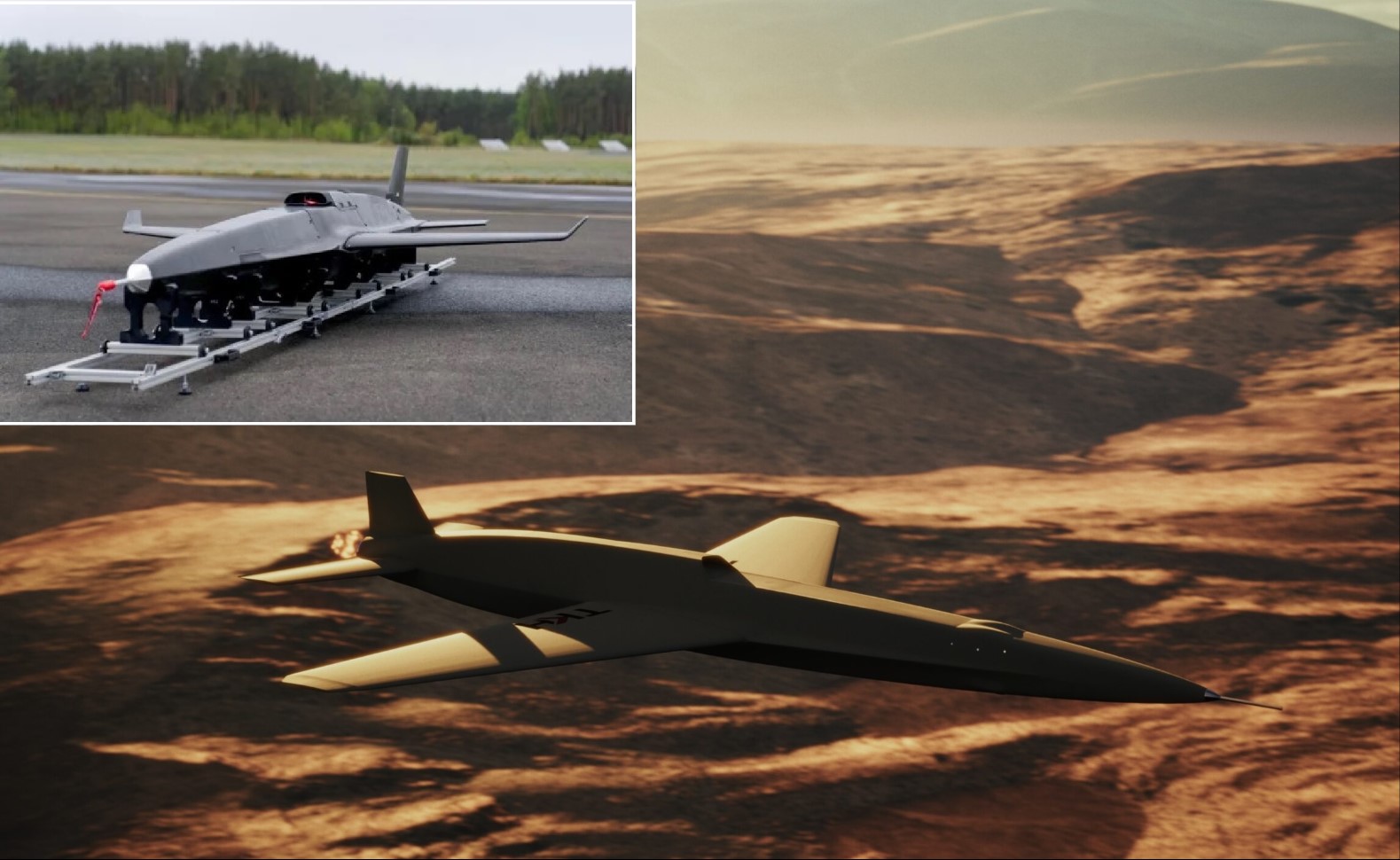
World
WARSAW — May 26, 2026 : Polish defense contractor TKH Technology has successfully completed the flight testing phase of the MTJD-15 (Modular Turbo Jet Drone), the first platform in a new family of domestically developed turbojet-powered unmanned aerial vehicles (UAVs) intended for military and civil applications. Developed in cooperation with the licensed defense entity TOP GUN, the program represents a step in Poland’s effort to establish sovereign long-range unmanned aerial capabilities. The completion of testing follows a campaign conducted on Polish military proving grounds that began in November 2025. Recently released video footage by TKH Technology confirmed the conclusion of flight trials after several months of evaluation, demonstrating the aircraft’s operational performance and validating the platform’s core design. Program Development and Domestic Production The MTJD program was initiated to develop a highly adaptable and modular aerial platform built entirely with domestic engineering and industrial resources. According to TKH Technology, the MTJD-15 was developed in Poland from the architectural design stage through to avionics, hydraulic systems, flight control systems, and a proprietary turbojet engine, making it one of the country’s few fully indigenous jet-powered drone projects. The company states that all key systems are sourced through Polish technologies and production capabilities, reducing dependence on imported components and limiting vulnerability to potential export restrictions or supply chain disruptions. This approach also provides the manufacturer with greater control over serial production and future modernization. Development of the MTJD family reportedly began around 2022 as part of a broader effort to establish long-range unmanned platforms for reconnaissance, strike, and support missions. The MTJD-15 was publicly unveiled during the 2025 edition of the MSPO 2025 held in Kielce, where the project received the Defender award. MTJD-15 Design and Mission Flexibility The MTJD-15 serves as the baseline model of the Modular Turbo Jet Drone family and is designed around a modular architecture that enables rapid reconfiguration depending on mission requirements. The platform can be adapted for tactical and strategic reconnaissance, strike operations, patrol missions, and transportation of medical supplies or equipment. The drone also supports autonomous operation and is optimized for high-altitude flight, allowing improved operational endurance and fuel efficiency during long-range missions. According to the manufacturer, the modular design enables operators to adjust payload configurations without extensive modifications to the airframe. Technical Specifications and Performance The MTJD-15 measures approximately 3.2 meters in length and features a wingspan of 2.4 meters. It has an empty weight of 45 kilograms and a maximum takeoff weight of 105 kilograms, while supporting a payload capacity exceeding 15 kilograms. In terms of performance, the UAV achieves a cruising speed exceeding 600 kilometers per hour, equivalent to approximately Mach 0.54. At sea level, the drone is capable of speeds exceeding 624 kilometers per hour, while at maximum operational altitude its speed remains above 576 kilometers per hour. The platform has an operational range of approximately 1,000 kilometers and a service ceiling of 13,000 meters. It requires a runway length of roughly 430 meters for takeoff. Operating at higher altitudes allows the platform to improve fuel efficiency and conduct missions at ranges that may reduce exposure to radar detection and interception. TKH Technology describes the system as a long-range platform capable of supporting observation or strike missions without relying on higher-cost manned aircraft or cruise missile systems. Future MTJD Variants and Production Expansion The MTJD-15 is the first of three planned variants in the Modular Turbo Jet Drone family. TKH Technology is currently developing larger and more capable configurations intended to expand payload and speed performance. The MTJD-70 is being designed to carry a payload of up to 70 kilograms while maintaining a cruising speed of approximately Mach 0.8 and an estimated operational range of around 800 kilometers. The larger MTJD-100 variant is intended to carry payloads exceeding 100 kilograms and is projected to reach speeds of up to Mach 2.3, with an operational ceiling above 15,000 meters and a range exceeding 1,000 kilometers. To support anticipated demand, TKH Technology has established a production line capable of manufacturing approximately 1,000 drones annually. The company is also expanding its industrial infrastructure to support future serial production of the heavier MTJD-70 and MTJD-100 variants, contributing to Poland’s domestic defense manufacturing and long-range UAV development capabilities.
Read More → Posted on 2026-05-26 14:33:26
World
PARIS — May 26, 2026 : French defense company Thales has successfully completed the first live firings of its sovereign X-Fire launcher, marking a development milestone in France’s effort to modernize long-range land strike capabilities under the FLP-T Programme. Conducted on May 20, 2026, the tests validated the maturity of the land-based strike platform, which has been developed in partnership with Soframe and is intended to support long-range precision engagements at distances exceeding 150 kilometers. The X-Fire launcher is being developed as part of France’s FLP-T (Frappe Longue Portée Terrestre) program to replace the French Armed Forces’ aging LRU (Unitary Rocket Launcher) systems, a French adaptation of the M270 multiple launch rocket system that is expected to reach the end of operational service around 2027. The program seeks to address two key requirements: maintaining immediate operational continuity and restoring sovereign industrial capability for deep-strike missions. Capability Continuity and Sovereign Strike Development As France prepares to phase out the LRU fleet, the X-Fire system has been designed with a flexible and modular architecture capable of operating both sovereign and allied munitions. This transitional capability is intended to ensure uninterrupted long-range strike readiness by allowing the launcher to employ foreign or partner-produced rockets until France’s indigenous precision munition enters operational service later in the decade. The latest launcher firings follow the demonstration of the FLP-t 150 sovereign ballistic munition on May 5, 2026, at the DGA-EM test range on Île du Levant. Developed jointly by Thales and ArianeGroup, the FLP-t 150 is expected to become the primary munition integrated with the X-Fire platform and forms a central component of France’s future long-range precision strike architecture. Under the industrial partnership, Thales is responsible for the overall system architecture, including the launcher, fire-control systems, launch interfaces, navigation and targeting systems, while ArianeGroup oversees propulsion and guidance technologies derived from ballistic missile expertise. The FLP-t 150 munition is designed to travel at largely supersonic speeds and incorporates a rear-mounted fin guidance system enabling terminal maneuvers during flight. According to program details, the munition is expected to strike targets beyond 150 kilometers with sub-decametric precision, including in contested electromagnetic environments. Mobile Platform and Navigation Systems The X-Fire launcher is mounted on an agile 8×8 mobile platform compatible with the French Army’s existing logistics fleet, supporting rapid deployment and operational integration with current land-force structures. The system is designed to enhance battlefield mobility while ensuring compatibility with multiple munition types during the transition toward sovereign strike capability. To preserve precision in electronically contested environments, the launcher integrates resilient navigation systems developed by Thales, including the TopStar Smart Receiver, a GNSS anti-jamming device, and TopAxyz, an inertial measurement unit. Together, the systems provide continuous positioning, navigation and timing capabilities while supporting high-precision targeting and firing even in the presence of severe electromagnetic interference or electronic warfare jamming. Training and Transition Capability The May 20 firing campaign also demonstrated the launcher’s compatibility with the Thales-developed 68mm X-Fum training rocket, previously tested on platforms including the Tiger combat helicopter. The X-Fum munition is intended to allow military personnel to conduct regular training and familiarize operators with the X-Fire system during the transition period before sovereign long-range munitions become fully operational. Julien Assoun, Vice-President of Vehicles and Tactical Systems at Thales, stated that the X-Fire launcher had been developed to address the requirement for sovereign deep-strike munitions while ensuring continuity of operational capability as current LRU systems near retirement. He added that the successful live firings demonstrated system performance and that preparations for production ramp-up are already underway. Program Outlook and Industrial Footprint The X-Fire launcher forms part of France’s broader FLP-T effort to modernize sovereign long-range land strike capabilities and restore an indigenous precision-strike industrial base. Production activities are expected to involve multiple Thales sites, including facilities in Cholet, Élancourt, Gennevilliers, La Ferté-Saint-Aubin and Valence, alongside Soframe’s manufacturing site in Duppigheim. France is expected to finalize a decision later this year regarding its future long-range land strike system. The Thales-ArianeGroup proposal is competing against alternatives such as the Thundart system being developed by a consortium of MBDA and Safran, as well as foreign systems including the M142 HIMARS.
Read More → Posted on 2026-05-26 14:28:20
World
MONTREAL — May 26, 2026 : Bombardier Defense will supply three Global 6500 aircraft to support maritime surveillance missions for the Australian Border Force (ABF) under a new fixed-wing aerial surveillance programme aimed at strengthening Australia’s border monitoring and national coverage capabilities. The aircraft will be operated by Metrea, a defence company that provides effects-as-a-service to national security partners, as part of a broader contract awarded by Australia’s Department of Home Affairs to Metrea Australia Pty Ltd. Under the agreement, the Australian Border Force will receive a fleet of 11 fully crewed, technologically advanced fixed-wing aircraft to conduct short- and long-range aerial surveillance missions. Operations under the programme are scheduled to begin on January 1, 2028, with the fleet expected to provide continuous 24/7, year-round surveillance coverage to enhance maritime monitoring, border protection and national aerial surveillance operations across Australia. Global 6500 to Strengthen Maritime Surveillance Capability The three Bombardier Global 6500 aircraft will be adapted in a dedicated special mission configuration to meet the operational requirements of maritime surveillance. Their introduction will support the transition to enhanced fixed-wing aerial surveillance capabilities under the new Metrea-operated contract for the Australian Border Force. Bombardier said the Global 6500 is designed for missions requiring long range, speed, endurance and reliability, making it suitable for extended maritime patrol operations over large operational areas. The aircraft has a range of 6,600 nautical miles, a maximum operating speed of Mach 0.90 and endurance exceeding 18 hours. Bombardier also highlighted the platform’s class-leading electrical power generation capacity for mission systems and ample cabin space, enabling the integration of specialised surveillance equipment and mission personnel. “The Global 6500 aircraft brings a new level of capability for maritime surveillance, with exceptional range, speed, endurance and reliability,” said Michael Anckner, Vice President, Worldwide Sales at Bombardier Defense. “Our teams are proud that this game-changing aircraft is the trusted choice to support the Australian Border Force’s aerial surveillance program,” he added. Expansion of Bombardier’s Special Mission Presence in Australia The programme will introduce Bombardier’s Global aircraft platform into Australia in a dedicated special mission role, further expanding the company’s footprint in the country’s defence and security aviation sector. Bombardier has previously supported several special mission programmes worldwide using the Global platform, while its Learjet and Challenger aircraft are already used in Australia for search-and-rescue and medical evacuation operations. The company currently has more than 75 business aircraft operating across Australia within its Learjet, Challenger and Global families and has expanded regional infrastructure to support both commercial and special mission customers. In 2022, Bombardier opened a Melbourne Service Centre at Essendon Fields Airport to strengthen support for operators in the region. In May 2024, Bombardier Defense established its first international office in Adelaide to provide dedicated assistance for special mission customers in Australia. The company later announced a new Line Maintenance Station in Perth in March 2025 to expand sustainment and maintenance support. Global 6500 Platform for Government and Military Missions Bombardier Defense stated that governments, military operators and mission partners select the Global 6500 for specialised operations due to its combination of performance, reliability, flexibility and outer-mould line configuration options. The company combines Challenger and Global aircraft platforms with engineering, maintenance and mission integration expertise to deliver customised solutions for government and defence customers. Through its worldwide support network, Bombardier aircraft are used for intelligence, surveillance and reconnaissance (ISR), airborne early warning and control (AEW&C), border and maritime patrol, head-of-state transport, medical evacuation, humanitarian assistance and multi-role operations.
Read More → Posted on 2026-05-26 14:19:41
World
WASHINGTON — May 26, 2026 : The U.S. Navy has approved a $17.45 million contract modification for the Fiscal Year 2026 Selected Restricted Availability (FY2026 SRA) of the Wasp-class amphibious assault ship USS Iwo Jima (LHD-7), extending a major maintenance and modernization effort designed to support long-term F-35B Lightning II operations and preserve the ship’s operational readiness into the 2030s. The modification, announced on May 22, 2026, exercises options under a Naval Sea Systems Command contract awarded on January 8, 2026 to BAE Systems Maritime Solutions Norfolk. The original contract carried a base value of $204.16 million and a cumulative potential value of $255.88 million, with maintenance work scheduled to continue through May 2028 in Norfolk, Virginia. Maintenance Program and Contract Scope The FY2026 SRA is categorized as a Chief of Naval Operations maintenance period and is being conducted primarily pier-side rather than through a major overhaul or drydock modernization. The availability combines depot-level repairs, structural restoration, combat systems modernization, aviation support upgrades, and lifecycle extension work intended to sustain USS Iwo Jima’s operational effectiveness after more than two decades of service. The contract covers labor, supervision, testing, certification, facilities use, engineering support, and production activities required to restore material condition and improve shipboard capabilities. Planned work includes corrosion repair, steel replacement, preservation coatings, propulsion plant inspections, electrical distribution maintenance, and overhauls of pumps, valves, piping systems, ventilation systems, and auxiliary machinery. F-35B Modernization and “Lightning Carrier” Transition A central objective of the modernization effort is preparing USS Iwo Jima for sustained F-35B Lightning II operations as the U.S. Marine Corps transitions away from the legacy AV-8B Harrier II fleet toward fifth-generation expeditionary aviation. The upgrades support the Navy and Marine Corps’ “Lightning Carrier” concept, under which amphibious assault ships embark larger F-35B air wings to supplement conventional aircraft carrier operations. In this configuration, Wasp-class ships can conduct sea-control missions, expeditionary advanced base operations, and distributed maritime warfare while increasing strike capacity during regional contingencies. Traditionally, USS Iwo Jima embarked a mixed aviation detachment that included six AV-8B Harrier II or six F-35B aircraft, four CH-53E Super Stallion helicopters, four AH-1 attack helicopters, three to four UH-1 utility helicopters, and 12 MV-22B Osprey tiltrotors. Under the Lightning Carrier model, however, Wasp-class vessels can embark between 16 and 20 F-35B aircraft, substantially increasing sortie generation and operational flexibility. Aviation Infrastructure and Engineering Upgrades To support sustained F-35B operations, the ship is undergoing modifications to aviation infrastructure and engineering systems. Because the F-35B generates significantly greater thermal stress during short takeoff and vertical landing operations, reinforced flight deck sections and thermal spray non-skid coatings are being installed to protect landing areas from heat-related degradation. The modernization package also includes upgrades to electrical power distribution systems and expanded cooling capacity required to sustain the increased technical demands associated with stealth fighter operations. Aviation maintenance facilities and support spaces are being strengthened to support higher operational tempos and larger embarked fighter detachments. Additional improvements include modernization of JP-5 aviation fuel systems, fueling stations, aviation ordnance handling equipment, logistics support areas, and maintenance infrastructure necessary for prolonged F-35B deployment cycles. Secure digital infrastructure compatible with the aircraft’s sustainment ecosystem is also being incorporated, including networking systems supporting the Autonomic Logistics Information System (ALIS) and the Operational Data Integrated Network (ODIN), both required for mission planning, diagnostics, software support, and maintenance management. Combat Systems and Shipboard Modernization Alongside aviation-focused improvements, USS Iwo Jima is receiving combat systems upgrades intended to improve command, communications, and battlespace awareness. Modernization efforts include upgrades to Consolidated Afloat Networks and Enterprise Services (CANES), replacing segmented information systems with integrated shipboard networking architecture. The ship is also receiving Ship’s Signal Exploitation Equipment (SSEE) Increment F enhancements intended to improve signals intelligence processing, electronic surveillance, and electromagnetic battlespace awareness. The availability further addresses long-term material wear accumulated during extensive deployments across the Atlantic, Mediterranean, Fifth Fleet, and U.S. Central Command areas of operation. USS Iwo Jima: Service History and Capabilities Commissioned on June 30, 2001, USS Iwo Jima is the seventh and final conventionally powered Wasp-class amphibious assault ship in U.S. Navy service. The vessel displaces approximately 40,500 tons at full load and measures 257 meters (843 feet) in length with a beam of 31.8 meters. Powered by two steam turbines generating approximately 70,000 shaft horsepower, the ship can sustain speeds of roughly 22 knots. USS Iwo Jima features a full-length flight deck, hangar deck, aircraft elevators, aviation fuel systems, and a well deck for amphibious landing craft, enabling simultaneous aviation and amphibious operations. The vessel can embark roughly 1,900 Marines alongside armored vehicles, helicopters, MV-22B Osprey tiltrotors, landing craft, and fixed-wing aircraft. Since entering service, the ship has participated in operations connected to Afghanistan and Iraq following the September 2001 attacks and deployed with the 26th Marine Expeditionary Unit across the Mediterranean Sea, Red Sea, and Arabian Gulf during 2003 and 2004. In 2005, USS Iwo Jima served as a sea-based aviation, logistics, medical, and command platform during Hurricane Katrina relief operations near New Orleans. The ship later supported Operation Odyssey Dawn near Libya in 2011 and conducted repeated Atlantic and Fifth Fleet deployments involving MV-22B Osprey operations and F-35B interoperability activities. Most recently, on January 3, 2026, USS Iwo Jima participated in Operation Absolute Resolve, during which Nicolás Maduro and Cilia Flores were transferred aboard the vessel before transportation to the United States in connection with federal narcoterrorism-related charges issued in 2020. Industrial Base and Fleet Readiness The modernization effort draws on technical experience developed during previous F-35B integration work aboard sister ships including USS Wasp, USS Essex, USS Bataan, USS America, and USS Tripoli. Work is being carried out by BAE Systems Maritime Solutions Norfolk, one of the Navy’s principal private-sector maintenance facilities on the U.S. East Coast. The availability also reflects broader pressure on the U.S. naval industrial base, where amphibious ship maintenance must compete for skilled labor, facilities, and technical resources alongside aircraft carrier overhauls, submarine maintenance programs, and Columbia-class ballistic missile submarine construction. Once completed, the FY2026 Selected Restricted Availability is expected to preserve USS Iwo Jima’s amphibious readiness while strengthening its ability to support higher-capacity F-35B operations and expanded expeditionary strike missions in future maritime operations.
Read More → Posted on 2026-05-26 12:25:22Search
Top Trending in 24 Hours
-
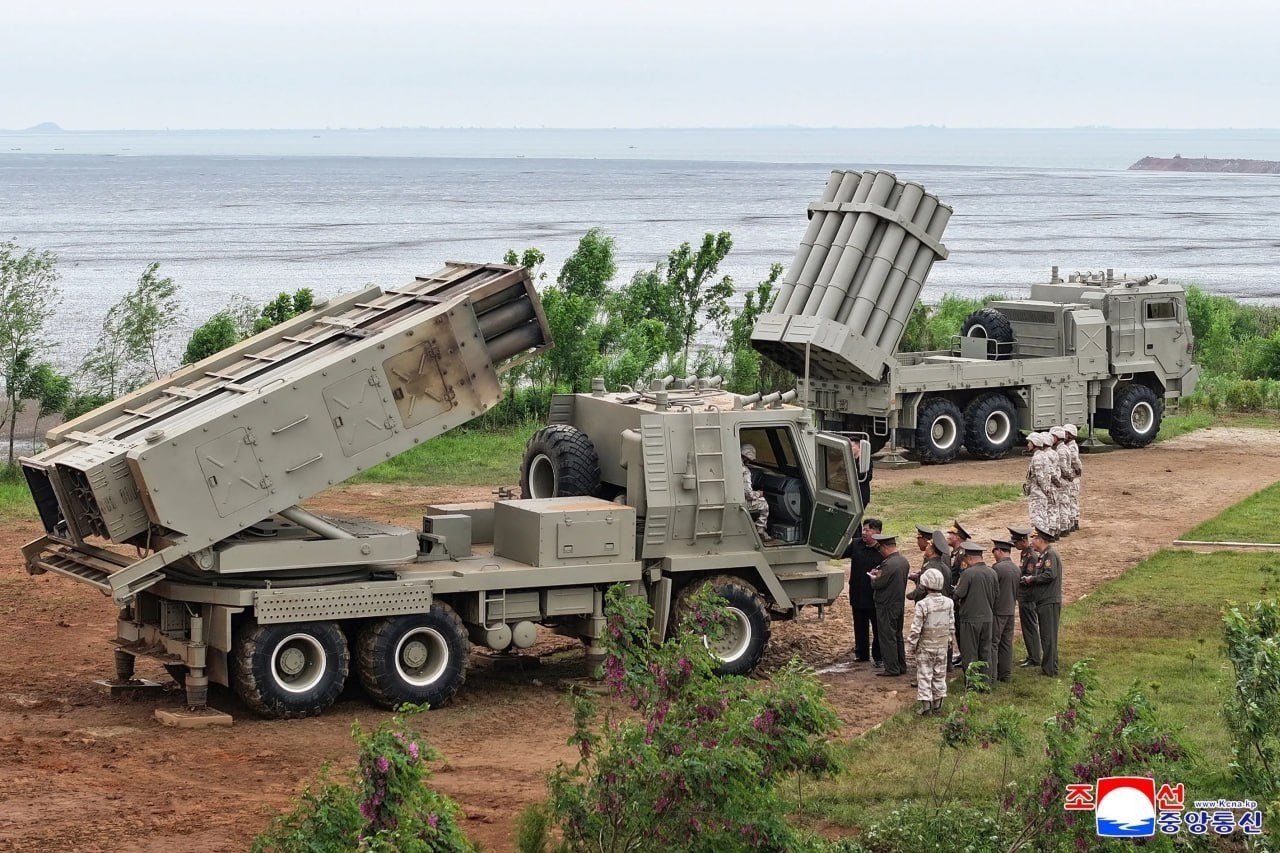 North Korea Tests AI-Powered Missile Capable of Changing Flight Path
-
 NASA Develops Humanoid Robots for Future Moon and Mars Missions
-
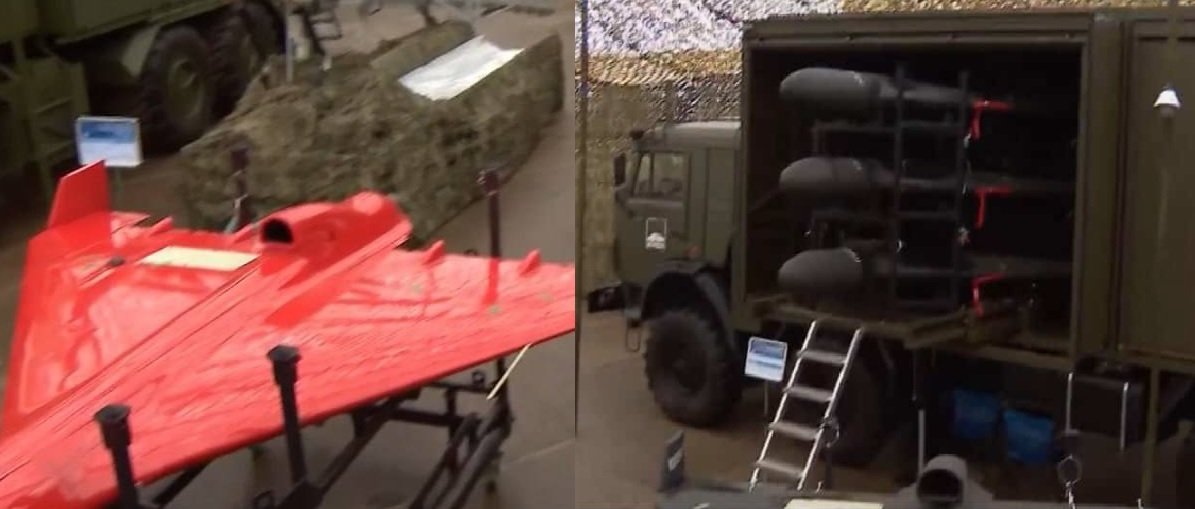 Russia Reveals Jet-Powered Harpy Attack Drones and Mobile Launchers
-
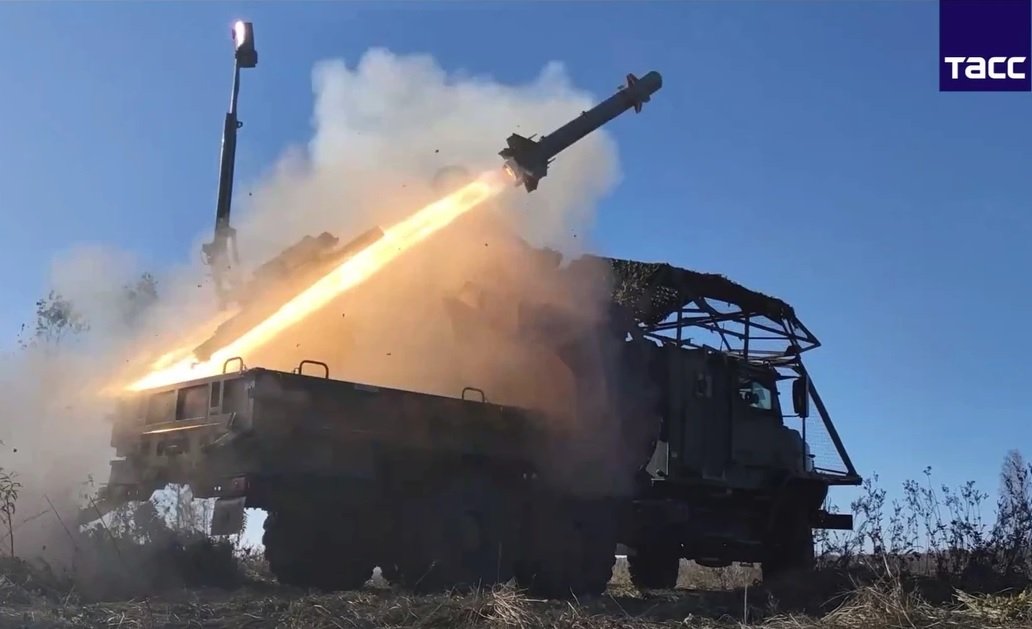 Russia Demonstrates Truck-Mounted LMUR Missile System During Tsentr-2026
-
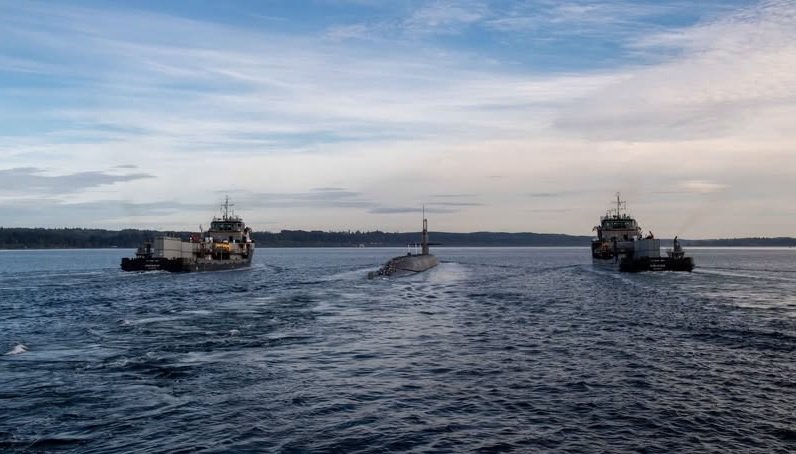 U.S. Navy Swaps Homeports of USS Wyoming and USS Pennsylvania Ahead of Columbia-Class Transition
-
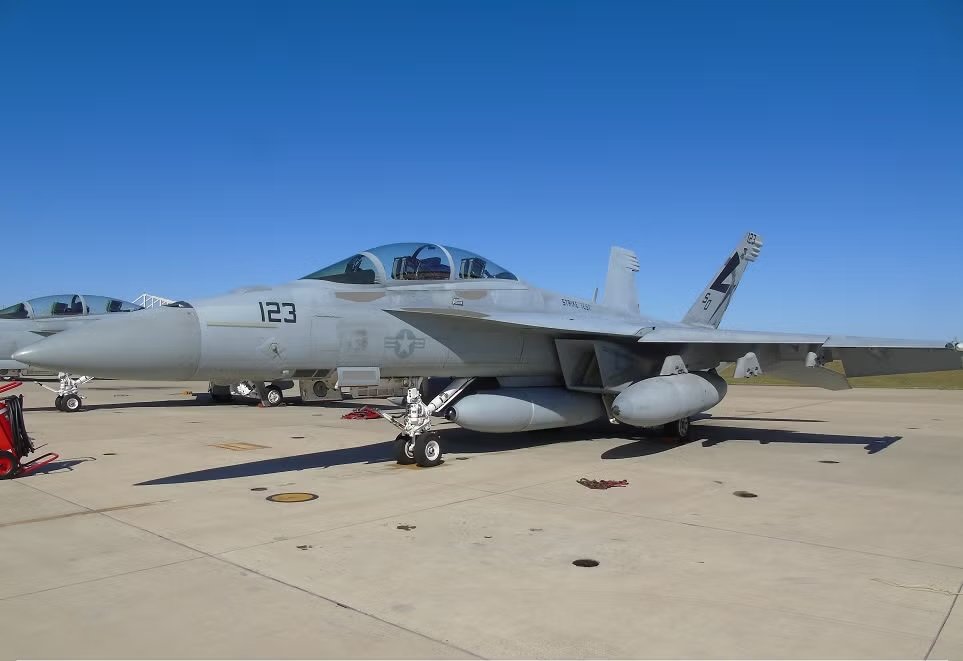 Lockheed Martin Secures $245 Million Contract for F/A-18 Super Hornet IRST Systems
-
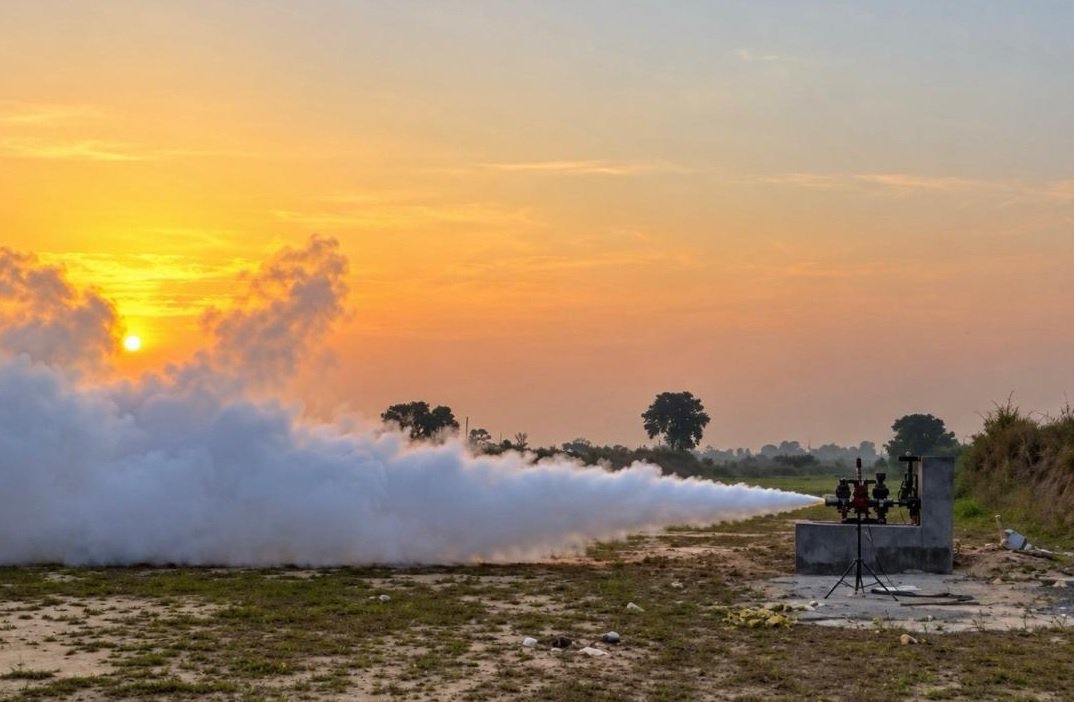 IG Defence Successfully Tests Two Solid Rocket Motors for JWALA Micro-Missile
-
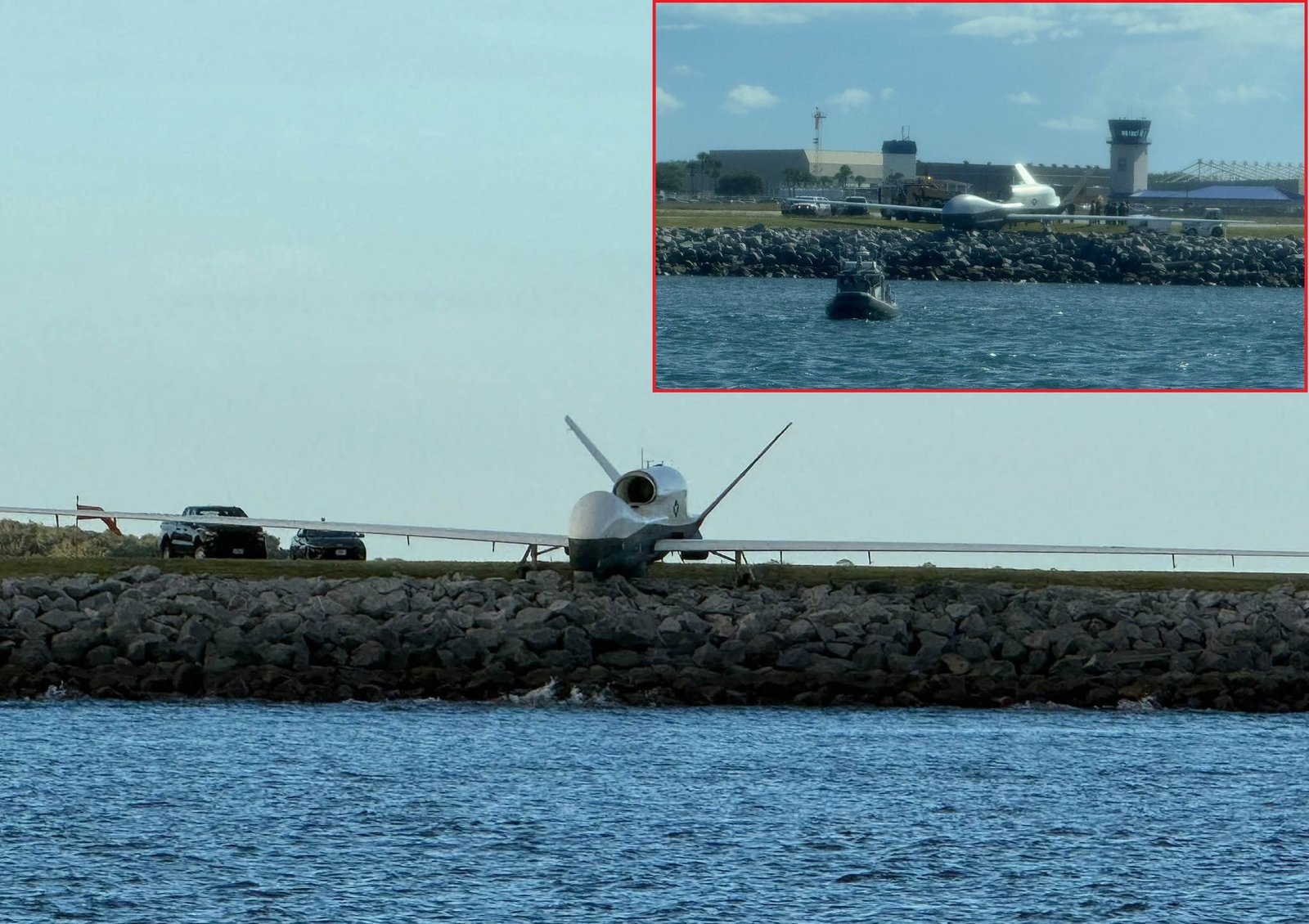 U.S. Navy MQ-4C Triton Drone Found Off Runway as Mayport Incident Remains Unexplained
Top Trending in 4 Days
-
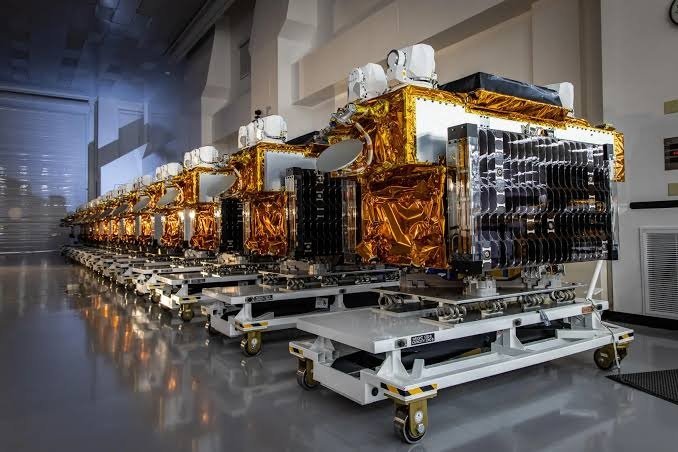 Northrop Grumman Delivers First 21 Satellites for Pentagon’s Next-Generation Military Network
-
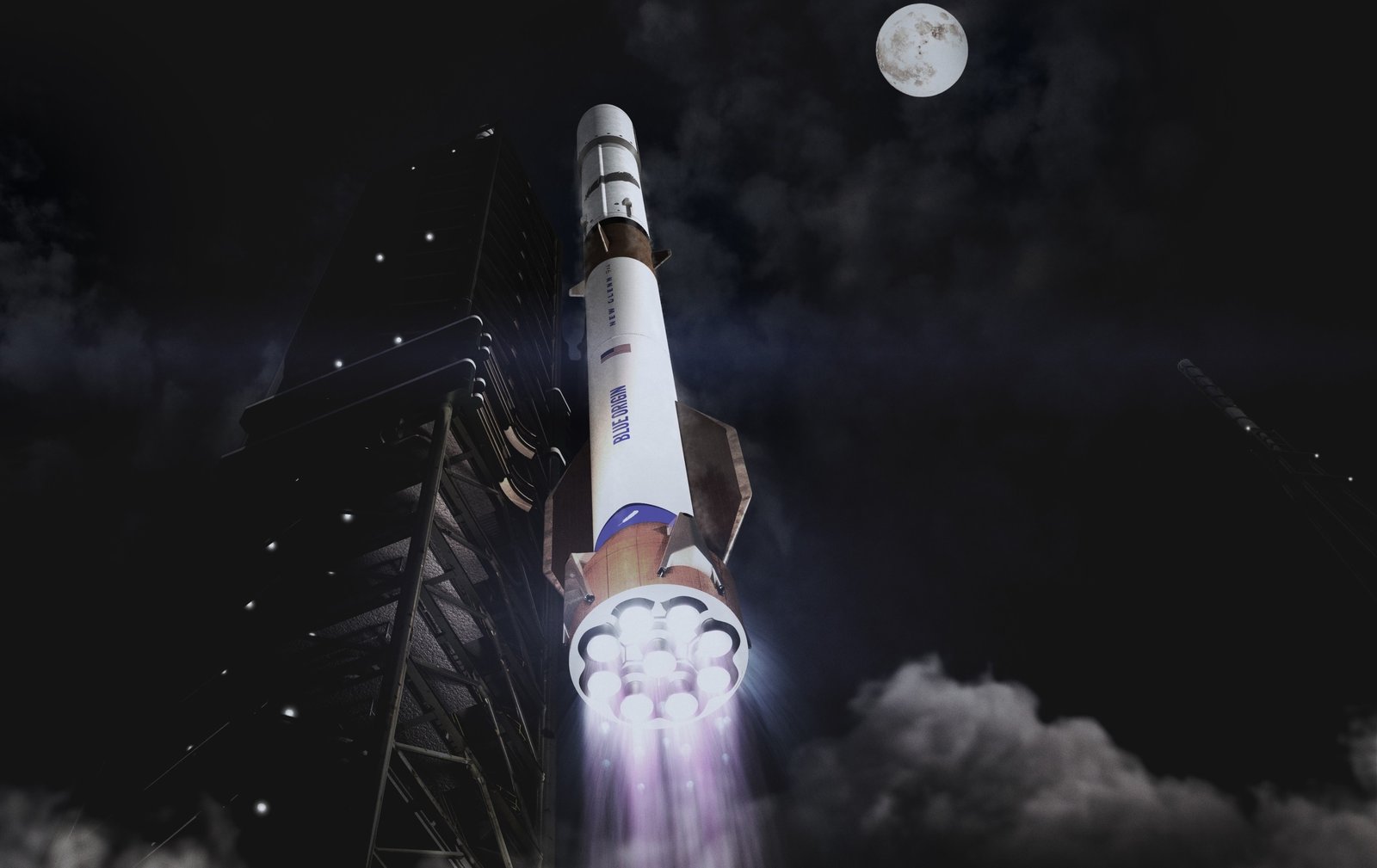 NASA Adds Blue Origin’s Upgraded New Glenn 9×4 to Launch Services Contract
-
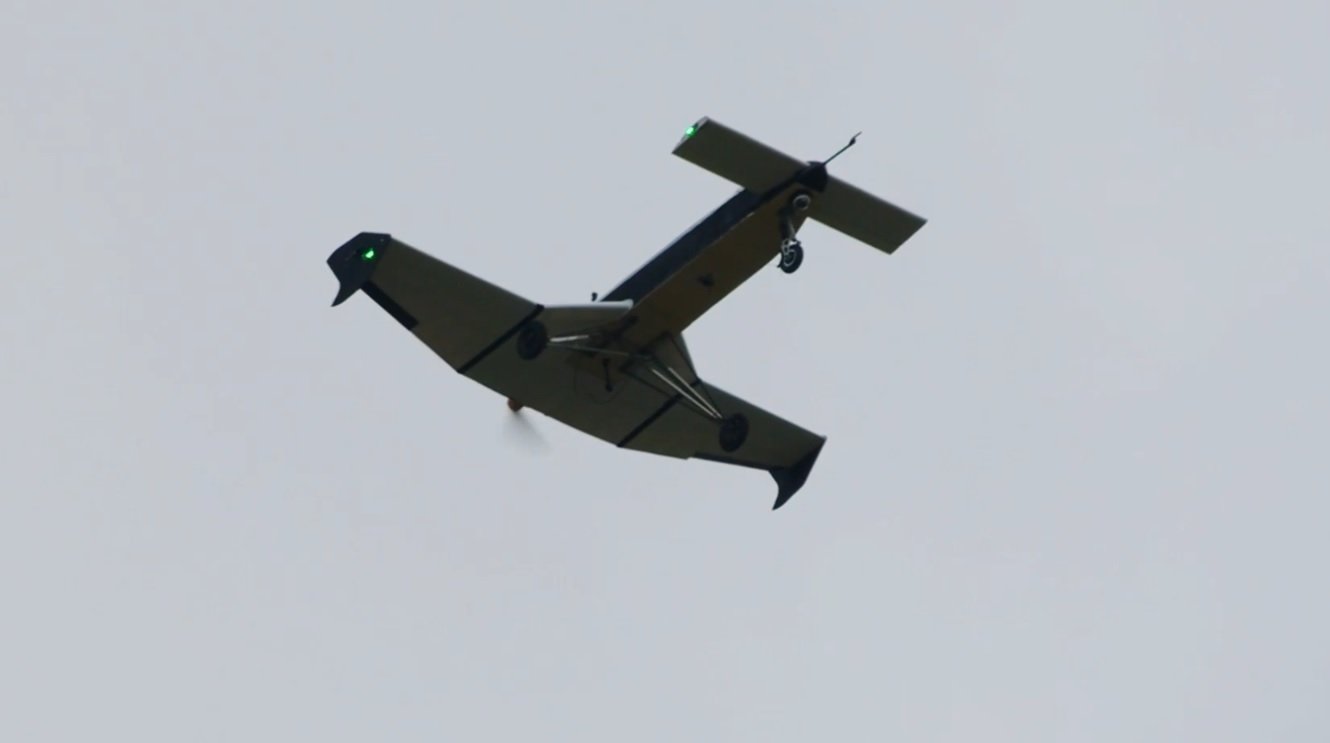 Ukraine’s SkyFall Unveils Thor Hammer Strike UAV With Up to 600-Km Range
-
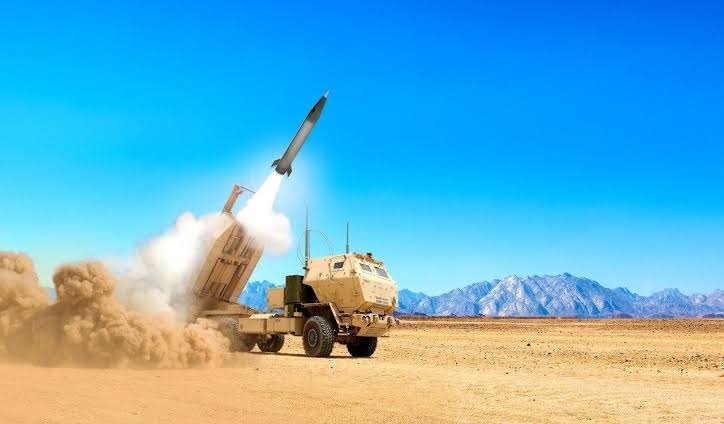 U.S. Army Selects Five Companies to Develop 1,000-Km Precision Strike Missile Prototypes
-
 Boeing Wins $20 Billion U.S. Navy Contract for F/A-XX Sixth-Generation Fighter
-
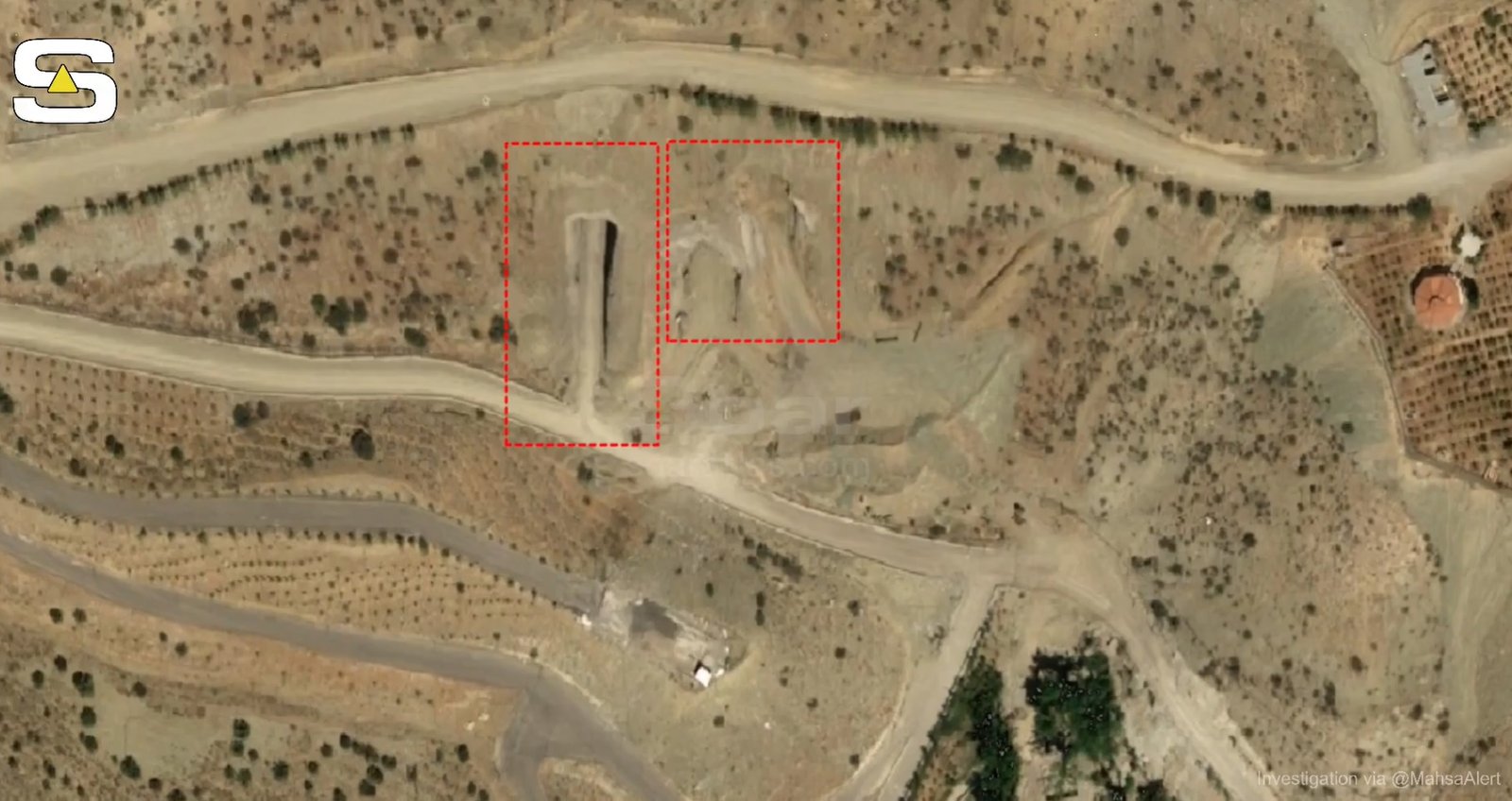 Satellite Imagery Shows Construction Changes at Hillside Site Linked to Iran’s Supreme National Security Council
-
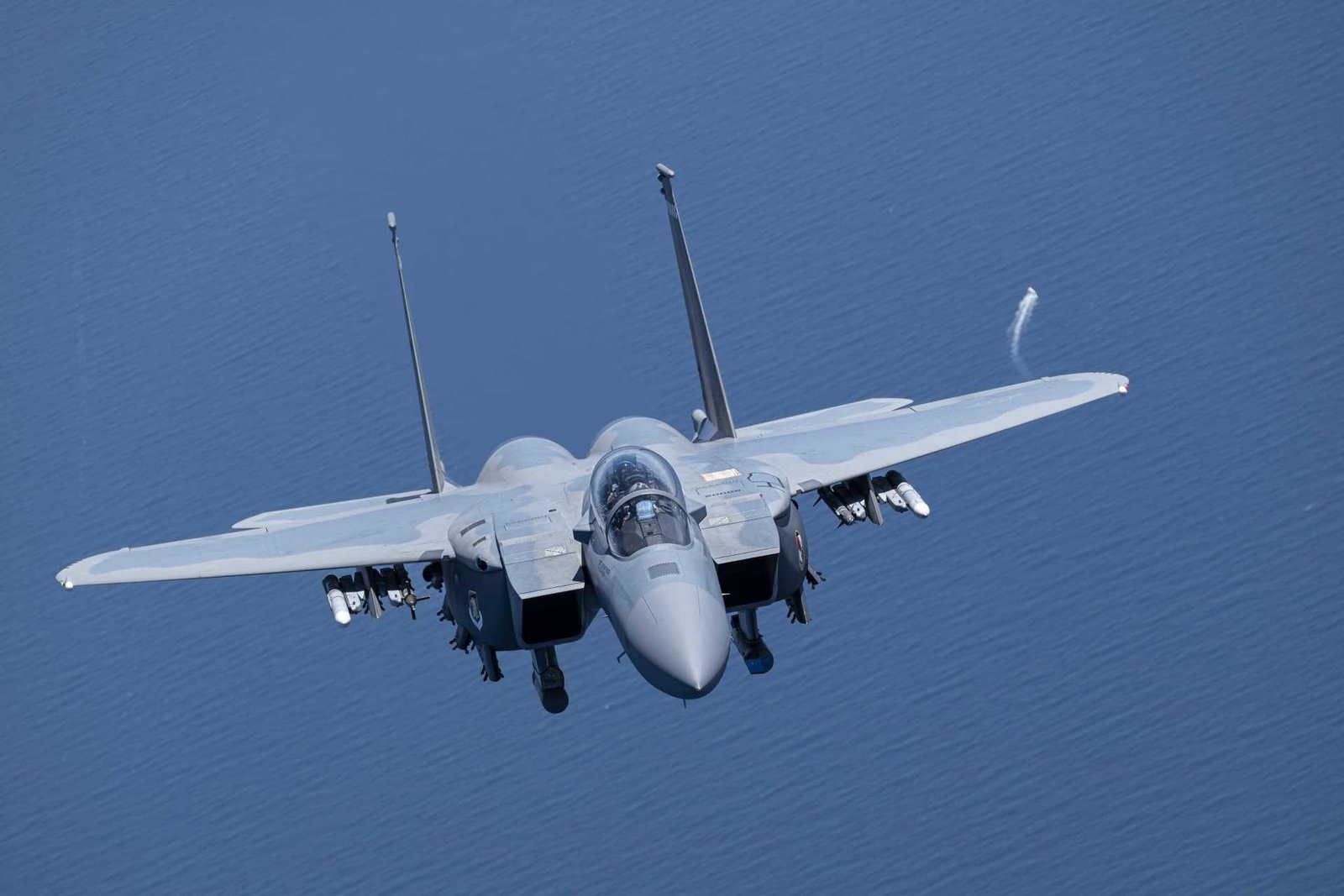 U.S. Air Force Seeks Missile Warning System for F-15EX Fleet
-
 NASA Awards Modulate Space $38 Million Contract to Develop Lunar 5G and Wi-Fi Network
