World
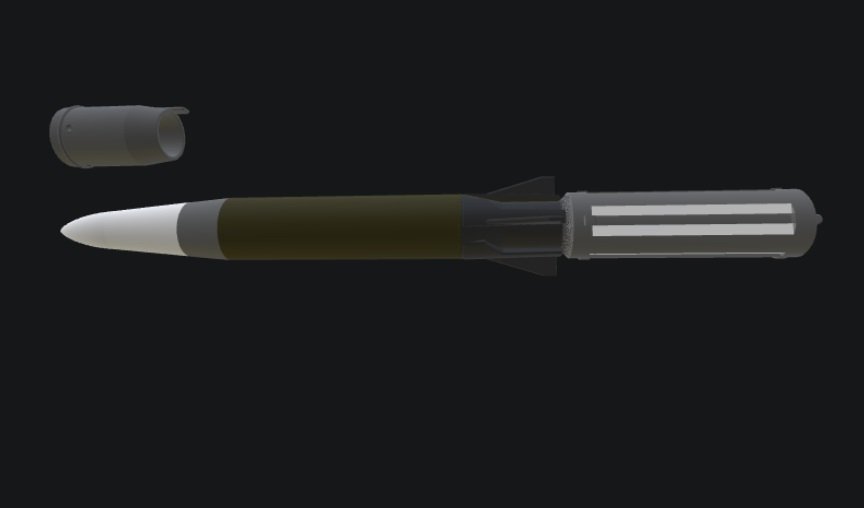
KYIV, Ukraine, — Ukraine’s Defence Intelligence Directorate (DIU) has published a detailed technical and industrial breakdown of Russia’s 3M22 Zircon missile, including an interactive 3D model, identified components, manufacturers, personnel and foreign-made equipment linked to its production. The information was released on August 31, 2026, through the DIU’s War&Sanctions portal. The agency identified 70 enterprises involved in producing the missile and its major systems and assemblies. It also published information on 84 officials and employees of key companies involved in its production. Missile designed for naval launch According to DIU, the 3M22 was developed as a weapon for Russia’s naval forces. It was designed for launch from Russian nuclear-powered submarines and Project 22350 frigates equipped with the 3S-14 UKSK vertical launch system. DIU says that the missile was later adapted for launch from Bastion-M coastal defence systems. The War&Sanctions database classifies the 3M22 as a ballistic missile and lists its main dimensions as 8 metres in length and 0.666 metres in body diameter. The listed warhead weight is approximately 120 kg. Its listed flight altitude is 30–40 km. DIU also compares the Zircon’s warhead with that of the smaller Banderol cruise missile, which it says carries a 150 kg warhead. Two solid-propellant motors The missile is launched from a container using a solid-propellant booster. The booster provides the initial altitude and speed before separating, after which the missile’s solid-propellant sustainer motor starts. DIU says that the initial correction of the missile’s trajectory is carried out by orientation and stabilisation thrusters located inside a protective fairing. The fairing is subsequently separated from the missile. Russia has claimed that the Zircon can reach speeds of up to Mach 8–9 during parts of its flight. The DIU database separately lists a maximum fixed speed of Mach 6.8, while the agency states that this speed is not maintained throughout the entire flight. Combined guidance system The Zircon uses a combined guidance system. According to DIU, it uses inertial guidance during the cruise phase and switches to an active radar homing seeker during the terminal phase. The identified 3B222 active radar homing head is manufactured by NPP RADAR MMS JSC. Onboard processing is handled by the Baget-83 digital computing system, manufactured by KB Korund-M JSC. Flight control includes 3B915 electro-hydraulic steering actuators, manufactured by the Central Research Institute of Automation and Hydraulics (TsNIIAG). The missile also has deployable aerodynamic control surfaces in its tail section. The control surfaces remain folded during transport and deploy after launch. DIU states that the tail section is made of titanium. Components identified by DIU The War&Sanctions database identifies a number of major Zircon components and their manufacturers. These include: 3G22 main warhead — GOSNIIMASH JSC 3L2211 solid-fuel missile engine — NPO Iskra PJSC Launch engine — PZ MASH / Permsky Zavod Mashynostroitel JSC 3B228 radio-technical countermeasure system — KNIRTI JSC 3B915 steering units — TsNIIAG JSC Baget-83 onboard digital computer — KB Korund-M JSC T-657 chemical power source — Energia PJSC Rusar para-aramid threads — Kamenskvolokno JSC DIU identifies VPK NPO Mashinostroyeniya JSC as the main manufacturer and designer of the missile. Foreign-made electronics identified The Ukrainian intelligence service also identified foreign-made electronic components associated with the Zircon. Among them is the TGA2704 amplifier, manufactured by TriQuint Semiconductor, a company that is now part of Qorvo. DIU identifies its manufacturer headquarters as being in the United States. Another identified component is the Altera Cyclone II EP2C5T144I8N FPGA. DIU identifies the component as originating from the United States, while the part itself is an Altera Cyclone II FPGA; Altera is now part of Intel. DIU's database currently lists four identified components for the Zircon entry, including the two U.S.-origin electronic components, a measuring potentiometer and a microchip whose manufacturer has not been identified. Production network mapped The new release goes beyond the missile's physical design. DIU has mapped the industrial network supporting production of the 3M22, identifying 70 enterprises involved in its production, including companies responsible for missile systems, airframes, engines and solid propellant. The portal also provides information on the companies and personnel involved and allows users to examine the missile through an interactive 3D model. DIU is asking for additional information from the public to expand its database on the missile's production chain. The release is part of DIU's broader War&Sanctions project, which has recently published similar technical and industrial information on other Russian weapons, including the 9M723 Iskander-M missile and the Su-35S fighter.
Read More → Posted on 2026-08-31 13:38:19
World
AMMAN, Jordan — U.S. Army Patriot air-defense systems intercepted Iranian ballistic missiles launched toward U.S. military positions in Jordan following a U.S. strike on two Iranian launchers on Larak Island in the Strait of Hormuz on August 30. The exchange marked a new round of direct U.S.-Iran military activity after several weeks without publicly confirmed U.S. strikes on Iranian territory. U.S. Central Command said American forces struck two Iranian launchers after observing Islamic Revolutionary Guard Corps (IRGC) personnel preparing to launch rockets carrying sea mines into the Strait of Hormuz. Iran subsequently launched ballistic missiles toward U.S. military positions in Jordan. The IRGC said the operation targeted the King Hussein and Al-Azraq bases, the latter also known as Muwaffaq Salti Air Base. Jordanian authorities said their air-defense systems intercepted eight missiles that entered the country's airspace. PAC-3 MSE Interceptor Expenditure Defense analyst Babak Taghvaee reported that two U.S. Army Patriot PAC-3 batteries in Jordan launched between 96 and 128 MIM-104F PAC-3 Missile Segment Enhancement (MSE) interceptors against approximately 32 Iranian ballistic missiles. His assessment indicates that roughly three to four interceptors were launched for each incoming ballistic missile. BREAKING: The U.S. Army launched almost 96 to 128 MIM-104F PAC-3 MSE surface-to-air missiles from its Patriot PAC-3 air-defense batteries in Jordan tonight against Iranian ballistic missiles. They launched three to four interceptors at each one of 32 Iranian ballistic missiles!… pic.twitter.com/N4g3tNg1BU — Babak Taghvaee - The Crisis Watch (@BabakTaghvaee1) August 30, 2026 The reported figures have not been independently confirmed by the U.S. Department of Defense. U.S. officials have confirmed the Iranian missile attack and the successful defensive response, but specific numbers of Patriot interceptors used in the engagement have not been publicly released. The PAC-3 MSE is the upgraded version of the PAC-3 interceptor. According to the U.S. Department of Defense, the MSE incorporates a higher-performance solid rocket motor, modified lethality enhancer, improved control surfaces and upgraded guidance software. The system is designed to engage tactical ballistic missiles as well as other air-breathing and unmanned threats. Iranian Missile Attack Followed Larak Island Strike The Iranian missile launches came after U.S. forces attacked two Iranian launchers on Larak Island. U.S. officials said the launchers were being prepared for use against shipping in the Strait of Hormuz with rockets carrying sea mines. The IRGC said the American operation caused casualties among Iranian military personnel and civilians and announced that it would respond. Iran then launched missiles toward U.S. military facilities in Jordan. The Jordanian military confirmed that eight missiles breached the country's airspace and were intercepted. Initial reports did not indicate significant casualties or damage at the targeted U.S. bases. The United Arab Emirates also reported intercepting an Iranian drone over its territorial waters during the same period of renewed hostilities. Claims About U.S. Patriot Stockpiles The reported expenditure of 96 to 128 PAC-3 MSE interceptors has renewed attention on the availability of U.S. missile-defense interceptors. Taghvaee argued that repeated attacks of a similar scale could place additional pressure on U.S. Patriot stocks in the region. However, claims that the U.S. Army would run out of Patriot interceptors after three additional attacks, or that it would be forced to withdraw from Jordan, have not been confirmed by the Pentagon. The exact number of PAC-3 interceptors currently available to U.S. forces in Jordan and elsewhere is not publicly disclosed. The reported transfer of Patriot interceptors from U.S. forces in South Korea to the Middle East also requires caution. Publicly available information does not establish the exact number of missiles transferred or the current inventory remaining at individual U.S. bases. Why the Interceptor Ratio Matters The reported use of three to four PAC-3 MSE interceptors for each Iranian ballistic missile is significant because each defensive engagement consumes a high-value interceptor while Iran can launch multiple missiles in a salvo. A high interceptor-to-target ratio can therefore become an important factor during prolonged missile exchanges. At the same time, the actual number of interceptors required depends on the engagement circumstances, including the number of incoming missiles, their trajectories, the defense architecture and the probability of successful interception. For the August 30 engagement, however, the 96-to-128 interceptor figure remains an analyst estimate rather than an officially confirmed U.S. military figure. The latest exchange also demonstrates the continued role of Patriot systems in defending U.S. forces against Iranian ballistic-missile attacks. Earlier U.S. military operations have similarly involved Patriot and other missile-defense systems against Iranian missile threats, although the Pentagon has not released the specific PAC-3 expenditure for this latest engagement. The confrontation followed the first publicly confirmed U.S. strike on Iranian territory since late July and has again brought the Strait of Hormuz and U.S. military positions across the region into the focus of the ongoing conflict.
Read More → Posted on 2026-08-31 12:38:13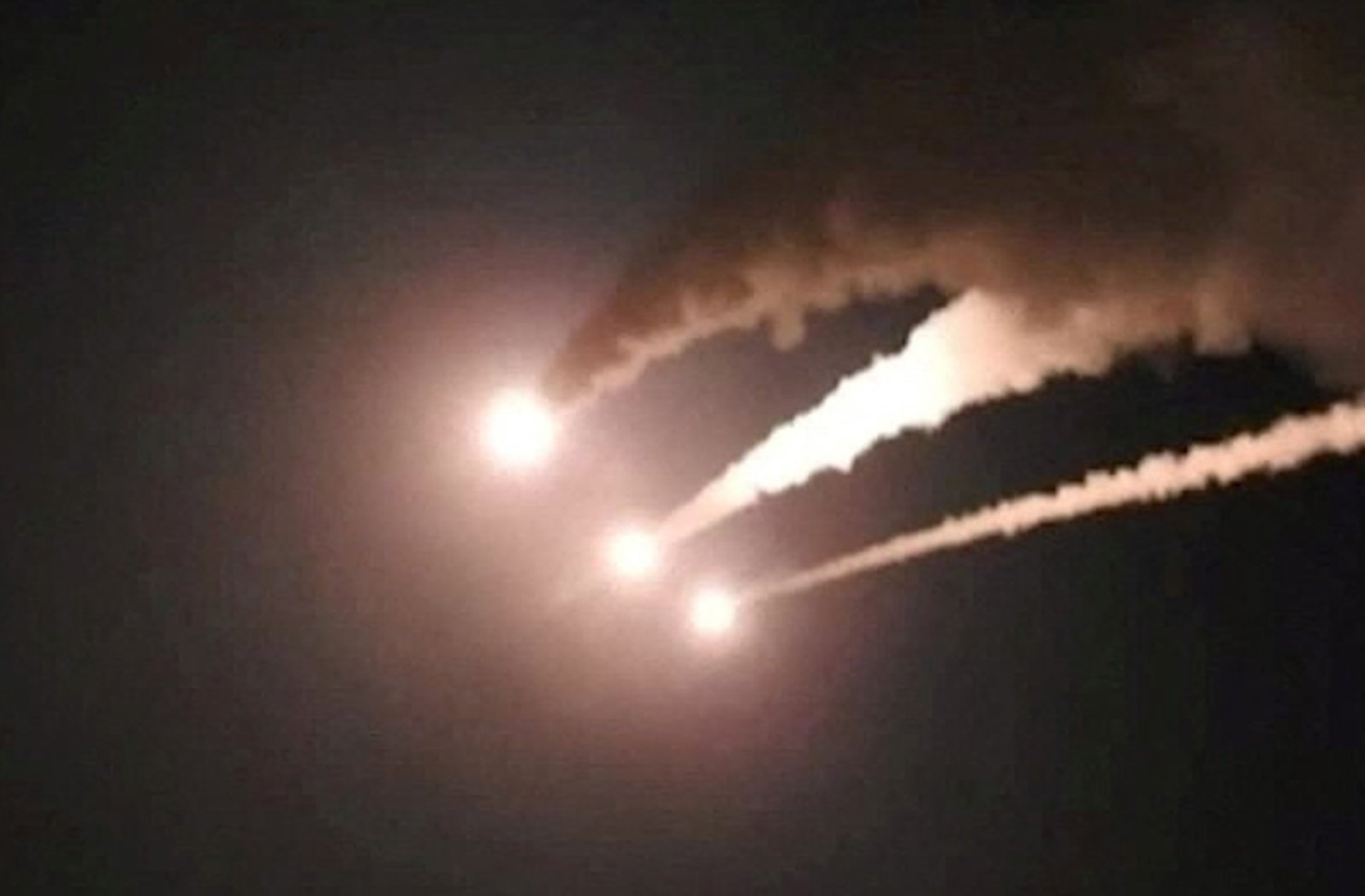
World
WASHINGTON/TEHRAN, — U.S. forces struck two Iranian rocket launchers on Larak Island in the Strait of Hormuz on Sunday, August 30, marking the first known U.S. attack on Iranian territory since late July. Iran responded hours later with ballistic missile and drone operations against U.S. military positions in Jordan and the United Arab Emirates. U.S. Strike on Larak Island U.S. Central Command (CENTCOM) said the strike targeted two launchers after Islamic Revolutionary Guard Corps (IRGC) personnel were observed preparing to fire rockets carrying sea mines into the Strait of Hormuz. CENTCOM spokesman Captain Tim Hawkins described the operation as a “limited, precise action” against what the U.S. considered an imminent threat to civilian mariners and commercial shipping. Iranian state media said the strike was carried out by drones and caused military and civilian casualties. Tasnim reported that two people were killed and two others wounded. Tehran condemned the attack and vowed a response. The casualty figures have not been independently verified. The strike came after the U.S. said it had completed clearing sea mines from international shipping lanes in the Strait. President Donald Trump had also warned that vessels attempting to place new mines would be destroyed. Iran Retaliates in Jordan and UAE The IRGC later said it launched ballistic missiles against two U.S.-associated bases in Jordan, King Hussein and Al-Azraq, also known as Muwaffaq al-Salti. Iran claimed the attacks targeted technical infrastructure, maintenance facilities and areas where fighter aircraft were stationed, causing heavy damage. Jordan's armed forces said its air defenses intercepted and destroyed eight missiles that entered Jordanian airspace before they could threaten civilians or property. U.S. officials also said the missiles targeting U.S. forces in Jordan were intercepted, with no significant impact reported. Iran also said it launched drones toward Al Minhad Air Base in the UAE, targeting areas where U.S. helicopters and personnel were stationed. However, the UAE said its air defenses intercepted an Iranian drone over its territorial waters and denied Iranian reports that Al Minhad airbase had been attacked. Iranian authorities separately claimed that its air defenses shot down a U.S. MQ-9 Reaper over the Strait of Hormuz. The claim has not been independently confirmed. Renewed Tensions Around the Strait The exchange ended weeks of relative calm between Washington and Tehran and renewed concerns over the security of the Strait of Hormuz, a major route for global energy shipments. Oil prices rose as markets reacted to the renewed fighting and concerns over possible disruption to shipping. Iranian President Masoud Pezeshkian said Tehran was not seeking war but would not remain passive in response to U.S. attacks. The latest exchange has increased uncertainty over the future of the conflict and security of commercial shipping through the Strait of Hormuz.
Read More → Posted on 2026-08-31 11:59:25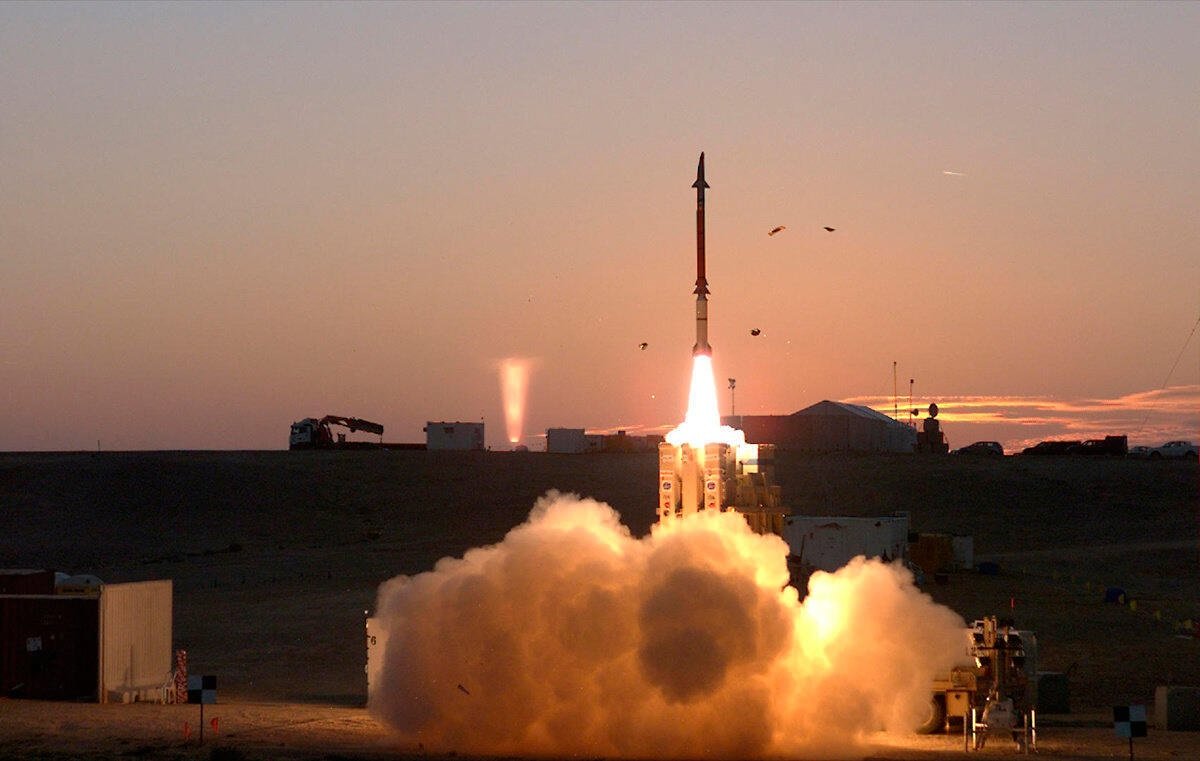
World
TEL AVIV, — Greece and Israel are scheduled to sign agreements on Monday, August 31, for a multilayered air and missile defense network known as “Achilles Shield.” The program is valued at slightly more than €3 billion, with recent reports putting the agreement at about €3.1 billion ($3.6 billion). The signing in Tel Aviv is expected to move the program from government approval into its implementation phase. If completed as reported, it would become the largest Israeli defense export agreement to date, exceeding the value of Israel’s previous major defense export deal, the $3.5 billion Arrow 3 sale to Germany in 2023. The agreements are expected to be signed by Greece’s General Directorate for Defense Investments and Armaments (GDDIA) and Israel’s Directorate of International Defense Cooperation (SIBAT), together with the Israeli defense organizations and companies involved in the program. Three Israeli air defense systems The core of Achilles Shield will combine three Israeli-developed systems to provide different layers of air and missile defense. David’s Sling, developed by Rafael, will provide the higher-tier missile defense capability. Reports on the Greek program have identified the SkyCeptor version as the planned configuration. It is intended to address ballistic and other missile threats. Barak MX, developed by Israel Aerospace Industries (IAI), will form another layer of the network. Greece plans to use the system as part of the replacement of its older Hawk air-defense capability. At the shorter-range end, Rafael’s SPYDER system will be included. It is planned to replace Greece’s Russian-origin Osa-AK and Tor-M1 systems. The three systems will be integrated with Greece’s existing Patriot air-defense systems and other sensors and capabilities rather than operating as separate networks. Command and control and source-code access A major element of Achilles Shield will be its command-and-control architecture. Greek Defense Minister Nikos Dendias has said the system will be built around an integrated command-and-control structure capable of prioritizing threats and supporting the selection of an appropriate response. Greece also intends to use artificial-intelligence capabilities within this architecture. Greece has also secured provisions concerning access to the source code. Dendias said in July that Greece should not acquire critical command-and-control systems without the ability to intervene in their architecture and development. Recent reporting indicates that the source-code issue was among the final matters resolved before the planned signing. Greek defense industry participation The agreement also includes significant participation from Greek defense companies. Reports say 12 Greek companies will participate in the program, with domestic industrial work exceeding €700 million, equivalent to about 25% of the program's value. The arrangement is intended to give Greek industry a role in manufacturing, integration and support activities rather than limiting the program to the direct purchase of foreign-built systems. 35-month implementation period Greece approved the Achilles Shield program through its Government Council for Foreign Affairs and Defense (KYSEA) on July 23, 2026. Dendias said the complete system would become operational within 35 months, with deliveries taking place in stages rather than all at once. Negotiations for the program have continued for about three years. The project was delayed during the period of Israeli military operations in Gaza before Greece resumed efforts to finalize the agreement. Part of Greece’s wider military modernization Achilles Shield is a major component of Greece’s broader Agenda 2030 defense modernization program. The wider procurement effort includes additional unmanned systems, satellites, naval modernization and military transport capabilities. Among the other approved programs are Heron 1 unmanned aerial systems, 10 additional V-BAT systems, synthetic-aperture-radar satellite capabilities, 10 VICTA special operations vessels, modernization of four MEKO-class frigates, and three Embraer C-390 Millennium transport aircraft. The Greek Defense Ministry describes Achilles Shield as part of a wider national defense architecture extending across the sea, land, air, cyberspace and space, with different military platforms connected through a networked command-and-control structure. The planned August 31 signing in Tel Aviv will therefore mark the next major step in Greece’s effort to establish the Achilles Shield as an integrated national air and missile defense architecture.
Read More → Posted on 2026-08-30 15:32:59
World
KYIV, Ukraine — Ukraine has formally asked the International Telecommunication Union (ITU) to remove its national territory from the declared service areas of Russia’s Rassvet satellite internet network across all frequency bands. Foreign Minister Andrii Sybiha announced the move on August 28, saying Ukraine had submitted a formal note to the ITU Radiocommunication Bureau through its Permanent Mission to the United Nations and other international organizations in Geneva. The request was jointly coordinated by Ukraine’s Ministry of Foreign Affairs, Ministry of Digital Transformation and State Centre of Radio Frequencies. Ukrainian officials said Russia intends to extend Rassvet-1 and Rassvet-3 coverage over Ukraine and that Kyiv wants to protect its frequency resources used for mobile communications, radio networks, satellite systems and other telecommunications. Sybiha said Russia’s planned use of the satellites over Ukrainian territory is intended to support military operations rather than civilian connectivity. He also called on international partners to support Ukraine’s position and take similar measures to prevent Rassvet operations over their own sovereign territories. The ITU coordinates international use of radio-frequency spectrum and satellite orbits, but it does not have the ability to physically prevent satellites from passing over a country or stop their signals from reaching the ground. Russia's Rassvet Network Rassvet is being developed by Russian aerospace company Bureau 1440 as a low-Earth-orbit broadband network intended as a domestic alternative to systems such as SpaceX’s Starlink. The project uses 5G non-terrestrial-network technology and active phased-array terminals, with subscriber terminals designed to provide data speeds of up to 1 Gbps. Bureau 1440 is also developing terminals for aircraft, trains and mobile platforms. The network has gained importance for Russia as access to Starlink has become more restricted for Russian forces. Earlier this year, Ukrainian forces and SpaceX introduced measures to block unauthorized Russian access to Starlink terminals. Military analysts have linked Rassvet to battlefield communications and the operation of reconnaissance and strike drones. Russian officials have also publicly connected Bureau 1440’s technology with control systems for heavy unmanned aerial vehicles. 32 Rassvet-3 Satellites Launched in 2026 Bureau 1440 launched 16 Rassvet-3 satellites on March 23, 2026, from the Plesetsk Cosmodrome. One satellite from that group later re-entered the atmosphere, while 12 of the remaining satellites had reached an operational altitude of about 550 kilometers by late July. Other satellites were still raising their orbits. A second group of 16 Rassvet-3 satellites was launched on July 19. Tracking data showed that the satellites initially remained at much lower altitudes. Two failed to complete orbit-raising maneuvers and were moving toward atmospheric re-entry, while several others remained below their planned operating altitude. Russia plans to expand the constellation to 156 satellites by the end of 2026 and 292 satellites by 2027, when commercial service is planned to begin. Longer-term plans call for about 900 satellites by 2035, providing near-global coverage, including the Arctic region. Despite the expansion plans, the network remains limited in scale and has faced orbital problems with satellites from the two 2026 launches. Rassvet Satellites Already Passing Over Ukraine Tracking analysis from services including N2YO indicated that the first Rassvet-3 satellites pass over Ukraine about four times a day. Two of these passes typically provide stable communication windows lasting more than an hour. Ukraine’s ITU petition focuses on removing its territory from Rassvet’s declared service areas. Kyiv says it will continue diplomatic measures against the Russian satellite network while seeking support from other countries.
Read More → Posted on 2026-08-30 13:23:19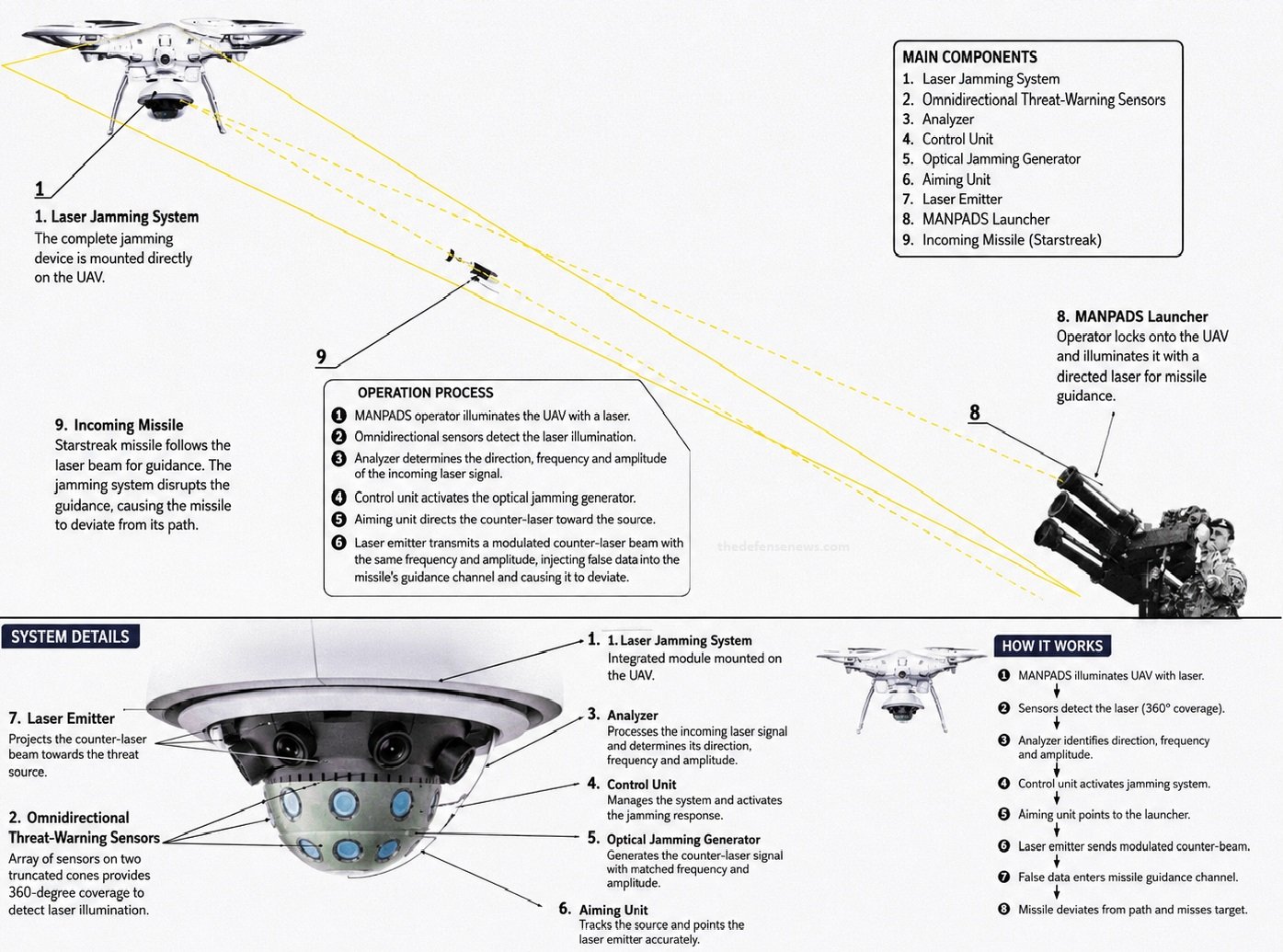
World
MOSCOW, — Russia’s 3rd Central Research Institute of the Ministry of Defense has developed and patented a laser jamming system designed to protect unmanned aerial vehicles (UAVs) from man-portable air-defense systems (MANPADS) that use laser beam-riding guidance. The system is described in Russian patent documents reviewed by TASS. Reports about the patent first appeared in July 2025. The device is intended to counter laser-guided systems such as the British-made Starstreak. System Designed for UAVs The patented equipment is mounted directly on a UAV and is designed to detect laser illumination from a missile guidance system and respond with a counter-laser signal. Its main components include an array of omnidirectional threat-warning sensors, an analyzer, a control unit, an optical jamming generator, an aiming unit and a laser emitter. The warning sensors are positioned on two truncated cones around the aircraft. According to the patent description, this arrangement provides 360-degree coverage for detecting directed laser illumination. Once the system detects the laser signal, the analyzer determines the direction from which it is coming and examines characteristics of the guidance signal, including its frequency and amplitude. The control unit then activates the optical jamming system. The aiming unit directs the countermeasure toward the location of the laser source. Counter-Laser Signal Targets the Guidance Channel The system is designed specifically for missiles that receive guidance through a laser beam rather than using an infrared seeker. The counter-laser signal is modulated using the frequency and amplitude characteristics identified from the incoming guidance signal. According to the patent, this allows the jammer to introduce false information into the missile's guidance channel. The intended result is to disrupt the missile's guidance and cause it to deviate from its planned flight path, reducing the probability of the UAV being hit. This approach is different from conventional infrared countermeasures. Laser beam-riding weapons do not depend on a heat signature from the target in the same way as infrared-guided missiles, so countermeasures designed specifically to defeat infrared seekers are not the primary mechanism addressed by this system. Starstreak Uses Laser Beam-Riding Guidance Starstreak is an example of a MANPADS system that uses laser beam-riding guidance. During an engagement, the launcher projects a laser guidance beam toward the target, while the missile uses sensors to determine its position within that beam and make flight corrections. The Russian patent is aimed at interfering with this guidance method rather than attempting to defeat a conventional infrared seeker. The patent therefore describes the system as a countermeasure against portable air-defense systems that rely on laser command or beam-riding guidance. Compact and Reusable Design The developers describe the equipment as lightweight and compact, making it suitable for installation on UAVs. The patent contrasts the concept with larger airborne self-protection systems such as MANTA. Another feature identified in the patent is its reusable nature. Unlike expendable pyrotechnic countermeasures, the laser-based system does not depend on a single-use physical countermeasure. The patent states that the technical result of the system is a reduction in the probability of a UAV being hit by disrupting the missile's guidance. However, the available information does not establish that the system has entered production or operational service. There is also no publicly available information confirming production timelines, test results or specific UAV platforms that would receive the equipment. The patent describes the technology and its intended operating principle, but those details do not by themselves confirm deployment. The 3rd Central Research Institute is a Russian Defense Ministry research organization with a history of work on military technology and equipment.
Read More → Posted on 2026-08-30 12:48:47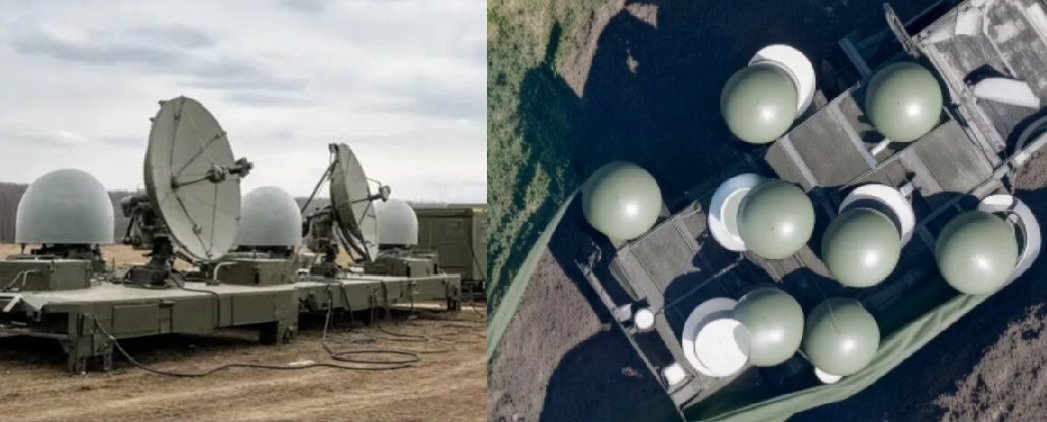
World
MOSCOW, — Russia has begun serial production of the Volna Kupol Garant, an electronic warfare (EW) system designed to disrupt communications between Starlink terminals and satellites, according to a Russian defense-industry source cited by state news agency TASS on August 28. The move follows Russian claims that the system has demonstrated effectiveness during testing and earlier deployments. The start of serial production marks a shift from limited production and deployment toward larger-scale manufacturing. How the Volna Kupol Garant Works The Volna Kupol Garant uses a different approach from conventional systems that directly jam communications equipment on the ground. According to Ukrainian radio technology expert and presidential adviser Serhii “Flash” Beskrestnov, the system directs powerful radio-frequency interference toward Starlink satellites in low Earth orbit. The objective is to interfere with the satellites' ability to receive signals transmitted by Starlink terminals on the ground. Beskrestnov said in June that Starlink terminals transmit toward satellites in the 14–14.5 GHz frequency range. He described eight data channels, each with a bandwidth of 62.5 MHz, that the Russian system is designed to interfere with. The system is mounted on six trailers, with two antennas per trailer, giving it a total of 12 antennas. The equipment uses steerable antennas to direct interference toward satellites passing over the area. A single system has been reported to affect an area of approximately 20 square kilometers. The system is manufactured by Rossiysky Kupol, also referred to as Russkii Kupol, a company based in Simferopol, Crimea, according to Ukrainian reporting on the system. Starlink's Role in the War Starlink has become an important communications system for Ukrainian forces, including for battlefield communications and unmanned systems. Russia has been developing and deploying electronic warfare systems intended to interfere with Starlink communications. Ukrainian officials reported in June that Russian forces were using the Volna Kupol Garant against Starlink links. The system's satellite-focused approach is intended to interfere with the connection before the communication reaches the ground terminal. However, the effectiveness of such interference depends on several factors, including the satellite passing over the affected area and the ability of Starlink terminals to establish connections with other satellites. The Institute for the Study of War's Critical Threats Project noted that the system reportedly engages satellites rather than individual ground terminals and that Starlink's large constellation and frequent satellite handovers can limit the duration and scale of disruption. Russian Claims and Reported Limitations The Russian defense-industry source quoted by TASS said the Volna Kupol Garant had proven effective and that production was being expanded. The source also claimed that multiple systems could be used to increase the area affected by interference. Independent assessments, however, have highlighted limitations. The system is relatively large and requires significant power, while its reported coverage is limited to a specific area. Ukrainian officials have also reported that Russian Volna Kupol Garant systems have been identified and attacked. The system's estimated cost has been reported at around $1.5 million per unit, although this figure is an estimate rather than an officially confirmed production price. Ukrainian forces have previously released evidence of strikes against Volna Kupol Garant systems. Open-source reporting has also identified satellite imagery showing a destroyed system at Russian military unit No. 2156 in Gelendzhik, on Russia's Black Sea coast. Russia Says Technology Could Be Supplied Abroad The Russian defense-industry source cited by TASS also said that Russia retains the right to distribute the technology to other countries. That statement indicates that Moscow sees the system as more than a battlefield electronic warfare capability. However, there is currently no confirmed public information establishing which foreign countries have ordered or received the Volna Kupol Garant. The start of serial production nevertheless represents a further Russian effort to counter Starlink through electronic warfare. Its actual effectiveness at scale will depend on the number of systems deployed, their ability to remain operational, and Starlink's ability to maintain connectivity through its wider satellite network.
Read More → Posted on 2026-08-30 12:28:09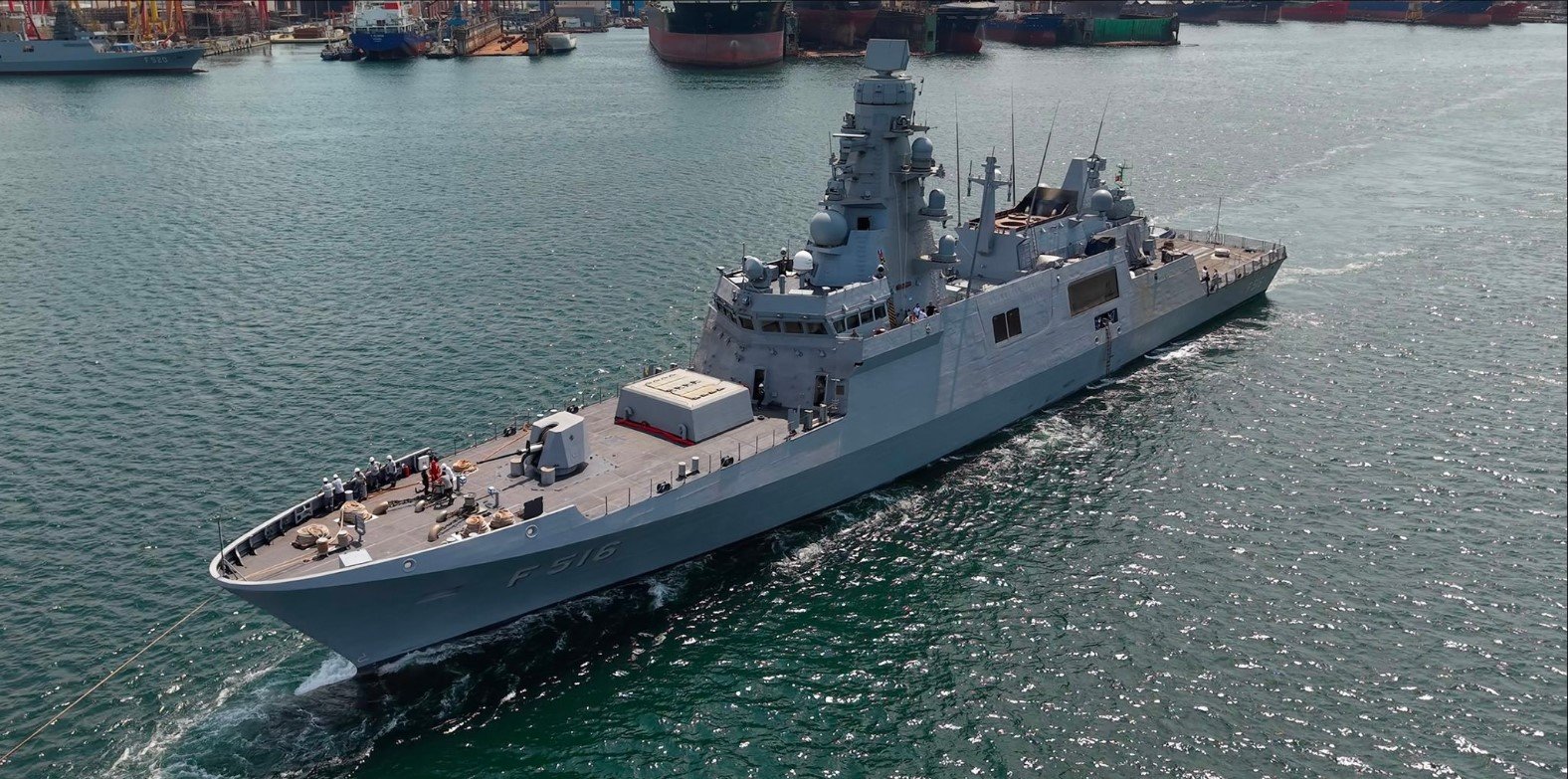
World
ISTANBUL, — Turkiye’s second I-class (Istif-class) frigate, the future TCG Izmir (F-516), has begun its first Sea Acceptance Trials (SAT), marking the latest stage in the construction of the Turkish Navy’s expanding national frigate programme. Anadolu Shipyard announced on August 26 that TCG Izmir had entered its sea acceptance testing phase. The frigate first went to sea for the trials on August 10, 2026. During the trials, the ship’s navigation, propulsion, manoeuvring, electrical, communications and other platform systems are being evaluated under operating conditions. TCG Izmir is being built by Anadolu Shipyard under the STM-TAIS partnership and is the sixth vessel of the MILGEM programme. It is the second I-class frigate after TCG Istanbul (F-515), which was delivered to the Turkish Navy in January 2024. STM says the programme now covers a total of eight I-class frigates. Enlarged Strike-Length MIDLAS VLS One of the most visible differences between TCG Izmir and the lead ship is the configuration of the forward MIDLAS (National Vertical Launching System). TCG Istanbul uses the tactical-length version of MIDLAS, while TCG Izmir is being fitted with the larger strike-length version. Roketsan's published specifications give the tactical version a length of 6.7 metres and the strike version a length of 8 metres. The corresponding eight-cell modules weigh 15,000 kg and 18,000 kg respectively. The strike-length system is designed to accommodate larger missiles. Roketsan states that MIDLAS can launch different types of guided weapons, with the company's published material identifying SIPER 1D and ATMACA integration as being in progress. Earlier reporting has also identified the strike-length version for weapons such as ATMACA and the GEZGIN cruise missile. The exact initial missile configuration aboard TCG Izmir has not been publicly confirmed by the Turkish Defence Industry Agency or Anadolu Shipyard. Therefore, the presence of the larger launcher should not be treated as confirmation that every compatible missile has already been integrated or will be carried during the ship's initial deployment. Higher Indigenous Content The frigate also represents another step in Turkiye's effort to increase the use of domestically developed systems on its naval platforms. Anadolu Shipyard has stated that TCG Izmir has a domestic systems rate exceeding 80 percent. TCG Izmir is also receiving the domestically developed 76 mm/62-calibre DENIZHAN naval gun. The third completed DENIZHAN gun was delivered to Anadolu Shipyard for integration on TCG Izmir in February 2025. The system was developed by MKE and Istanbul Naval Shipyard Command. I-Class Frigate Programme The I-class frigates are an enlarged development of Turkiye's MILGEM Ada-class design and are intended to provide the Turkish Navy with a multi-role frigate capable of conducting surface, anti-submarine and air-defence missions, along with surveillance and other naval operations. The class was developed as a successor to the older YAVUZ-class (MEKO 200 Track I) frigates. The design incorporates a larger hull, increased fuel capacity and greater endurance compared with the Ada-class. TCG Istanbul was constructed at Istanbul Naval Shipyard, while TCG Izmir and the other follow-on frigates are being constructed through the STM-TAIS industrial partnership. STM says seven additional national frigates are being built as part of the eight-ship programme. TCG Izmir Key Specifications According to the specifications provided for the I-class frigates, the ships have: Length: 113.2 metres Beam: 14.4 metres Draught: 4.05 metres Displacement: approximately 3,000–3,100 tonnes Maximum speed: more than 29 knots Cruising speed: 14 knots Range: approximately 5,700 nautical miles at 14 knots Propulsion: CODAG arrangement with two diesel engines and one GE LM2500 gas turbine Shafts: two, with controllable-pitch propellers Combat management system: HAVELSAN ADVENT The reported sensor and combat-system fit includes the ASELSAN CENK-S 3D AESA radar, ALPER-P LPI navigation radar, AKR-D fire-control radars, AHTAPOT electro-optical system, PIRI infrared search and track system, FERSAH hull-mounted sonar and HIZIR torpedo countermeasures system. The planned weapons fit includes a 16-cell MIDLAS VLS, 16 ATMACA anti-ship missiles, one 76 mm DENIZHAN naval gun, one 35 mm GÖKDENIZ CIWS, two 25 mm STOP remote weapon stations and two triple lightweight torpedo tubes. Next Stage Toward Delivery The Sea Acceptance Trials will allow the ship's platform and combat systems to be evaluated at sea before the frigate is accepted into Turkish Naval Forces service. The testing of TCG Izmir comes as Turkiye continues parallel construction and fitting-out of the remaining I-class frigates. The enlarged strike-length MIDLAS installation on TCG Izmir is one of the programme's most significant configuration changes compared with TCG Istanbul. However, the final operational missile load and the full extent of weapon integration will depend on the completion of the relevant testing and acceptance activities.
Read More → Posted on 2026-08-30 12:04:52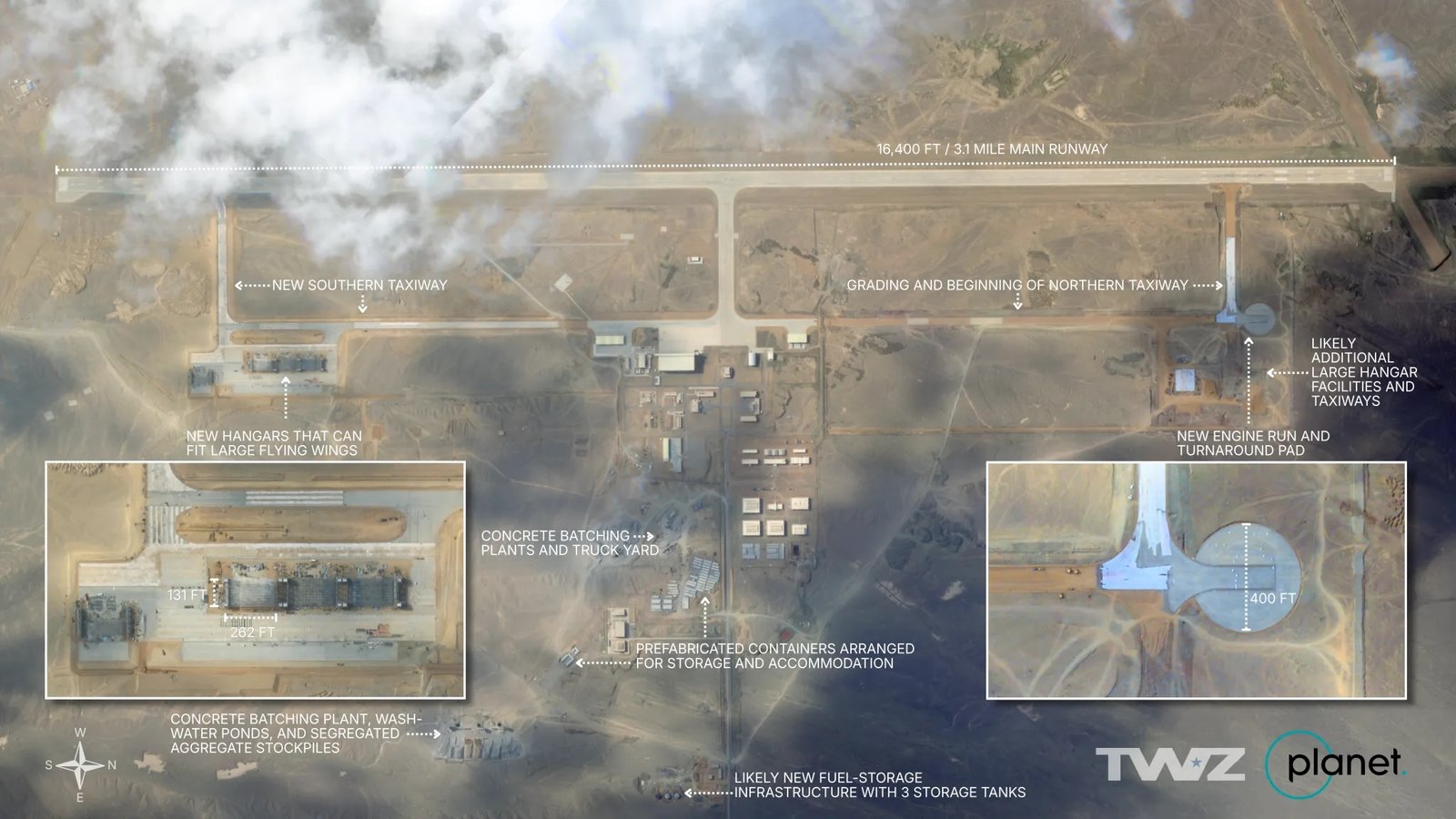
World
LOP NUR, Xinjiang, China — China is rapidly expanding a remote flight-test facility near Lop Nur in Xinjiang, with new satellite imagery showing large hangars, taxiways, aircraft turning areas and possible fuel-storage infrastructure under construction. The facility, which is used for testing experimental platforms and next-generation combat aircraft, has developed from a relatively basic airfield into a larger People’s Liberation Army (PLA) flight-test center. The site is sometimes compared with the U.S. Area 51 because of its remote location and apparent role in testing sensitive aerospace programs. High-resolution satellite imagery collected by Planet Labs on August 27, 2026, shows the latest construction across the base. The airfield has a runway approximately 16,400 feet (about 5 kilometers) long, making it one of the longest military runways of its type. Geo-intelligence researcher Damien Symon, who assisted The War Zone in analyzing the imagery, said the new taxiways, aircraft turning pads, hangars and possible fuel-storage infrastructure substantially increase the facility's ability to support aircraft movements and sustained flight-test activity. From a Basic Airstrip to a Major Test Facility The Lop Nur facility was considerably smaller when it attracted attention in 2020. At that time, satellite imagery showed a 3.1-mile runway, a small hangar and a limited number of vehicles. The site was also associated with Chinese military space-development activities, including testing of reusable spaceplanes. The facility expanded significantly in the following years. In 2023, the main apron was enlarged and a large hangar was added. Additional hangars appeared on both sides of the main ramp in 2025, with their configuration indicating that they were intended for tactical fixed-wing aircraft. Construction activity increased further from May 2025 and has continued since then. The facility's growing infrastructure has coincided with the appearance of advanced Chinese aircraft at the site. In 2025, both of China's publicly identified sixth-generation fighter designs, the Chengdu-associated J-36 and Shenyang-associated J-XDS, were observed at Lop Nur for the first time. Their presence was notable because the aircraft were operating away from the home airfields associated with their manufacturers. Four Large Hangars Under Construction One of the most significant developments visible in the latest imagery is the construction of four large hangars on the southern apron. Three of the hangars measure approximately 80 by 40 meters (262 by 131 feet), while a fourth nearby structure has different dimensions. All four have access to the new southern taxiway. According to Symon's assessment, the dimensions of these structures are sufficient to accommodate tactical and strategic aircraft currently operated by the PLA. For comparison, China's operational Xi'an H-6 strategic bomber has a wingspan of approximately 108 feet. The wide proportions of the new hangars are also similar to structures at another Chinese test facility near Malan in Xinjiang, which has been associated primarily with unmanned aircraft testing. However, Lop Nur appears to have a greater focus on crewed aircraft. The large hangars have led to speculation that the facility could eventually support testing of China's H-20 stealth bomber. However, the H-20 has not yet appeared publicly, and there is no confirmation that the new Lop Nur hangars are being built specifically for that aircraft. The War Zone also describes this possibility as speculation. New Taxiways Increase Aircraft Movement Capacity A new taxiway is nearing completion along the southern side of the main runway. It runs parallel to the runway and connects with the central apron and main hangar area. Once completed, the taxiway will allow aircraft to move between areas of the facility without having to back-taxi along the main runway. This would provide greater flexibility for aircraft movements during flight-test operations. Construction is also continuing at the northern section of the facility. Grading is underway for another taxiway intended to connect the central apron with the northern portion of the runway, with concrete work already beginning. A circular pad approximately 400 feet in diameter has also been constructed in the northern area. It has direct connections to both the runway and the main base area. Analysts assess the feature as likely being intended for engine runs and aircraft turnaround activities, although its exact purpose has not been officially confirmed. An additional apron extension is being built nearby, with at least two large hangars under construction. These structures have more conventional proportions than the four wide hangars on the southern apron. Possible Fuel Infrastructure and Construction Support The latest imagery also shows possible fuel-storage infrastructure under construction. The structures appear to include three potential storage tanks, although their exact purpose has not been confirmed. Symon assessed that, if confirmed as fuel-storage facilities, the infrastructure could support higher sortie rates and longer periods of sustained flight-test activity. Construction-support infrastructure has also expanded. Buildings that were still under development in late 2025 are now complete, while rows of prefabricated containers have appeared behind the central apron. Their exact purpose is not confirmed, although the structures could provide storage or accommodation associated with the ongoing construction work. A concrete batching plant, including wash-water ponds and aggregate stockpiles, has also been established farther east on the facility's outskirts. Other construction sites are visible nearby, but their eventual purpose remains unclear. Lop Nur's Role in China's Advanced Aircraft Testing The continued expansion suggests that Lop Nur is being developed to support a larger volume of aircraft testing and associated activities. Its remote location, long runway and growing hangar and taxiway infrastructure provide the facility with additional capacity for experimental aircraft programs. The presence of the J-36 and J-XDS prototypes has already linked the base with China's advanced combat-aircraft development. The new hangars are large enough for aircraft substantially larger than conventional fighter aircraft, but their specific intended occupants have not been publicly identified. The possible connection to the H-20 remains unconfirmed. China has not publicly revealed a testing location for the bomber, and there is currently no verified evidence establishing that the aircraft will be tested at Lop Nur. The facility is located near China's historic Lop Nur nuclear test area, where China conducted its first nuclear test, Project 596, in 1964. The region has therefore been associated with highly sensitive Chinese military and strategic programs for decades. The latest satellite imagery shows that the Lop Nur flight-test facility is continuing to expand, with new hangars, taxiways, aircraft operating areas and support infrastructure increasing its capacity. However, the specific aircraft and programs that will use the newest facilities remain largely unconfirmed. Source : TWZ
Read More → Posted on 2026-08-29 15:45:23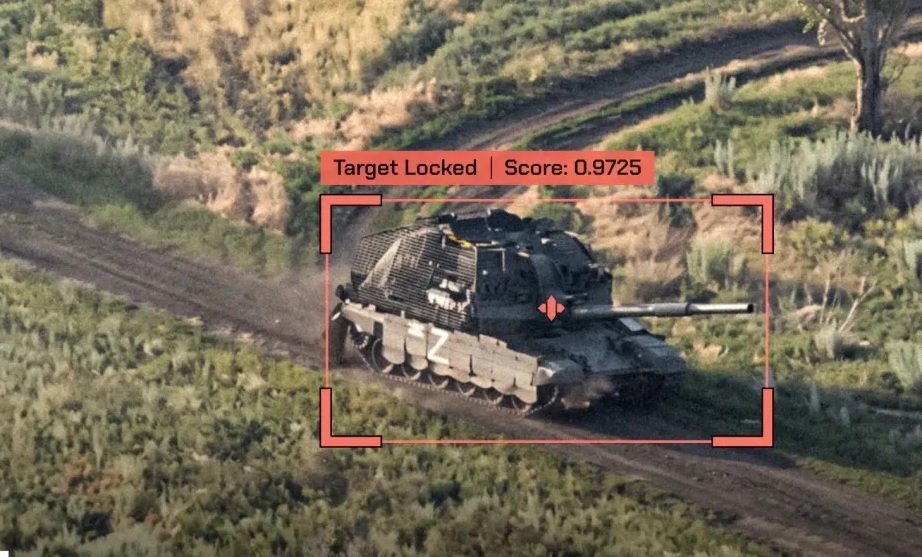
World
KYIV, — Ukraine’s Ministry of Defence said artificial intelligence is reducing by up to 90% the time military analysts need to detect signs of enemy activity in photographs and video. According to the ministry, AI systems can automatically examine visual data and identify enemy positions and military equipment. By automating the initial analysis, the technology allows personnel to assess potential targets more quickly than through manual examination alone. The ministry said the time savings also affect the wider military kill chain, which covers the stages from finding and fixing a target to tracking, selecting a means of engagement, carrying out the engagement and assessing its results. AI is being used to reduce the time required at several of these stages rather than replacing the process itself. Human remains responsible for strike decisions Ukraine says the use of AI on the battlefield continues to follow the human-in-the-loop principle. AI can identify potential targets and accelerate their assessment, but the final decision to engage remains with a human operator. The Ministry of Defence said the level of system autonomy is limited according to the potential consequences of an error. The approach is intended to increase the speed of battlefield analysis while keeping authority over the use of force with people. More than 70 AI and machine-vision systems in use The ministry said Ukrainian Defence Forces units are currently using more than 70 systems based on artificial intelligence and machine vision for detecting, recognizing and engaging targets. Ukraine's AI development effort also involves a growing domestic industrial base. The ministry said more than 200 Ukrainian companies produce AI-enabled drones. Brave1, Ukraine's state defense-technology cluster, separately lists more than 200 AI product manufacturers within its wider defense-technology ecosystem. The Brave1 Market also provides military users with access to AI-related technologies. The ministry said 46 AI solutions are available, including technologies for target recognition, optical stabilization and automatic terminal guidance. AI is being trained on battlefield data Ukraine is also developing infrastructure to train military AI systems using real-world battlefield information. The Ministry of Defence said more than 100 Ukrainian companies have access to Brave1 Dataroom, a secure environment for testing, training and fine-tuning military AI models. Developers can use structured visual and thermal datasets collected under real-world conditions. Another system, Avengers Labs, provides developers with an annotated dataset containing 5 million frames collected during military missions. The data includes images of tanks, artillery, air-defense systems, infantry groups and aerial targets, including reconnaissance UAVs and Shahed-type drones. The resulting Avengers AI platform has been integrated into the Vezha module of Ukraine's DELTA combat system. The Ministry of Defence said it identifies 70% of enemy military equipment in real time while analyzing more than 100,000 video streams each month. Defence AI Centre established in 2026 Ukraine's Ministry of Defence established the Defence AI Centre A1 in March 2026 to coordinate the wider integration of artificial intelligence into defense processes and support the development of military technology. The ministry has also said that AI is already being incorporated into systems associated with DELTA. On August 28, the ministry announced that an AI assistant had become available to all DELTA users, allowing them to obtain answers to common questions directly through the combat-system interface. Ukraine has set a longer-term goal of equipping 100% of frontline drones with machine-vision and AI technologies. The expansion reflects the country's broader effort to use automated analysis and machine vision to process increasing volumes of battlefield information while keeping human operators responsible for decisions to use force. The 90% figure and the details on AI-enabled battlefield analysis were published by Ukraine's Ministry of Defence on August 28, 2026.
Read More → Posted on 2026-08-29 15:28:00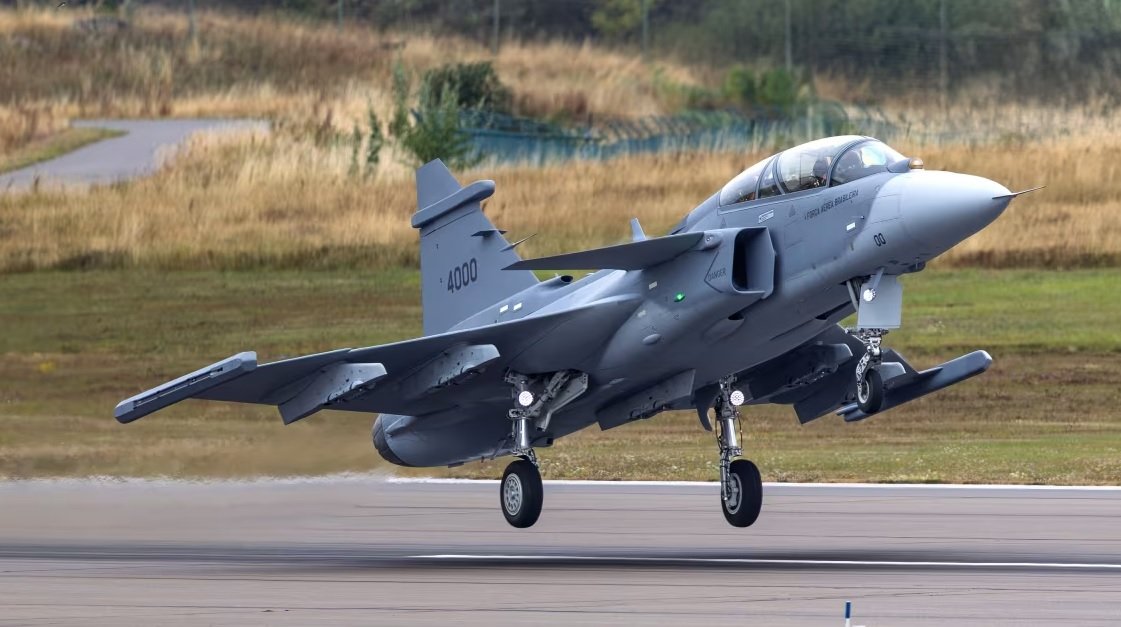
World
LINKÖPING, Sweden, — Saab has successfully completed the first flight of the Gripen F, the two-seat variant of the Gripen E fighter. The flight took place on August 28, 2026, at Saab’s airfield in Linköping, Sweden, marking the start of the aircraft’s airborne test campaign. The aircraft took off at 09:40 local time and remained airborne for 40 minutes. Saab chief test pilot Jakob Högberg and Brazilian Air Force test pilot Lieutenant Colonel Aviator Abdon de Rezende Vasconcelos flew the mission. The sortie verified the functionality of the aircraft’s core systems and its initial flight performance. Brazil is the launch customer for the Gripen F. The aircraft carries Brazilian Air Force markings and was formally rolled out at Linköping on June 2, 2026. Manufacturing of the first Gripen F began in 2020. The aircraft combines components common with the Gripen E with a redesigned forward fuselage to accommodate the second cockpit. Lars Tossman, head of Saab’s Aeronautics business area, said the first flight was an important step for Saab and the Brazilian Air Force. He said the Gripen F is designed to accelerate pilot training while enhancing operational performance in advanced combat missions. Flight Testing Following the first flight, the Gripen F will undergo initial production acceptance flights before progressive flight-envelope expansion. Test teams will gradually evaluate speed, altitude, G-load and angle of attack, while also testing tactical capabilities and functions specific to the rear cockpit. The test campaign will be conducted by Saab’s Flight Test Centre in Sweden. After the planned testing and aircraft acceptance procedures are completed, the Gripen F will be prepared for delivery to the Brazilian Air Force. Developed With Brazil The Gripen F is the result of the strategic partnership between Brazil and Sweden and the technology-transfer programme under Brazil’s Gripen programme. More than 350 Brazilian engineers, technicians and pilots have participated in training related to development, production, flight testing and maintenance. Brazil also played an active role in co-developing the two-seat variant, supporting direct industrial participation and long-term cooperation between the two countries. Brazil’s 2014 contract covers 36 Gripen aircraft, comprising 28 single-seat Gripen E and eight two-seat Gripen F aircraft. Deliveries began in 2020, with 11 aircraft handed over so far, all single-seat models. The first Gripen E assembled in Brazil was rolled out at Embraer’s facility in Gavião Peixoto in March 2026. The Gripen F retains the Gripen E’s core configuration, including its AESA radar and General Electric F414G engine. The second cockpit can operate independently or together with the front cockpit, allowing the aircraft to be used for pilot training and operational missions. The Gripen F is 15.9 metres long, has a 16,500 kg maximum take-off weight and retains the same number of external hardpoints as the Gripen E. Unlike the single-seat Gripen E, it does not have an internal cannon. Additional Gripen F orders have been placed by Colombia for two aircraft and Thailand for one aircraft as part of an initial batch. The Swedish Air Force has not ordered the two-seat version. The first flight begins the Gripen F’s flight-testing phase in Sweden. Further testing will continue before the aircraft is prepared for transfer to the Brazilian Air Force.
Read More → Posted on 2026-08-29 15:07:49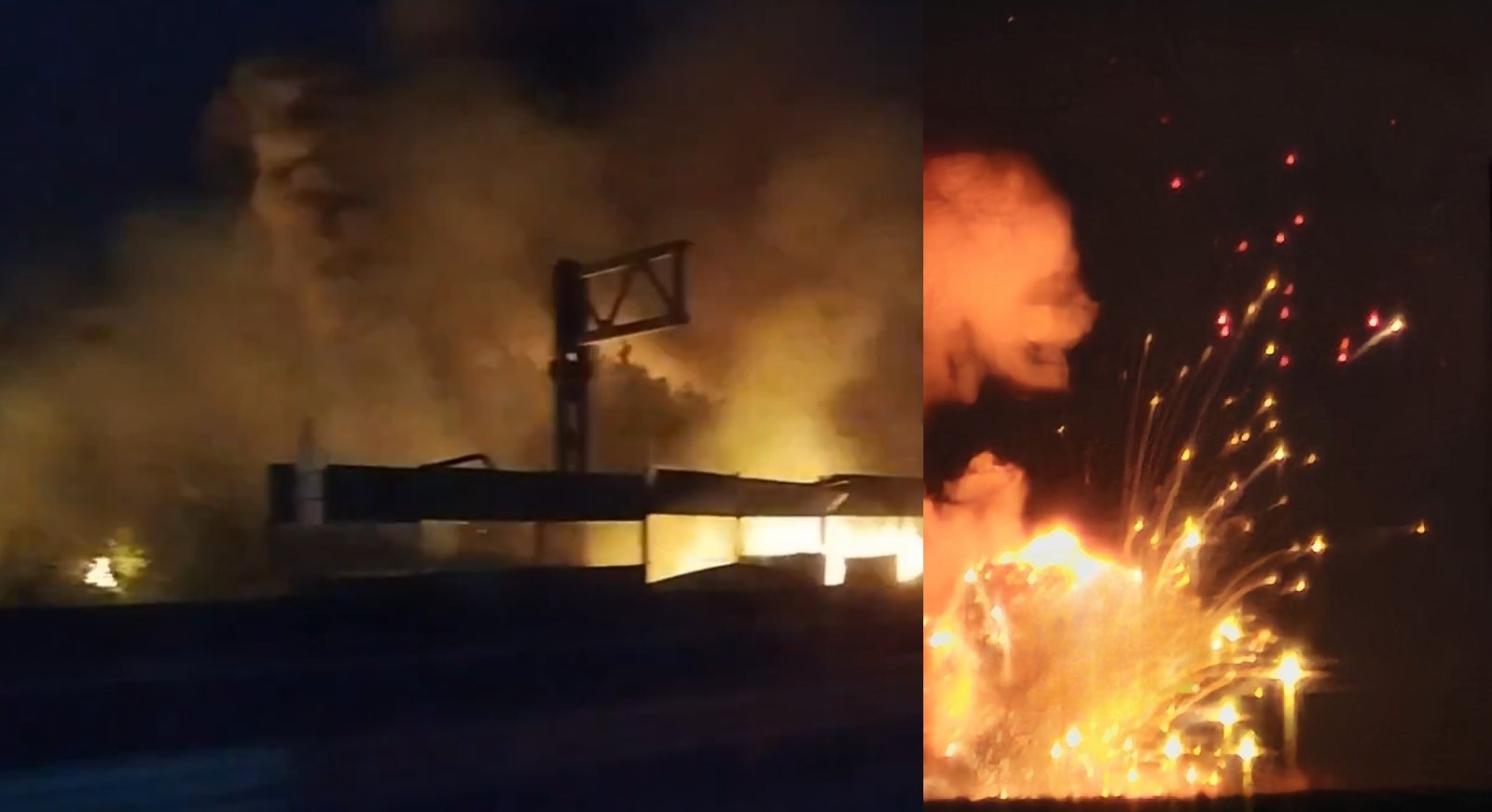
World
KYIV, Ukraine — At least 37 people were killed and 42 others injured after a Russian drone strike hit a warehouse in the village of Myla in Kyiv region on the evening of August 28, triggering a large fire and a series of secondary explosions that continued for hours, Ukrainian authorities said. The facility is located in the Bucha district, west of Kyiv. The explosions damaged around 50 nearby residential buildings and affected a care facility for elderly people and people with disabilities. More than 380 people were evacuated from the area as emergency crews continued firefighting, rescue and debris-removal operations. 🇷🇺🇺🇦 Huge explosions in Kiev. 3 mushroom clouds can be seen. pic.twitter.com/HgUoaAwzsd — ConflictX (@ConflictXtweets) August 28, 2026 Ammunition storage under investigation Ukrainian President Volodymyr Zelenskyy said the initial strike hit a Defense Forces storage facility containing shells, mines, other ammunition and drones. He said the ammunition should not have been stored close to residential areas and confirmed that a criminal investigation into official negligence had been opened. The Office of the Prosecutor General is examining the legality of storing explosive materials at the site, including the actions of officials responsible for the facility and whether the necessary permits and safety requirements were followed. The investigation comes after the secondary explosions caused extensive damage outside the facility. Ukrainian authorities are continuing to assess the site as rescue workers search damaged areas. Local official among those killed Among those killed was Taras Didych, head of the Dmytrivka community, which includes Myla. Officials said Didych was among the first people to arrive at the scene to help residents after the strike. He was killed during the response to the incident. Traffic was also temporarily restricted on a section of the M-06 Kyiv–Chop highway between the 15th and 32nd kilometer markers because of the continuing fire and explosions. More than 300 emergency personnel were involved in the response, according to Zelenskyy's office. Russia says ammunition depot was targeted Russia's Defense Ministry said the strike targeted an ammunition depot in Myla. According to the Russian statement, the facility stored components and launch boosters associated with FP-1/FP-2 long-range unmanned aerial vehicles. Ukrainian officials, meanwhile, described the site as a Defense Forces ammunition storage facility. The attack has therefore raised two separate issues in Ukraine: the direct impact of the Russian strike and questions over how explosive materials were stored near populated areas. Similar incident in Vyshneve The Myla explosion follows another Russian strike on an ammunition storage facility in Vyshneve, near Kyiv, in July. Ukrainian authorities said the July 6 strike caused ammunition stored at the site to detonate. The Security Service of Ukraine later said the warehouses were not intended for ammunition storage and that the facility was located close to residential areas. Investigators subsequently detained senior executives of the defense enterprise involved over alleged official negligence. Ukrainian Prime Minister Serhii Koretskyi criticized the failure to prevent another similar incident, saying the previous case should have provided a lesson for authorities. Myla strike part of wider Russian aerial attacks The strike on Myla occurred during a broader series of Russian drone attacks across Ukraine. Ukrainian authorities reported attacks affecting Kyiv and several other regions, including Odesa, Dnipro, Zaporizhzhia, Sumy, Kherson, Kharkiv, Mykolaiv, Donetsk and Chernihiv. Ukrainian officials have also reported increased use of jet-powered drones in recent attacks. These systems fly at substantially higher speeds than conventional propeller-driven attack drones, creating additional challenges for Ukraine's existing air-defense network. Ukrainian officials have said interceptor drones intended to counter such threats have not yet demonstrated the expected effectiveness. The Myla site remains under emergency operations, with authorities continuing to clear debris, search affected areas and assist residents whose homes were damaged. The death toll could still change as rescue and inspection work continues.
Read More → Posted on 2026-08-29 14:20:06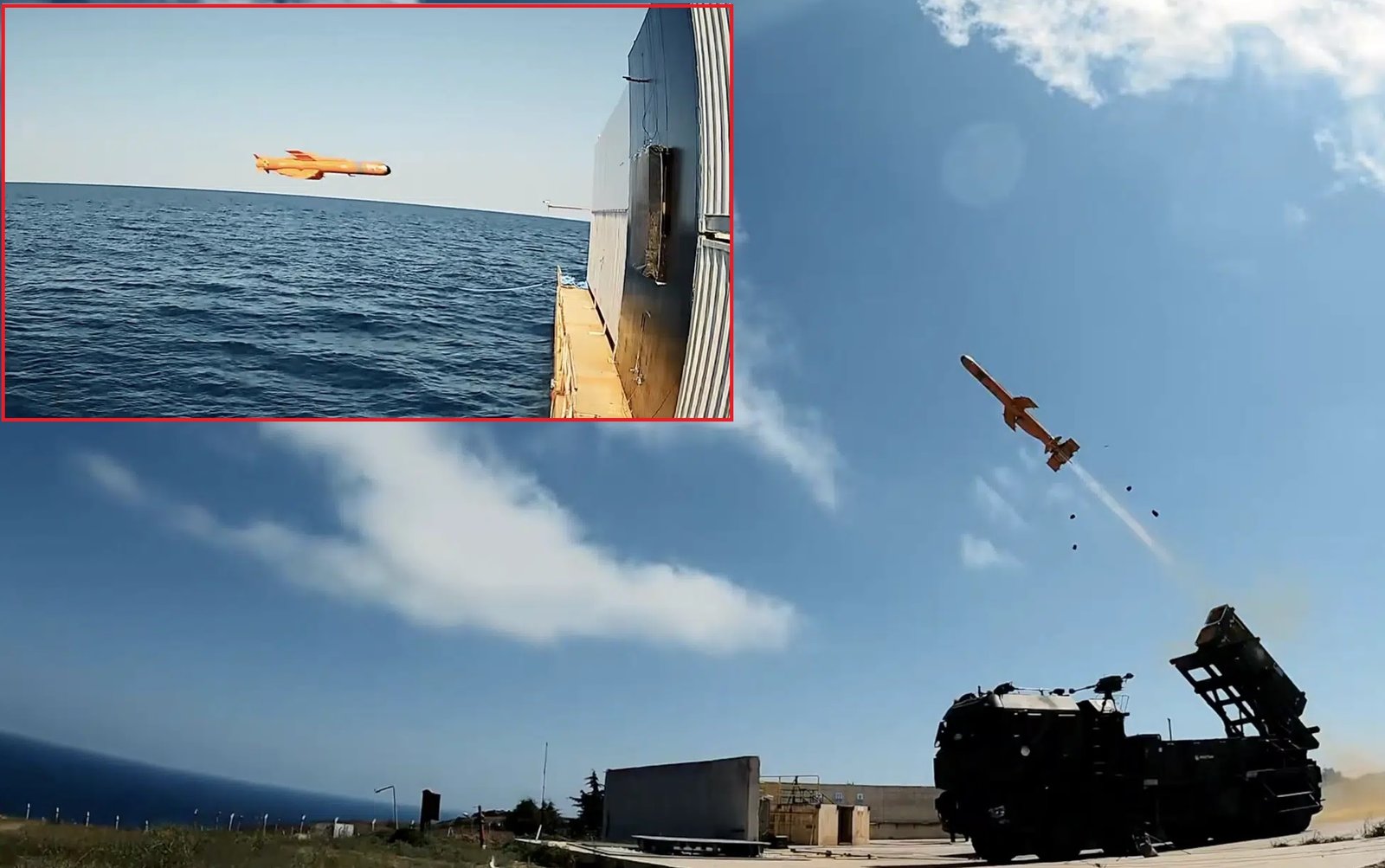
World
ANKARA, Turkiye — Turkish defense manufacturer Roketsan has conducted the first publicly announced ground-launch tests of its CAKIR cruise missile, firing two missiles from a mobile land-based launcher against separate land and maritime targets. In a statement released on August 28, 2026, Roketsan said the two missiles were launched in separate tests conducted on different days and both achieved direct hits. The tests used a next-generation Imaging Infrared (IIR) terminal seeker and also demonstrated an extended range enabled by a new fuel system. Roketsan did not disclose the exact test location, engagement ranges, target types, flight profiles or telemetry data. Reporting identified the launch vehicle as a Koluman DERMAN 8x8 tactical truck. The surface-launched version uses a solid-fuel booster and folding fins for canister carriage before the missile's turbojet takes over. The tests expand ÇAKIR's publicly demonstrated launch options beyond its earlier air-launch trials. The missile was first unveiled in March 2022 as a modular system designed for air, naval and land platforms, including aircraft, unmanned combat aerial vehicles, unmanned surface vessels, tactical wheeled vehicles and surface combatants. In May 2023, a Bayraktar Akıncı UCAV conducted ÇAKIR's first flight test from an altitude of about 7,000 metres. That test also marked the first demonstrated use of Kale Arge's indigenous KTJ-1750 turbojet engine. CAKIR Specifications CAKIR is a high-subsonic cruise missile with a stated speed of Mach 0.75 to 0.85 and a manufacturer-stated family range exceeding 150 km. Roketsan's published specifications give the missile a weight of about 275 kg without the booster, while different surface-launch configurations have been published at around 330–350 kg with the booster. The missile has a diameter of about 275 mm. Its approximately 70-kg warhead is offered in high-explosive, blast-fragmentation and thermobaric configurations and is intended for use against surface ships, coastal targets and land targets. Its guidance system combines inertial navigation, anti-jam satellite navigation, altimeter and terrain-referenced navigation. ÇAKIR can use IIR, radio-frequency (RF) or hybrid IIR/RF terminal seekers; the latest ground tests used the new-generation IIR seeker. A two-way datalink allows in-flight target updates, re-attack decisions and mission aborts. Roketsan has also designed the missile for terrain-masking flight over land and sea-skimming flight over water, as well as coordinated employment by multiple missiles. Export and Indonesian Cooperation CAKIR also has an international market. Roketsan's chief executive said in July 2023 that an export agreement had been signed before the missile entered Turkish service. Qatar and Indonesia are publicly identified as customers. Indonesia has confirmed procurement of CAKIR along with other Turkish systems. Roketsan and Indonesian partners have also established cooperation for local missile and rocket production. During Indo Defence 2025, Indonesian shipbuilder Republik Palindo, part of Republikorp, displayed a fast attack craft concept equipped with CAKIR. The latest tests demonstrate a land-based launch capability for CAKIR against both land and maritime targets. However, Roketsan has not stated that the tests completed formal qualification or confirmed an immediate operational deployment by the Turkish Armed Forces. Further testing will be required to establish the performance of the boosted ground-launched configuration across its full range and target envelope.
Read More → Posted on 2026-08-29 14:04:46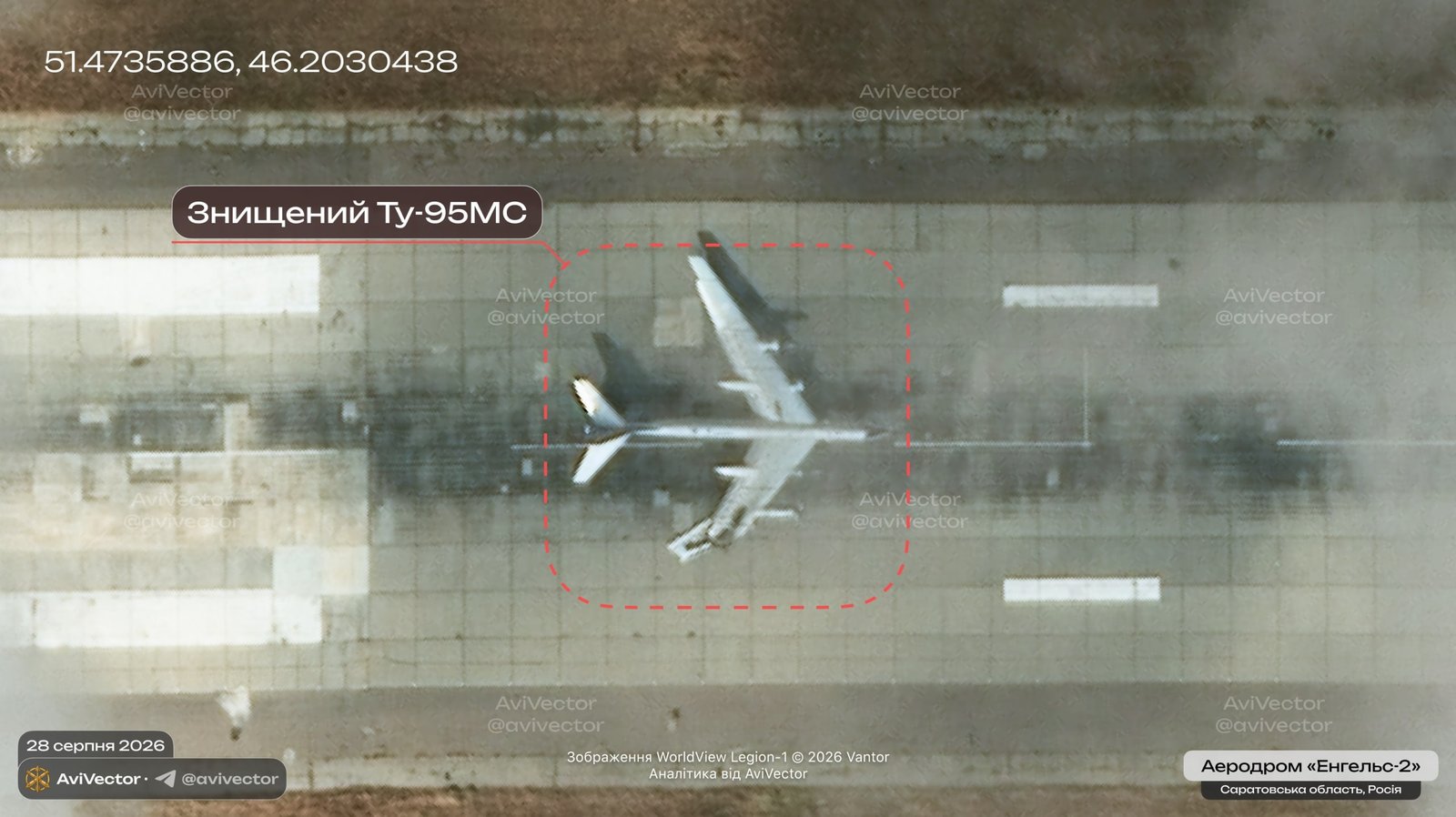
World
KYIV — Ukraine’s Security Service (SBU) has struck a Russian Tu-95MS strategic missile-carrying bomber at the Engels-2 military airbase in Russia’s Saratov region, Ukraine President Volodymyr Zelensky said on Friday. The operation was carried out by the SBU’s Alpha special operations unit using long-range drones. The SBU said its drones travelled approximately 800 kilometers to reach the airbase. Ukrainian President Volodymyr Zelensky confirmed the strike, saying the targeted Tu-95MS belongs to the type of aircraft Russia uses to conduct missile strikes against Ukraine. “In the Russian Engels, the soldiers of the SBU "Alpha" hit a TU-95MS missile carrier. These are the planes that strike Ukraine.” Damage to Tu-95MS Satellite imagery and images published by analysts from the AviVector group show significant damage to the bomber’s right wing, with part of the wing structure appearing to have broken away. Analysts tracking the airbase identified the aircraft as a Tu-95MS that had been used for training flights. Analysts cited in Ukrainian media assessed that the aircraft is beyond repair because of the extent of the damage. The assessment is based on available imagery and analysis rather than an independent Russian confirmation. The SBU also said that, according to preliminary information, the strike hit an ammunition depot and a fuel and lubricants storage facility at the airbase in addition to the bomber. Second Tu-95MS Hit at Engels The August 28 operation is the second reported SBU strike against a Tu-95MS at Engels in roughly six weeks. On July 16-17, Ukrainian forces struck another Tu-95MS at the same airbase. Satellite imagery subsequently showed that the aircraft’s tail section had been completely destroyed, leaving the bomber beyond repair. The SBU has described the July operation as the destruction of a Tu-95 used by Russia for missile strikes against Ukraine. Zelensky also confirmed that aircraft was approximately 800 kilometers from Ukraine’s border. Role of Engels-2 The Engels-2 airbase is an important Russian base for long-range strategic aviation. Tu-95MS and Tu-160 bombers operate from the facility, and the Tu-95MS is used as a missile-carrying platform for Russia’s long-range strikes against Ukraine. Ukrainian Defence Intelligence has identified the Kh-101, Kh-555 and Kh-55 as cruise missiles launched by Russian aircraft of this type. The location of the airbase makes it a significant distance from the Ukrainian border. The SBU said its drones covered about 800 kilometers during the latest operation. Other Ukrainian Strikes Reported The Tu-95MS strike was reported alongside other Ukrainian operations against targets inside Russia. Zelensky said Ukrainian forces also struck an oil refinery in Russia’s Yaroslavl region, located about 1,000 kilometers from the front line, and conducted strikes against Russian targets in the Black Sea. The Yaroslavl operation targeted the Slavneft-YANOS refinery, according to Ukraine’s General Staff and Ukrainian media reports. The latest strike at Engels adds another reported loss of a Russian strategic bomber to Ukraine’s long-range drone campaign against Russian military infrastructure. The damage to the August 28 Tu-95MS has been documented in satellite imagery, while the assessment that the aircraft cannot be repaired remains an analyst assessment.
Read More → Posted on 2026-08-28 16:36:24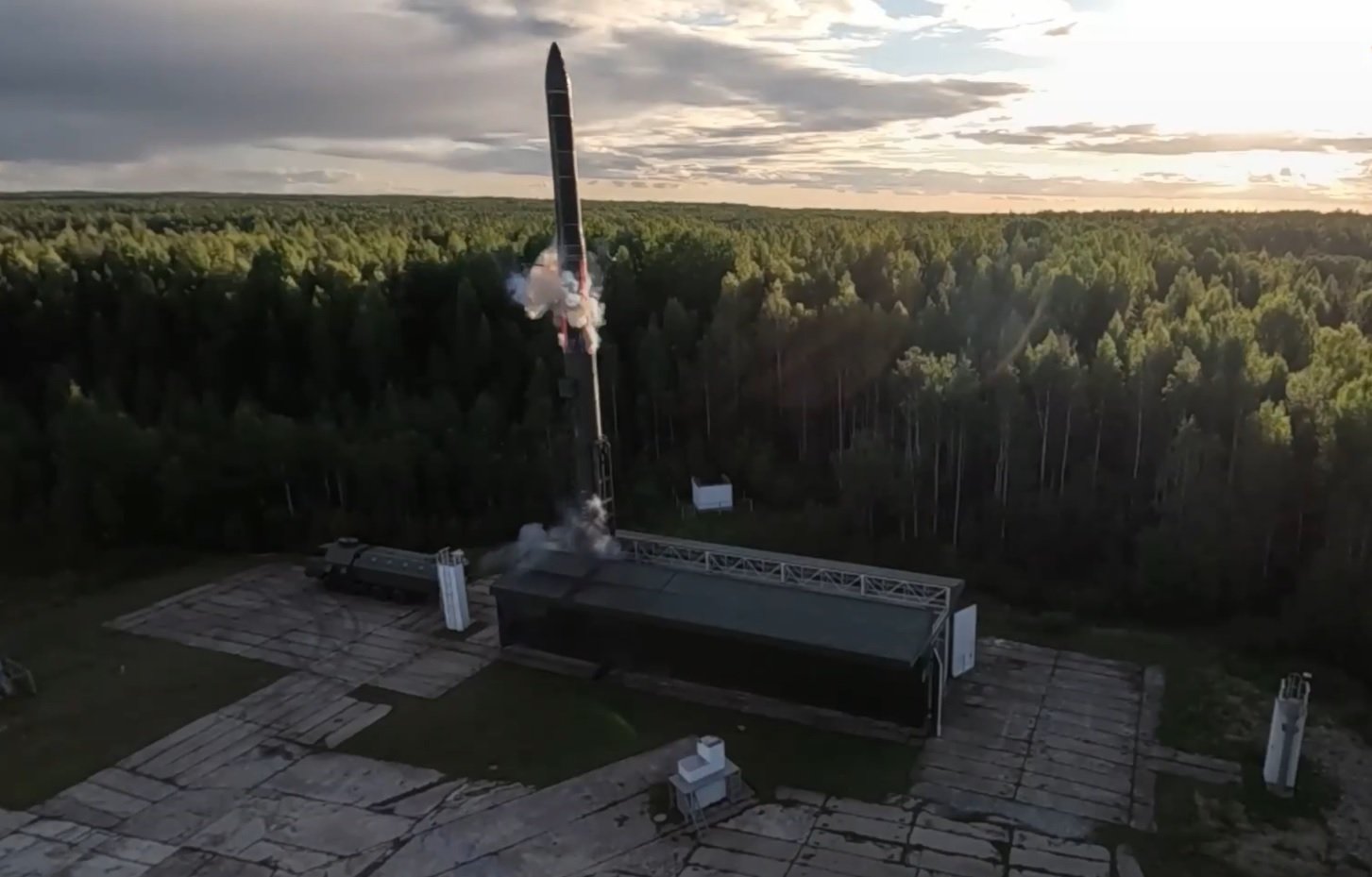
World
MOSCOW, — Russia’s Strategic Missile Forces conducted a successful training-combat launch of a mobile, solid-fuel intercontinental ballistic missile (ICBM) from the Plesetsk State Testing Cosmodrome in the Arkhangelsk region, according to the Russian Ministry of Defense. The missile was launched toward the Kura test range on the Kamchatka Peninsula, covering more than 6,700 kilometers (about 4,160 miles). The Defense Ministry said the training warheads reached the designated area and that all assigned tasks were completed. It also reported that the missile maintained its planned trajectory. Before the launch, a mobile launcher battery was deployed to a remote, forested location. Video released by the Defense Ministry showed the missile launching from the site. The ministry did not identify the specific missile model used in the August 28 launch. However, a similar launch in May 2026 involved the RS-24 Yars, a mobile, solid-fuel ICBM, which was launched from Plesetsk toward the Kura range during strategic forces exercises. A separate RS-28 Sarmat test was also conducted from Plesetsk around the same period. The Defense Ministry said the main objective of the latest launch was to confirm the tactical, technical and flight characteristics of the missile system. The launch followed reports of Ukrainian drone activity in the Arkhangelsk region on August 23, including near the Plesetsk area. Russian authorities said drones were intercepted and reported no injuries. On August 24, Russia also conducted a successful Soyuz-2.1b launch from Plesetsk carrying a military satellite into orbit. Plesetsk is used by Russia for both military space launches and intercontinental ballistic missile testing. The latest launch was presented by the Russian Defense Ministry as a routine training activity intended to verify missile-system performance and the readiness of Strategic Missile Forces personnel.
Read More → Posted on 2026-08-28 16:13:03Search
Top Trending in 24 Hours
-
 North Korea Fires Short-Range Ballistic Missile Toward Sea of Japan After Freedom Edge 26
-
 India’s xTerra Robotics Launches Indigenous DHAV-Hy Wheeled-Legged Quadruped for Industrial Inspection
-
 U.S. Army Awards $10.64 Million Contract to Ukrainian Drone Maker Skyeton for Raybird Systems
-
 U.S. Delivers First CH-47F Chinook to Egypt Under 12-Helicopter Deal
-
 U.S. Space Force Seeks Rapid-Response Satellites for Close-Range Orbital Inspections
-
 BEL Showcase X-Band Multi-Function Radar for QRSAM to Japanese Delegation
-
 U.S. Government Seizes Almasirah.net, Houthi-Linked News Website
-
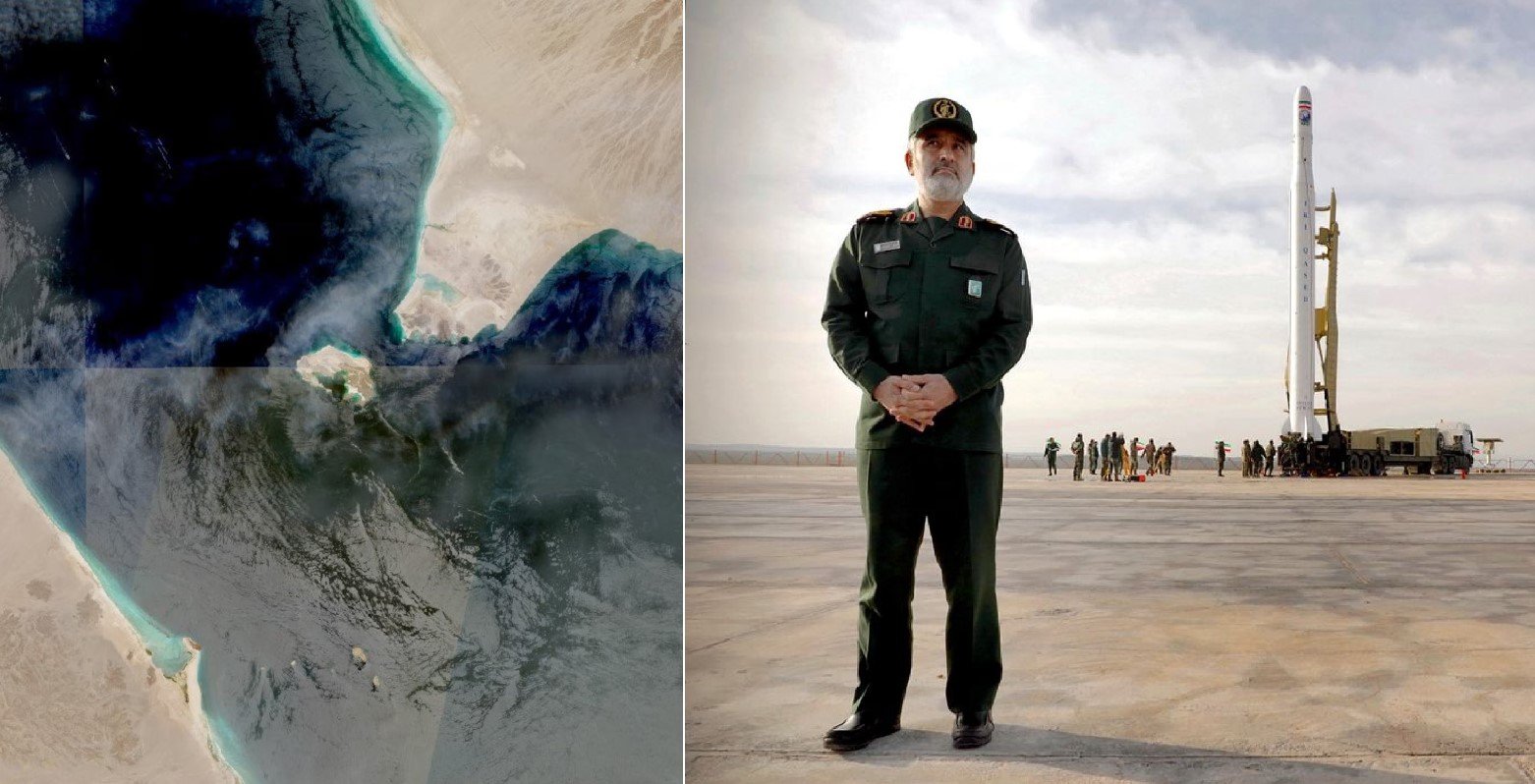 IRGC Experts Visit Bab El-Mandeb to Oversee Radar Installation and Tunneling, Houthi Sources Say
Top Trending in 4 Days
-
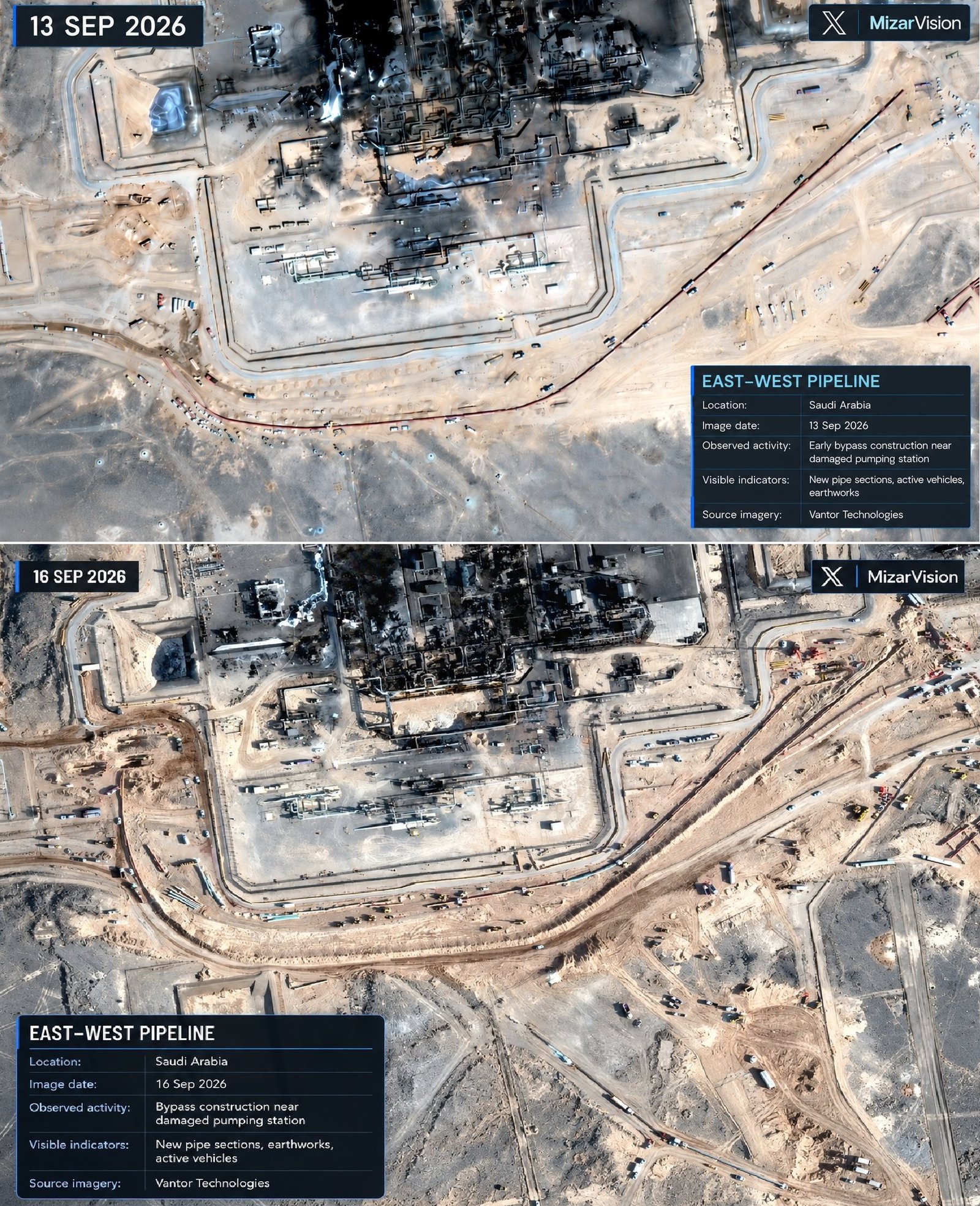 Satellite Images Show Saudi Arabia Building Emergency Bypass Around Damaged East-West Oil Pipeline Station
-
 Sensitive F-35 Components Diverted to Hong Kong, Some Parts Missing
-
 Italian Eurofighter Damaged in Houthi Attack on Saudi Arabia’s King Fahd Air Base
-
 U.S. Secures Permanent Military Rights in Greenland in Historic Security Pact with Denmark
-
 U.S. Approves Potential $2.68 Billion Air Defense Package for Ukraine Including S-300 Clone Missiles
-
 BEL Signs Export Deal with Elbit Systems for Directed Infrared Countermeasure Sub-Assemblies, Secures ₹648 Crore in Additional Orders
-
 China Privately Urges Iran to Restrain Houthis After Saudi Appeal
-
 Israeli Firm Arbe Robotics Unveils Alerion High-Resolution 4D Radar for Counter-Drone Operations