New Delhi — On July 03, 2026, India's Defence Acquisition Council (DAC) has approved capital acquisition proposals worth about ₹52,000 crore, clearing a broad package of military procurement for the Indian Army, Navy and Air Force under the Acceptance of Necessity (AoN) process.
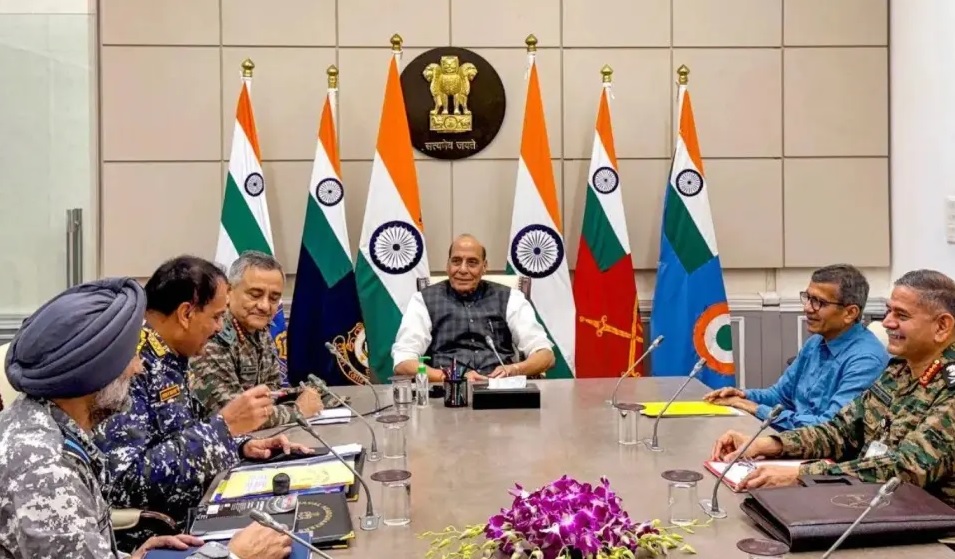
The approvals were granted during a DAC meeting chaired by Defence Minister Rajnath Singh on Friday. AoN is the first stage in India's defence procurement process before tendering and contract negotiations begin.
The Indian Army received the largest share of the approvals, with procurement covering electronic warfare, air defence, armoured vehicle protection and precision strike systems.
Among them is the Akash Tarang Electronic Warfare System, which will provide anti-UAV capability for frontline formations by jamming and neutralising hostile drone signals. The council also cleared jet-based kamikaze drones, giving the Army loitering munitions equipped with electronic warfare features for precision strike missions.
The DAC also approved an Active Protection System (APS) for Army tanks. The system intercepts incoming anti-tank projectiles before impact, increasing vehicle survivability. Infantry units will receive the Man-Portable Anti-Tank Guided Missile (MPATGM), a shoulder-fired missile intended for engaging enemy armoured and mechanised formations across different terrain.
Air defence approvals include the Medium Range Surface-to-Air Missile (MRSAM) system for engaging aircraft and missile threats at medium range. The Very Short Range Air Defence System (V-SHORADS), fitted with multi-spectral sensing technology, was also cleared. The portable system is intended for low-altitude aerial threats while improving resistance against enemy countermeasures.
For the Indian Navy, the council approved the Naval Shipborne Unmanned Aerial System (NSUAS), allowing warships to launch sensor-equipped unmanned aircraft for maritime surveillance and situational awareness during operations at sea.
The Navy's procurement package also includes the Multi Influence Ground Mine (MIGM), which will be used to restrict an adversary's freedom of manoeuvre in maritime areas. The DAC also cleared the establishment of a Land-Based Testing Facility (LBTF) to evaluate electric motors and propulsion systems for future naval warships. The facility will support testing before those systems are integrated into operational platforms.
For the Indian Air Force, the council approved procurement of the Fixed-Wing High Altitude Pseudo Satellite (FW-HAPS). The solar-powered unmanned platform operates in the stratosphere for extended periods and will provide intelligence, surveillance and reconnaissance (ISR), telecommunications and remote sensing capability over wide areas. It can remain airborne for months, depending on mission requirements.
The procurement package places emphasis on indigenous technology alongside unmanned systems and electronic warfare capabilities. Several of the approved systems are intended to support domestic defence manufacturing as India continues reducing dependence on foreign military imports.
The approvals issued on July 3 cover only the Acceptance of Necessity (AoN) stage. The programmes will now move into the next phases of the procurement process, including preparation of tenders, technical evaluation and contract award before production and induction into service.
Source: PIB Delhi.
——— End of Article ———