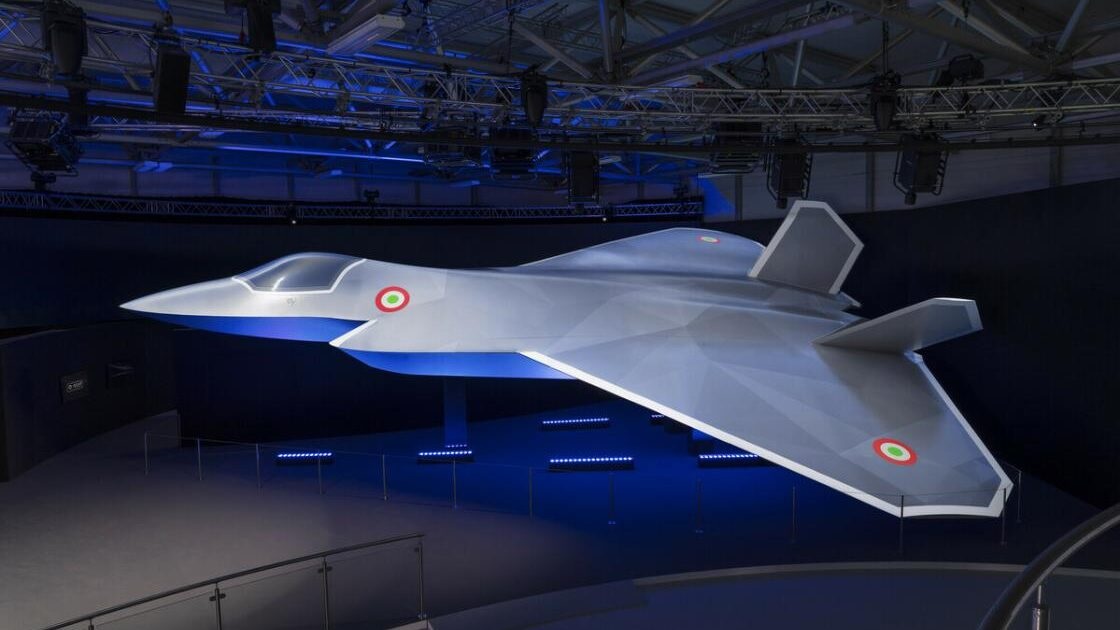
LONDON — The governments of the United Kingdom, Italy and Japan have awarded a £4.6 billion ($6.14 billion) development contract to Edgewing, advancing the next phase of the Global Combat Air Programme (GCAP) and funding work on the three nations' planned sixth-generation fighter aircraft through the end of 2027.
The 18-month contract, which began on July 1, 2026, was placed by the GCAP Agency, the trinational organisation overseeing the programme. It covers completion of the advanced concept and assessment phase, establishes the aircraft's final capability requirements and funds detailed engineering, design and testing activities.
The award follows a £686 million bridging contract issued to Edgewing in April 2026, allowing development work to continue while the larger agreement was being finalised. Funding for the latest contract is provided jointly by the UK, Italy and Japan.
Edgewing serves as the programme's prime contractor and design authority. The company is headquartered in Britain and was created by BAE Systems, Leonardo, and Japan Aircraft Industrial Enhancement Co. Ltd. (JAIEC), a consortium involving Mitsubishi Heavy Industries, to manage development of the future combat aircraft.
"This contract represents the trust placed in us by all three nations and our GCAP Agency partners," Edgewing Chief Executive Marco Zoff said. He described the company as the first engineering prime formed by three countries to work on behalf of their national defence industries under a single customer.
GCAP Agency Chief Executive Masami Oka said the agreement enables the agency and Edgewing to continue work across all areas of the programme. He said the project supports shared development costs, technology cooperation and highly skilled jobs across the three partner nations, adding that the long-term funding provides greater certainty for the programme.
The announcement coincides with the UK government's new Defence Investment Plan, which commits an additional £8.6 billion to GCAP over the next four years, resolving earlier questions over Britain's long-term funding profile for the project.
The aircraft under development will replace the Eurofighter Typhoon in UK and Italian service and the Mitsubishi F-2 in Japan. Entry into service remains planned for 2035.
Preliminary specifications released by BAE Systems indicate the aircraft will be three to four metres longer than the Typhoon, giving it greater internal fuel capacity, longer range and the ability to carry a larger payload.
The platform will integrate digital engineering, artificial intelligence and data fusion technologies. It is also being developed to operate alongside autonomous drones during combat missions.
Work on the aircraft's mission systems is being carried out by the GCAP Electronics Evolution (G2E) consortium, which is responsible for advanced sensors, secure communications and electronic warfare systems. A separate propulsion consortium, including Rolls-Royce and Japan's IHI Corporation, is developing the next-generation engine.
GCAP was formally launched in 2022, with the international government organisation established in late 2023. The latest contract moves the programme through its concept phase and into more detailed design work.
The award also follows the reported collapse of the rival Franco-German Future Combat Air System (FCAS) programme in June 2026 after prolonged industrial disagreements between its partners. Saudi Arabia and Canada have expressed interest in joining or observing GCAP, while executives from Leonardo have said Germany could also become a future partner. Any expansion of the programme would require unanimous approval from the United Kingdom, Italy and Japan.
Source: Gov.uk.
——— End of Article ———