World
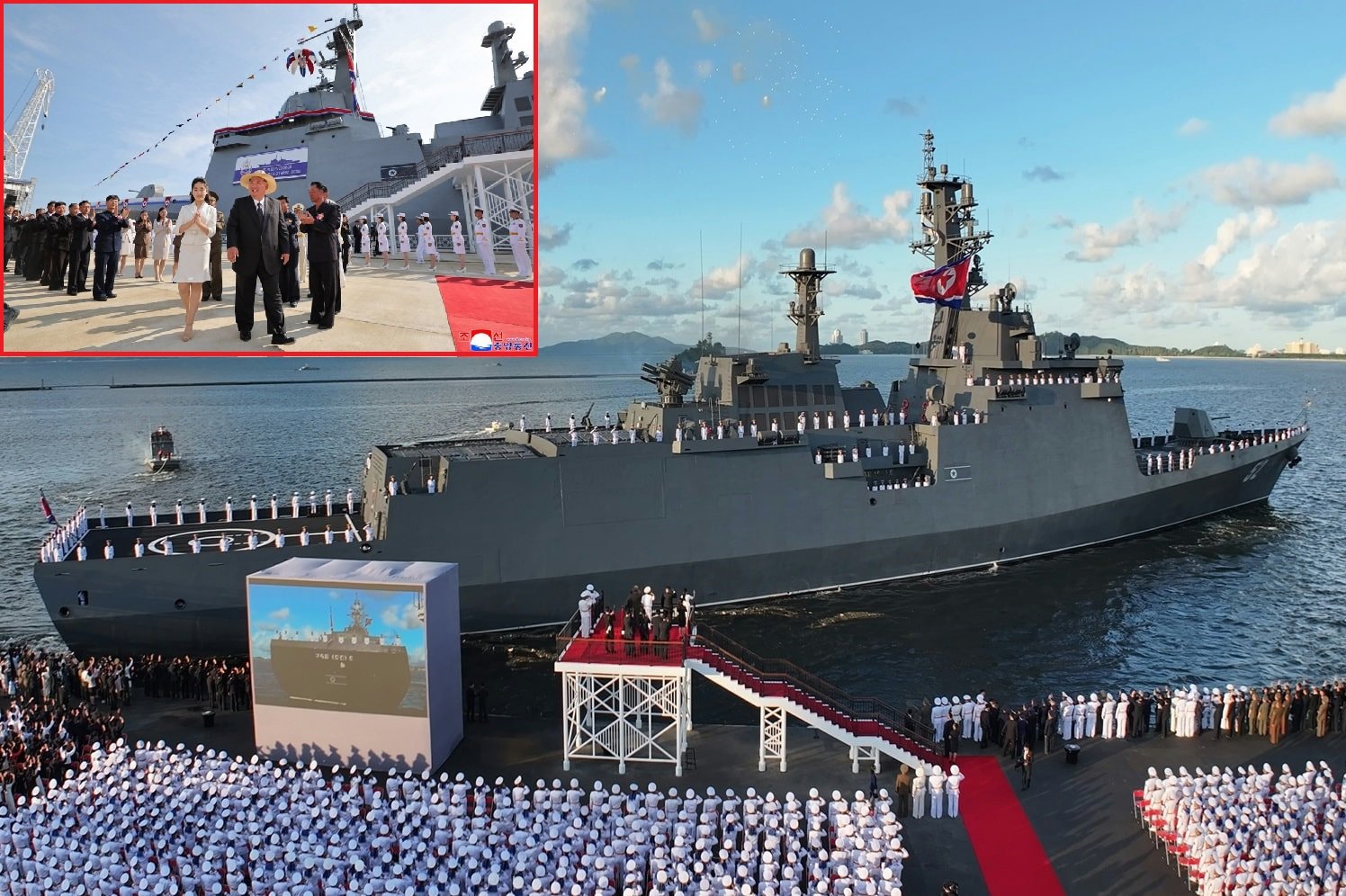
PYONGYANG — North Korea has officially commissioned its newest 5,000-ton Choe Hyon-class guided-missile destroyer, Kang Kon, during a ceremony at the eastern port city of Wonsan on Sunday, September 6. North Korean leader Kim Jong Un attended the ceremony with his wife Ri Sol-ju, daughter Kim Ju Ae, and senior government and military officials. The Kang Kon, hull number 52, has been assigned to the Korean People’s Navy’s East Sea Fleet. During his address, Kim described the destroyer as an offensive warship and part of North Korea’s nuclear counteraction system. He said the vessel would be responsible for defending the country’s maritime sovereignty and delivering retaliatory strikes against its enemies. Kim also said North Korea is implementing a major plan to strengthen its naval forces, with the next phase expected to be presented within eight months. Second Choe Hyon-Class Destroyer The Kang Kon is the second ship of the Choe Hyon class, following the Choe Hyon (51), which entered service on June 23, 2026, and was assigned to the West Sea Fleet. Two additional ships of the class are under construction. The class represents North Korea’s largest and most heavily armed surface warships. Each vessel displaces about 5,000 tons and measures approximately 145 meters in length. The Kang Kon was constructed at the Hambuk Shipyard in Chongjin. On May 21, 2025, it partially capsized during its initial launch attempt and suffered major hull damage. After recovery and repairs, it was successfully relaunched on June 12, 2025. The ship later underwent navigation and weapons testing. In July 2026, Kim observed tests involving a strategic cruise missile, naval artillery, automatic guns and the ship’s electronic warfare systems. He subsequently ordered the trials to be completed and the vessel placed into active service within two months. Missile and Defensive Systems The Choe Hyon-class is equipped with a large vertical launch system (VLS) containing 88 cells, including 64 cells aft of the superstructure and 24 forward. The ships also feature eight inclined missile launchers and can carry different types of missiles, including weapons described by North Korean state media as nuclear-capable cruise missiles. Other weapons include a 127mm automated naval gun, a short-range air-defense system resembling the Russian Pantsir-M, two six-barrel 30mm close-in weapon systems, twin 533mm torpedo tubes, decoy launchers and additional machine guns. The destroyers are fitted with four fixed-panel phased-array radar panels, an electronic warfare suite and countermeasure systems. Their stated missions include anti-ship, anti-aircraft, anti-submarine and other operations. Further Naval Expansion The commissioning of the Kang Kon is part of North Korea’s broader effort to expand its naval forces beyond coastal defense. Kim has previously outlined plans for larger warships, including 10,000-ton guided-missile cruisers. North Korea is also developing new naval bases along its eastern coastline to accommodate larger warships and support newly established naval units. Satellite imagery has confirmed that additional Choe Hyon-class vessels are under construction. The Kang Kon’s entry into service gives North Korea a second destroyer of the class as Pyongyang continues its stated effort to expand and modernize its surface fleet for operations on both coasts.
Read More → Posted on 2026-09-07 15:42:44
World
RIYADH — Yemen’s Houthi movement has released a video claiming to show a missile strike on Saudi-linked trucks carrying military equipment near the Al-Wadiah camp, while Saudi Aramco facilities in Jizan were hit in a separate attack on Monday. The developments come as fighting between the Houthis and Saudi-backed Yemeni government forces continues and raise questions over how the recently signed Makkah Joint Defence Agreement between Saudi Arabia, Türkiye and Pakistan could be applied if attacks on Saudi territory continue. Houthis release video of Al-Wadiah strike Houthi military media released footage on or around September 6-7 that it said shows Houthi forces using locally manufactured ballistic missiles against trucks carrying military equipment from Saudi Arabia near the Al-Wadiah camp. pic.twitter.com/EjRhy8BCdJ September 7, 2026 According to the Houthi account, the missiles struck and burned the vehicles at the site. The group described the weapons as domestically manufactured ballistic missiles. The video appears to show several vehicles being hit, but the exact location, extent of damage and any casualties have not been independently confirmed. Saudi authorities, the internationally recognized Yemeni government and other independent sources have not publicly confirmed the Houthi claims. The release comes amid renewed fighting between Houthi forces and Saudi-backed Yemeni government troops. In recent weeks, the Houthis have also claimed missile and drone attacks against positions in areas including Marib and Hadramawt and against targets close to the Saudi border. Jizan Aramco facilities hit again Separately, Saudi Aramco’s oil facilities in Jizan were struck on Monday, September 7, according to a Financial Times report citing two people familiar with the matter. The extent of the damage was still being assessed. One source described the latest incident as similar in scale to an earlier attack about a month ago. NOAA-20 satellite imagery shows large plumes of black smoke rising from Aramco’s Jazan oil refinery in southwestern Saudi Arabia after it was struck by the Houthis today. 🛰🇸🇦 NOAA-20 satellite imagery shows large plumes of black smoke rising from Aramco’s Jazan oil refinery in southwestern Saudi Arabia after it was struck today by the Houthis. https://t.co/cdhFe7I274 pic.twitter.com/bkOUWlDoYS — Egypt's Intel Observer (@EGYOSINT) September 7, 2026 Jizan, located close to the Yemeni border, is home to a Saudi Aramco refinery with a processing capacity of 400,000 barrels of crude oil per day, along with associated energy infrastructure. Aramco had not immediately issued a public comment on the latest incident. Previous Houthi-claimed attacks targeted Aramco facilities in Jizan and Yanbu during July and August. In one August incident, Saudi Arabia’s Energy Ministry confirmed a fire at the Jizan refinery that was later extinguished, with no injuries reported. The Houthis said a drone was used in that attack. Aramco CEO Amin Nasser had previously said that earlier attacks caused some production interruptions but did not have a material operational or financial impact. Oil prices also moved higher following reports of the latest attack, with Brent crude rising by about 1.2 percent. Makkah defence agreement faces a new test The latest attacks come one month after Saudi Arabia, Türkiye and Pakistan signed the Makkah Joint Defence Agreement in Makkah on August 7. The agreement states that an armed attack against any one of the three countries will be regarded as an attack against all three. It also calls for stronger defence cooperation and collective deterrence. Turkish Foreign Minister Hakan Fidan has said the agreement is not directed against Iran or any particular country. He has also indicated that assistance under the agreement would depend on the circumstances and could include areas such as intelligence, logistics, ammunition or other forms of support. The three countries have also begun work on implementing the agreement, including discussions on defence cooperation and coordination. No confirmed Turkish or Pakistani combat involvement As of September 7, there has been no official announcement from Türkiye or Pakistan confirming direct military participation in operations against the Houthis. The agreement's collective-defence provision does not by itself establish that Turkish or Pakistani forces will immediately conduct combat operations in Yemen. The exact response would depend on decisions by the member governments and the circumstances surrounding any attack. Possible assistance could include intelligence, logistics, defensive capabilities and other forms of military cooperation, but there has been no public confirmation that either country is preparing to deploy combat forces against the Houthis. The Houthi video and the reported attack on Jizan therefore come at an important point for the new Saudi-Türkiye-Pakistan defence arrangement. However, the extent of any future response from Ankara or Islamabad remains unclear. The situation remains fluid, and damage assessments for the Jizan incident are continuing. Claims made in the Houthi video about the Al-Wadiah strike have also not been independently verified.
Read More → Posted on 2026-09-07 15:21:51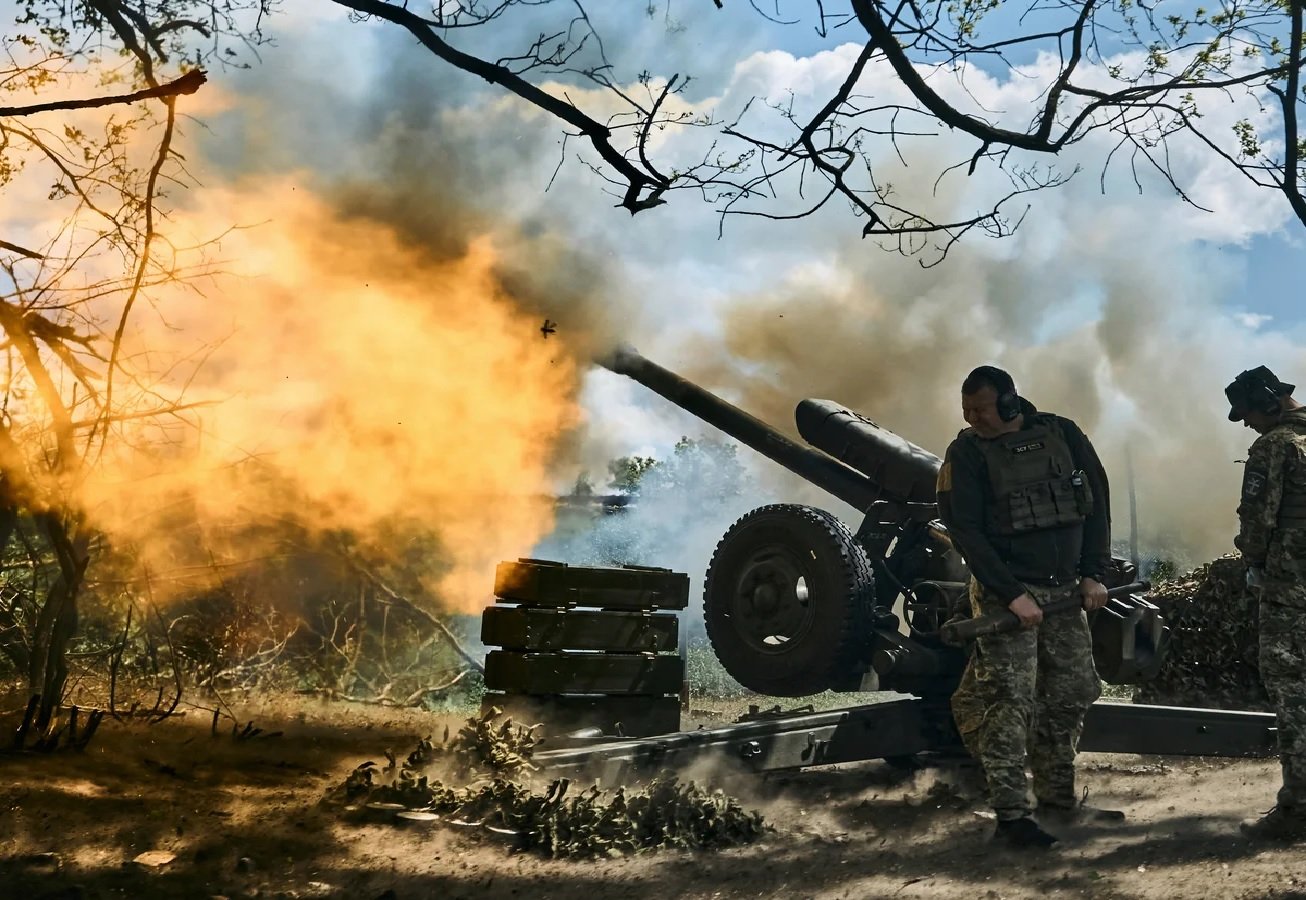
World
KYIV — Ukraine lost approximately $1.2 billion in 2024 to fraud, waste and mismanagement in military procurement, according to more than 700 pages of confidential government audits reviewed by The New York Times. The audits, conducted by Ukraine’s State Audit Service and an internal Defense Ministry auditing unit, examined contracts from 2024 and 2025. The audits found that seven of Ukraine’s 10 largest military contractors received new contracts despite criminal investigations, previous delivery failures or executives being arrested on corruption charges. Auditors also identified 18 companies that received new contracts after defaulting on earlier agreements. Six had failed to fulfill even one previous military contract. In one case, a company that failed to deliver any of 600 specialized drones later received an order for 1,950 more. Defective Mortar Shells A major case involved the state-owned Pavlohrad Chemical Plant, which supplied the military with about 233,000 unusable mortar rounds in 2024. Court records said many had defective fuses or faulty propellant charges. The plant’s director, Leonid Shyman, was facing embezzlement and fraud investigations. Despite the ammunition problems, the Defense Procurement Agency continued awarding contracts to the plant. One was a $280 million contract awarded while Shyman was out on bail on corruption charges. The plant also received an order to supply nearly all of Ukraine’s 122-mm artillery shells for 2025. Shyman was later sentenced to five years in prison in a separate case involving inflated prices for explosives. Higher-Priced Weapons Contracts The audits found approximately $126 million in losses from bypassing lower bids and purchasing weapons at higher prices. Some contracts were also awarded without a clear legal basis. In one 2024 case involving Turkish-made artillery rockets, three companies offered prices of approximately $4,200, $4,600 and $5,100 per rocket, all produced at the same Turkish plant. The lowest bidder, Arca Defense, offered to sell directly to Ukraine, but the contract went to a subsidiary of the Czech holding Czechoslovak Group at the highest price. The decision increased the overall cost by about $130 million. The audits also identified disputes over at least $100 million in advance payments for a contract that ultimately failed. They found that many purchases were made through arms intermediaries rather than directly from manufacturers, with intermediaries typically adding markups of at least 3 percent. Former Defense Procurement Agency adviser Tamerlan Vahabov said such practices leave the military with fewer resources to purchase weapons while ammunition shortages continue. The audits describe repeated problems involving companies that could not demonstrate they could deliver weapons, lacked required licenses, or faced few consequences for failed deliveries and overcharging. The Defense Procurement Agency declined to comment, and it remains unclear what specific action it took in response to the findings.
Read More → Posted on 2026-09-07 13:56:21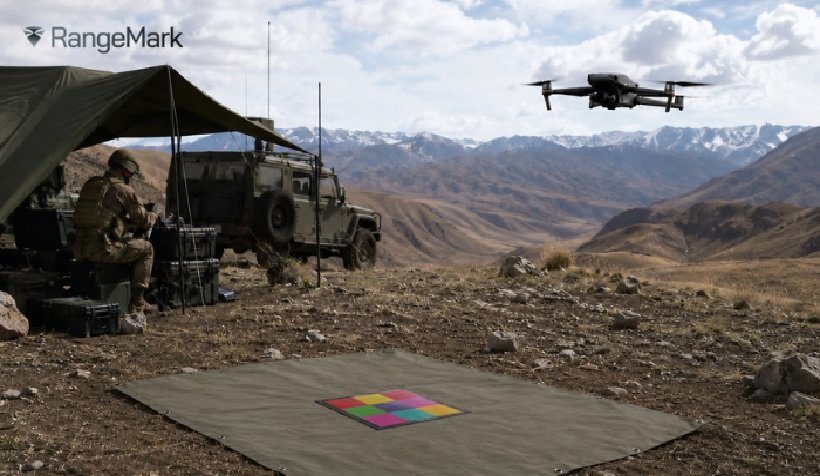
World
TEL AVIV — Israeli technology company Sodyo Ltd. has introduced RangeMark, a visual identification system designed for drones and autonomous systems to detect and identify passive printed markers from distances of up to 1 kilometer (0.62 miles). Sodyo presented the technology publicly at Commercial UAV Expo 2026, held September 1–3 at Caesars Forum in Las Vegas. The company exhibited RangeMark at Booth #1005. Sodyo announced the launch on August 5, 2026. Works Without GPS, RF or Network Connectivity RangeMark is designed to work using only a standard camera and a printed, battery-free marker. The system does not require GPS, cellular service, radio-frequency (RF) signals or a network connection. The marker itself requires no power source and does not transmit or emit signals. This allows the system to provide a visual identification method in offline or disconnected environments. Sodyo distinguishes RangeMark from conventional AI-based object recognition. While AI vision systems can classify objects such as vehicles, buildings or people, RangeMark is designed to identify a specific marked asset or location and provide a deterministic machine-readable identity. The company said this can include identifying designated landing zones, drop points, infrastructure and friendly personnel. Sodyo's platform describes its recognition process as resolving a visual marker into a verified identity through its computer-vision technology. Flight Testing Demonstrates Long-Range Detection According to Sodyo, RangeMark has been tested in real flight conditions. During flight testing, drones detected a 100 cm (39-inch) marker at distances of up to 500 meters (1,640 feet) and a 50 cm (20-inch) marker at up to 250 meters (820 feet). The tests covered an area of approximately 20 hectares (49 acres) and included hover, transit and search-pattern operations. Flight speeds reached 20 meters per second, or 72 km/h (45 mph). Sodyo also reported broader Sodyo Labs testing in which a 120 cm marker was recognized at the maximum 1,000-meter range, while a 12 cm marker was detected at 100 meters. Two Marker Formats RangeMark currently supports two physical marker formats. Color Code is a high-density format designed for standard visible-light conditions, while Carbon Code uses a two-tone design intended for more challenging visibility environments. Sodyo said additional formats covering other parts of the electromagnetic spectrum are under development. The company says the technology is based on more than a decade of patented development and has more than 35 global patents, with priority dating to 2012. Sodyo Targets Drone and Autonomous Systems Market Sodyo CEO Alon Raz said RangeMark is intended to give autonomous systems a reliable visual reference for identifying marked locations and assets. “RangeMark turns a marked point anywhere in the physical world into a point of certainty… with nothing but a camera and a printed marker, something no existing visual technology can deliver at that range,” Raz said. He added that the technology took more than a decade of patented work to reach its current form, saying, “When a machine can be certain, it can be trusted to act on its own.” Sodyo plans to use a partner-led licensing model, targeting drone manufacturers, autonomy-platform developers, camera suppliers and system integrators. The company said potential applications include defense, infrastructure inspection, emergency response and industrial automation. RangeMark represents Sodyo's expansion of its visual identification technology into the drone and autonomous-systems market, with the company focusing on machine-readable identification of physical locations and assets without requiring an active communications connection.
Read More → Posted on 2026-09-07 13:46:30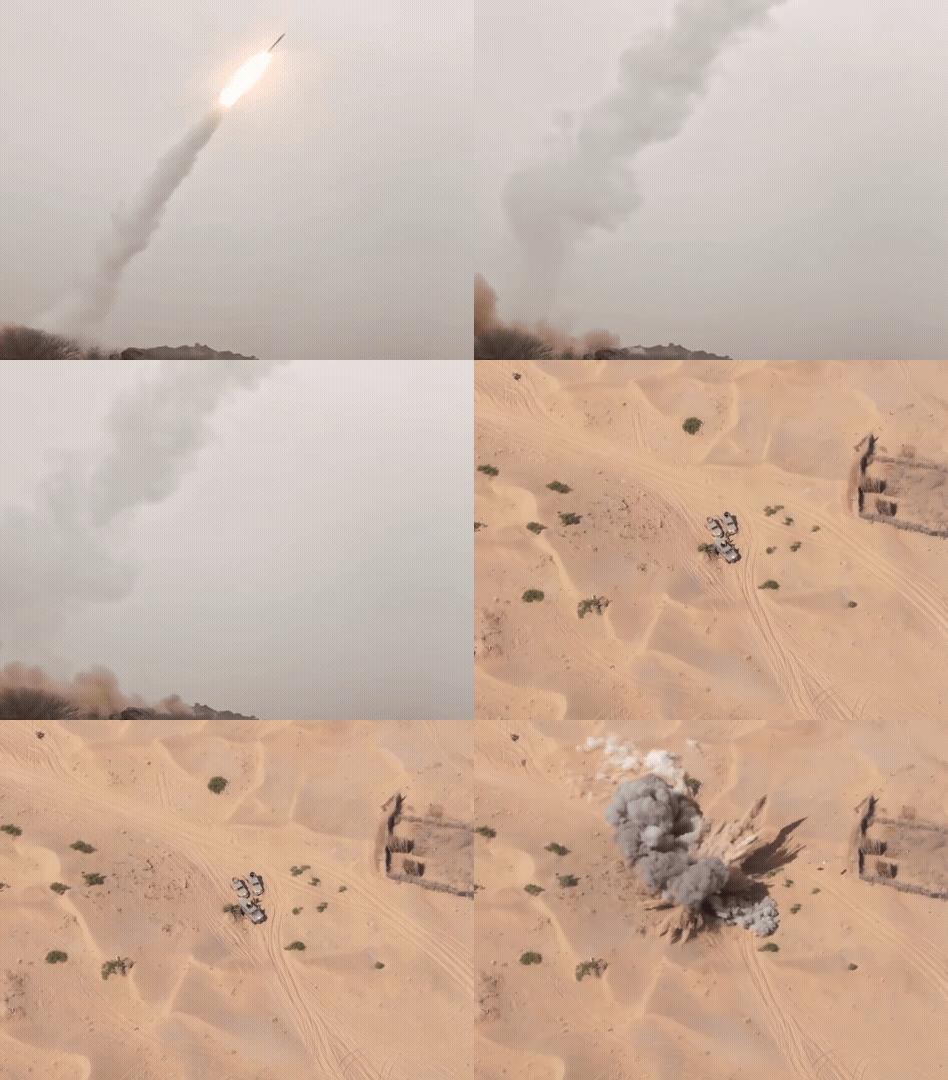
World
SANA'A — Yemen’s Houthi movement has released drone footage that it says shows a ballistic missile striking a meeting of senior commanders from Saudi-backed Yemeni government forces in an open desert area. The footage appears to show three armoured vehicles arriving at a gathering point while a reconnaissance drone observes from above. After another vehicle arrives, the video shows a missile launch followed by an explosion that engulfs the vehicles. Houthi media claimed everyone at the meeting was killed, but the casualty figures and identities of those killed have not been independently verified. pic.twitter.com/DSnhsygC7C September 6, 2026 Reports circulating about the incident put the death toll at nine people, including claims that two Pakistan Army officers were among those killed. However, there is currently no public confirmation from Pakistani, Saudi or Yemeni authorities that Pakistani military officers died in this particular strike. The reported Pakistani connection has drawn attention because Pakistan, Saudi Arabia and Türkiye signed the Makkah Joint Defence Agreement on August 7, 2026. The agreement states that an armed attack against any one of the three countries will be regarded as an attack against all three and calls for expanded defence cooperation. However, the agreement does not by itself establish that Pakistani forces are deployed inside Yemen. There are no confirmed public reports from Pakistani authorities that Pakistan Army officers were assisting Yemeni government forces inside Yemen in connection with the strike. Fighting intensifies in western Yemen The footage was released as fighting has intensified across parts of western Taiz and southern Hodeidah, with Houthi forces advancing toward areas around Mokha and the Bab al-Mandab Strait. Recent clashes have caused significant casualties on both sides, although competing battlefield claims remain difficult to independently verify. The Houthis have previously used ballistic missiles and drones against positions held by Saudi-backed government forces. Earlier attacks in Marib and Hadramout also caused significant casualties among government-aligned troops. The latest footage provides the Houthis' account of a targeted missile strike, but independent verification of the location, casualty total and identities of those killed remains unavailable.
Read More → Posted on 2026-09-07 13:38:20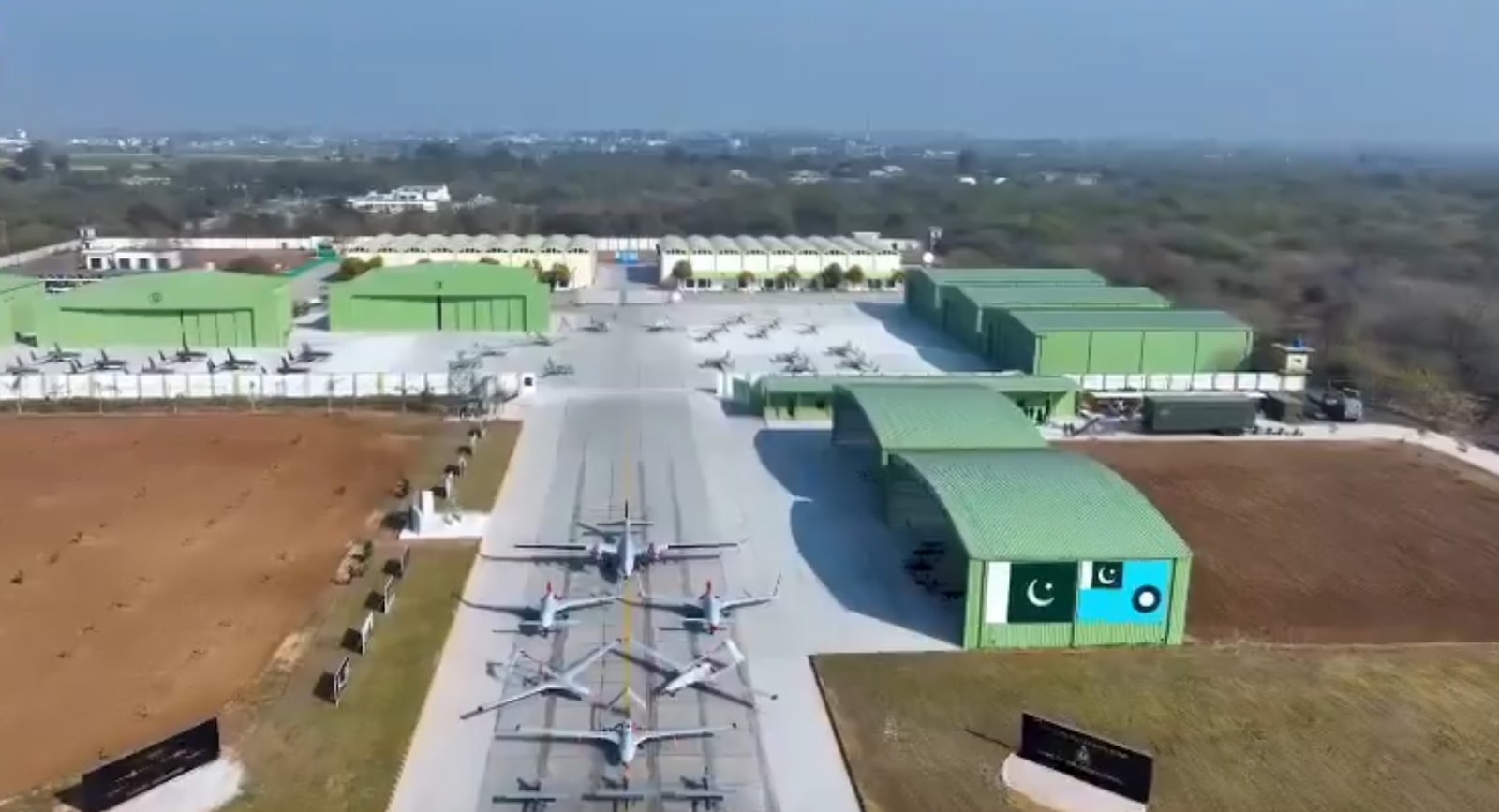
World
ISLAMABAD, — Pakistan has added Turkish-made Baykar K2 kamikaze unmanned aerial vehicles (UAVs) to its military inventory, with the Pakistan Army releasing video showing the system. Pakistan is reportedly the first known export customer for the K2. Türk üretimi kamikaze İHA, Pakistan ordusu envanterine girdi.Pakistan ordusunun resmi hesabından paylaşılan videoda, çok sayıda BAYKAR üretimi K2 kamikaze İHA'yı envanterine kattığı görüldü.200 kg harp başlığı taşıyabilen K2'nin menzili 2000+ km. https://t.co/GDDqrQxkvz pic.twitter.com/JPptaQADjQ — Conflict (@ConflictTR) September 6, 2026 Developed by Baykar and unveiled in March 2026, the K2 has an 800 kg maximum take-off weight, 200 kg warhead capacity, range exceeding 2,000 km and endurance of more than 13 hours. It is 5.1 metres long with a 10-metre wingspan and uses a 100-horsepower internal combustion engine with a pusher propeller. The UAV features AI-powered, vision-based navigation, an electro-optical/infrared camera and both line-of-sight and beyond-line-of-sight communications. Baykar has also demonstrated autonomous swarm operations involving multiple K2 aircraft. Pakistan has not disclosed the number of K2 UAVs acquired, contract value, delivery schedule or operational basing. In a related development, Pakistan has also showcased the Turkish ASELSAN KORKUT 35mm air-defense system. The system appeared in the Pakistan Air Force's “Fizaon K Pasbaan” promotional film released around Defence Day. KORKUT uses twin 35mm cannons, radar and electro-optical tracking, along with ATOM programmable airburst ammunition. It has an effective range of approximately 4 km and a combined firing rate of up to 1,100 rounds per minute. The two systems add new Turkish-made strike and short-range air-defense capabilities to Pakistan's military inventory, expanding defense cooperation between Pakistan and Türkiye.
Read More → Posted on 2026-09-07 12:42:04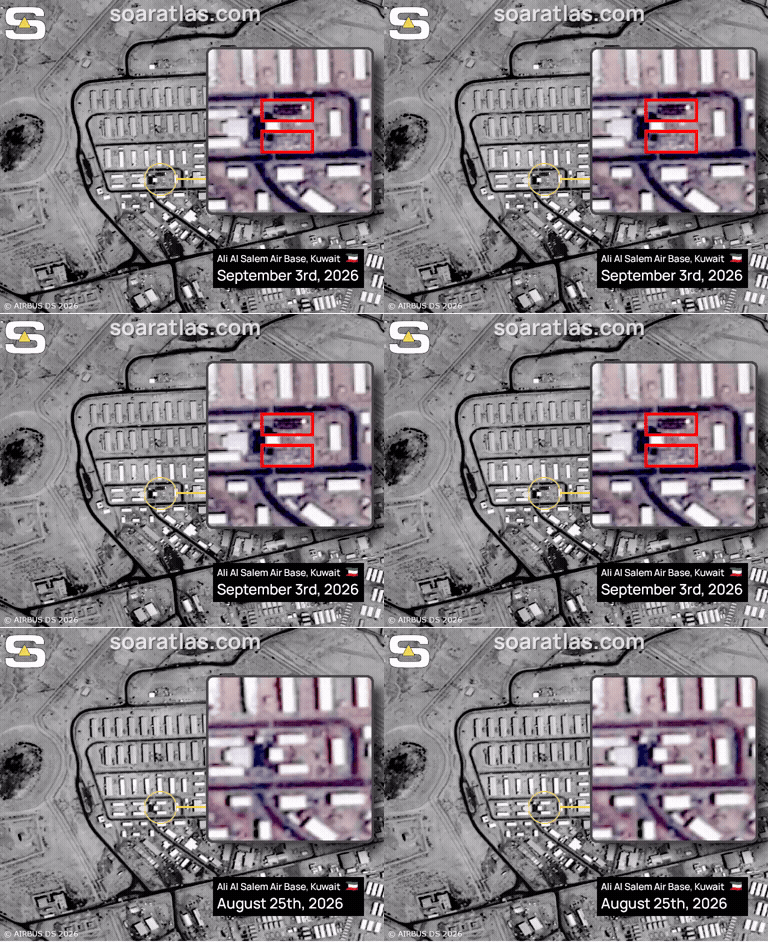
World
KUWAIT CITY — New high-resolution satellite imagery released by Soar Atlas clearly shows the destruction of two U.S. personnel housing buildings at Ali Al Salem Air Base in Kuwait. According to Soar Atlas, satellite imagery from August 25 to September 3 shows that both buildings were completely destroyed during that period. One building can be clearly seen reduced to rubble, while debris from the second building has been partially cleared. 🚨Soar Atlas has made available new high-res imagery to explore, showing the destruction of two housing accommodations used by U.S. soldiers at Ali Al Salem Air Base in Kuwait.Explore and Compare:👉 https://t.co/RGRB7rCmctThe damage follows Iranian claims of recent attacks. pic.twitter.com/eebnwyhN2O — Soar (@SoarAtlas) September 7, 2026 The imagery matches claims made by Iran’s Islamic Revolutionary Guard Corps (IRGC) on September 2 that it had carried out a combined missile-and-drone strike targeting U.S. housing and command facilities at the base. The IRGC also claimed that the attack killed U.S. personnel, damaged a drone hangar and deployment ramp, and destroyed several drones. The IRGC said the strike was carried out in retaliation for a U.S. airstrike the previous day on a residential house in Sirik, southern Iran, which it said killed four people, including a child, and injured nearly 70 others. It also said the Kuwait attack occurred alongside strikes on U.S. facilities in Jordan, Bahrain and Erbil, Iraq. Ali Al Salem Air Base hosts U.S. forces, including elements of the 386th Air Expeditionary Wing, and serves as a logistics and tactical airlift hub for U.S. and coalition operations in the region. Iranian state media, including Mehr News Agency, reported on September 7 that the new Soar Atlas imagery shows the destruction of the two U.S. personnel housing buildings. The satellite imagery provides visual confirmation that the two buildings were destroyed, but U.S. and Kuwaiti authorities have not independently confirmed the reported casualties or the full extent of damage from the September 2 incident. The base has also been the subject of several IRGC claims of attacks earlier in 2026 involving drones, missiles, shelters, hangars and other facilities.
Read More → Posted on 2026-09-07 11:50:16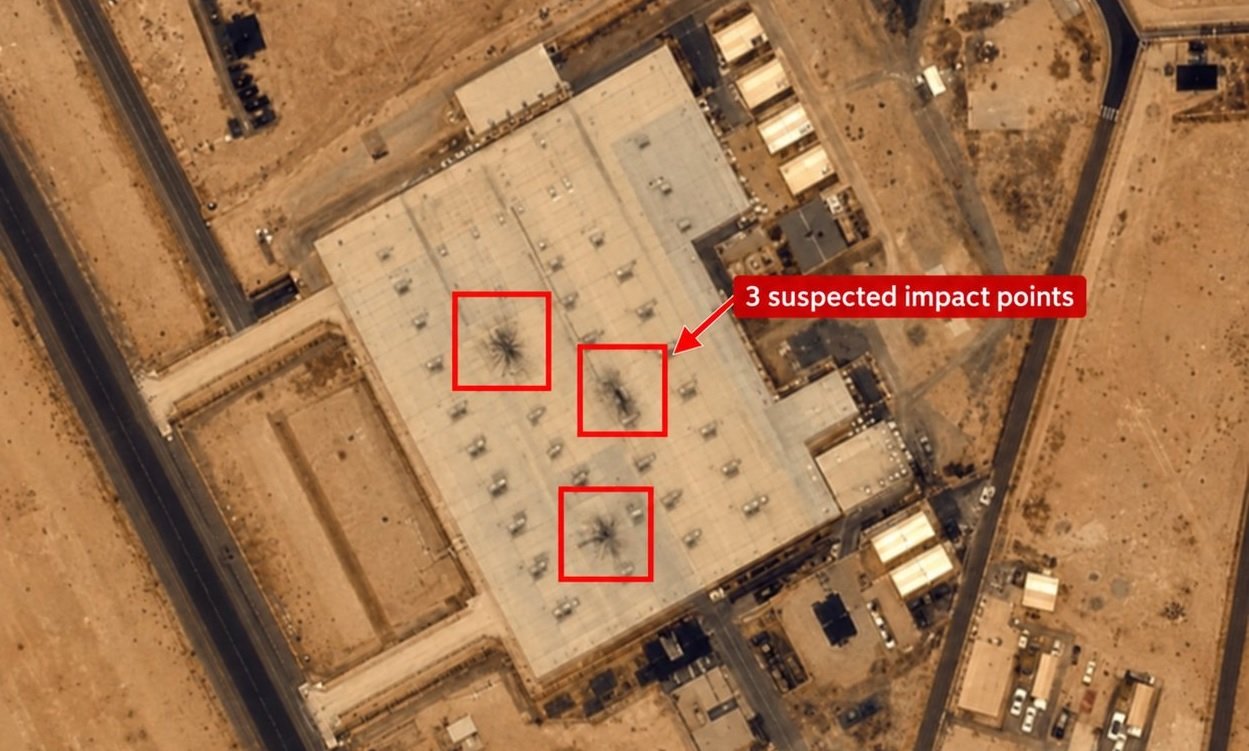
World
KUWAIT — Low-resolution satellite imagery released by open-source intelligence group MizarVision indicates possible Iranian missile impacts at two U.S.-linked air bases in Kuwait, challenging claims that all incoming missiles were intercepted. The assessment, dated September 6, 2026, identifies possible impact points at Ali Al Salem Air Base and Ahmad al-Jaber Air Base following Iran's September 3 missile and drone strikes. Three Suspected Impacts at Ali Al Salem At Ali Al Salem Air Base, a facility building in the troop billeting area appears to show three impact points, which are clearly visible in the satellite image released by MizarVision. The three locations appear as dark marks on the roof of the large facility and are highlighted by MizarVision in its damage assessment. Three More Impacts Reported at Ahmad al-Jaber Separate satellite imagery reportedly shows three impacts in the aircraft and fighter-jet parking area at Ahmad al-Jaber Air Base. The latest imagery provides visual evidence of possible impacts at both bases, although the low resolution means the imagery alone does not establish the exact cause or extent of the apparent damage. Iran had previously claimed that its forces targeted satellite communication systems, equipment depots and fighter-jet hangars during the September 3 attack. Conflicting Claims Over the Attack Iran's Army said on September 3 that it carried out missile and drone strikes against U.S.-linked military facilities in Kuwait. Iranian authorities claimed successful hits on several targets, including satellite communications systems, equipment warehouses and fighter-jet hangars. Kuwait's Armed Forces, meanwhile, said its air-defense systems were engaging incoming missiles and drones. Kuwaiti authorities also told residents that explosions heard during the attack were associated with successful interceptions. Kuwait's Foreign Ministry condemned the strikes as a violation of the country's sovereignty and a threat to its security and stability. The conflicting statements have left uncertainty over the number of incoming weapons intercepted and whether some missiles reached facilities inside the bases. Satellite Imagery Provides Additional Evidence MizarVision's latest assessment adds satellite imagery to the available information about the September 3 attack. The image specifically identifies three suspected impact points at Ali Al Salem and reports three additional impacts at Ahmad al-Jaber. However, the imagery does not independently confirm that all six locations were caused by Iranian missiles, nor does it establish the extent of damage to military equipment or infrastructure. The latest assessment therefore provides evidence of possible impacts at both U.S.-linked bases, while the precise cause and damage remain subject to further verification.
Read More → Posted on 2026-09-07 11:35:41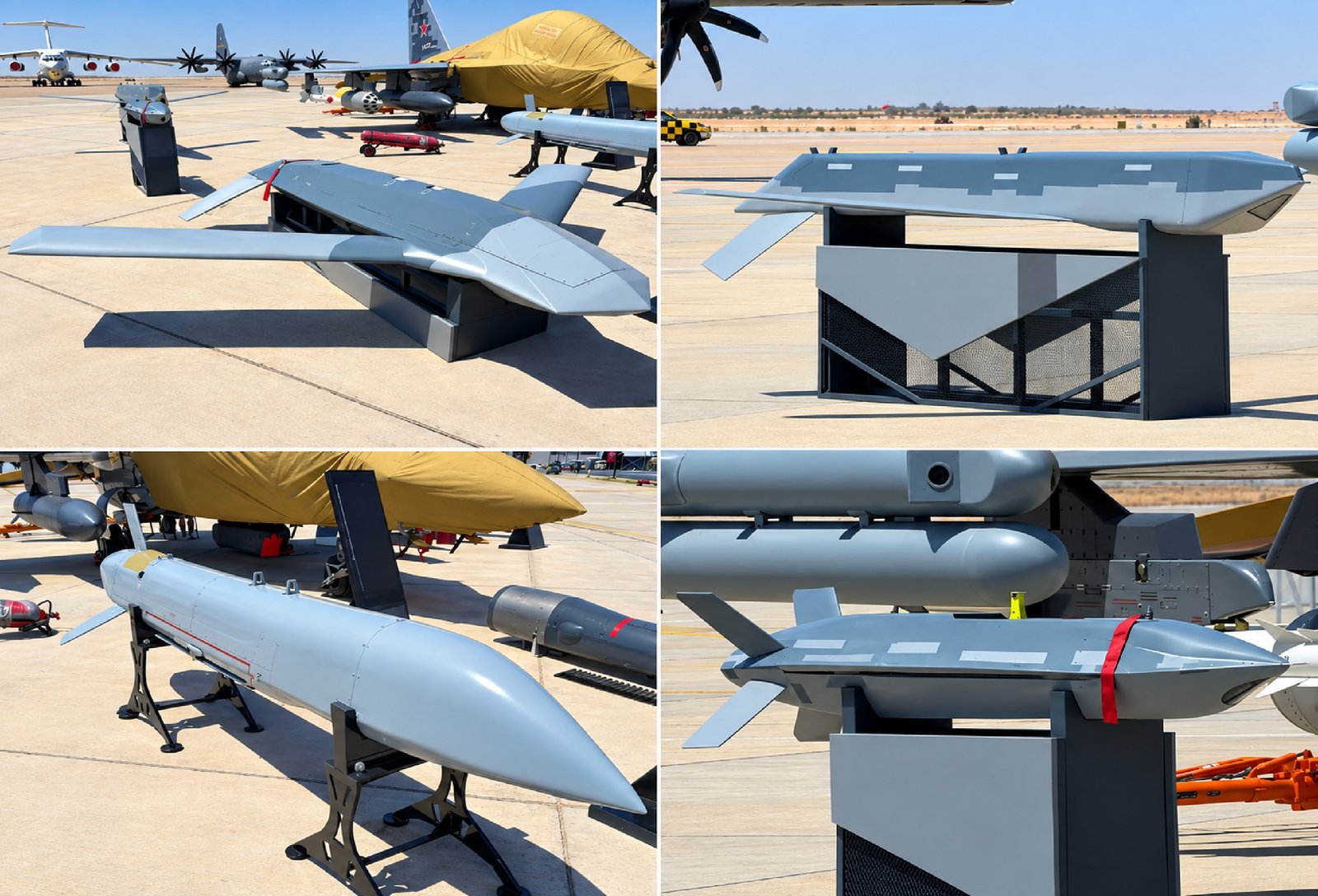
World
EL ALAMEIN, Egypt — The first images of several Russian air-launched munitions and unmanned platforms have emerged during preparations for the second El Alamein International Airshow in Egypt, which will take place from September 8 to 10, 2026. Footage from the setup of the Russian exposition shows the Banderol, S-71K Kover (Kovyor), S-71M Monokhrom and another smaller, unidentified munition. Russia's state defense corporation Rostec has confirmed that the S-71K and S-71M will be presented at the exhibition for the first time. The Russian display is being organized by Rosoboronexport, part of Rostec, at El Alamein International Airport. The company said its exhibition will include new Russian aircraft, weapons, air-defense systems, counter-drone solutions, loitering munitions and unmanned platforms. Some of the products are being shown internationally for the first time. S-71K and S-71M The S-71K and S-71M are described by Rostec as unmanned platforms designed for launch from fifth-generation fighter aircraft. The systems are being presented alongside the export version of the Su-57E fighter. Rostec says the platforms have low observability, long flight range and high speed, with different wing configurations. The S-71K is identified in available reporting as Kover, while the S-71M is known as Monokhrom. Earlier descriptions have associated the two systems with different strike and target-search roles, but detailed official technical specifications have not yet been released for the exhibition. The setup footage provides the first clear public images of the systems ahead of their formal presentation. Further information is expected as the airshow begins. Banderol also shown The Banderol, also referred to in some reports as Dan-T, is also visible in the Russian display. The system has previously been reported as a compact air-launched cruise missile or missile-drone hybrid. Unlike the S-71 systems, the Banderol is not a new public appearance. Its inclusion in the display places it alongside Russia's newer family of air-launched unmanned systems. Su-57E at the center of the Russian display The main aircraft in the Russian static exhibition will be the Su-57E, the export version of Russia's fifth-generation fighter. Rostec said the aircraft will be displayed with a range of air-to-air and air-to-surface weapons. These include the RVV-MD2, RVV-BD, Kh-38MLE, Kh-69 and Kh-58UShKE. Rostec has also confirmed that the Su-57E will take part in the airshow's flight program. The Russian exhibition will also feature the Yak-130M modernized combat trainer with air-launched weapons, while other Russian companies will display air-defense and counter-drone systems. Focus on Middle Eastern and African markets Rosoboronexport Director General Alexander Mikheev said Russia's exhibition is aimed at Egypt as well as countries in Africa and the Middle East. He described Egypt as Russia's important strategic partner and said the exhibition would feature Russian products that have been tested in real-world conditions. The appearance of the S-71K and S-71M alongside the Su-57E gives visitors a first look at Russia's new concept of launching unmanned platforms from a fifth-generation fighter. The second El Alamein International Airshow will run from September 8 to 10, 2026, with additional technical information on the newly displayed systems expected during the event.
Read More → Posted on 2026-09-06 18:05:53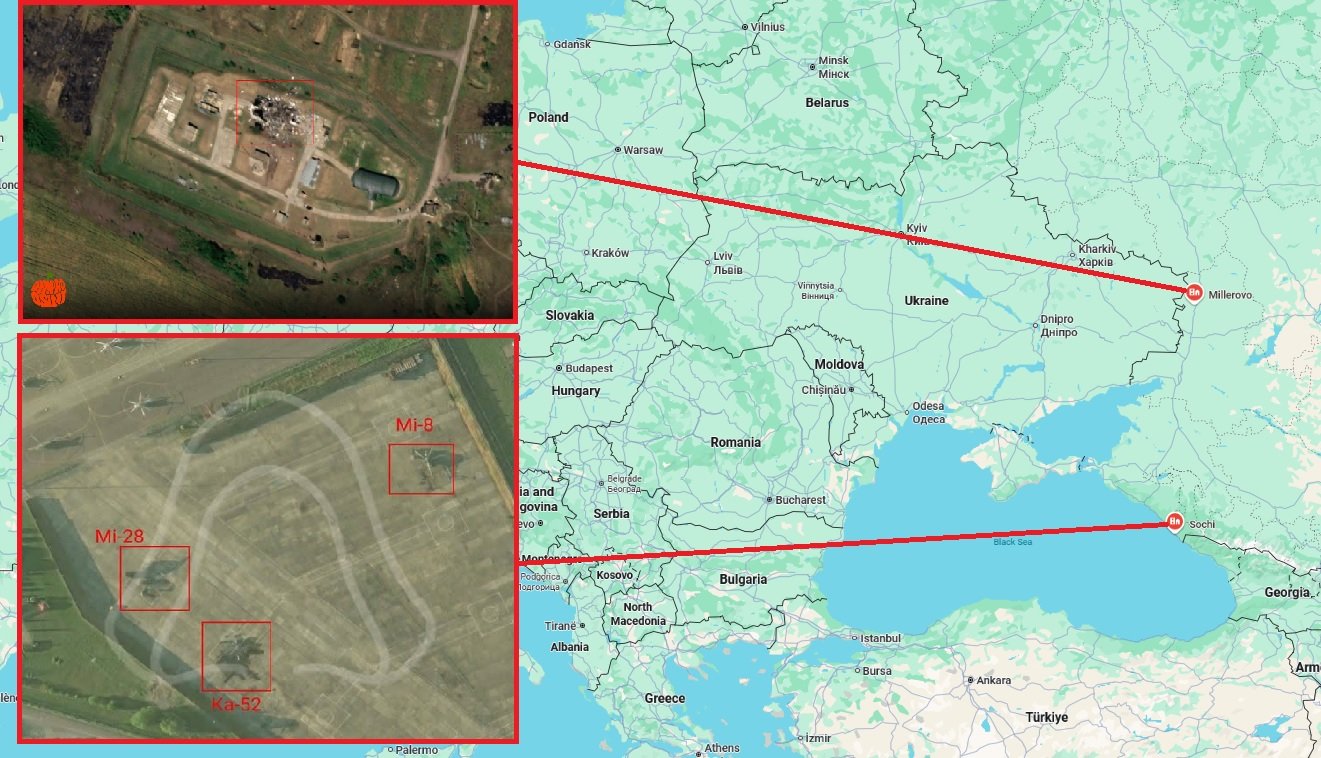
World
MOSCOW — Satellite imagery has confirmed damage to Russian military infrastructure and aircraft following separate Ukrainian drone strikes on the Millerovo airbase in Rostov Oblast and the Sochi area in Krasnodar Krai. The imagery provides additional evidence of the results of attacks carried out on August 30 and September 4, 2026, including damage to radar systems, an ammunition storage facility, a maintenance facility and Russian military helicopters. Damage at Millerovo Airbase The first strike took place during the night of August 30 at Millerovo airbase in Rostov Oblast. Satellite imagery published by the open-source intelligence group Dnipro OSINT confirmed the destruction of an ammunition storage facility and the airbase's technical and maintenance facility, known as the TECh. The imagery also showed damage to an RSP-27 precision approach radar and a Nebo-SV early warning radar. Ukrainian outlet Militarnyi reported that the attack was carried out by Ukraine's 1st Separate Center of the Unmanned Systems Forces using FP-1 long-range strike drones. The same operation also targeted Russian military assets at Yeysk airbase, where a Pantsir-S1 air-defense system, a Sopka-2 radar and an aviation weapons storage facility were reportedly struck. A Kasta 2E2 radar near Shabelskoye was also targeted. Robert “Madyar” Brovdi, commander of Ukraine's Unmanned Systems Forces, said the main target at Millerovo was the DRL-27 module of the RSP-27 aircraft landing radar system. The DRL-27 is used for detecting airborne targets and forms part of the airfield's air traffic control system when combined with the PRL-27 landing radar. Millerovo airbase is located about four kilometres northwest of Millerovo city, near Dolotinka. The facility has hosted Russia's 31st Guards Fighter Aviation Regiment, which operates Su-30SM fighters. Ukrainian officials have described the airfield as a staging location for Russian frontline aviation supporting operations in eastern and southern Ukraine. The base has previously been targeted, including in December 2023 and July 2025. NASA's FIRMS system also recorded a fire at the airbase during the early hours of August 30 following a drone alert in the area. FP-1 drones used in the attack The FP-1 is a long-range one-way attack drone developed by Ukrainian defense company Fire Point. The baseline version has a publicly documented range of up to 1,600 kilometres and can carry a modular warhead in the 60–120 kilogram range, depending on configuration. Fire Point has also stated that the drone costs about $55,000 per unit. An extended-range version has subsequently been associated with ranges of up to about 3,400 kilometres, although specifications vary between different versions and configurations. The FP-1 has been used by Ukraine for long-range strikes against military and logistical targets inside Russia. The platform is among the systems Ukraine has developed to conduct deep strikes without relying on Western long-range missiles. Helicopters damaged at Sochi A separate Ukrainian drone strike on September 4 caused damage at Sochi International Airport in Krasnodar Krai. Satellite imagery reviewed after the attack showed a destroyed Russian Ka-52 attack helicopter and a destroyed Mi-28 attack helicopter at the airport's military helicopter parking area. A Mi-8-family transport helicopter was also damaged. The strike also affected fuel infrastructure near the airport. Reports based on satellite imagery identified six destroyed fuel storage tanks at the BATO aviation fuel depot. A nearby Lukoil facility was also hit, with three additional storage tanks reported destroyed or damaged. Satellite evidence also indicated damage at a nearby Russian air-defense position, with one launcher from an S-300 or S-400 system reportedly detonating during the attack. The exact system involved has not been independently confirmed. The attack had an impact on airport operations. Sochi airport operated under restrictions for more than 11 hours, while flights were delayed, cancelled or diverted. Temporary restrictions were also placed on aircraft refueling. Previous attacks Sochi airport and nearby infrastructure have previously been affected by Ukrainian strikes. A helicopter parking area in the Adler district was targeted in October 2023, while an August 2025 attack caused a fire at nearby oil infrastructure and disrupted airport operations. Millerovo has likewise been targeted several times since Russia's full-scale invasion of Ukraine, including attacks reported in December 2023 and July 2025. As of September 6, Russian authorities had not publicly provided a specific assessment of the damage to the Millerovo facilities or the helicopters and military infrastructure identified in the satellite imagery from the September 4 attack. Main Source : defence-blog
Read More → Posted on 2026-09-06 17:49:43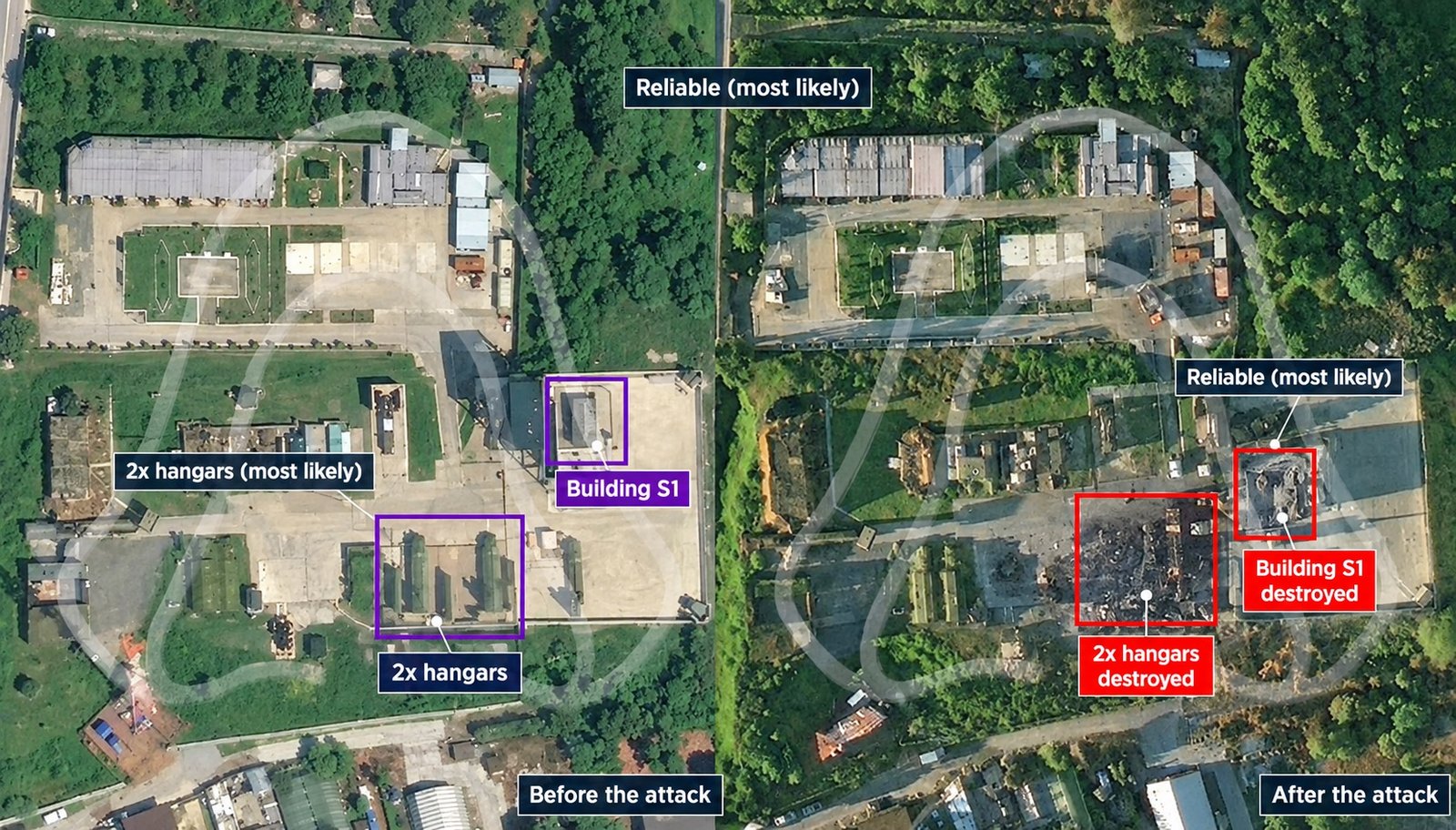
World
SOCHI, — Ukrainian Defense Forces carried out coordinated drone strikes against Russian military and energy infrastructure in the Sochi area on September 4, with further damage reported at Sochi International Airport. The strikes destroyed air defense systems, damaged fuel storage facilities and destroyed or damaged several Russian military helicopters. S-300 and Pantsir systems destroyed The first strike took place in the early hours of September 4 against a Russian air defense position near the settlement of Sirius, close to the Psou River and the border with occupied Abkhazia. Satellite imagery published by the Absolutely Reliable Source Telegram channel showed two S-300 launchers and a Pantsir surface-to-air missile and gun system destroyed. The exact Pantsir modification was not identified, although reports linked it to a newer Pantsir-SMD configuration produced by Russia's High-Precision Systems holding. Russian publication ASTRA and OSINT group Exilenova+ analyzed eyewitness footage and geolocated the fire to the area. The first explosions were reported at about 1:20 a.m., followed by secondary detonations that reportedly continued for several hours. Oil depots hit During the same operation, Ukrainian drones struck two oil facilities in the Sochi area: Rosneft's Adler oil depot and a Lukoil facility. Later satellite imagery showed damage to several storage tanks. At the BATO aviation fuel terminal near Sochi's Adler Airport, associated with Rosneft operations, six tanks were destroyed — two RVS-2000 tanks and four RVS-1000 tanks. At the Lukoil-Yugnefteprodukt depot, three RVS-400 tanks were destroyed or damaged. The facilities had protective netting and structures, but fires were reported at the sites. The attack also disrupted operations at Sochi International Airport. Restrictions lasted for more than 11 hours, with dozens of flights delayed, canceled or diverted. Aircraft refueling was also limited, with notices restricting services primarily to the Lukoil operator for a period. Sochi Mayor Andrey Proshunin confirmed a large drone attack on civilian and military infrastructure in Sochi and Sirius. He advised residents to remain away from windows and stay in shelters. Drone debris was found at several locations, while local authorities reported no casualties. Russian helicopters damaged Satellite imagery released after the attack also showed damage to military helicopters at Sochi International Airport. Ukraine's Defense Forces destroyed a Ka-52 and a Mi-28 attack helicopter, while a Mi-8 family multirole helicopter was damaged. Two radar stations at the airport, including an airfield surveillance radar, were also reported damaged. The initial reports came from eyewitness videos, photographs and OSINT geolocation. Subsequent satellite imagery from the Absolutely Reliable Source channel was used to assess damage to the S-300 launchers, Pantsir system, fuel tanks and helicopters. The strikes affected Russian air defense, aviation and fuel infrastructure in the Sochi area, although Russian authorities have not publicly confirmed all of the reported military losses. Source : militarnyi
Read More → Posted on 2026-09-06 17:28:30
World
ABU DHABI / SAO JOSE DOS CAMPOS, Brazil — UAE-based advanced technology and defence group EDGE has completed its acquisition of Brazilian aerospace engineering company AKAER after all customary closing conditions and relevant regulatory approvals were fulfilled. The acquisition was completed on September 4, 2026, following the share purchase agreement announced by the companies in July. Under the agreed corporate structure, Brazilian defence company SIATT will hold a minority equity stake in AKAER. The arrangement is intended to preserve AKAER’s status as an Empresa Estratégica de Defesa (EED), or Strategic Defence Company, within Brazil. EDGE retains control of AKAER. EDGE Group Managing Director and CEO Hamad Al Marar said the completion of the acquisition represents an important milestone for EDGE in Brazil. He also highlighted AKAER’s engineering expertise and its continued contribution to Brazil’s defence ecosystem. Expanded engineering and technology capabilities The acquisition gives EDGE an established engineering base in Brazil with a multidisciplinary team covering the product lifecycle from project design and development through to industrialisation. EDGE and AKAER already work together on the development and industrialisation of unmanned systems, providing an existing basis for closer integration within the group. EDGE said the acquisition also expands its capabilities in areas including optronics, electro-optic and infrared systems, and space-related technologies. These capabilities were identified by EDGE when it announced the planned acquisition in July. The transaction forms part of EDGE’s expanding investment in Brazil. The group said the acquisition will support Brazil’s defence industry, strategic technologies and technological sovereignty, while contributing to direct and indirect employment opportunities and the development of national skills and capabilities. AKAER's aerospace experience Founded in 1992 and headquartered in São José dos Campos, São Paulo, AKAER has more than three decades of experience in aerospace engineering. The company has accumulated more than 10 million engineering hours across military and commercial aerospace programmes for global manufacturers. AKAER has contributed to several major aerospace programmes, including Saab’s Gripen NG fighter, Turkish Aerospace’s Hürjet trainer, and aircraft programmes from Embraer, including the Super Tucano, ERJ-E1, ERJ-E2, Legacy 450/500 and KC-390. Its engineering work has also included Boeing’s 747-8 and the Brazilian Air Force’s P-3 Orion fleet. AKAER will continue operating from Brazil, maintaining its local presence and established operations. The company’s São José dos Campos base remains part of its role in Brazil’s aerospace and defence industry. EDGE has already expanded its presence in Brazil through investments in SIATT and Condor Non-Lethal Technologies. The completion of the AKAER acquisition adds another Brazilian aerospace and defence engineering company to the group’s portfolio.
Read More → Posted on 2026-09-06 17:18:13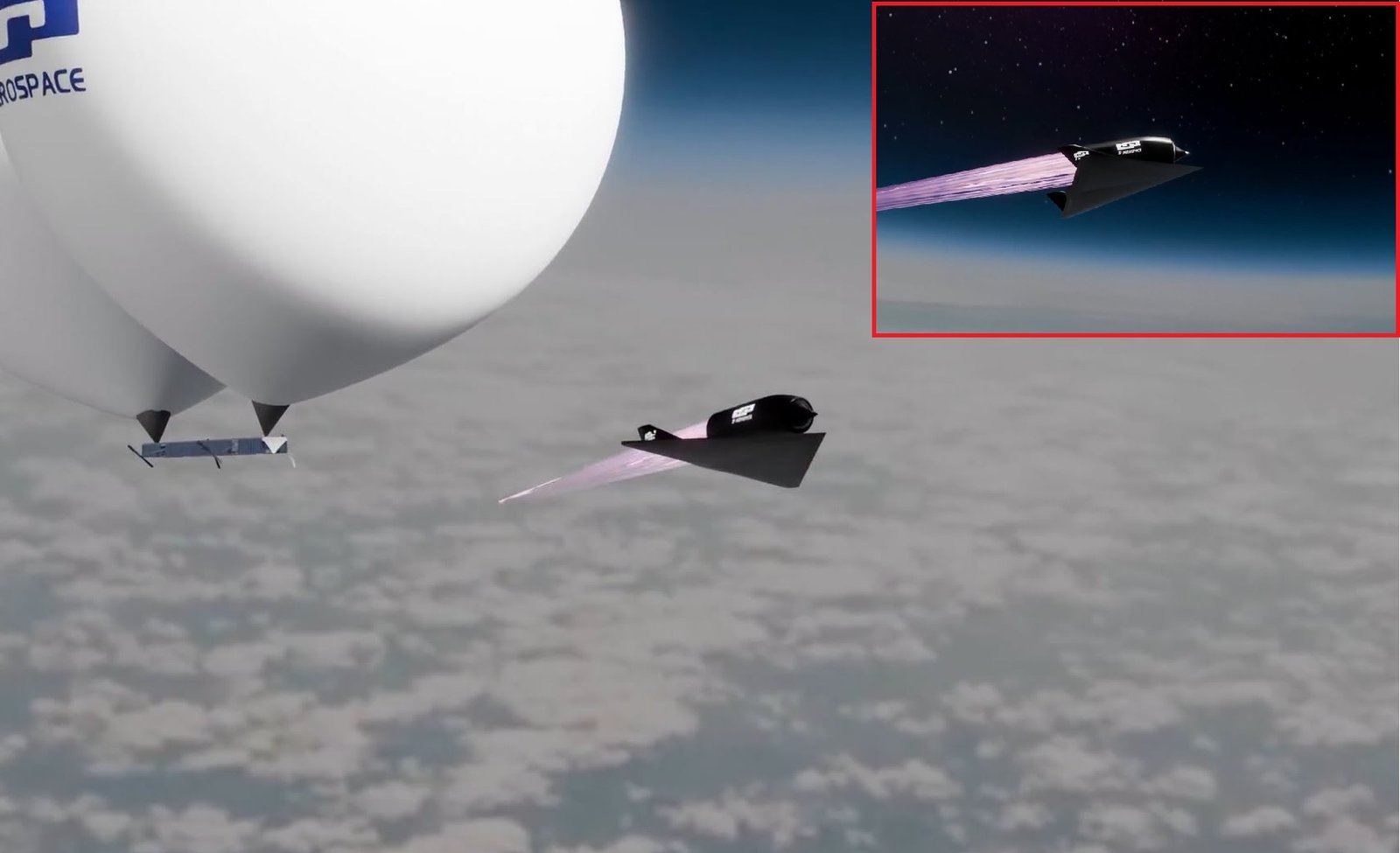
World
CALIFORNIA — JP Aerospace, an American volunteer-run nonprofit that has spent more than four decades developing an alternative approach to spaceflight, has released new computer-generated images of a proposed vehicle called Hazel. The images, shared by JP Aerospace president John Powell, show a dark, wing-shaped aircraft being released from a high-altitude airship called SuperTandem. The airship features two balloons connected by a long truss. Powell said the images are stills from an upcoming Hazel concept video and are not footage of an actual flight or test. No physical hypersonic vehicle matching the current Hazel concept has been publicly reported as built or flown. JP Aerospace has not disclosed technical specifications, funding sources or a target launch date for Hazel. Airship to Orbit program JP Aerospace refers to itself as “America’s Other Space Program.” Its long-term Airship to Orbit (ATO) program aims to reach space using lighter-than-air vehicles instead of conventional rockets. The proposed system has three stages. The Ascender would carry people and cargo from the ground to about 140,000 feet. The Dark Sky Station, positioned at roughly 140,000 feet, would serve as a high-altitude transfer and construction facility. The final stage is the Orbital Ascender, a proposed airship about one mile long that would be built at the Dark Sky Station. Covered with solar panels, it would gradually accelerate over several days using lightweight, low-power electric ion propulsion, eventually reaching orbital speeds of above Mach 20. Previous high-altitude testing JP Aerospace's best-documented flight was the October 2011 mission of its unmanned Tandem airship. The twin-balloon vehicle used a 30-foot carbon-fiber truss, two electric motors and six-foot propellers, reaching 95,085 feet over Nevada's Black Rock Desert. The altitude set an airship record at the time. Powell said Tandem took about five years to develop and cost roughly $30,000. After the flight, the vehicle was recovered by parachute after one balloon failed and the second was released. The organization has also conducted roughly 200 smaller research missions using balloons and small rockets. Its PongSat program has carried thousands of student science experiments to high altitudes in ping-pong balls. Hazel's earlier design The Hazel name is also linked to a 1959 U.S. concept for an inflatable Mach 3 aircraft called Hazel MC-10. The earlier design was studied extensively and had work conducted on its engines, wings and subsystems, but it never flew after competing programs advanced. Powell has discussed building engineering models of the 1959 design for low-speed and Mach 4 wind-tunnel testing and explanatory videos. The latest concept presents Hazel as a hypersonic test vehicle that could be air-launched from a high-altitude platform. JP Aerospace has not publicly confirmed construction or flight testing of the massive orbital-class airships required for its Airship to Orbit vision, nor has it reported a flight of a physical Hazel vehicle matching the current concept. The organization is also working on projects including the Ellipse airship prototype, hybrid and magnetohydrodynamic propulsion tests, and a crewed submarine used as a systems and life-support testbed. The new SuperTandem and Hazel images add to JP Aerospace's ongoing concept work, but they remain computer-generated illustrations rather than operational hardware.
Read More → Posted on 2026-09-06 17:10:40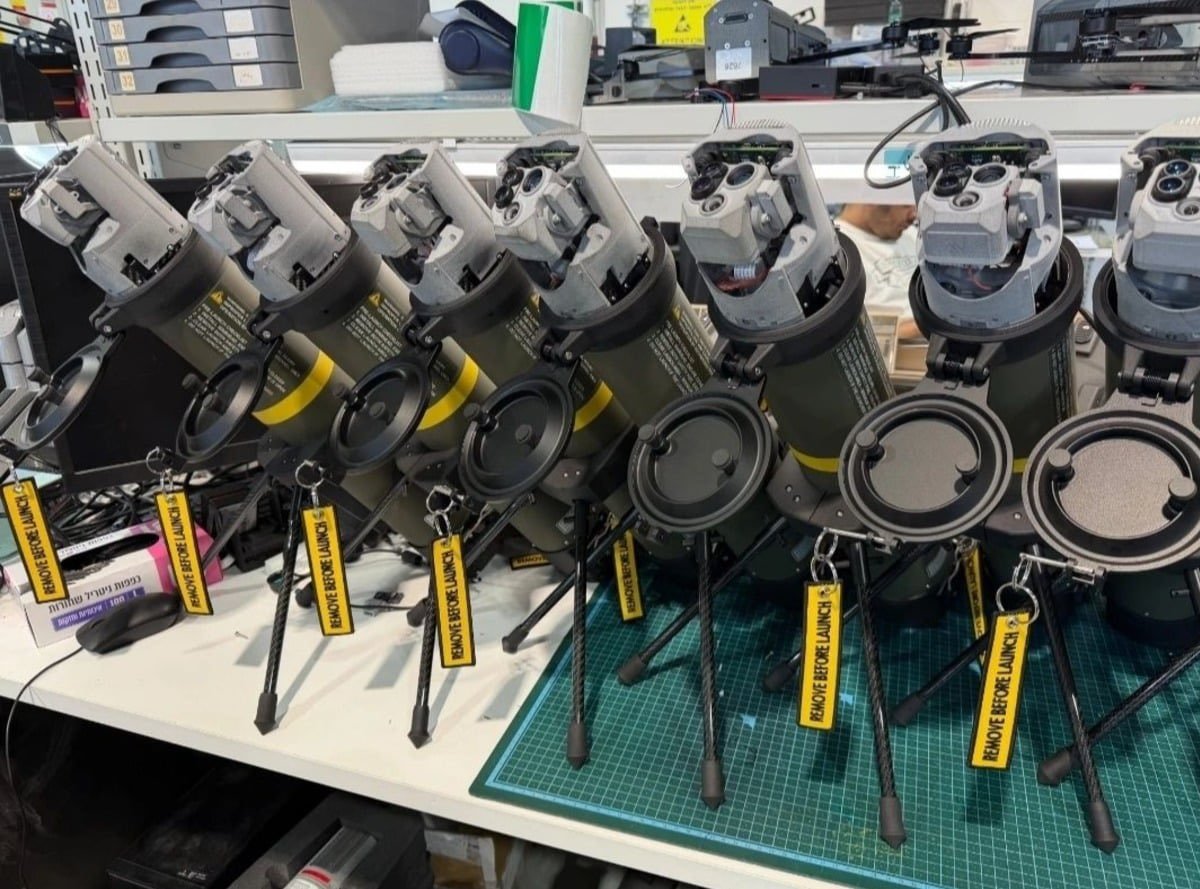
World
TEL AVIV, Israel — Israeli defense company SpearUAV has reached a new production milestone, with nearly 1,000 Viper 300 loitering munition systems ready for delivery to customers, according to the company. The specific countries and military units receiving the systems have not been disclosed. SpearUAV has also reported that production of the Viper 300 has reached hundreds of systems per month. The company has not provided an exact monthly production figure or a breakdown of the nearly 1,000 systems by customer or region. Viper 300 designed for infantry and armored units The Viper 300 is a compact, capsule-launched loitering munition designed for infantry and armored forces. It can be carried by soldiers or launched from military vehicles. Unlike fixed-wing loitering munitions, the Viper 300 uses a quadcopter configuration that allows it to hover and move at low speeds. SpearUAV says this provides an advantage in environments where hovering and close maneuvering are required, including urban areas and missions involving moving targets. The system uses onboard artificial intelligence to assist with target identification. An operator receives the drone's video feed and remains involved in the engagement process, selecting the target before an attack. The complete system weighs 2.8 kg, including the launch capsule and payload. It has a stated top speed of 27 meters per second, a range of up to 5 km and an endurance of up to 20 minutes. The Viper 300 is equipped with a 300-gram directional warhead. Multi-Canister Launcher expands vehicle integration SpearUAV has also developed the Multi-Canister Launcher (MCL), which allows multiple Viper systems to be mounted on armored vehicles. The launcher is intended to provide battalion-and-below units with an integrated capability for reconnaissance and loitering-munition missions. In May 2026, SpearUAV confirmed to Shephard that it was manufacturing and delivering approximately 1,000 Viper systems to multiple customers. The company said the system was already deployed by the Israel Defense Forces and had also been exported to undisclosed users. The company has continued to present the Viper family as an organic aerial capability for ground forces, including infantry and combat vehicles. Earlier $20 million Viper 300 contract SpearUAV announced a $20 million Viper 300 contract in December 2024 with an undisclosed customer. The agreement included options that could increase its value to approximately $60 million, with deliveries expected to begin in 2025. The company has not disclosed the total value of contracts associated with the nearly 1,000 Viper systems currently being delivered or prepared for delivery. Wider Viper family The Viper 300 is part of SpearUAV's wider Viper family, which includes the smaller Viper 40, the larger Viper 750 and the Viper I interceptor. The company has also developed the MCL for deploying multiple systems from ground vehicles. In November 2025, Uvision Group completed its acquisition of SpearUAV, bringing SpearUAV's encapsulated Viper systems into Uvision's broader portfolio of loitering-munition technologies. The latest production figure indicates that SpearUAV is continuing to expand manufacturing and deliveries of the Viper family, although the company has not publicly identified the customers receiving the nearly 1,000 Viper 300 systems.
Read More → Posted on 2026-09-06 16:57:33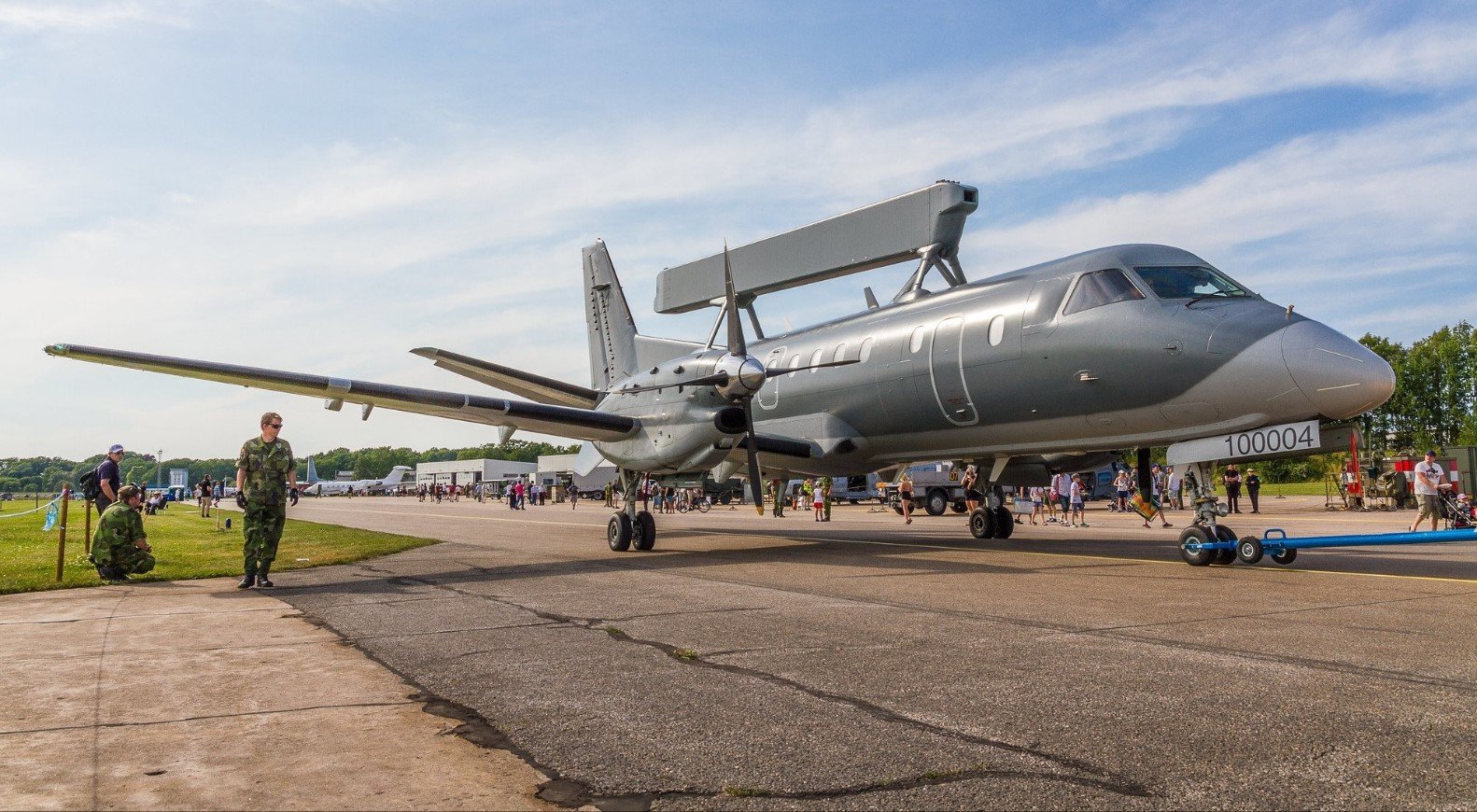
World
KYIV — Ukraine’s Ministry of Defence has officially confirmed that Swedish-supplied ASC 890 airborne early warning and control (AEW&C) aircraft have entered combat operations over Ukrainian airspace. The confirmation appeared in a ministry publication titled “Air Force Capabilities Coalition: How Partners Are Helping Build the Future of the Ukrainian Air Force.” The ministry said Sweden announced the transfer in May 2024, formally confirmed the delivery in August 2025, and the aircraft began its first combat sorties over Ukraine in March 2026. Sweden Supplied Two ASC 890 Aircraft Sweden pledged two ASC 890 aircraft, also known as the Saab 340 AEW&C, as part of a military aid package worth approximately €1.16 billion ($1.25 billion). The package was announced in May 2024 and was Sweden’s largest military aid package to Ukraine at the time. The ASC 890 is based on the Saab 340 airframe and is designed to provide airborne surveillance and command capabilities. Sweden said the aircraft would help Ukraine detect and identify targets at long range. Erieye Radar Provides Long-Range Surveillance The aircraft’s main sensor is the FSR 890 Erieye radar, installed in the distinctive rectangular “balance beam” fairing above the fuselage. The radar is an active electronically scanned array (AESA) system operating in the S-band and incorporates gallium nitride (GaN) components. According to the specifications provided in the supplied information, Erieye can track up to 1,000 air targets and 500 surface targets simultaneously. Its instrumental detection range is about 450 kilometres, while the range against fighter-sized aircraft is approximately 350 kilometres. Operating at around 6,000 metres (20,000 feet) gives the aircraft an elevated view that can help detect low-flying cruise missiles and drones from several hundred kilometres away. Ground-based radars face limitations against such targets because of terrain and the radar horizon. Flying Radar and Command Post The ASC 890 does more than detect targets. It can also act as a flying command post, collecting surveillance information and passing tracking data to other aircraft and air-defence units. Ukrainian F-16 fighters have been modified to exchange data with the ASC 890. This allows pilots to receive information from the airborne radar and can reduce the need to activate their own radars when engaging detected targets, helping limit the risk of revealing their positions. The aircraft is operated by a crew of six or seven, including flight personnel and mission specialists such as mission control, combat control and surveillance operators. It typically operates at speeds of around 300 km/h and altitudes between 2,000 and 6,000 metres, with higher altitudes used when greater radar coverage is required. The Erieye system uses fixed side-looking radar arrays, providing approximately 120–150 degrees of coverage on each side. Part of Ukraine’s Network-Centric Air Force Ukraine’s Defence Ministry said the ASC 890, together with F-16, Mirage 2000 and Gripen fighters, forms the foundation of a modern network-centric air combat system aligned with NATO standards. The aircraft is part of the wider Air Force Capabilities Coalition, involving 14 partner nations and supporting Ukraine’s transition from Soviet-era aviation systems to Western standards. Ukraine began receiving F-16s in 2024 from Denmark, the Netherlands, Norway and Belgium. France began delivering Mirage 2000 fighters in 2025, while Sweden has committed to transferring 16 Gripen C/D fighters. A newer Gripen E variant is planned for delivery by early 2029. Sweden previously operated two ASC 890 aircraft, and both were transferred to Ukraine. The transfer also required preparations and data-sharing modifications to enable integration with Ukraine’s F-16 fleet. A video that appeared on a Russian Telegram channel on 20 March 2026 appeared to show an ASC 890 in flight with Ukrainian voices in the background, but its exact date and location could not be independently verified at the time. The Ukrainian Ministry of Defence later officially confirmed that the aircraft had begun combat sorties in March 2026. The ASC 890 now provides Ukraine with an airborne surveillance and command capability that can extend detection of low-altitude threats and support coordination between Western fighter aircraft and Ukraine’s wider air-defence network.
Read More → Posted on 2026-09-05 16:33:10Search
Top Trending in 24 Hours
-
 North Korea Fires Short-Range Ballistic Missile Toward Sea of Japan After Freedom Edge 26
-
 India’s xTerra Robotics Launches Indigenous DHAV-Hy Wheeled-Legged Quadruped for Industrial Inspection
-
 U.S. Army Awards $10.64 Million Contract to Ukrainian Drone Maker Skyeton for Raybird Systems
-
 U.S. Space Force Seeks Rapid-Response Satellites for Close-Range Orbital Inspections
-
 U.S. Delivers First CH-47F Chinook to Egypt Under 12-Helicopter Deal
-
 BEL Showcase X-Band Multi-Function Radar for QRSAM to Japanese Delegation
-
 U.S. Government Seizes Almasirah.net, Houthi-Linked News Website
-
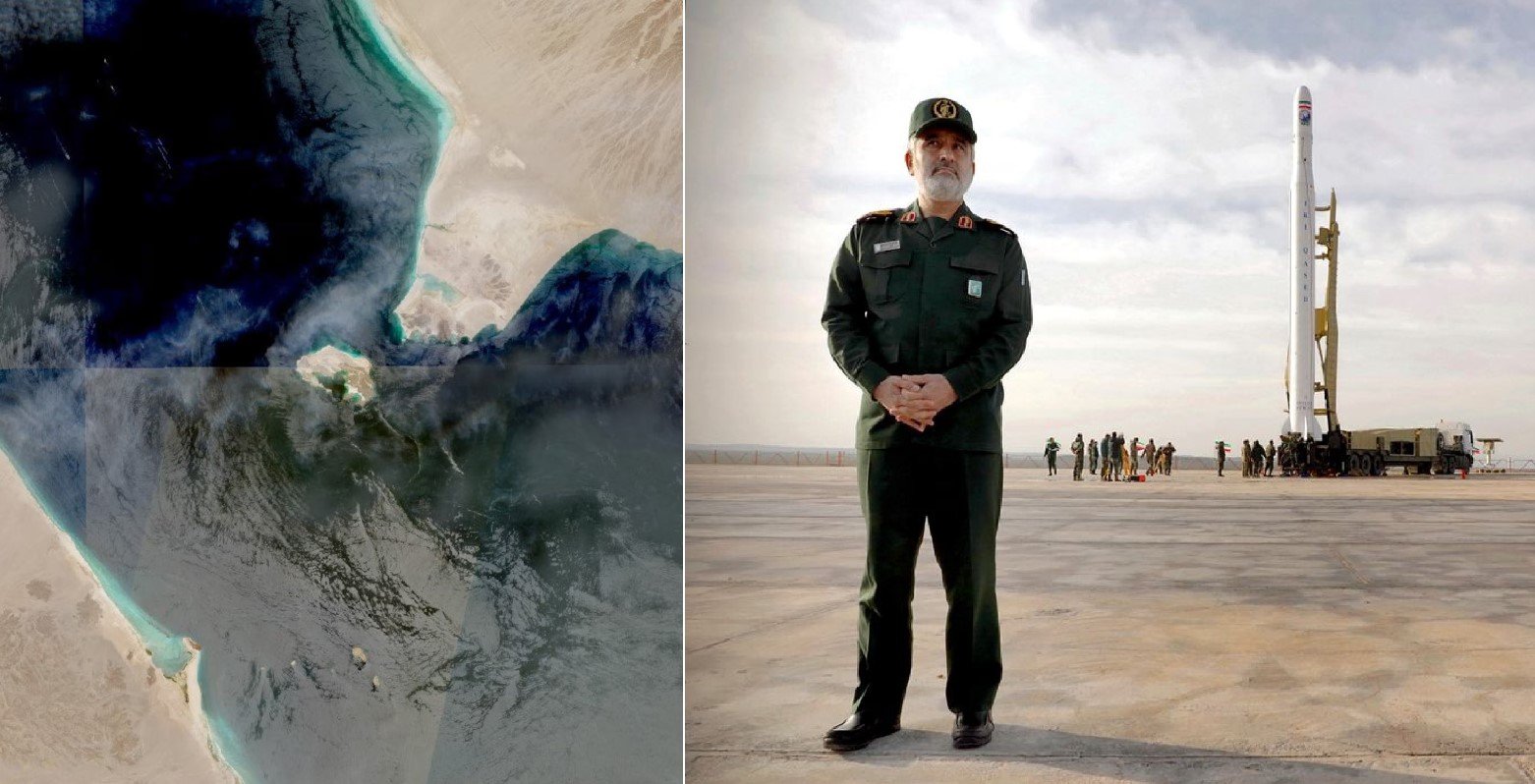 IRGC Experts Visit Bab El-Mandeb to Oversee Radar Installation and Tunneling, Houthi Sources Say
Top Trending in 4 Days
-
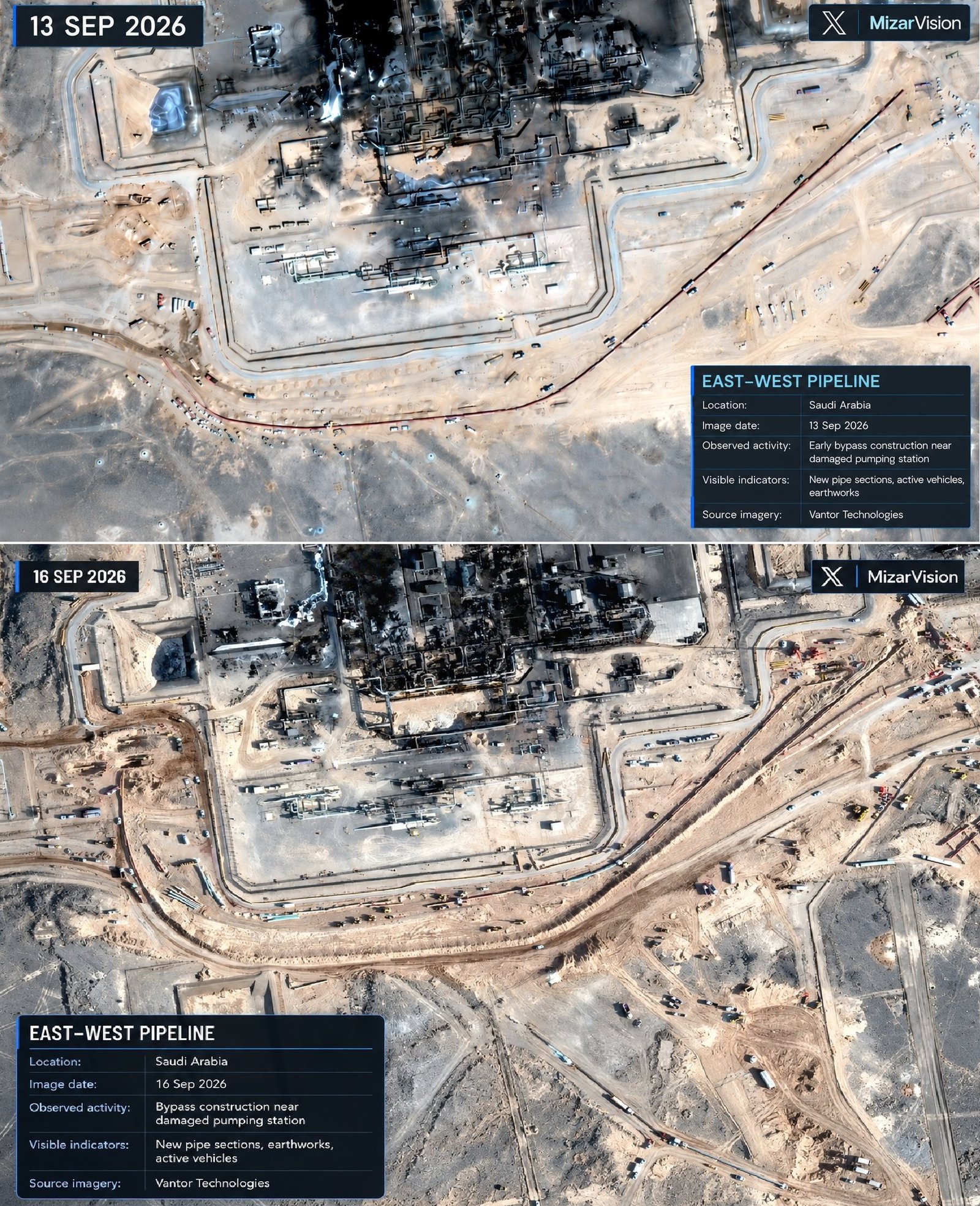 Satellite Images Show Saudi Arabia Building Emergency Bypass Around Damaged East-West Oil Pipeline Station
-
 Sensitive F-35 Components Diverted to Hong Kong, Some Parts Missing
-
 Italian Eurofighter Damaged in Houthi Attack on Saudi Arabia’s King Fahd Air Base
-
 U.S. Secures Permanent Military Rights in Greenland in Historic Security Pact with Denmark
-
 U.S. Approves Potential $2.68 Billion Air Defense Package for Ukraine Including S-300 Clone Missiles
-
 BEL Signs Export Deal with Elbit Systems for Directed Infrared Countermeasure Sub-Assemblies, Secures ₹648 Crore in Additional Orders
-
 China Privately Urges Iran to Restrain Houthis After Saudi Appeal
-
 Israeli Firm Arbe Robotics Unveils Alerion High-Resolution 4D Radar for Counter-Drone Operations