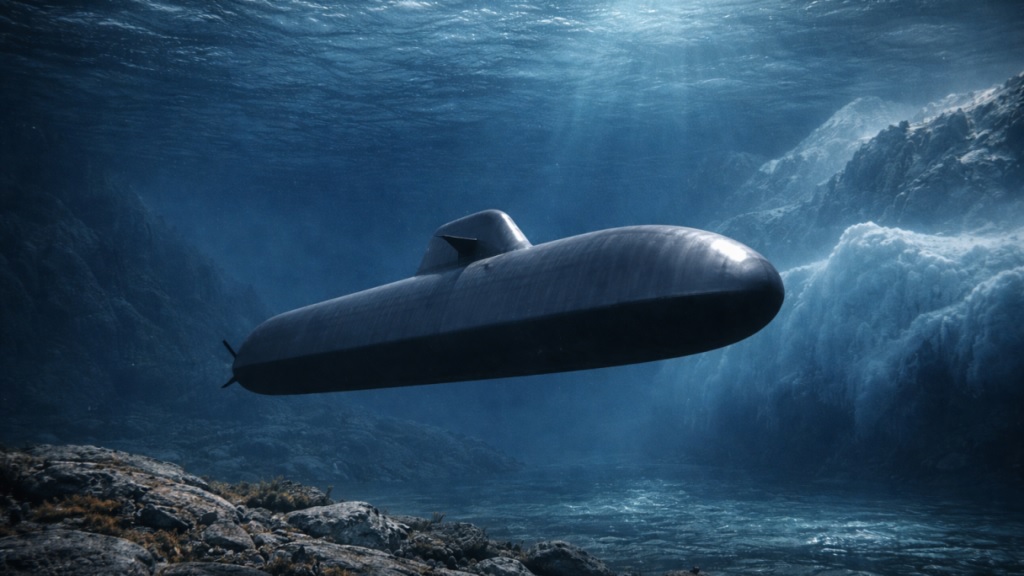
HALIFAX, Nova Scotia — Canadian Prime Minister Mark Carney has announced that Germany's ThyssenKrupp Marine Systems (TKMS) has been selected as the preferred bidder for the Canadian Patrol Submarine Project (CPSP), marking a major milestone in Canada's effort to replace its aging submarine fleet.
The project, expected to cost up to $100 billion over its full lifecycle, is the largest defence procurement program in Canadian history. Under the plan, Canada intends to acquire up to 12 Type 212CD diesel-electric submarines for the Royal Canadian Navy (RCN).
TKMS was selected over South Korea's Hanwha Ocean, which had offered its KSS-III Batch-II submarine design following a competitive evaluation process.
First Deliveries Planned by 2034
The announcement was made during Prime Minister Mark Carney's visit to Canadian Forces Base Halifax.
To speed up the delivery schedule, TKMS, together with the governments of Germany and Norway, has agreed to defer some of their own submarine production slots. This arrangement is intended to allow Canada to receive its first four Type 212CD submarines by 2034, reducing the risk of a capability gap as the current fleet approaches retirement.
Germany and Norway have already ordered the Type 212CD submarines. If Canada completes the purchase of all 12 vessels, the three NATO allies would operate a combined fleet of up to 24 submarines based on the same design. A common platform is expected to simplify training, maintenance, logistics, and operational cooperation.
Replacing the Victoria-Class Fleet
The Canadian Patrol Submarine Project was launched in 2021 to replace Canada's fleet of four Victoria-class submarines.
Canada acquired the Victoria-class boats from the United Kingdom in 1998 after they had previously served as the Royal Navy's Upholder-class submarines. Over the years, the fleet has experienced technical problems and extended maintenance periods. According to the government, only one of the four submarines is currently operationally available for deployment.
The new submarines are expected to strengthen Canada's underwater capabilities across the Atlantic, Pacific, and Arctic oceans.
Type 212CD Capabilities
The Type 212CD submarine is designed for long-endurance underwater operations and includes several features intended for modern naval missions.
Its diesel-electric propulsion system is combined with a hydrogen fuel cell-based Air-Independent Propulsion (AIP) system, allowing the submarine to remain submerged for longer periods without surfacing.
The design also incorporates a diamond-shaped hull that helps reduce acoustic and active sonar signatures, improving stealth during operations.
The submarines are built to operate in under-ice Arctic conditions, including movement through first-year sea ice, supporting Canada's increasing focus on Arctic security. They are also designed to be fully compatible with NATO systems, allowing seamless integration with allied naval operations.
Contract Negotiations Continue
Although TKMS has been selected as the preferred supplier, a final contract has not yet been signed.
The Canadian government and TKMS will now begin detailed negotiations covering areas such as contract terms, technology transfer, industrial participation, and overall project costs. The government has set a target to complete the negotiations and sign binding agreements by the end of 2027.
Prime Minister Mark Carney said Hanwha Ocean's proposal was also highly competitive. If negotiations with TKMS do not produce an acceptable agreement on cost, technology transfer, or industrial benefits, Canada retains the option of selecting Hanwha Ocean as the reserve supplier.
Support for Canadian Industry
The submarine program will be carried out under Canada's Industrial and Technological Benefits Policy, which requires major defence projects to generate economic benefits within the country.
The government expects a significant share of the project's long-term investment to support Canadian shipyards, technology companies, suppliers, and skilled jobs throughout the construction, maintenance, and operational life of the new fleet.
Source: theguardian
——— End of Article ———