ANKARA, Turkey — Denmark, Finland, Germany, and Norway have signed a letter of intent to jointly procure up to five Northrop Grumman MQ-4C Triton high-altitude, long-endurance (HALE) unmanned aircraft to strengthen NATO's Intelligence, Surveillance and Reconnaissance (ISR) capabilities.
The announcement was made on Tuesday during the NATO Summit Defence Industry Forum in Ankara. The new aircraft will become part of NATO's ISR Force and will complement the alliance's existing Alliance Ground Surveillance (AGS) fleet, which operates from Sigonella Air Base in Sicily, Italy.
According to NATO Secretary General Mark Rutte, the agreement is part of a broader package of defence industry initiatives announced during the summit. The joint procurement is valued at approximately $2.7 billion and marks the first time NATO, as an alliance, is acquiring the MQ-4C Triton system.
Designed for Long-Range Maritime Surveillance
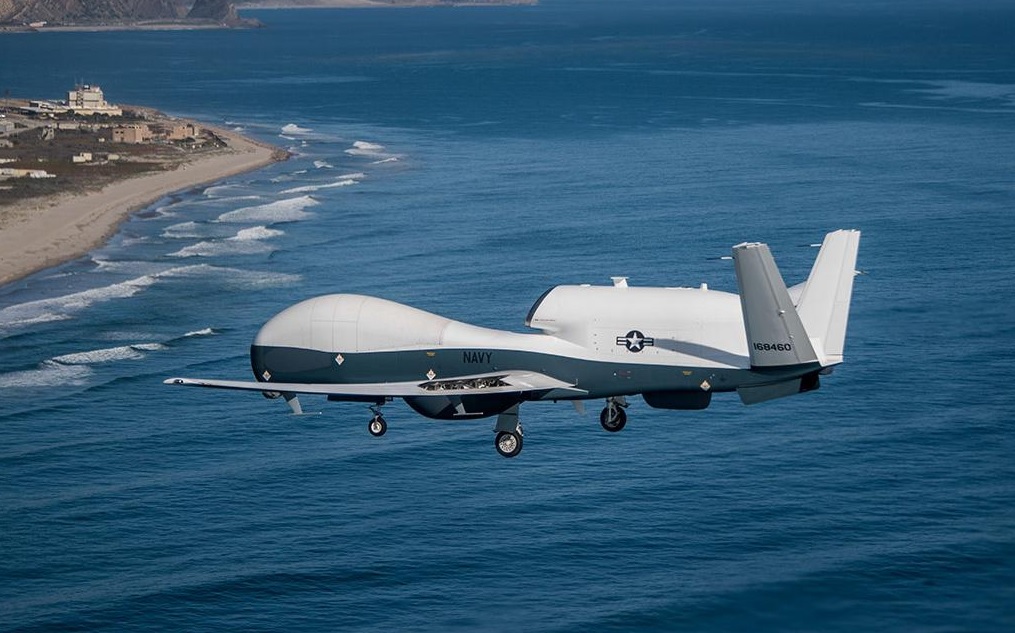
The MQ-4C Triton is a maritime surveillance aircraft developed from the RQ-4 Global Hawk. It is specifically designed for persistent intelligence, surveillance, and reconnaissance missions over large ocean areas.
Unlike the standard Global Hawk, the Triton is built to operate in demanding maritime environments. It features a reinforced airframe, lightning protection, and advanced de-icing systems, allowing it to safely fly through harsh weather conditions and descend to lower altitudes when required to identify surface targets.
The aircraft is capable of flying for more than 24 hours on a single mission while operating at altitudes of over 50,000 feet (15.2 kilometres). This allows it to monitor large maritime regions while remaining above most commercial air traffic and adverse weather.
Advanced ISR Capabilities
The MQ-4C Triton is equipped with the AN/ZPY-3 Multi-Function Active Sensor (MFAS) radar, providing 360-degree maritime surveillance and surface target tracking. It also carries high-definition electro-optical and infrared (EO/IR) sensors for day-and-night imaging.
In addition to its imaging systems, the aircraft includes signals intelligence (SIGINT) capabilities that can detect and analyse electronic emissions. It can also serve as a secure communications relay, enabling information sharing between naval units operating across long distances.
According to NATO, these capabilities will improve early threat detection, enhance maritime domain awareness, and help protect critical sea lines of communication.
Focus on the Arctic and High North
NATO said the new Triton fleet will play an important role in supporting operations in the Arctic and the High North, where long-range surveillance is essential because of the vast maritime areas and challenging operating conditions.
The aircraft are expected to provide persistent monitoring of maritime activity and strengthen the alliance's ability to respond to security challenges in northern regions.
Transatlantic Industrial Partnership
The programme will be delivered through a transatlantic industrial consortium.
Northrop Grumman will manufacture the MQ-4C Triton aircraft in the United States, while Airbus Defence and Space, together with other European defence companies, will provide the ground segment. Their responsibilities include command and control systems, data management services, infrastructure, and mission support.
NATO said the arrangement builds on transatlantic industrial cooperation developed over the past decade to support a modern and integrated ISR capability.
Existing Operational Service
The MQ-4C Triton is already in operational service with the U.S. Navy, where it works alongside the P-8 Poseidon maritime patrol aircraft. The Navy's Unmanned Patrol Squadron 19 (VUP-19) achieved initial operational capability with the Triton in September 2023 during a deployment to Guam. The aircraft was later deployed to Sigonella Air Base in Italy for the first time in March 2024.
Outside NATO, Australia is also procuring four MQ-4C Triton aircraft for its defence forces.
NATO has not announced a delivery schedule or confirmed the final number of aircraft beyond the planned procurement of up to five systems. Once operational, the new fleet is expected to expand the alliance's maritime surveillance capability and strengthen intelligence sharing across member nations.
Source: nato.int
——— End of Article ———