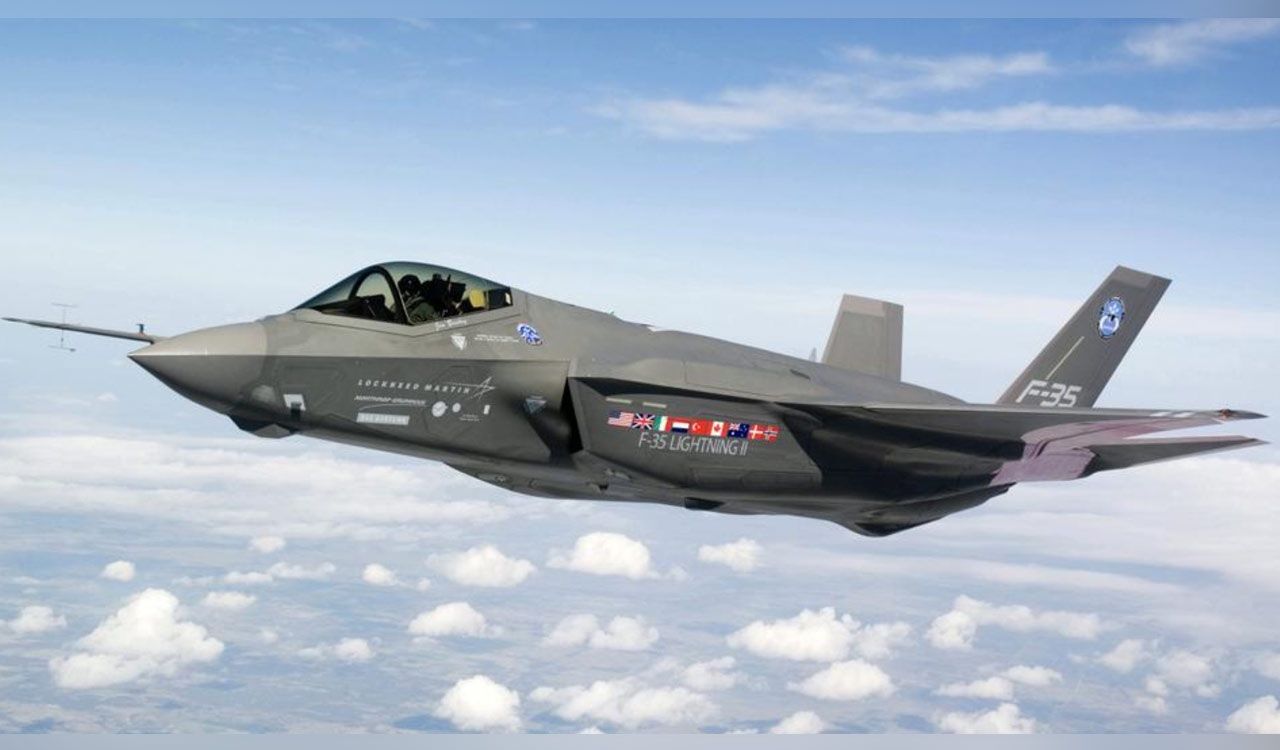
Washington — U.S. President Donald Trump is preparing to restore Turkey's access to the F-35 fighter jet program, reversing the decision his administration made in 2019 to remove Ankara from the multinational project, according to multiple reports and U.S. administration officials.
The issue is expected to be discussed during Trump's meeting with Turkish President Recep Tayyip Erdogan on the sidelines of the NATO Heads of State and Government Summit in Ankara.
Speaking to reporters after arriving in Turkey, Trump confirmed that his administration is reviewing the possibility of moving forward with the sale.
"It's a decision we're going to make," Trump said. "We have a better relationship with Turkey, and Turkey has been in many ways much more loyal than other countries."
Erdogan also expressed confidence before the bilateral meeting, saying Trump had previously promised to deliver five F-35 fighter jets and adding that he believes the U.S. president "always keeps his promises."
Reversal of 2019 Decision
Turkey was removed from the F-35 program in 2019 after purchasing the Russian-made S-400 air defense system. At the time, Washington argued that operating the S-400 alongside the F-35 could allow Russia to collect intelligence on the aircraft's advanced stealth and sensor capabilities, making the two systems incompatible.
The United States also suspended Turkey's participation in the program and halted delivery of aircraft that Ankara had already paid for. Turkey had planned to acquire more than 100 F-35s and was also a manufacturing partner producing components for the fighter aircraft.
The F-35 aircraft purchased by Turkey but never delivered remain in storage in the United States.
Trump has repeatedly said he was dissatisfied with Turkey's removal from the program and has previously blamed earlier U.S. policies for contributing to Ankara's decision to purchase the Russian air defense system.
Legal and Congressional Challenges
Any effort to restore Turkey's participation would face significant legal and political hurdles.
A U.S. law passed by Congress in 2020 prohibits the transfer of F-35 fighter jets to Turkey unless the administration certifies that Ankara no longer possesses the Russian S-400 air defense system.
According to U.S. officials, national security teams led by Defense Secretary Pete Hegseth have spent several weeks examining legal options that could allow the administration to comply with U.S. law while moving forward with the sale.
Vice President JD Vance recently confirmed that the administration is reviewing possible legal pathways after Trump directed officials to examine the issue.
Officials said several options have been discussed to address the S-400 requirement. These include transferring the systems to a third party or rendering them permanently inoperable by removing essential components. Previous discussions about transferring the systems to Ukraine did not move forward.
Administration officials also indicated that an initial agreement could begin with an exchange of letters between Trump and Erdogan to start the technical process, although they cautioned that no final decision has yet been made and the president's plans could still change.
Israel Opposes the Move
The reported policy shift has drawn opposition from Israeli Prime Minister Benjamin Netanyahu, who has urged the White House not to proceed with the sale.
Netanyahu said supplying Turkey with F-35 fighter jets could affect the regional military balance, arguing that Israel's air superiority plays an important role in maintaining security in the Middle East.
He also criticized Erdogan's statements toward Israel and raised concerns about Turkey's regional policies, including its positions regarding Greece and Cyprus.
NATO Summit Context
The F-35 discussions are taking place during the NATO summit in Ankara, where alliance members are addressing defense spending, support for Ukraine and broader security issues.
Trump has continued to criticize European NATO members over defense spending, arguing that allies should increase their military contributions more quickly. He also expressed disappointment over what he described as limited NATO support during the recent U.S. conflict with Iran.
Trump is expected to hold meetings with several leaders during the summit, including Ukrainian President Volodymyr Zelensky, as NATO continues discussions on the war in Ukraine and the alliance's future security priorities.
While the administration appears to be moving toward restoring Turkey's access to the F-35 program, officials say the proposal must still overcome legal requirements, congressional restrictions and diplomatic concerns before any aircraft can be delivered.
Source: nytimes
——— End of Article ———