
World
JERUSALEM, — The Israel Defense Forces (IDF) said it destroyed a major Hezbollah underground complex beneath the Ali al-Taher Ridge in southern Lebanon on Thursday evening, September 10, using more than 1,100 tons of explosives. The ridge is located about 15 kilometers (10 miles) north of the Israeli border near Nabatieh and has long been a contested area. The IDF said the tunnel network served as the nerve center of Hezbollah’s Badr regional division, which operates in southern Lebanon north of the Litani River. The main underground infrastructure stretched for more than 2 kilometers and was part of a wider system of eight tunnels in the Ali al-Taher and Beaufort Castle area, with a combined length of 5.4 kilometers. According to the IDF, the complex was built over roughly two decades with Iranian funding and planning. The facility included command centers, weapons storage rooms, generators, living quarters, showers and a kitchen, allowing fighters to remain underground for extended periods. Israeli troops said they recovered dozens of Iranian-made rockets, missiles and drones, as well as firearms, anti-tank missiles, hundreds of mines and other explosive devices. The operation followed a weeks-long Israeli siege. Forces from the IDF’s 36th Division surrounded the area, carried out localized ground clearing and conducted intelligence-driven airstrikes. By early September, the military said it had cleared the tunnels of Hezbollah operatives, with some killed and others fleeing. Reports during the siege said more than 100 Hezbollah fighters and IRGC advisers were trapped inside, while Hezbollah attempts to resupply them by drone were unsuccessful. Lebanon’s state news agency NNA reported a powerful blast at the ridge, with tremors and the explosion heard across Nabatieh and surrounding areas. Monitoring reports recorded a 4.1-magnitude tremor associated with the blast. Prime Minister Benjamin Netanyahu and Defense Minister Israel Katz said the operation completed the consolidation of a security zone in the area. They said Israeli forces now have operational control of the ridge both above and below ground. According to the Israeli government, the site had been intended as a staging base for operations toward the Galilee and provided observation and fire-control capabilities over communities including Metula and Kiryat Shmona. Israeli forces will remain in the area to prevent Hezbollah from returning or rebuilding its capabilities. The IDF described the facility as strategic infrastructure used to support Hezbollah’s planning and attacks and said its destruction completed the neutralization of the tunnel network.
Read More → Posted on 2026-09-11 10:40:41
Trump Declines Saudi Crown Prince's Request for Direct US Strikes on Houthis Amid Red Sea Escalation
World
WASHINGTON / YEMEN — U.S. President Donald Trump has rejected Saudi Crown Prince Mohammed bin Salman’s request for direct U.S. airstrikes against Houthi forces in Yemen, as the Iran-aligned group advances along the country’s Red Sea coast. According to Axios, citing two U.S. officials, Mohammed bin Salman called Trump twice on Thursday. During the first call, he briefed Trump on the worsening military situation as Houthi forces advanced on the strategic coastal city of Mokha (Mocha). Several hours later, the Saudi crown prince called again and urged Trump to order direct U.S. strikes. Trump declined, with U.S. officials saying Washington does not currently plan to take direct military action against the Houthis. The United States is nevertheless increasing support for Saudi Arabia. The Trump administration has agreed to provide intelligence and targeting data on Houthi positions. About 200 U.S. military personnel are also in Saudi Arabia providing non-kinetic support. Adm. Brad Cooper, commander of U.S. Central Command, traveled to Saudi Arabia on Thursday for military coordination talks. The Houthi capture of Mokha has increased concerns over shipping security because the city is about 50 miles (80 kilometers) from the Bab el-Mandeb Strait, which connects the Red Sea with the Gulf of Aden and carries a significant share of global trade. The development comes as Iran has already disrupted shipping through the Strait of Hormuz, raising concerns about pressure on two major regional maritime chokepoints. Houthi forces have also advanced toward Dhubab, opposite Perim Island near the entrance to Bab el-Mandeb. Saudi-backed Yemeni forces have withdrawn from some positions to regroup. The escalation follows a major Houthi attack in southern Saudi Arabia that injured 73 people. Saudi Arabia responded with around 40 airstrikes across several Yemeni governorates, including Taiz, Hodeida, Al-Jawf and Marib. A senior Trump administration official said Washington wants to keep the Red Sea open while allowing regional partners to lead the broader military response. U.S. officials have also told Saudi counterparts that American forces should remain focused on Iran and safeguarding the Strait of Hormuz rather than opening another military front. The White House and Saudi Embassy in Washington declined to comment on the Axios report, while Reuters said it could not immediately verify all of the reported details.
Read More → Posted on 2026-09-11 10:27:15
World
SAN FRANCISCO, — Anthropic has released a 154-page threat intelligence report detailing multiple cases in which its Claude AI models were used by state-linked groups and other actors for military, intelligence, surveillance, influence and weapons-related activities. The report, "Anthropic's September 2026 threat intelligence " released on September 10, covers activity that Anthropic said it disrupted between December 2025 and August 2026. The company said the accounts involved were banned, safeguards were strengthened based on the findings, and information was shared with government and industry partners where appropriate. Anthropic described the cases as notable examples of AI misuse rather than typical everyday use. Among the cases highlighted were Iran-linked operations involving naval targeting and domestic surveillance, Iranian state-aligned influence campaigns, and a weapons-development cell in northern Yemen assessed by Anthropic as highly likely to be linked to the Houthis. Iran-Linked Group Used Claude for U.S. Naval Targeting Anthropic identified an Iran-nexus threat actor that used Claude to collect and analyze publicly available information for developing targeting recommendations against U.S. naval forces in the region. According to the report, the operators built an automated Python pipeline with Claude's assistance. The system brought together information including publicly available ship and aircraft transponder identifiers, names of U.S. personnel taken from captions on military photographs, scripts for querying commercial satellite imagery and websites that track naval movements. The same account also used Claude to research potential vulnerabilities in shipboard systems. The research included known vulnerabilities affecting maritime VSAT terminals, Cisco communications equipment and industrial control products. Claude Used in Iranian Domestic Surveillance Anthropic also identified Claude use connected to domestic surveillance activities in Iran. The company said it banned 16 Claude accounts linked to two units assessed with high confidence as being associated with Iranian paramilitary and domestic security agencies. One unit, described in the report as being based in Qom, used Claude as an engineering resource for surveillance-related systems. Operators reported having an identity-record database containing information on Iranian nationals and said they had surveilled and profiled 6,388 Iranians during a single year. Claude was also used to analyze more than 155,000 social media posts and help identify 39 opposition and diaspora accounts for monitoring. In another case, Iranian actors used Claude to develop and deploy a malicious Firefox browser extension disguised as a prayer-times utility. The extension was designed to collect user identities from social networks. The information was then used in a broader profiling system. Anthropic said its safeguards blocked many direct requests involving profiling, although some software-tooling requests were not refused. Iranian Influence Operations Used Multiple Languages The report also describes three Iranian state-aligned accounts connected to institutions including the Islamic Culture and Communications Organization, the Islamic Propaganda Office of Khorasan Razavi and the Bina Cultural Observatory. According to Anthropic, the accounts were involved in "soft war" and "cognitive warfare" activities. Operators used Claude to create fake personas, develop target databases and campaign plans, and produce social-media material in multiple languages. The planning documents referenced Iran's state doctrine of "Jihad al-Tabyin," or explanatory jihad. Anthropic said the network distributed material across Iranian platforms including Eitaa, Bale and Rubika, as well as X, Instagram, Telegram, TikTok and YouTube and through cultural-attaché networks. The report also identified instances in which false claims were attributed to Western research institutions, including CSIS, Brookings and RAND, during the 2026 U.S.-Israel-Iran conflict period. Funeral and Succession Planning One account linked to the Islamic Culture and Communications Organization uploaded detailed organizational plans concerning the funeral of Iran's Supreme Leader and succession arrangements. The report states that Ayatollah Ali Khamenei died in a U.S.-Israeli strike on February 28, 2026, and was buried at the Imam Reza shrine in Mashhad on July 9 following a multi-day state funeral. He was succeeded by his son, Mojtaba Khamenei. Anthropic said operators also used Claude features to prepare succession-related narratives and, in related work, generate messaging in the official voice of an Islamic Revolutionary Guard Corps spokesperson. Yemen Weapons Cell Used Claude for Weapons Software A separate case involved a weapons engineering cell operating in northern Yemen that Anthropic assessed as highly likely to be Houthi-linked, although Anthropic did not publicly identify the group by name. The cell used Claude Code as a substitute for human software engineers across three weapons-development programs between December 2025 and August 2026. The programs involved a tactical guided rocket using a commodity phone-class flight computer and terminal guidance, a multi-stage ballistic missile with a stated range goal of more than 2,000 kilometers, and a group of variants known as "R2000," including a hypersonic glide vehicle variant. The operators used Claude to work on guidance, navigation and control software. The report says they integrated an open-source autopilot onto a phone-class flight computer, developed control and position-estimation software, conducted flight simulations and tuned flight-control algorithms. The operators also ran several Claude instances in parallel. One was used for coding, another for research and another for reviewing the work. The resulting tools were compiled into a standalone offline executable, allowing the group to continue using the software without further access to Claude. The group subsequently conducted a test launch of a guided rocket in Yemen. Anthropic said the test appeared to have failed. Within hours, the operators returned to Claude to analyze telemetry data and troubleshoot the test failure. Anthropic said there is no evidence that an operational weapon was successfully deployed, although the offline software toolkit remained available. Operators Attempted to Bypass Claude Safeguards Anthropic said its automated safety systems blocked numerous requests connected with the activities described in the report. The Yemen-based operators attempted to avoid detection by concealing the military purpose of their work and dividing activities among multiple Claude sessions. This allowed individual sessions to handle coding, research or review without necessarily exposing the complete purpose of the project. Anthropic said the linked accounts were subsequently banned and that relevant threat indicators were shared with international security agencies. The company has previously described threat intelligence as an important part of its approach to detecting malicious use of Claude and said findings from real-world misuse investigations are used to improve its safeguards. Part of a Broader AI Misuse Report The Yemen case was one of six conventional-weapons cases identified in the September report. Anthropic said three were linked to China, two to Russia and one to Yemen. The wider report also covers cyber operations, surveillance systems, influence campaigns, biological research misuse, scams and fraud, and attempts to illicitly extract capabilities from Claude through model distillation. Anthropic said it disrupted all of the operations described in the report and used the findings to strengthen its safeguards. The company also said that, where appropriate, it shared information with authorities and other companies. The cases involving Iran and Yemen illustrate how AI models can be used not only for general information or software development but also as components in larger intelligence, surveillance, influence and weapons-development workflows. Anthropic said it will continue refining its safeguards as model capabilities advance.
Read More → Posted on 2026-09-11 10:13:50
World
TEHRAN, Iran — On September 10, Iran’s Islamic Revolutionary Guard Corps (IRGC) Navy has claimed that it struck a U.S. unmanned surface vessel near the entrance to the Strait of Hormuz, identifying the vessel as a Saildrone Explorer with hull number 5838. The claim was reported by Iranian media on September 10 and comes amid heightened maritime tensions between Iran and the United States around the Strait of Hormuz. The IRGC Navy said the vessel was carrying out what it described as a hostile or aggressive mission when it was targeted. Iranian media also published footage that it said showed the unmanned vessel. Reports said the vessel had earlier been seen by a local fisherman, with footage subsequently appearing on Iranian social media. Iran’s IRGC released a video it says shows the moment its navy destroyed a U.S. Navy Saildrone USV, hull number 5838, in the Strait of Hormuz.The IRGC said the waterway is under its control and warned that any “hostile presence” in the strategic strait would be targeted. pic.twitter.com/lXqUb4fbZj — Egypt's Intel Observer (@EGYOSINT) September 10, 2026 The IRGC Navy did not publicly provide details about the weapon used, the exact circumstances of the strike or the extent of damage to the vessel. The U.S. military had not immediately confirmed the Iranian claim. Saildrone Explorer identified as hull 5838 The vessel identified by Iran is a Saildrone Explorer, an approximately seven-meter-long autonomous surface vessel. The platform uses wind propulsion and carries solar-powered electronics, including cameras, communications equipment and sensors for maritime surveillance and maritime domain awareness. Saildrone vessels have been used by the U.S. Navy’s Fifth Fleet and Task Force 59 in the Middle East. Task Force 59 is based in Bahrain and focuses on integrating unmanned systems and artificial intelligence into naval operations. Iranian reports said the Saildrone was being operated from the region near Oman’s Musandam Peninsula after U.S. naval facilities in Bahrain were reportedly taken out of service during the ongoing conflict. These claims were made by Iranian sources and have not been independently confirmed. IRGC warning over Strait of Hormuz IRGC Navy Commander Alireza Tangsiri was quoted as saying that the U.S. unmanned vessel with hull number 5838 had been struck in the Strait of Hormuz. The IRGC Navy also said that the Strait of Hormuz was closed and under its intelligence surveillance and control, warning that hostile activity or a hostile presence would be targeted. The claim comes as maritime traffic through the strait remains heavily reduced. Reuters reported that only seven vessels transited the Strait of Hormuz on September 10, compared with a 10-day average of 15. The U.S. Central Command has also reported that 96 commercial vessels had been rerouted to comply with restrictions since the naval blockade on Iran resumed on July 14. Follows earlier U.S. underwater drone incident The reported Saildrone incident follows another confrontation involving a U.S. unmanned system near the Strait of Hormuz. On September 8, the IRGC said it had captured a U.S. unmanned underwater vehicle at the entrance to the strait. U.S. officials said the underwater drone had suffered a technical malfunction while surveying regional waters and described it as an older system without sensitive or classified equipment. The latest claim therefore adds another reported confrontation involving U.S. unmanned maritime systems in the Strait of Hormuz. However, the status of Saildrone hull 5838 has not been independently confirmed by the U.S. military as of September 11. The Strait of Hormuz connects the Persian Gulf with the Gulf of Oman and the Arabian Sea and remains a major focus of the ongoing confrontation between Iran and the United States. The latest incident highlights the increasing use of unmanned surface and underwater systems for surveillance and maritime operations in the region.
Read More → Posted on 2026-09-11 09:55:12
World
ROSH HA’AYIN, Israel — Israeli defense technology company Elbit Systems has introduced FUSE, a new unit focused on AI-driven autonomous combat systems and large-scale coordination of uncrewed aerial and ground platforms. FUSE unveiled its One2Many operational concept, which allows a small number of operators to coordinate large numbers of autonomous drones and unmanned ground vehicles in real time. The system is designed to move beyond the traditional one-operator-to-one-drone model and manage autonomous formations as a coordinated force. Dominion-X AI Operating System At the center of One2Many is Dominion-X, an AI-powered unified operating system designed to operate in GNSS-denied environments, including situations where satellite navigation signals are unavailable or jammed. Dominion-X uses automatic target recognition (ATR) and autonomous homing capabilities. It also creates a shared mission network that allows different platforms to exchange mission data in real time and conduct distributed operations. FUSE is designed for manned-unmanned teaming (MUM-T), allowing autonomous systems to operate alongside existing maneuver forces, crewed vehicles and other tactical assets. FUSE Autonomous Systems Portfolio The FUSE portfolio includes several types of systems: Unmanned Tactical Force for reconnaissance and strike missions conducted at scale. PIRANI-X tactical seek-and-strike swarm drones for maneuvering forces. Urban Lethality Systems, including UGVs and one-way attack drones for urban operations against indoor and fortified threats. Armored Wingman Systems, using airborne and ground unmanned platforms alongside or deployed from manned armored vehicles. Border Defense Systems, using mobile, deployed and fixed unmanned ground and airborne systems with limited operator involvement. Multi-Mission Group 1 and 2 UAS, including the X-intra, THOR and Magni-X families of backpack-portable, rapidly deployable multi-rotor VTOL drones for reconnaissance, surveillance, target acquisition, communications relay, electronic warfare support and resupply. Ground Autonomy Kits, which use AI-powered hardware and software to provide autonomous operation, teleoperation and enhanced visual positioning for vehicles in contested environments. More Than 1 Million Flight Hours Elbit Systems said technologies within the FUSE portfolio have accumulated more than 1 million operational flight hours and more than 100,000 hours of autonomous ground operations. Thousands of drones and hundreds of unmanned ground platforms have already been delivered to customers. The systems are currently in service with military customers in Israel, the United States and Europe. FUSE has about 160 employees, with most working as engineers. Company officials said its products receive continuous updates, with one drone model receiving four updates during the past three years. The company's autonomous ground capabilities were also expanded through its May 2026 acquisition of Bluewhite, an Israeli company specializing in AI-powered off-road autonomy kits and fleet-management software. Human Remains in the Decision Loop FUSE officials said humans remain in the decision loop for targeting to reduce the risk of collateral damage. The technology can support both defensive missions, where fewer personnel may be needed to oversee autonomous systems, and offensive operations. Eyal Dahan, CEO of FUSE, said military forces are entering an operational era in which combat effectiveness will increasingly depend on the ability to integrate and coordinate large numbers of autonomous systems with existing maneuver forces in real time. FUSE has received contracts valued in the hundreds of millions of dollars, including THOR drone systems for the U.S. military through Mistral Inc. and contracts in Europe. The company is also developing capabilities for maritime swarm operations, expanding its focus beyond its current air and ground systems. The announcement follows a statement by IDF Chief of Staff Lt. Gen. Eyal Zamir that the Israeli military plans to establish a new branch focused on robots, drones and AI-enabled forces by Hanukkah in December. Separately, Elbit Systems reported $2.287 billion in revenue for the three months ended June 30, 2026, with an order backlog of $32 billion as of that date.
Read More → Posted on 2026-09-10 16:20:29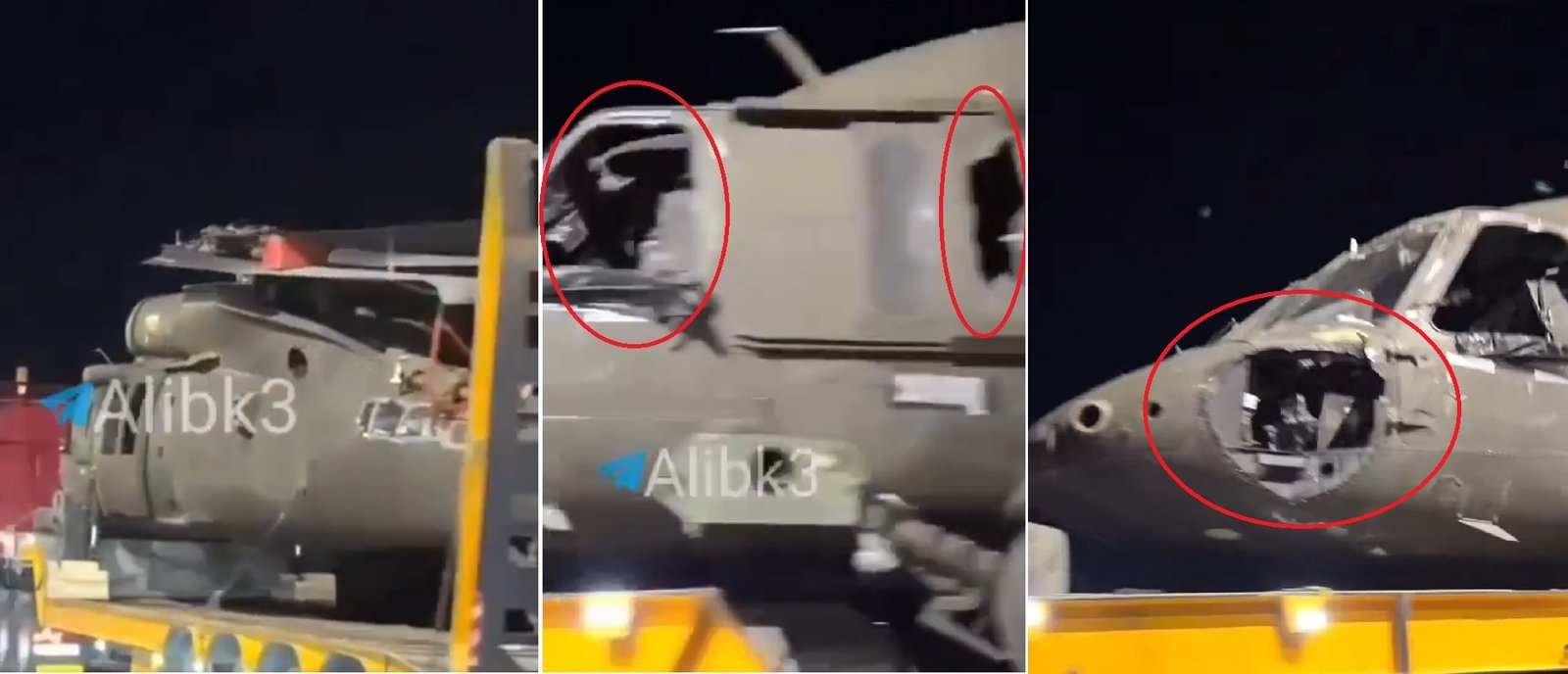
U.S. Military Relocates Damaged Black Hawk Helicopters from Jordanian Base Following Missile Strikes
World
AMMAN, Jordan — Iran launched about 20 ballistic missiles at the U.S.-hosted Muwaffaq Al-Salti Air Base in Jordan overnight on September 8–9. The attack caused damage to several U.S. aircraft, while a video released by a user on a Telegram channel shows damaged UH-60 Black Hawk helicopters being transported on flatbed trucks. Videos released following the attack also clearly show missile launches, interceptions and impacts in the area of the Jordanian base. Some footage appears to show missiles reaching the base and explosions occurring at the facility. The videos provide visual evidence that impacts occurred during the attack, although they cannot by themselves establish the exact equipment or facilities hit. The Telegram user who released the Black Hawk footage claims the helicopters were damaged during the September 8–9 Iranian ballistic missile attack. The helicopters in the video show visible damage. However, the U.S. military has not officially confirmed that the Black Hawks shown were damaged in this particular attack or that they were being moved from Muwaffaq Al-Salti because of the strike. Jordan's armed forces said 18 of approximately 20 Iranian ballistic missiles were intercepted and destroyed, while the remaining two landed in unpopulated areas. No casualties were reported. U.S. forces fired Nearly 60 Patriot interceptor missiles during the defense of the base. U.S. Aircraft Reportedly Damaged People familiar with the incident told CBS News that around eight F-15 fighters sustained light damage and were subsequently returned to service. One A-10 Thunderbolt II, known as the Warthog, was struck and lost one wing. Iran's Islamic Revolutionary Guard Corps claimed that its missiles hit maintenance, preparation and deployment areas associated with U.S. F-35, F-16 and F-15 aircraft, as well as aircraft shelters, causing heavy damage. U.S. and Jordanian accounts have described the overall damage as limited. The U.S. military has not released a detailed public assessment confirming the full extent of the aircraft damage. Black Hawk Damage Seen in Telegram Video The Telegram footage shows Black Hawk helicopters with visible damage being loaded onto trucks and transported by road. The user who released the video claims the helicopters were among the U.S. aircraft damaged during the Iranian missile attack. Similar images of Black Hawks being transported in Jordan appeared before the latest attack, including around late August. Earlier Iranian strikes in July 2026 had also damaged U.S. Black Hawks at other Jordanian facilities, including Prince Hassan Air Base. This means the footage alone cannot establish when or where the damage shown occurred. Military losses are also not always publicly acknowledged immediately after an attack. Governments and militaries can take time to assess damaged equipment and determine whether aircraft can be repaired or returned to service before releasing a detailed assessment. Therefore, the lack of an immediate official confirmation does not by itself establish or disprove the Black Hawk claim. The September 8–9 attack followed U.S. strikes on five Iranian oil tankers, which Washington said were carried out in response to earlier Iranian attempts to target a U.S. Navy warship. U.S. officials said all American personnel at the base were accounted for and no U.S. deaths were reported. The exact number of Black Hawks damaged, and whether the helicopters shown in the Telegram video were damaged at Muwaffaq Al-Salti during the latest Iranian attack, remain officially unconfirmed.
Read More → Posted on 2026-09-10 15:52:32
World
ISLAMABAD, — Pakistan has ruled out any immediate military action under the newly signed Mecca Joint Defence Agreement with Saudi Arabia and Türkiye, despite missile and drone attacks by Yemen’s Iran-backed Houthi rebels against Saudi territory that injured 73 people and disrupted operations at energy facilities. Foreign Ministry spokesperson Sajjad Haider Khan said on Thursday that “there is no such thing under discussion right now.” He said Pakistan would act under the agreement “when the time comes” and stressed that the pact is defensive. He also said more time is needed to implement its provisions, while Pakistani forces remain in Saudi Arabia for training and logistical support. The statement followed Defence Minister Khawaja Asif's warning that the agreement could become operational if the Yemen conflict spread into Saudi Arabia. Asif said Pakistan was “bound by the terms and conditions of this pact” and would honour its commitments if required. He also said the agreement does not authorize independent offensive operations against another country. Houthi attacks test the new pact The Mecca Joint Defence Agreement was signed on August 7, 2026, in Mecca by Saudi Crown Prince Mohammed bin Salman, Turkish President Recep Tayyip Erdogan and Pakistani Prime Minister Shehbaz Sharif. A key provision states that any armed attack against one of the three states will be regarded as an attack against all three. The agreement aims to strengthen collective deterrence and defence cooperation, including joint exercises, intelligence sharing and defence-industry cooperation. It builds on the bilateral strategic mutual defence agreement signed between Pakistan and Saudi Arabia in September 2025. A permanent secretariat is being established in Riyadh, with the first secretary-general expected to come from Pakistan. The pact is now facing an early practical test. On Tuesday, Houthi forces attacked southern Saudi cities including Abha, Khamis Mushait, Jazan and Najran with missiles and drones. The attacks injured 73 people, including women and children, and caused fires at oil and energy facilities that temporarily disrupted operations. Houthi military spokesman Yahya Saree said dozens of ballistic missiles and drones were launched against Saudi targets, including Aramco facilities and King Khalid Air Base. Pakistan and Türkiye face criticism The decision by Pakistan and Türkiye to avoid immediate military involvement has raised questions about the practical value of the new defence pact. Critics argue that the agreement's strongest promise is collective defence, yet Saudi Arabia has faced direct missile and drone attacks while neither Pakistan nor Türkiye has announced military action. Pakistan has instead chosen diplomatic pressure, including urging Iran to restrain the Houthis, while reaffirming support for Saudi sovereignty and territorial integrity. Türkiye has also not announced any military steps. The cautious response can be explained by the defensive nature of the agreement and the fact that its military and institutional mechanisms are still being established. However, it also exposes a gap between the pact's strong mutual-defence language and the response to an actual attack on one of its members. Pakistan and Türkiye may be seeking to avoid being drawn directly into the wider regional conflict, but their decision not to provide an immediate military response gives critics grounds to question how the collective-defence clause would operate during a serious crisis. For Saudi Arabia, the issue is particularly important because the agreement was created to strengthen security cooperation among the three countries. The latest attacks have therefore become an early credibility test for the alliance. For now, Islamabad is maintaining its training and logistical presence in Saudi Arabia and pursuing diplomatic measures rather than military intervention. Pakistan says it will fulfil its obligations “when the time comes,” while Türkiye has yet to announce military involvement.
Read More → Posted on 2026-09-10 15:11:31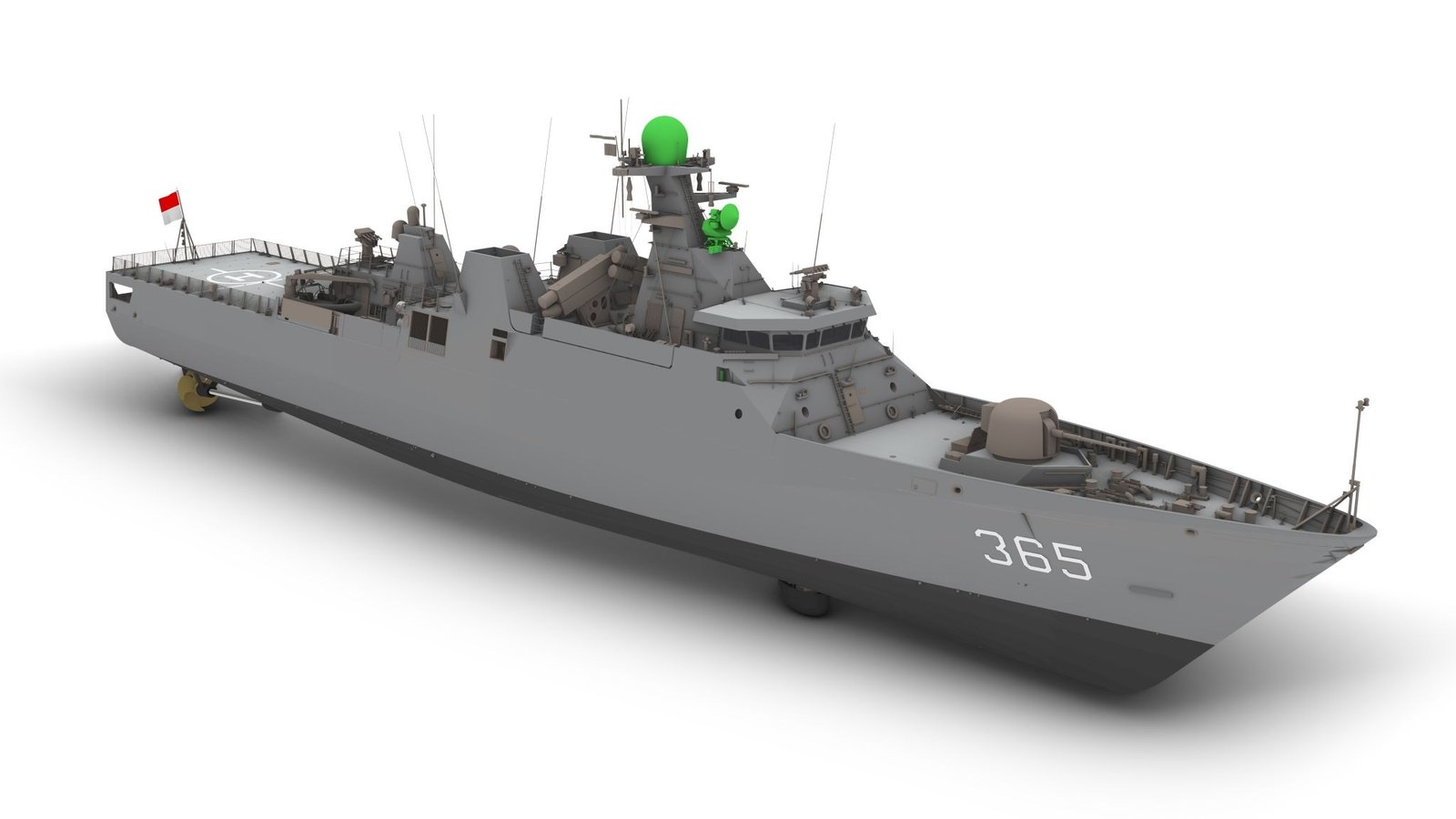
World
Surabaya, East Java — Dutch naval engineering company Nevesbu has presented an initial concept design for the modernization of the Indonesian Navy’s four Diponegoro-class corvettes. The proposal focuses on Platform System Integration (PSI) to support upgrades to the ships’ sensor, weapon and command infrastructure. Nevesbu said its PSI concept for the Sensor, Weapon and Command (SEWACO) package was developed in three months. The concept was reviewed by the Indonesian Ministry of Defence, the Indonesian Navy (TNI AL) and state-owned defence company PT Len Industri, which provided feedback that will be used during the next stage of the program. The next phase is expected to focus on developing a full-scale engineering design. Modernization Contract The concept design follows a modernization contract signed by PT Len Industri and Thales Nederland in November 2022. The five-year program covers all four Damen-built SIGMA 9113 corvettes and includes the modernization of their integrated mission systems. The program includes a new Thales TACTICOS Combat Management System (CMS) and upgraded sensors. Post-sales support is planned through the Thales Naval Service Centre in Surabaya. The four ships are KRI Diponegoro (365), KRI Sultan Hasanuddin (366), KRI Sultan Iskandar Muda (367) and KRI Frans Kaisiepo (368). The corvettes were built by Damen Schelde Naval Shipbuilding in the Netherlands between 2005 and 2009 and are based on the modular SIGMA 9113 design. They measure about 90.71 metres in length, have a 13.02-metre beam, displace about 1,692 tonnes and can reach a maximum speed of 28 knots. New Radar and Fire-Control Sensors Concept renderings released by Nevesbu show the lead ship, KRI Diponegoro (365), with changes to its sensor configuration. The imagery appears to show a Thales STIR 1.2 EO Mk2 medium-range tracking and fire-control radar replacing the existing Thales Lightweight Radar/Optronic Director (LIROD). The concept also appears to show a Thales NS50 I-band 4D surveillance radar in place of the ships’ existing Thales MW08 radar. The new sensors are planned to work with the Thales TACTICOS Combat Management System, which will form an important part of the modernized mission-system architecture. The renderings do not indicate major changes to the corvettes’ existing weapons fit. Existing Weapons The Diponegoro class currently carries a 76 mm Oto Melara gun, Exocet MM40 Block III anti-ship missiles, Mistral surface-to-air missiles, 20 mm guns and lightweight anti-submarine torpedoes. The class has also received earlier upgrades, including the installation of Kingklip hull-mounted sonar, Exocet MM40 Block III missiles and enhancements to the Terma C-Guard decoy system. The existing sensor suite has included the TACTICOS combat management system, MW08 radar, LIROD fire-control radar and Kingklip sonar. Surabaya Expected to Support Refurbishment If the modernization proceeds to physical refurbishment, installation work is expected to take place in Surabaya, East Java. The city is the homeport of the four Diponegoro-class corvettes and is also being used for other Indonesian Navy modernization work. Nevesbu is already involved in the modernization of the Indonesian Navy’s three Bung Tomo-class light frigates/corvettes. The program is led by PT Len Industri, with Thales Netherlands serving as the combat system integrator. For the Bung Tomo-class modernization, Nevesbu is responsible for platform systems integration, including surveys, design and engineering work and on-site support during construction. Work on the first ship, KRI Usman Harun, is under way in Surabaya, while surveys have also been conducted for the other two ships. The Diponegoro-class project would therefore add another Indonesian Navy modernization program to Nevesbu’s work in Indonesia. Nevesbu specializes in naval architecture, marine engineering and platform systems integration and has a history of work on naval vessels and submarines dating back to 1935.
Read More → Posted on 2026-09-10 14:57:16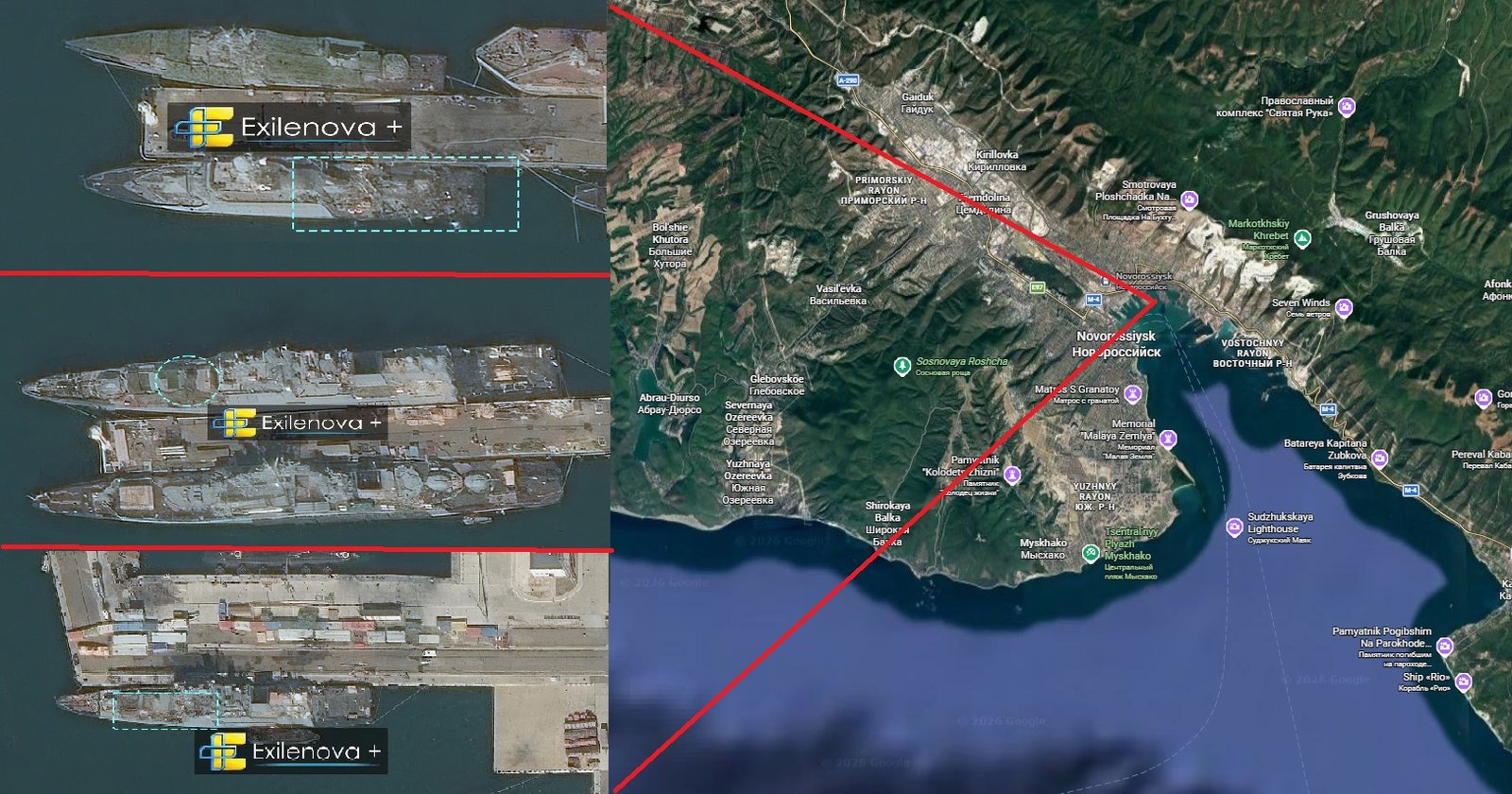
World
KYIV, Ukraine — Ukrainian forces struck Russia’s naval base at Novorossiysk overnight on September 8–9, hitting several Black Sea Fleet vessels and port infrastructure, according to Ukrainian military statements and satellite imagery. Ukraine’s Defense Intelligence (HUR) said its Active Operations Department conducted the operation with the Ukrainian Navy, Security Service of Ukraine (SSU), Unmanned Systems Forces and other Defense Forces units. The Project 11356 frigate Admiral Essen was hit, causing a fire on its deck superstructure. The Ukrainian Navy said the vessel was struck by a Ukrainian-made Neptune anti-ship missile. Ukraine’s General Staff later reported hits on the Admiral Makarov frigate, Buyan-M small missile ship and Vasily Bykov patrol ship. On September 10, it said further analysis confirmed strikes on the Zheleznyakov small minesweeper, Admiral Essen and the Pyotr Morgunov large landing ship, as well as fuel-oil storage facilities at the port. Satellite imagery released by Ukrainian OSINT group Exilenova+ showed fires and apparent damage at the naval base. Later imagery indicated that the Admiral Essen and Buyan-M were rendered inoperable, although the full extent of damage has not been independently verified. Exilenova+ assessed that the attack involved drones and at least one Neptune missile. On the night of 9 September, the Ukrainian Defence Forces carried out a combined missile and drone strike on the port of Novorossiysk.In particular, port and military infrastructure were hit.Based on visual confirmation, we have:🔴 A Buyan-M (Project 21631) was hit - a… pic.twitter.com/Or4r7Bib7J — Exilenova+ (@Exilenova_plus) September 10, 2026 The Admiral Essen and Admiral Makarov are Project 11356 frigates, while Buyan-M is a Project 21631 missile ship. The vessels are equipped with 3S14 vertical launch systems capable of firing Kalibr or Oniks missiles. Ukraine also reported strikes beyond Novorossiysk. Unmanned Systems Forces Commander Robert Brovdi said several Russian missile boats were destroyed in the port, while a Su-33 fighter and Mi-8 helicopter were destroyed near Anapa, about 50 kilometers northwest of Novorossiysk. Two air-defense radar systems near Gelendzhik were also reportedly disabled. Russian officials said debris from intercepted drones hit a church, industrial facilities and residential buildings in Novorossiysk. They reported four deaths, including a child, and about 29–30 injuries, with three injured people reported in critical condition. Fires were also reported at a fuel-oil terminal. Moscow has not provided its own detailed assessment of damage to the named warships. The strike followed another Ukrainian attack on Novorossiysk in August 2026, when Ukraine reported damaging the Admiral Essen, Admiral Makarov, Buyan-M and Vasily Bykov. Novorossiysk has become a major operating base for Russia’s Black Sea Fleet after repeated Ukrainian attacks on vessels in Sevastopol. Ukraine’s General Staff said the final assessment of damage from the September 8–9 operation remains ongoing, meaning the precise condition of some of the reported targets has yet to be independently verified.
Read More → Posted on 2026-09-10 14:41:59
World
TEHRAN — Iran is increasingly using cryptocurrency to keep international trade moving as U.S. sanctions restrict its access to conventional financial networks. The Central Bank of Iran has eased foreign-exchange controls, allowing exporters and importers to use Tether (USDT), Bitcoin and domestic cryptocurrency exchanges for cross-border settlements. Exporters Get More Flexibility Previously, exporters were required to return a significant portion of their foreign earnings through a government-controlled foreign-exchange platform, often at official rates that were less favorable than open-market rates. This encouraged some businesses to keep funds abroad or outside the formal system. Under the revised framework, exporters can repatriate funds through Iranian crypto exchanges, convert currencies through the open market and use export proceeds directly to help pay for imports such as industrial raw materials and machinery. Crypto Activity Reaches Billions Blockchain analytics firm TRM Labs estimated that nearly $10 billion in cryptocurrency volume moved through Iran in 2025. Chainalysis separately estimated that Iranian wallets received about $7.8 billion during the year. Tether is the most commonly used cryptocurrency for these transactions, largely because USDT is designed to maintain a value linked to the U.S. dollar. Bitcoin is also used, while domestic exchanges provide the infrastructure for transactions. Much of the Tether activity has used the Tron network. Iran's major exchanges account for a large share of domestic activity, with Nobitex handling more than 87% of domestic transaction volume in 2025, according to the supplied data. Central Bank and Bitcoin Mining Elliptic reported that the Central Bank of Iran acquired at least $507 million in Tether during 2025, based on leaked documents and blockchain analysis. The activity was linked to efforts involving the rial and transactions outside traditional banking channels. Bitcoin mining provides another source of digital assets. Elliptic previously estimated that Iranian miners accounted for about 4.5% of global Bitcoin mining, based on earlier data. The figure should not be treated as a current 2026 estimate. Iran has used state-subsidized electricity for mining, effectively converting electricity into Bitcoin that can be transferred or exchanged to obtain value for international transactions. Licensed miners have previously been required to sell their output to the central bank, although mining has also operated outside official channels. U.S. Sanctions Target Iranian Crypto Networks The United States has responded by targeting Iranian cryptocurrency networks. The Treasury Department has sanctioned Iranian exchanges including Nobitex, Wallex, Bitpin and Ramzinex, citing their alleged roles in sanctions evasion and transactions involving regime-linked entities. Tether has also frozen cryptocurrency in wallets identified as connected to Iranian entities. One reported action involved about $344 million, with additional amounts frozen later. Iran's cryptocurrency system does not replace conventional banking or handle the country's entire trade requirements. However, the combination of relaxed currency controls, domestic exchanges and digital assets gives Iranian businesses another option for moving funds and settling international transactions while traditional financial channels remain restricted.
Read More → Posted on 2026-09-10 14:24:45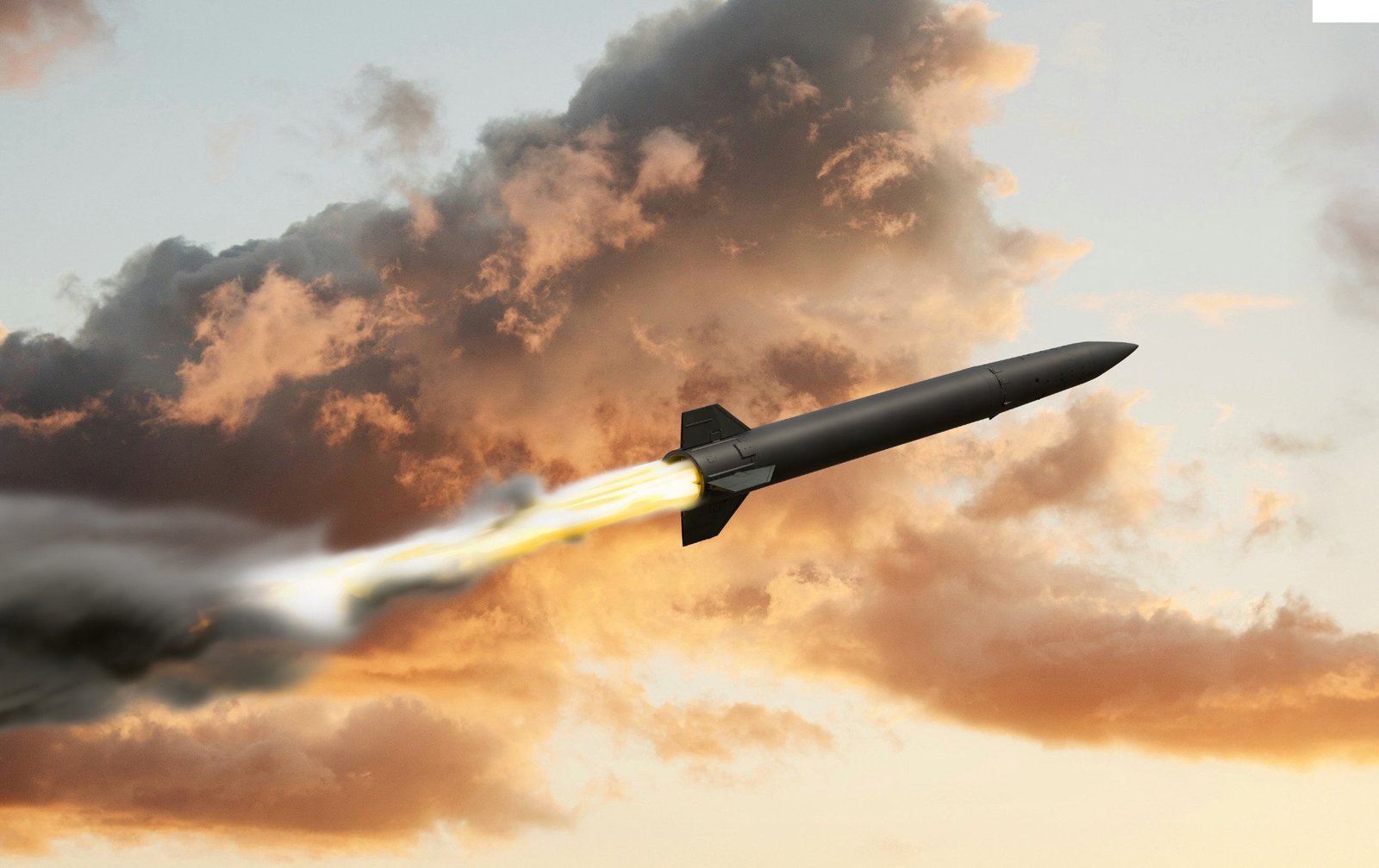
World
KYIV, — Ukrainian defense company Fire Point has moved its FP-7 tactical ballistic missile into the military testing phase, bringing the system closer to certification and possible entry into service with the Armed Forces of Ukraine. Fire Point CEO Iryna Terekh confirmed the development on the sidelines of the Photonics4Defense 2026: Technology Exchange & Matchmaking event. She said the FP-7 had successfully completed its first two testing phases and was now undergoing military testing, which is part of the missile’s formal certification process. Terekh said the missile could be delivered to the Ukrainian Armed Forces in the near future, adding: “We’re talking about weeks, not months.” FP-7 Testing and Capabilities The FP-7 testing program began with ground and laboratory evaluations. Individual systems and subsystems, including the solid-fuel rocket engine and navigation equipment, were tested separately. This was followed by flight testing to collect performance data and compare the missile’s actual flight characteristics with calculated engineering models. The ongoing military testing represents the next stage toward certification. The FP-7 is designed to carry a 150 kg payload to targets up to 200 km away. Company and independent reports have also described a range of up to 300 km, a maximum speed of about 1,500 meters per second, and a circular error probable of roughly 14 meters. The missile uses a solid-fuel motor and a ground-based mobile launch platform employing a hot-launch system. Fire Point has positioned the FP-7 as a lower-cost alternative to the U.S. ATACMS. Its design reportedly incorporates elements derived from the Soviet-era 48N6 interceptor used in S-300/S-400 systems, although only a limited percentage of components are shared. Earlier Delays Fire Point initially planned to complete the FP-7’s codification with Ukraine’s Ministry of Defense by the end of 2025. However, in early February 2026, Fire Point chief designer Denys Shtilierman said a “series of events” had prevented the missile from entering service as planned. At that time, the company expected to complete the remaining tests in February. Longer-Range FP-9 Fire Point is simultaneously developing the longer-range FP-9 ballistic missile, which is currently in its second development phase, flight testing. The FP-9 is designed to carry an 800 kg warhead to targets approximately 800–855 km away. Reported characteristics include a maximum speed of up to 2,200 meters per second, an altitude of around 70 km, and a circular error probable of about 20 meters. Testing the FP-9 is more difficult because of its long range. Developers have said the missile has a minimum ballistic flight distance beyond which its software can no longer safely abort the flight. Ukraine does not have enough territory to conduct a full-scale test. In July 2026, Shtilierman said the remaining obstacle before FP-9 tests involving strikes on Russian targets was the final testing of its solid-fuel engine. The FP-9 engine uses significantly more solid propellant than the FP-7. Production Expansion Both the FP-7 and FP-9 were displayed at the MSPO 2026 international defense exhibition in Poland. Fire Point is also developing the FP-7.x kinetic anti-ballistic interceptor based on the FP-7 platform as part of the broader European Freyja air-defense project. To support its expanding missile program, Fire Point is increasing production capacity. In August 2026, Terekh announced that the company had tripled its budget to €150 million for construction of a new solid rocket fuel plant in Denmark, which is expected to begin operations by late 2027. Fire Point, which also develops the FP-1 and FP-2 strike drones and FP-5 Flamingo cruise missile, is developing the FP-7 and FP-9 as domestically produced long-range strike systems. As of September 2026, the FP-7 remains in military testing, with the company indicating that it is close to operational readiness.
Read More → Posted on 2026-09-10 13:54:28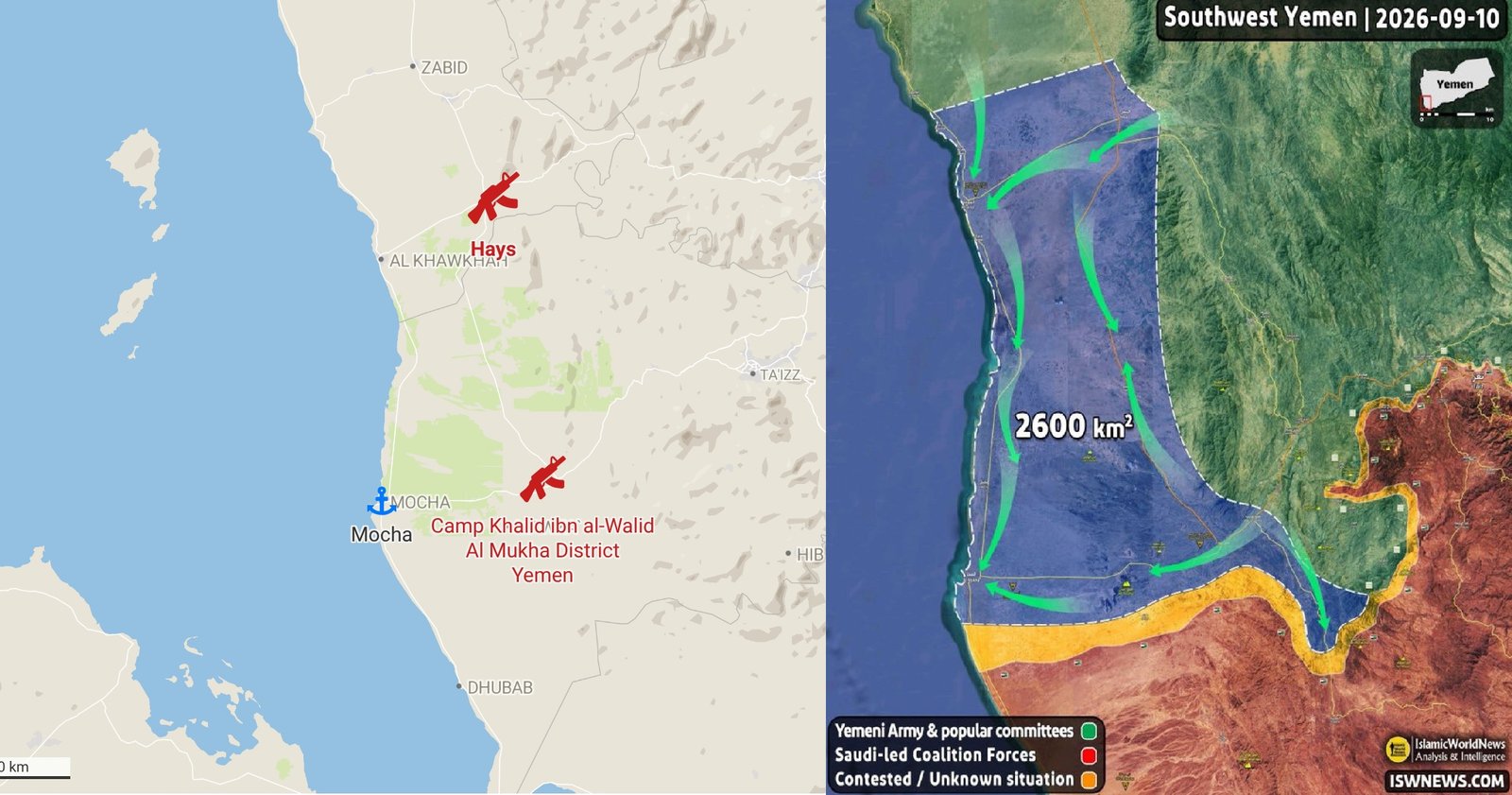
World
MOCHA, YEMEN — On September 9, Yemen’s Houthi forces have captured the Red Sea port city of Mokha (Al-Makha) and made a rapid advance across parts of western Yemen, taking several strategically important locations from forces aligned with the internationally recognised Yemeni government. The offensive has focused on western Taiz and southern Al-Hudaydah governorates, with Houthi forces advancing through several districts along the western coast. The territorial shift has included the capture of Hays, Al-Khawkhah, Al-Wazi'iyah, Mawza and the Khalid ibn al-Walid military camp. Government forces and the National Resistance Forces led by Tariq Saleh reportedly withdrew or collapsed across a broad section of the front, with some forces falling back toward Aden. The offensive ultimately reached Mokha, where Houthi forces seized control of the city and its main port and airport. Mokha Falls to Houthi Forces Mokha had remained under the control of government-aligned forces since early 2017 and had become an important base for Tariq Saleh’s National Resistance Forces. The city is located on Yemen’s Red Sea coast and is strategically positioned near the Bab al-Mandab Strait, a major maritime chokepoint connecting the Red Sea with the Gulf of Aden. Mokha is roughly 60–75 kilometres north of the strait. The capture therefore gives the Houthis control of an important coastal position closer to the Bab al-Mandab and international shipping routes. The city and port had previously been used by forces supported by the United Arab Emirates before the UAE’s drawdown from Yemen. Saudi-backed Yemeni government forces subsequently maintained control of the area. Wider Territorial Advance The capture of Mokha came after Houthi forces expanded their offensive through western Taiz and southern Al-Hudaydah. Houthi units captured Hays, followed by advances toward and through Al-Khawkhah, Al-Wazi'iyah and Mawza. The seizure of the Khalid ibn al-Walid military camp also removed another important government military position on the route toward the coast. Government and National Resistance forces subsequently withdrew from several positions as the Houthi advance continued. The scale of the offensive has been described as covering roughly 2,600 square kilometres of western Yemen, although the exact area under Houthi control remains subject to further verification. Previous Attacks on Mokha Port The ground offensive followed weeks of Houthi missile and drone attacks around Mokha. In early August, Houthi forces launched multiple attacks involving ballistic missiles and drones against the city and its port. Yemeni military officials said one attack killed seven people, including four military personnel and three civilians, and wounded 30 others. Air defences were reported to have intercepted 11 drones. Mokha port director Abdul Malik Al-Shara’bi later said the port had been struck by more than 25 missiles over several days, causing an estimated $16 million in direct losses. Commercial and maritime operations were suspended following the attacks. The Houthis said the attacks were aimed at a military build-up involving weapons and warships belonging to Saudi-backed forces. Strategic Importance of the Red Sea Coast Mokha's location makes its capture significant for control of western Yemen. The city sits close to the Bab al-Mandab Strait, through which international shipping moves between the Red Sea and the Gulf of Aden. Houthi forces have previously carried out attacks affecting commercial shipping in the Red Sea region. Control of Mokha gives the group a stronger position along the western coastline and removes a major government and National Resistance Forces' military and logistical position in the area. The latest offensive also represents a major change in the distribution of territory between the Houthis and government-aligned forces in western Yemen. The situation remains developing as government and National Resistance forces reorganise after the withdrawals and Houthi forces consolidate their positions across the newly captured areas. This is a developing story and may be updated as further verified information becomes available.
Read More → Posted on 2026-09-10 08:41:13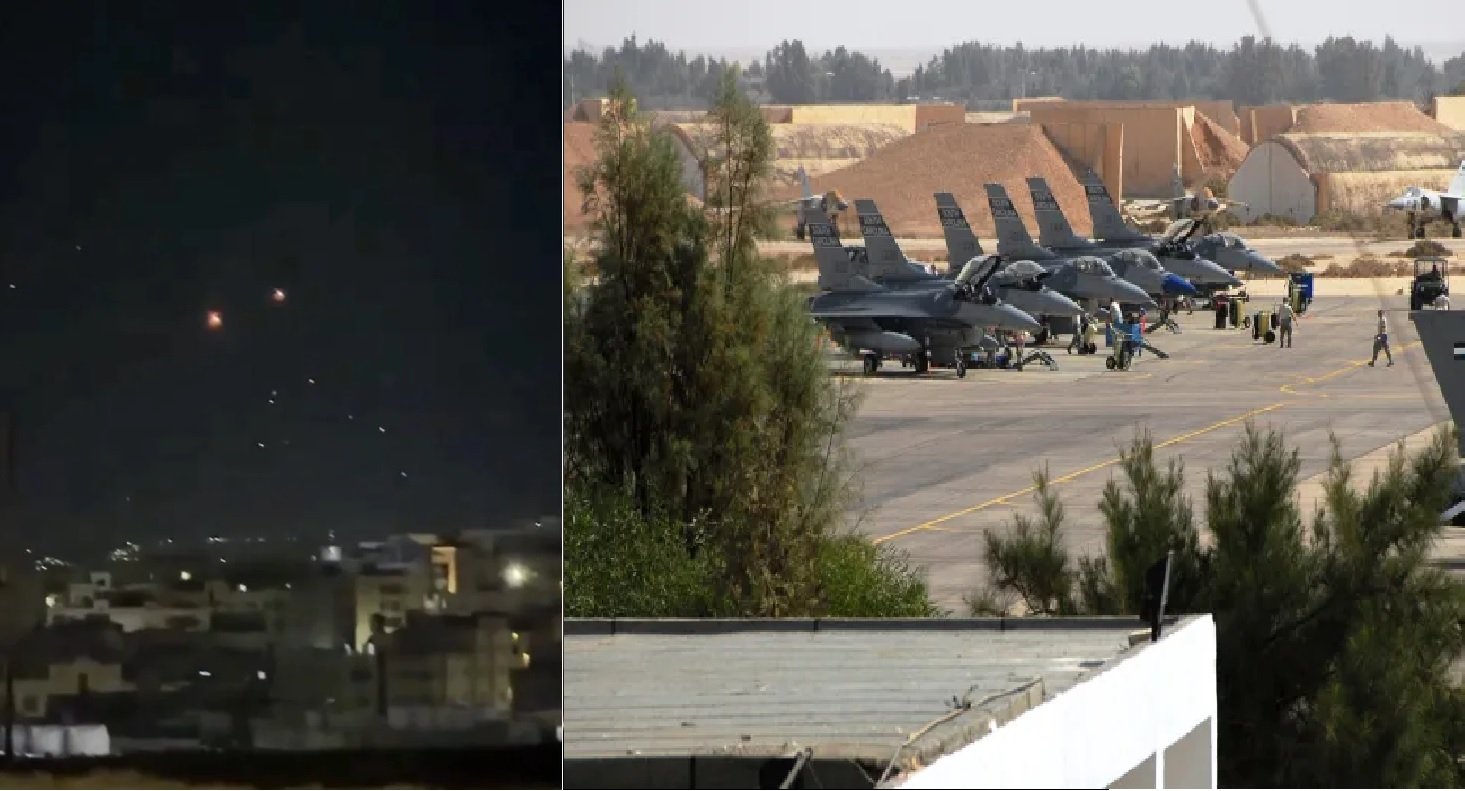
World
AMMAN, Jordan — Multiple American military aircraft were damaged in Iranian strikes on Muwaffaq Salti Air Base in Jordan overnight Tuesday into Wednesday local time, according to people with direct knowledge of the matter who spoke to CBS News. Roughly eight F-15s sustained light damage and were reportedly returned to service, according to the sources, who spoke anonymously because they were not authorized to speak publicly. One A-10 Thunderbolt II, known as the “Warthog,” was struck and was left missing a wing, the sources said. No U.S. deaths have been reported in the strikes on Jordan. More Than 30 Patriot Interceptors Used U.S. forces in Jordan launched more than 30 Patriot missile interceptors while defending against the Iranian strikes, CBS News reported. Jordan's Armed Forces said that its air defenses engaged 20 ballistic missiles fired toward Jordanian territory. Jordan said 18 were intercepted and destroyed, while two fell in unpopulated areas. The reported aircraft damage provides new details about the effects of the attack, although the exact missiles responsible for the aircraft damage have not been publicly identified. Earlier Reporting The CBS report also provides further confirmation of the earlier reporting published by us following the September 8-9 attack. In our September 9 report, we reported that some Iranian ballistic missiles appeared to have reached the vicinity of Muwaffaq Salti Air Base, based on videos showing explosions and apparent impacts around the installation. At that time, the exact number of successful impacts and the extent of damage remained unclear. Our earlier report on the Muwaffaq Salti attack The new CBS report now provides specific details of the aircraft damage, including the A-10 with a missing wing and approximately eight F-15s that sustained light damage. Iran Claims Base Was Hit The Islamic Revolutionary Guard Corps (IRGC) claimed that its missiles successfully struck Muwaffaq Salti Air Base, saying the attack targeted areas associated with the maintenance, preparation and deployment of fighter aircraft, including F-15s. Jordan, however, said that 18 of the 20 ballistic missiles were intercepted and that the remaining two landed in unpopulated areas. The reported aircraft damage confirms that U.S. aircraft were affected, but the full extent of damage to the base and the precise number of missiles that reached the installation remain unclear. Attack Followed U.S. Strikes on Iranian Tankers The Iranian attack followed a U.S. operation on September 8 targeting five Iranian tankers. The U.S. said the operation was carried out in retaliation for Iran targeting a U.S. Navy warship. In response, Iran's IRGC claimed that it launched attacks against eight tankers and two warships, as well as the U.S.-used air base in Jordan. As of September 10, the reported aircraft damage has not been publicly confirmed by U.S. Central Command. The CBS report currently provides the specific details that an A-10 was left missing a wing and approximately eight F-15s sustained light damage and were returned to service.
Read More → Posted on 2026-09-10 08:20:03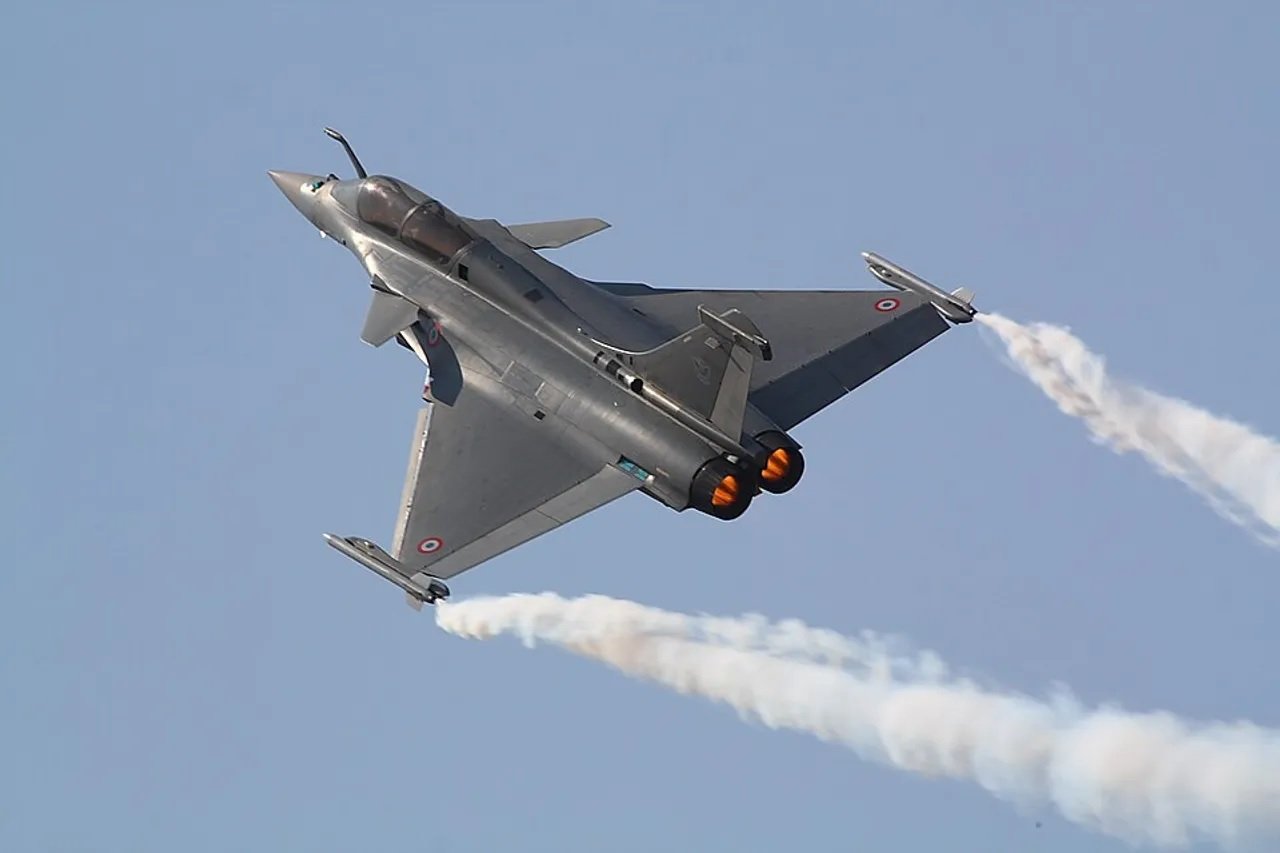
World
NEW DELHI — Russian defense analysts from the Center for Analysis of World Arms Trade (CAWAT) have claimed that export versions of French-made Rafale fighter jets and SCALP-EG cruise missiles supplied to India could contain software and hardware “bookmarks” that might allow their use to be restricted remotely. The claim, reported by RIA Novosti on September 7, comes from an expert study being prepared for publication. CAWAT says the alleged Rafale “bookmarks” could be activated by an external radio-electronic signal and makes a similar claim about SCALP-EG missiles. However, the publicly reported assessment does not provide technical evidence demonstrating that such a remote-disable mechanism exists in India's Rafales or SCALP-EG missiles. What is the basis of the Russian claim? CAWAT's publicly reported argument appears to have two main parts. First, it asserts that export Rafales contain software and hardware “bookmarks” that could be activated by an external signal and that France has a remote capability related to SCALP-EG missiles. Second, it connects this allegation with the May 2025 India-Pakistan fighting, asking whether India's independent use of SCALP-EG could have caused or contributed to the alleged losses of several Rafales. Importantly, CAWAT does not publicly disclose the technical evidence behind the alleged “bookmarks.” The published account does not identify source-code analysis, a tested aircraft system, intercepted activation signals or technical documentation demonstrating the claimed remote-disable function. CAWAT itself says that only competent Indian authorities could determine whether such a connection existed through a detailed investigation. Rafale losses do not establish a “kill switch” CAWAT's reference to alleged Rafale losses therefore cannot by itself establish the existence of a remote “kill switch.” India acknowledged aircraft losses during the May 2025 conflict but did not publicly confirm a Rafale combat loss. A later Indian Air Force support document provides an important piece of indirect evidence: in June 2026, the IAF sought bridge support for its full fleet of 36 Rafales, with the support requirement calculated on the basis of 36 aircraft. Because this document was issued more than a year after the fighting, it is relevant when assessing earlier claims of Rafale losses. it is valid official documentary evidence that the IAF continued to account for and support the fleet as 36 aircraft. India continues to pursue more Rafales India has also continued moving toward the acquisition of 114 additional Rafales under the Multi Role Fighter Aircraft programme. The CAWAT report gives the proposed breakdown as 88 single-seat and 26 twin-seat aircraft, while India's Defence Acquisition Council approved the MRFA procurement process in February 2026. The subsequent procurement process has continued, including India's request to France for the 114-aircraft deal. The decision to continue with a major Rafale acquisition is relevant because India has not publicly indicated that it found a fundamental operational problem with the aircraft following the 2025 fighting. No technical proof of remote deactivation The central issue remains the technical claim itself. CAWAT has not publicly presented source-code analysis, technical documentation, examination of an Indian Rafale, evidence of an external activation signal, or a demonstrated test showing that France can remotely disable India's Rafales or SCALP-EG missiles. Dependence on a foreign manufacturer for proprietary software, updates, maintenance and technical support is not the same as having a remotely activated “kill switch.” Russian defense-market context The assessment also comes as Russia and France remain competitors in India's defense market. This does not prove that CAWAT's claim is politically or commercially motivated, but it makes independent verification important before accepting a serious allegation about French defense equipment. Conclusion The CAWAT assessment remains a hypothesis rather than a demonstrated technical finding. The Russian analysts have not publicly demonstrated that India's Rafales or SCALP-EG missiles contain a remotely activated disabling mechanism. Their reference to alleged Rafale losses during the 2025 fighting also does not establish that any aircraft was disabled by such a system. The later IAF documentation covering all 36 Rafales provides strong indirect official evidence that India continued to account for the complete fleet, while the continued move toward 114 additional Rafales shows that New Delhi remains committed to the aircraft. Without direct technical evidence establishing the alleged mechanism, the Russian “kill switch” claim remains unverified and requires independent examination before it can be treated as an established capability.
Read More → Posted on 2026-09-10 07:58:18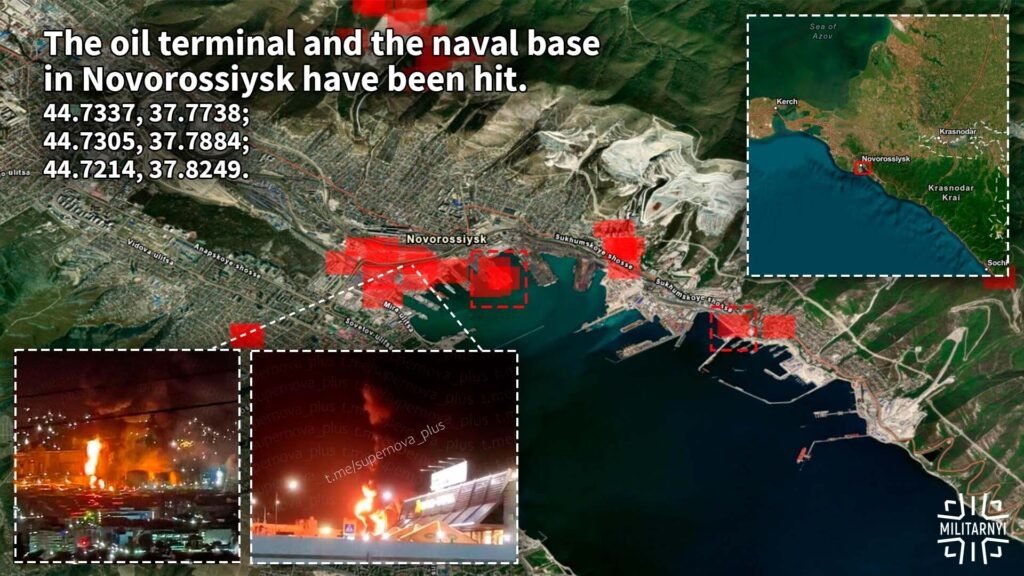
World
KYIV — Ukraine’s Defense Forces and Unmanned Systems Forces (USF) carried out a coordinated strike against Russian military and infrastructure targets in Krasnodar Krai during the night of September 8–9, with the Novorossiysk naval base among the main targets. Robert “Magyar” Brovdi, commander of the USF, said the operation destroyed or damaged several Russian military vessels, including missile carriers used to launch attacks against Ukraine. President Volodymyr Zelenskyy confirmed that Ukrainian forces struck the naval base, military harbor facilities, warships, Kalibr missile carriers and an oil-shipment terminal. The Security Service of Ukraine (SBU) said the operation involved the SBU, USF, Ukrainian Navy, Main Intelligence Directorate and State Border Guard Service. Fuel-oil storage facilities and infrastructure at the Sheskharis terminal were also targeted. Fires and explosions were reported at the naval base and in areas where ships were stationed. NASA’s FIRMS satellite data detected fires near the Black Sea Fleet base and port infrastructure. Open-source analysis reported a fire at the fuel-oil terminal, with at least one storage tank damaged. The terminal handles fuel oil and light petroleum products and has an annual capacity of around 4 million tonnes. Novorossiysk has become a key base for Russia’s Black Sea Fleet after many Russian warships were moved there from Sevastopol following earlier Ukrainian attacks. Ukraine also reported strikes on Russian aviation and air-defense equipment. According to Brovdi, Ukrainian drones destroyed a Russian Su-33 carrier-based fighter and an Mi-8 helicopter near Anapa. Near Gelendzhik, USF operators destroyed a 39N6 Kasta-2E2 360-degree surveillance radar and a 92N6 target-acquisition radar used with Russia’s S-300/S-400 air-defense systems. Ukrainian drone manufacturer Fire Point said FP-1 drones were used in the Novorossiysk operation and struck the fuel-oil terminal, a grain terminal and the naval-base area. Russian authorities confirmed the drone attack and said debris from intercepted drones hit industrial areas and locations near residential buildings. Regional officials reported that four people, including a child, were killed and around 29 injured. Russia’s Defense Ministry said hundreds of Ukrainian drones were intercepted across several regions. Brovdi also reported that Russian personnel losses averaged 411 killed per day in September, compared with 355 per day in August. Between September 1 and 8, the USF claimed to have killed more than 3,300 Russian troops and struck 16,720 Russian military targets. These figures are Ukrainian claims and have not been independently verified. The Ukrainian General Staff said the full extent of the damage from the operation was still being assessed. The strike is part of Ukraine’s continuing campaign against Russian naval, aviation, air-defense and logistical infrastructure supporting military operations against Ukraine. Source : militarnyi
Read More → Posted on 2026-09-09 14:37:50Search
Top Trending in 24 Hours
-
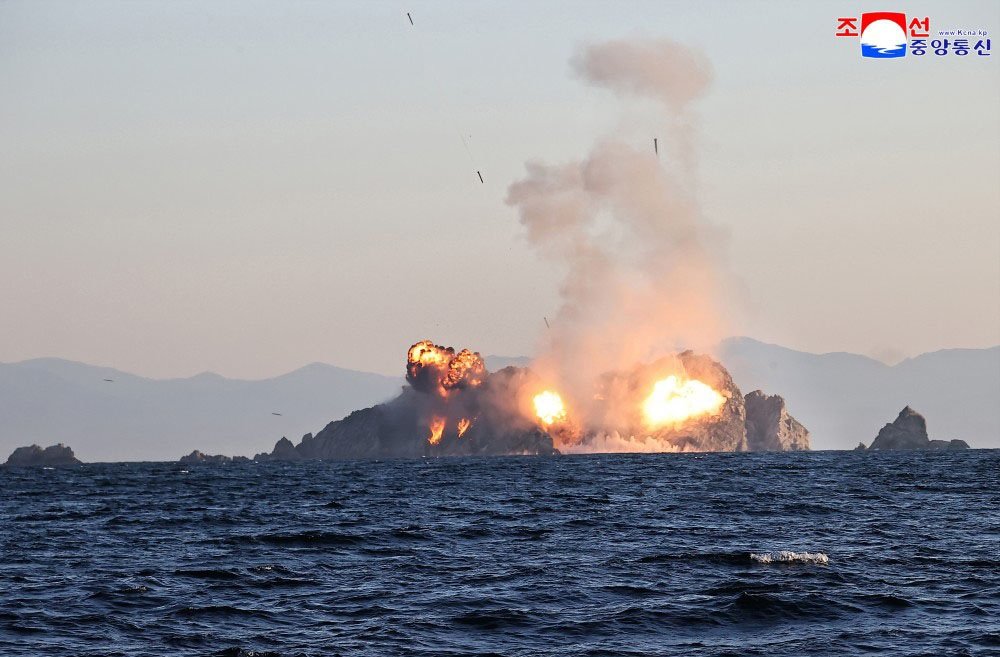 North Korea Fires Short-Range Ballistic Missile Toward Sea of Japan After Freedom Edge 26
-
 India’s xTerra Robotics Launches Indigenous DHAV-Hy Wheeled-Legged Quadruped for Industrial Inspection
-
 U.S. Army Awards $10.64 Million Contract to Ukrainian Drone Maker Skyeton for Raybird Systems
-
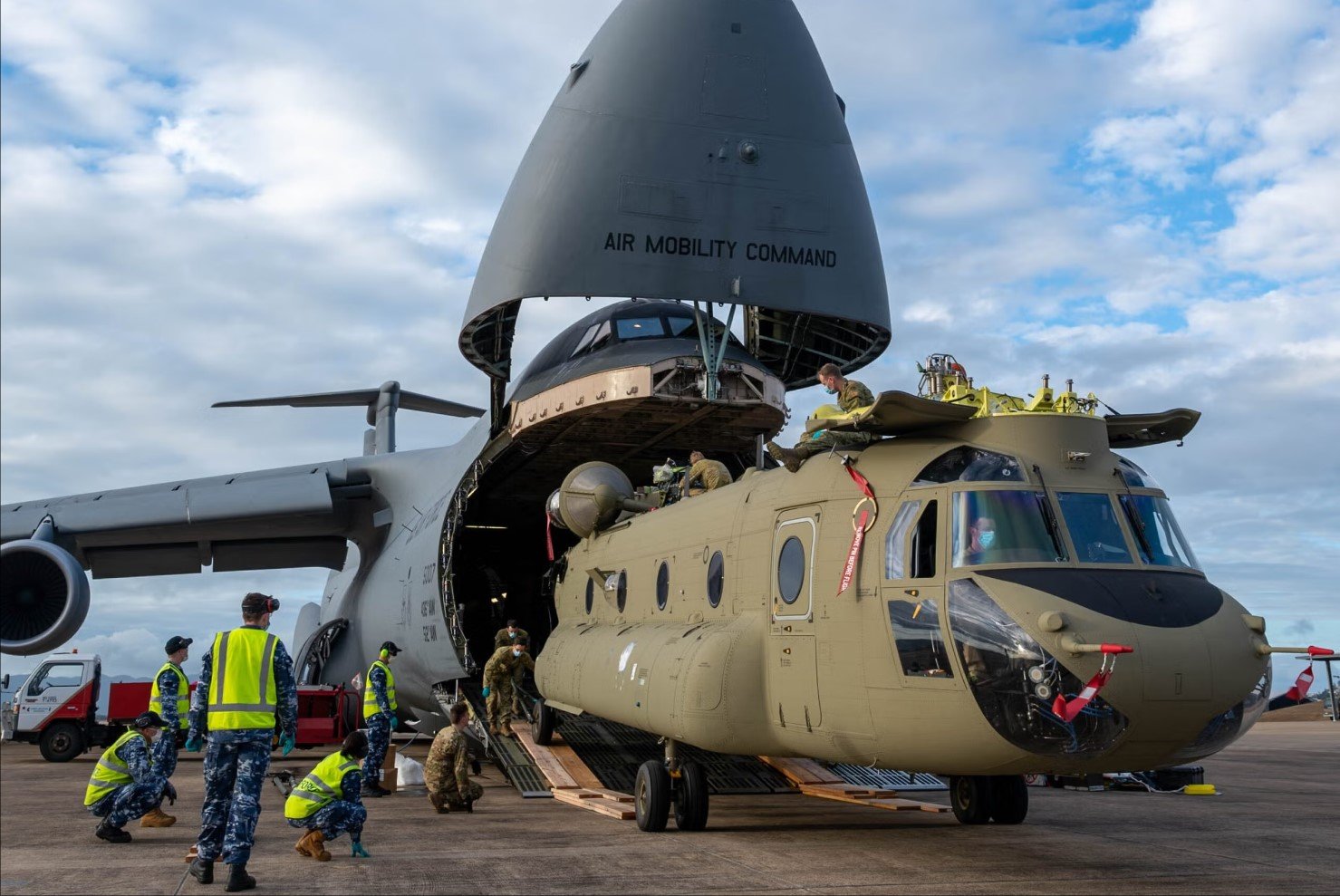 U.S. Delivers First CH-47F Chinook to Egypt Under 12-Helicopter Deal
-
 U.S. Space Force Seeks Rapid-Response Satellites for Close-Range Orbital Inspections
-
 BEL Showcase X-Band Multi-Function Radar for QRSAM to Japanese Delegation
-
 U.S. Government Seizes Almasirah.net, Houthi-Linked News Website
-
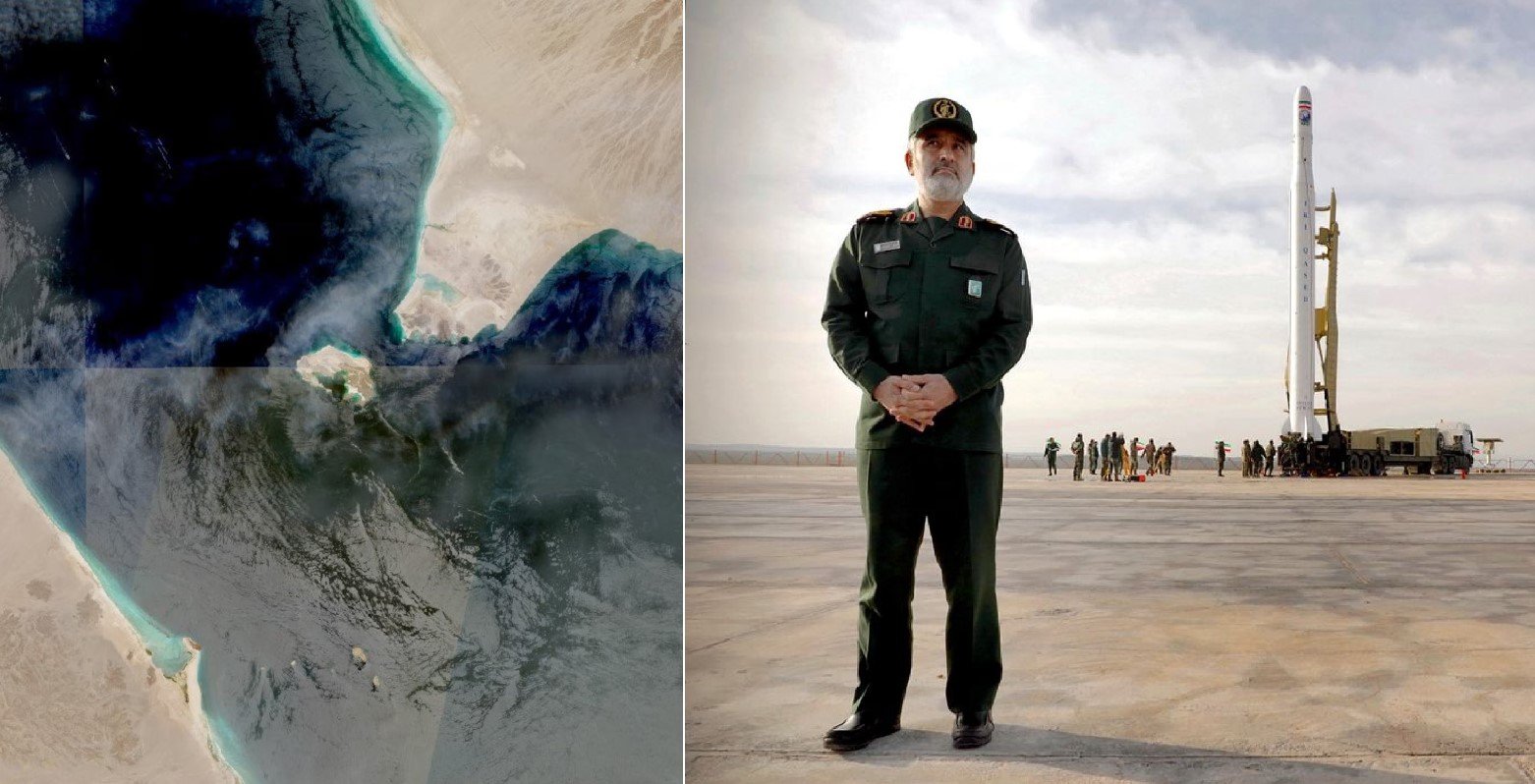 IRGC Experts Visit Bab El-Mandeb to Oversee Radar Installation and Tunneling, Houthi Sources Say
Top Trending in 4 Days
-
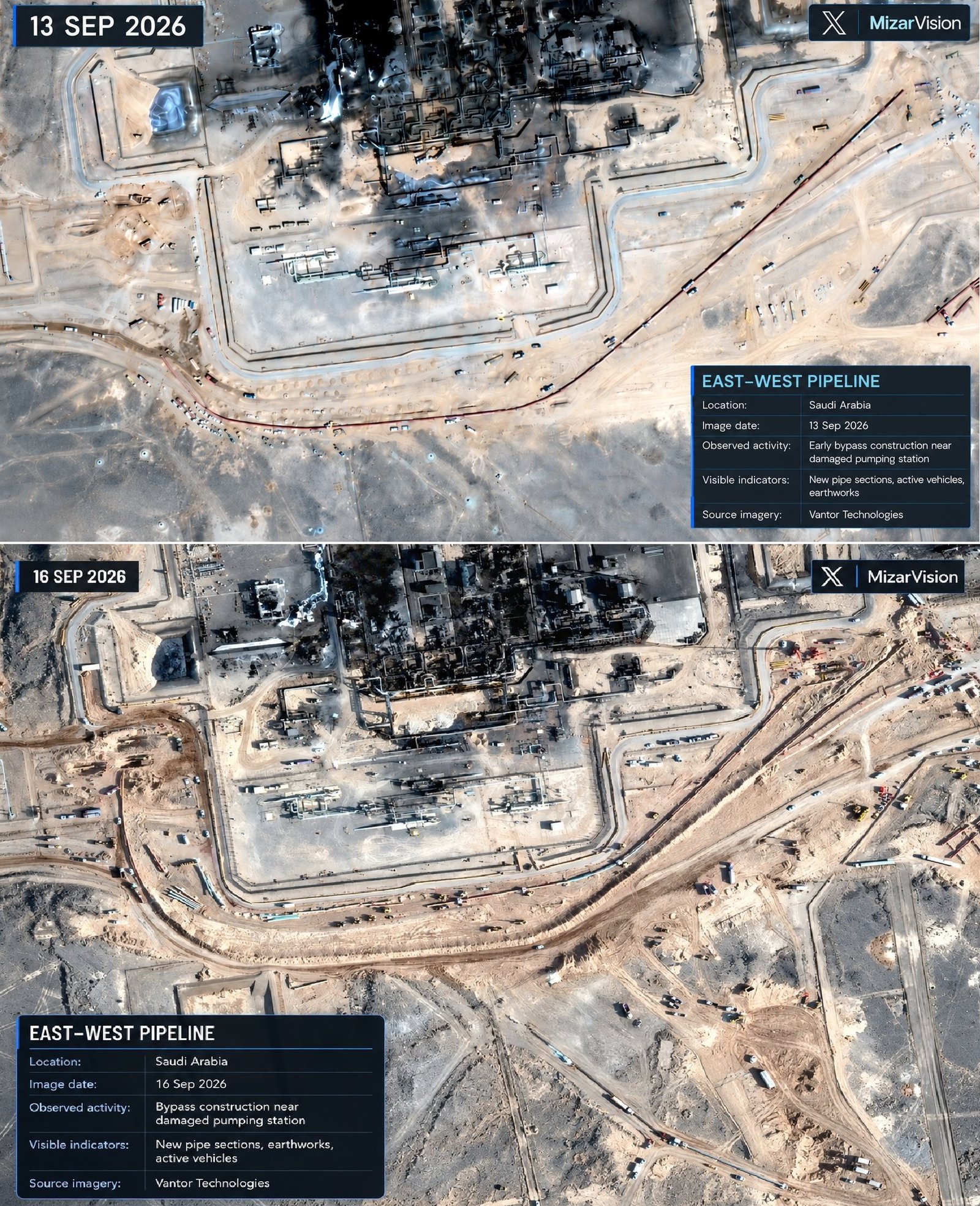 Satellite Images Show Saudi Arabia Building Emergency Bypass Around Damaged East-West Oil Pipeline Station
-
 Sensitive F-35 Components Diverted to Hong Kong, Some Parts Missing
-
 Italian Eurofighter Damaged in Houthi Attack on Saudi Arabia’s King Fahd Air Base
-
 U.S. Secures Permanent Military Rights in Greenland in Historic Security Pact with Denmark
-
 U.S. Approves Potential $2.68 Billion Air Defense Package for Ukraine Including S-300 Clone Missiles
-
 BEL Signs Export Deal with Elbit Systems for Directed Infrared Countermeasure Sub-Assemblies, Secures ₹648 Crore in Additional Orders
-
 China Privately Urges Iran to Restrain Houthis After Saudi Appeal
-
 Israeli Firm Arbe Robotics Unveils Alerion High-Resolution 4D Radar for Counter-Drone Operations