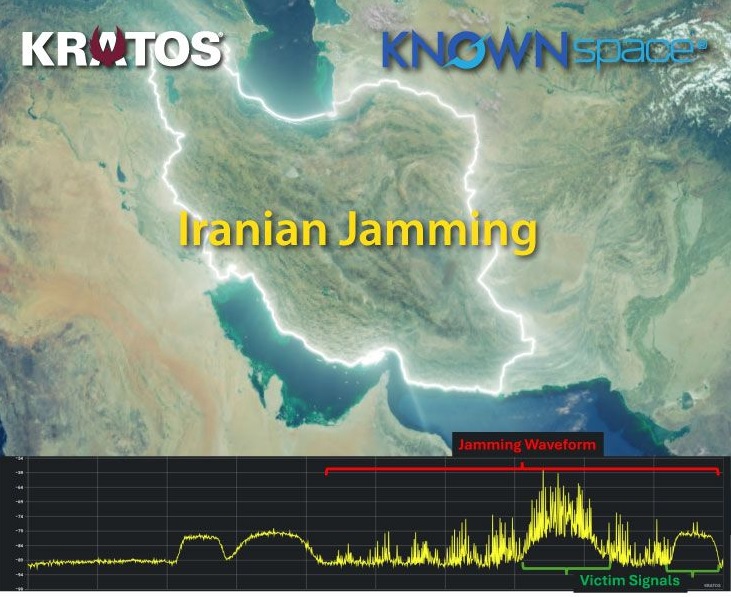
COLORADO SPRINGS, Colo. — Kratos Defense and Security Solutions has reported that its KnownSpace global sensor network detected a new wave of radio frequency (RF) jamming activity originating from Tehran early Wednesday morning, marking the first recorded Iranian electromagnetic interference (EMI) since such activity went quiet earlier this month.
According to Kratos, the interference began at approximately 4:00 a.m. local time. The detection came shortly after the announcement that the recent regional ceasefire had ended, a development that analysts say could lead to increased electromagnetic interference (EMI) activity as regional tensions rise.
The company said the latest jamming event had a limited immediate impact. The interference affected one satellite transponder and lasted for about one hour before the signal ended.
Despite its short duration, Kratos said the event indicates that Iranian RF jamming infrastructure remains operational. The company assessed that the interference patterns are consistent with efforts to disrupt satellite communications (SATCOM) used by U.S., Israeli, and other allied military and civilian operators.
How the Jamming Was Detected
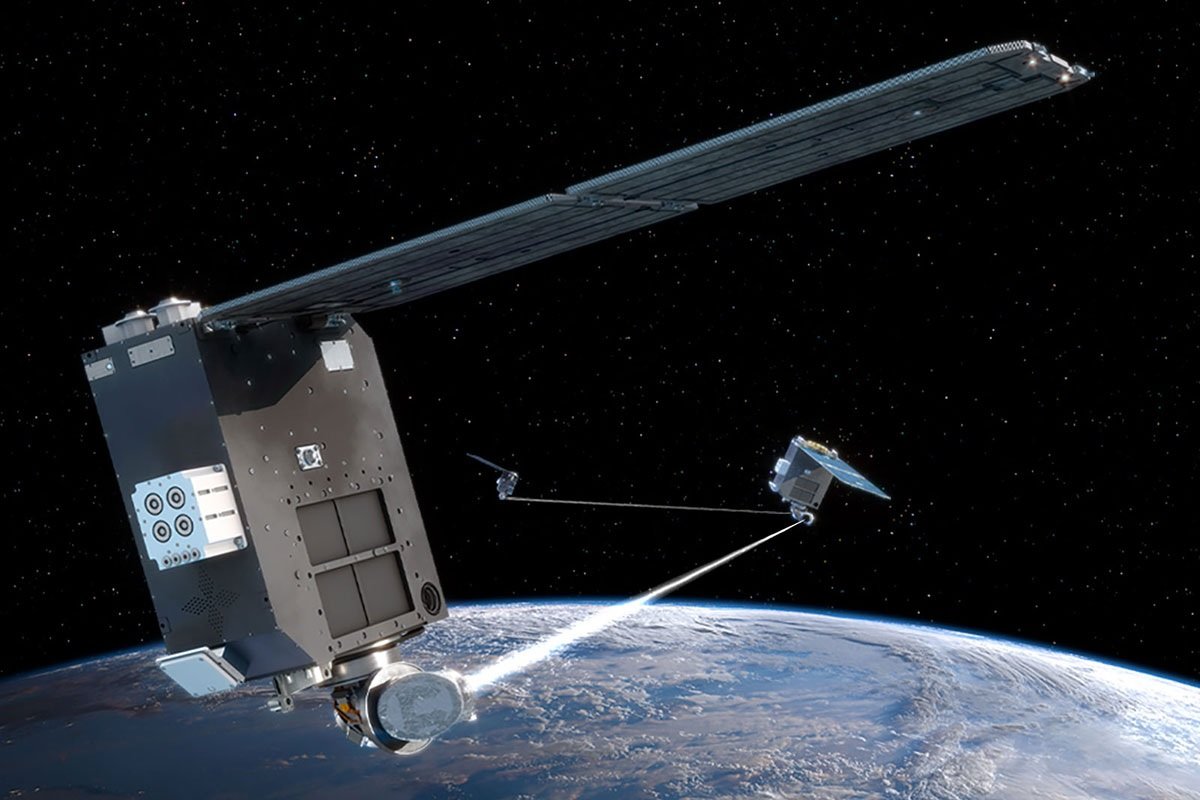
The activity was detected through the KnownSpace Global Sensor Network, a commercially operated space domain awareness system designed to monitor the radio frequency environment around satellites.
Kratos operates more than 190 passive RF sensors across over 19 locations worldwide. Because satellite coverage over the Middle East also extends to these sensor sites, the network can monitor uplink and downlink radio frequency activity occurring within Iran without requiring sensors inside the country.
To determine the source of the interference, Kratos analyzes signal spillover between adjacent satellites. When a jammer transmits energy toward a satellite's uplink frequency, a small portion of that signal spreads to nearby satellites. By measuring differences in signal arrival time and frequency across multiple satellites, analysts can geolocate the origin of the transmission, allowing Kratos to identify Tehran as the source of the jamming activity.
RF jamming generally works by transmitting noise or unmodulated tones on the same frequency used by legitimate satellite communications. This interference can reduce signal quality or prevent receivers from processing the intended communications.
Previous Monitoring of Iranian RF Activity
KnownSpace provides continuous monitoring of geostationary satellite communications and is used to detect, locate, and analyze interference events. Kratos has previously used the network to monitor Iranian RF jamming campaigns affecting commercial communications satellites, with earlier geolocation results frequently pointing to areas near Tehran.
Earlier in 2026, the company reported multiple RF interference events linked to Iranian sources. Those incidents involved several jamming techniques, including high-power modulated transmissions, bandwidth-matched interference, and sweeping signal patterns that affected multiple satellites.
Continued Monitoring
Kratos said it is continuing to monitor the electromagnetic spectrum to determine whether the latest one-hour interference was an isolated event or the beginning of a broader jamming campaign.
The company noted that systems such as KnownSpace support both commercial and defense users by providing independent space domain awareness and tracking satellite communication interference without relying solely on classified monitoring systems.
Source: Kratos Defense and Security Solutions
——— End of Article ———