BEIJING — Chinese defense scientists have published new research outlining advances in high-power microwave (HPM) technology, including a system capable of generating up to 100 gigawatts (GW) of output. According to the study, the technology could provide a lower-cost method of disrupting or damaging low Earth orbit (LEO) satellite networks compared with conventional anti-satellite (ASAT) weapons.
The findings were published this month in the peer-reviewed journal High Power Laser and Particle Beams. The paper was authored by a research team led by Zhang Jun from the College of Advanced Interdisciplinary Studies at the National University of Defense Technology (NUDT), offering a rare public look at China's military research in pulsed-power systems.
The researchers wrote that China's pulsed-power technology has advanced rapidly in recent years due to sustained national strategic requirements.
"Pulsed-power drivers for HPM generation have transitioned from laboratory prototypes to practical applications, evolving progressively from 'functional' to 'high-performance' and 'durable' systems," the paper states.
100-Gigawatt High-Power Microwave System
According to the study, a single pulsed-power driver cannot independently produce sufficient energy because of insulation and engineering limitations. To address this, the NUDT team developed a system that synchronizes multiple compact pulsed-power modules into one integrated platform.
The researchers said this approach allows each module to operate at maximum efficiency while improving the overall power-to-weight ratio.
"Synchronizing multiple compact pulsed-power modules enables each unit to operate at peak efficiency while maximizing its power-to-weight ratio," the team wrote.
Using this design, the researchers said they developed a 100GW-class ultra-high-power pulsed-power system capable of producing tens of gigawatts while remaining within practical size and weight limits. The paper also notes that the system could be further scaled to higher output levels in the future.
New Power System for Extreme Conditions
The study also describes supporting technologies developed alongside the HPM system.
Among them is a lithium-ion capacitor hybrid power system, which the researchers say allows rapid activation while providing stable electrical output. According to the paper, the system can operate in temperatures as low as minus 40 degrees Celsius, making it suitable for use in cold-weather and polar environments.
The publication also describes all-solid-state pulsed-power systems designed for different operational requirements. According to the researchers, Chinese institutions have developed multiple gigawatt-class HPM systems, and some have already been delivered to military users.
Potential Impact on Low Earth Orbit Satellites
High-power microwave weapons generate intense electromagnetic pulses that can interfere with or damage electronic systems.
According to the paper, microwave pulses of around 1 gigawatt are generally considered capable of causing severe electronic interference or permanent hardware damage to satellites operating in low Earth orbit.
The researchers state that a 100GW-class system could pose a significant threat to large satellite constellations, including SpaceX's Starlink, particularly if such networks are being used for military purposes.
The paper also notes that using directed microwave energy for anti-satellite missions could offer a lower-cost alternative to traditional kinetic anti-satellite missiles while avoiding the creation of orbital debris.
Broader Research in High-Power Microwave Technology
The publication also references other Chinese developments in the field.
Earlier in 2026, researchers at the Northwest Institute of Nuclear Technology in Xi'an reported the development of the TPG1000C system, which they said can continuously generate 20 gigawatts of output for up to one minute. The reported system weighs about five tonnes and is approximately four meters long.
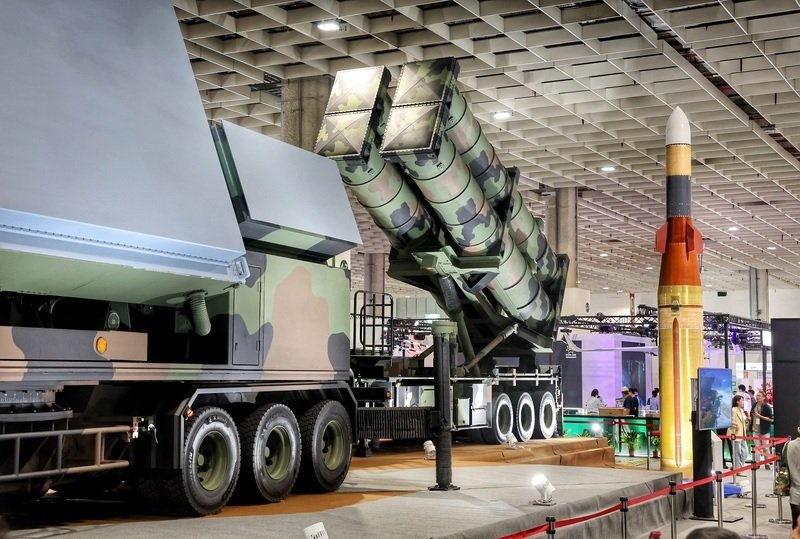
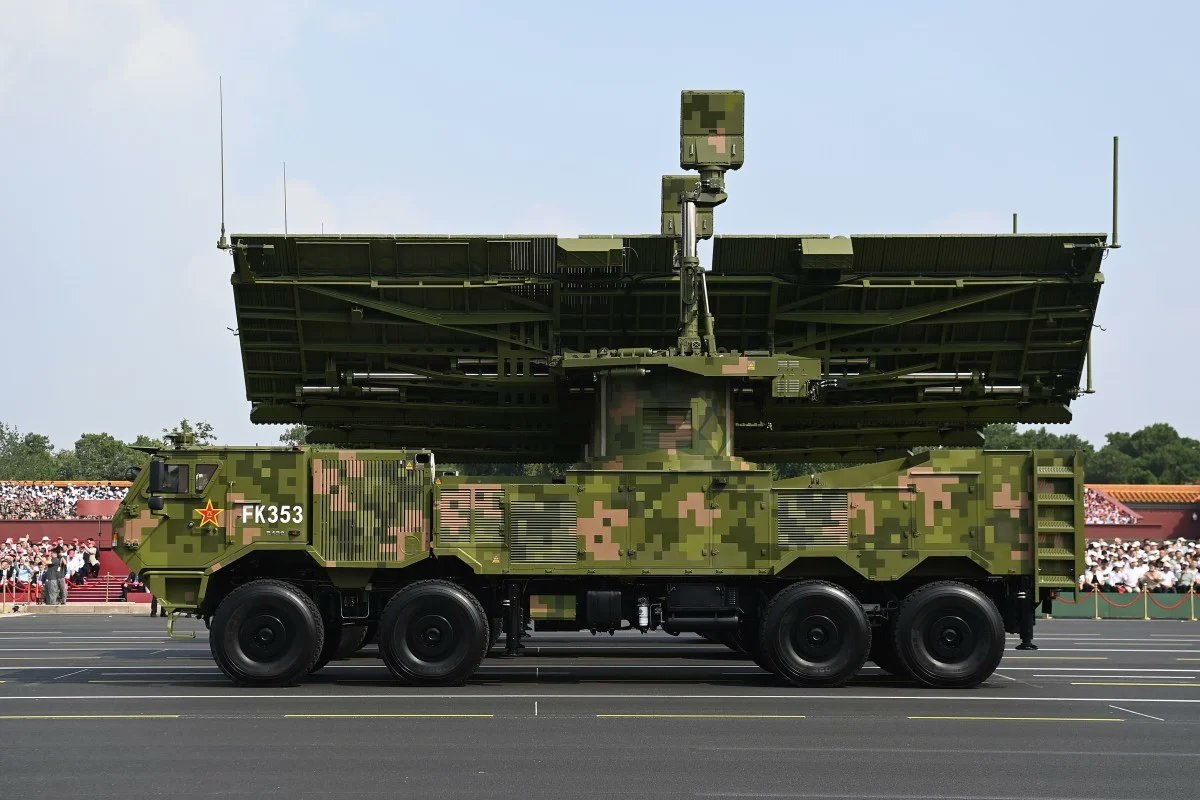
China has also displayed mobile ground-based HPM systems, including the Hurricane 2000 and Hurricane 3000, at the Zhuhai Air Show. These systems are designed primarily for shorter-range missions such as counter-drone operations.
Future Development
The NUDT researchers said future work will focus on improving beam control precision while reducing the size, weight, and manufacturing cost of HPM systems.
The paper also states that China's research in pulsed-power technology has expanded significantly in recent years, with the researchers describing the country's work in the field as being among the world's leading efforts.
The publication provides one of the most detailed public descriptions to date of China's ongoing research into high-power microwave technology and its potential military applications, particularly in electronic warfare and operations involving low Earth orbit satellite systems.
——— End of Article ———