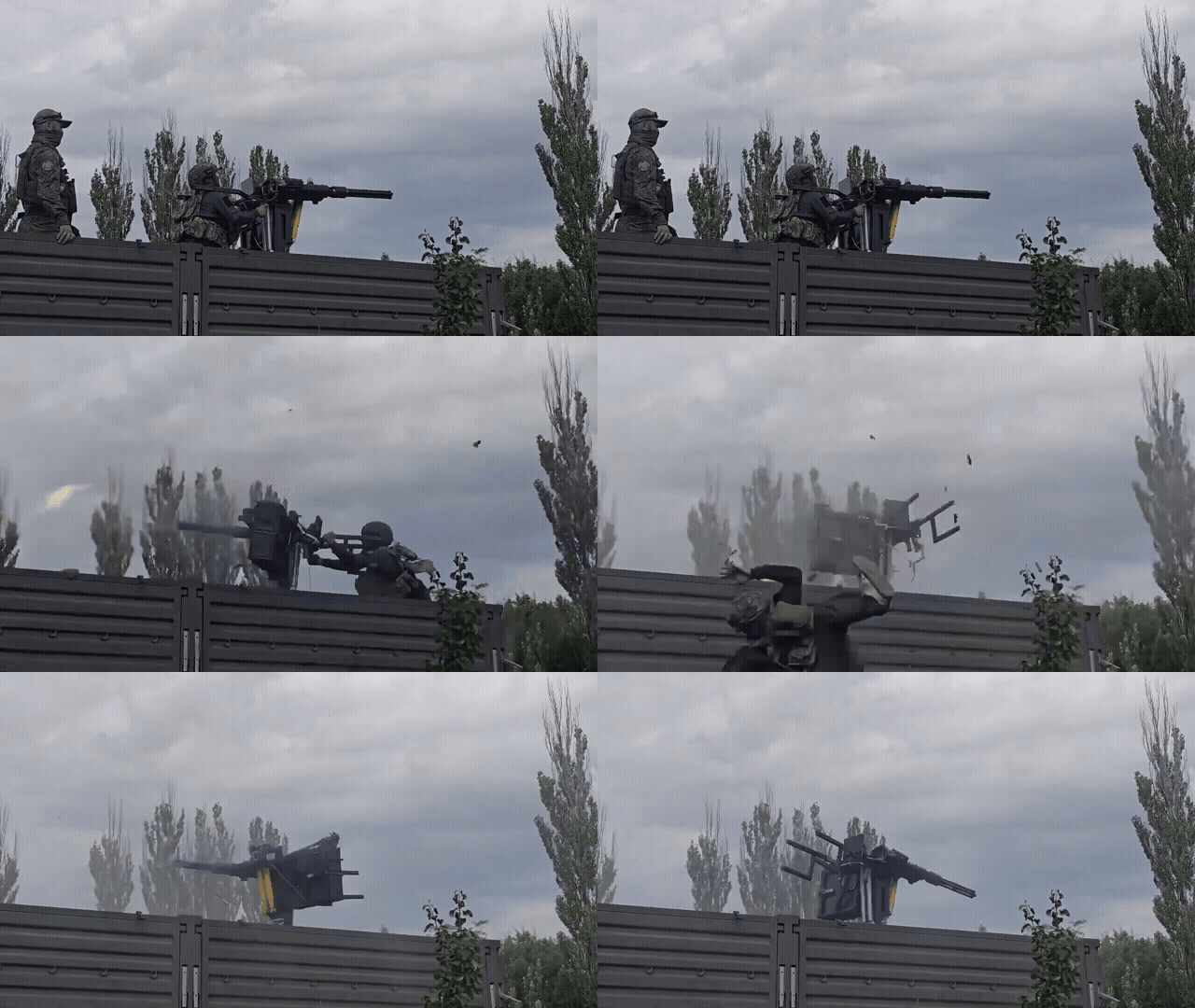
MOSCOW, Russia — A Russian mobile air defense training exercise involving a repurposed YakB-12.7 heavy machine gun ended with the operator losing control of the weapon after it was fired from an improvised rotating mount, according to recently circulated video footage.
The footage shows the YakB-12.7, originally designed for the Mi-24 "Hind" attack helicopter, being used in a ground-based anti-drone role. Moments after firing begins, the weapon and its mount rotate violently, causing the operator to lose control while nearby personnel move away from the area. There has been no official confirmation of fatalities or injuries resulting from the incident.
Aircraft Weapon Repurposed for Ground Defense
The Yakushev-Borzov YakB-12.7 is a four-barreled, gas-operated rotary heavy machine gun chambered in 12.7×108mm ammunition. Developed by the Soviet Union in 1973, it was designed specifically for the Mi-24 attack helicopter and is capable of firing between 4,000 and 5,000 rounds per minute.
The weapon forms the primary armament of the USPU-24 (Unified Machine Gun Installation) mounted beneath the nose of the Mi-24. In helicopter service, it is installed in the specially engineered VSPU-24 turret, which is designed to absorb the weapon's significant recoil and firing forces while maintaining stability during operation.
Russian mobile air defense groups have increasingly adapted helicopter-mounted weapons such as the YakB-12.7 for use on trucks and static firing positions as part of efforts to counter Ukrainian FPV and kamikaze drones.
Improvised Mount Lost Stability During Firing
Analysis of the training footage indicates that the machine gun was installed on a rotating turret with the weapon positioned offset from the turret's axis of rotation. Such a configuration left the firing platform unable to properly counter the forces generated by the weapon.
The YakB-12.7 produces extremely high recoil and torque because of its high cyclic firing rate. Once the trigger was pulled, the uneven distribution of force caused the entire mount to rotate rapidly, pulling the weapon out of the operator's control.
The improvised mounting system lacked several features normally required for weapons of this class, including:
- A heavily stabilized base
- A locking mechanism to prevent rotation
- Recoil dampening equipment
- Proper counterweights to balance the system
Without these engineering measures, the rotating stand acted as a pivot instead of a stable firing platform.
Frontline Adaptation Reflects Equipment Challenges
The incident highlights the engineering difficulties involved in adapting aircraft weapons for ground combat roles.
Military analysts have noted that Russian frontline units have increasingly relied on locally produced or improvised equipment to meet operational requirements. Reported shortages of standardized machine gun mounts have led mechanics, engineers and military personnel to assemble field-built solutions designed to fill immediate tactical needs.
While such adaptations can provide additional capabilities against drone threats, they may not always incorporate the engineering standards required to safely manage high-recoil weapon systems.
Historical Examples Show Importance of Stabilization
Military engineering has previously demonstrated that off-center weapon placement can be successful when supported by dedicated stabilization systems.
One Cold War-era West German experimental tank project featured an off-center main gun, but engineers incorporated a turret locking mechanism that secured the turret before firing. The vehicle's crew was also positioned in a separate protected capsule isolated from the rotating components.
By comparison, the improvised Russian mounting system shown in the training exercise did not include comparable locking mechanisms, stabilizers or counterbalancing measures, resulting in the loss of control when the YakB-12.7 was fired.
The incident highlights the importance of proper mounting design, recoil management, and stabilization when adapting high-rate-of-fire aircraft weapons for ground-based anti-drone operations.
——— End of Article ———