TEHRAN/WASHINGTON — Newly released commercial satellite imagery analyzed by CNN in collaboration with the Institute for Science and International Security (ISIS) indicates that Iran may have begun repairing and rebuilding several nuclear-related facilities damaged during U.S. and Israeli airstrikes earlier this year.
The imagery, captured between June and early July 2026, has raised questions about whether the observed reconstruction work is consistent with a 14-point Memorandum of Understanding (MoU) signed between the United States and Iran in late June.
Repair Activity Seen at Parchin and Pickaxe Mountain
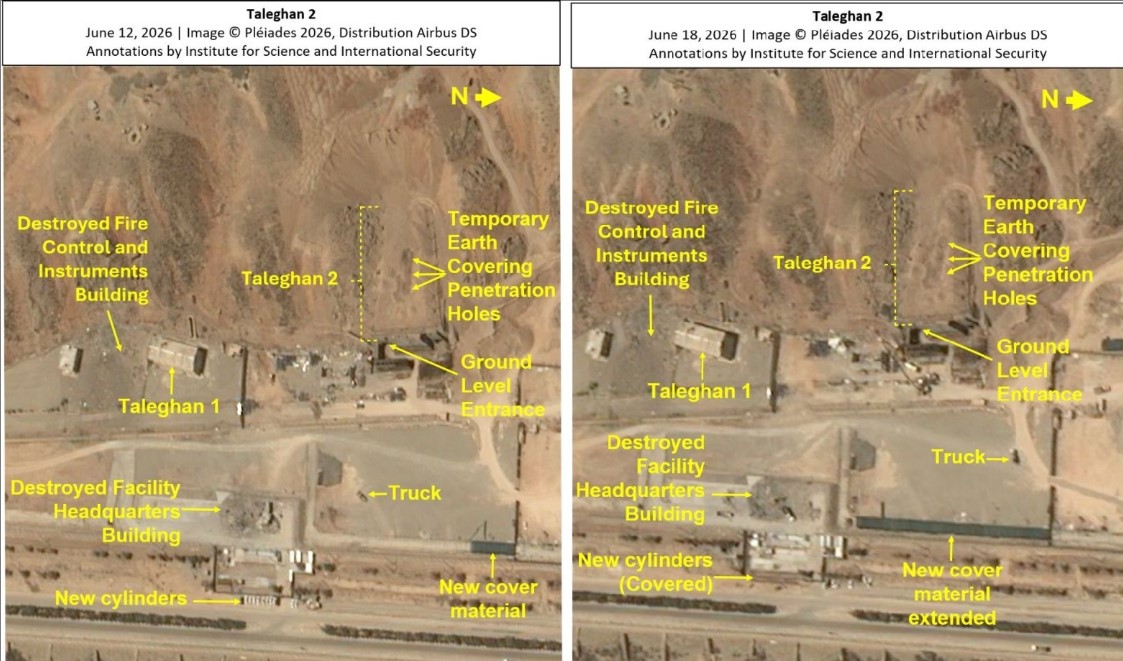
According to the analysis, one of the most significant developments has been observed at the Taleghan 2 facility inside the Parchin military complex, southeast of Tehran. The site has long been associated by Western analysts with nuclear weapons-related research, although Iran has consistently denied pursuing nuclear weapons.
Satellite images show workers excavating around three bomb impact points created during earlier airstrikes. Initial cleanup involved placing temporary dirt coverings and protective screening over the damaged areas. Later images show steel reinforcing mesh installed before fresh concrete was poured to strengthen the hardened roof. Construction equipment, including cranes and concrete mixing trucks, was also visible operating at the site.
Another location showing increased activity is Pickaxe Mountain, an underground facility located near Iran's Natanz uranium enrichment complex. The imagery shows construction vehicles regularly entering and leaving tunnel entrances. Analysts also identified a newly built security wall around the site, while tunnel portals appear to have been extended and covered with gravel and sand as part of ongoing engineering work.
Military Bases Also Show Signs of Repairs
Beyond nuclear-related locations, the satellite imagery also indicates repair work at several Iranian military facilities affected during previous strikes.
At Tabriz Air Base, analysts observed that a runway crater caused by earlier attacks had been filled with concrete. Additional repair work has also been reported at several missile storage facilities and military bases.
However, the latest available imagery does not show visible reconstruction work at Iran's major uranium enrichment facilities, including Natanz, Fordow, and Isfahan, which were also targeted during the conflict.
Questions Over Compliance With U.S.-Iran Memorandum
The reconstruction activity has drawn attention because it appears to have taken place while a 14-point Memorandum of Understanding (MoU) between Washington and Tehran was still in effect.
The agreement, signed in late June 2026 following weeks of military tensions, reportedly included Iranian commitments not to develop or acquire nuclear weapons and to maintain the status quo at its nuclear facilities during the negotiation period.
According to the CNN and Institute for Science and International Security analysis, repair work at locations such as Taleghan 2 appears to have started while the agreement remained active. Analysts cited in the report said such activity could raise questions about whether the work was consistent with the commitments outlined in the memorandum.
The diplomatic arrangement later broke down after U.S. President Donald Trump stated that the agreement was no longer in effect, followed by additional U.S. military strikes against Iran earlier this week.
Satellite Analysis Highlights Ongoing Recovery Efforts
The imagery suggests that while earlier strikes disrupted operations at several nuclear-related facilities, Iran has begun clearing debris and restoring damaged infrastructure at selected locations.
The Institute for Science and International Security said its assessment of the commercial satellite images points to substantial reconstruction work, particularly at the Taleghan 2 facility, including repairs to damaged structures and reinforcement of impacted areas.
Experts also note that commercial satellite imagery provides valuable insight into activity at restricted sites, but it cannot by itself determine the exact purpose of construction work. They say independent verification by inspectors from the International Atomic Energy Agency (IAEA) would be necessary to fully assess the condition of Iran's nuclear facilities and any implications for its nuclear program.
Iran continues to maintain that its nuclear program is intended solely for peaceful purposes, while several Western governments have expressed concerns over activities they believe could support nuclear weapons development. The latest satellite imagery adds new information to ongoing international discussions about Iran's nuclear activities and compliance with previous agreements.
Source: CNN / isis-online
——— End of Article ———