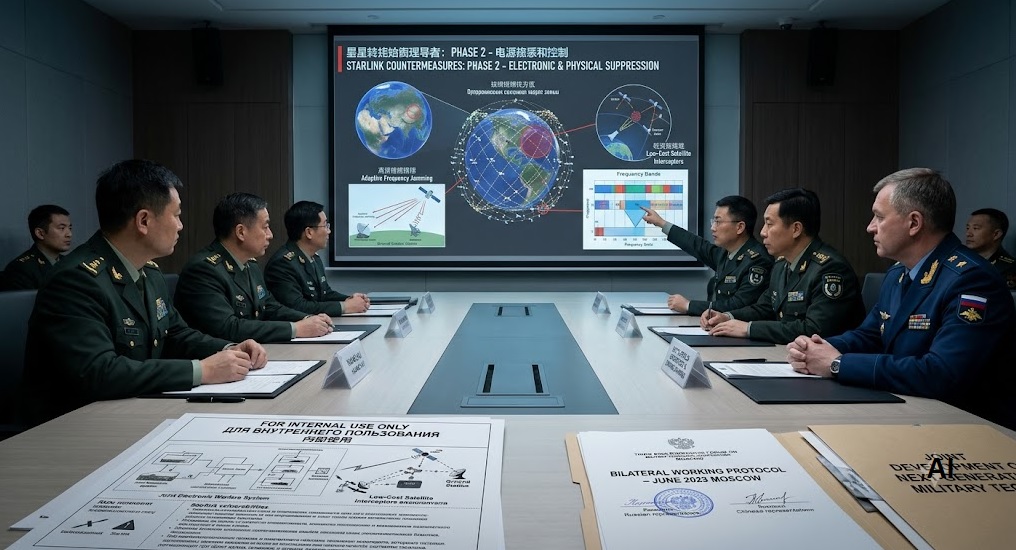
A joint investigation by The Insider, Der Spiegel, and Le Monde has revealed classified documents outlining an extensive military-technical cooperation program between Russia and China, including a proposed multi-layered strategy to counter SpaceX's Starlink satellite communications network.
The investigation is based on documents obtained by journalists, including four presentations delivered at the Third China-Russia Forum on Military-Technical Cooperation held in Guangzhou, China, in November 2023, and a signed bilateral working protocol following negotiations in Moscow in June 2023. According to the report, the Guangzhou forum was a regularly scheduled bilateral meeting that had never been publicly disclosed.
Five Areas of Military Cooperation
According to the leaked documents, Russia and China discussed cooperation across five major defense sectors:
- Space weapons and satellite destruction capabilities
- Integrated air and missile defense systems
- Autonomous loitering munitions operating in swarm mode
- Next-generation combat armored vehicles
- Military aviation
The documents suggest that both countries are seeking to expand cooperation by combining Russian operational experience with Chinese industrial and technological capabilities.
Presentation Focused on Countering Starlink
One of the presentations obtained by investigators was dedicated entirely to measures aimed at countering Starlink, the satellite communications network operated by SpaceX.
The presentation was delivered by Huang Hui and Ren Jie, researchers from the China Aerospace Science and Technology Corporation (CASC), China's primary state-owned space contractor responsible for the Long March launch vehicle family and a significant portion of the country's military satellite infrastructure.
The document, classified for internal use, describes Starlink as having evolved beyond a commercial broadband system into communications infrastructure supporting military operations. It highlights the constellation's distributed architecture, arguing that the absence of a central relay node makes it difficult to disable through conventional means.
According to the presentation, Starlink's large number of satellites in low Earth orbit and its use of radio spectrum create what the authors describe as a "space blockade," which they argue limits opportunities for competing satellite systems.
Three-Level Proposal Against Starlink
The presentation outlines a three-level approach for Russia and China to counter the Starlink network.
Legal and Diplomatic Measures
The first level proposes coordinated legal and diplomatic efforts aimed at slowing Starlink's expansion.
According to the documents, Russia and China would argue that the growing number of satellites in low Earth orbit increases the risk of orbital collisions. The proposal recommends forming an international coalition to seek regulatory restrictions on further deployment of the Starlink constellation through international regulatory organizations.
Frequency Competition and Electronic Countermeasures
The second level focuses on radio spectrum and orbital resources.
The documents propose that Russia and China jointly apply for frequency bands and orbital slots required for future Starlink expansion in an effort to complicate further deployment through international regulatory processes.
The presentation also recommends creating a joint electronic countermeasure architecture using power suppression and adaptive interference technologies to selectively disrupt Starlink communications in specific geographic areas. It proposes integrating Chinese and Russian counter-satellite programs under common technical standards.
Cyber Operations and Physical Countermeasures
The third level combines cyber and physical measures.
According to the presentation, researchers propose cyber operations targeting civilian Starlink user terminals through methods including spoofed access, malware infection, and exploitation of software vulnerabilities. The stated objective is to spread malicious code through the network and cause what the document describes as "network paralysis."
The presentation also discusses developing low-cost interceptor systems based on a "one-against-many" concept. According to the authors, the goal would be to create weapons inexpensive enough to destroy satellites faster than SpaceX could replenish the constellation through continued launches.
The document further recommends expanding cooperation with other interested countries in what it describes as a technical alliance against Starlink.
Secret Military Negotiations in Moscow
The investigation also reveals previously undisclosed negotiations held in Moscow in June 2023.
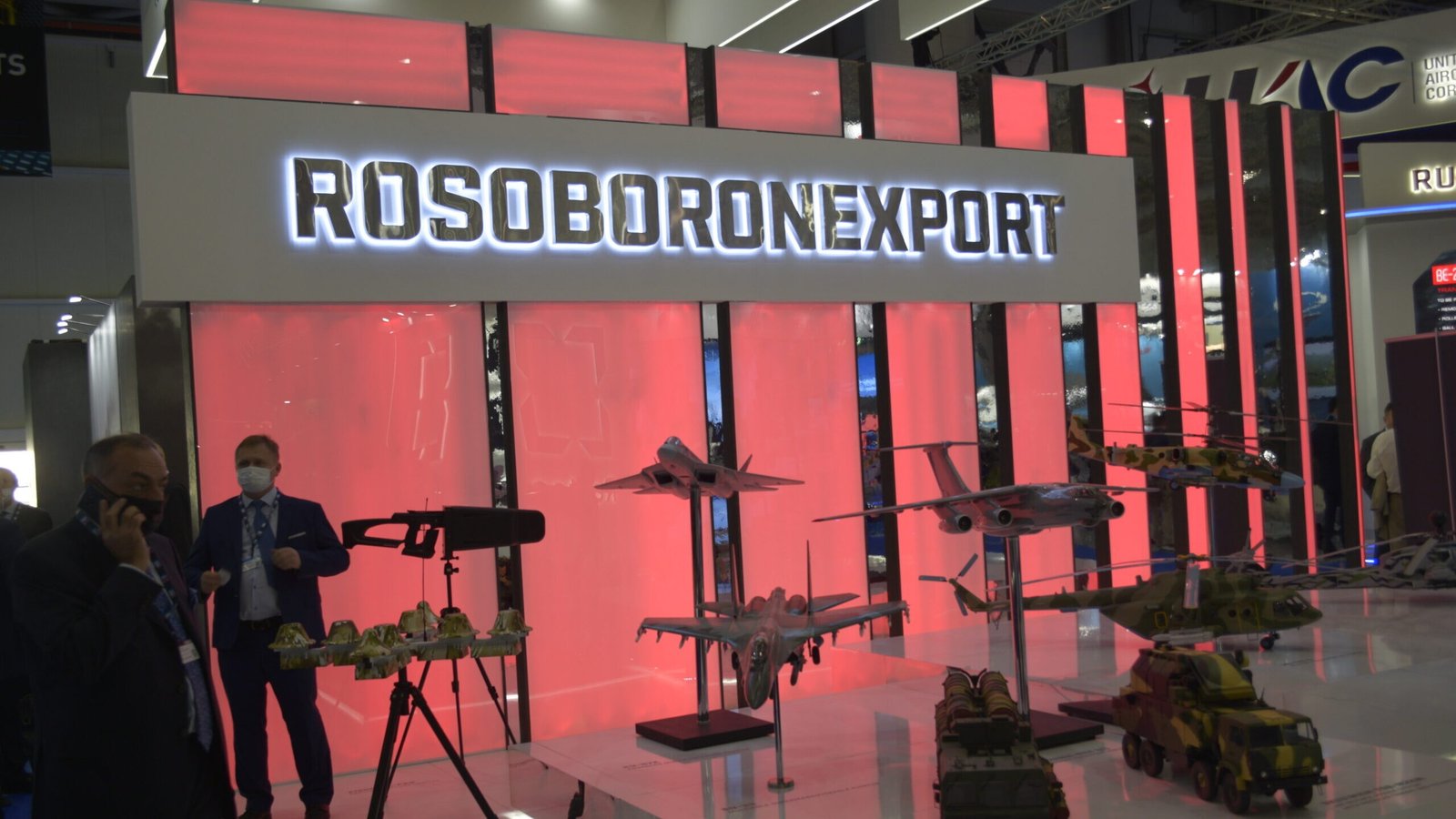
According to the signed working protocol, a Chinese military delegation led by Colonel Tong Xiaofeng, Deputy Director of the Bureau of Technical Cooperation under China's Central Military Commission, met with representatives from Rosoboronexport, Almaz-Antey, and NPO Almaz.
The Russian delegation included senior officials such as Andrey Kovalev, Deputy Director of Rosoboronexport's Research and Technology Department, and Pavel Sozinov, General Designer of Almaz-Antey.
During the visit, the Chinese delegation also toured the Tikhomirov Research Institute of Instrument Making (NIIP) in Zhukovsky, which develops radar systems including the Belka radar used on Russia's Su-57 fighter aircraft.
Joint Air and Missile Defense Program
According to the protocol, both countries agreed to cooperate on the development of an integrated low-altitude air defense and terminal-phase ballistic missile defense system.
The proposed system is intended to intercept medium-range ballistic missiles, maneuvering warheads, and hypersonic missiles.
The technical objectives outlined in the documents include intercepting ballistic missiles with ranges of up to 4,000 kilometers, engaging maneuvering targets capable of 25g lateral acceleration, and intercepting hypersonic threats at altitudes of up to 40 kilometers.
The protocol also calls for joint research into cross-domain missile defense technologies, coordinated use of ground, air, and electronic warfare assets, and automated control of multi-role missile systems. It states that Russia would provide a draft contract and commercial proposal to China by August 2023, with negotiations continuing later that year in Beijing.
Exchange of Battlefield Experience and Technology
The investigation also describes discussions held during the Fourth China-Russia Forum on Military-Technical Cooperation, which took place in Yekaterinburg in December 2024.
According to a presentation by Li Rong of the PLA Academy of Military Sciences, China proposed a structured exchange in which Russia would provide battlefield data and operational experience gained during the war in Ukraine.
The documents state that China has developed approximately 160 types of loitering munitions produced by more than 50 manufacturers, but lacks large-scale combat experience in their operational use.
In return, China proposed providing artificial intelligence technologies and mass-production capabilities to jointly develop a new generation of autonomous swarm drones.
The documents also discuss expanding cooperation on supply chains affected by international sanctions. According to the presentation, China would provide microchips and electronic components, while Russia would supply raw materials and other components that are more difficult for China to obtain.
Additional Areas of Cooperation
Other presentations reviewed during the investigation examined lessons from the war in Ukraine for future armored vehicle development.
According to the documents, Chinese researchers analyzed the destruction of Russian armored vehicles using anti-tank guided weapons, drones, and precision strike systems. The findings were presented as a basis for developing future armored combat vehicles equipped with artificial intelligence, active protection systems, unmanned turrets, and integrated drone swarm capabilities.
A separate presentation from the Aviation Industry Corporation of China (AVIC) outlined proposals for expanding cooperation in military aviation through joint laboratories, technology sharing, intellectual property cooperation, and collaborative research.
The findings, published by The Insider in partnership with Der Spiegel and Le Monde, describe a structured and expanding military partnership between Russia and China spanning space, missile defense, drones, armored vehicles, aviation, and advanced military technologies.
Source: Insider
——— End of Article ———