WASHINGTON — The U.S. Army has declared its first Dark Eagle hypersonic missile battery fully fielded and ready for combat deployment, nearly three years behind its original 2023 schedule. Lieutenant General Frank (Francisco) Lozano, the Army's senior acquisition official for long-range fires, confirmed the development in a November 19 interview with Breaking Defense.
“It is fully fielded. It is ready to go,” Lozano said. He confirmed that the battery has the equipment and personnel required for combat missions. However, the Army has not disclosed its deployment location or the exact date it achieved full operational status. Some ground support vehicles were delivered as early as 2021.
Testing and Production Delays
Dark Eagle, officially known as the Long-Range Hypersonic Weapon (LRHW), was originally scheduled to enter service in 2023. Its development faced repeated delays due to launcher testing problems and missile production issues.
During attempted tests at Cape Canaveral, Florida, in March and September 2023, launches were cancelled before liftoff because of pre-flight check failures involving the launcher and ground support equipment. Successful full-system flight tests followed in June and December 2024.
However, manufacturing and quality-control problems at Lockheed Martin delayed further deliveries. A July 2026 Government Accountability Office (GAO) report found that production was running at roughly half the output required by the Pentagon. The Army and Navy temporarily paused production to address defects.
Lozano said the Army introduced stricter component testing covering solid rocket motors, guidance sections, navigation units and seekers. The Army and Navy completed another successful joint flight test in March 2026.
Dark Eagle Range and Capabilities
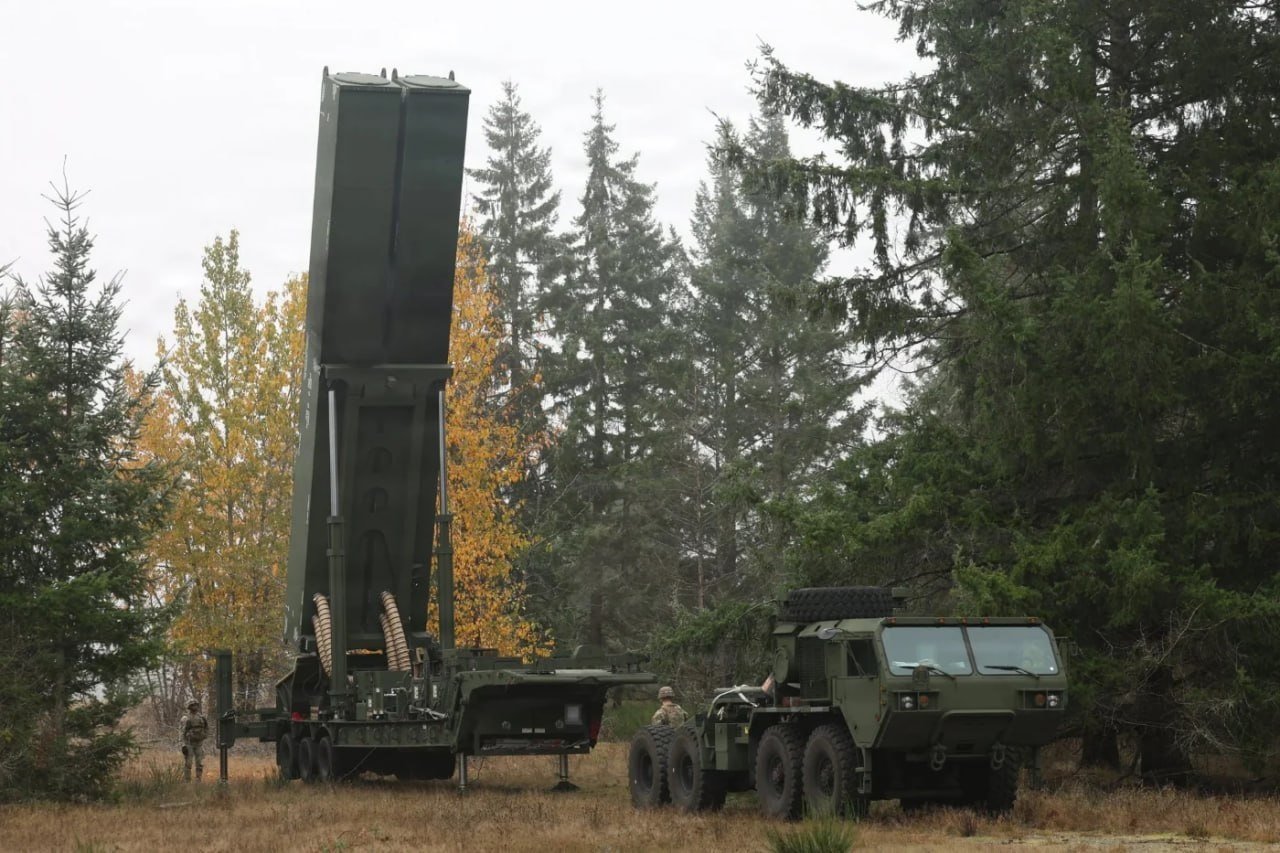
A standard Dark Eagle battery includes four trailer-mounted launchers, a battery operations centre and support vehicles. Each launcher carries two missiles, giving the battery a total of eight missiles.
The system has a reported range of approximately 1,725 miles (2,775 kilometres) and a speed exceeding Mach 5, or 3,800 mph (more than 6,100 km/h). Lozano has previously said the range is sufficient to reach mainland China from Guam.
Lockheed Martin builds the rocket booster and launch equipment and integrates the system, while Dynetics develops the unpowered hypersonic glide body. The glide body separates from the booster and manoeuvres towards hardened and high-value targets.
Dark Eagle uses the Common Hypersonic Glide Body, which is also part of the U.S. Navy's Conventional Prompt Strike programme.
Army Training and Future Batteries
Soldiers from the 5th Battalion, 3rd Field Artillery Regiment, associated with the 1st Multi-Domain Task Force at Joint Base Lewis-McChord, Washington, have trained on Dark Eagle since 2021. Army units also practised moving and operating the system during Exercise Talisman Sabre 2025 in Australia and Exercise Valiant Shield 2026 in the Pacific, including training on Guam.
The Army is now developing its second and third batteries. According to the July 2026 GAO assessment, the second battery is expected in early 2027. Lozano said production of the third battery is already more than halfway complete.
The Army also wants to bring two or three additional defence contractors into future production to reduce supply bottlenecks and accelerate deliveries. The service expects subsequent batteries to reach operational readiness faster than the first.
The first battery's readiness marks a major programme milestone, as the Army moves towards expanding its ground-based hypersonic strike capability.
——— End of Article ———