CHARLEROI, Belgium — Europe has opened its largest satellite manufacturing facility in Belgium as the European Union moves forward with plans to build its own satellite communications network, IRIS², as an alternative to Elon Musk's Starlink.
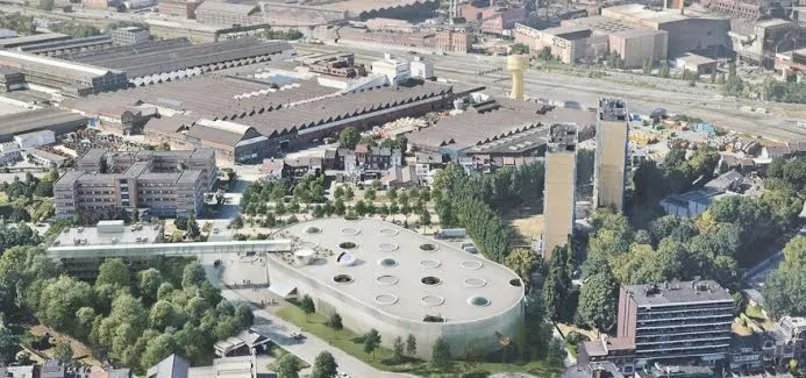
Belgium's King Philippe inaugurated the 20,000-square-metre factory on November 24 in Marcinelle, near Charleroi. Built by Belgian aerospace company Aerospacelab, the facility can produce up to 500 satellites annually, making it Europe's largest satellite factory and the third-largest globally by production capacity.
€2.4 Billion Contract for IRIS² Satellites
The factory will serve as the main production centre for the EU's IRIS² (Infrastructure for Resilience, Interconnectivity and Security by Satellite) programme.
In September 2026, Aerospacelab secured a €2.4 billion contract to design and deliver 264 low-Earth-orbit (LEO) satellites, representing approximately 76% of the planned 348-satellite constellation.
Other European companies will supply the remaining spacecraft. Airbus Defence and Space will build 66 LEO satellite platforms, Germany's OHB will supply 18 medium-Earth-orbit satellites, and Thales Alenia Space will provide communications payloads.
IRIS² aims to provide encrypted and resilient communications for European governments, defence agencies and military users, alongside broadband services for businesses and citizens. In August 2026, the European Commission and the SpaceRISE consortium, led by Eutelsat, SES and Hispasat, expanded the constellation from 282 to 348 satellites, increasing planned secure government communications capacity by 60%. The programme's estimated cost is €15.6 billion.
€100 Million Investment and Company Rebranding
The factory represents an investment of approximately €100 million. Its 20,000-square-metre area includes 7,000 square metres of production space and 4,000 square metres of cleanrooms.
Founded in 2018 by Benoît Deper, Aerospacelab announced the project in 2022 and began construction in May 2024. The company also announced it will change its name to Ectro from November 30, 2026. Technical teams are expected to move into the facility in January 2027.
The workforce is expected to grow from around 500 to 1,000 employees by the end of 2027, with full-scale satellite production targeted for the end of 2028.
IRIS² Expected to Become Operational in 2032
Despite the factory opening, IRIS² is still under development and is not yet an operational alternative to Starlink, which already has more than 11,000 satellites in orbit.
The first IRIS² satellites are expected to launch by the end of 2029, while Aerospacelab's 264 satellites are scheduled to begin launching in 2030. Initial communication services are expected in 2030, with full operational capability targeted for 2032.
The Belgian facility will give Europe greater domestic satellite production capacity, supporting the development and long-term maintenance of its planned independent communications network.
——— End of Article ———