WASHINGTON, — April 10, 2026 : The United States Department of Defense has awarded Lockheed Martin an $11,437,794 contract modification to develop additional software upgrades for Israel’s F-35I “Adir” fleet, under an existing U.S. Navy-managed Foreign Military Sales (FMS) agreement.
The modification is added to contract N0001921C0040, which supports international partners operating the F-35 Lightning II. The award is administered by the Naval Air Systems Command in Patuxent River, Maryland, with all funding provided by the Government of Israel. The Department of Defense confirmed that the full contract value was obligated at the time of award, with no financial contribution from U.S. taxpayers.
Contract Scope and Execution
The agreement covers the development and integration of three new software data loads, described in official documentation as “productionized plus builds.” These builds are derived from existing enterprise software baselines and are part of Israel’s System Development and Design Phase II framework.
Work will be performed primarily at Lockheed Martin’s aeronautics facility in Fort Worth, Texas, accounting for approximately 80 percent of the effort, while the remaining 20 percent will take place at undisclosed locations outside the continental United States, likely within Israel. The project is scheduled for completion by March 2030.
The effort includes both software development and systems engineering activities, ensuring that newly developed capabilities are tested, stabilized, and suitable for operational deployment across Israel’s active fleet.
Software Architecture and Data Loads
The F-35 platform operates on a highly complex, software-driven architecture. Due to restrictions on modifying core source code, international operators such as Israel implement localized capabilities through specialized software data loads that function alongside the baseline system.
The “productionization” process involves transitioning software from experimental or laboratory-tested configurations into stable, scalable versions that can be safely deployed across operational aircraft. This ensures compatibility with the global F-35 software ecosystem while enabling country-specific enhancements.
The three software data loads included in this contract focus on sensor fusion, electronic warfare, and weapons integration.
Enhanced Sensor Fusion
Sensor fusion upgrades are designed to improve the aircraft’s ability to combine data from multiple onboard and offboard sources into a unified operational picture. This includes inputs from radar systems, electro-optical and infrared sensors, and electronic support measures.
The enhanced processing capability is expected to improve situational awareness for pilots, enabling faster and more accurate threat detection and decision-making during complex missions.
Electronic Warfare Improvements
The electronic warfare component builds on Israel’s domestically developed systems, including suites produced by Elbit Systems. These upgrades are intended to strengthen the aircraft’s ability to detect, jam, and evade hostile radar systems and integrated air defense networks.
The integration of indigenous electronic warfare technologies allows the Israeli Air Force to tailor its capabilities to specific regional threats while maintaining interoperability with U.S. and allied forces.
Weapons Integration Expansion
The third software package focuses on expanding weapons compatibility, enabling the F-35I to more effectively carry and deploy Israeli-developed munitions. These include systems such as the Python-5 and SPICE.
The upgrades enhance the aircraft’s ability to recognize, integrate, and employ these weapons within its mission systems, ensuring seamless operation alongside standard U.S.-supplied ordnance.
Platform Customization and Fleet Status
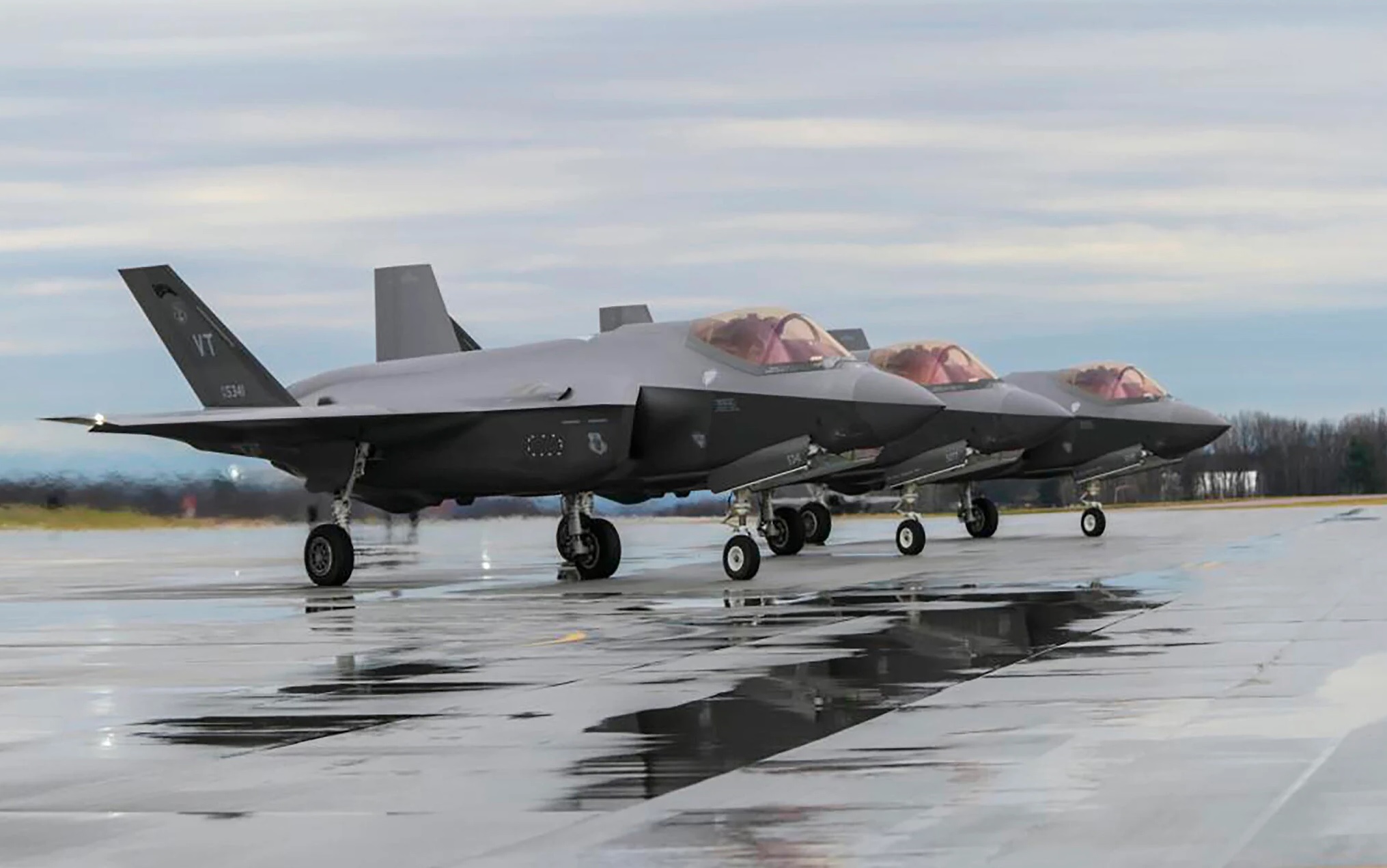
Israel operates the F-35I “Adir,” a customized variant of the F-35A, that retains the standard airframe and engine but incorporates nationally developed systems and software layers. The aircraft features an open architecture design that allows Israeli engineers to independently modify and upgrade mission systems within approved parameters.
Israel is currently the only F-35 operator authorized to carry out sovereign modifications of this scale. The country has received 48 aircraft out of a total order of 75.
Strategic Context and Program Continuity
The software upgrade effort follows recent operational deployments of Israeli F-35I aircraft in early 2026 and coincides with a ceasefire agreement involving Iran. The timing allows the incorporation of operational data and lessons learned into future capability development.
The upgrades also support continuity in capability development amid delays in the broader F-35 Block 4 modernization program, ensuring that Israel maintains its operational readiness and technological baseline.
The contract underscores ongoing U.S.-Israel defense cooperation within the F-35 program, combining U.S.-developed platform architecture with Israeli-specific systems integration under the Foreign Military Sales framework. No additional details regarding performance benchmarks or testing timelines have been disclosed.
——— End of Article ———