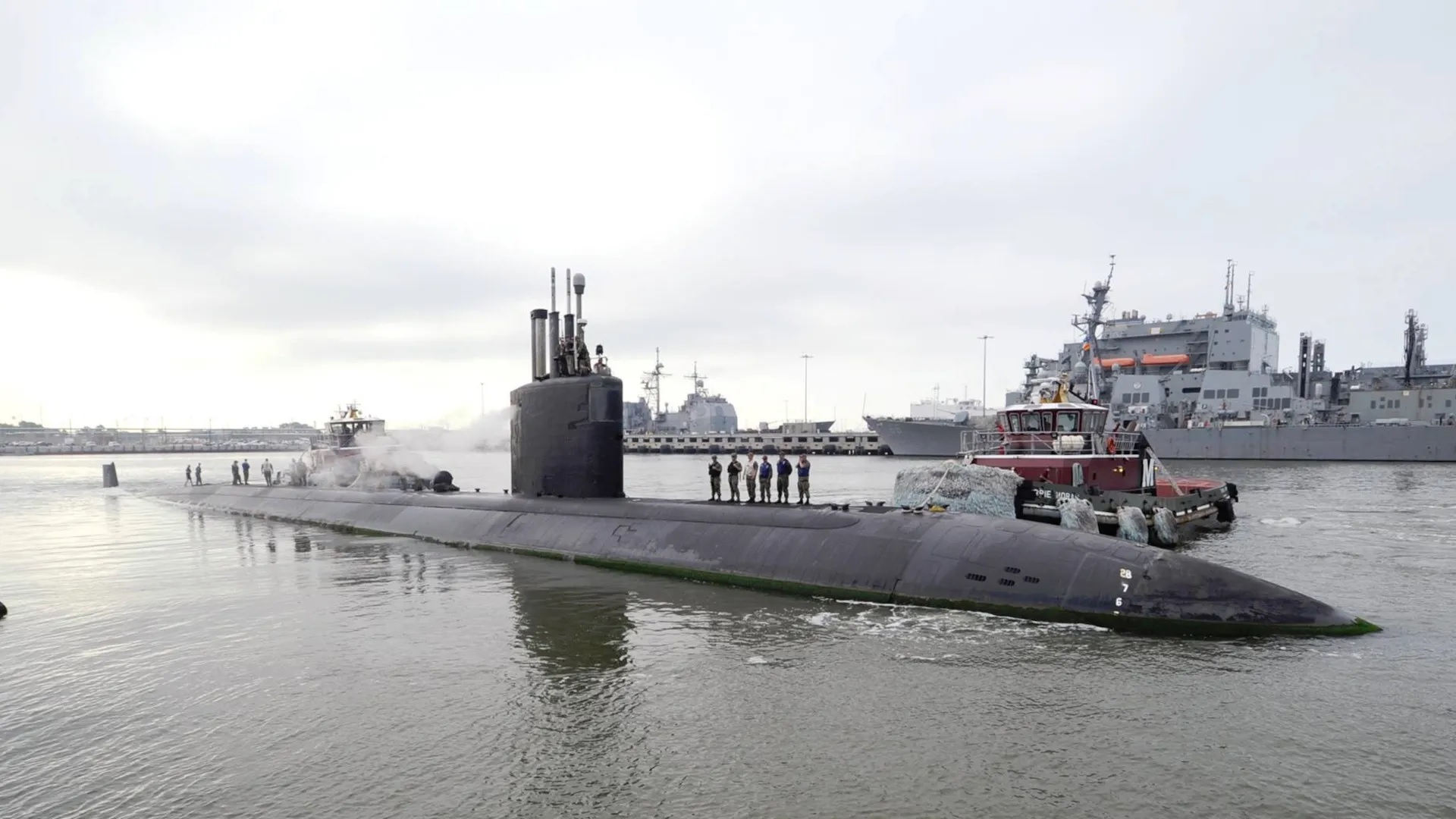
WASHINGTON, — April 11, 2026 : The U.S. Department of the Navy announced on April 10, 2026, that it will proceed with the inactivation of the Los Angeles-class attack submarine USS Boise (SSN 764), ending a long-delayed overhaul program that had extended for more than a decade and accumulated significant costs.
The decision follows a comprehensive internal review that concluded completing the submarine’s engineered overhaul would not be cost-effective when compared to other naval priorities, particularly new submarine construction and fleet readiness programs.
Background and Maintenance Timeline
USS Boise, commissioned in 1992, is among the newer vessels in the Los Angeles-class fleet. Despite this, the submarine has been largely inactive since approximately 2015, following its last operational deployment.
The vessel was originally scheduled to undergo a routine engineered overhaul in fiscal year 2016. However, delays associated with congestion and workforce limitations at public shipyards prevented timely maintenance. By 2017, while stationed pierside at Naval Station Norfolk, Virginia, the submarine lost its dive certification, formally removing it from operational service.
Over the following years, USS Boise was relocated multiple times in an effort to begin repairs. It was towed to Huntington Ingalls Industries’ Newport News Shipbuilding facility in 2018, returned temporarily to Norfolk, and then moved back to Newport News in 2020.
In February 2024, the Navy awarded a $1.2 billion contract to Huntington Ingalls Industries (HII) Newport News Shipbuilding to carry out the long-delayed overhaul. At that time, completion of the work was projected for 2029.
Cost Analysis and Project Status
By April 2026, the Navy had invested approximately $1.6 billion in repair efforts for USS Boise. Despite this expenditure, only about 22 percent of the planned overhaul work had been completed.
Updated cost estimates indicated that an additional $1.9 billion would be required to finish the overhaul, bringing the total projected cost to nearly $3 billion.
According to Navy officials, this cost level represented approximately 65 percent of the procurement cost of a new Virginia-class submarine. At the same time, the expected operational return from the completed overhaul was limited. The submarine would have provided roughly 20 percent of the service life of a new vessel, equating to approximately three deployments before retirement.
Additionally, if completed as scheduled, USS Boise would not have rejoined the fleet until 2029, meaning it would have remained inactive for nearly 15 years.
Official Statements and Decision Rationale
Chief of Naval Operations Adm. Daryl Caudle stated that the decision was based on a detailed evaluation of costs, timelines, and operational value.
“After a rigorous, data-driven analysis, we’ve made the necessary decision to inactivate the USS Boise,” Caudle said. He added that the move would allow the Navy to redirect skilled labor and financial resources toward higher-priority programs, including the construction of Virginia-class and Columbia-class submarines and improving the readiness of the existing fleet.
Secretary of the Navy John Phelan also supported the decision, noting that approximately $800 million had already been spent with limited progress and that completing the overhaul would require substantially more funding for a platform with constrained remaining service life.
The Navy confirmed that all funding and personnel associated with USS Boise’s overhaul will be reassigned to other submarine construction and maintenance efforts. The reallocation is intended to support timely delivery of new platforms and improve overall fleet availability.
Industrial Base and Maintenance Challenges
The USS Boise case highlights ongoing challenges within the U.S. Navy’s maintenance infrastructure. Public shipyards have faced persistent issues related to workforce shortages, limited dry dock capacity, and extended repair timelines.
These constraints have contributed to reduced operational availability across the submarine force, with some vessels missing scheduled deployments or returning to service later than planned.
To address these challenges, the Navy has increasingly relied on private shipyards, including facilities operated by Huntington Ingalls Industries and General Dynamics Electric Boat, to perform maintenance work alongside new construction programs. However, maintenance performed at private facilities has generally been more costly and competes for specialized labor required for building new submarines.
Huntington Ingalls Industries stated that it has been notified of the Navy’s decision and will coordinate with the service to discontinue overhaul work on USS Boise. The company indicated that shipbuilders currently assigned to the project will be reassigned to other work at Newport News Shipbuilding, with no anticipated impact on its workforce.
Expert Assessment and Strategic Implications
Bryan Clark, a senior fellow at the Hudson Institute, described the situation as indicative of broader industrial base limitations while supporting the Navy’s decision to terminate the overhaul effort.
The inactivation of USS Boise reflects a shift in how the Navy prioritizes resources, focusing on investments that provide measurable improvements to fleet readiness and long-term operational capability.
Current Status and Next Steps
USS Boise is currently in drydock at Newport News Shipbuilding. Following the April 10, 2026 announcement, the Navy will proceed with the inactivation process.
Personnel assigned to the submarine will be reassigned across the fleet, and financial resources will be redirected to higher-priority submarine programs. The decision is part of a broader effort to align maintenance spending with strategic objectives and ensure that investments contribute directly to operational readiness and force structure modernization.
——— End of Article ———