PARIS — April 15, 2026 : France has initiated test firings of two domestically developed rocket artillery systems, the FLP-T 150 and the Thundart, as part of the Frappe Longue Portée Terrestre (FLP-T) programme aimed at replacing the French Army’s aging Lance-Roquettes Unitaire (LRU) launchers.
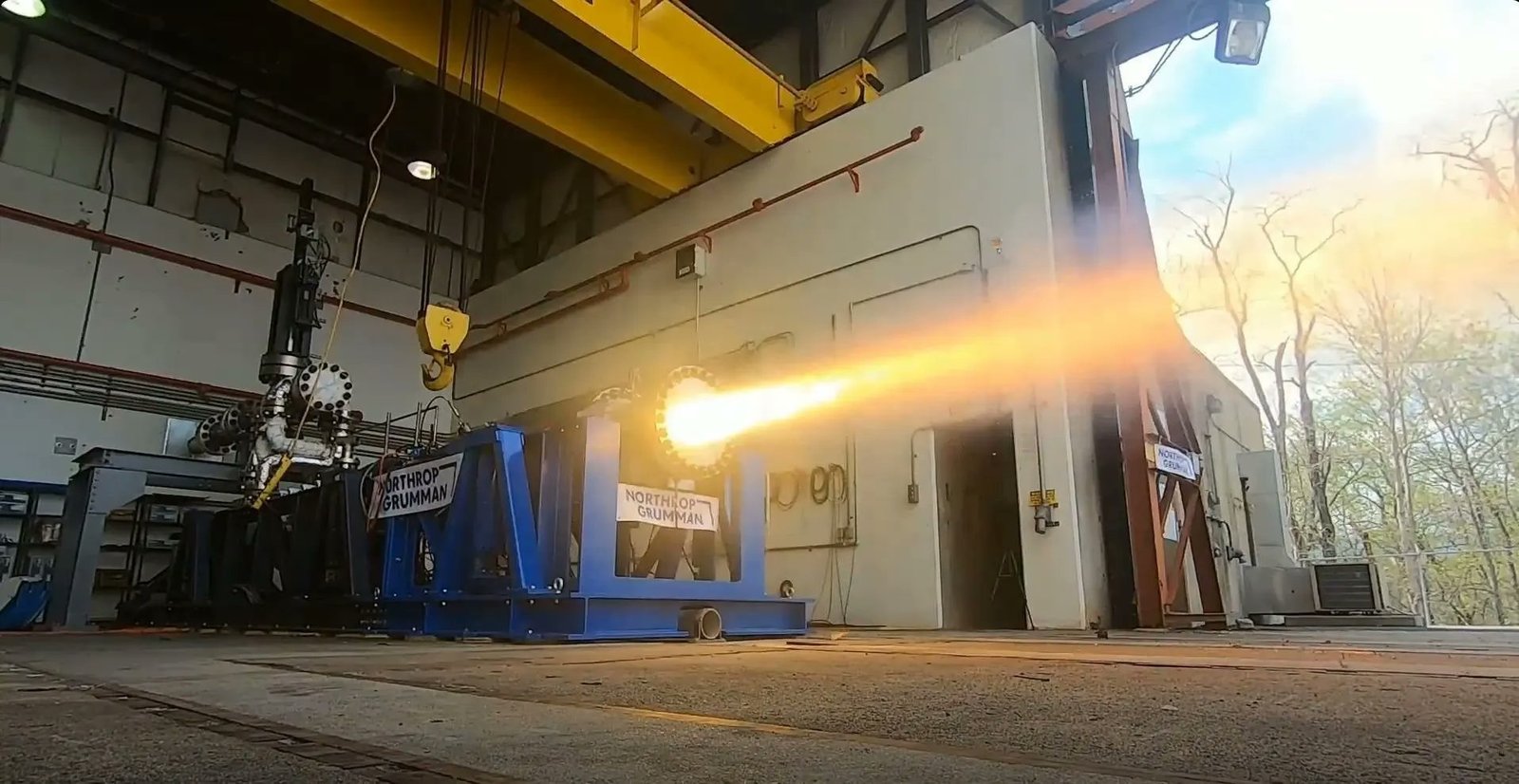
The first test firing of one of the candidate munitions was conducted on April 14, 2026, and proceeded successfully, according to General Delegate for Armaments Patrick Pailloux, who addressed a parliamentary hearing on April 15. Additional test firings are scheduled to take place during the week of April 20, marking the continuation of the evaluation phase for the two French-developed systems. These trials follow innovation partnership contracts awarded at the end of 2024.
The FLP-T programme, launched in 2023 by the Direction Générale de l’Armement (DGA), aims to restore and expand France’s long-range precision strike capability. The current LRU systems—modernised variants of the M270 multiple launch rocket system—are due to begin retirement in 2027. At present, only nine LRU launchers remain operational within the French Army.
Both candidate systems are designed to achieve a range of 150 kilometres with sub-decametric precision. A central requirement for the programme is the ability to operate effectively in GNSS-denied environments, ensuring resilience against enemy electronic warfare and satellite signal jamming.
The FLP-T 150 system, developed by Thales and ArianeGroup, is described as a containerised, mobile, and scalable rocket artillery solution capable of precision strikes even under GNSS-denied conditions. The system is also presented as ITAR-free, allowing export without restrictions tied to United States regulations. ArianeGroup is responsible for propulsion and rocket development, while Thales is developing the guidance systems, onboard electronics, command-and-control architecture, and launcher platform, expected to be mounted on a truck-based configuration.
The Thundart system, developed by Safran and MBDA, is based on a 227 mm guided rocket and incorporates technologies from the Armement Air-Sol Modulaire (AASM) air-to-ground munition. Safran has completed three qualification test firings of an AASM bomb equipped with a dual-mode laser-infrared (LIR) seeker. With this qualification achieved, the guidance solution is expected to be available in 2027. The same LIR seeker will be integrated into the Thundart rocket, which will be produced on the same AASM production line, where output rates have quadrupled.
In parallel, Thales is preparing to present a new guidance component designed to function in GNSS-denied environments. This technology is intended to be adaptable beyond long-range strike applications and forms part of a broader system solution that includes both munition and launcher elements.
Following the ongoing test campaign, the DGA will conduct a comparative assessment of the two domestic systems alongside third-party foreign solutions. The selection process will focus on achieving the best balance between cost, performance, and delivery timelines. Patrick Pailloux stated that the final decision will be based on test results and a market study examining export options.
The French Army has identified the FLP-T capability as a priority requirement for high-intensity operations. Under the updated military programming law, France plans to acquire between 13 and 26 launcher systems and approximately 300 munitions by 2030. This initial capability will equip an artillery battalion, with long-term objectives including supporting a division deployable within 30 days and enabling France to command an army corps within NATO.
Despite operational urgency, budget constraints remain a key factor. Pailloux emphasized the importance of national sovereignty through a “Made in France” solution, while noting the need for export markets to ensure economic viability. However, competition from established systems such as American HIMARS, Israeli PULS, and South Korean Chunmoo has already captured a significant share of the European market.
Highlighting the procurement dilemma, Pailloux outlined the trade-off between a quickly available, lower-cost foreign solution and a more capable but costlier domestic system with longer development timelines. He indicated that the decision will require balancing urgency, capability, cost, and sovereignty considerations.
The DGA acknowledged that the final selection may represent a compromise aligned with operational needs and strategic priorities. A decision on the FLP-T programme is expected before summer 2026.
The FLP-T 150 and Thundart systems represent France’s effort to establish a fully sovereign long-range rocket artillery capability. The ongoing demonstration firings are intended to support delivery of an operational system before 2030. No further technical details beyond the 150 km range and precision requirements, or information on interim foreign procurement options, have been disclosed by the DGA at this stage.
——— End of Article ———