CANBERRA, — April 15, 2026 : The Royal Australian Navy (RAN) has formally activated the Maritime Autonomous Systems Unit (MASU) on April 14, 2026, marking the transition of Australia’s uncrewed maritime programs from prototype testing to operational deployment. Established under Project SEA 1200, the unit consolidates the Ghost Shark, Bluebottle, and Speartooth programs into a single command structure designed to deliver deployable autonomous maritime capabilities.
The activation introduces an institutional framework that enables the Navy to integrate autonomous platforms into frontline operations, supporting persistent surveillance, undersea warfare, and distributed maritime presence in accordance with Australia’s 2024 National Defence Strategy.
Organizational Structure and Operational Role
MASU has been structured to provide centralized command and operational integration of uncrewed systems across the fleet. The unit incorporates an Uncrewed Systems Control Centre and Deployable Vehicle Teams, allowing operators to deploy, monitor, and control autonomous systems from any wharf location globally.
The unit is responsible for doctrine development, operational employment, operator training, and continuous testing and evaluation of autonomous maritime technologies. It operates under the oversight of Commander Submarines, Commodore Dan Sutherland, with Commander Chris Forward serving as Officer in Charge.
According to official statements, MASU is designed to function as the headquarters for a hybrid force that integrates crewed naval platforms—including submarines, surface combatants, and maritime patrol aircraft—with autonomous systems. The unit’s stated motto is “We Wait, We Strike.”
Autonomous Fleet Composition
MASU operates a layered architecture of three distinct uncrewed maritime platforms, each designed to fulfill specific operational roles across the maritime domain.
Ghost Shark (Extra-Large Autonomous Undersea Vehicle)
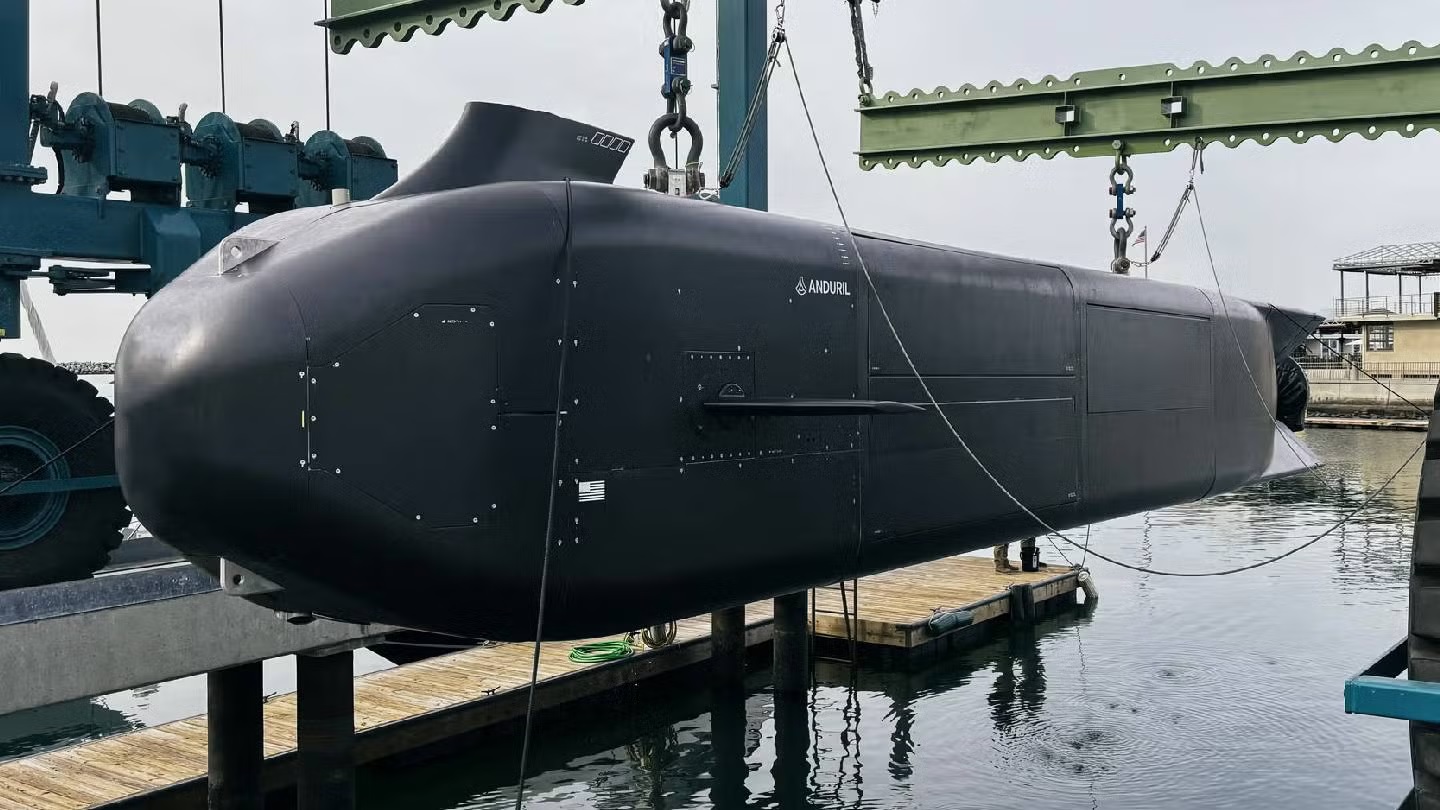
Ghost Shark serves as the primary high-endurance and survivable undersea platform within MASU. The program began in 2022 through collaboration between the RAN, the Defence Science and Technology Group, and Anduril Australia. It was subsequently incorporated into the Advanced Strategic Capabilities Accelerator under Mission Zero.
The first prototype was delivered in April 2024, one year ahead of schedule. On September 10, 2025, the Australian Government awarded a A$1.7 billion, five-year contract to Anduril Australia covering production, sustainment, and continued development. As of April 15, 2026, the Navy has taken delivery of its first production vehicles.
Ghost Shark measures between 10 and 30 meters in length and uses an all-electric propulsion system with a “flooded hull” design, eliminating the need for a pressurized crew compartment. Waterproof compartments protect propulsion and payload systems, while onboard autonomy is managed through Anduril’s Lattice AI framework.
The platform is designed for long-range, long-endurance intelligence, surveillance, and reconnaissance (ISR) missions, with the capability to carry modular payloads. While specific armament details remain undisclosed, officials confirm the system is designed to deliver kinetic effects when required.
Bluebottle (Uncrewed Surface Vessel)
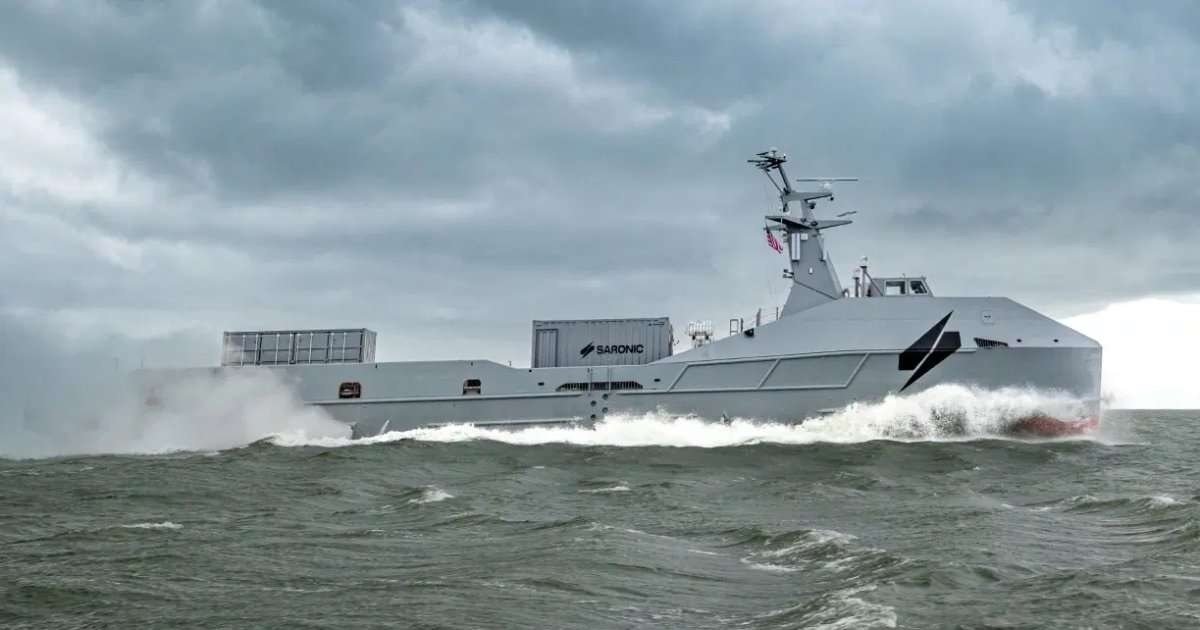
The Bluebottle uncrewed surface vessel provides persistent surface and sub-surface surveillance capabilities. It is developed by Sydney-based Ocius Technology in partnership with the Navy.
Powered by a combination of solar, wind, and wave energy, Bluebottle is capable of operating continuously for months without refueling. The vessel travels at approximately 5 knots and supports a modular payload of up to 300 kilograms, with average power consumption between 100 and 120 watts.
Bluebottle platforms are equipped with variable-depth sensors and operate under a “human-on-the-loop” control model. They also function as communication relay nodes, particularly for submerged autonomous systems.
On March 11, 2026, the Australian Government awarded a A$176 million contract for 40 additional vessels, expanding the RAN’s operational Bluebottle fleet to 55 units.
Speartooth (Large Uncrewed Underwater Vehicle)
Speartooth, developed by Melbourne-based C2 Robotics, fills the capability gap between smaller surface systems and larger extra-large underwater vehicles.
The platform is designed as a low-cost, scalable, and modular large uncrewed underwater vehicle optimized for rapid manufacturing. It incorporates a common command-and-control architecture, direct propeller propulsion, and variable-buoyancy propulsion systems.
Speartooth is intended for long-range and long-duration missions, including seabed surveillance, scouting, decoy operations, and payload delivery in contested environments. Its lower cost profile allows deployment in scenarios where use of higher-value systems such as Ghost Shark may not be operationally optimal.
The platform has also participated in interoperability activities under AUKUS Pillar Two, including trials alongside the HMS Anson.
Operational Integration and Layered Employment
MASU enables a distributed and layered operational model across the maritime domain. Bluebottle vessels provide wide-area maritime awareness and sensor coverage. Speartooth systems investigate contacts, conduct seabed operations, and deploy distributed payloads. Ghost Shark platforms are tasked with deeper penetration missions, including intelligence gathering and potential strike operations.
The systems can be deployed from shore facilities, surface vessels, or containerized launch solutions, providing flexibility in both peacetime and contested environments.
Strategic Context and AUKUS Alignment
The establishment of MASU aligns with the requirements outlined in Australia’s 2024 National Defence Strategy, particularly the need for persistent surveillance and operational reach across the country’s northern maritime approaches. The Australian Government has allocated up to A$7.2 billion for subsea warfare capabilities and autonomous maritime systems as part of this effort.
MASU also serves as the RAN’s central organization for advancing cooperation under AUKUS Pillar Two, focusing on the integration of autonomous systems, software development, and joint operational concepts with allied partners.
Programs such as Ghost Shark and Bluebottle are structured as sovereign industrial initiatives, with domestic production and supply chains involving more than 40 Australian companies. The activation of MASU reflects the transition of these industrial efforts into operational capability within the fleet.
Capability Transition to Operational Service
The activation of MASU represents a shift toward introducing minimum viable capabilities into service at an accelerated pace. By combining development, experimentation, and operational deployment within a single unit, the RAN aims to reduce the time required to integrate emerging technologies into active service.
Defence officials state that the unit will continue to refine operational concepts, expand fleet numbers, and enhance system interoperability as autonomous maritime systems become a permanent component of Australia’s naval force structure.
——— End of Article ———