World
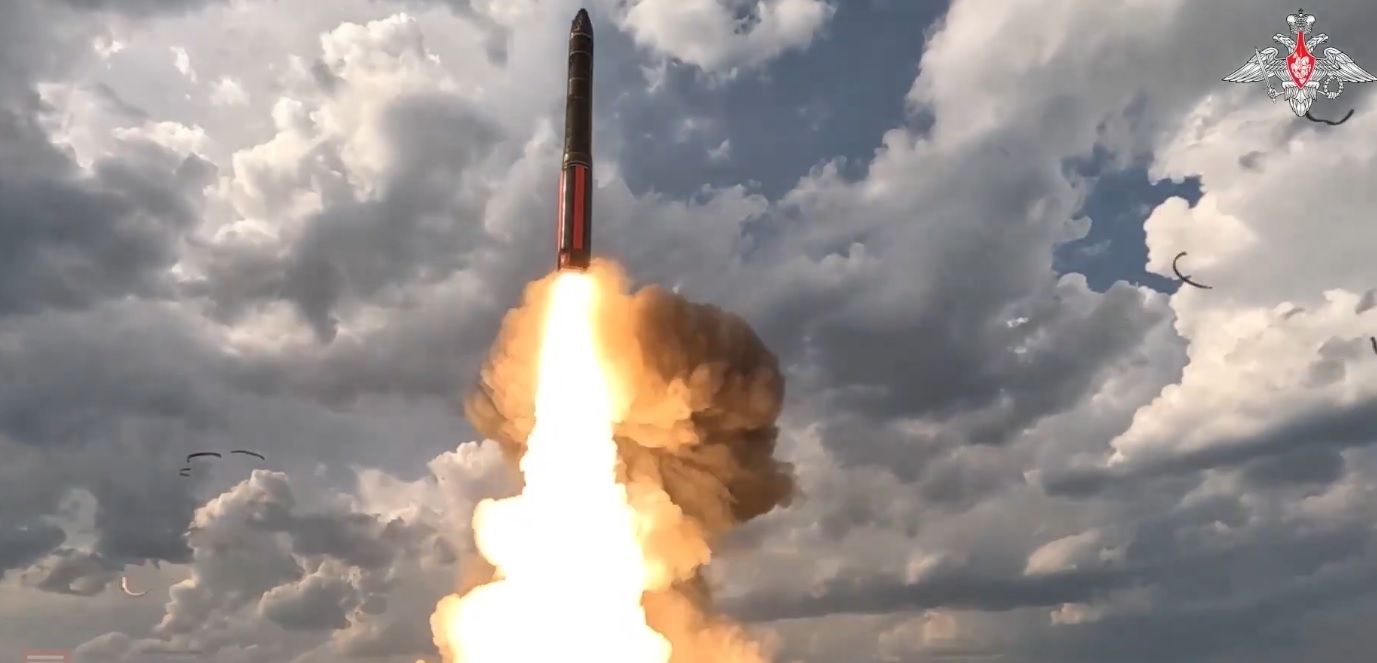
MOSCOW, — May 21, 2026 : Russia launched a Yars intercontinental ballistic missile (ICBM) during large-scale joint nuclear exercises with Belarus, as Moscow and Minsk carried out one of their most extensive strategic readiness drills in recent years involving land, air, and naval nuclear-capable forces. The three-day exercises, conducted from May 19 to May 21, included the operational deployment of strategic missile systems, long-range aviation assets, naval forces, and mobile missile units across Russia and Belarus. A major feature of the drills was the transfer of actual nuclear munitions to military units for operational training purposes, marking the first time live nuclear payloads were used during such joint tactical exercises. According to the Russian Defense Ministry, the Yars ICBM was launched from the Plesetsk Cosmodrome in northern Russia toward the Kura testing range in the Kamchatka region in the country’s Far East. Russian officials stated that the missile successfully reached its designated target area. The Yars missile system is a road-mobile intercontinental ballistic missile capable of carrying multiple independently targetable reentry vehicles (MIRVs). The system has a reported operational range exceeding 10,000 kilometers, enabling it to strike targets across Europe and North America. Russian military officials stated that the exercises were designed to test combat readiness, command coordination, and the operational handling of strategic and tactical nuclear systems under simulated wartime conditions. For the first time during joint Russian-Belarusian nuclear drills, live nuclear munitions were formally transferred to missile and aviation units operating in both countries. Previous exercises of this type generally relied on inert or mock warheads used to simulate the weight and electronic characteristics of actual nuclear payloads. The Russian Defense Ministry stated that military personnel practiced the transportation, storage, security, loading, and deployment of active nuclear munitions at field storage facilities and operational missile positions. Belarusian defense authorities confirmed that Belarusian crews participated in the preparation and handling of nuclear-capable systems stationed on Belarusian territory in coordination with Russian forces. Russia has maintained tactical nuclear weapons in Belarus following agreements announced in 2023, with deployment activities beginning in 2025. The exercises involved approximately 64,000 military personnel from both countries, according to Russian defense data. Naval components included 73 surface warships and 13 submarines, including eight submarines equipped with nuclear-capable ballistic missiles. More than 140 aircraft participated in the drills, including Tu-95MS strategic bombers and MiG-31 aircraft capable of carrying Kinzhal hypersonic missiles. Ground formations included over 200 mobile missile launchers and associated support systems deployed across multiple training areas. In addition to the Yars launch, Russian forces conducted a submerged launch of a Sineva submarine-launched ballistic missile. The drills also included launches of Kinzhal hypersonic missiles and Zircon hypersonic cruise missiles from naval platforms operating in northern waters, including the Barents Sea. Belarusian combat crews separately carried out a practical launch of a Russian-made Iskander-M short-range ballistic missile at the Kapustin Yar testing range in Russia as part of the joint operational training program. Russian President Vladimir Putin and Belarusian President Alexander Lukashenko observed the final stage of the exercises through a video conference link on Thursday. During the broadcast, Putin stated that the drills were intended to improve coordination between strategic and tactical nuclear forces under conditions involving potential external aggression. Russian officials described the exercises as defensive in nature and aimed at maintaining the operational readiness of the Union State’s nuclear deterrence forces. Belarusian authorities also stated that the exercises were planned military activities and were not directed against any specific third party. The drills were conducted amid heightened regional security measures near Belarus’ borders. In recent weeks, Ukraine has strengthened security along its northern frontier with Belarus due to concerns regarding possible cross-border military activity connected to the ongoing conflict in the region.
Read More → Posted on 2026-05-21 18:15:50
World
WASHINGTON, — May 21, 2026 : The United States has deployed the USS Nimitz Carrier Strike Group into the Caribbean Sea as the U.S. Department of Justice unsealed a federal indictment against former Cuban leader Raúl Castro and five former Cuban officials over the 1996 shootdown of two civilian aircraft operated by the Miami-based exile organization Brothers to the Rescue. The coordinated timing of the naval deployment and legal action reflects an expanded U.S. pressure campaign against Cuba, combining military positioning, sanctions enforcement, intelligence monitoring, and judicial measures amid broader regional tensions involving Venezuela and Caribbean maritime security. Indictment Over 1996 Shootdown The indictment, announced on May 20 during a press conference at Miami’s Freedom Tower, accuses Castro and the co-defendants of murder, conspiracy to kill U.S. nationals, and destruction of aircraft in connection with the February 24, 1996 incident in which Cuban Air Force MiG-29 and MiG-23 fighter aircraft shot down two unarmed Cessna 337 Skymaster planes over international waters south of Florida. The aircraft belonged to Brothers to the Rescue, a Miami-based exile organization known for conducting humanitarian and reconnaissance flights over the Florida Straits. Four individuals were killed in the incident, including three U.S. citizens. According to U.S. officials, Castro was serving as Cuba’s defense minister at the time and oversaw the military chain of command responsible for authorizing the interception operation. Acting U.S. Attorney General Todd Blanche stated that the United States would continue pursuing accountability for attacks on American citizens regardless of the time elapsed since the incident. Jason Reding Quiñones, U.S. Attorney for the Southern District of Florida, stated that investigators concluded the Cuban military command structure approved the operation before the aircraft were intercepted and destroyed. Cuban authorities rejected the charges and defended the 1996 operation, maintaining that the Brothers to the Rescue aircraft had repeatedly violated Cuban airspace. Cuban President Miguel Díaz-Canel criticized the U.S. action and reiterated Havana’s longstanding position regarding the incident. USS Nimitz Carrier Strike Group Enters Caribbean At the same time, United States Southern Command confirmed that the USS Nimitz Carrier Strike Group entered the Caribbean Sea following completion of the Southern Seas 2026 deployment. The strike group includes the aircraft carrier USS Nimitz, Carrier Air Wing 17, the guided-missile destroyer USS Gridley, and the fleet replenishment oiler USNS Patuxent. The deployment marks the first major U.S. carrier presence in the Caribbean in 2026 and significantly increases American airborne surveillance, electronic warfare, and maritime monitoring capabilities across the northern Caribbean and surrounding sea lanes. Unlike previous regional operations, the current deployment does not include amphibious assault ships or Marine Expeditionary Units, indicating the mission is centered on deterrence, maritime security, intelligence collection, and sanctions enforcement rather than preparations for ground operations. Carrier Air Wing 17 operates F/A-18E/F Super Hornet multirole fighters, EA-18G Growler electronic attack aircraft, E-2D Advanced Hawkeye airborne early warning aircraft, and MH-60 Seahawk helicopters assigned to anti-submarine warfare and maritime patrol missions. Final Operational Transit for USS Nimitz The USS Nimitz departed Bremerton, Washington, on March 7 for its final operational transit ahead of planned inactivation and reactor defueling in Norfolk, Virginia. Because the carrier cannot transit the Panama Canal due to size limitations, the strike group sailed around Cape Horn and through the Strait of Magellan before entering the Atlantic Ocean. Prior to arriving in the Caribbean, the strike group conducted multinational exercises and interoperability operations with Brazil, Argentina, Chile, and Colombia during Southern Seas 2026, a pre-planned deployment focused on maritime security coordination and regional naval cooperation. USS Nimitz remains the longest-serving active aircraft carrier in the U.S. Navy. The nuclear-powered carrier displaces approximately 100,020 long tons at full load, measures 332.8 meters in length, and is capable of speeds exceeding 31 knots. Pressure Campaign on Cuba and Venezuela The deployment coincides with broader U.S. sanctions enforcement efforts targeting maritime fuel shipments between Venezuela and Cuba. Since early 2025, Washington has increased restrictions on tanker traffic supplying Cuban ports, particularly following the January 2026 U.S. operation that resulted in the capture of Venezuelan leader Nicolás Maduro. The Cuban government stated earlier this month that national diesel and oil reserves had been largely exhausted, contributing to severe fuel shortages and repeated electrical grid failures across Havana, Santiago de Cuba, Holguín, and Matanzas. Power outages lasting between 12 and 18 hours have disrupted transportation, telecommunications, industrial operations, and public services throughout the island. U.S. officials have also linked the current pressure campaign to wider geopolitical concerns involving Cuba’s reported security cooperation with China and Russia. Secretary of State Marco Rubio recently referenced Cuban links to Chinese intelligence activity and Russian military coordination in the region. CIA Director John Ratcliffe reportedly warned Cuban officials earlier this month that the timeline for diplomatic engagement with Washington was narrowing as U.S. sanctions and maritime enforcement measures intensified. President Donald Trump also publicly referenced Cuba during remarks on Wednesday, underscoring the administration’s continued focus on Havana as part of its broader regional security strategy. U.S. officials stated that the current operation remains focused on maritime domain awareness, intelligence collection, sanctions enforcement, and regional deterrence, with no amphibious or expeditionary ground forces currently assigned to the mission.
Read More → Posted on 2026-05-21 18:07:16
World
WASHINGTON, — May 21, 2026 : The United States Department of the Treasury on Thursday announced sanctions against nine individuals accused of supporting Hezbollah and undermining Lebanon’s sovereignty through political, diplomatic, and security networks linked to the Iran-backed group. The sanctions target four Hezbollah members of parliament, two senior Lebanese security officials, and Iran’s ambassador to Lebanon. According to the Treasury Department, the designated individuals used their official positions inside Lebanon’s political and security institutions to facilitate Hezbollah’s activities and obstruct efforts aimed at restoring state authority and stability. The sanctioned Hezbollah parliamentarians are Hassan Fadlallah, Ibrahim al-Mousawi, Hussein al-Hajj Hassan, and Mohammad Fanich. U.S. officials alleged that the lawmakers helped expand Hezbollah’s political influence while supporting the group’s broader operational objectives inside Lebanon. The Treasury Department also imposed sanctions on Lebanese security officials Samir Hamada and Khattar Nasser el-Din. U.S. authorities accused the two officials of abusing their institutional authority and access within Lebanon’s security apparatus to benefit Hezbollah and protect the group’s operational infrastructure. Iran’s Ambassador to Lebanon, Mohammad Reza Sheibani, was also included in the sanctions package. The Treasury accused Sheibani of coordinating Iranian support for Hezbollah and interfering in Lebanon’s internal affairs in violation of diplomatic norms and Lebanese sovereignty. The U.S. designation follows recent action by Lebanese authorities, who withdrew Sheibani’s diplomatic accreditation and declared him persona non grata after accusing him of violating diplomatic conventions and interfering in domestic political matters. In a statement released alongside the sanctions announcement, U.S. Treasury Secretary Scott Bessent said Hezbollah continues to obstruct Lebanon’s path toward stability and reconstruction by maintaining its armed structure and influence within state institutions. “Hezbollah is a terrorist organization and must be fully disarmed,” Bessent said. He further stated that the Treasury Department would continue targeting officials and individuals accused of enabling Hezbollah’s activities and supporting the group’s operations inside Lebanon. Under the sanctions, all property and financial interests belonging to the designated individuals that fall under U.S. jurisdiction are blocked. The measures also prohibit U.S. citizens and entities from engaging in transactions or business dealings with them. According to the Treasury Department, Hezbollah relies on political allies and loyalists positioned within Lebanon’s government and security agencies to preserve its military and logistical networks outside the authority of the Lebanese Armed Forces. U.S. officials stated that these networks assist Hezbollah in bypassing financial oversight, maintaining supply routes, and exerting influence over state institutions. The sanctions are part of broader U.S. efforts to increase pressure on Hezbollah and its regional support structure. The United States has repeatedly accused Iran of providing financial, military, and logistical support to Hezbollah, which Washington officially designates as a terrorist organization. U.S. officials stated that the latest measures are intended to support Lebanon’s sovereignty, strengthen the authority of state institutions, and counter activities that undermine peace, reconstruction, and long-term stability in the country.
Read More → Posted on 2026-05-21 17:57:14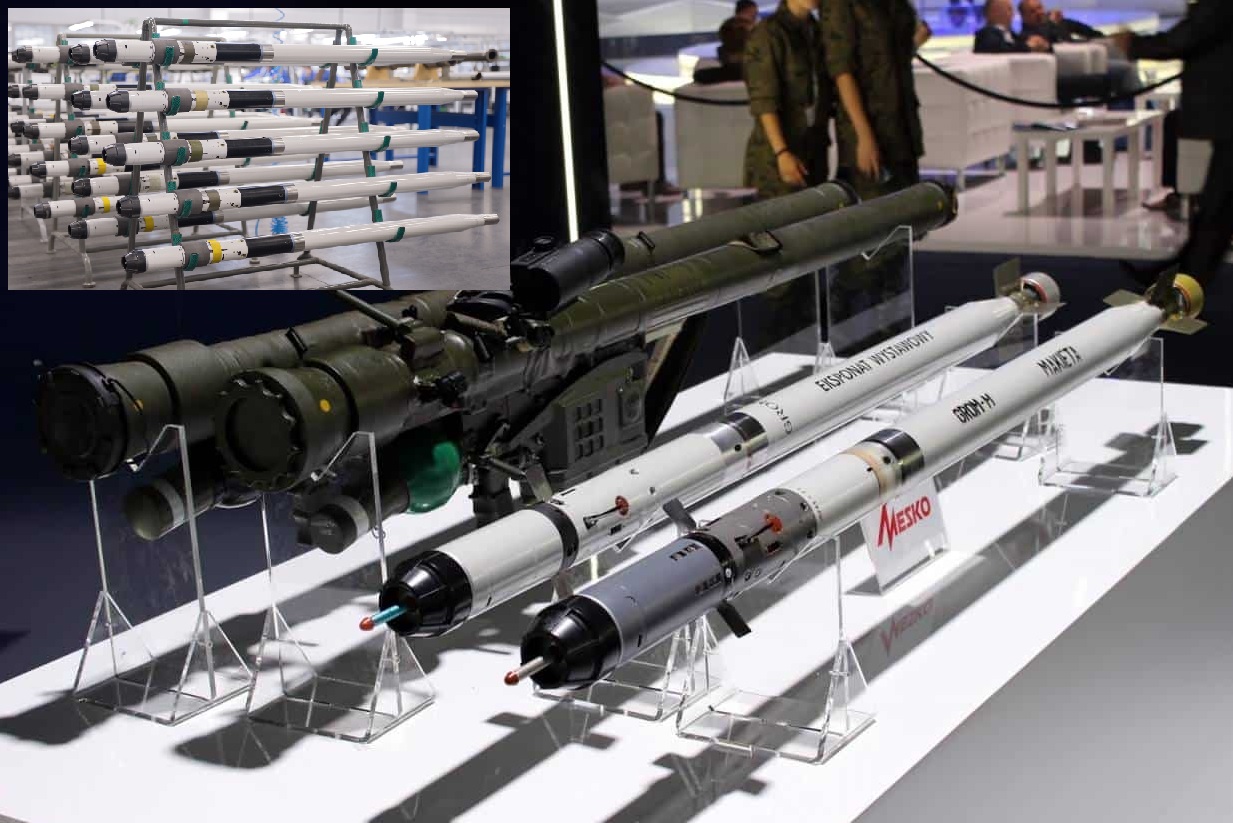
World
SKARŻYSKO-KAMIENNA, Poland — May 21, 2026 : Polish defense manufacturer MESKO S.A. has increased production of its Piorun man-portable air-defense system (MANPADS) missiles to more than six units per day as international demand for the combat-proven system continues to expand across Europe and NATO member states. The production increase was reported by Polish military analyst Jarosław Wolski after visiting the company’s manufacturing facility in Skarżysko-Kamienna. According to Wolski, the missiles are assembled manually from machine-produced components, with current daily output now exceeding six missiles. Production Expansion and SAFE Program Support MESKO is reorganizing its production lines to sustain higher manufacturing rates while simultaneously fulfilling domestic military contracts and growing export orders. The company is also preparing for future procurement projects expected under the European Union’s SAFE defense initiative. The SAFE (Security Action for Europe) program is a €150 billion European Union defense financing mechanism designed to accelerate military production and procurement among member states. Earlier in May 2026, Poland became the first EU member state to formally join the initiative after securing a €43.7 billion defense loan aimed at supporting defense modernization and industrial expansion. A significant portion of the funding is expected to support domestic defense companies, including MESKO, enabling additional investment in missile manufacturing infrastructure and long-term production capacity. Piorun System Capabilities The Piorun, meaning “Thunderbolt” in Polish, is an upgraded version of Poland’s earlier Grom MANPADS. The system is designed to engage low-flying aircraft, helicopters, cruise missiles, and unmanned aerial vehicles. During the modernization process, the sensitivity of the missile’s infrared homing seeker was increased fourfold compared to the previous Grom system. The upgraded seeker improves target detection range while increasing resistance to infrared countermeasures and electronic interference. The missile carries a 1.82-kilogram warhead equipped with both proximity and impact fuzes. It has an operational range of up to 6,500 meters and can engage targets at altitudes of up to 4,000 meters. The missile reaches a maximum speed of approximately 660 meters per second. Combat Use and Export Growth International interest in the Piorun system increased significantly after Poland transferred an undisclosed number of launchers and missiles to Ukraine in early February 2022 following the beginning of Russia’s full-scale invasion. The system was subsequently used in combat operations against Russian aircraft, helicopters, and drones, contributing to its growing reputation in the international defense market. Its operational performance, combined with shortages of MANPADS inventories in several countries, has led to a rise in export demand. MESKO has secured export contracts for the Piorun system from multiple countries, including the United States, Norway, Sweden, Estonia, Latvia, and Belgium. Recent reports also indicate that France is evaluating the system for potential procurement. Future MANPADS Development Alongside efforts to expand current production, Poland is also preparing for future short-range air-defense requirements. The Polish Armaments Agency has launched preliminary market consultations regarding the development and procurement of a next-generation MANPADS intended to eventually replace the Piorun system in Polish military service. The expansion of Piorun production reflects Poland’s broader effort to strengthen domestic defense manufacturing capacity while supporting increasing European demand for short-range air-defense systems under ongoing regional security modernization programs.
Read More → Posted on 2026-05-21 17:43:26
World
WASHINGTON / DUBAI, — May 21, 2026 : Iran’s Supreme Leader has ordered that the country’s stockpile of near-weapons-grade enriched uranium must remain inside Iran and cannot be exported, according to Iranian sources, hardening Tehran’s position in ongoing indirect negotiations with the United States. The directive directly challenges one of Washington’s primary demands in the talks, as U.S. officials have continued to insist that Iran’s stockpile of uranium enriched to 60% purity be removed, transferred, or neutralized as part of any future agreement. The latest development comes as Iranian officials review a new U.S. proposal delivered through mediators in Pakistan and Oman. Direct communication between Tehran and Washington remains suspended, with messages continuing to pass indirectly through officials in Islamabad and Muscat. Uranium Stockpile at Center of Talks Iran’s supply of uranium enriched to 60% purity has emerged as one of the most sensitive issues in the negotiations. U.S. officials have described the material as a key “red line” because enrichment at that level represents most of the technical process required to reach the 90% threshold associated with weapons-grade uranium. According to assessments by nuclear experts and U.S. energy officials, Iran currently possesses approximately 1,000 pounds of 60% enriched uranium. International monitors have warned that the stockpile could potentially be enriched further within a short period of time if Tehran decided to do so. Washington has repeatedly argued that transferring the material to a third-party country would extend Iran’s potential nuclear breakout timeline and reduce immediate proliferation concerns. However, the new directive from Iran’s leadership effectively removes the export option from the negotiations. Iranian officials said retaining the uranium inside the country reflects a broader consensus within Iran’s political and security establishment that exporting the material would increase the country’s vulnerability during future crises or negotiations. Iran Signals Openness to Diplomacy Despite adopting a firmer position on the uranium issue, Iranian officials have indicated that Tehran remains open to a diplomatic settlement. Iran’s Foreign Ministry confirmed that messages continue to be exchanged with the United States through Pakistani and Omani mediators. A ministry spokesperson stated that Tehran has received Washington’s latest viewpoints and is reviewing them as part of the ongoing negotiations. The current discussions involve not only Iran’s nuclear activities but also wider regional security concerns, sanctions relief, and efforts to reduce tensions across the Middle East. Iranian representatives stated that diplomacy is continuing alongside military preparedness. Officials said the country is maintaining a high-readiness defensive posture and deploying additional surveillance and protective systems while negotiations remain unresolved. U.S. Maintains Pressure Campaign In Washington, U.S. President Donald Trump said his administration is not under pressure to quickly finalize an agreement with Tehran. Trump pointed to the economic impact of ongoing U.S. naval operations and maritime pressure around the Strait of Hormuz, arguing that current measures are already placing significant strain on Iran’s economy and oil sector. The Strait of Hormuz remains one of the world’s most important maritime trade routes, with roughly 20% of global crude oil shipments passing through the corridor. U.S. officials said naval deployments and related disruptions in the Persian Gulf have affected Iranian shipping activity and regional trade operations. Trump also stated that military options remain available if diplomacy fails to produce what Washington considers an acceptable outcome. Regional Mediation Efforts Continue The latest round of diplomacy follows a reported pause in planned U.S. strike considerations earlier this week after Gulf partners, including Qatar, Saudi Arabia, and the United Arab Emirates, requested additional time for negotiations. Pakistan has continued to play a major role in facilitating indirect communication between Tehran and Washington. Pakistan’s army chief is expected to travel to Tehran as part of ongoing mediation efforts aimed at preserving dialogue and preventing further escalation in the region. No agreement has been reached so far, and negotiations remain ongoing as both sides continue reviewing proposals and assessing their positions on key nuclear and security issues.
Read More → Posted on 2026-05-21 17:27:33
World
MIAMI BEACH, Fla., — May 21, 2026 : SRC, Inc. has been selected as one of six winners in the U.S. Army’s xTech|Live competition during the eMerge Americas 2026 conference for its “Silent Impact” electronic warfare system, a modular high-altitude payload architecture designed to deliver scalable non-kinetic effects in contested environments. The xTech|Live competition is part of the Army FUZE xTech Program, which aims to identify and accelerate dual-use technologies capable of improving soldier readiness, operational effectiveness, and multi-domain mission support. The initiative also provides companies with a direct pathway to engage Army stakeholders and transition emerging technologies into operational testing and future deployment programs. SRC’s Silent Impact capability was selected under the competition’s “Stratospheric Effects” category, which focuses on technologies designed to extend sensing, cyber, and electronic warfare capabilities deep into contested battlespaces, including Anti-Access/Area Denial (A2/AD) environments. The Silent Impact system is designed as a small form-factor, platform-agnostic payload that can be deployed from high-altitude stratospheric platforms or integrated into kinetic delivery systems such as 155 mm artillery shells. Once released, the payload can operate as a temporary or persistent electronic warfare node behind enemy lines. Depending on mission requirements, the system can remain airborne using parachute-assisted deployment or continue operations after ground landing. According to SRC, the payload combines software-defined radios, onboard high-performance computing, and modular mission systems to conduct a range of cyber electromagnetic operations. These include electronic attack missions, radar jamming, communications disruption, cyber payload deployment, surveillance operations, deception activities, and anti-access/area denial effects. The system also supports Navigation Warfare (NAVWAR) operations, including Positioning, Navigation, and Timing (PNT) attacks such as GNSS and GPS spoofing or signal denial. These capabilities are intended to disrupt adversary coordination, navigation, and precision-strike operations during combat engagements. Silent Impact has been developed using a Modular Open Systems Architecture (MOSA), allowing operators to rapidly configure the payload with mission-specific electronic warfare, radar, cyber, or signals intelligence modules. The architecture is intended to support distributed operations while reducing reliance on large crewed aircraft operating near contested airspace. SRC stated that the system was engineered with low size, weight, power, and cost (SWaP-C) characteristics while extending sensing and non-kinetic effects into heavily defended operational areas. The technology builds upon the company’s broader experience in electronic warfare systems, tactical jammers, counter-unmanned aerial systems, and compact payload technologies. “Our Silent Impact family of systems are rooted in decades of experience in electronic warfare and small form factor systems, and we are excited about its potential to provide scalable, non-kinetic effects in support of distributed operations,” said Kevin Hair. As one of six winners selected from up to 36 live-pitch participants, SRC will receive a $100,000 cash prize to continue development of the technology. The award also provides the company with opportunities for additional Army engagement and operational evaluation. Later this month, SRC is scheduled to demonstrate the Silent Impact system to Department of Defense stakeholders and the 101st Airborne Division during the “Week of the Eagles” event at Fort Campbell. The demonstration will support future Army experimentation activities and potential operational integration efforts. The xTech|Live competition at eMerge Americas 2026 focused on four operational categories: Counter-sUAS for Dismounted Forces, Stratospheric Effects, Reconnaissance and Security for Reduced Formations, and Rear Area Security. Winners were selected following live presentations and evaluations conducted by Army and Department of Defense subject matter experts. SRC’s selection highlights growing Army interest in rapidly deployable electronic warfare and cyber electromagnetic capabilities designed to support future multi-domain operations in highly contested operational environments.
Read More → Posted on 2026-05-21 17:15:09
World
ABU DHABI, — May 21, 2026 : A French Army Leclerc main battle tank assigned to the 5th Cuirassier Regiment successfully destroyed an aerial drone during live-fire trials conducted at Zayed Military City in Abu Dhabi, demonstrating a short-range anti-drone capability using the tank’s standard 120 mm main gun ammunition. The engagement, confirmed on May 20 by the French Military Governor of Strasbourg and commander of the 2nd Armored Brigade, was carried out using the 120 mm OEFC F1 canister round. The tests were conducted to evaluate whether existing armored vehicles could counter low-cost aerial threats such as FPV drones and loitering munitions without requiring external modifications or additional dedicated systems. The trials reflect a wider operational shift among Western militaries as armored formations adapt to the growing threat posed by small unmanned aerial systems observed extensively in the Russia-Ukraine war and recent Middle East conflicts. Live-Fire Trials Conducted in Abu Dhabi The testing campaign took place at Zayed Military City, where the French Army’s 5th Cuirassier Regiment has maintained a permanent deployment since June 2016. The regiment operates under the authority of the 2nd Armored Brigade and serves as France’s standing armored formation in the Gulf region. According to French military officials, the engagement conditions were intentionally designed to exceed the parameters commonly encountered during recent combat operations. The drone targets approached from perpendicular angles, creating high angular-speed tracking challenges for the tank crew. Additional testing conditions included erratic drone flight paths, smaller target dimensions, and engagement altitudes higher than those typically associated with FPV drone attacks. Military personnel involved in the trials noted that lateral drone trajectories are particularly difficult to engage because they move rapidly across the gunner’s line of sight. The Leclerc’s stabilized gun-laying system, rapid turret traverse, and digital fire-control architecture enabled the crew to track and engage maneuvering aerial targets during the exercise. OEFC F1 Canister Round Used for Drone Interception The interception was achieved using the OEFC F1 (Obus Explosif à Effets Canalisés F1) round developed by KNDS France, formerly Nexter and GIAT Industries. The ammunition is fired from the Leclerc’s CN120-26/52 smoothbore cannon and uses the standard NATO 120×570 mm cartridge format. Originally designed for close-range anti-personnel operations, trench clearing, convoy protection, and urban combat, the OEFC F1 operates through volumetric saturation rather than precision fragmentation. Immediately after leaving the barrel, the round disperses approximately 1,100 tungsten balls in a widening cone toward the target area. The projectile has a muzzle velocity of approximately 1,410 meters per second and an effective engagement range of around 500 meters. French Army assessments indicated that this dispersion pattern significantly increases hit probability against small and maneuvering drones by compensating for crew reaction delays and minor aiming inaccuracies. Military officials noted that FPV drones and quadcopters require only limited structural damage to become inoperable. Damage to rotors, wiring, flight-control systems, or onboard stabilization components is often sufficient to neutralize the aircraft. Although the Leclerc is equipped with an AANF1 7.62 mm machine gun, French military personnel stated that the 120 mm canister round provides a higher probability of interception against evasive low-altitude aerial targets. However, officials emphasized that the capability is intended as an opportunistic self-defense measure and not as a replacement for dedicated short-range air defense systems. Future Combat Command Oversaw the Trials The tests were conducted under the French Army’s Future Combat Command (CCF), established on August 1, 2023, to accelerate doctrinal adaptation, battlefield experimentation, and integration of operational feedback. The command is led by Army Corps General Bruno Baratz and reports directly to the French Army Chief of Staff. It combines several institutions, including the Command Doctrine and Leadership Training Center, the French Army Technical Section, the Army Battle Lab, and the Scorpion Combat Expertise Force. The Abu Dhabi trials were conducted as part of the ATHENA framework, which focuses on rapid unit-level experimentation and tactical adaptation without waiting for lengthy procurement or modernization programs. 5th Cuirassier Regiment Maintains Permanent UAE Deployment The 5th Cuirassier Regiment maintains a permanent armored presence at Zayed Military City and operates as both a desert warfare training center and logistical support hub for French operations in the region. Its current equipment inventory includes: 16 Leclerc main battle tanks 14 VBL light armored vehicles 14 VBCI infantry fighting vehicles 5 CAESAr 155 mm self-propelled howitzers VAB engineering vehicles 2 DCL armored recovery vehicles French military officials stated that the regiment’s long-term deployment in the Middle East exposed it to persistent UAV and loitering munition threats earlier than many France-based units, contributing to the development of localized counter-drone procedures. The regiment also participated in Operation Apagan in August 2021, deploying a combined-arms tactical group to Al Dhafra Air Base and Kabul airport during evacuation operations. The mission secured the evacuation of 2,834 individuals, including 142 French nationals, 62 European citizens, and 2,630 Afghan personnel. French Army officials stated that additional evaluation of engagement procedures, tactical integration, and fire-control coordination will continue under the Future Combat Command. No formal operational adoption of the anti-drone tactic across the wider Leclerc fleet has been announced.
Read More → Posted on 2026-05-21 16:38:23
World
WASHINGTON, — May 21, 2026 : US President Donald Trump and Israeli Prime Minister Benjamin Netanyahu held a tense hour-long phone call on Tuesday, exposing growing differences between Washington and Tel Aviv over how to address the ongoing conflict with Iran, according to US and Israeli officials familiar with the discussion. The conversation highlighted a widening strategic divide between the two allies, with Trump favoring continued diplomatic negotiations while Netanyahu pressed for the immediate resumption of planned US military strikes against Iran. Trump Pauses Planned Iran Strikes According to US officials, the disagreement followed an earlier conversation on Sunday in which Trump informed Netanyahu that the United States was preparing a new wave of targeted strikes against Iranian-linked facilities. The planned military operation, internally referred to as “Operation Sledgehammer,” was expected to begin early this week. However, within approximately 24 hours, Trump paused the planned operation following consultations with key Gulf allies, including Qatar, Saudi Arabia, and the United Arab Emirates. Officials said those countries urged Washington to allow diplomatic efforts to continue in order to avoid a wider regional escalation. Since the decision to halt the strikes, Gulf states and Pakistani mediators have remained in close contact with both Washington and Tehran to develop a framework for further negotiations. Netanyahu Pushes for Military Action During Tuesday’s call, Netanyahu argued that delaying military operations would benefit Tehran and provide Iran additional time to strengthen its position, according to Israeli and US sources. Israeli officials said Netanyahu expressed disappointment that the strikes had been postponed and maintained that military pressure should continue as originally planned. Israeli officials remain skeptical that diplomacy alone can produce a long-term agreement capable of limiting Iran’s nuclear activities. A central concern for Israel remains Iran’s enriched uranium stockpile. Israeli sources familiar with the discussions said Netanyahu believes Tehran is unlikely to accept major nuclear concessions under the current negotiations. An Axios report, citing US officials familiar with the call, described Netanyahu’s reaction to the diplomatic pause as highly frustrated following Washington’s decision to suspend the planned operation. Diplomatic Framework Under Discussion US officials said Trump informed Netanyahu that mediators are attempting to secure a preliminary “letter of intent” between Washington and Tehran that could open a temporary negotiation period focused on key disputes. According to officials familiar with the discussions, negotiations are expected to address Iran’s nuclear program, sanctions relief, regional security concerns, and maritime stability in the Persian Gulf, including the Strait of Hormuz. The proposed diplomatic framework is reportedly being supported by Pakistan, Qatar, Saudi Arabia, Turkey, and Egypt as part of broader regional mediation efforts. Iran Continues Indirect Talks Iran’s Foreign Ministry confirmed on Wednesday that indirect communications between Tehran and Washington are continuing through Pakistani mediation channels. Foreign Ministry spokesperson Esmaeil Baghaei stated that discussions are proceeding based on Iran’s previously submitted 14-point proposal and that Tehran is currently reviewing the latest American positions. Iranian officials have continued to demand the release of frozen Iranian assets, an end to what Tehran describes as actions against Iranian shipping, and a halt to Israeli military operations in Lebanon as part of any broader agreement. Reuters reported, citing two unnamed senior Iranian sources, that Iranian Supreme Leader Mojtaba Khamenei has directed Iranian authorities not to transfer the country’s near-weapons-grade uranium stockpile abroad under any future agreement. Iranian state media has not officially confirmed the report, while US officials stated that the directive had not been formally communicated to the White House as of Thursday morning. Pakistan Expands Mediation Role Pakistan has emerged as a key intermediary in the negotiations between Washington and Tehran. Pakistani officials have facilitated several rounds of indirect talks in recent weeks, including previous discussions involving US Vice President JD Vance and Iranian Parliament Speaker Mohammad Bagher Ghalibaf. Pakistan’s army chief, Field Marshal Asim Munir, is scheduled to travel to Tehran on Thursday as part of ongoing diplomatic efforts aimed at reducing tensions and advancing negotiations. Trump Signals Diplomacy but Keeps Military Option Open Speaking to reporters on Wednesday, Trump said the United States was in the “final stages” regarding Iran and suggested that the situation could either result in a diplomatic agreement or renewed military action. “We’ll either have a deal or we’re going to do some things that are a little bit nasty,” Trump said, while expressing hope that military action would not become necessary. Trump also publicly insisted that relations with Netanyahu remain positive, stating that the Israeli leader “will do whatever I want him to do” regarding Iran policy. Despite those remarks, officials in both Washington and Tel Aviv acknowledged that differences over timing and strategy have become increasingly visible in recent days. Secretary of State Marco Rubio said Thursday that there were “some good signs” in the negotiations but cautioned that no agreement had yet been secured. “There’s some good signs, but I don’t want to be overly optimistic,” Rubio told reporters before departing for meetings in Sweden and India. Israeli officials indicated that Netanyahu is seeking a visit to Washington in the near future for direct discussions with Trump regarding Iran and regional security developments. The situation remains fluid as mediators continue efforts to prevent renewed military escalation while negotiations between Washington and Tehran remain ongoing.
Read More → Posted on 2026-05-21 16:27:04
World
WEST LAFAYETTE, Indiana — May 21, 2026 : L3Harris Technologies has completed a self-funded testing campaign for two advanced Rotating Detonation Engines (RDEs), marking a significant milestone in the company’s effort to develop next-generation propulsion systems for future missile applications. The tests were conducted at Purdue University’s Zucrow Laboratories and focused on validating both the operational physics and full-scale performance of the propulsion technology. According to the company, the campaign consisted of two separate testing phases designed to examine sustained engine operation and mission-representative performance across a simulated flight profile. Long-Duration Testing Validates Core Engine Physics The first phase of testing focused on long-duration engine runs intended to validate the fundamental physics governing rotating detonation engine operability. Engineers evaluated how the propulsion system behaved during extended operation and identified the conditions under which the technology performs most effectively under continuous thermal and mechanical stress. L3Harris stated that the test series provided important data regarding combustion stability, operational consistency, and overall engine behavior during prolonged operation. Full-Scale Engine Demonstrates Mission-Range Operation The second phase involved a full-scale rotating detonation engine operating in a test stand environment. During this series, the engine successfully demonstrated the ability to function across the complete simulated flight range associated with a relevant defense mission profile. According to the company, the testing confirmed that the propulsion system could maintain reliable operation throughout different phases of simulated mission conditions, providing data that will support future integration into operational flight systems. Scott Alexander, President of Missile Propulsion at L3Harris, stated that completing two successful rotating detonation engine test campaigns within a single year highlights the company’s expanding propulsion development capabilities. Alexander noted that L3Harris continues to develop a broad propulsion portfolio that includes solid rocket motors, highly loaded grains, ramjets, dual-mode ramjets, and advanced-cycle propulsion technologies intended to improve the range, speed, and operational capability of future defense systems for the United States and allied nations. Rotating Detonation Engines Offer Efficiency Advantages Rotating Detonation Engines represent an advanced form of air-breathing propulsion technology that differs significantly from conventional combustion systems. Unlike traditional engines that rely on subsonic deflagration combustion, RDEs use continuous detonation waves traveling around an enclosed combustion chamber. This detonation-based process is being studied across the aerospace and defense sector because of its potential thermodynamic efficiency advantages over conventional propulsion methods. The technology could allow future missile systems to achieve greater operational range and higher speed while reducing propulsion system complexity. L3Harris stated that RDE architectures generally require fewer moving components than traditional turbofan or ramjet systems, which could simplify manufacturing and maintenance requirements. Additive Manufacturing Used in Engine Production As part of the development effort, L3Harris utilized additive manufacturing techniques, including 3D printing, to produce critical engine components used during the testing campaign. The company stated that additive manufacturing helped reduce production timelines and lower manufacturing costs while allowing engineers to rapidly develop and test propulsion hardware during the research phase. More Than a Decade of Internal Development The propulsion effort was conducted under L3Harris’ Advanced Missile Propulsion Technology division and represents more than a decade of internal research and development investment focused on rotating detonation ramjet technology. George Thum, Director of Advanced Missile Propulsion Technology at L3Harris, stated that data collected during the Purdue University testing campaign will support future system integration efforts and help define operating requirements for next-generation RDE-powered systems. According to Thum, the tests provided valuable feedback regarding how the propulsion system can be adapted for near-term operational applications while also helping engineers expand the operating envelope of future RDE-powered platforms. Future Integration Efforts Continue L3Harris has not released detailed performance figures, thrust data, or timelines for future flight demonstrations. The company also did not identify which missile platforms or defense programs may eventually integrate the propulsion technology. However, with both the fundamental physics and full-scale operational characteristics now validated through testing, the company stated that it is continuing efforts to transition rotating detonation engine technology toward future flight-ready systems intended for high-speed and extended-range defense missions.
Read More → Posted on 2026-05-21 16:14:45
World
CRIMEA — May 21, 2026 : Ukrainian drone strikes damaged components of a Russian RSP-28ME aircraft landing radar system at the Russian-controlled Belbek air base in temporarily occupied Crimea during the night of May 16–17, 2026, according to images published on May 20 by the Telegram channel Dosye Shpiona. The published photographs show visible damage to multiple elements of the radar complex, including the DRL-27SE air traffic control radar module and a central command module mounted on a KamAZ-6350 military transport truck. Images from the site also indicate that Russian forces had installed anti-drone protective netting around parts of the system before the strike, though the measures did not prevent the drones from reaching the target. Damage to Airfield Support Infrastructure The RSP-28ME is a modern mobile radar landing system used by the Russian Armed Forces to support aircraft operations at military airfields. The system is designed to provide radar guidance during aircraft approach and landing, monitor flight trajectories, and assist pilots with runway alignment and glide path control. According to publicly available Russian technical specifications, a complete RSP-28ME complex includes the DRL-27SE dispatch radar module, PRL-27SE or PRL-27SM landing radar modules, an automatic radio direction finder, a centralized command-and-control module, and a dedicated diesel power station for autonomous field operation. Russia began introducing the RSP-28ME system into service in 2021 as part of broader modernization efforts involving military aviation infrastructure. The system reportedly requires a crew of three personnel for operation. The strike on the landing radar complex represents another Ukrainian effort aimed at degrading Russian aviation support capabilities in occupied Crimea. Damage to airfield radar and landing control systems can complicate flight operations, particularly during night activity or adverse weather conditions. Belbek Air Base Remains Repeated Target Belbek air base remains one of Russia’s primary military aviation facilities in occupied Crimea and has repeatedly been targeted during Ukraine’s long-range strike campaign against Russian military infrastructure on the peninsula. The airfield is used for fighter aircraft operations and supports broader Russian air defense and aviation activity in the Black Sea region. Ukrainian strikes in Crimea have increasingly focused on air bases, radar systems, logistics facilities, ammunition depots, and command infrastructure linked to Russian military operations. FP-2 Drones Demonstrate Expanded Strike Capability In a separate development, Ukraine’s Unmanned Systems Forces released footage showing FP-2 strike drones launching unguided aircraft rockets during attacks on a Russian Black Sea Fleet communications facility near Myrne in occupied Crimea. The FP-2 drones, manufactured by the Ukrainian defense company Fire Point, reportedly targeted antenna arrays and radio infrastructure associated with the fleet’s communications network. The released footage showed the drones firing unguided aerial rockets while approaching their targets, indicating the integration of additional offensive capabilities into Ukrainian long-range unmanned systems. According to available reports, the FP-2 drones can carry rocket pods designed to launch Soviet-era 57mm S-5 or 80mm S-8 unguided rockets. The drones are reportedly capable of carrying two rocket pods with a combined salvo capacity of up to eight rockets. Military analysts noted that the addition of airborne rocket capability may allow the drones to engage Russian mobile fire groups, electronic warfare systems, and short-range air defense positions during the approach phase of an attack. Such tactics could improve the drones’ ability to penetrate defended areas before striking primary infrastructure targets. The dual-role use of FP-2 drones as both strike platforms and airborne rocket carriers reflects the continuing evolution of unmanned warfare capabilities being employed in the conflict. All information regarding the reported strikes, damage assessments, and FP-2 drone operations is based on Ukrainian sources, including material published by Ukraine’s Unmanned Systems Forces and the Telegram channel Dosye Shpiona. No official Russian confirmation regarding the extent of the reported damage has been issued.
Read More → Posted on 2026-05-21 15:58:08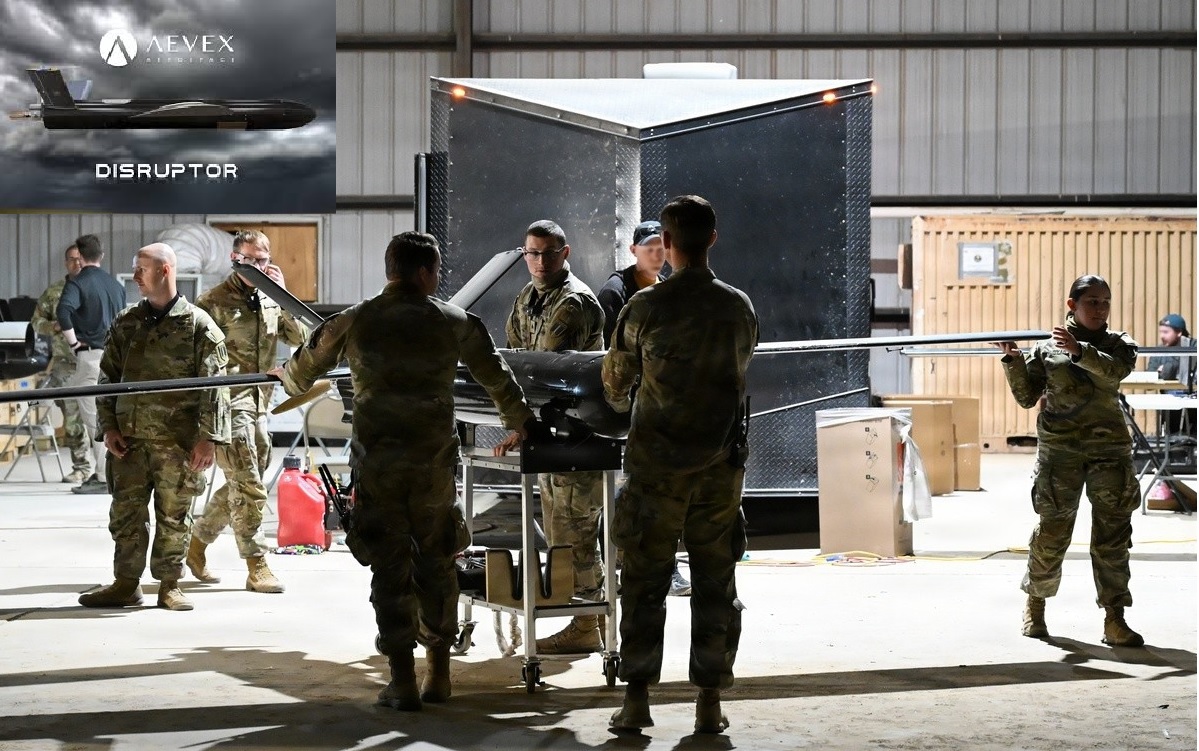
World
FORT IRWIN, Calif., — May 21, 2026 : The U.S. Army has publicly demonstrated the AEVEX Aerospace Disruptor loitering munition during the multinational Arcane Thunder 26 exercise, providing the clearest operational view so far of the long-range strike drone linked to the classified Phoenix Ghost program. Arcane Thunder 26 was conducted from April 6 to April 29, 2026, across Germany, Poland, and the United States. The unmanned systems portion of the exercise took place at the National Training Center in Fort Irwin, California, where soldiers from Multi-Domain Command Europe’s Innovations cell carried out night flight preparations and launch operations involving experimental unmanned aerial systems. Publicly released footage and photographs from the exercise confirmed the deployment of the Disruptor in a large-scale multinational training environment, marking a notable shift for a system that had previously remained largely undisclosed. Phoenix Ghost Program Origins The Disruptor is the largest and most capable platform within AEVEX Aerospace’s Phoenix Ghost family of loitering munitions. The Phoenix Ghost program was originally accelerated by the U.S. Air Force in April 2022 to support Ukraine with long-range strike capabilities. Although the program remained classified for several years, AEVEX publicly acknowledged the broader Phoenix Ghost family during the Association of the U.S. Army symposium in October 2024. At the time, Elizabeth Trammell, AEVEX’s Senior Director of Business Development, stated that the capability had existed “for a while” and that the company had received authorization to publicly discuss the system. Design and Technical Characteristics The Disruptor falls within the U.S. military’s Group 3 unmanned aircraft category, which includes systems weighing between 25 and 600 kilograms, operating at altitudes between 1,000 and 5,500 meters, and capable of speeds ranging from 185 to 460 kilometers per hour. The aircraft measures approximately 3 meters in length with a wingspan of 4.8 meters. It features a tubular carbon-fiber fuselage reinforced with aluminum structural components, straight wings with foam-filled aerofoil sections and wooden ribs, and a V-tail configuration. Propulsion is provided by a small internal combustion engine driving a two-blade pusher propeller. The baseline configuration has a launch weight of 84 kilograms and is deployed using a pneumatic catapult system. A larger 93-kilogram configuration employs a rocket-assisted takeoff booster. AEVEX has also confirmed that the system can be launched directly from a ground vehicle. Range, Payload, and Strike Capability The Disruptor was developed for long-range precision strike missions against light vehicles, radar systems, equipment, and personnel concentrations. The system is designed to conduct top-down air-burst attacks, improving effectiveness against unarmored targets positioned in trenches or behind cover. In addition to strike missions, the platform is also intended to support intelligence, surveillance, and reconnaissance operations. The drone incorporates the CompassX artificial intelligence-based sensor fusion navigation system, enabling visual-based navigation and alternative Positioning, Navigation, and Timing (PNT) capability for operations in GPS-denied or electronically contested environments. Performance varies depending on engine configuration. The standard carburetor-engine variant provides approximately 4.5 hours of endurance and a range of up to 600 kilometers while carrying a 22.5-kilogram warhead. An upgraded electronic fuel injection (EFI) configuration increases endurance to more than 11 hours, with manufacturer specifications indicating up to 14 hours, while extending operational range to approximately 1,300 to 1,400 kilometers with the same payload capacity. Ukraine Operations and Production Expansion AEVEX has confirmed that the Disruptor has been employed in Ukraine as part of the Phoenix Ghost effort. During the company’s first-quarter 2026 earnings call, AEVEX CEO Roger Wells stated that the company executed the Phoenix Ghost program from 2022 through 2025 and continues work under the EUCOM Deep Strike Program. According to company figures, the combined programs account for more than 9,300 systems delivered or committed through the end of 2026, representing contracts valued at approximately $1.2 billion. Operational details regarding combat deployment and targeting remain classified. To support expanded production, AEVEX has increased cooperation with propulsion and launch-system suppliers. In April 2026, X-Bow Systems announced a contract to provide hundreds of rocket-assist production kits and thousands of solid rocket motors for Disruptor launch systems. Deliveries under the contract are scheduled between March and August 2026. X-Bow Systems stated that the production effort relies on additive-manufactured solid propellant technology intended to accelerate manufacturing timelines and increase production capacity. Company CEO Jason Hundley said the contract demonstrated the ability to transition from contract award to operational field capability within a matter of months. Expanding Role in U.S. Military Operations The public appearance of the Disruptor during Arcane Thunder 26 reflects the increasing emphasis within the U.S. military on scalable long-range loitering munitions capable of operating in contested electronic warfare environments. The system’s integration into multinational exercises also highlights the growing operational focus on precision strike drones designed for distributed operations across NATO and other potential theaters of conflict.
Read More → Posted on 2026-05-21 15:39:26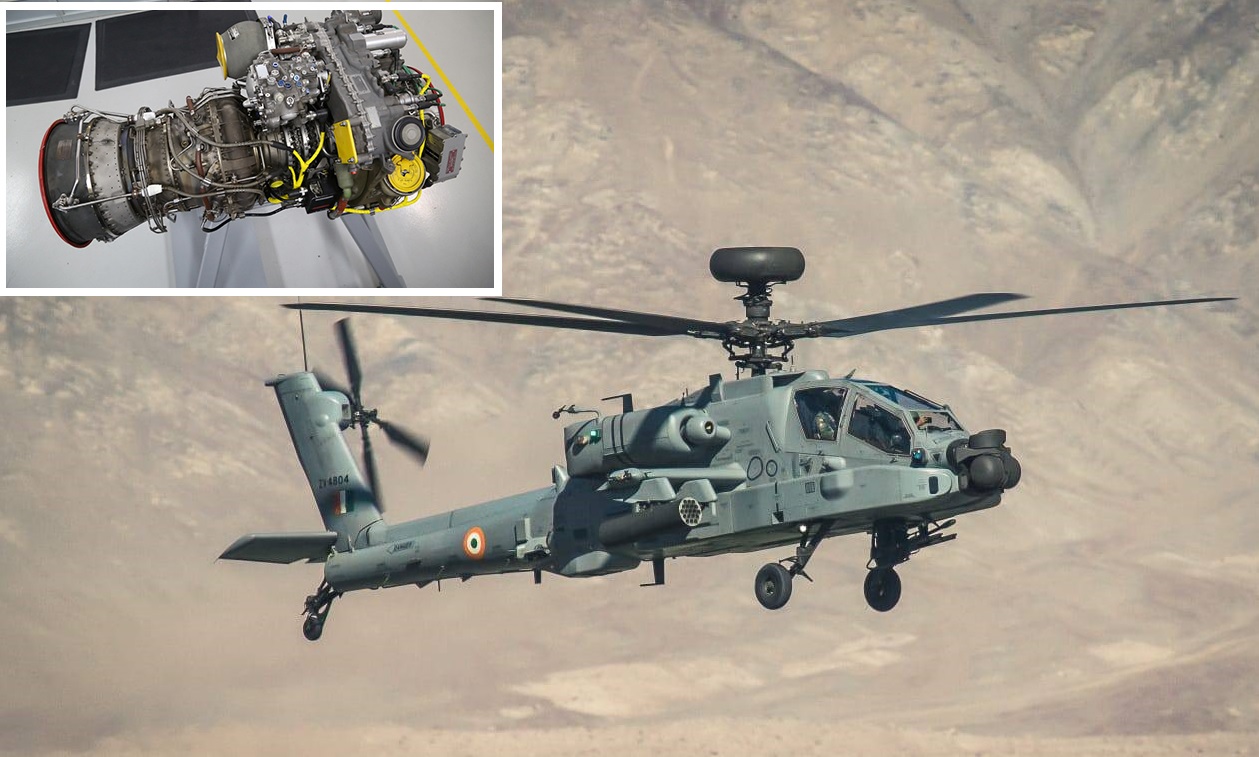
World
LONDON, — May 21, 2026 : GE Aerospace has been awarded a three-year contract by Boeing Defence UK to provide engine support services for the British Army’s fleet of AH-64E Apache Guardian attack helicopters. The agreement covers maintenance and support for the T700-GE-T701D turboshaft engines powering the AH-64E fleet and establishes a localized support network within the United Kingdom intended to improve aircraft availability and operational readiness while reducing dependence on overseas repair channels. The contract is structured under a Performance Based Logistics (PBL) model, under which compensation is tied directly to operational performance metrics such as fleet readiness and aircraft availability rather than the number of labor hours performed or spare parts supplied. The arrangement is designed to align industrial support with the British Army’s operational requirements by incentivizing reduced downtime and sustained mission capability. As part of the agreement, GE Aerospace will permanently station a field service representative at Wattisham Flying Station, the British Army’s primary Apache operating base in Suffolk. The on-site support presence is intended to provide immediate technical assistance to military maintenance crews and flight operations personnel. Major repair and overhaul work for the engines will be carried out at StandardAero’s facility in Gosport on England’s south coast. The site serves as a major rotary-wing maintenance, repair, and overhaul hub supporting several UK military aviation programs. Paul Ferraro, Vice President and General Manager for Defense Engines and Services at GE Aerospace, said the contract strengthens regional support and services for the UK Apache fleet while helping ensure readiness and availability. The T700-GE-T701D is the latest production variant of the T700 engine family, which has remained in continuous production since the late 1970s. The engine produces approximately 1,800 shaft horsepower and incorporates full-authority digital engine control (FADEC), improving fuel efficiency, engine management, and pilot workload compared with earlier variants. According to publicly available program data, the T700 engine family has accumulated more than 100 million flight hours worldwide, with over 25,000 engines delivered to approximately 130 operators across 50 countries. In addition to the Apache, the engine family powers platforms including the UH-60 Black Hawk and the SH-60 Seahawk. The British Army is currently transitioning from the earlier AH-64D Longbow Apache to the AH-64E Guardian under a government-to-government agreement signed with the United States in 2020. The modernization effort follows two decades of operational service by the AH-64D fleet, including combat deployments in Afghanistan. The UK plans to field a fleet of 50 AH-64E helicopters. The AH-64E variant incorporates upgraded avionics, improved networking capability, enhanced sensors, and greater interoperability with allied forces. The aircraft is also capable of coordinating operations with unmanned aerial systems. The UK Apache modernization effort aligns with broader allied procurement trends. Australia is also acquiring the AH-64E under Project LAND 4503, reflecting continued allied investment in the Boeing platform and its support infrastructure. Because the T700 engine family supports a significant portion of NATO and allied helicopter operations across missions including close air support, air assault, medical evacuation, maritime patrol, and search and rescue, maintaining regional maintenance and supply-chain capability remains an important operational requirement for allied forces. The three-year contract provides the British Army with a dedicated domestic repair and support framework intended to sustain Apache fleet readiness and ensure consistent engine maintenance aligned with operational requirements.
Read More → Posted on 2026-05-21 15:11:21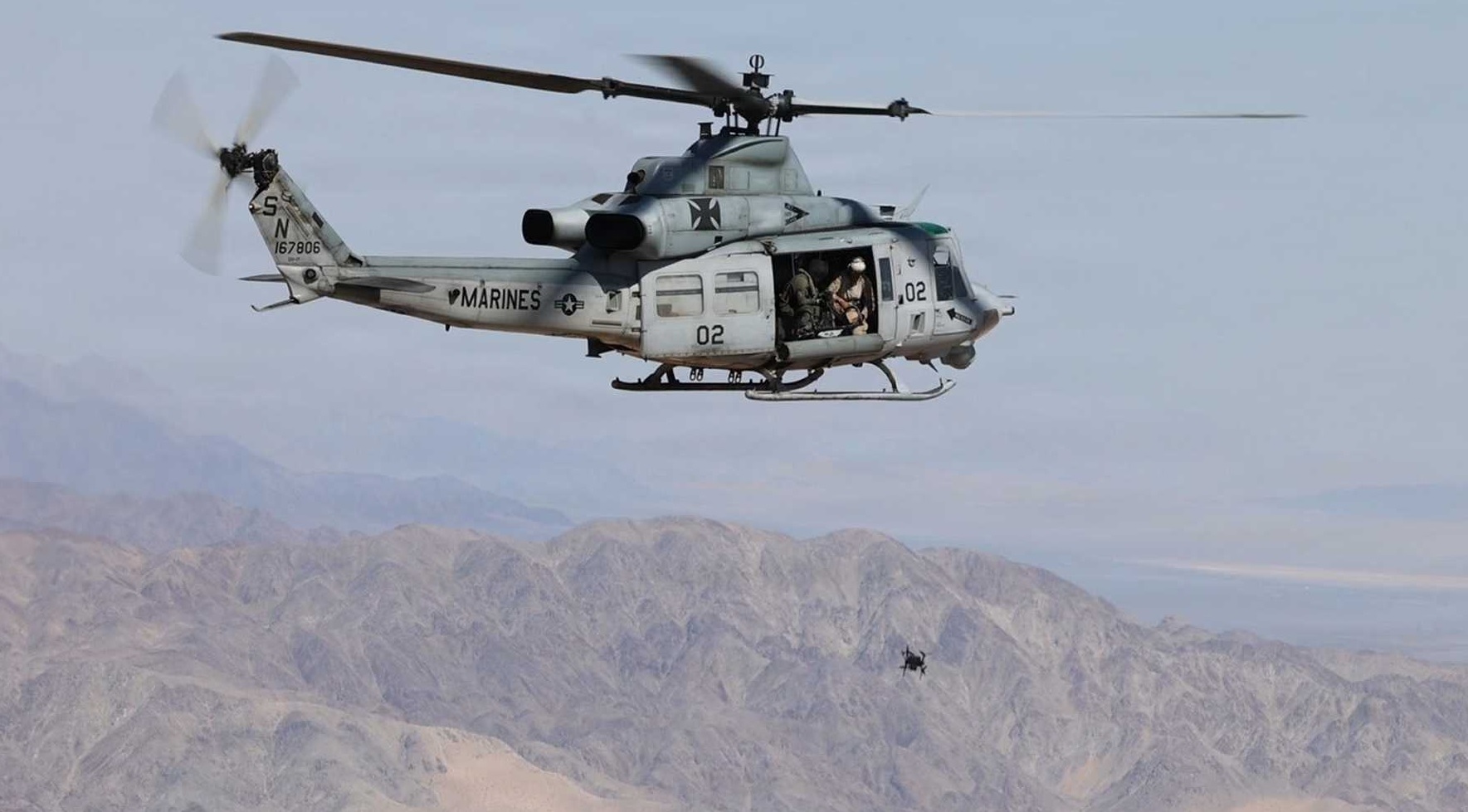
World
MARINE CORPS AIR GROUND COMBAT CENTER TWENTYNINE PALMS, Calif., — May 21, 2026 : The U.S. Marine Corps has demonstrated the use of UH-1Y Venom and AH-1Z Viper helicopters as airborne control platforms for first-person view (FPV) drones, validating a concept designed to extend operational reach while reducing risk to crewed aircraft operating near contested areas. The demonstration involved Marines from Marine Light Attack Helicopter Squadron 169 (HMLA-169), Marine Aircraft Group 39, 3rd Marine Aircraft Wing, and the 3rd Light Armored Reconnaissance Battalion, 1st Marine Division. The exercise was conducted at Marine Corps Air Ground Combat Center Twentynine Palms, California, as part of ongoing efforts to integrate uncrewed systems into Marine Corps aviation operations. During the exercise, Marines from the 3rd Light Armored Reconnaissance Battalion launched a Neros Archer FPV drone from a ground position before transferring control authority to a specialized operator team aboard a UH-1Y Venom helicopter operating miles away from the target area. Operators inside the aircraft then maneuvered the drone toward its designated target, demonstrating the helicopter’s ability to function as an airborne command and remote-control platform. The UH-1Y Venom served as an elevated communications and coordination node during the mission. By operating at higher altitude, the aircraft extended radio line-of-sight communications and reduced limitations caused by terrain, urban infrastructure, and ground-level interference that commonly affect drone operations. Capt. Quinton Thornbury, a UH-1Y Venom pilot with HMLA-169, said the primary objective of the exercise was to test the feasibility of deploying and controlling an FPV drone from a moving helicopter. “The primary objective was to test the feasibility of a non-kinetic drop and deployment of a first-person view drone from a moving helicopter, which we were able to do today,” Thornbury said. “From there, validate that we can control the maneuver of that drone from the back of the aircraft.” According to the Marine Corps, the concept is intended to address the growing threat posed by advanced integrated air defense systems that increasingly force conventional rotary-wing aircraft to operate from greater stand-off distances. By combining the endurance, altitude, and networking capabilities of the H-1 helicopter fleet with expendable FPV drones, the service aims to shift terminal battlefield risk from crewed aircraft to uncrewed systems. Sgt. Matthew Pocklington, a UH-1Y crew chief with HMLA-169, said the tactic allows helicopter crews to continue supporting ground forces while remaining farther from hostile threats. “This tactic allows us to keep our air crews safe and sound while pushing the lethal edge of the battlefield out to where the enemy is,” Pocklington said. “We are still providing our ground support, and close air support, but in a way that lets the drones close with and destroy the enemy, rather than putting our Marines in harm’s way.” The exercise used the Neros Archer FPV drone manufactured by Neros Technologies. The Marine Corps stated that the Archer system was selected because it is currently the most widely used FPV drone among Marine infantry units and already benefits from an established logistics and support network, which could accelerate integration across aviation units. Officials also highlighted the drone’s compact size and precision targeting capability, noting that the system can support operations in complex combat environments while reducing the risk of collateral damage. The demonstration further showed the potential for FPV drones to function as remote extensions of helicopter sensors and strike capabilities. Marine Corps officials stated that the concept could provide commanders with additional options for engaging enemy armor, fortified positions, and maritime targets using low-cost attritable systems instead of relying solely on expensive guided munitions. The integration is expected to provide operational advantages for the AH-1Z Viper attack helicopter. Under conventional tactics, the aircraft often must approach closer to targets for visual identification and engagement using onboard cannons or rockets. By assigning forward reconnaissance and terminal strike functions to FPV drones, helicopter formations can detect, track, and engage threats from significantly greater distances while reducing exposure to enemy air defenses. The Marine Corps said the demonstration forms part of broader efforts to evaluate new methods for integrating crewed aviation platforms with uncrewed systems across future operational environments.
Read More → Posted on 2026-05-21 15:04:18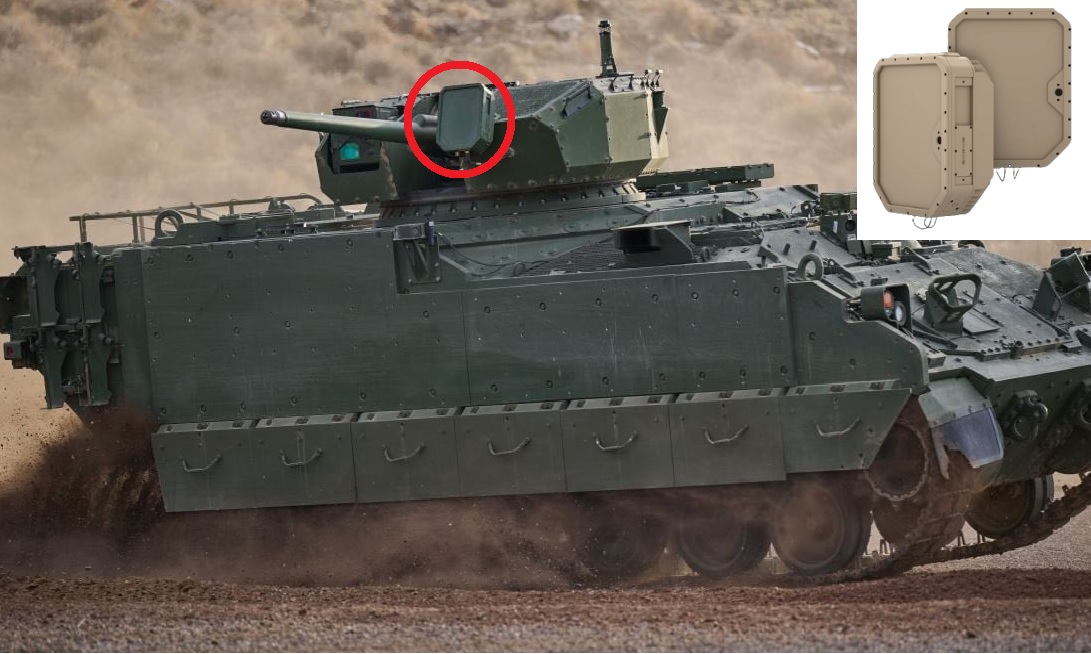
World
FORT CAVAZOS, Texas — May 21, 2026 : The U.S. Army’s 1st Cavalry Division is evaluating two prototype Armored Multi-Purpose Vehicle 30mm variants (AMPV-30) equipped with EchoShield radar systems for counter-unmanned aerial system (C-UAS) operations. The vehicles were developed and supplied by BAE Systems as company-funded prototypes and delivered to the Army in April 2026 under the service’s “Transformation in Contact” (TiC) 2.0 initiative. The program is intended to accelerate the field testing of emerging technologies by placing new systems directly into operational units for soldier evaluation. AMPV-30 Configuration The AMPV platform was originally developed by BAE Systems to replace the U.S. Army’s legacy M113 armored vehicle family, providing improved survivability, mobility, and onboard power generation for Armored Brigade Combat Teams (ABCTs). The AMPV-30 configuration transforms the standard support vehicle into a mobile counter-drone platform designed to provide localized air defense protection for armored formations operating in contested environments. The prototypes are equipped with the Kongsberg Gruppen MCT-30 remotely operated turret, derived from the RT-20 design. The turret is armed with a Mk 44 Bushmaster II 30mm autocannon capable of firing programmable airburst munitions (PABM), which are designed to engage aerial targets by creating fragmentation patterns along the drone’s projected flight path. The turret also includes a coaxial 7.62mm machine gun and can be configured to carry additional weapons such as FGM-148 Javelin anti-tank guided missiles or laser-guided 70mm rockets depending on mission requirements. EchoShield Radar Integration To provide aerial target detection and tracking capability, the AMPV-30 integrates the EchoShield radar system developed by U.S.-based radar manufacturer Echodyne. The radar is externally mounted on the vehicle and provides continuous low-altitude airspace surveillance for detecting and tracking small unmanned aerial systems operating near the ground. EchoShield is a software-defined cognitive 4D pulse-Doppler radar utilizing Echodyne’s proprietary Metamaterials Electronically Steered Array (MESA) architecture. The system operates in the Ku-band frequency range between 15.4 and 16.6 GHz and is specifically optimized to detect low-flying, slow-moving, and small radar cross-section targets in cluttered battlefield environments. The radar dynamically adjusts waveforms and beam scheduling through software to improve target detection and tracking performance without requiring physical hardware modifications. Radar Specifications According to published technical specifications, the EchoShield radar provides high-fidelity tracking data, including range, azimuth, elevation, and velocity information. Key specifications include: Tracking capacity for more than 1,000 objects simultaneously Angular tracking accuracy of less than 0.5 degrees in both azimuth and elevation Field of view of 130 degrees in azimuth and 90 degrees in elevation Track update rates of up to 10 Hz Detection range of approximately 3 kilometers for Group 1 drones Detection range of up to 11.4 kilometers for larger Group 3 UAVs Maximum instrumented range of 30 kilometers depending on mission configuration The radar panel measures approximately 42.5 × 33 × 18 centimeters, weighs 17.8 kilograms, and consumes less than 250 watts during operation, allowing integration onto mobile armored platforms with limited impact on vehicle power requirements. EchoShield also incorporates native target classification capability using Doppler signatures to distinguish drones from environmental clutter and other airborne objects, including hovering UAVs operating close to the ground. Operational Evaluation The AMPV-30 prototypes are being evaluated as part of the Army’s broader modernization effort to improve protection against emerging drone threats on the battlefield. The integration of mobile radar surveillance, programmable airburst munitions, and armored mobility reflects a shift in Army doctrine toward providing armored and cavalry formations with organic short-range air defense capabilities rather than relying solely on dedicated air defense artillery units. The Army has stated that the AMPV-30 vehicles remain prototype systems developed for testing and capability assessment purposes. At present, there is no formal procurement requirement or funded acquisition program for the configuration. The ongoing evaluation is intended to assess the operational effectiveness of combining counter-drone detection and engagement systems onto the AMPV platform to support future battlefield requirements.
Read More → Posted on 2026-05-21 14:37:42
World
BEIJING, — May 20, 2026 : Chinese customs authorities have halted the import and domestic clearance of Nvidia’s GeForce RTX 5090D V2 graphics processing unit (GPU), effectively blocking sales of the China-specific gaming chip across the country, according to reports from Chinese technology industry sources and motherboard manufacturers. The restriction reportedly took effect on May 15 and coincided with the state visit to Beijing by U.S. President Donald Trump. Nvidia CEO Jensen Huang was also present in China during the visit after reportedly joining the U.S. delegation at the last minute during a stop in Alaska. Huang traveled alongside several American technology executives participating in trade and diplomatic discussions. The development came as the U.S. Department of Commerce reportedly authorized approximately 10 major Chinese companies to purchase Nvidia H200 artificial intelligence processors under a controlled licensing framework. The approvals were viewed as part of a limited export mechanism allowing select Chinese firms to access restricted AI hardware under strict regulatory conditions. At the same time, Beijing moved to block Nvidia’s GeForce RTX 5090D V2, a consumer-oriented Blackwell-based GPU specifically engineered for the Chinese market to comply with U.S. export regulations. The RTX 5090D V2 was developed by Nvidia as a downgraded version of the standard RTX 5090. The China-specific model featured 24GB of VRAM instead of 32GB and used a narrower memory bus intended to reduce performance in advanced computing and AI workloads while remaining within U.S. export compliance limits. Although marketed primarily toward gamers and professional 3D creators, industry reports indicated that Chinese AI developers increasingly adopted the GPU as an alternative to restricted enterprise-grade AI accelerators. Some reports also stated that certain firms modified the cards to increase VRAM capacity to as much as 48GB in an effort to improve AI model training performance and bypass built-in limitations. According to Chinese supply chain sources and local technology publications, customs officials informed importers, retailers, and motherboard manufacturers that the RTX 5090D V2 would no longer receive processing approvals or sales permits. Logistics companies reportedly received notices stating that import clearance for the product would not be granted. The move represents a significant policy shift because the restriction was initiated by Beijing rather than Washington. Analysts said the action reflects broader Chinese industrial efforts aimed at reducing reliance on modified American semiconductor products while accelerating the transition toward domestically developed alternatives. Chinese semiconductor companies including Huawei and Cambricon are expected to benefit as authorities continue encouraging AI developers and technology firms to adopt local hardware ecosystems and reduce dependence on foreign suppliers. Because the RTX 5090D V2 was manufactured exclusively for China, the customs restriction leaves Nvidia with limited alternative destinations for existing inventory. The development also adds further pressure on Nvidia’s China business following multiple rounds of U.S. export restrictions affecting advanced GPUs and AI accelerators, including earlier limitations involving the RTX 4090D and enterprise Blackwell products. Nvidia has not issued an official statement regarding the reported customs action as of the latest available information. No formal public decree or comprehensive government blacklist update has been independently confirmed beyond customs notifications referenced by industry sources and Chinese manufacturers.
Read More → Posted on 2026-05-20 16:41:03Search
Top Trending in 24 Hours
-
 U.S. Space Force Awards Impulse Space $28 Million Contract for 2029 Orbital Surveillance Mission
-
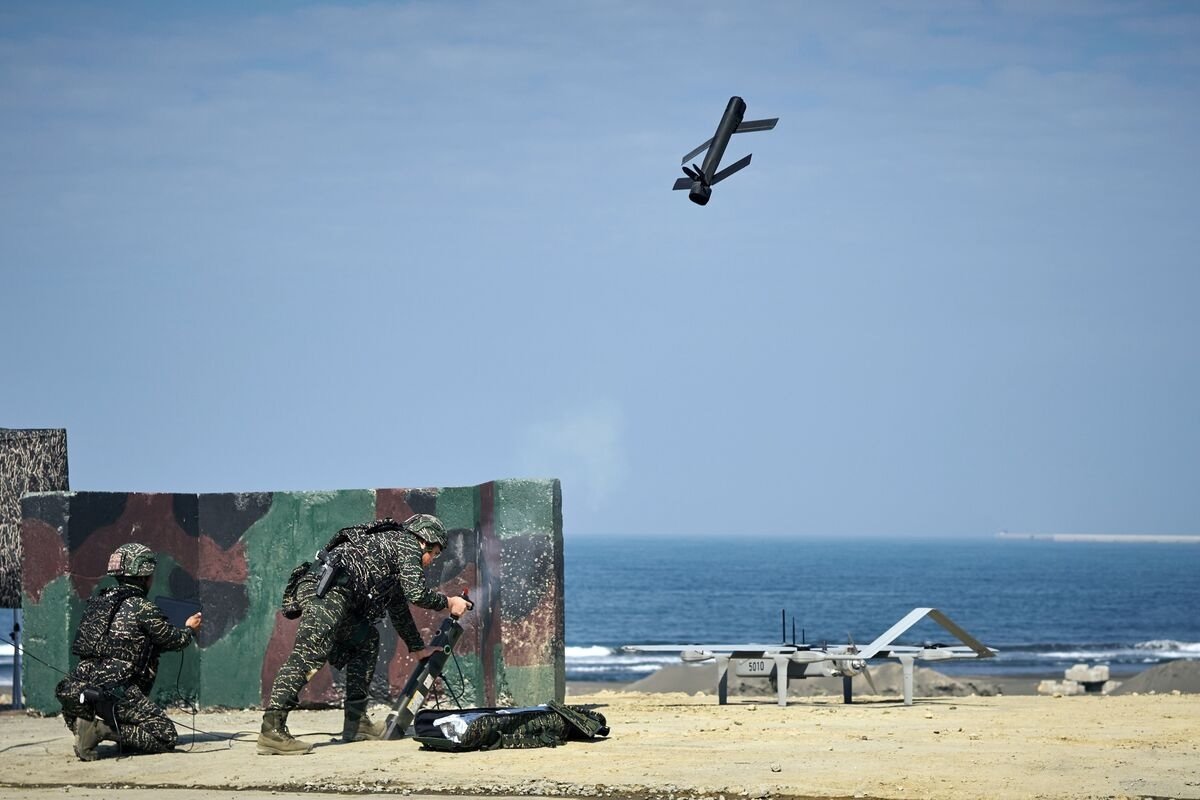 Taiwan Integrates Attack Drones Into Three-Service Live-Fire Exercise at Jiupeng for First Time
-
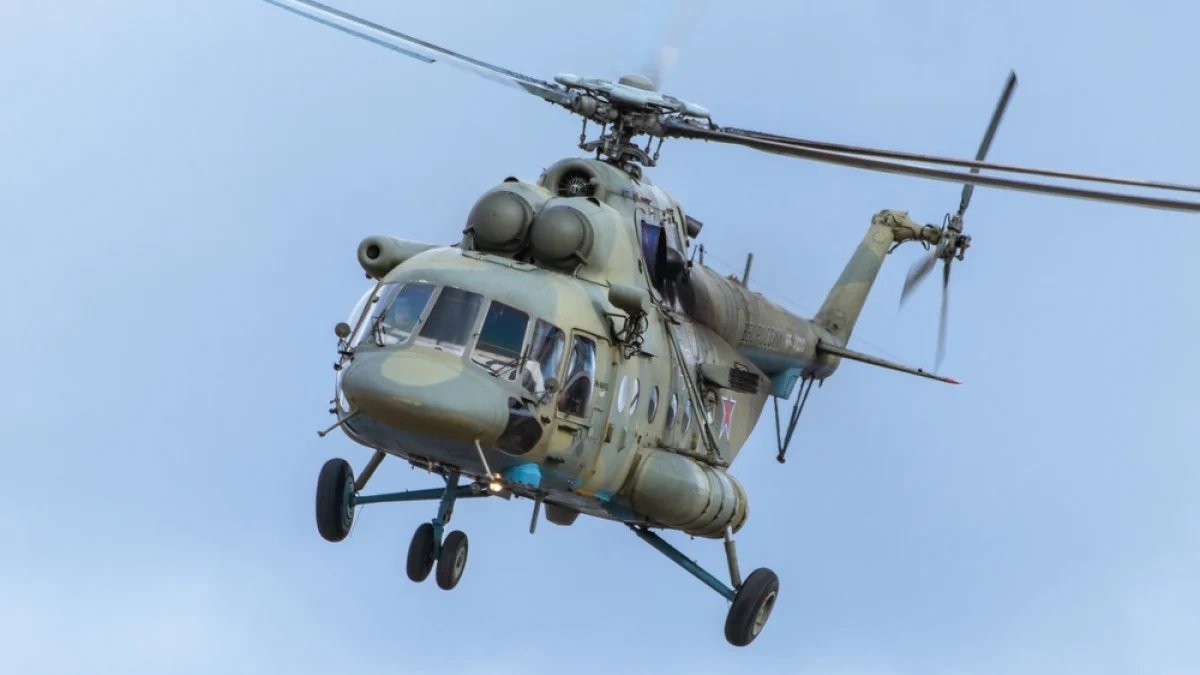 Russian Mi-8 Military Helicopter Crosses Into Polish Airspace for 42 Seconds Near Braniewo
-
 UK Air Force Hawk T2 Trainer Aircraft Crashes Near Valley After Takeoff, Both Pilots Eject Safely
-
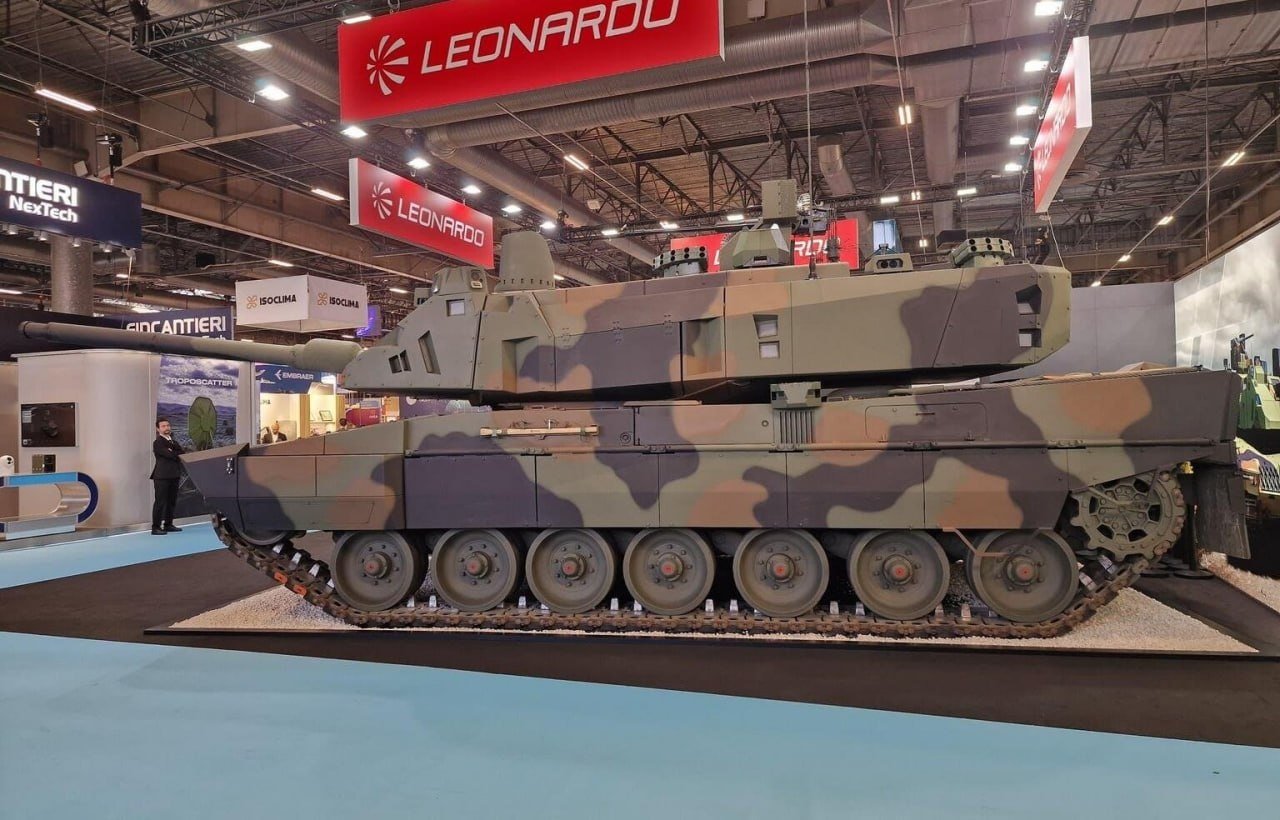 Italy Allocates Up to €5.14 Billion for Procurement of 132 New Main Battle Tanks
-
 Roketsan KARAOK Anti-Tank Missile Successfully Hits Aerial Target for First Time
-
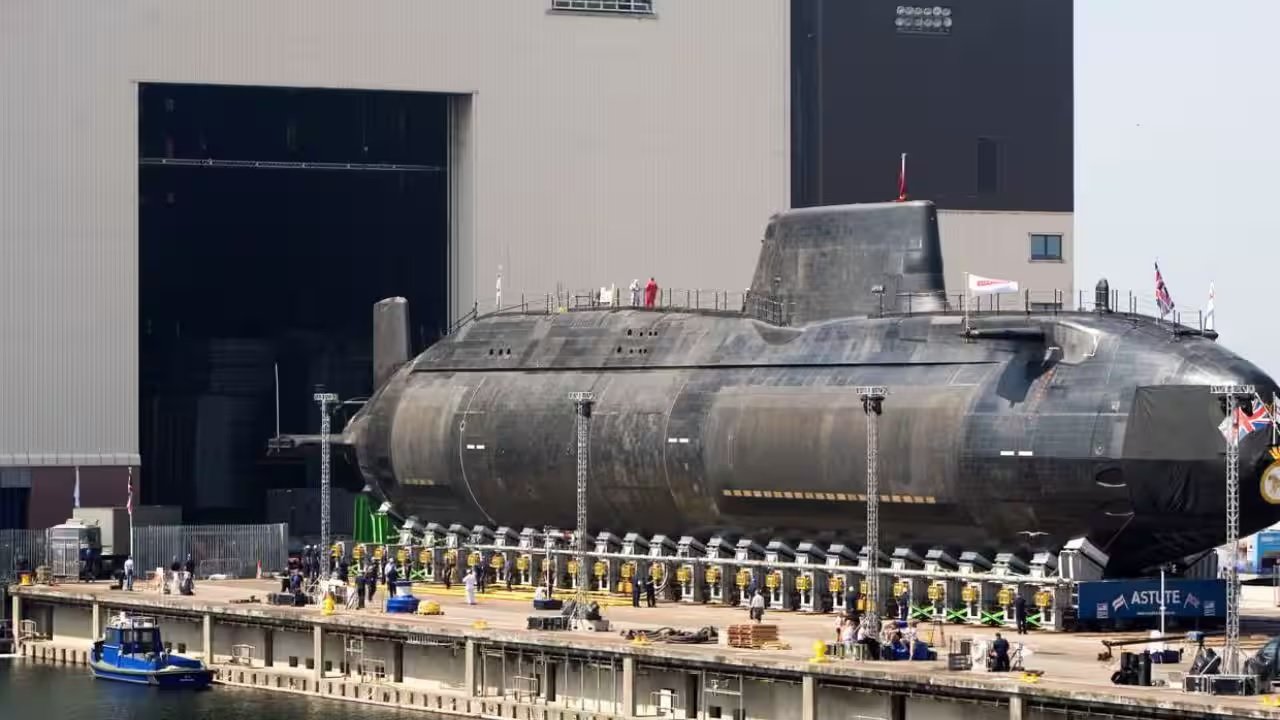 UK Announces £6 Billion Investment to Double Nuclear Submarine Production Rate
-
 Dutch Firm DeltaQuad Launches Evo-LE VTOL UAV With Up to Eight-Hour Endurance
Top Trending in 4 Days
-
 U.S. Army Awards $10.64 Million Contract to Ukrainian Drone Maker Skyeton for Raybird Systems
-
 India’s xTerra Robotics Launches Indigenous DHAV-Hy Wheeled-Legged Quadruped for Industrial Inspection
-
 U.S. Space Force Seeks Rapid-Response Satellites for Close-Range Orbital Inspections
-
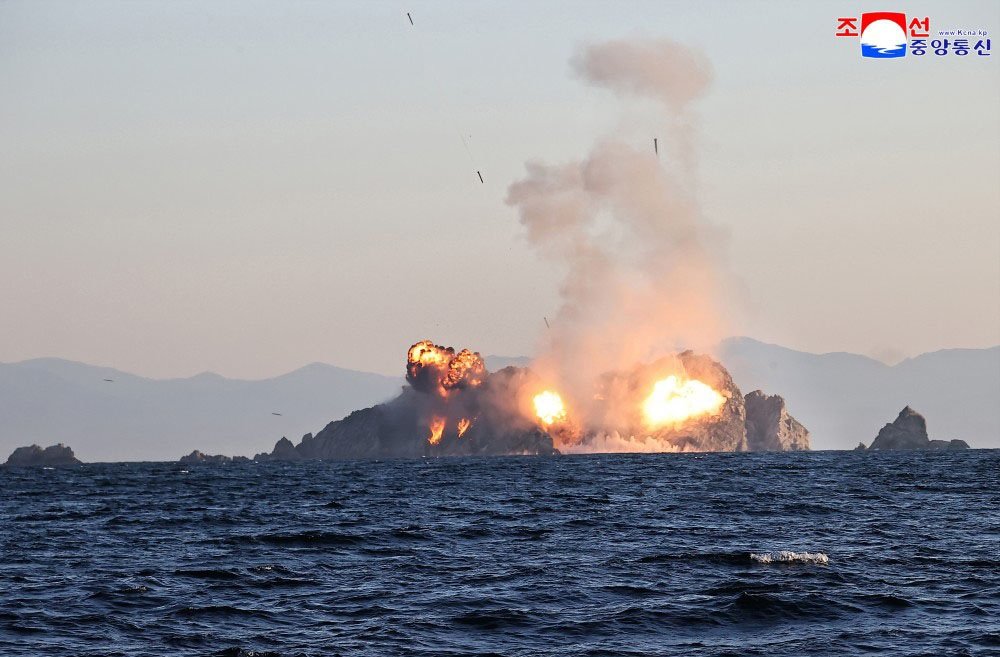 North Korea Fires Short-Range Ballistic Missile Toward Sea of Japan After Freedom Edge 26
-
 U.S. Government Seizes Almasirah.net, Houthi-Linked News Website
-
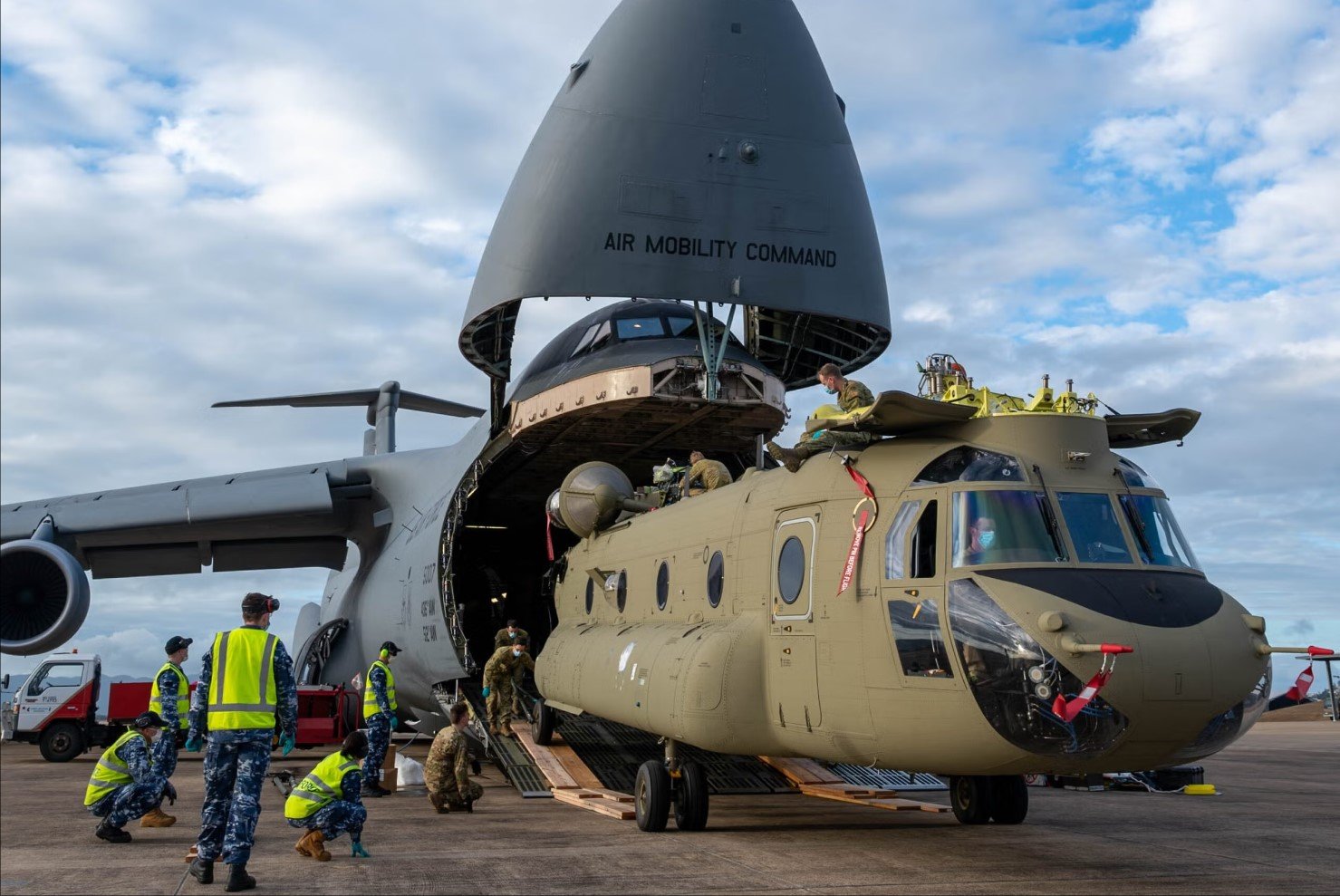 U.S. Delivers First CH-47F Chinook to Egypt Under 12-Helicopter Deal
-
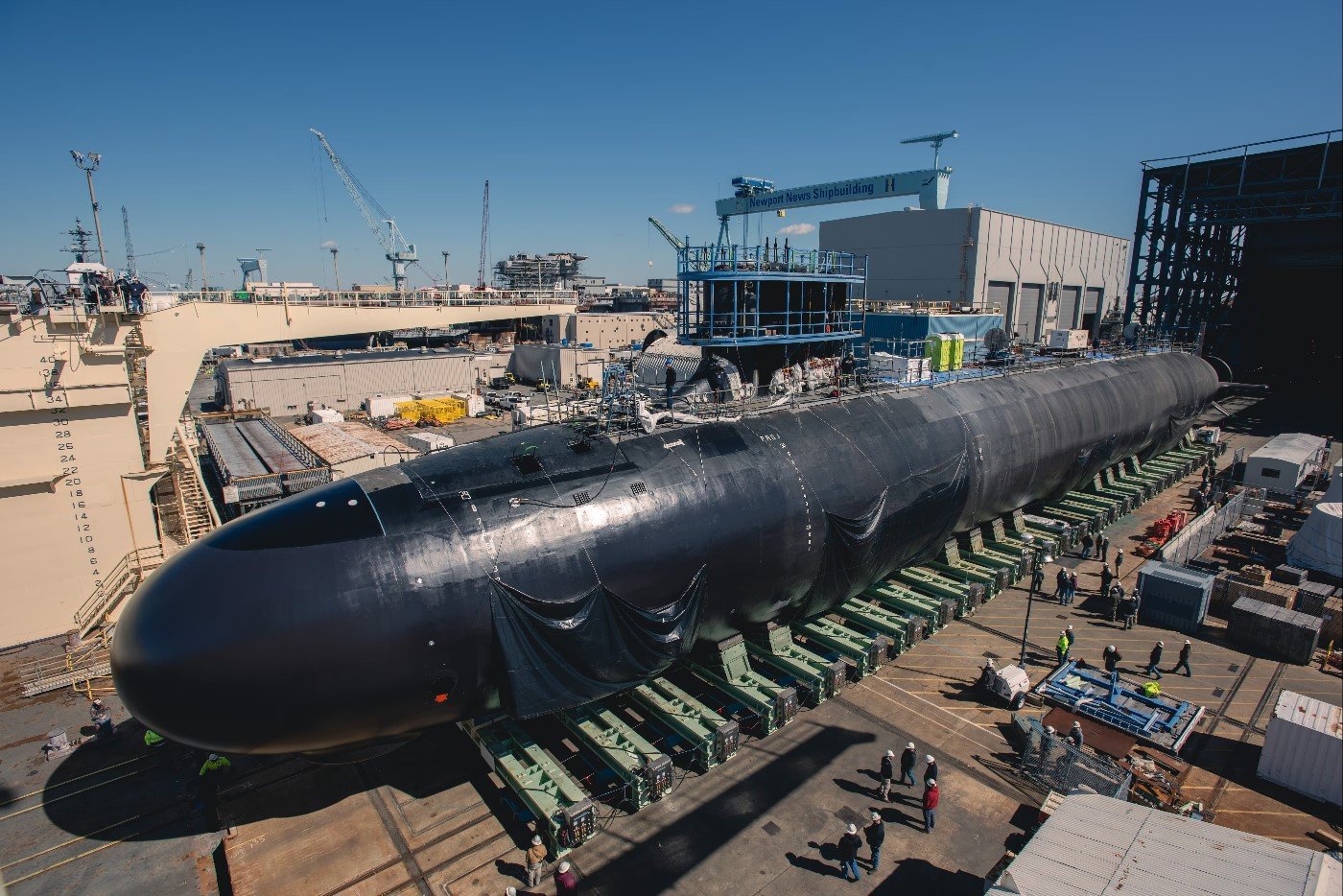 US Navy Submarine Director Outlines Four-Pillar Plan to Raise Build Rates
-
 Ukraine Reports First Use of Fire Point’s FP-7 Tactical Ballistic Missile inMoscow-Region Strikes on Oil Refinery