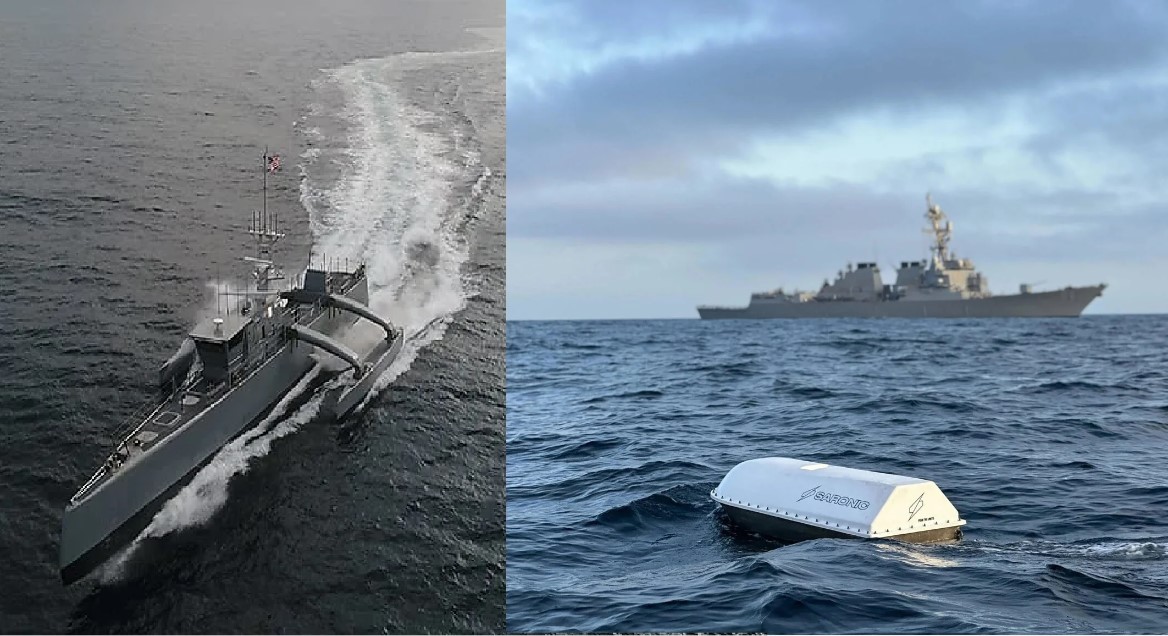
NATIONAL HARBOR, Md., — April 22, 2026 : The U.S. Navy is preparing a significant expansion of unmanned maritime capabilities in the Indo-Pacific, with plans to deploy more than 30 Medium Unmanned Surface Vessels (MUSVs) and thousands of smaller unmanned surface vessels (USVs) across the region by 2030, according to officials speaking at the Navy League’s Sea-Air-Space Symposium.
Capt. Garrett Miller, commander of Surface Development Group One, stated during a panel discussion on Monday that the planned deployments are based on Indo-Pacific operational requirements and long-term surface force planning data extending through 2045. The projected force structure also includes a substantial number of unmanned aerial systems (UAS) operating from both manned and unmanned naval platforms.
Miller indicated that the expansion reflects priorities identified by U.S. Indo-Pacific Command (INDOPACOM), particularly in response to evolving maritime challenges in the region. The People’s Liberation Army Navy (PLAN) has expanded both fleet size and long-range strike capabilities in recent years, transitioning from a primarily near-shore operational focus to sustained blue-water deployments across the Indo-Pacific.
Force Structure and Operational Concepts
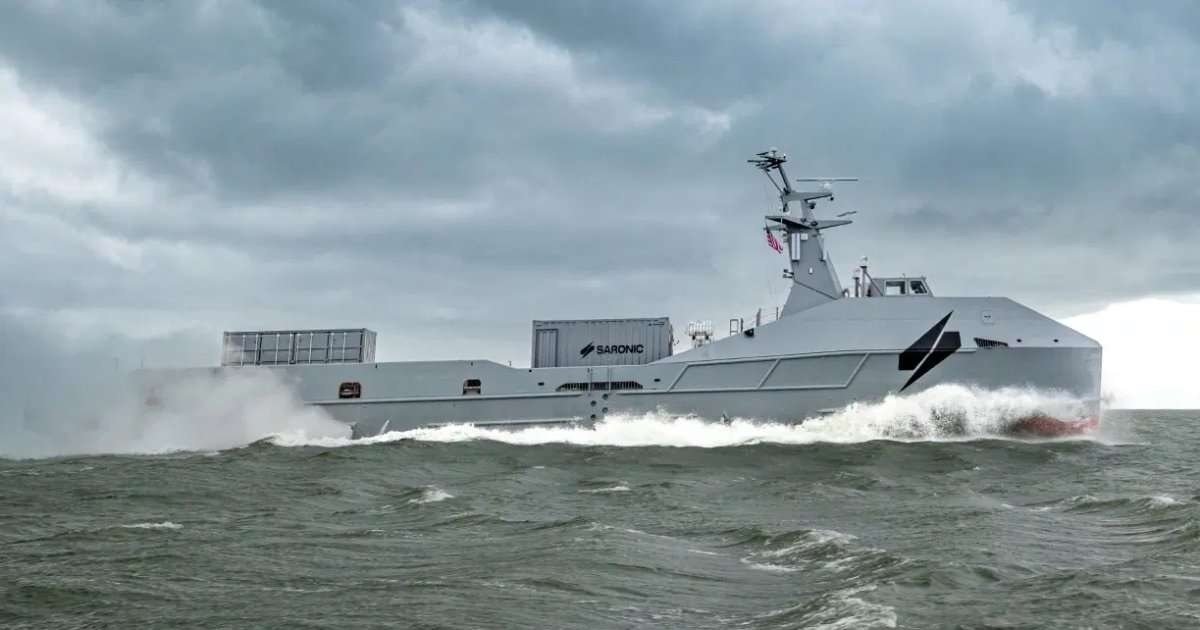
The planned increase in MUSVs represents a significant rise from the Navy’s current inventory of approximately four vessels. Expanding to more than 30 MUSVs in the Indo-Pacific by 2030 would mark a roughly sevenfold increase in this category alone. In parallel, the Navy expects to field thousands of smaller USVs designed to operate in distributed and networked formations.
These developments are aligned with a broader operational concept supported by INDOPACOM leadership, including Adm. Samuel Paparo, who in 2024 outlined the use of large numbers of autonomous systems to complicate adversary planning and enhance distributed maritime operations. The concept includes coordinated use of surface, aerial, and subsurface unmanned platforms for surveillance, targeting, and deterrence missions, including scenarios involving Taiwan.
The Navy’s approach also aligns with the Department of Defense’s Replicator initiative, which focuses on accelerating the procurement and deployment of autonomous systems. According to Navy statements, the first tranche of capabilities under this initiative reached initial operational status in August 2025.
Lessons from Recent Conflicts
U.S. officials have examined the employment of uncrewed systems in recent operational environments, including Ukrainian use of maritime drones against the Russian Black Sea Fleet, as well as USV activity in the Persian Gulf and Red Sea during ongoing Middle East conflicts.
Rear Adm. Douglas Sasse, director of the Assessment Division (N81) in the Office of the Chief of Naval Operations, noted that these cases demonstrate the effectiveness of unmanned systems in constrained maritime environments. He described such scenarios as allowing rapid deployment from coastal areas with relatively short operational distances.
Sasse emphasized, however, that conditions in the Indo-Pacific differ significantly. The region’s vast distances between islands and archipelagos create operational challenges for unmanned systems, including endurance, sustainment, and survivability over long transit routes. He stated that these factors require different operational approaches compared with those used in confined seas such as the Black Sea or Red Sea.
Logistics and Sustainment Developments
To address long-range operational requirements, the Navy is advancing sustainment concepts for unmanned platforms. On April 15, 2026, Military Sealift Command announced that the fleet replenishment oiler USNS Guadalupe (T-AO 200) conducted an astern refueling of the MUSV Seahawk off the coast of Southern California.
The operation transferred nearly 700 gallons of diesel fuel and was described as a proof-of-concept demonstration for supporting MUSVs during extended deployments alongside carrier strike groups. The event represents a step toward integrating unmanned vessels into standard naval logistics frameworks.
Integration with Carrier Strike Groups
The Navy has also outlined near-term operational integration plans. During the WEST 2026 conference in San Diego, officials confirmed that unmanned systems are expected to deploy alongside the Theodore Roosevelt Carrier Strike Group later in 2026.
Miller stated that MUSVs are expected to support a range of missions, including maritime domain awareness and intelligence collection. He noted that onboard sensor systems, including advanced camera suites, could provide fleet commanders with additional operational flexibility and expanded situational awareness.
Surface Development Group One, based in San Diego, continues to oversee the development, testing, and operational evaluation of unmanned surface vessels. The organization is responsible for integrating these platforms into fleet operations as part of the Navy’s broader transition toward distributed and autonomous maritime capabilities.
Regional Coordination and Strategic Context
Recent Pentagon engagements with Indo-Pacific allies have included commitments to expand missile and unmanned system capabilities along the first island chain. The planned deployment of large numbers of USVs and associated systems is expected to complement these efforts by enhancing surveillance coverage and distributed operational capacity across the region.
The Navy’s long-term planning framework indicates that unmanned systems will form a core component of future maritime operations in the Indo-Pacific, with continued development focused on scalability, endurance, and integration with existing naval forces.
——— End of Article ———