WASHINGTON, — April 22, 2026 : U.S. intelligence assessments indicate that Iran continues to retain a substantial portion of its military capability following the conclusion of the 38-day U.S. and Israeli campaign known as Operation Epic Fury, despite public statements from senior U.S. officials describing the operation as having eliminated Tehran’s ability to project power.
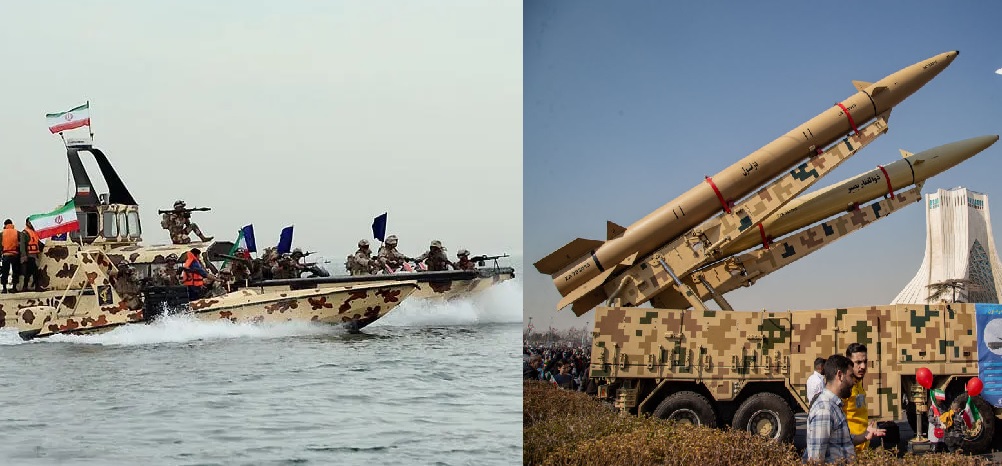
According to multiple U.S. officials familiar with classified battle damage assessments, as of the ceasefire that took effect in early April 2026, approximately half of Iran’s ballistic missile stockpile and associated launch systems remained intact. Intelligence estimates suggest Iran still possesses thousands of ballistic missiles overall, including more than 1,000 medium-range systems from a pre-conflict inventory of roughly 2,500.
Officials said a significant number of launchers were preserved due to dispersal strategies and storage in hardened underground facilities. Some of these sites were damaged or buried during strikes but remained recoverable, and Iranian forces are assessed to have used the ceasefire period to restore access to certain systems.
Missile and UAV Capabilities Remain Intact
In written testimony submitted ahead of an April 2026 hearing of the House Armed Services Committee, Marine Lt. Gen. James Adams, director of the Defense Intelligence Agency, stated that Iran retains “thousands of missiles and one-way attack UAVs” capable of threatening U.S. and partner forces across the region.
The assessments indicate that while the campaign degraded missile production and deployment infrastructure, attrition and expenditure did not eliminate Iran’s ability to conduct further strikes.
Naval Forces: Conventional Fleet Hit, IRGC Assets Survive
U.S. officials confirmed that Operation Epic Fury inflicted extensive losses on Iran’s conventional naval forces. Pentagon spokesman Sean Parnell stated that U.S. and allied strikes destroyed approximately 92 percent of Iran’s largest naval vessels and about 44 minelayers. He described the operation as the largest elimination of naval capacity over a three-week period since World War II.
However, intelligence assessments indicate that roughly 60 percent of the naval forces of the Islamic Revolutionary Guard Corps (IRGC) remained operational at the start of the ceasefire. The IRGC Navy, which relies on asymmetric tactics, was not the primary focus of strikes targeting larger warships.
Pre-conflict estimates placed the IRGC’s inventory of small, fast-attack craft in the thousands. These vessels, designed for swarm tactics and operations in confined waterways, have continued to operate in the Persian Gulf and Strait of Hormuz.
On Wednesday, shortly after President Donald Trump announced a unilateral extension of the ceasefire to allow additional time for negotiations, Iranian gunboats conducted attacks on commercial shipping in the Strait of Hormuz. The incidents involved IRGC vessels firing on multiple tankers, including Indian-flagged ships, causing damage in at least one case and forcing several vessels to alter course.
The attacks disrupted maritime traffic and contributed to upward pressure on global energy prices. Iranian Foreign Minister Abbas Araghchi stated on the same day that responsibility for the economic impact “lies with the aggressors.”
Air Force Degraded but Operational
U.S. intelligence further assesses that Iran’s air force, while degraded, remains largely operational. Approximately two-thirds of Iran’s aircraft are still assessed to be in service.
The fleet continues to consist primarily of older U.S.- and Soviet-origin platforms, including F-14 Tomcats, F-4 Phantom II fighters, F-5 Tiger II aircraft, MiG-29s, and Su-24 strike aircraft, along with domestically upgraded systems.
Although air operations were significantly disrupted during the campaign, officials said available aircraft and infrastructure remain sufficient for limited operational use.
Scale of the Campaign
According to Pentagon data, Operation Epic Fury lasted approximately 38 days and involved more than 10,200 air sorties targeting over 13,000 sites across Iran. Targets included command and control facilities, missile production centers, air defense systems, and elements of Iran’s defense industrial base.
Pentagon officials maintain that the campaign achieved its primary objectives of degrading Iran’s missile forces, naval power, and military infrastructure.
Sean Parnell stated that “in less than 40 days, the United States military delivered a crippling series of blows,” while emphasizing the scale and coordination of the operation.
Divergence Between Public Statements and Intelligence Assessments
Public statements from senior U.S. officials have characterized the outcome of the operation in broader terms. President Trump said on Tuesday that U.S. forces had “taken out their navy, taken out their air force, taken out their leaders.”
Defense Secretary Pete Hegseth, speaking on April 8, 2026, described the campaign as “a historic and overwhelming victory” that “rendered [Iran’s military] combat ineffective for years to come.”
However, intelligence officials have indicated that these statements do not fully reflect the current operational status of Iran’s remaining forces.
Officials said Iran’s pre-conflict planning—including dispersal of assets, use of hardened underground facilities, and reliance on decentralized and asymmetric capabilities—limited the overall effectiveness of the strikes against certain elements of its military.
Ongoing Situation
U.S. forces remain deployed in the Middle East as negotiations for a broader agreement continue following the early April ceasefire. Officials stated that contingency plans remain in place should hostilities resume.
Current intelligence assessments suggest that while Iran’s military capability has been significantly reduced in several areas, key components—including missile forces, IRGC naval assets, and portions of the air force—remain operational and capable of influencing regional security dynamics.
——— End of Article ———