PRINCE SULTAN AIR BASE, Saudi Arabia — April 22, 2026 : The United States military has deployed a Ukrainian-developed counter-drone command-and-control platform, known as Sky Map, at Prince Sultan Air Base in Saudi Arabia, as part of ongoing efforts to strengthen defenses against repeated Iranian drone and missile attacks.
The deployment took place in recent weeks following a series of strikes that damaged U.S. aircraft and infrastructure at the base. Ukrainian military personnel have arrived on site to train U.S. forces in operating the system, according to officials familiar with the development.
System Overview and Capabilities
Sky Map is a software-based command-and-control platform developed by the Ukrainian company Sky Fortress, which was established in 2022 by engineers with ties to the Ukrainian military. The company has been supported by Brave1, Ukraine’s military innovation unit.
The system integrates data from radar networks and a wide array of acoustic sensors to provide real-time detection of aerial threats. It presents this information through a centralized dashboard featuring maps and live video feeds. The platform is designed to identify and track low-cost, mass-produced drones, including Iranian-developed Shahed systems, and to coordinate responses such as interception using counter-drone assets.
Sky Fortress has deployed more than 10,000 acoustic sensors across Ukraine, where the system has been widely used in operational conditions. Within Ukrainian forces, Sky Map functions as a primary tool for coordinating counter-drone activities.
Integration with U.S. Systems
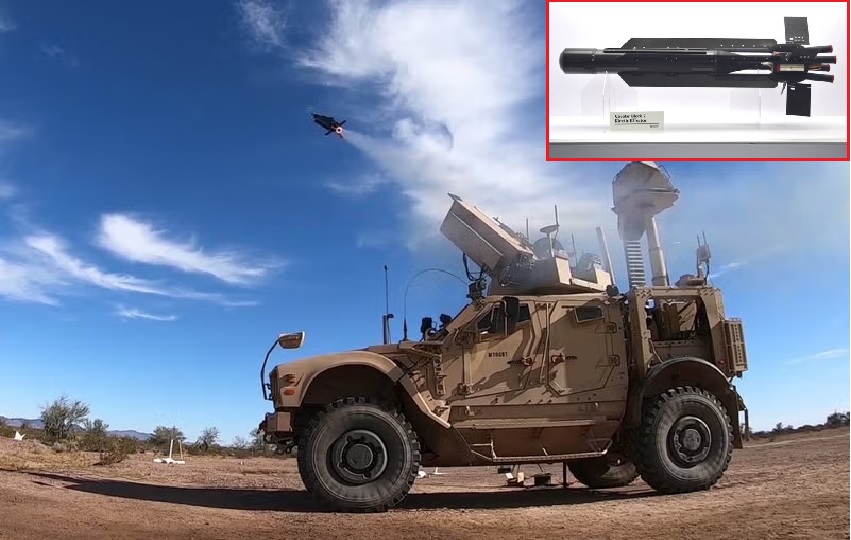
At Prince Sultan Air Base, Sky Map is being integrated alongside existing U.S. counter-unmanned aerial system infrastructure. These include the Northrop Grumman Forward Area Air Defense (FAAD) command platform and RTX-produced Coyote interceptor drones.
Additional systems under evaluation at the base include Merops interceptor drones, developed by Project Eagle, a U.S. firm backed by former Google chief executive Eric Schmidt. Early testing of the Merops system has encountered technical challenges, including an incident earlier in April 2026 in which an interceptor drone lost control and impacted a base facility.
U.S. defense officials have emphasized that no single system provides comprehensive protection against the full range of drone threats, particularly those involving coordinated or swarm-style attacks.
Operational Context and Recent Attacks
Prince Sultan Air Base, located approximately 400 miles from Iran, has been subjected to multiple waves of drone and missile attacks since the escalation of regional hostilities.
One of the most significant incidents occurred on March 27, 2026, when a strike damaged a U.S. Air Force E-3 Sentry airborne warning and control aircraft. The same and subsequent attacks also caused damage to several KC-135 refueling tankers, base infrastructure, and a radar system supporting the Terminal High Altitude Area Defense (THAAD) battery.
Casualty reports indicate that at least one U.S. service member was killed in attacks linked to operations at or near the base, with multiple personnel injured. Across the broader conflict, U.S. military casualties have reached 13 killed and more than 300 wounded.
Funding and Broader Defense Efforts
The deployment of Sky Map is part of a wider U.S. Department of Defense initiative to enhance counter-drone capabilities. The Pentagon’s Joint Interagency Task Force 401 has allocated more than $350 million for procurement and development of counter-unmanned aerial system technologies under Operation Epic Fury.
This effort reflects ongoing assessments of air and missile defense gaps at forward-deployed locations. Analysts have previously identified vulnerabilities in detecting and intercepting low-flying, small, and inexpensive drones, which can be deployed in large numbers.
Strategic and Political Context
The integration of Ukrainian technology into U.S. defense operations follows earlier political exchanges between Washington and Kyiv regarding defense cooperation. On March 6, 2026, U.S. President Donald Trump stated in a media interview that the United States did not require external assistance for drone defense, declining an earlier offer from Ukrainian President Volodymyr Zelenskiy.
Despite that position, the operational deployment of Sky Map indicates continued technical collaboration at the tactical level. Neither U.S. Central Command, which oversees operations at Prince Sultan Air Base, nor Sky Fortress has provided official comment on the deployment. The office of President Zelenskiy has also not responded to requests for comment.
Continuing Integration
U.S. forces continue to test and integrate multiple counter-drone technologies at Prince Sultan Air Base as part of broader force protection measures. The addition of Sky Map represents an effort to expand detection and response capabilities tailored to evolving drone threats, particularly those involving low-cost systems used in repeated attacks.
Officials involved in the program have indicated that layered defense approaches—combining detection, tracking, and interception—remain central to addressing the operational challenges posed by unmanned aerial systems in the region.
——— End of Article ———