
World
BEALE AIR FORCE BASE, California : The U.S. Air Force has successfully validated its ability to sustain one of its most critical intelligence platforms under combat-like conditions, as a U-2 Dragon Lady reconnaissance aircraft flew a demanding sortie from Beale Air Force Base on January 14, 2026, during Exercise Dragon Shield. The mission, conducted by a U-2 assigned to the 99th Reconnaissance Squadron and generated by Airmen of the 9th Aircraft Maintenance Squadron, tested the wing’s capacity to launch, recover, and sustain aircraft operations in a simulated contested environment marked by limited infrastructure, operational stress, and heightened threat conditions. Testing Readiness Under Austere and Contested Conditions Exercise Dragon Shield was designed to replicate the pressures of modern high-end conflict, where U.S. forces must operate despite chemical, biological, radiological, or electronic threats. Maintenance and operations personnel were required to perform duties while wearing Mission Oriented Protective Posture (MOPP) gear at varying protection levels, significantly increasing physical and procedural complexity. Despite these constraints, Airmen successfully executed aircraft generation, launch, and recovery, demonstrating the unit’s ability to maintain mission effectiveness even when normal base operations are degraded or disrupted. The exercise underscored the importance of disciplined procedures, clear communication, and technical proficiency in maintaining intelligence, surveillance, and reconnaissance (ISR) availability during wartime scenarios. Maintenance Airmen Take On Expanded Operational Roles In addition to traditional maintenance responsibilities, Airmen assumed air marshal duties during the exercise, guiding pilots through launch and recovery phases. These tasks included final visual inspections, aircraft safety verification, and standardized hand-signal communication in environments where verbal or radio communication may be limited. Such cross-functional responsibilities are increasingly vital as the Air Force prepares for distributed operations, where smaller teams must execute multiple roles while sustaining high-value intelligence assets. A Strategic Intelligence Asset Above the Battlefield The U-2 Dragon Lady remains one of the United States’ most capable ISR platforms, providing persistent, high-altitude coverage in support of U.S. and allied forces. Operating day or night and across all phases of conflict, the aircraft delivers critical imagery and signals intelligence during peacetime monitoring, low-intensity conflict, and large-scale hostilities. Its ability to operate above 70,000 feet places it beyond the reach of most air defense systems while enabling wide-area surveillance of contested regions. From this near-space environment, the U-2 provides commanders with timely indications and warning, forming the backbone of strategic and operational decision-making. Advanced Sensors and Near Real-Time Intelligence Delivery The U-2S variant in service today is a single-seat, single-engine aircraft optimized for extended-endurance missions while carrying heavy, high-powered sensor payloads. Its long, narrow wings give it glider-like characteristics, enabling unmatched altitude performance and fuel efficiency. The aircraft carries a sophisticated sensor suite capable of collecting multi-spectral electro-optic, infrared, and synthetic aperture radar (SAR) imagery. Intelligence products can be stored onboard or transmitted via secure air-to-ground and air-to-satellite data links, enabling near real-time dissemination to combatant commanders worldwide. In addition to digital sensors, the U-2 retains an optical bar camera that produces ultra-high-resolution film imagery. While film products are developed and analyzed after landing, they continue to provide unparalleled strategic detail. The aircraft’s Measurement and Signature Intelligence (MASINT) systems further enhance situational awareness by detecting recent activity and identifying efforts to conceal or disguise man-made objects. Extreme Flight Demands and Unique Operating Procedures Operating at extreme altitudes presents unique challenges for U-2 pilots, who wear full pressure suits similar to those used by astronauts. The aircraft’s bicycle-style landing gear and limited forward visibility require exceptional precision during landing. Each recovery is supported by a second qualified U-2 pilot driving a high-performance chase vehicle alongside the runway, providing real-time radio guidance for altitude control and runway alignment—a procedure unique within military aviation. Modernization Keeps a Cold War Icon Relevant Powered by a General Electric F118-101 engine, the U-2 conducts long-duration missions without requiring air refueling. Since the mid-1990s, extensive modernization efforts have ensured the aircraft remains effective against evolving threats. Upgrades to the Block 10 electrical system introduced advanced fiber-optic architecture, reducing electronic noise and enabling integration of the latest generation of sensors. A fully redesigned digital cockpit, featuring color multifunction displays and modern avionics, replaced legacy round-dial gauges that were no longer supportable. These investments have extended the service life of the U-2, preserving its unique combination of altitude, endurance, and sensor flexibility—capabilities that remain unmatched by satellites or unmanned systems alone. From Cold War Origins to Modern Global Operations Originally developed in deep secrecy and first flown in 1955, the U-2 played a decisive role during the Cold War, most notably during the Cuban Missile Crisis, when it provided intelligence that shaped U.S. national security policy. Today, U-2 aircraft, home-based at Beale Air Force Base under the 9th Reconnaissance Wing, continue to deploy globally in support of combat operations, strategic deterrence, and allied cooperation. When tasked, they also support disaster response, search and rescue, environmental monitoring, and humanitarian assistance missions. Exercise Dragon Shield reaffirmed that—even in an era dominated by advanced satellites and unmanned platforms—the U-2 Dragon Lady remains a vital, resilient, and irreplaceable intelligence asset, capable of delivering decisive information when operational conditions are most demanding and strategic stakes are highest.
Read More → Posted on 2026-01-25 14:06:40
World
PERSIAN GULF : As U.S. naval forces maneuver across the North Arabian Sea, new assessments of Iran’s maritime capabilities are reshaping how military planners view the balance of power in the Persian Gulf. Far from relying on a handful of aging warships, Tehran has spent the past decade building a dense, distributed naval force centered on missiles, sea mines and submarines—an architecture designed not to defeat the U.S. Navy ship for ship, but to overwhelm it through scale, surprise and economic disruption. At the heart of this strategy is what analysts increasingly describe as a “missile wall.” Combined forces from Iran’s regular Navy and the Islamic Revolutionary Guard Corps Navy (IRGC-N) are now estimated to operate between 1,600 and 2,000 missile launchers at sea. These include Vertical Launch System (VLS) cells, deck-mounted containerized launchers, and missile tubes spread across dozens of ship types, hundreds of small craft, and a large submarine fleet. The result is a maritime posture that dramatically raises the cost of any U.S. strike and complicates escalation control in one of the world’s most strategically sensitive waterways. A Navy Built for Saturation, Not Symmetry Iran’s naval doctrine has shifted decisively away from traditional blue-water ambitions. Instead of trying to match American carrier strike groups with destroyers and cruisers, Tehran has invested in a low-cost, high-volume force optimized for saturation attacks. By dispersing missile launchers across a wide range of platforms, Iran aims to ensure survivability. No single strike can neutralize the threat, and even limited engagements risk triggering waves of anti-ship and anti-air missiles launched from multiple directions and domains simultaneously. This approach is explicitly designed to challenge the Aegis combat systems aboard U.S. destroyers, which rely on finite interceptor inventories and radar tracking capacity. In a true saturation scenario, defenders may be forced to choose which threats to intercept—and which to absorb. Heavy Platforms as Missile Carriers Iran still operates a limited number of large surface combatants, but their role has fundamentally evolved. Approximately a dozen frigates, destroyer-type vessels and forward base ships—most notably from the Mowj, Makran and Shahid Mahdavi classes—now function primarily as missile carriers rather than traditional fleet escorts. Several of these ships are equipped with containerized ballistic and cruise missiles, allowing Tehran to rapidly reconfigure payloads. Base ships can reportedly carry 12 to 24 launchers each, armed with long-range anti-ship systems such as the Abu Mahdi missile, which Iranian sources claim can reach 1,000 to 1,700 kilometers. These vessels also field medium-range air defenses, including the Sayyad-3 missile with a reported engagement range of up to 150 kilometers. Though vulnerable in a high-end naval battle, these ships significantly extend Iran’s strike reach and act as mobile launch nodes within a wider missile network. The Rise of the Stealth Catamaran The most consequential surface innovation in Iran’s fleet is the Shahid Soleimani-class catamaran. Numbering roughly five to six units, these vessels represent a sharp break from Iran’s legacy naval designs. With radar-reduced profiles and high transit speeds, the catamarans are among the first Iranian ships to integrate true VLS cells at sea. Each vessel is assessed to carry more than twenty launch cells, supplemented by box launchers for cruise missiles. Armed with long-range systems from the Ghadr and Abu Mahdi families, these ships blur the line between corvette and arsenal ship. Crucially, they also carry organic air-defense systems, enabling them to operate closer to contested waters while employing hit-and-run tactics. In operational terms, they are designed to strike first, reposition rapidly, and disappear into Iran’s cluttered littoral battlespace before retaliation can be organized. Submarines and the Element of Surprise Iran’s undersea force may be its most destabilizing naval asset. With an estimated 25 to 30 submarines—including three Russian-built Kilo-class boats, several Fateh-class submarines, and more than twenty Ghadir-class mini-subs—Tehran has tailored its fleet for the shallow, acoustically complex waters of the Strait of Hormuz. The key development is the integration of the Jask-2 cruise missile, which can be launched while submerged through torpedo tubes. Though its range is shorter than Iran’s surface-launched systems, the missile’s true value lies in surprise. A weapon fired from a midget submarine hiding near shipping lanes offers minimal warning time to a carrier strike group. Combined with Hoot supercavitating torpedoes, Iran’s submarines are designed to force U.S. commanders to devote disproportionate resources to anti-submarine warfare in confined waters. The Swarm: Hundreds of Boats, Hundreds of Launchers The backbone of Iran’s maritime power remains its vast fleet of fast attack boats, operated primarily by the IRGC Navy. Estimates place the number of armed craft between 300 and 500, ranging from Zulfiqar and Ashura missile boats to Tondar attack craft. Individually fragile, these vessels gain strength through sheer numbers. Many are now equipped with compact missile launchers capable of firing systems such as the Zolfaghar Basir anti-ship missile, reportedly reaching up to 700 kilometers, as well as the “358” loitering missile, designed to hunt helicopters, drones and low-flying aircraft. In a conflict scenario, these boats would operate in coordinated swarms, launching missiles from dispersed coastal positions and island chains, saturating defenses while complicating targeting for U.S. aircraft and surface combatants. Sea Mines and the Economic Battlefield Missiles are only part of Iran’s naval calculus. Intelligence assessments indicate Tehran maintains a stockpile of roughly 5,000 naval mines, making it one of the largest mine inventories in the region. Unlike traditional mine warfare, which relies on slow-moving minelayers, Iran’s doctrine emphasizes rapid deployment by fast boats and auxiliary vessels. In a matter of hours, key shipping lanes could be seeded with mines, effectively choking the Strait of Hormuz. The implications extend far beyond the battlefield. Approximately 20 percent of the world’s oil supply transits the strait. Even a temporary disruption would send shockwaves through global energy markets, driving prices sharply higher and amplifying economic instability worldwide. Strategy, Scale and the Risk of Escalation The growing body of data points to a fundamental strategic mismatch. Overthrowing the Iranian regime—a country of roughly 90 million people with a hardened coastline and layered defenses—would require forces far beyond current U.S. naval deployments. By contrast, a limited strike or demonstrative use of force risks triggering precisely the asymmetric response Iran has spent years preparing. In such a scenario, Tehran would not need to defeat the U.S. Navy outright. Trading low-cost missiles and mines for billion-dollar warships, disrupting global trade, and imposing political and economic costs on Washington could be judged a strategic success. As tensions rise, the central question is no longer whether Iran can challenge U.S. naval supremacy in conventional terms. It is whether any military action in the Persian Gulf can remain limited once a 2,000-launcher navy, built for saturation and disruption, is unleashed.
Read More → Posted on 2026-01-24 18:24:25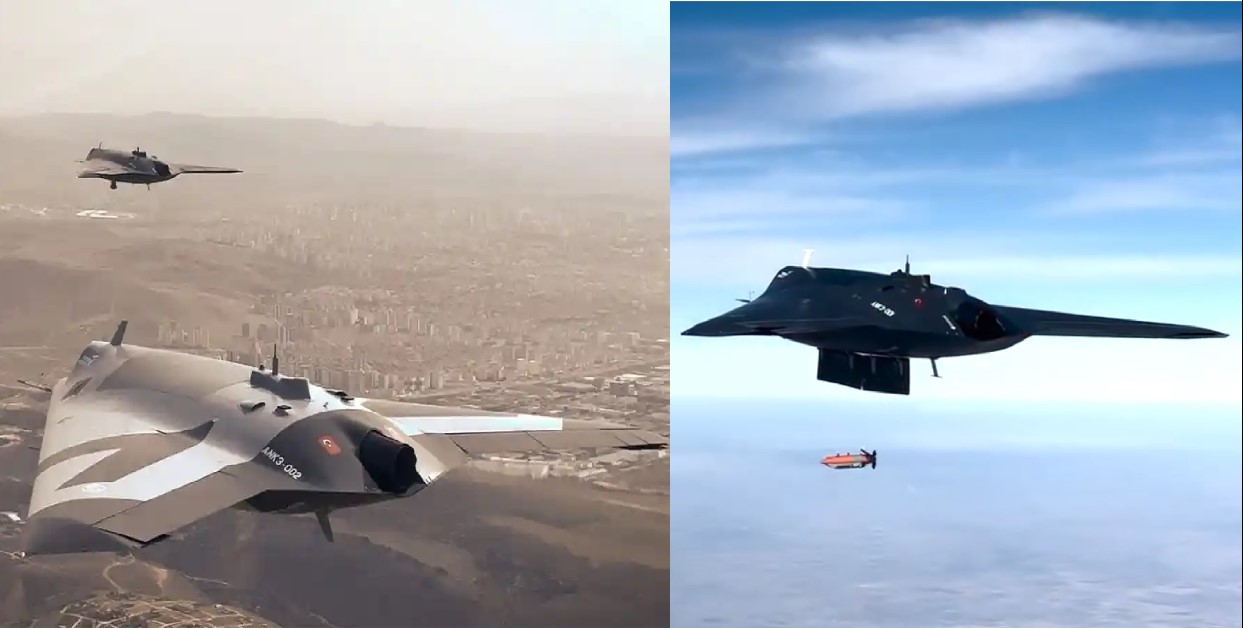
World
ANKARA : Turkish Aerospace Industries (TAI) has moved its next-generation stealth unmanned combat aircraft into the production phase after finalizing its design, marking a significant acceleration in Türkiye’s indigenous airpower ambitions. TAI Chief Executive Officer Mehmet Demiroğlu confirmed that the ANKA-3 unmanned combat aerial vehicle (UCAV) has successfully completed its Critical Design Review (CDR), formally freezing the aircraft’s configuration and clearing the path for serial manufacturing. Speaking in an interview with SAHA Istanbul, Demiroğlu said production work has already begun, with the Turkish Air Force expected to place an order exceeding 50 aircraft within the year. Design Frozen, Serial Production Begins According to Demiroğlu, the ANKA-3’s final form was determined after extensive evaluation of data collected from two flying prototypes. Design refinements derived from real-world flight testing have now been fully incorporated into the production configuration. “We finalized the critical design review phase two months ago and froze the design. We started production,” Demiroğlu said, emphasizing that feedback from flight tests played a decisive role in shaping the aircraft’s final structure. Two additional prototypes reflecting the finalized configuration are scheduled to be built in 2026, while serial production activities will continue in parallel, allowing TAI to shorten the transition from development to operational deployment. Automotive-Style Manufacturing Model TAI plans to adopt automotive-industry production methods for the ANKA-3 program, aiming to reduce unit costs and increase manufacturing speed. Demiroğlu said this approach is intended to support higher production volumes while maintaining consistency and quality. “We are looking at the automotive industry. If we can bring our approaches closer to that—faster and more cost-effective—our numbers will increase,” he noted. The CEO expressed strong confidence in the platform’s future, citing growing international interest. According to Demiroğlu, multiple foreign delegations have shown interest not only in acquiring the aircraft but also in joint production and co-development of future variants, though domestic requirements remain TAI’s top priority. Major Turkish Air Force Order Expected Demiroğlu provided the clearest confirmation to date regarding the scale of the program, stating that the Turkish Air Force is expected to order more than 50 ANKA-3 UCAVs this year alone. Once inducted into service, ANKA-3 is planned to operate within Türkiye’s manned-unmanned teaming (MUT) doctrine, flying in coordination with advanced crewed aircraft such as the HÜRJET jet trainer/light attack aircraft and the KAAN fifth-generation fighter. “After it comes into inventory, I believe ANKA-3’s path will open up the way HÜRJET’s did,” Demiroğlu said, suggesting the aircraft could become a major export platform once domestic deployment is secured. Engine Supply Secured Despite Ukraine War Addressing concerns over propulsion, Demiroğlu confirmed that Ukrainian engine deliveries continue without disruption, despite the ongoing war. “We don’t see any problems right now. Ukraine was able to produce and deliver engines to us even while under war,” he said. At the same time, TAI is maintaining contingency plans. Demiroğlu noted that Türkiye’s domestically developed TF6000 turbofan engine, produced by TEI, could be adapted for ANKA-3 if required, potentially with increased thrust configurations. Twin-Engine Variant Studied, Not Prioritized TAI has previously explored a twin-engine concept for the platform, sometimes informally referred to as ANKA-4. Demiroğlu confirmed that conceptual studies were conducted but stressed that current efforts are focused exclusively on bringing the single-engine ANKA-3 into full-rate production. “We studied it. But our first priority is ANKA-3. Let’s get ANKA-3 into production first,” he said, adding that twin-engine configurations significantly increase cost and complexity. Engine choice, Demiroğlu explained, directly affects aircraft size, payload capacity, and operational cost, making any future twin-engine version dependent on clearly defined military requirements. Rapid Flight Test Progress and Combat Trials ANKA-3 conducted its first engine run in 2023 and achieved its maiden flight on December 28, completing a fully autonomous sortie lasting more than an hour, including an automatic landing. Since then, the aircraft has rapidly expanded its test envelope. During its 12th sortie, ANKA-3 successfully struck a ground target using the TEBER-82 guidance kit, followed by another successful live-fire test employing the TOLUN precision munition. The program’s second prototype has also entered flight testing. TAI highlighted the unusually fast pace of development, noting that nearly 250 engineers and technicians employed AI-supported modeling, simulation, and autonomous flight-control technologies to move the aircraft from concept to combat-capable testing in a compressed timeline. Stealth Design and Multi-Role Capability Designed as a low-observable flying-wing UCAV, ANKA-3 emphasizes survivability, internal weapons carriage, and high-speed penetration. Its turbofan engine provides a significant performance increase over earlier Turkish drones, enabling operations in contested airspace. Key technical specifications include: Length: 7.9 meters Wingspan: 12.5 meters Height: 2.5 meters Maximum takeoff weight: 6,500 kg Payload capacity: 1,200 kg (internal) Service ceiling: 40,000 feet Endurance: 10 hours at 30,000 feet Maximum speed: 425 knots (Mach 0.7) Cruise speed: 250 knots (Mach 0.42) Propulsion: Turbofan engine Mission Systems and Payloads ANKA-3 is designed as a multi-mission platform, capable of operating across strike, intelligence, surveillance, reconnaissance, and electronic warfare roles. Its payload options include: ISR: EO/IR sensors, SAR radar, GMTI-ISAR Electronic warfare: COMINT, ELINT, ESM, electronic attack, jamming Weapons: Precision-guided bombs, laser-guided rockets, anti-tank missiles Operational support: SATCOM, radio relay, air-launched drones, AIS, personnel location systems, emergency locator transmitters, real-time video transmission, TCAS Strategic Implications With its design finalized and serial production underway, ANKA-3 represents one of the most ambitious steps yet in Türkiye’s push toward independent, high-end unmanned combat aviation. The expected large-scale Turkish Air Force order, combined with growing foreign interest, positions the platform as a cornerstone of Türkiye’s future air combat ecosystem—bridging stealth unmanned strike capability with next-generation manned fighters. As production ramps up, ANKA-3 is set to become not just another drone, but a central pillar of Türkiye’s evolving airpower doctrine.
Read More → Posted on 2026-01-24 17:47:07
World
WASHINGTON / CANBERRA : The United States has formally delivered the first MC-55A Peregrine intelligence aircraft to the Royal Australian Air Force (RAAF), marking a significant milestone in Australia’s expansion of long-range intelligence, surveillance and electronic warfare (ISR/EW) capabilities amid rising strategic competition in the Indo-Pacific. L3Harris Technologies confirmed on January 24, 2026, that the aircraft was handed over by the U.S. Air Force following completion of integration and mission-system testing. The transfer represents the first tangible outcome of Australia’s Peregrine program, a U.S. Foreign Military Sales (FMS) initiative designed to provide the RAAF with a highly survivable, multi-domain intelligence platform capable of operating in contested environments. A New Strategic Intelligence Platform The MC-55A Peregrine is a missionized, long-range aircraft designed to collect, process and disseminate intelligence across the air, land, sea, space and cyber domains. Built on a modified Gulfstream business jet airframe, the aircraft has been extensively reconfigured to support signals intelligence (SIGINT), electronic surveillance, electronic warfare (EW) and real-time data fusion missions. Unlike traditional ISR aircraft focused on a single domain, the Peregrine is intended to function as an airborne intelligence node, linking sensors, shooters and command elements across the joint force. Australian defence officials view the platform as central to future long-range targeting, mission planning, and coalition operations, particularly across the vast distances of the Indo-Pacific. L3Harris said the aircraft’s role extends beyond passive intelligence collection, enabling electronic support measures, threat detection, and real-time intelligence sharing with allied forces. Delivery and Training Pathway Under the delivery framework, the first MC-55A has been formally transferred from U.S. Air Force custody to the RAAF. Follow-on aircraft will remain in the United States for a defined period to support crew training, mission rehearsal, and pre-delivery activities. This phased approach is intended to accelerate Australian operational readiness while reducing transition risk for aircrew and maintainers. L3Harris has also established an in-country field service team in Australia to provide technical support and integrate Australian industry partners into the sustainment chain. The company has committed to continuous software and hardware upgrades to ensure the aircraft remains effective against evolving electronic and cyber threats. Capabilities and Mission Systems While many of the MC-55A’s mission systems remain classified, available program details indicate the aircraft carries an advanced suite of SIGINT and electronic surveillance sensors capable of detecting, identifying and geolocating electronic emissions. These include radar systems, military communications networks, and other electromagnetic signatures associated with regional military activity. The Peregrine’s open-architecture mission system allows onboard processing and rapid dissemination of intelligence to aircraft, naval vessels, ground forces and command centers. This enables near-real-time situational awareness and supports time-sensitive targeting decisions. Designed for high-altitude, long-endurance operations, the MC-55A can operate at extended ranges, providing persistent coverage across large maritime and land theaters. Its business-jet heritage offers high transit speeds, allowing rapid repositioning between operational areas while sustaining extended on-station intelligence collection. Specifications Overview Based on the Gulfstream platform, the MC-55A Peregrine features a long-range airframe optimized for endurance, altitude and survivability. The aircraft is capable of operating at altitudes above 40,000 feet and has a range exceeding 6,000 nautical miles, depending on mission configuration. It is powered by twin turbofan engines and supports a multi-crew mission team, including pilots, mission operators and intelligence analysts. The aircraft incorporates secure communications, encrypted data links, and interoperability standards compatible with U.S. and allied forces. Its modular mission architecture allows rapid upgrades as new sensors, processors and electronic warfare capabilities are introduced. Strategic Significance Australia’s acquisition of the MC-55A Peregrine reflects a broader shift toward high-end intelligence and electronic warfare capabilities as regional military activity intensifies. The aircraft is expected to replace and significantly expand legacy systems, delivering greater persistence, flexibility and survivability in contested battlespaces. Interoperability with U.S. forces remains a core element of the program. Delivered through a U.S. Department of Defense–managed FMS framework, the Peregrine ensures common standards, shared logistics, and seamless integration during joint and coalition operations. Jason Lambert, president of Intelligence, Surveillance and Reconnaissance, Space and Mission Systems at L3Harris, described the aircraft as a “force multiplier” for the RAAF, highlighting its role in delivering critical data for long-range targeting, regional deployments, and future Australian Defence Force operations. As additional aircraft are delivered and brought into service, the MC-55A Peregrine is expected to become a cornerstone of Australia’s intelligence architecture, providing real-time situational awareness and electronic support across the Indo-Pacific at a time of growing strategic uncertainty.
Read More → Posted on 2026-01-24 17:18:08
World
Jerusalem / Washington , 24 January 2026 : The anticipated timing of a potential U.S.-led military escalation in the Middle East appears to have shifted, not because of a change in force posture, but because of politics, family, and optics at the highest level of power. The continued presence of senior U.S. political figures in Jerusalem—most notably Jared Kushner—has injected a temporary pause into an otherwise accelerating strategic environment, according to regional analysts tracking both diplomatic movements and military deployments. While air and naval assets continue to reposition across the Eastern Mediterranean and surrounding theaters, observers say the final decision point now hinges less on hardware and more on human geography: who is still on the ground, and who has left. A Diplomatic Presence That Complicates Timing Jared Kushner’s visit to Jerusalem, alongside U.S. envoy Steve Witkoff, has emerged as an unexpected variable in the crisis calculus. Israeli Prime Minister Benjamin Netanyahu is scheduled to meet the delegation to discuss elements of a revised regional peace framework, a move that signals active diplomacy even as military preparations quietly continue in the background. Several analysts describe Kushner’s presence as a de facto political brake. The reasoning is straightforward: any large-scale conflict involving Iran would carry the risk of immediate retaliation, potentially including advanced missile systems that remain difficult to intercept with absolute certainty. Launching such an operation while close family members and senior advisers of the former U.S. president are physically present in a potential target zone would represent an extraordinary risk—one that does not align with Donald Trump’s long-documented aversion to personal and familial exposure. As a result, attention has shifted from traditional indicators such as carrier strike group movements to a more unusual signal: the departure of the U.S. delegation itself. In diplomatic and intelligence circles, the moment Kushner’s aircraft leaves Israeli airspace is increasingly viewed as the true marker for any transition from preparation to execution. Military Readiness Continues Despite Political Pause The diplomatic delay has not translated into a military stand-down. NATO’s deployment of an E-3 AWACS surveillance aircraft—identified by regional trackers as NATO008—into the Eastern Mediterranean underscores that operational readiness remains intact. Such platforms are designed to loiter for extended periods, gathering intelligence, coordinating airspace, and providing real-time battlefield awareness. Military officials familiar with NATO doctrine note that AWACS deployments often precede action by days rather than hours. Their presence suggests that command-and-control architecture is already in place, awaiting only a political directive to activate the next phase. Naval assets, including U.S. and allied carrier groups, remain positioned within operational range, reinforcing the impression that the machinery of war is primed, even if the start signal has not yet been given. The Tanker Movements Raising Questions Additional intrigue has come from the observed movement of U.S. aerial refueling tankers. Several KC-135 aircraft were seen departing Al Udeid Air Base in Qatar and heading westward, away from the immediate proximity of Iran. Rather than signaling de-escalation, defense analysts interpret the move as a protective adjustment. High-value support assets such as refueling tankers are among the most vulnerable targets in the opening hours of any high-intensity conflict. By repositioning them farther from potential missile strike zones, U.S. planners may be ensuring survivability so they can surge forward once hostilities formally begin. In this reading, the tanker movements reflect tactical patience rather than retreat. Tehran’s Strategy of Ambiguity From Tehran, the rhetoric has hardened but grown deliberately opaque. Senior Iranian military figures, including adviser Rahim Safavi, have spoken publicly about a “unique weapon” capable of ending a war swiftly, while naval commanders have warned of “smart control” of regional waterways. Such language has fueled speculation about unconventional capabilities, ranging from electromagnetic disruption to coordinated swarms of naval drones designed to overwhelm fleet defenses. While no concrete evidence has been presented, the messaging appears calculated to create uncertainty and deterrence rather than reassurance. Notably, Iranian statements increasingly suggest acceptance of confrontation rather than efforts to avert it. Phrases such as “we are waiting for them” imply a strategic shift away from prevention toward preparation, reinforcing fears that diplomatic off-ramps may be narrowing. A Crisis Suspended, Not Resolved As of Saturday morning, Jan. 24, the region finds itself in a state of suspended animation. Militarily, the components are in place: surveillance aircraft are airborne, naval forces are deployed, and logistical assets are repositioning for survivability and reach. Politically, however, the signal remains red. The decisive factor, according to multiple regional observers, is no longer an intelligence leak or a military maneuver, but a simple travel update. When news breaks that the U.S. delegation has departed Tel Aviv, many will interpret it as the lifting of the final political restraint. Until then, the Middle East remains locked in a moment of extreme tension—defined less by action than by waiting, and by the thin line separating diplomacy on the ground from war just beyond the horizon.
Read More → Posted on 2026-01-24 16:31:07
World
WASHINGTON : The Pentagon on Friday released a sweeping new National Defense Strategy (NDS) that lays out the military priorities of President Donald Trump’s administration, framing U.S. security policy around homeland defense, hard deterrence against great-power rivals, and a sharper expectation that allies shoulder greater responsibility for regional security. The document, one of the most consequential statements of American military doctrine, portrays a world defined by intensifying competition with China, persistent confrontation with Russia, and enduring threats from Iran and North Korea. It also marks a notable return to hemispheric defense concepts reminiscent of Cold War–era strategy, updated for what the administration describes as an increasingly unstable global order. Homeland Defense and the “Trump Corollary” At the center of the new strategy is a renewed emphasis on defending the U.S. homeland and its immediate approaches. The Pentagon says the military will prioritize securing America’s land borders, maritime access points, and airspace, including through the development of the “Golden Dome,” a next-generation air and missile defense architecture designed to counter ballistic, cruise, and hypersonic threats. The strategy also expands U.S. military focus across the Western Hemisphere. It pledges to actively defend American interests from the Arctic to the Caribbean, explicitly naming the Panama Canal, the Gulf of America, and Greenland as critical terrain whose security is deemed essential to both U.S. military mobility and global commerce. Pentagon officials describe this posture as a “Trump Corollary to the Monroe Doctrine,” signaling that Washington is prepared to use military power swiftly and decisively to prevent external powers from establishing strategic footholds in the Americas. The document cites Operation ABSOLUTE RESOLVE as a recent demonstration of that capability, underscoring what it calls America’s readiness to enforce its red lines with “speed, power, and precision.” China and the Indo-Pacific Balance China is identified as the United States’ most consequential strategic competitor. While the strategy emphasizes that President Trump seeks “stable peace, fair trade, and respectful relations” with Beijing, it makes clear that preventing Chinese dominance over the United States and its allies remains a core objective. The Pentagon outlines plans to strengthen denial defenses along the First Island Chain, a critical arc of territory stretching from Japan through Taiwan and the Philippines. By reinforcing this line with allied cooperation, advanced missile defenses, and forward-deployed forces, U.S. planners aim to complicate any attempt by China to project power deeper into the Pacific. The strategy stresses that deterrence in the Indo-Pacific will increasingly rely on burden sharing. Allies and partners are expected to expand their military capabilities, increase defense spending, and contribute more directly to regional stability, while the United States provides strategic leadership, advanced capabilities, and integration. Burden Sharing and Alliance Realignment Across all theaters, the NDS calls for a recalibration of alliance responsibilities. In Europe, Asia, and the Middle East, the United States intends to remain engaged but will push allies to take the lead against threats that are geographically closer and more severe for them. Pentagon officials argue that this approach allows the U.S. military to focus on the most dangerous challenges while still supporting allies with intelligence, logistics, and high-end capabilities. The strategy frames this shift not as retrenchment, but as a more sustainable model for collective defense in an era of constrained resources and simultaneous global challenges. Russia and the European Theater Russia is described as a “persistent but manageable” threat to NATO’s eastern flank. Despite demographic decline and economic strain, the strategy notes that Moscow’s ongoing war in Ukraine has demonstrated its ability to sustain large-scale military operations and mobilize industrial capacity. At the same time, the Pentagon emphasizes the disparity between Russia and NATO as a whole. European NATO members, it argues, vastly exceed Russia in economic strength, population, and latent military power. Germany’s economy alone, the document notes, is significantly larger than Russia’s, reinforcing the administration’s view that Europe has the means to defend itself if it chooses to do so. Iran and the Middle East The strategy takes a hard line on Iran, reiterating that Tehran will not be allowed to acquire nuclear weapons. It claims Iran’s regional network, often referred to as the “Axis of Resistance,” has been severely weakened, citing Israeli military operations that have degraded Hezbollah and Hamas. Despite these setbacks, the Pentagon warns that Iran appears intent on rebuilding its conventional forces and may again pursue nuclear capabilities, particularly if it refuses to engage in what the administration calls meaningful negotiations. The document also highlights Iran’s history of attacks against Americans and its stated hostility toward Israel, describing these factors as central to U.S. threat assessments in the region. North Korea and Nuclear Deterrence North Korea is identified as an acute threat to both South Korea and Japan, two U.S. treaty allies. While many of Pyongyang’s conventional forces are characterized as outdated or poorly maintained, the strategy warns that they still pose a serious invasion risk, requiring constant vigilance from Seoul. More concerning, according to the Pentagon, is North Korea’s expanding missile and nuclear arsenal. The document states that the DPRK is now capable of striking targets in South Korea and Japan with both conventional and nuclear weapons, and that its strategic forces are increasingly able to threaten the U.S. homeland itself. A Strategy of Deterrence and Resolve Taken together, the new National Defense Strategy outlines a vision of American military power rooted in deterrence, hemispheric defense, and selective global engagement. It reflects the Trump administration’s belief that peace is best preserved through visible strength, clear boundaries, and allies that are prepared to defend themselves alongside the United States. Pentagon officials say the strategy will guide force posture, weapons development, and alliance diplomacy in the years ahead, shaping how the U.S. military prepares for what it describes as an era of renewed great-power rivalry and persistent regional conflict.
Read More → Posted on 2026-01-24 16:15:52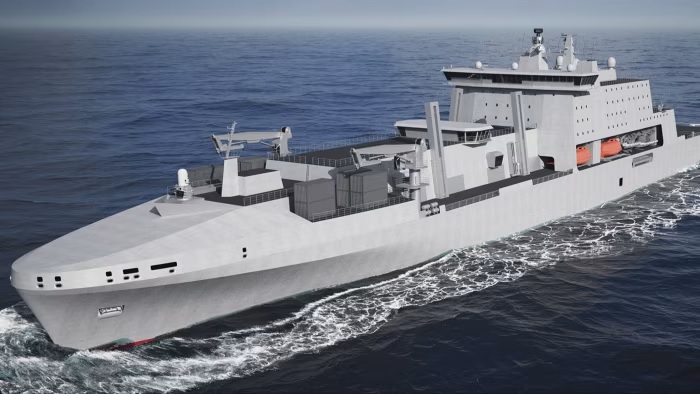
World
Puerto Real, Spain / London : Navantia has begun construction work in Spain on a major British naval logistics programme, marking a significant step forward in the Fleet Solid Support (FSS) ships that will underpin the Royal Navy’s future global operations. At Navantia’s shipyard in Puerto Real, Cádiz, workers have started building the first structural modules for three large logistics vessels destined for the UK’s Royal Fleet Auxiliary (RFA). The programme, led by Navantia UK under contract from the UK Ministry of Defence (MoD), is designed to deliver a new generation of solid support ships capable of sustaining British carrier strike operations far from home waters. A Programme Moving from Design to Production The commencement of module construction in southern Spain comes three years after the FSS contract was first signed and follows a steel-cutting ceremony held on 3 December at Navantia UK’s Appledore shipyard in Devon. That event was attended by the UK Minister for Defence Industry, Luke Pollard, alongside Navantia Chairman Ricardo Domínguez, and formally marked the transition of the programme from the design phase into full industrial production. A parallel steel-cutting event in Cádiz underlined the growing role of Navantia’s Spanish facilities in the programme. Among those present were the UK Defence Attaché to Spain, Captain Antony Crabb, and Navantia’s Director of Operations and Business Development, Gonzalo Mateo-Guerrero, highlighting the depth of UK–Spain defence-industrial cooperation. UK–Spain Defence Cooperation Highlighted British defence officials have described the start of construction at Puerto Real as a major milestone. The British Embassy Defence Attaché in Spain said the work demonstrated Navantia’s commitment to delivering the ships on time and within budget, calling the FSS programme “a great example of cooperation between our two defence industries and our two countries.” Under current programme plans, modules fabricated in Spain will be transported to the integration yard in Belfast, where final assembly, systems integration, testing and delivery will take place. Navantia UK’s Appledore yard and Harland & Wolff in Belfast are working alongside Navantia’s Spanish shipyards in a coordinated production model intended to combine British and Spanish industrial strengths. Commitment to Quality and Delivery Navantia executives have stressed the strategic importance of the programme for both the company and UK defence. Gonzalo Mateo-Guerrero said the start of work at Puerto Real demonstrated Navantia’s determination to deploy its best technical and industrial capabilities in support of a customer of vital importance, adding that the ships would be delivered to the highest standards of quality and rigour. The FSS ships rank among the most complex non-combatant vessels in the UK naval inventory, requiring advanced cargo-handling systems, robust replenishment-at-sea capabilities, and the endurance to operate continuously with frontline naval forces. Backbone of the Carrier Strike Group Once delivered, the three FSS ships will be operated by Royal Fleet Auxiliary personnel and will form a central pillar of the Royal Navy’s Carrier Strike Group. Their primary mission will be to supply ammunition, spare parts, food and other essential stores to warships at sea, allowing carrier-led task groups to remain deployed for extended periods without returning to port. Each vessel will be approximately 216 metres long—roughly two Premier League football pitches—and will have a displacement of around 39,000 tonnes. This makes them the second-largest ships in UK Defence service, surpassed only by the Queen Elizabeth-class aircraft carriers. Strengthening UK Maritime Endurance Defence planners regard the Fleet Solid Support programme as critical to sustaining Britain’s ability to operate globally in an era of increased maritime competition and longer naval deployments. By replacing ageing logistics vessels with larger, more capable ships, the Royal Navy aims to enhance resilience, sustainment and operational flexibility across its fleet. With module construction now underway in Spain and integration planned in Belfast, the FSS programme has entered its most intensive industrial phase. If delivered as planned, the new ships will significantly strengthen the logistical backbone of the UK’s naval forces and reinforce long-term defence cooperation between the United Kingdom and Spain.
Read More → Posted on 2026-01-24 16:05:51
World
LONDON : Prime Minister Keir Starmer has withdrawn draft legislation that would have transferred sovereignty over the Chagos Islands to Mauritius, reversing course after mounting political pressure at home and abroad and renewed concerns over Britain’s defence commitments to the United States. Government officials said the bill was pulled from the parliamentary agenda following warnings that the proposal could conflict with the 1966 UK–US defence agreement governing the British Indian Ocean Territory (BIOT), which underpins the operation of the Diego Garcia military base — one of the most strategically significant US installations outside American territory. Strategic Concerns and Treaty Obligations At the heart of the controversy lies Diego Garcia, the largest island in the Chagos archipelago, which hosts a joint US–UK military base used for operations across the Middle East, Africa and the Indo-Pacific. The 1966 exchange of notes between London and Washington guarantees continued British sovereignty over the territory in return for granting the United States long-term defence access. Senior defence figures reportedly warned Downing Street that transferring sovereignty to Mauritius could place the UK in breach of those commitments or require a complex renegotiation with Washington at a time of heightened global tensions. Critics within the British security establishment argued that any ambiguity over control of the islands could undermine operational certainty at Diego Garcia. Trump Intervention Adds Pressure The proposed legislation also drew sharp criticism from US President Donald Trump, according to officials familiar with the discussions. Trump is said to have privately and publicly questioned the wisdom of altering the status of territory hosting a critical American military base, framing the issue as a matter of alliance credibility and strategic stability. His intervention added to concerns within the Starmer government that the bill risked straining relations with Washington at a moment when London is seeking to reinforce defence and intelligence ties amid conflicts in Ukraine, the Middle East, and rising tensions in the Indo-Pacific. A Long-Running Dispute The sovereignty of the Chagos Islands has been disputed for decades. Britain separated the territory from Mauritius in 1965, three years before Mauritius gained independence. Between the late 1960s and early 1970s, the UK forcibly removed the Chagossian population to facilitate the construction of the military base, a move later acknowledged by British courts as morally wrong. In 2019, the International Court of Justice (ICJ) issued a non-binding advisory opinion stating that the UK’s continued administration of the islands was unlawful and that Britain should end its control “as rapidly as possible.” The same year, the United Nations General Assembly backed the opinion, increasing diplomatic pressure on London to negotiate a transfer to Mauritius. Successive British governments have resisted an unconditional handover, citing defence requirements, but talks with Mauritius have continued intermittently. Starmer’s Labour government had signalled a renewed willingness to resolve the dispute through legislation and negotiation, raising expectations of a breakthrough. Political Fallout at Home Opposition figures and several Labour backbenchers criticised the now-withdrawn bill as rushed and insufficiently protective of UK security interests. Others accused the government of backing down under US pressure and abandoning an opportunity to resolve a long-standing colonial legacy. The Mauritian government expressed disappointment, reiterating its claim to sovereignty and calling for renewed negotiations. Chagossian advocacy groups, many of whom have campaigned for the right of return and compensation, said the withdrawal prolonged uncertainty over their future. Downing Street said the government remains committed to a “lawful and durable resolution” of the Chagos dispute but stressed that any settlement must safeguard national security and honour international defence obligations. Officials indicated that talks with Mauritius would continue, though no new timetable has been announced. For now, the withdrawal underscores the enduring tension between Britain’s legal and moral obligations stemming from its colonial past and the hard realities of modern geopolitics — with Diego Garcia remaining a linchpin of Western military strategy and a decisive factor in London’s calculations.
Read More → Posted on 2026-01-24 15:55:45
World
WARSAW : Poland has approved the deployment of a vast, AI-driven anti-drone defense system known as “Sun,” marking one of the most ambitious military infrastructure projects in Europe since the Cold War. The system, designed to protect Poland’s eastern frontier with Belarus and Russia’s Kaliningrad exclave, is scheduled to begin entering active service in 2026, with full operational coverage expected by 2027. The program, valued at more than $2 billion, is a central pillar of Poland’s broader “Eastern Shield” strategy, which aims to harden NATO’s eastern flank against what Warsaw describes as an escalating campaign of reconnaissance flights, drone incursions and hybrid warfare tactics emanating from the east. A Response to Rising Drone Incursions The decision follows a turbulent security environment in 2024 and 2025, during which Polish authorities recorded dozens of unauthorized drone flights near or across national airspace. Polish defense officials say many of these incidents involved reconnaissance platforms probing air-defense reactions rather than overt attacks, a pattern increasingly associated with so-called “gray zone” warfare. Against this backdrop, the Sun system has been tailored not only for wartime defense, but also for peacetime deterrence. Officials stress that its architecture allows Warsaw to respond proportionally, disrupting hostile drones without triggering broader military escalation. Deputy Defense Minister Cezary Tomczyk said the objective was to “close the gap between observation and response,” ensuring that even small, low-cost unmanned aircraft can no longer operate with impunity near Poland’s borders. How the ‘Sun’ System Works Unlike traditional air-defense platforms, Sun is not a single weapon but an integrated, multi-layered shield combining electronic warfare, artificial intelligence and kinetic interception. At its core is a network of sensors, radar units and AI-assisted command systems capable of tracking and classifying everything from hobbyist quadcopters to long-range kamikaze drones. The first line of defense relies on non-kinetic measures. Using advanced electronic warfare tools, including high-intensity electromagnetic pulses (EMP), the system can disable drones mid-flight by disrupting onboard electronics. Defense officials emphasize that this capability is particularly important over populated areas, as it neutralizes threats without explosions or falling debris. For scenarios involving mass attacks or armed drones, Sun integrates hard-kill options. These include rapid-fire cannon systems designed to counter drone swarms, as well as newly developed interceptor drones capable of pursuing and destroying hostile UAVs in mid-air. Together, the layers are intended to provide continuous coverage along roughly 700 kilometers of frontier. Accelerated Deployment Under Special Legislation To meet the 2026 operational deadline, the Polish parliament adopted a Special Act on Defence Investments, streamlining land acquisition, construction permits and procurement procedures. The law allows the military to bypass standard peacetime regulations for projects designated as critical to national security. Under this framework, initial system clusters are already being installed on observation towers in northeastern Poland, with the first batteries expected to reach operational readiness within months rather than years. Military planners say this phased rollout will allow crews to gain experience while the wider network is still under construction. European Funding and Strategic Significance While the Sun shield is a national project, its financing underscores its broader European role. A significant portion of the cost will be covered by EU defense loans, reflecting Brussels’ growing view that Poland’s eastern border constitutes the European Union’s primary line of defense. Poland’s overall defense budget for 2026 is projected to reach nearly $47 billion, equivalent to about 4.8 percent of GDP, placing Warsaw among the highest military spenders in NATO relative to economic size. Officials argue that early investment in defensive systems like Sun reduces the risk of far higher costs in the event of a future conflict. Preparing for the ‘Gray Zone’ Defense analysts note that the Sun system is specifically optimized for hybrid threats that fall short of open warfare. By relying on electronic disruption during peacetime and reserving kinetic responses for extreme conditions, Poland hopes to deter persistent probing without creating incidents that could spiral into direct confrontation. Military commanders also point to the system’s modular design, which allows it to be upgraded as drone technology evolves. With unmanned platforms becoming cheaper, faster and more autonomous, Polish planners say adaptability is as important as raw firepower. A New Layer on NATO’s Eastern Flank Once complete, the Sun shield will form a continuous anti-drone barrier integrated with Poland’s air-defense network and NATO surveillance systems. Officials describe it as both a national safeguard and a collective security asset, reinforcing deterrence across the alliance’s eastern edge. As deployment begins in 2026, Warsaw is signaling that the era of unchallenged drone operations near its borders is coming to an end—and that future tests of NATO’s defenses will meet an increasingly sophisticated response.
Read More → Posted on 2026-01-24 15:42:29
World
Addis Ababa / Moscow : Ethiopia has officially confirmed the acquisition of Russian-made Orion-E reconnaissance and strike unmanned aerial vehicles, marking the first publicly verified export of the Orion drone system to a foreign customer. The confirmation came after an Orion-E UAV was displayed in Ethiopian Air Force markings at Aviation Expo 2026, where it appeared as part of a complete export package including the air vehicle, ground control station, and associated support equipment. The appearance of the system removes long-standing uncertainty surrounding Russia’s claims that the Orion platform was being marketed abroad. Until now, despite years of promotion at international defense exhibitions, no confirmed foreign operator of the Orion family had been publicly identified. Ethiopia’s display represents a milestone for Russia’s unmanned aviation sector and signals a deepening of defense ties between Addis Ababa and Moscow. A Combat-Tested MALE Drone Enters Africa The Orion-E is the export variant of the Orion medium-altitude, long-endurance (MALE) unmanned aerial vehicle, developed by Russia’s Kronshtadt Group. The baseline Orion conducted its first flight in 2016 and has since been fielded by Russian forces, seeing operational use in Syria and later in Ukraine. In Russian service, the drone has been employed for intelligence, surveillance, and reconnaissance (ISR) missions, artillery and missile target designation, and direct strike operations using guided munitions. According to Russian promotional material, the Orion-E is capable of operating at altitudes of up to 7,500 meters, with endurance exceeding 24 hours, depending on payload and mission profile. The system is designed to carry electro-optical and infrared sensors for persistent surveillance, along with small precision-guided air-to-ground weapons for strike missions. Its role broadly mirrors that of Western MALE platforms such as the U.S.-made MQ-1 Predator, offering a balance of long-dwell reconnaissance and limited offensive capability. The drone displayed at the Ethiopian Air Force exhibition area appeared configured for both reconnaissance and strike tasks, consistent with the Orion-E’s advertised export role. Mixed Combat Record in Ukraine While Russian officials frequently describe the Orion as a combat-proven system, its operational record has drawn scrutiny. Independent defense monitoring group Oryx, which tracks losses based on visually confirmed evidence, has documented the destruction or damage of at least nine Orion drones during Russia’s war in Ukraine. These losses have highlighted the vulnerability of MALE UAVs to modern integrated air defense systems and electronic warfare in contested airspace. Analysts note that such losses are not unique to Russian drones, as similar systems operated by multiple countries have faced increasing risks on high-intensity battlefields. Nevertheless, the attrition rate observed in Ukraine underscores the limitations of the Orion family when operating against capable adversaries. Despite these setbacks, Russia has continued production and development of the platform, introducing upgraded variants and tailored export configurations. The Orion-E is marketed with modified avionics and communications systems designed to meet foreign customer requirements, although detailed specifications remain closely guarded. Russia’s Export Push Amid Sanctions Ethiopia’s acquisition comes as Russia intensifies efforts to expand defense exports despite Western sanctions and export restrictions imposed since the invasion of Ukraine. Unmanned systems have become a central component of this strategy, particularly in regions where access to Western technology is politically constrained. Africa has emerged as a key focus of Russian arms marketing, alongside the Middle East and parts of Asia. The Orion-E has been promoted as a lower-cost alternative to Western MALE drones, with fewer political conditions attached to sales, training, and operational use. The confirmed sale to Ethiopia suggests that Russia has successfully translated battlefield experience and sustained marketing into at least one concrete export contract for its flagship MALE UAV. Ethiopia’s Broader Defense Relationship with Russia The Orion-E acquisition fits into a longer history of Ethiopian defense procurement from Russia and the former Soviet Union. For decades, Moscow has been a major supplier of combat aircraft, air defense systems, and armored vehicles to Ethiopia, forming the backbone of several branches of the Ethiopian National Defense Force. Ethiopia’s air force has long operated Russian-origin platforms, including Su-27 fighter jets acquired in the late 1990s, which remain among the most capable aircraft in its inventory. In more recent years, Ethiopia has reportedly strengthened its ground-based air defense network with Russian systems, including the Pantsir-S1 short-range air defense system, reflecting growing concern over aerial threats, particularly drones and precision-guided munitions. The addition of the Orion-E suggests a deliberate move by Addis Ababa to expand its unmanned aerial capabilities, complementing manned aircraft and improving ISR coverage and precision-strike options in both conventional and internal security operations. Strategic Implications Ethiopia’s confirmation as the first known export customer for the Orion-E carries broader strategic implications. For Russia, it represents a symbolic breakthrough, demonstrating that its advanced unmanned systems can still find buyers on the international arms market despite sanctions. For Ethiopia, it signals an intent to modernize its aerial capabilities and maintain diversified defense partnerships outside Western supply chains. As unmanned systems continue to reshape modern warfare, the introduction of the Orion-E into Ethiopian service highlights how combat-tested but contested platforms are increasingly finding roles beyond the battlefields where they were first proven. Whether the system delivers lasting operational value to Ethiopia will depend on how effectively it is integrated, protected, and employed in an evolving threat environment.
Read More → Posted on 2026-01-24 15:06:16
World
Washington / Naval Aviation Desk : As the U.S. Navy moves to accelerate decisions on its long-delayed Next Carrier Air Dominance (NCAD) effort, a small but outspoken aerospace firm has entered the debate with one of the most audacious independent proposals yet. Stavatti Aerospace this month unveiled detailed concept data for the SM-39 “Razor,” a notional sixth-generation, carrier-based strike fighter that the company claims could combine extreme speed, intercontinental-scale reach, and a program cost far below what has historically defined cutting-edge naval aviation. The proposal arrives as the Navy seeks to replace the F/A-18E/F Super Hornet in the 2030s with what is formally referred to as the F/A-XX, an aircraft expected to anchor future carrier air wings alongside unmanned systems. Congressional pressure, Indo-Pacific threat assessments, and concerns about the shrinking combat radius of carrier aviation have all pushed the service to re-energize the program after years of uncertainty. Into that environment, Stavatti has inserted a concept designed as much to provoke discussion as to offer an alternative path. A $51 Billion Vision for Naval Air Power According to Stavatti’s January 2026 release, the SM-39 Razor is framed around a notional acquisition of 600 aircraft, each priced at a stated flyaway cost of approximately $85 million. That places the headline value of the program at roughly $51 billion, excluding long-term sustainment but including a proposed training ecosystem built around 50 full-mission simulators. Deliveries are projected to begin in 2031 and conclude by 2037, an aggressive schedule by modern defense acquisition standards. The company argues that such scale is essential to restore mass and flexibility to carrier air wings, which have steadily shrunk as aircraft have grown more complex and expensive. Stavatti further proposes standing up a new U.S.-based production facility capable of ramping to output rates as high as 200 aircraft per year, supporting an estimated 1,600 skilled jobs over a two-decade span. While Stavatti lacks the industrial footprint of traditional naval aviation primes, it emphasizes its status as a long-registered U.S. defense contractor and its intention to operate within existing regulatory and security frameworks. Range First, Speed Without Apology Operational reach sits at the heart of the SM-39 pitch. Navy leaders have repeatedly warned that anti-ship missiles, long-range sensors, and dense integrated air defense systems are pushing carriers farther from contested coastlines, especially in the Indo-Pacific. Stavatti claims the Razor would deliver a tactical combat radius exceeding 1,200 nautical miles from a carrier deck, a figure that would dramatically exceed that of current strike fighters if achieved with a useful internal payload. Equally striking are the aircraft’s speed claims. Company materials describe sustained dash performance above Mach 4, with supercruise speeds exceeding Mach 2.5. Stavatti attributes this to a low-observable, triple-fuselage planform intended to reduce supersonic wave drag, paired with next-generation adaptive-cycle afterburning turbofans. The firm references either a proprietary “NeoThrust” engine concept or a propulsion class comparable to current U.S. adaptive-engine demonstrators, highlighting improved fuel efficiency, thermal management, and electrical power generation. Such performance figures place the SM-39 well outside the publicly discussed envelopes of expected F/A-XX designs. They also raise immediate questions about heat management, structural durability, carrier suitability, and sustainment costs in the corrosive maritime environment. Naval aviation history offers few examples of extreme-speed aircraft translating cleanly to routine carrier operations. Weapons, Volume, and Future Effects Beyond speed and range, the most concrete technical data in the proposal centers on internal volume and weapons carriage. The SM-39 is described as featuring an internal M61A2 20-millimeter Vulcan cannon with a 1,000-round magazine, supported by two primary internal weapons bays. A forward bay approximately 162 inches long, rated for 5,000 pounds at 7.5 g, is intended for air-to-air missiles or lighter precision weapons. A larger mid-fuselage bay, rated for 12,000 pounds, supports a rotary launcher and heavier strike loads. In representative configurations, Stavatti suggests the Razor could carry up to six beyond-visual-range air-to-air missiles internally, or multiple 2,000-pound-class precision-guided bombs while maintaining low observability. External carriage is also built into the design, with four jettisonable wing hardpoints rated at 4,500 pounds each. These stations are presented as compatible with U.S. Navy anti-ship, anti-radiation, and standoff strike weapons, as well as large external fuel tanks, bringing the total design workload to an asserted 25,000 pounds. Looking further ahead, Stavatti alludes to internal power and cooling margins sufficient to support future directed-energy weapons, including high-energy lasers, should such systems mature for tactical aviation. This emphasis mirrors broader Pentagon interest in electrical power generation as a defining attribute of sixth-generation platforms. An Outlier in an Unforgiving Program In contrast to expected F/A-XX contenders from Boeing and Northrop Grumman, Stavatti’s proposal rests less on pedigree and more on disruption. The major primes are widely expected to stress their experience with carrier qualification, systems integration, and sustaining complex fleets over decades. Stavatti, by comparison, is offering extreme performance, generous internal volume, and a cost narrative closer to advanced fourth-generation fighters than to past sixth-generation estimates. Whether the SM-39 Razor is viewed as a genuine alternative or a provocative thought experiment, its appearance highlights the unresolved tensions at the core of the Navy’s Next Carrier Air Dominance effort. The service needs greater range, survivability, and payload to keep carrier aviation relevant against peer adversaries, but it must also deliver an aircraft that can be built, maintained, and operated at scale from pitching decks around the world. History suggests that executable engineering, risk reduction, and lifecycle sustainability ultimately matter more than headline speed or range. For now, Stavatti’s SM-39 stands as a bold data point in the evolving NCAD debate — a reminder of how wide the gap remains between aspiration and a carrier-ready aircraft that can actually go to sea.
Read More → Posted on 2026-01-24 14:53:26
World
Tehran / Washington : Tensions in the Persian Gulf escalated sharply this week after senior Iranian officials vowed to “sink and humble” the USS Abraham Lincoln carrier strike group, even as the U.S. Navy confirmed the American armada’s approach toward waters Tehran routinely describes as its strategic “backyard.” The warnings, delivered by commanders of the Islamic Revolutionary Guard Corps (IRGC) and echoed by senior Iranian diplomats, represent one of Tehran’s most explicit threats yet against a U.S. supercarrier. Iranian leaders have publicly claimed that advanced hypersonic and anti-ship ballistic missiles could overwhelm American defenses and destroy the nuclear-powered aircraft carrier if hostilities erupt. The deployment of the Abraham Lincoln (CVN-72) and its escorts was ordered by U.S. President Donald Trump as what the White House called a “precautionary measure,” amid Iran’s deepening economic crisis, sustained domestic unrest, and renewed regional volatility following last year’s Israel–Iran clashes. Tehran’s Escalating Rhetoric Iranian Foreign Minister Abbas Araghchi described the carrier’s arrival as a “deliberate provocation,” while IRGC Commander-in-Chief Hossein Salami declared that Iranian forces have their “finger on the trigger.” In statements broadcast on state media, Salami warned that any U.S. strike would trigger an “all-out war” and claimed Iran could destroy American warships with missiles “faster than the enemy can react.” Central to Iran’s messaging is the Fattah-1 missile, unveiled in 2023 and repeatedly showcased since then as a hypersonic system capable of speeds exceeding Mach 13. Iranian officials claim the weapon employs a maneuverable reentry vehicle, allowing it to evade interception by U.S. naval air defenses and strike high-value targets at sea. Tehran has reinforced its claims by pointing to past “Great Prophet” military exercises, in which the IRGC simulated swarm attacks using fast boats, drones, cruise missiles, and ballistic weapons against mock U.S. aircraft carriers. Can Iran Really Hit — or Sink — a Moving Supercarrier? Behind the dramatic rhetoric, military analysts caution that threatening a carrier and destroying one are vastly different challenges. An aircraft carrier is among the most survivable military assets ever built. Displacing more than 100,000 tons and moving at speeds exceeding 30 knots, it is designed to absorb damage and remain afloat even after severe impacts. Sinking such a vessel would likely require multiple heavy ballistic missile hits or catastrophic secondary explosions. Iran does possess ballistic missiles theoretically capable of threatening ships. Systems such as the Khalij Fars and Zolfaghar-Basir are advertised as anti-ship ballistic missiles with terminal guidance, using radar or electro-optical seekers to home in on targets during the final phase of flight. A direct hit by a large ballistic warhead traveling at several times the speed of sound could inflict massive kinetic damage, potentially cracking the flight deck or disabling key systems. However, the decisive issue is not warhead power — it is the “kill chain.” The Kill Chain Gap To strike a moving aircraft carrier at sea, Iran would need a seamless chain of capabilities: persistent satellite or drone surveillance, real-time target tracking, secure data links, mid-course missile updates, and highly accurate terminal guidance. Western analysts widely assess that Iran has yet to demonstrate this full integration in real combat conditions. Recent history reinforces those doubts. During direct confrontations with Israel in June 2025, Iran launched large salvos of ballistic and cruise missiles against fixed military bases. While the attacks showed range and volume, they also exposed significant accuracy limitations. Independent experts estimate the real-world circular error probable (CEP) of Iran’s most advanced missiles at roughly 500 to 900 meters. Iranian claims of 20-meter precision were not borne out in practice, with many warheads landing in open areas rather than striking specific hangars or aircraft shelters. Striking a stationary coordinate is fundamentally different from hitting a moving target at sea. To date, Iran has not publicly demonstrated a successful long-range ballistic missile strike against a maneuvering naval vessel under combat conditions. Without reliable real-time satellite targeting — an area still dominated by the United States and its allies — Iranian missile attacks risk becoming effectively “blind,” relying on pre-programmed coordinates that quickly become obsolete once a target changes course. Saturation Over Precision Iranian doctrine attempts to compensate for these weaknesses through saturation. In a conflict scenario, Tehran would likely launch waves of drones, cruise missiles, and ballistic missiles simultaneously, hoping to overwhelm U.S. defenses and ensure at least one missile penetrates the protective shield around the carrier. Even then, U.S. naval forces are built for layered defense. The Abraham Lincoln strike group includes multiple Arleigh Burke-class destroyers equipped with the Aegis combat system and SM-3 and SM-6 interceptors, specifically designed to counter ballistic and hypersonic threats. Carrier-based aircraft, electronic warfare systems, and close-in defenses add further layers of protection. Mission Kill vs. Sinking Most defense experts agree that completely sinking a U.S. supercarrier remains an extraordinarily high bar. A more realistic scenario would be a “mission kill.” A single successful strike on the flight deck could halt flight operations, temporarily removing the carrier from combat without sending it to the bottom of the ocean. Such damage would still carry enormous strategic consequences, but it falls far short of the apocalyptic imagery invoked by Iranian officials. Deterrence, Not Destiny As the USS Abraham Lincoln transits the Indian Ocean toward the Gulf region, the confrontation appears less about imminent war than about deterrence and perception. For Tehran, hypersonic rhetoric projects strength amid internal and external pressure. For Washington, the carrier’s presence signals resolve and reassurance to allies. For now, Iran’s threat to “sink” an American aircraft carrier appears to rest more on psychological warfare than on a proven, end-to-end military capability. Whether that gap remains theoretical — or is ever tested in combat — is a question the region can ill afford to have answered at sea.
Read More → Posted on 2026-01-24 14:43:49
World
Washington : L3Harris Technologies says the rapid evolution of air and missile threats is reshaping how air forces think about airborne early warning and control (AEW&C), warning that many existing fleets are increasingly mismatched to today’s operational demands. In an assessment released by the company, L3Harris argued that persistent airborne awareness, seamless multi-domain coordination across air, land, sea, space and cyber, and real-time connectivity with fifth-generation combat aircraft have become essential requirements for deterrence and coalition warfare. According to the firm, these demands are exposing structural weaknesses in legacy AEW&C programs originally designed for a less contested and slower-moving battlespace. Aging Fleets, Rising Costs L3Harris noted that many AEW&C platforms currently in service rely on aging system architectures that are costly to sustain and slow to modernize. Long production timelines, complex upgrade roadmaps, and rising lifecycle costs are limiting how quickly governments can field credible surveillance and battle-management capabilities at scale. Recent delays and cancellations of major AEW&C programs have further underscored what the company described as a widening gap between operational demand and available solutions. As air and missile threats become faster, lower-observable and more networked, air forces are reassessing how to modernize their fleets while maintaining readiness in increasingly contested electromagnetic environments. The AERIS Concept L3Harris says this capability gap is driving interest in AERIS, its next-generation AEW&C family built on missionized business jet platforms. Unlike traditional large AEW&C aircraft, AERIS is designed around commercially proven airframes adapted for military missions—an approach the company says enables faster delivery timelines and lower sustainment costs. According to L3Harris, AERIS was designed from inception for fifth-generation interoperability, allowing real-time data sharing across allied aircraft, sensors, and command-and-control networks. The system is intended to support faster, more coordinated decision-making across coalition forces. Performance and Survivability The company said AERIS aircraft operate at higher altitudes and faster cruise speeds than many legacy AEW&C platforms that do not require aerial refueling. Combined with greater unrefueled range, these characteristics are intended to extend radar horizons, enhance survivability, and provide persistent coverage with fewer aircraft. At the core of the platform is an advanced Active Electronically Scanned Array (AESA) radar offering true 360-degree coverage. L3Harris said the radar delivers increased detection range, improved tracking accuracy, and enhanced resistance to jamming, enabling effective operation in contested electromagnetic environments. Networked Command and Control L3Harris emphasized AERIS’ communications architecture as a central element of the design. The aircraft integrates satellite communications, line-of-sight, and beyond-line-of-sight connectivity to maintain continuous links with allied aircraft, ground forces, and command centers. The company said this architecture enables real-time information sharing, even in degraded or denied environments, allowing commanders to preserve situational awareness and battle management control under contested conditions. AERIS also incorporates an AI-enabled mission management system designed to reduce operator workload and accelerate threat assessment. By automating data fusion, prioritization, and cueing, the system is intended to shorten decision cycles and deliver actionable intelligence during time-sensitive operations. Two Configurations, Common Architecture The AERIS family is available in two configurations sharing a common mission system architecture. AERIS X is based on the Bombardier Global 6500, while AERIS A is built on the Gulfstream G550 platform. L3Harris said both variants provide full air surveillance and battle-management capability, allowing air forces to select an airframe aligned with national requirements while preserving fleet commonality. Readiness and Cost Focus L3Harris positioned readiness and sustainment as key differentiators, stating that AERIS is a mature, production-ready solution rather than a developmental platform dependent on future upgrades. The company said it has delivered more than 100 missionized business jets across multiple roles and has additional aircraft modifications currently on order. According to L3Harris, AERIS offers lower acquisition and lifecycle costs compared with legacy AEW&C platforms. Maintenance and sustainment are designed to be performed by national air forces with support from local industry, an approach the company says can accelerate modernization timelines and strengthen domestic defense ecosystems. International Validation The company cited the Republic of Korea’s selection of its next-generation AEW&C solution as validation of AERIS’ performance, interoperability, and readiness. L3Harris said the decision reflects a broader shift among air forces toward rapidly fieldable systems capable of meeting modern operational requirements without prolonged development cycles. As air and missile threats continue to increase in speed, range, and sophistication, L3Harris argues that the future of AEW&C lies in agile, networked platforms capable of seamless integration with advanced fighters and coalition command structures. Whether AERIS emerges as a new benchmark for airborne battle management will depend on how quickly governments move to close what the company describes as a critical and growing capability gap.
Read More → Posted on 2026-01-24 13:49:36
World
WASHINGTON : The U.S. Navy has moved to lock in the long-term relevance of its most prolific standoff strike weapon, awarding Raytheon a $380.8 million contract modification to expand Tomahawk cruise missile recertification and modernization work through the end of the decade. The decision underscores a strategic judgment increasingly shared across the Pentagon: sustaining depth in existing missile inventories is as decisive as fielding new platforms. According to an announcement dated January 21, 2026, Naval Air Systems Command (NAVAIR) awarded Raytheon Co. (RTX) of Tucson, Arizona, a fixed-price incentive and firm-fixed-price contract modification—designated P00010—under contract N0001925C0071. The action raises the total definitized contract value to $476.5 million and formally extends work on Lot Five and Lot Six Tomahawk missiles, with completion scheduled for April 2029. The contract covers depot-level recertification and modernization, associated hardware, spares, and rotable pool assets. At its core, the effort is designed to reset the service life of existing Tomahawk missile inventories at scale, while inserting new capabilities that allow the weapon to remain viable in contested, electronically dense environments. Preserving Mass in an Era of Missile Competition The Tomahawk Land Attack Missile (TLAM) has been the Navy’s principal long-range precision strike weapon for more than four decades, launched from surface combatants and submarines across the U.S. Navy fleet, as well as from Royal Navy submarines in the United Kingdom. As demand for long-range fires accelerates worldwide and missile production lines strain under wartime replenishment pressures, the Navy is placing renewed emphasis on what officials describe as “day-one mass”—the number of ready, deployable weapons available at the opening of a conflict. Recertification is central to that strategy. By replacing life-limited components at mid-life, the process extends a missile’s service life by roughly 15 additional years, avoiding the cost and time required to build entirely new rounds while preserving operational inventory depth. Just as importantly, recertification creates the opportunity to integrate Block V upgrades, transforming legacy Block IV missiles into significantly more capable variants. A Weapon Built for Adaptation The Tomahawk remains a subsonic, all-weather cruise missile optimized for survivable, low-altitude penetration and long-range precision strike. After launch, a solid-fuel booster accelerates the missile clear of the ship or submarine before a turbofan engine sustains cruise flight along mission-tailored routes. Navigation relies on a layered guidance architecture, combining inertial navigation, terrain and scene matching, and GPS support. The Navy lists the effective range of Block IV and Block V TLAM-E variants at approximately 900 nautical miles. Block IV introduced two-way satellite communications, enabling in-flight retargeting, loitering, and post-strike battle damage assessment via an onboard camera. These features allow commanders to adapt missions in real time as the operational picture evolves—an increasingly critical advantage as conflicts become more dynamic and information-driven. Block V: From Life Extension to Capability Growth Early Block V Tomahawks were produced by recertifying and modernizing existing Block IV missiles, and the Navy plans to transition the entire Block IV inventory through the same pipeline. Block V introduces upgraded navigation and communications systems designed to improve accuracy, reliability, and resilience against jamming, spoofing, and electronic warfare, now considered baseline threats in modern conflict. Within Block V, two variants carry particular tactical and operational significance. The first, Block Va—Maritime Strike Tomahawk, adds an advanced seeker capability that enables engagement of moving surface ships at sea. This restores a long-range anti-surface warfare option, extending naval strike reach well beyond that of most ship-launched missiles and significantly complicating an adversary’s naval calculus. The second, Block Vb, replaces the legacy warhead with the Joint Multiple Effects Warhead System (JMEWS). The new payload is intended to broaden the target set, improving lethality against hardened and complex targets while preserving a single-missile standoff strike profile. Raytheon has described the modernization effort as an evolutionary leap, taking a combat-proven weapon system and integrating new seekers, enhanced networking, and greater survivability to support future capability growth. A Joint and Allied Weapon Funding details in the January award illustrate how broadly Tomahawk now spans U.S. force design. In addition to Navy weapons procurement, the contract draws from Army missile procurement and Marine Corps procurement accounts, reflecting the missile’s expanding role beyond traditional naval launch platforms. The U.S. Army has already demonstrated Tomahawk launches from its Typhon Mid-Range Capability system, providing combatant commanders with a land-based, harder-to-target long-range strike option. This convergence of naval and land-based fires is intended to complicate adversary defenses, support distributed operations, and simplify logistics and sustainment. The award also includes $99.4 million in Foreign Military Sales (FMS) funding, reinforcing allied participation in the same modernization and depot ecosystem. By sustaining partner inventories alongside U.S. stocks, the Navy aims to preserve interoperability and reduce the risk that allies face missile shortages during a prolonged high-intensity conflict. Extending Relevance Into the 2030s With work now scheduled through April 2029, the latest contract modification signals strong confidence that Tomahawk will remain a central pillar of U.S. and allied long-range strike capacity well into the 2030s. While next-generation weapons continue to advance, the Navy’s investment reflects a pragmatic reality of modern warfare: precision, range, resilience, and quantity matter. In an era defined by contested seas, electronic warfare, and the growing strategic importance of munition stockpiles, the Tomahawk’s modernization is not about nostalgia for a legacy system—but about ensuring that a proven, adaptable weapon remains decisive when it matters most.
Read More → Posted on 2026-01-24 13:44:14
World
Doha / Abu Dhabi / Washington : Britain has moved Royal Air Force Typhoon fighter jets into the Gulf, sealing off a critical corridor of Middle Eastern airspace as the United States delivers its starkest warning yet to Iran’s leadership. The coordinated military posture—spanning air, sea, and high-level diplomacy—has sharpened fears that the region is approaching a decisive moment that military planners privately describe as the calm before a major strike. Late Thursday night, aviation authorities reported no change in regional Notices to Airmen (NOTAMs), a technical stillness that analysts say often precedes large-scale operations. Behind that apparent normality, however, a series of tightly synchronized deployments and political signals has placed U.S. allies and adversaries on heightened alert. Britain’s Typhoons Close the Final Air Gap The most consequential development has been the deployment of British Typhoon fighters to Qatar’s Al Udeid Air Base, the largest American military facility in the Middle East. Officially framed as a defensive guarantee to protect Qatari airspace, the move carries broader operational significance. Military officials familiar with coalition planning say the Typhoons are intended to establish continuous combat air patrols over and around Al Udeid, creating an air protection umbrella for U.S. strategic aircraft operating from—or transiting through—the base. By assuming responsibility for air defense, Britain effectively frees American F-15 and F-35 fighters to concentrate on offensive missions. The decision marks London’s most direct role yet in “securing the theater,” a phrase used within NATO planning circles to describe the final stage before sustained combat operations. It also closes what planners had viewed as the last major gap in allied air coverage across the central Gulf. A VIP Landing in the UAE At nearly the same time, a U.S. Air Force C-37A—an aircraft reserved for senior American officials—touched down in the United Arab Emirates. While Washington has not disclosed the passenger manifest, defense sources indicate the visit is linked to final coordination with Emirati leadership. The UAE occupies a pivotal position in any regional escalation, serving as a global energy hub and a critical node for commercial aviation. Officials believe the visit was designed to brief Emirati leaders on anticipated scenarios and to align measures to protect oil infrastructure, ports, and airports from potential Iranian retaliation. Such high-level, last-minute diplomatic engagements are typically associated with contingency planning rather than routine reassurance, underscoring the seriousness of the current posture. Trump’s Warning to Tehran The military movements were accompanied by unusually explicit rhetoric from former President Donald Trump, who issued what many analysts interpret as a direct threat to Iran’s highest leadership. “I don’t want to address Khamenei—they know what we are looking at,” Trump said, adding that the United States has “a massive military force heading toward Iran.” The remarks were widely read as an acknowledgment of a defined target set, focused not on Iranian conventional forces or the civilian population, but on the regime’s core leadership and nuclear infrastructure. In Washington, defense officials say Trump’s comments amount to a public confirmation of fleet and bomber movements that have been quietly underway, including the positioning of U.S. aircraft carriers and long-range strategic bombers. A Region on Hourly Countdown By early Friday morning in Tehran, the regional picture had come into sharp focus. British Typhoons were on station in Qatar, U.S. and allied fighters were active from Jordan, and American carrier strike groups were closing distance at sea. Diplomatic traffic intensified, with senior U.S. envoys shuttling between Gulf capitals and Amman, while Israel placed its home front on full readiness. Despite the absence of formal airspace closures, defense analysts say the convergence of these elements suggests the window for de-escalation is rapidly narrowing. The current phase—marked by silence in civilian aviation and precision in military signaling—is widely regarded as the final preparatory stage. Whether this moment becomes a turning point or the opening chapter of a broader confrontation may be decided within hours. For now, the Gulf skies remain open, the radar screens calm, and the region waits in a tense, expectant pause.
Read More → Posted on 2026-01-23 18:27:50Search
Top Trending in 24 Hours
-
 Iranian Media Leaks 14-Point U.S.-Iran Peace Framework Amid Ongoing Negotiations
-
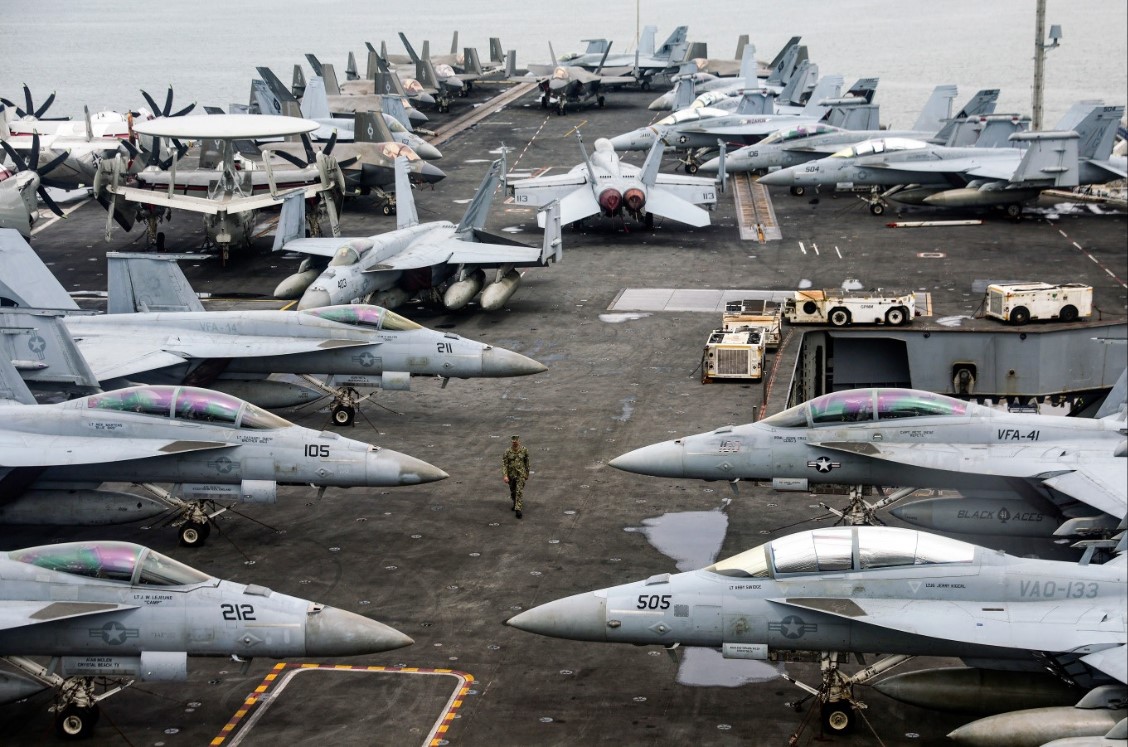 US Plans Significant Reduction of Fighter Jets and Warships for NATO Operations in Europe
-
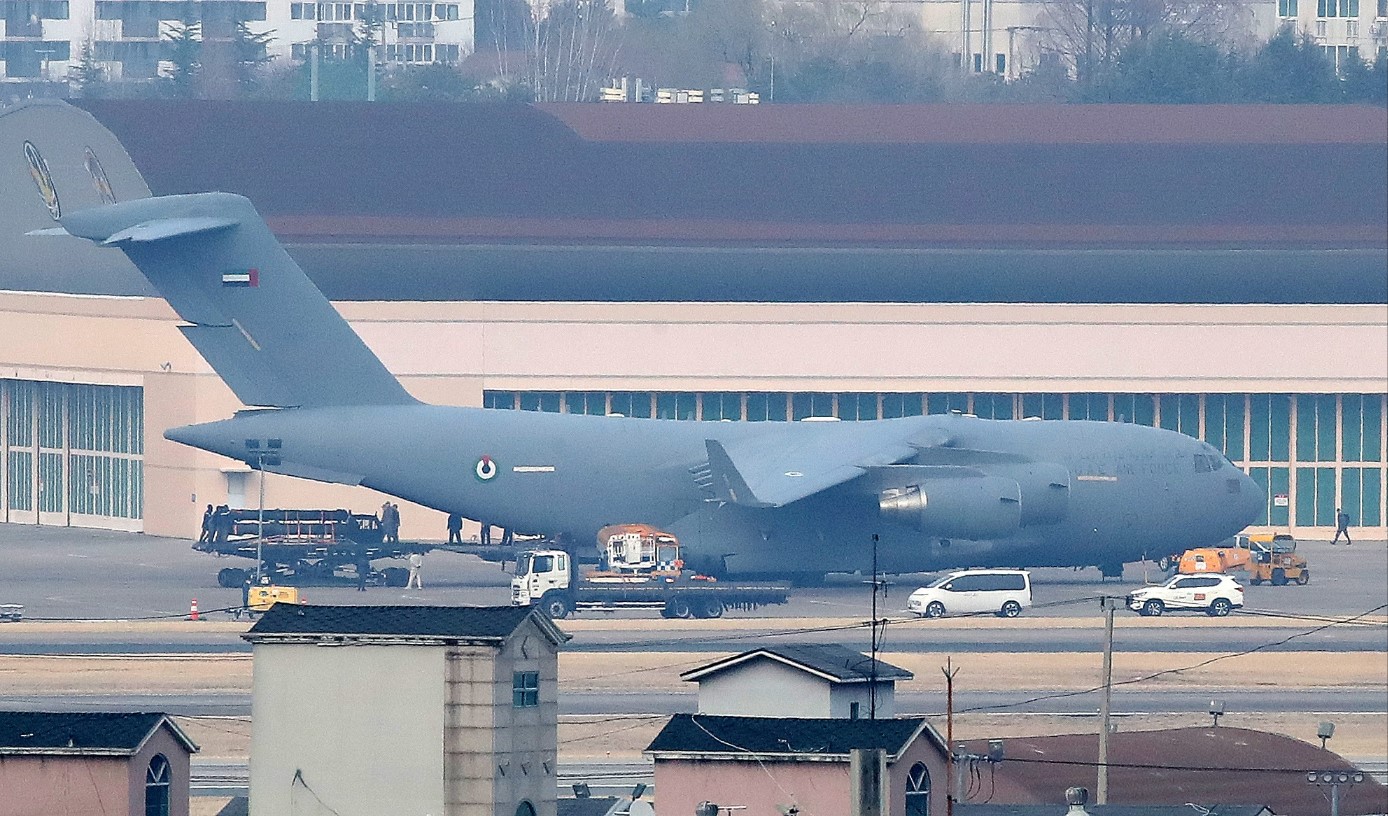 UAE Urgently Airlifts Cheongung-II Missile Defense Battery From South Korea Using Eight C-17 Aircraft
-
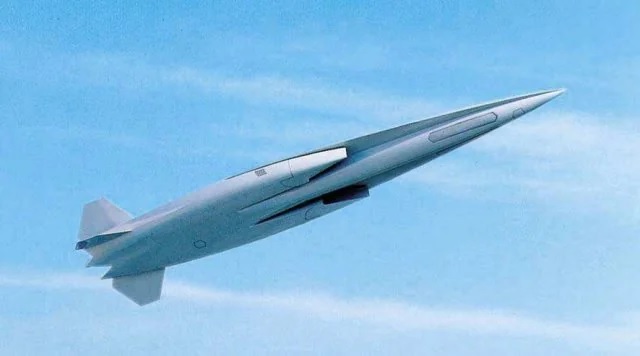 France Awards MBDA Contract to Develop ASN4G Hypersonic Nuclear Missile to Replace ASMPA-R
-
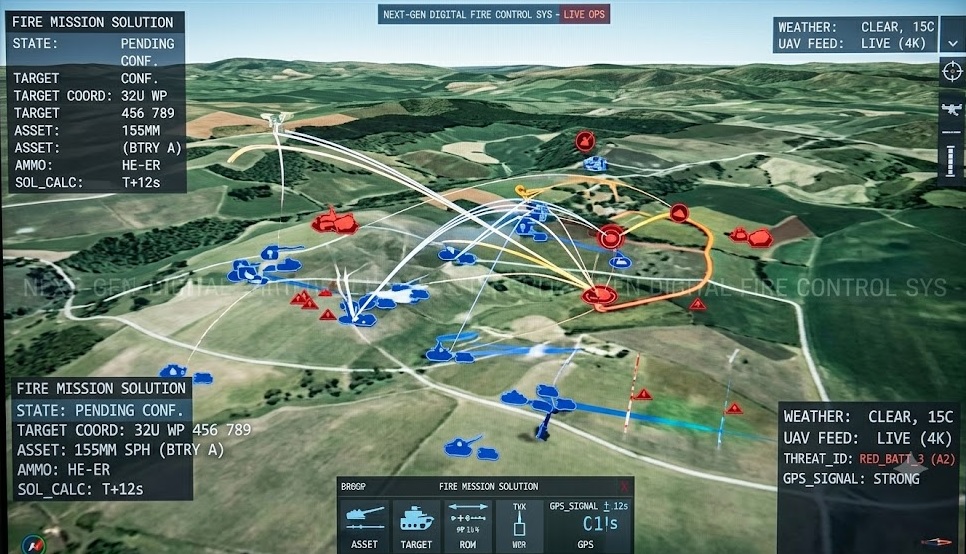 BAE Systems Unveils Next-Generation Digital Indirect Fire Control System at Eurosatory 2026
-
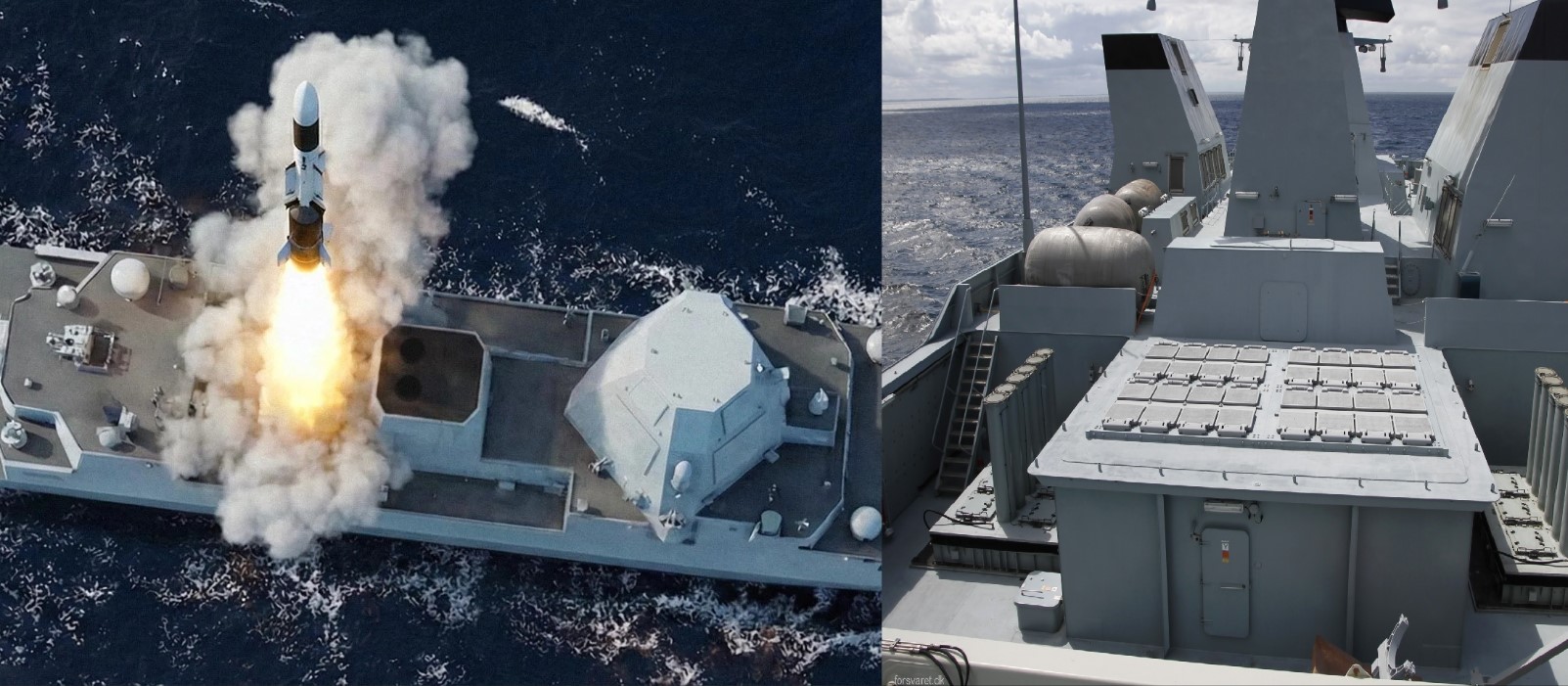 Engineering Challenges Behind the US Navy's Decision to Drop MK41 VLS from Flight I FF(X) Frigates
-
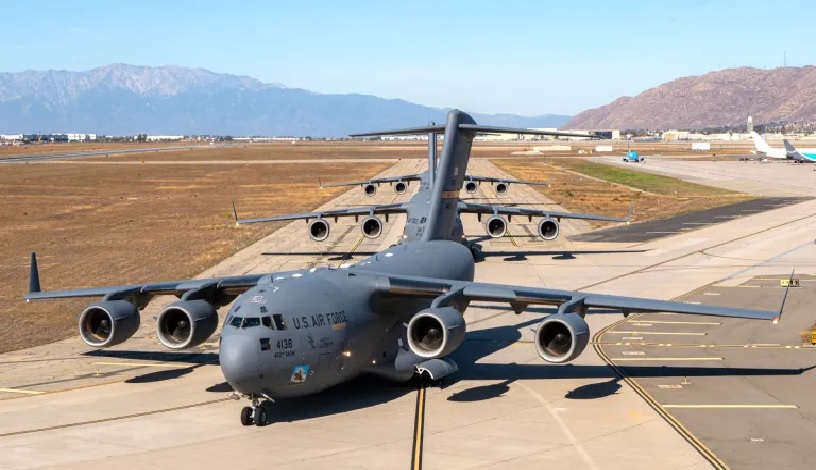 U.S. Air Force Faces Strategic Airlift Shortfall as C-17 Production Restart Remains Uncertain
-
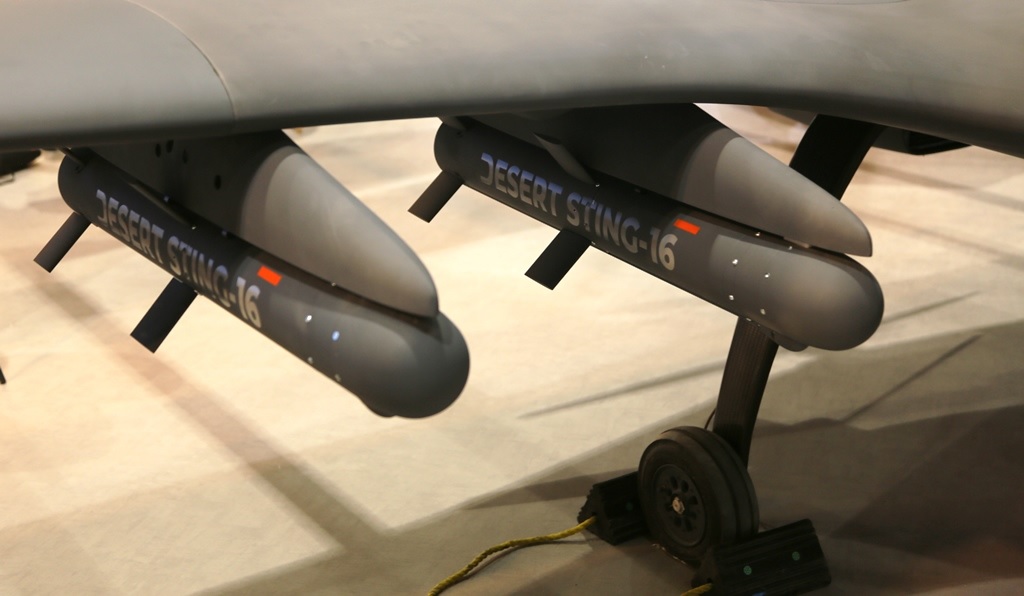 EDGE Integrates Desert Sting 16 Precision-Guided Munition with Bayraktar TB2 UAV
Top Trending in 4 Days
-
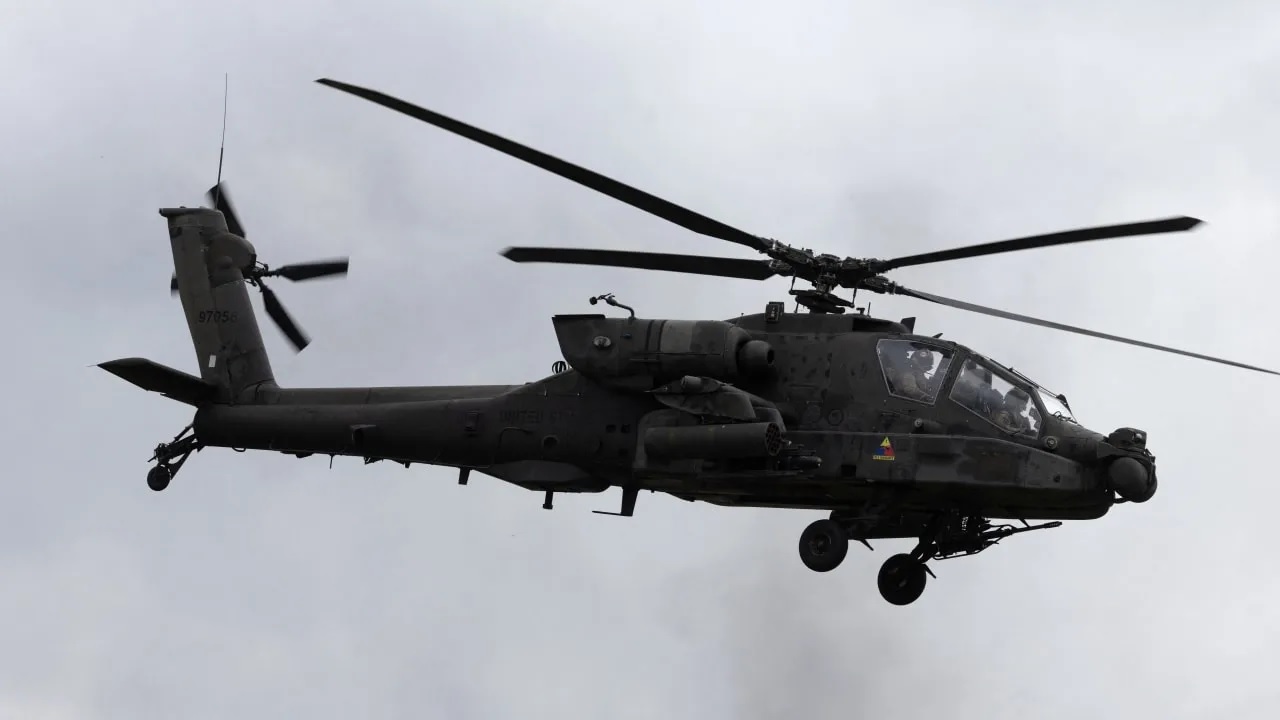 US Army Apache Helicopter Crashes Near Strait of Hormuz; Crew Rescued Safely
-
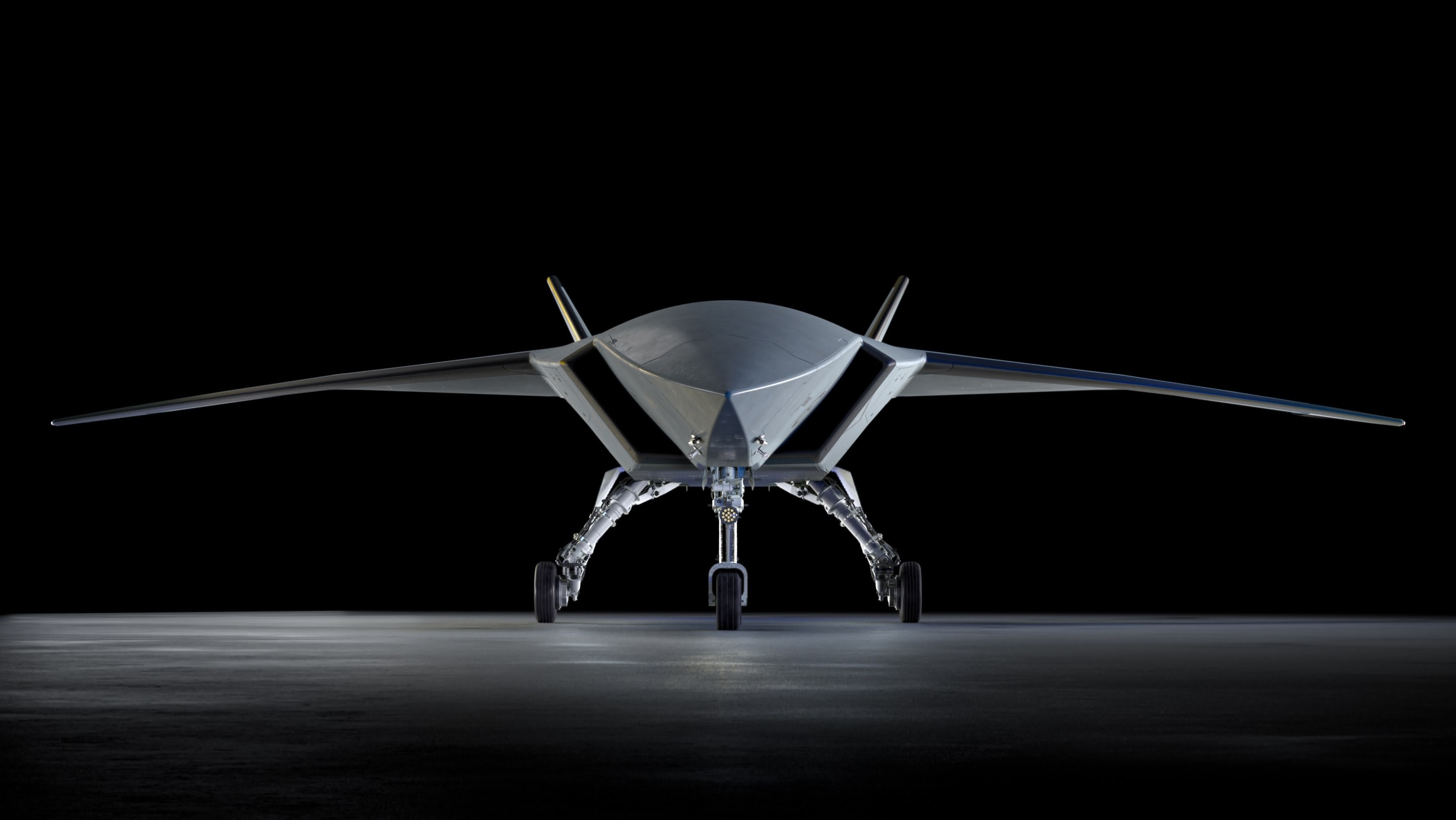 Boeing Introduces New MQ-28 Ghost Bat Upgrades with Increased Range, Payload and Weapons Capacity at ILA Berlin 2026
-
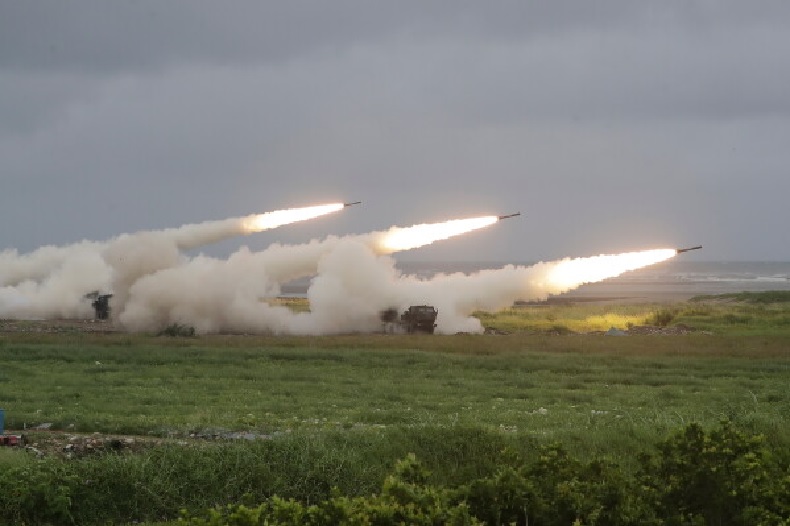 Taiwan Conducts First Live-Fire of HIMARS Rockets From West Coast During Invasion Defense Drill
-
 AMCA Airframe Spotted at DRDO’s ORANGE Facility for Radar Cross-Section Testing
-
 Diehl Defence Unveils IRIS-T Armed Cobra 600 Air Defense Drone at ILA Berlin 2026
-
 U.S. Army Successfully Demonstrates Quantum Sensor That Can Precisely Locate Radio Signals in 3D
-
 Airbus Unveils U760 Ravenstorm Loyal Wingman Drone at ILA Berlin 2026
-
 MBDA Develops AQUILA Interceptor to Counter Hypersonic and Maneuvering Missile Threats