Jerusalem / Washington , 24 January 2026 : The anticipated timing of a potential U.S.-led military escalation in the Middle East appears to have shifted, not because of a change in force posture, but because of politics, family, and optics at the highest level of power. The continued presence of senior U.S. political figures in Jerusalem—most notably Jared Kushner—has injected a temporary pause into an otherwise accelerating strategic environment, according to regional analysts tracking both diplomatic movements and military deployments.
While air and naval assets continue to reposition across the Eastern Mediterranean and surrounding theaters, observers say the final decision point now hinges less on hardware and more on human geography: who is still on the ground, and who has left.
A Diplomatic Presence That Complicates Timing
Jared Kushner’s visit to Jerusalem, alongside U.S. envoy Steve Witkoff, has emerged as an unexpected variable in the crisis calculus. Israeli Prime Minister Benjamin Netanyahu is scheduled to meet the delegation to discuss elements of a revised regional peace framework, a move that signals active diplomacy even as military preparations quietly continue in the background.
Several analysts describe Kushner’s presence as a de facto political brake. The reasoning is straightforward: any large-scale conflict involving Iran would carry the risk of immediate retaliation, potentially including advanced missile systems that remain difficult to intercept with absolute certainty. Launching such an operation while close family members and senior advisers of the former U.S. president are physically present in a potential target zone would represent an extraordinary risk—one that does not align with Donald Trump’s long-documented aversion to personal and familial exposure.
As a result, attention has shifted from traditional indicators such as carrier strike group movements to a more unusual signal: the departure of the U.S. delegation itself. In diplomatic and intelligence circles, the moment Kushner’s aircraft leaves Israeli airspace is increasingly viewed as the true marker for any transition from preparation to execution.
Military Readiness Continues Despite Political Pause
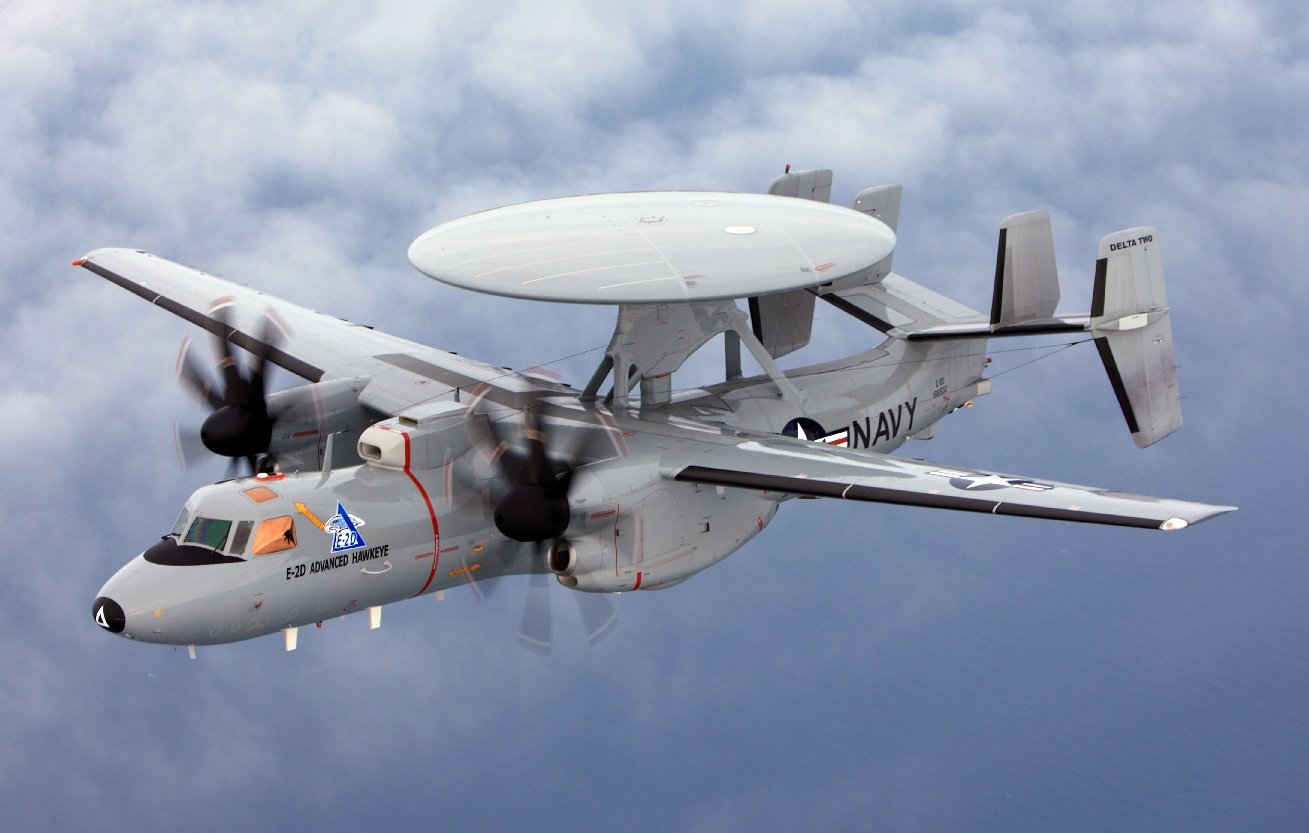
The diplomatic delay has not translated into a military stand-down. NATO’s deployment of an E-3 AWACS surveillance aircraft—identified by regional trackers as NATO008—into the Eastern Mediterranean underscores that operational readiness remains intact. Such platforms are designed to loiter for extended periods, gathering intelligence, coordinating airspace, and providing real-time battlefield awareness.
Military officials familiar with NATO doctrine note that AWACS deployments often precede action by days rather than hours. Their presence suggests that command-and-control architecture is already in place, awaiting only a political directive to activate the next phase.
Naval assets, including U.S. and allied carrier groups, remain positioned within operational range, reinforcing the impression that the machinery of war is primed, even if the start signal has not yet been given.
The Tanker Movements Raising Questions
Additional intrigue has come from the observed movement of U.S. aerial refueling tankers. Several KC-135 aircraft were seen departing Al Udeid Air Base in Qatar and heading westward, away from the immediate proximity of Iran.
Rather than signaling de-escalation, defense analysts interpret the move as a protective adjustment. High-value support assets such as refueling tankers are among the most vulnerable targets in the opening hours of any high-intensity conflict. By repositioning them farther from potential missile strike zones, U.S. planners may be ensuring survivability so they can surge forward once hostilities formally begin.
In this reading, the tanker movements reflect tactical patience rather than retreat.
Tehran’s Strategy of Ambiguity
From Tehran, the rhetoric has hardened but grown deliberately opaque. Senior Iranian military figures, including adviser Rahim Safavi, have spoken publicly about a “unique weapon” capable of ending a war swiftly, while naval commanders have warned of “smart control” of regional waterways.
Such language has fueled speculation about unconventional capabilities, ranging from electromagnetic disruption to coordinated swarms of naval drones designed to overwhelm fleet defenses. While no concrete evidence has been presented, the messaging appears calculated to create uncertainty and deterrence rather than reassurance.
Notably, Iranian statements increasingly suggest acceptance of confrontation rather than efforts to avert it. Phrases such as “we are waiting for them” imply a strategic shift away from prevention toward preparation, reinforcing fears that diplomatic off-ramps may be narrowing.
A Crisis Suspended, Not Resolved
As of Saturday morning, Jan. 24, the region finds itself in a state of suspended animation. Militarily, the components are in place: surveillance aircraft are airborne, naval forces are deployed, and logistical assets are repositioning for survivability and reach. Politically, however, the signal remains red.
The decisive factor, according to multiple regional observers, is no longer an intelligence leak or a military maneuver, but a simple travel update. When news breaks that the U.S. delegation has departed Tel Aviv, many will interpret it as the lifting of the final political restraint.
Until then, the Middle East remains locked in a moment of extreme tension—defined less by action than by waiting, and by the thin line separating diplomacy on the ground from war just beyond the horizon.
——— End of Article ———