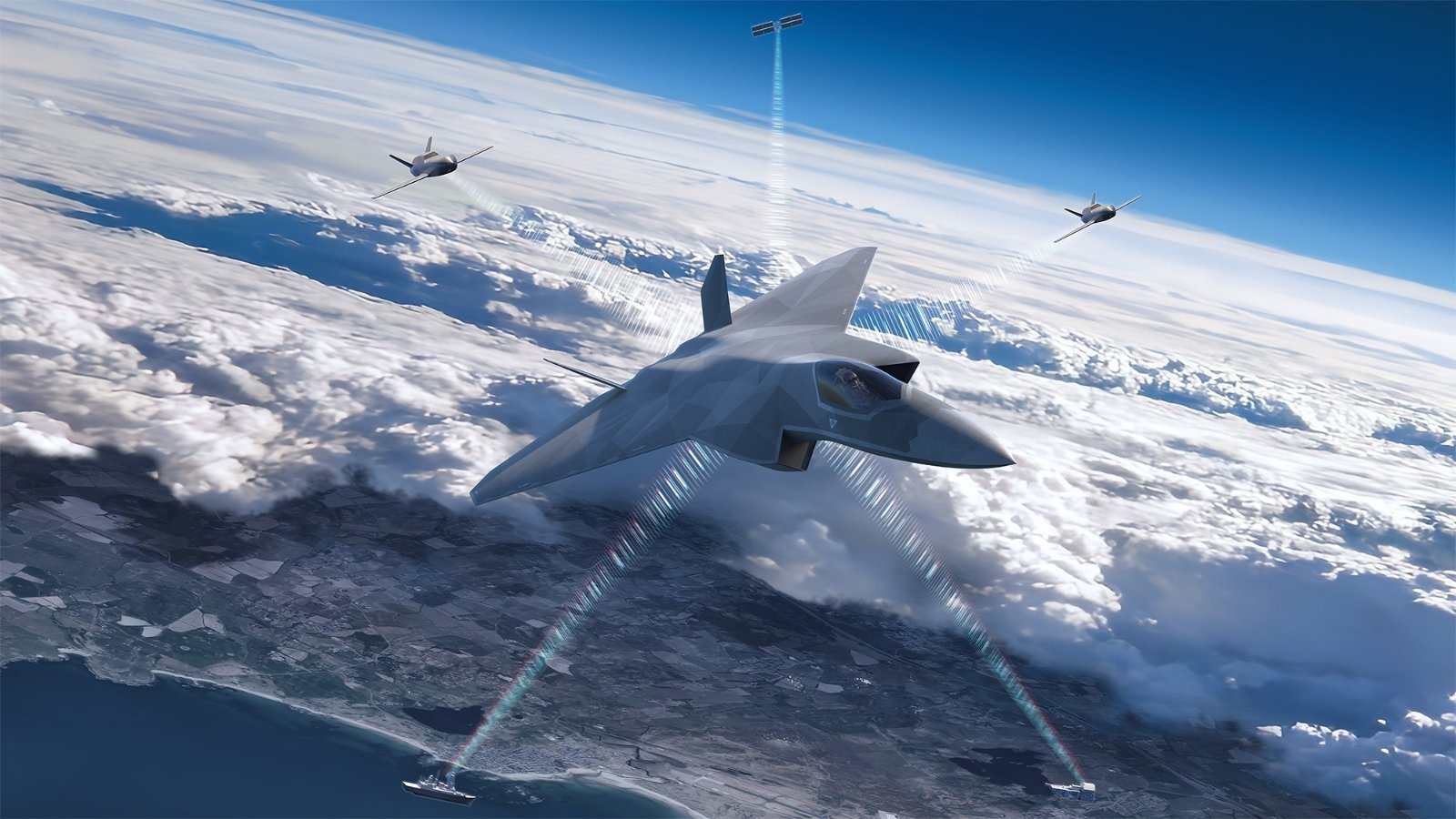
Washington / Naval Aviation Desk : As the U.S. Navy moves to accelerate decisions on its long-delayed Next Carrier Air Dominance (NCAD) effort, a small but outspoken aerospace firm has entered the debate with one of the most audacious independent proposals yet. Stavatti Aerospace this month unveiled detailed concept data for the SM-39 “Razor,” a notional sixth-generation, carrier-based strike fighter that the company claims could combine extreme speed, intercontinental-scale reach, and a program cost far below what has historically defined cutting-edge naval aviation.
The proposal arrives as the Navy seeks to replace the F/A-18E/F Super Hornet in the 2030s with what is formally referred to as the F/A-XX, an aircraft expected to anchor future carrier air wings alongside unmanned systems. Congressional pressure, Indo-Pacific threat assessments, and concerns about the shrinking combat radius of carrier aviation have all pushed the service to re-energize the program after years of uncertainty. Into that environment, Stavatti has inserted a concept designed as much to provoke discussion as to offer an alternative path.
A $51 Billion Vision for Naval Air Power
According to Stavatti’s January 2026 release, the SM-39 Razor is framed around a notional acquisition of 600 aircraft, each priced at a stated flyaway cost of approximately $85 million. That places the headline value of the program at roughly $51 billion, excluding long-term sustainment but including a proposed training ecosystem built around 50 full-mission simulators. Deliveries are projected to begin in 2031 and conclude by 2037, an aggressive schedule by modern defense acquisition standards.
The company argues that such scale is essential to restore mass and flexibility to carrier air wings, which have steadily shrunk as aircraft have grown more complex and expensive. Stavatti further proposes standing up a new U.S.-based production facility capable of ramping to output rates as high as 200 aircraft per year, supporting an estimated 1,600 skilled jobs over a two-decade span. While Stavatti lacks the industrial footprint of traditional naval aviation primes, it emphasizes its status as a long-registered U.S. defense contractor and its intention to operate within existing regulatory and security frameworks.
Range First, Speed Without Apology
Operational reach sits at the heart of the SM-39 pitch. Navy leaders have repeatedly warned that anti-ship missiles, long-range sensors, and dense integrated air defense systems are pushing carriers farther from contested coastlines, especially in the Indo-Pacific. Stavatti claims the Razor would deliver a tactical combat radius exceeding 1,200 nautical miles from a carrier deck, a figure that would dramatically exceed that of current strike fighters if achieved with a useful internal payload.
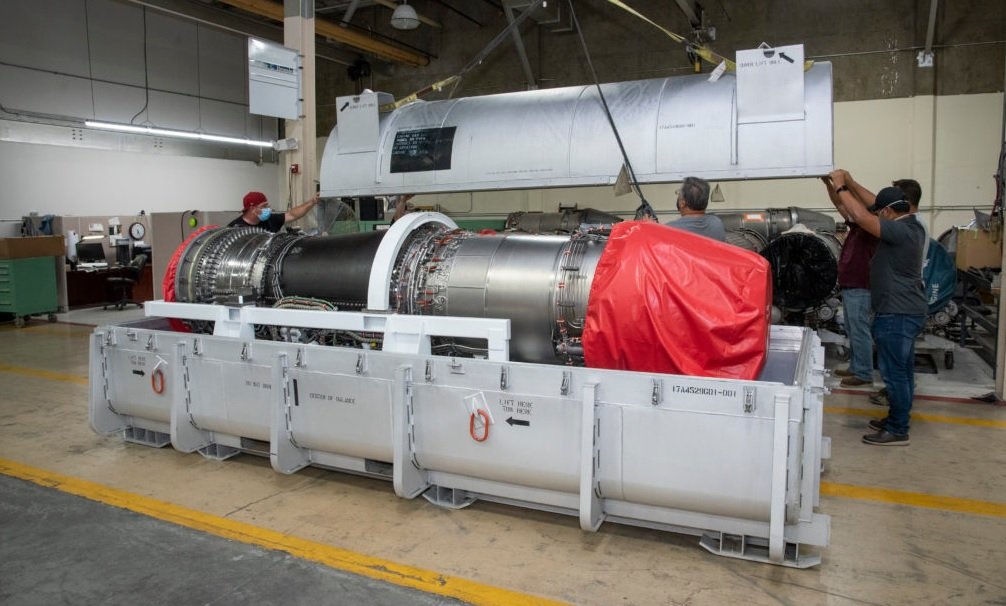
Equally striking are the aircraft’s speed claims. Company materials describe sustained dash performance above Mach 4, with supercruise speeds exceeding Mach 2.5. Stavatti attributes this to a low-observable, triple-fuselage planform intended to reduce supersonic wave drag, paired with next-generation adaptive-cycle afterburning turbofans. The firm references either a proprietary “NeoThrust” engine concept or a propulsion class comparable to current U.S. adaptive-engine demonstrators, highlighting improved fuel efficiency, thermal management, and electrical power generation.
Such performance figures place the SM-39 well outside the publicly discussed envelopes of expected F/A-XX designs. They also raise immediate questions about heat management, structural durability, carrier suitability, and sustainment costs in the corrosive maritime environment. Naval aviation history offers few examples of extreme-speed aircraft translating cleanly to routine carrier operations.
Weapons, Volume, and Future Effects
Beyond speed and range, the most concrete technical data in the proposal centers on internal volume and weapons carriage. The SM-39 is described as featuring an internal M61A2 20-millimeter Vulcan cannon with a 1,000-round magazine, supported by two primary internal weapons bays. A forward bay approximately 162 inches long, rated for 5,000 pounds at 7.5 g, is intended for air-to-air missiles or lighter precision weapons. A larger mid-fuselage bay, rated for 12,000 pounds, supports a rotary launcher and heavier strike loads.
In representative configurations, Stavatti suggests the Razor could carry up to six beyond-visual-range air-to-air missiles internally, or multiple 2,000-pound-class precision-guided bombs while maintaining low observability. External carriage is also built into the design, with four jettisonable wing hardpoints rated at 4,500 pounds each. These stations are presented as compatible with U.S. Navy anti-ship, anti-radiation, and standoff strike weapons, as well as large external fuel tanks, bringing the total design workload to an asserted 25,000 pounds.
Looking further ahead, Stavatti alludes to internal power and cooling margins sufficient to support future directed-energy weapons, including high-energy lasers, should such systems mature for tactical aviation. This emphasis mirrors broader Pentagon interest in electrical power generation as a defining attribute of sixth-generation platforms.
An Outlier in an Unforgiving Program
In contrast to expected F/A-XX contenders from Boeing and Northrop Grumman, Stavatti’s proposal rests less on pedigree and more on disruption. The major primes are widely expected to stress their experience with carrier qualification, systems integration, and sustaining complex fleets over decades. Stavatti, by comparison, is offering extreme performance, generous internal volume, and a cost narrative closer to advanced fourth-generation fighters than to past sixth-generation estimates.
Whether the SM-39 Razor is viewed as a genuine alternative or a provocative thought experiment, its appearance highlights the unresolved tensions at the core of the Navy’s Next Carrier Air Dominance effort. The service needs greater range, survivability, and payload to keep carrier aviation relevant against peer adversaries, but it must also deliver an aircraft that can be built, maintained, and operated at scale from pitching decks around the world.
History suggests that executable engineering, risk reduction, and lifecycle sustainability ultimately matter more than headline speed or range. For now, Stavatti’s SM-39 stands as a bold data point in the evolving NCAD debate — a reminder of how wide the gap remains between aspiration and a carrier-ready aircraft that can actually go to sea.
——— End of Article ———