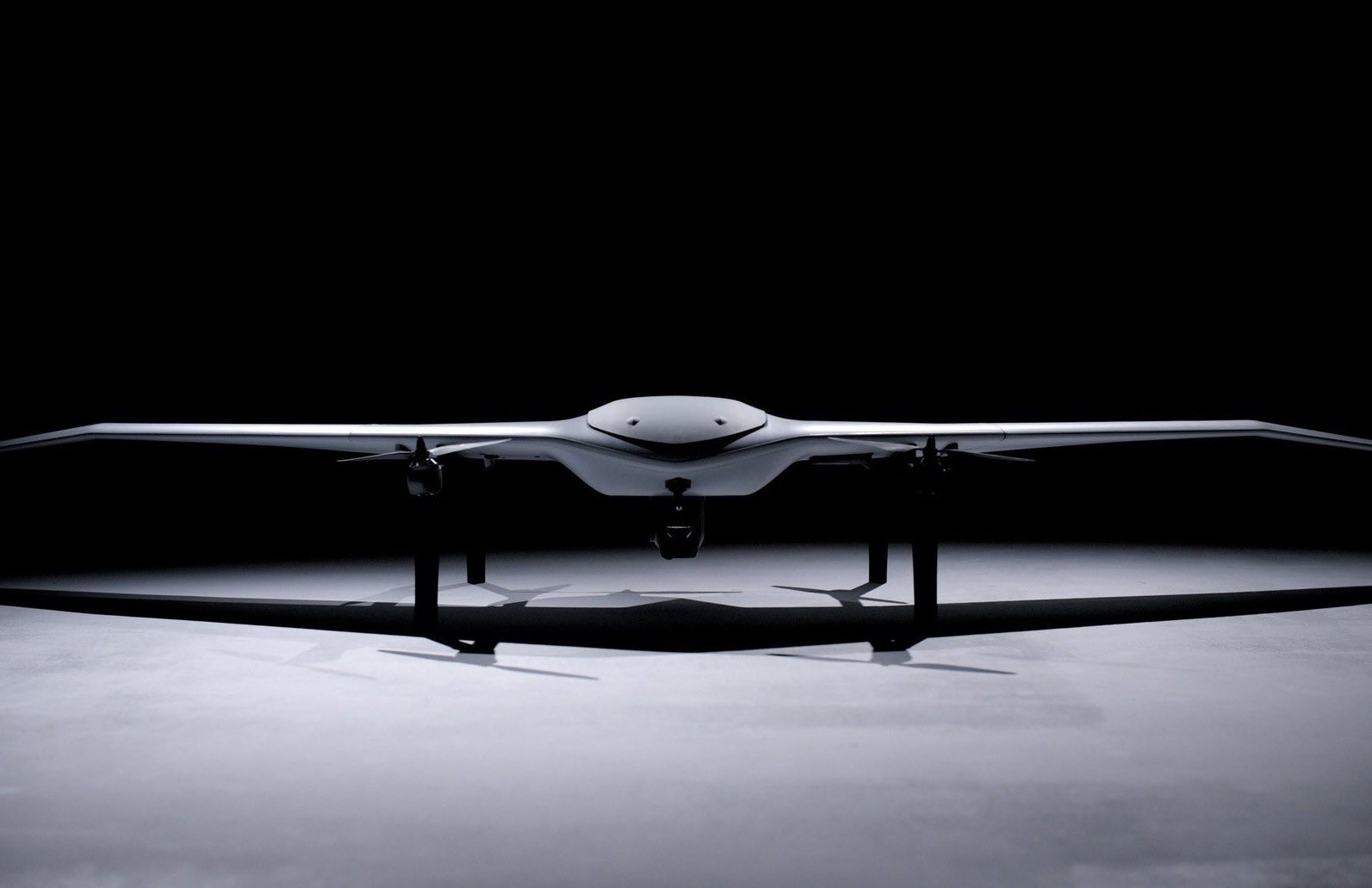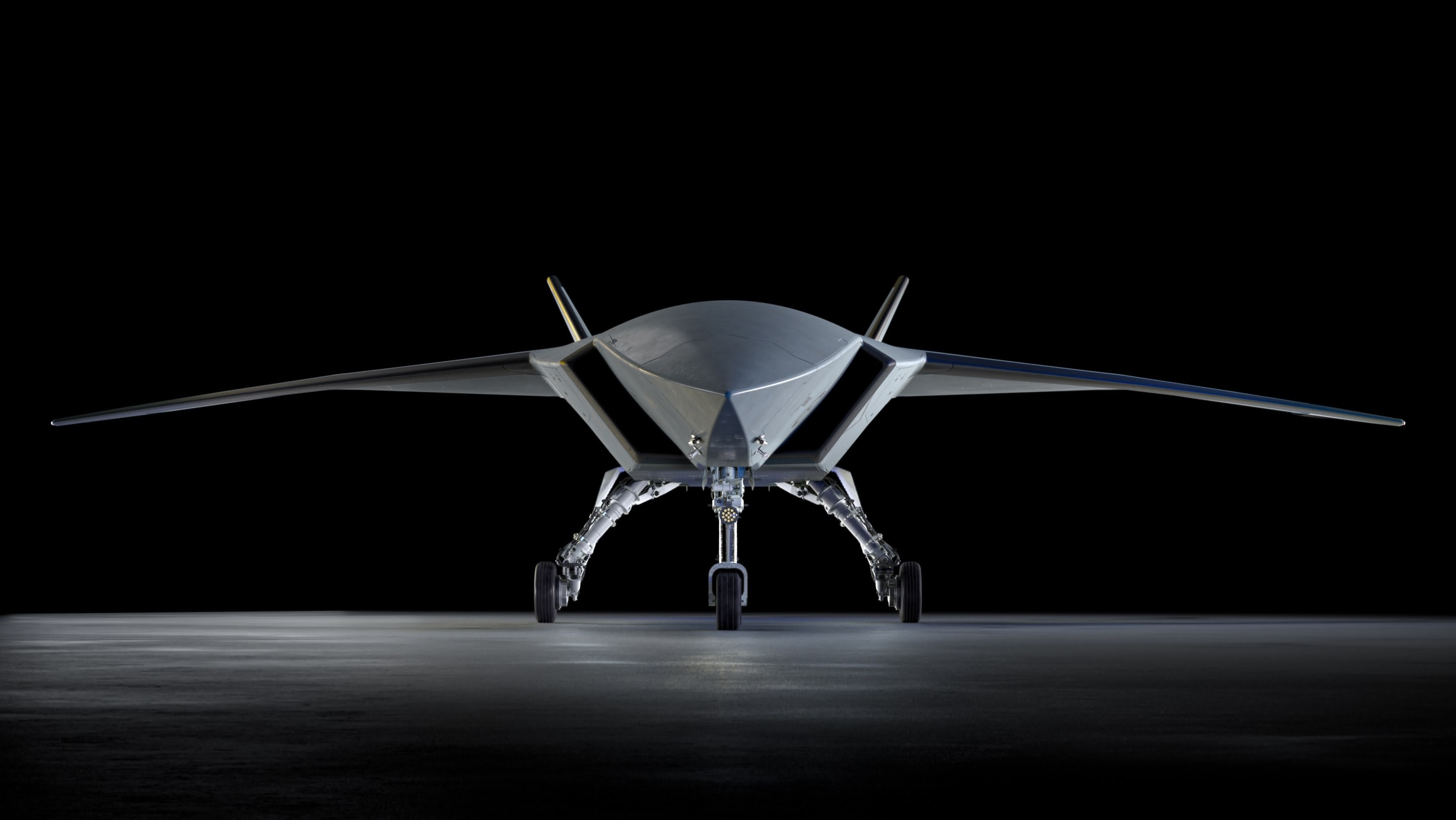
BERLIN, — June 10, 2026 : Boeing has announced a significant capability upgrade package for its MQ-28 Ghost Bat uncrewed combat aircraft at the ILA Berlin Air Show 2026, introducing enhancements that increase the platform’s range, payload capacity, weapons carriage options, and interoperability. The company also expanded its European industrial partnership network as it positions the aircraft for Germany’s planned Collaborative Combat Aircraft (CCA) procurement program scheduled for 2029.
Developed in partnership with the Royal Australian Air Force (RAAF), the MQ-28 Ghost Bat is designed to operate alongside crewed fighter aircraft as a collaborative combat aircraft, supporting missions ranging from air combat and intelligence gathering to electronic warfare and strike operations. The latest upgrades represent the most extensive evolution of the program since the aircraft entered flight testing and are intended to enhance operational flexibility for Australia and future allied operators.
Larger Wing Design Increases Payload and Range
A central element of Boeing’s Block 3 technology roadmap is a redesigned wing structure that expands the MQ-28’s wingspan from 20 feet (6 meters) to 24 feet (7.3 meters), an increase of more than 25 percent over the original design.
The larger wing enables a substantial increase in the aircraft’s maximum take-off weight (MTOW), which rises from 10,000 pounds (4,500 kilograms) to 12,000 pounds (5,400 kilograms). The modification also increases the platform’s useful payload capacity to more than 4,500 pounds (2,000 kilograms).
According to Boeing, the additional capacity allows operators to carry up to 2,000 pounds (900 kilograms) of extra fuel, weapons, sensors, or mission equipment. This provides greater flexibility to configure the aircraft for longer-range operations, heavier weapons loads, or a balance between endurance and combat capability depending on mission requirements.
Glen Ferguson, Boeing’s MQ-28 Global Program Director, said the expanded capacity enables operators to tailor the aircraft to specific operational needs.
“The additional capacity gives operators freedom to balance payload and endurance to configure for the mission at hand, whether that means carrying extra fuel for longer-range operations, increasing weapons carriage or any combination of both,” Ferguson said.
Expanded Weapons-Carrying Capability
The upgraded MQ-28 will feature enhanced weapons integration options while maintaining its low-observable characteristics.
Internal modifications allow the aircraft to carry weapons inside newly configured internal weapons bays, preserving stealth performance by reducing radar exposure. The internal bays can be configured to carry either two AIM-120 Advanced Medium-Range Air-to-Air Missiles (AMRAAMs) or four Small Diameter Bombs (SDBs).
For missions where additional firepower is prioritized over stealth, the aircraft will also be capable of carrying weapons on three external hardpoints. The expanded payload architecture broadens the MQ-28’s mission set, supporting air-to-air combat, strike operations, suppression of enemy air defenses, force protection, and intelligence, surveillance and reconnaissance missions.
Beyond-Line-of-Sight Communications Introduced
One of the most significant additions announced at Berlin is the integration of Beyond-Line-of-Sight (BLOS) communications capability.
The new communication architecture allows the MQ-28 to be controlled and monitored from crewed aircraft, ground stations, or naval platforms across extended distances through satellite-enabled and networked communications links. Boeing said the capability was developed in response to feedback from allied air forces seeking greater operational reach for collaborative combat aircraft operating across large geographic regions.
The BLOS system is expected to improve the aircraft’s effectiveness in joint and multi-domain operations, enabling integration with distributed force structures and long-range mission planning.
Open-System Software Architecture Enhances Flexibility
Alongside the physical upgrades, Boeing unveiled major software enhancements based on the Government Reference Architecture (GRA), an open-systems framework designed to simplify the integration of new technologies.
The upgraded architecture will allow operators to customize weapons integration, payload configurations, command-and-control systems, mission autonomy functions, and data-sharing capabilities according to national and operational requirements.
Boeing stated that the open architecture reduces dependence on proprietary systems and makes it easier for customers to integrate domestically developed technologies and future upgrades throughout the aircraft’s service life.
The MQ-28 is also receiving an upgraded modular mission nose section, enabling rapid integration of third-party payloads. The modular design supports a range of mission systems, including electronic warfare equipment, infrared search and track (IRST) sensors, communications relay packages, surveillance systems, and targeting support capabilities.
German Industry Team Expanded for Luftwaffe Bid
To strengthen its bid for the German Air Force’s future Collaborative Combat Aircraft requirement, Boeing announced the expansion of its German industry team.
German defense companies Diehl Defence and Rohde & Schwarz have joined the MQ-28 program alongside existing strategic partner Rheinmetall, which will continue serving as the lead systems integrator for German technologies.
Under the new partnership framework, Diehl Defence will focus on weapons integration, adapting German air-to-ground munitions and guided missile systems for the MQ-28 while contributing software components for future air combat networks.
Rohde & Schwarz will provide mission and communications systems integration through its Networked Multipoint Array Communications System (NEMACS), helping connect the MQ-28 with Bundeswehr command-and-control networks and enabling secure data exchange across military platforms.
Amy List, Vice President and Managing Director of Boeing Defence Australia, said the expanded partnership combines Australian and German expertise to support the aircraft’s future entry into German service.
“We’re bringing together the best of Australian and German innovation to be able to deliver the MQ-28 to the Luftwaffe by 2029. Welcoming Diehl Defence and Rohde & Schwarz to our team is a significant step forward,” List said.
Program Maturity and Future Development
The MQ-28 Ghost Bat continues to mature as one of the most advanced collaborative combat aircraft programs currently under development. Originally launched under Australia’s Airpower Teaming System initiative, the aircraft represents the country’s first domestically designed and developed military combat aircraft in more than 50 years.
Since its first flight in 2021, the MQ-28 has completed more than 150 test flights, including autonomous teaming demonstrations, sensor evaluations, and a successful autonomous live-fire AMRAAM engagement conducted in late 2025.
The aircraft is designed to operate alongside platforms such as the F-35A Lightning II, F/A-18F Super Hornet, EA-18G Growler, E-7A Wedgetail, and future combat aircraft, extending sensor coverage, carrying additional weapons, and performing higher-risk missions that would otherwise be assigned to crewed aircraft.
According to Boeing, the newly announced enhancements will be introduced through a spiral upgrade approach, allowing new capabilities to be progressively integrated into the fleet. The improvements are also intended to enhance interoperability with both Boeing and non-Boeing platforms, providing allied air forces with a highly configurable and adaptable uncrewed combat system.
With increased payload capacity, expanded weapons options, advanced networking capabilities, and greater mission flexibility, the MQ-28 Ghost Bat is moving closer to operational deployment as a key component of future crewed-uncrewed air combat operations for Australia and potential international customers.
——— End of Article ———