WASHINGTON : The U.S. Navy has moved to lock in the long-term relevance of its most prolific standoff strike weapon, awarding Raytheon a $380.8 million contract modification to expand Tomahawk cruise missile recertification and modernization work through the end of the decade. The decision underscores a strategic judgment increasingly shared across the Pentagon: sustaining depth in existing missile inventories is as decisive as fielding new platforms.
According to an announcement dated January 21, 2026, Naval Air Systems Command (NAVAIR) awarded Raytheon Co. (RTX) of Tucson, Arizona, a fixed-price incentive and firm-fixed-price contract modification—designated P00010—under contract N0001925C0071. The action raises the total definitized contract value to $476.5 million and formally extends work on Lot Five and Lot Six Tomahawk missiles, with completion scheduled for April 2029.
The contract covers depot-level recertification and modernization, associated hardware, spares, and rotable pool assets. At its core, the effort is designed to reset the service life of existing Tomahawk missile inventories at scale, while inserting new capabilities that allow the weapon to remain viable in contested, electronically dense environments.
Preserving Mass in an Era of Missile Competition
The Tomahawk Land Attack Missile (TLAM) has been the Navy’s principal long-range precision strike weapon for more than four decades, launched from surface combatants and submarines across the U.S. Navy fleet, as well as from Royal Navy submarines in the United Kingdom. As demand for long-range fires accelerates worldwide and missile production lines strain under wartime replenishment pressures, the Navy is placing renewed emphasis on what officials describe as “day-one mass”—the number of ready, deployable weapons available at the opening of a conflict.
Recertification is central to that strategy. By replacing life-limited components at mid-life, the process extends a missile’s service life by roughly 15 additional years, avoiding the cost and time required to build entirely new rounds while preserving operational inventory depth. Just as importantly, recertification creates the opportunity to integrate Block V upgrades, transforming legacy Block IV missiles into significantly more capable variants.
A Weapon Built for Adaptation
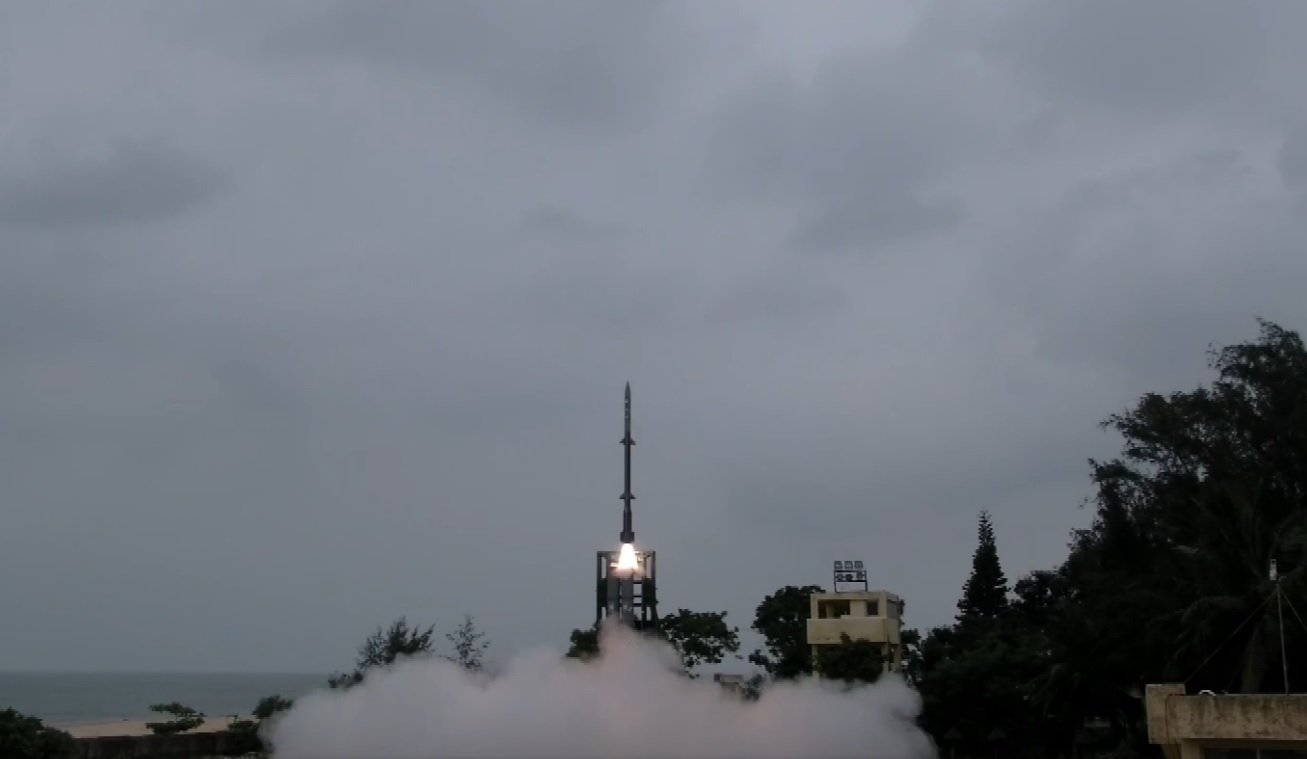
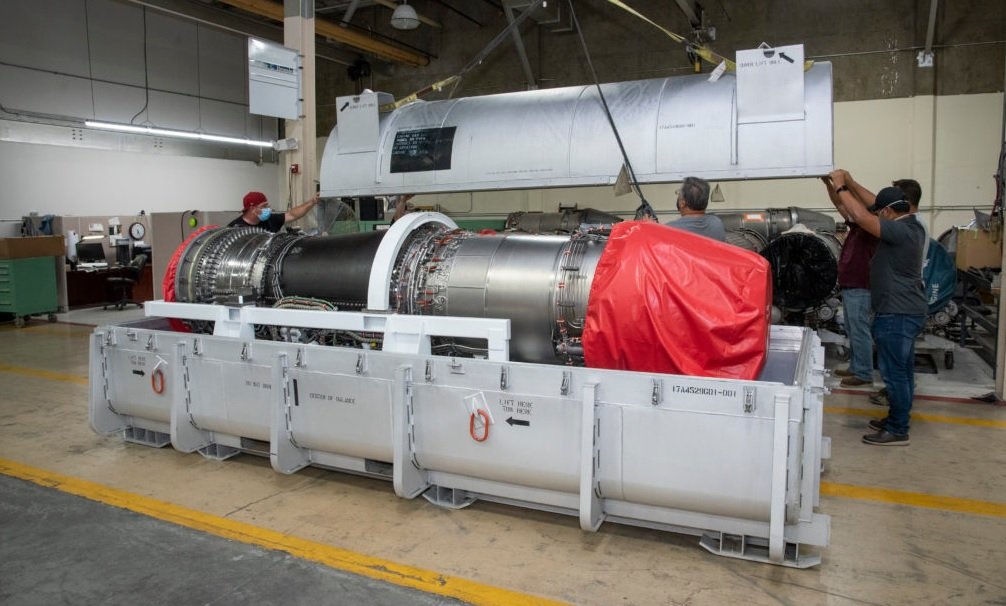
The Tomahawk remains a subsonic, all-weather cruise missile optimized for survivable, low-altitude penetration and long-range precision strike. After launch, a solid-fuel booster accelerates the missile clear of the ship or submarine before a turbofan engine sustains cruise flight along mission-tailored routes. Navigation relies on a layered guidance architecture, combining inertial navigation, terrain and scene matching, and GPS support.
The Navy lists the effective range of Block IV and Block V TLAM-E variants at approximately 900 nautical miles. Block IV introduced two-way satellite communications, enabling in-flight retargeting, loitering, and post-strike battle damage assessment via an onboard camera. These features allow commanders to adapt missions in real time as the operational picture evolves—an increasingly critical advantage as conflicts become more dynamic and information-driven.
Block V: From Life Extension to Capability Growth
Early Block V Tomahawks were produced by recertifying and modernizing existing Block IV missiles, and the Navy plans to transition the entire Block IV inventory through the same pipeline. Block V introduces upgraded navigation and communications systems designed to improve accuracy, reliability, and resilience against jamming, spoofing, and electronic warfare, now considered baseline threats in modern conflict.
Within Block V, two variants carry particular tactical and operational significance. The first, Block Va—Maritime Strike Tomahawk, adds an advanced seeker capability that enables engagement of moving surface ships at sea. This restores a long-range anti-surface warfare option, extending naval strike reach well beyond that of most ship-launched missiles and significantly complicating an adversary’s naval calculus.
The second, Block Vb, replaces the legacy warhead with the Joint Multiple Effects Warhead System (JMEWS). The new payload is intended to broaden the target set, improving lethality against hardened and complex targets while preserving a single-missile standoff strike profile.
Raytheon has described the modernization effort as an evolutionary leap, taking a combat-proven weapon system and integrating new seekers, enhanced networking, and greater survivability to support future capability growth.
A Joint and Allied Weapon
Funding details in the January award illustrate how broadly Tomahawk now spans U.S. force design. In addition to Navy weapons procurement, the contract draws from Army missile procurement and Marine Corps procurement accounts, reflecting the missile’s expanding role beyond traditional naval launch platforms.
The U.S. Army has already demonstrated Tomahawk launches from its Typhon Mid-Range Capability system, providing combatant commanders with a land-based, harder-to-target long-range strike option. This convergence of naval and land-based fires is intended to complicate adversary defenses, support distributed operations, and simplify logistics and sustainment.
The award also includes $99.4 million in Foreign Military Sales (FMS) funding, reinforcing allied participation in the same modernization and depot ecosystem. By sustaining partner inventories alongside U.S. stocks, the Navy aims to preserve interoperability and reduce the risk that allies face missile shortages during a prolonged high-intensity conflict.
Extending Relevance Into the 2030s
With work now scheduled through April 2029, the latest contract modification signals strong confidence that Tomahawk will remain a central pillar of U.S. and allied long-range strike capacity well into the 2030s. While next-generation weapons continue to advance, the Navy’s investment reflects a pragmatic reality of modern warfare: precision, range, resilience, and quantity matter.
In an era defined by contested seas, electronic warfare, and the growing strategic importance of munition stockpiles, the Tomahawk’s modernization is not about nostalgia for a legacy system—but about ensuring that a proven, adaptable weapon remains decisive when it matters most.
——— End of Article ———