PARIS — June 09, 2026 : European missile manufacturer MBDA is advancing the development of AQUILA, a next-generation interceptor missile designed to counter hypersonic weapons and highly maneuverable ballistic missile threats. The missile is being developed under the Hypersonic Defence Interceptor System (HYDIS) program, a major European initiative aimed at strengthening future air and missile defense capabilities against emerging hypersonic threats.
Supported by the European Defence Fund (EDF), the HYDIS program is coordinated by MBDA and includes 19 industry partners and more than 30 subcontractors from 14 European countries, including France, Germany, Italy, and Netherlands. The project is managed by Organisation for Joint Armament Cooperation.
Designed for Hypersonic Interception
AQUILA is MBDA's first interceptor specifically designed to engage hypersonic glide vehicles, hypersonic cruise missiles, and maneuvering ballistic missiles. Unlike conventional ballistic missiles that follow more predictable flight paths, hypersonic weapons travel at speeds above Mach 5 while performing rapid maneuvers, making them difficult to intercept with existing air-defense systems.
The interceptor is designed to operate entirely within the atmosphere and is intended to provide long-range interception capability against high-speed and maneuvering threats.
Three-Stage Missile Architecture
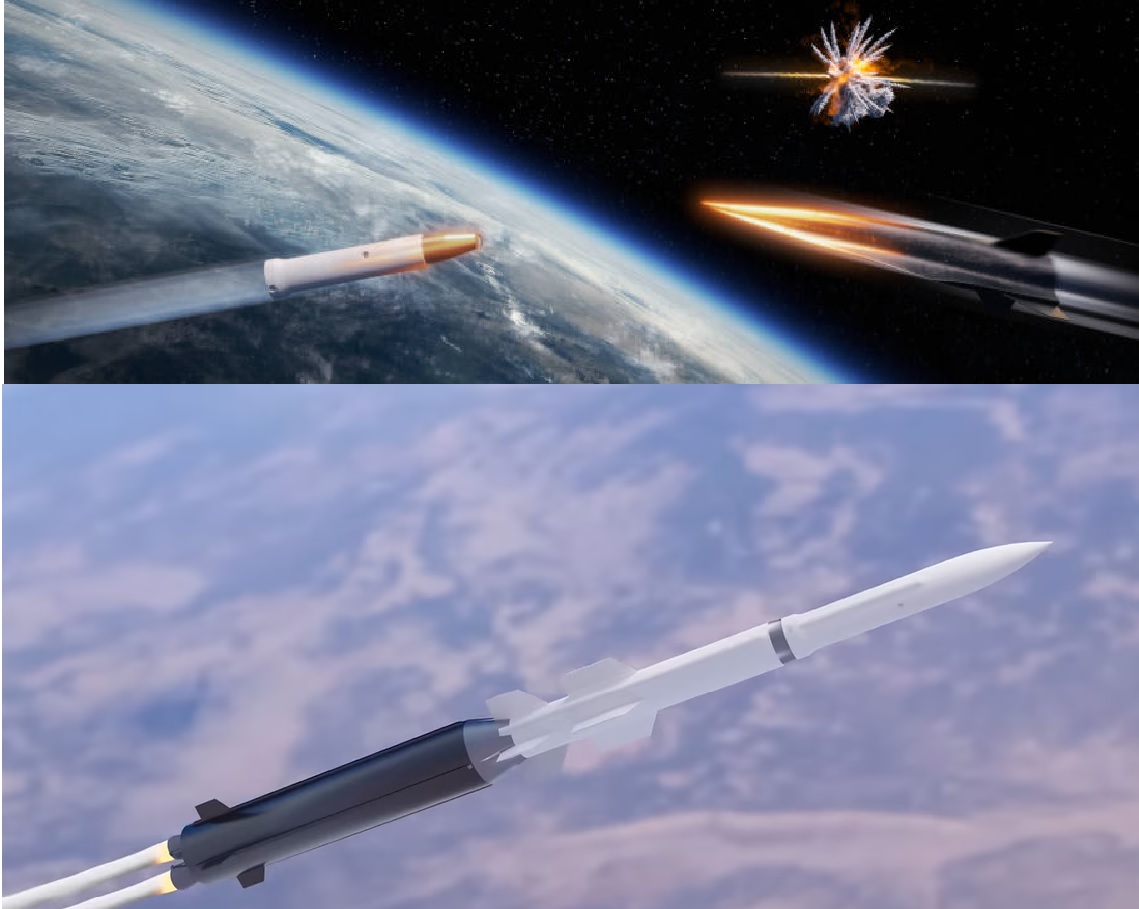
According to MBDA, AQUILA features a three-stage architecture consisting of a booster accelerator, a cruise stage, and a kill vehicle.
The booster accelerator provides the initial thrust required to rapidly reach operational speed and altitude. The cruise stage uses thrust-modulation technology, allowing the missile to adjust its flight path in response to changes in a target's trajectory. During the terminal phase, a highly agile kill vehicle equipped with advanced guidance systems is designed to intercept and destroy the target.
MBDA stated that AQUILA is being designed with very high flight velocity to enable rapid response against hypersonic threats. Due to its multi-stage design, the interceptor is expected to be larger than the current Aster 30 missile and will require a larger launch container.
Integration With SAMP/T Systems
The interceptor is being developed for integration with existing and future European air-defense networks. MBDA has confirmed that AQUILA is intended for both land-based and naval deployment and will be compatible with multiple launcher systems.
The missile is expected to integrate with the current SAMP/T air-defense system and the future SAMP/T NG (New Generation). Within the broader missile-defense architecture, AQUILA is intended to serve as an upper-tier defensive layer alongside Aster 30 Block 1 and future Block 1NT interceptors.
HYDIS Program Progress
The HYDIS program entered its three-year concept phase in 2024 with approximately €80 million in funding from the European Defence Fund.
Current work is focused on developing key technologies required for hypersonic interception, including predictive artificial intelligence algorithms, advanced guidance systems, and sensors capable of operating in the extreme conditions associated with hypersonic flight.
Initial studies evaluated 11 interceptor concepts before narrowing the field to six candidates and later to two leading designs. A final interceptor concept is expected to be selected during the next stage of the program.
Future European Missile Defense Capability
Participating nations are currently finalizing common operational requirements while the HYDIS consortium prepares for the final concept selection. The chosen design will form the basis of Europe's future counter-hypersonic missile defense capability.
If development proceeds as planned, AQUILA will complement the Aster missile family and provide European armed forces with a dedicated capability to counter next-generation hypersonic and maneuvering missile threats.
——— End of Article ———