CANBERRA, — June 17, 2026 : British defense technology company OpenWorks Engineering has been selected to provide its Vision Guard surveillance system for evaluation under the Australian Defence Force’s (ADF) Project Land 156, a major AU$1.3 billion counter-drone modernization program aimed at strengthening Australia's ability to detect and defeat unmanned aerial threats over the next decade.
The selection marks an important step for OpenWorks Engineering, a company widely known for its SkyWall net-based drone capture systems, as it expands its focus beyond drone defeat technologies into advanced detection and surveillance solutions. Under the Land 156 program, Vision Guard will undergo assessment alongside a range of sensors, effectors, and command-and-control systems being considered for future ADF counter-unmanned aerial systems (C-UAS) capabilities.
Australia Accelerates Counter-Drone Capability Development
Project Land 156 is one of Australia’s most significant defense acquisition initiatives focused on countering the rapidly growing threat posed by unmanned aerial systems. The program is being delivered through an accelerated procurement approach that uses rolling contracts, continuous demonstrations, and ongoing technology evaluations to rapidly introduce new capabilities into service.
Leidos Australia, serving as the program’s systems integration partner, is working with government and industry participants to develop a layered and distributed defense architecture capable of addressing a broad spectrum of drone threats, ranging from commercial quadcopters to increasingly sophisticated and weaponized unmanned systems.
To date, more than 120 drone detection and defeat technologies have reportedly been introduced or assessed through the Land 156 framework. The program’s flexible structure allows the Australian Defence Force to continuously evaluate, replace, and upgrade technologies as operational requirements evolve and new threats emerge.
Vision Guard Designed for Dismounted Infantry Operations
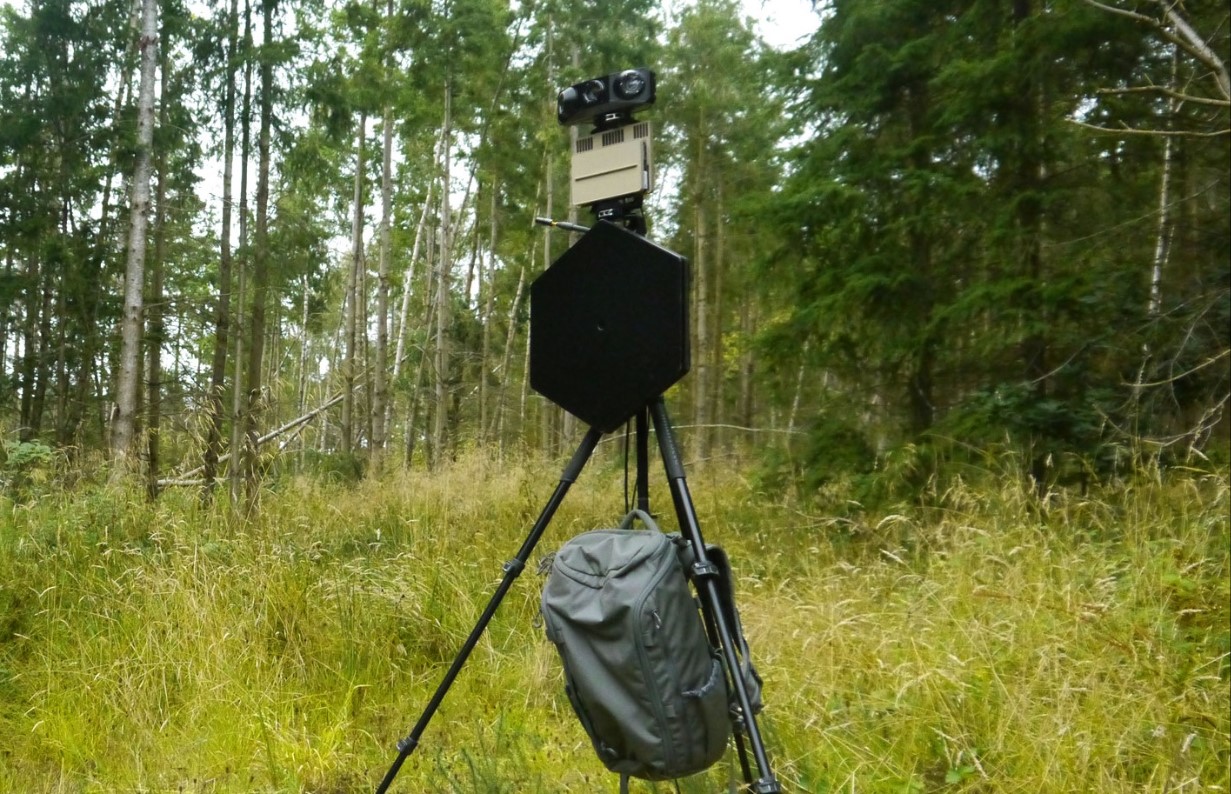
OpenWorks Engineering describes Vision Guard as the smallest and lightest intelligent optics system within its product portfolio. The system has been specifically developed to provide dismounted infantry units with a portable early-warning capability against small drones.
Unlike traditional surveillance systems that require operators to manually scan the sky, Vision Guard offers a panoramic staring capability, continuously monitoring a wide area and automatically searching for aerial threats. The system utilizes the company’s proprietary artificial intelligence and data fusion software to detect, track, and identify Class 1 unmanned aerial systems, including small commercial and military drones, at extended ranges.
Designed around strict Size, Weight, and Power (SWaP) requirements, the entire system, including supporting sensors, can be carried in a standard military backpack. OpenWorks states that Vision Guard can be fully deployed in less than two minutes, enabling infantry units to establish surveillance positions quickly during operations.
The system is also optimized for low-light environments, supporting covert observation missions and forward-deployed troops operating in challenging conditions.
Modular Sensor Integration and Network Connectivity
A key feature of Vision Guard is its modular architecture, allowing operators to tailor sensor configurations based on mission requirements and terrain conditions.
The system can integrate both active and passive wide-area sensors, including radar systems and acoustic detection panels, enhancing its ability to identify drone threats across different operational environments such as urban areas, open terrain, and coastal regions.
Once a drone is detected, Vision Guard automatically generates alerts and transmits information to operators through handheld tablets or existing military command networks. The system supports integration through established military interfaces, including ATAK (Android Team Awareness Kit), SAPIENT, and Cursor on Target (COT) protocols.
According to the company, onboard processing and low-bandwidth requirements enable compatibility with wireless military networks while reducing the burden on deployed communications infrastructure.
Enhancing Tactical Independence for Frontline Troops
The portable nature of Vision Guard is intended to provide frontline units with greater operational independence by allowing them to carry their own drone detection capability.
Traditionally, drone surveillance and warning functions have often relied on larger radar vehicles, fixed installations, or higher-echelon assets positioned far from frontline forces. By contrast, Vision Guard allows small units to independently monitor airspace around their positions and receive immediate warning of approaching threats.
This capability is increasingly viewed as critical as drones become a routine feature of modern battlefields, where even small commercial systems can conduct reconnaissance, direct artillery fire, or deliver payloads against military personnel and equipment.
Operational Experience and International Deployments
Vision Guard enters the Australian evaluation process with an established operational track record. OpenWorks Engineering stated that the system is already in service with several customers across Europe and the United States.
Most recently, Vision Guard participated in Project Vanaheim in Germany, a joint U.S.-U.K. experimentation initiative focused on improving interoperability between allied counter-drone systems.
During the exercise, the system was deployed at the platoon level to support defensive positions against simulated drone threats, demonstrating its ability to provide rapid detection, tracking, and identification of small unmanned aerial systems while remaining highly portable.
The system has also been demonstrated in various operational environments, including coastal and forward observation scenarios.
Evaluation Process Continues
Selection for evaluation under Project Land 156 does not guarantee a production contract. Vision Guard will continue to undergo testing and assessment alongside competing technologies as the Australian Defence Force refines its future counter-drone requirements.
The program’s ongoing evaluation process reflects a broader trend across military forces worldwide, where rapid drone proliferation has increased demand for integrated detection, tracking, and defeat capabilities. While kinetic and electronic countermeasures remain important, military planners increasingly view early detection and situational awareness as essential elements of effective counter-drone defense.
For OpenWorks Engineering, inclusion in the Land 156 program represents an opportunity to demonstrate how lightweight, AI-enabled surveillance systems can contribute to future battlefield protection and enhance the survivability of frontline infantry forces operating in increasingly drone-contested environments.
——— End of Article ———