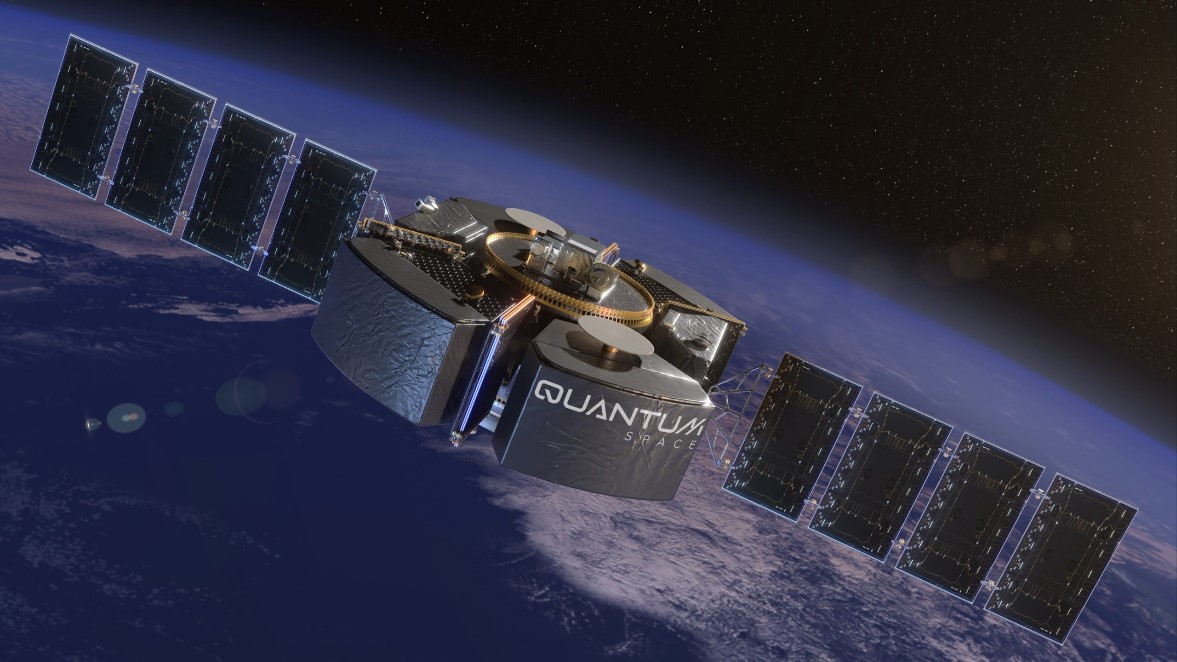
ROCKVILLE, Md., — June 18, 2026 : Quantum Space has been awarded a contract by the U.S. Department of Defense’s Operational Energy Capability Improvement Fund (OECIF) to develop and demonstrate an orbital fuel depot designed to refuel satellites in space. The project will be built on the company’s Ranger spacecraft platform and aims to extend the operational life of satellites by replenishing their fuel supplies after launch.
The contract represents a significant step in the evolution of military space logistics, moving orbital refueling from a long-term concept toward operational testing. The initiative is intended to address a longstanding challenge facing both military and commercial satellite operators: the limited lifespan imposed by onboard fuel reserves.
Addressing Satellite Fuel Limitations
Most satellites rely on a fixed amount of propellant carried at launch. Once that fuel is exhausted, satellites lose the ability to maneuver, conduct station-keeping operations, avoid space debris, or reposition to support mission requirements, even when their communications, surveillance, and other onboard systems remain functional.
For military spacecraft, this limitation can create operational vulnerabilities. Predictable fuel depletion can reduce flexibility and potentially allow adversaries to estimate when critical assets may become less capable of maneuvering. As a result, the U.S. Space Force has increasingly focused on developing maneuverable and sustainable space architectures capable of supporting long-duration operations.
Chris DePuma, who leads OECIF’s Operational Energy and Combat Power portfolio, said the award advances a capability that has been discussed for years within defense planning efforts.
“For years, in-space refueling has been a concept on our capability roadmaps. Today, we are investing to make it an operational reality,” DePuma said. “By removing traditional fuel constraints, we are not just keeping our vital assets ready—we are unlocking entirely new mission sets and novel operations.”
Ranger Platform to Serve as Refueling Depot
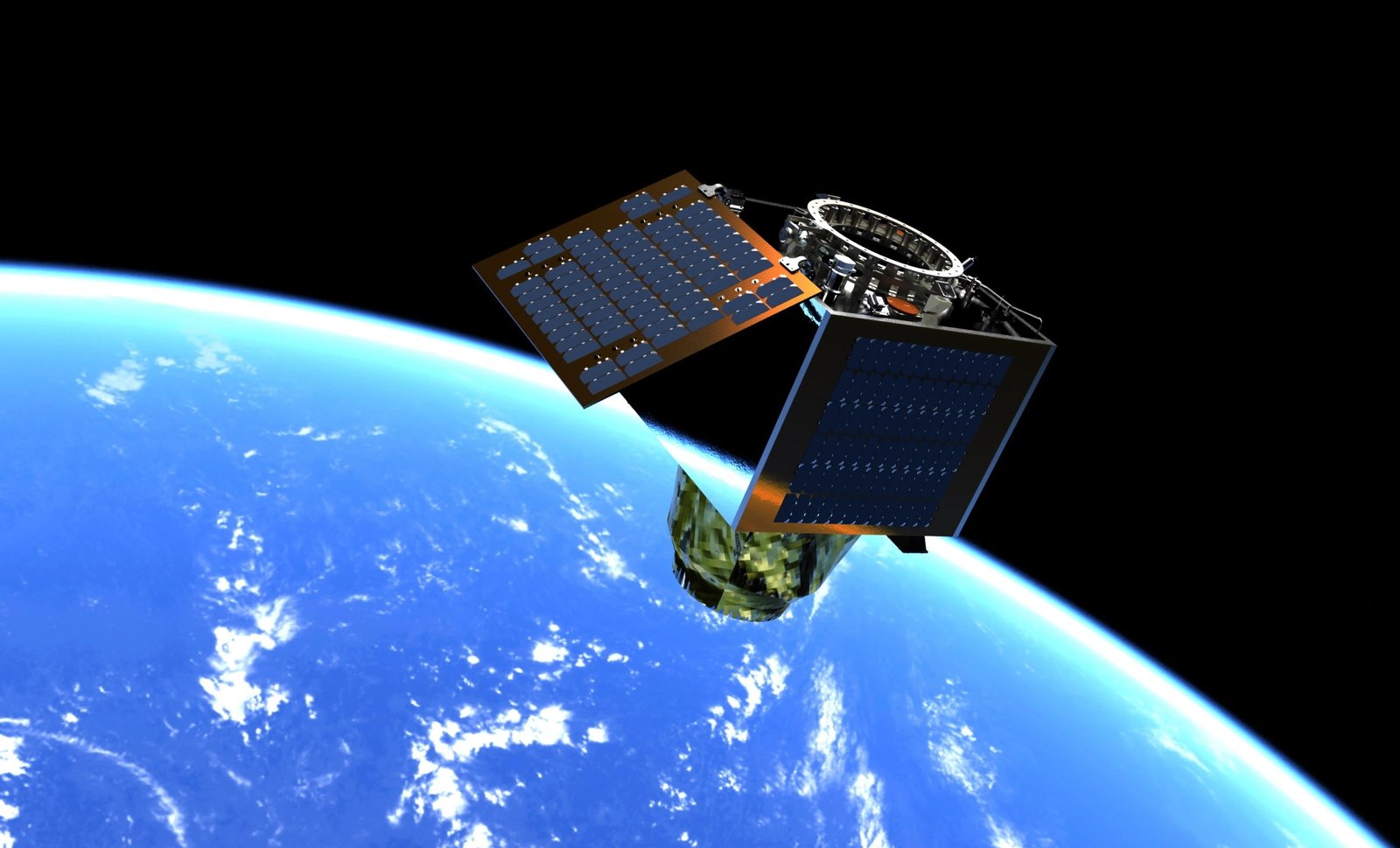
Quantum Space plans to integrate the refueling depot directly into its Ranger spacecraft platform. The company’s approach differs from some industry competitors by combining logistics and spacecraft capabilities within a single operational architecture.
The Ranger platform is designed to operate across multiple orbital regions, including Low Earth Orbit (LEO), Geostationary Orbit (GEO), and cislunar space, the region between Earth and the Moon.
Key capabilities of the Ranger platform include:
- Propellant Capacity: Ability to carry more than 4,000 kilograms of storable propellant in larger configurations.
- Single-Fuel Multimode Propulsion: A patented system that combines high-thrust chemical propulsion and efficient electric propulsion using a single fuel type.
- Modular Architecture: Designed for up to 15 years of operation and capable of being refueled itself.
- Multi-Orbit Operations: Capability to maneuver between different orbital regimes without extensive redesign.
Under current plans, Quantum Space intends to deliver the fuel-transfer vehicle to the U.S. Space Force by 2028, supporting future in-space logistics and refueling operations.
Expanding Space Logistics Infrastructure
Quantum Space Chief Executive Officer Jim Bridenstine, who previously served as NASA Administrator, described the contract as an important step toward establishing long-term space logistics infrastructure.
“It extends the life of high-value assets and creates operational options that fixed architectures simply cannot provide,” Bridenstine said.
Quantum Space Co-founder Ben Reed, a former NASA official who managed robotic satellite servicing initiatives, said the technologies required for orbital refueling have matured sufficiently for operational deployment.
“The time for a shift from demonstrations toward operational depots is now,” Reed said. “The technologies are mature, the mission need is urgent, and Quantum Space possesses capital for delivery.”
Growing Role in Defense Space Programs
The OECIF award adds to Quantum Space’s expanding portfolio of defense contracts. The company previously secured a position on the U.S. Space Force’s Andromeda Program, an indefinite-delivery/indefinite-quantity (IDIQ) contract vehicle with a shared ceiling value of $6.2 billion focused on developing constellations of maneuverable and refuellable spacecraft.
Quantum Space also reports active contracts and proposals with organizations including the U.S. Space Force, the Department of Defense, DARPA, and the Air Force Research Laboratory.
Industry Competition in Orbital Refueling
The orbital servicing and refueling sector has attracted growing interest from government and commercial operators seeking to increase satellite longevity and flexibility.
Several companies are pursuing similar technologies, including:
- Northrop Grumman, which received a $70 million Space Force contract for its Elixir refueling payload.
- Astroscale, which is developing the APS-R orbital tanker for geostationary orbit operations.
- Additional industry efforts involving propellant transfer and on-orbit servicing technologies.
The growing number of programs reflects increasing interest in creating a sustainable orbital logistics network capable of supporting military, civil, and commercial missions.
Manufacturing Expansion and Public Listing Plans
To support future production requirements, Quantum Space announced in May 2026 plans to establish a 25,000- to 40,000-square-foot manufacturing facility in Tulsa, Oklahoma. The facility will focus on producing large propulsion tanks and precision components for the Ranger spacecraft fleet.
The company is also pursuing a public market listing through a merger with Inflection Point Acquisition Corp. VI. The transaction is expected to value the combined company at more than $1 billion, with some filings indicating an estimated valuation of approximately $1.2 billion upon completion. The deal includes a $300 million PIPE investment and is expected to close during the fourth quarter of 2026, after which the company plans to trade on Nasdaq under the ticker QSPC.
Development Phase Continues
Despite securing multiple government contracts, Quantum Space remains in a growth and development phase. Financial projections associated with the planned merger forecast tens of millions of dollars in future revenue while also anticipating continued operational losses as the company expands manufacturing and advances spacecraft development.
The Ranger platform remains under active development, with its initial pathfinder mission still ahead. Quantum Space has indicated that successful demonstrations of orbital refueling could help shape future satellite designs by enabling longer operational lifetimes, increased maneuverability, and more resilient space architectures.
As the U.S. Space Force continues to prioritize in-space servicing, refueling, and logistics capabilities, the OECIF-funded demonstration is expected to contribute to broader efforts aimed at establishing sustained and flexible operations across Earth orbit and beyond.
——— End of Article ———