BEIJING, — June 17, 2026 : China’s People’s Liberation Army Air Force (PLAAF) has surpassed Russia’s Aerospace Forces (VKS) to become the world’s second-most powerful air force, according to multiple open-source defense assessments and aerospace analyses released in 2026.
The shift reflects China’s rapid modernization efforts, large-scale aircraft production, and growing fleet of advanced combat aircraft, particularly its expanding inventory of J-20 and J-35 fifth-generation stealth fighters. While the United States Air Force remains the world's most capable and largest air force, analysts note that China has established itself as the leading air power outside the United States.
China Builds the Largest Modern Combat Fleet Outside the United States
Recent assessments estimate that the PLAAF operates approximately 3,733 aircraft, including more than 2,184 combat-capable platforms and nearly 2,000 fighter aircraft. China's air assets are positioned across operational theaters facing Taiwan, the South China Sea, Japan, and the broader Western Pacific region.
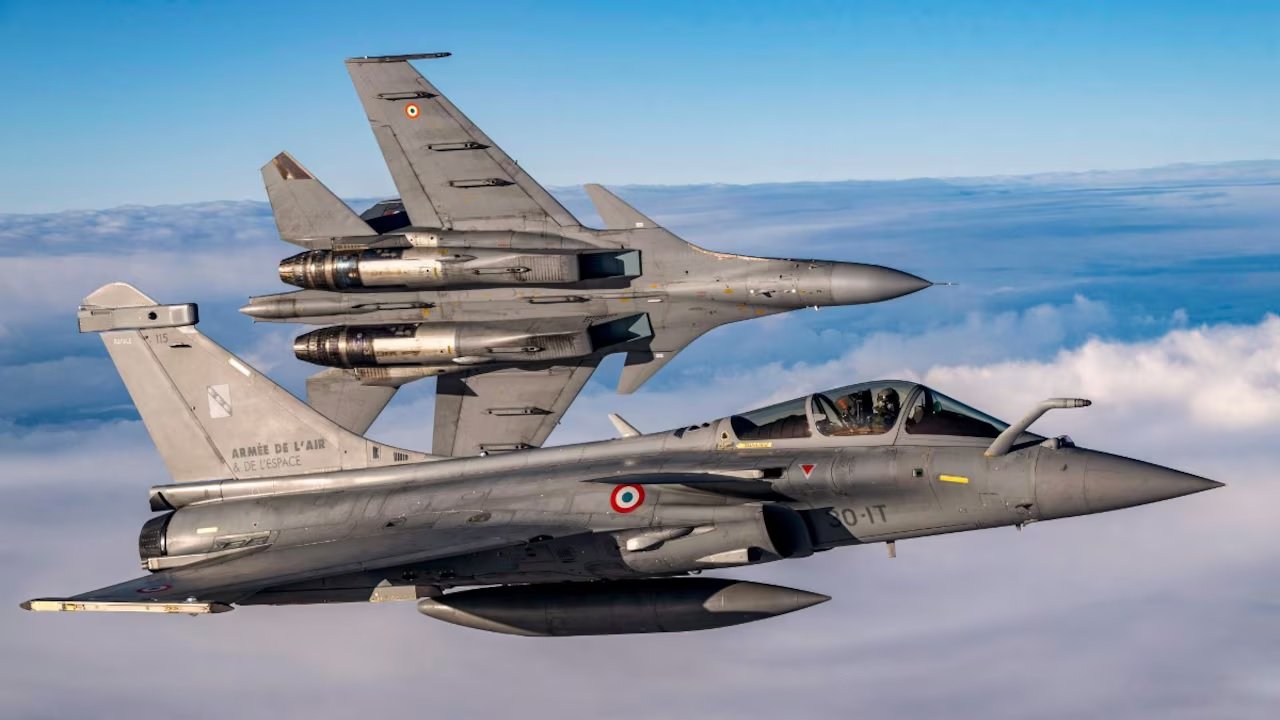
In comparison, Russia's VKS is estimated to field approximately 1,300 to 1,500 combat aircraft, a reduction attributed to operational demands, combat losses, sanctions, and industrial limitations associated with the conflict in Ukraine.
Analysts estimate China currently operates between 2,000 and 2,500 combat aircraft organized across approximately 110 to 130 fighter formations, providing substantial capacity for sustained operations, higher sortie generation rates, and improved ability to absorb combat attrition.
J-20 Fleet Expansion Drives Stealth Fighter Growth
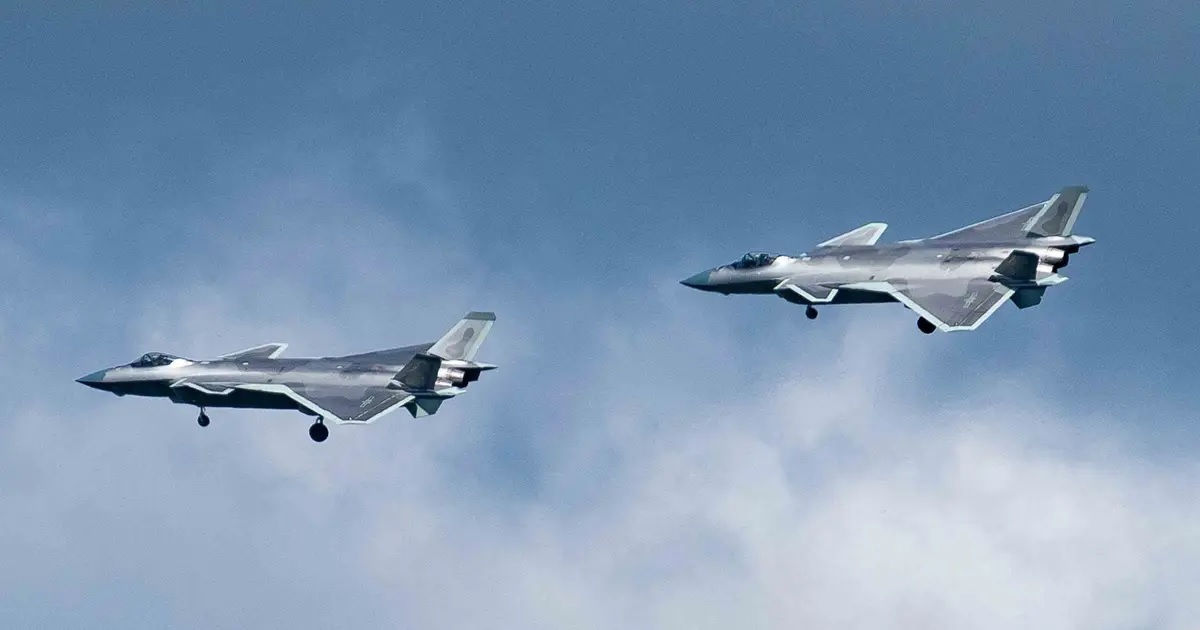
A major factor behind China's rise is the rapid expansion of its J-20 "Mighty Dragon" stealth fighter fleet.
Open-source estimates indicate that the PLAAF operates between 320 and 350 J-20 fighters, while some assessments place the operational fleet between 200 and 300 aircraft. The variation reflects differing methodologies used by defense analysts and tracking organizations.
China's aerospace industry has significantly increased production capacity through automated manufacturing systems and optimized supply chains. The Chengdu Aircraft Corporation, the primary producer of the J-20, is estimated to manufacture between 100 and 120 aircraft annually.
Recent satellite imagery and industrial reports indicate substantial expansion at major production facilities, including the addition of hundreds of thousands of square meters of manufacturing infrastructure. If current production rates continue, some analysts project China could field more than 1,000 fifth-generation fighters by 2030.
The J-20 incorporates advanced stealth characteristics, sensor fusion capabilities, modern avionics, and long-range air-to-air engagement systems. Reports also indicate that certain variants are being adapted for maritime strike missions.
J-35 Program Expands China's Stealth Aviation Portfolio
China is also introducing the Shenyang J-35 stealth fighter family, which includes both land-based and carrier-capable variants.
The J-35A, designed for PLAAF service, conducted reported test flights in 2026 and is expected to complement the larger J-20 fleet. The aircraft is intended to provide additional air defense and strike capabilities while serving as a medium-weight stealth platform.
The naval variant of the J-35 achieved a major milestone in 2025 when it successfully conducted launches using an electromagnetic aircraft launch system (EMALS) aboard China's newest aircraft carrier, the Fujian.
With the J-20 and J-35 programs progressing simultaneously, China has become the only country besides the United States to operate two distinct fifth-generation stealth fighter programs.
Russia Faces Production and Modernization Challenges
The change in ranking reflects diverging trends between Chinese and Russian military aviation industries.
Although Russia continues to maintain a total aircraft inventory exceeding 4,200 aircraft on paper, analysts note that the number of combat-ready platforms is significantly lower. Operational demands, sanctions, supply chain restrictions, and combat losses have affected fleet availability and modernization efforts.
Restrictions on access to advanced electronics, semiconductors, and avionics components have complicated the development and production of modern combat aircraft and systems, including active electronically scanned array (AESA) radars.
Russian fighter aircraft production is estimated to range between 24 and 35 aircraft annually, considerably lower than China's output. Meanwhile, Russia's fifth-generation Su-57 program remains constrained by production capacity and engine availability, resulting in an operational fleet estimated at 25 to 30 aircraft.
Despite these challenges, Russia continues to maintain significant capabilities through platforms such as the Tu-95 and Tu-160 strategic bombers, as well as the MiG-31 interceptor fleet, while also benefiting from operational experience gained during recent military campaigns.
J-16 and J-10 Fleets Form the Backbone of the PLAAF
China's growing airpower is not based solely on stealth aircraft.
The PLAAF operates approximately 450 J-16 multirole strike fighters and more than 550 J-10 variants, including the advanced J-10C equipped with AESA radars, modern avionics, and enhanced networking capabilities.
China has standardized many of its newer fighter aircraft around advanced sensors, digital cockpit systems, and long-range precision weapons. This modernization effort has enabled the retirement of older aircraft while improving overall fleet readiness.
The J-16D electronic warfare variant provides specialized capabilities for radar jamming and suppression of enemy air defenses, strengthening China's ability to conduct network-centric air operations.
Support Aircraft Enhance Operational Reach
Beyond combat aircraft, China has expanded key support assets that increase the effectiveness of its fighter force.
The growing fleet of KJ-500 airborne early warning and control (AEW&C) aircraft improves long-range target detection, battlespace awareness, and command-and-control capabilities.
China has also expanded its aerial refueling fleet, allowing fighters and strike aircraft to operate farther from mainland bases and sustain operations deeper into the Western Pacific and Philippine Sea.
Electronic warfare aircraft, including the J-16D, provide additional capabilities for disrupting enemy radar networks and air defense systems.
Together, these platforms form a broader networked combat ecosystem designed to integrate air, naval, and missile forces during joint operations.
Strategic Implications for the Indo-Pacific
The PLAAF's growth has significant implications for security planning across the Indo-Pacific region.
While the United States continues to maintain global air superiority through its F-35 and F-22 fleets, extensive tanker network, worldwide basing infrastructure, and alliance partnerships, China possesses the advantage of concentrating most of its modern air assets within a single theater.
Analysts note that this concentration of forces could influence military planning for countries including Japan, India, Australia, South Korea, and Taiwan, many of which are investing in next-generation aircraft, missile defense systems, electronic warfare capabilities, and advanced sensors.
Defense experts increasingly emphasize that future airpower competition will depend not only on aircraft numbers, but also on industrial production capacity, sensor integration, electronic warfare resilience, logistics networks, and the ability to sustain operations during prolonged conflicts.
China’s continued investment in indigenous aerospace development, aircraft production infrastructure, and force modernization is expected to remain a key factor shaping global airpower assessments throughout the coming decade.
——— End of Article ———