WASHINGTON, D.C., — June 18, 2026 : The U.S. Air Force has awarded engineering, manufacturing development (EMD), and production contracts to General Atomics Aeronautical Systems Inc. (GA-ASI) and Anduril Industries for the first increment of its Collaborative Combat Aircraft (CCA) program, advancing plans to field semi-autonomous unmanned aircraft that operate alongside crewed fighter jets.
The decision was announced four months ahead of schedule after both aircraft successfully met mission requirements during testing. The Air Force aims to acquire approximately 1,000 Collaborative Combat Aircraft, with Increment 1 serving as the foundation of the program.
Aircraft Move Into Production
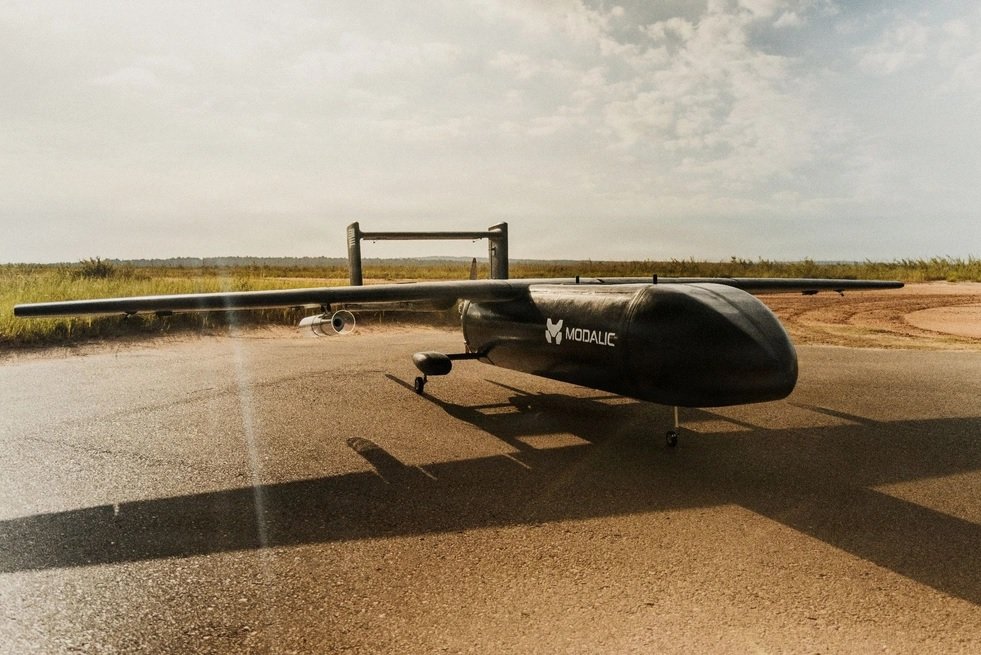
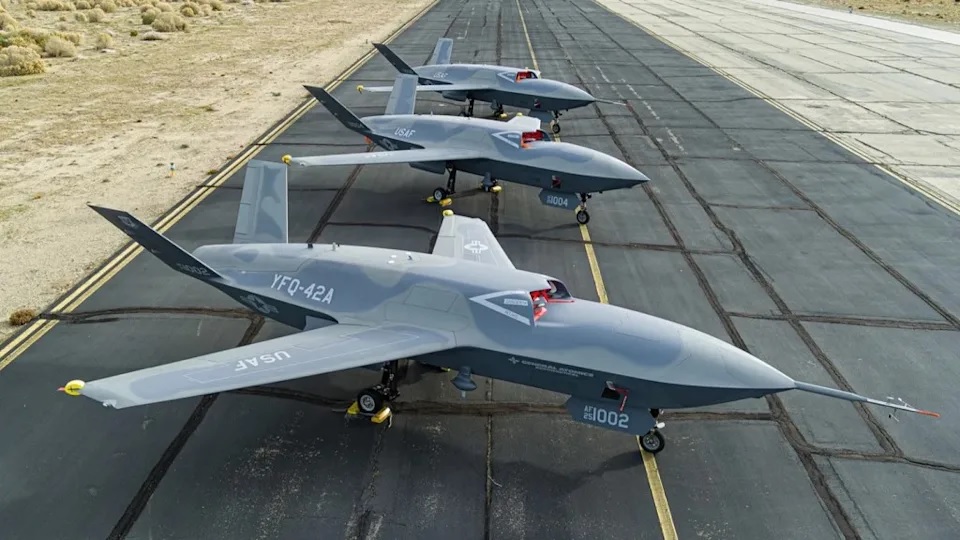
The aircraft developed by General Atomics and Anduril have transitioned from prototype to production status and will now be designated FQ-42A and FQ-44A, replacing their previous YFQ-42A and YFQ-44A prototype designations.
The YFQ-42A completed its first flight in August 2025, while the YFQ-44A conducted its maiden flight in October 2025. Both aircraft recently completed flight test campaigns with the Air Force’s Experimental Operations Unit.
According to the Air Force, the systems demonstrated readiness for full-scale manufacturing. The service is targeting a unit cost of approximately $30 million or less per aircraft, roughly one-third the cost of an F-35.
Secretary of the Air Force Troy Meink said the accelerated transition to manufacturing will help the service field combat-ready semi-autonomous aircraft more quickly. The Air Force plans to procure more than 150 combat-capable CCAs by the end of the decade.
Program Background
The CCA program is designed to provide affordable unmanned aircraft that can operate alongside platforms such as the F-35 Lightning II and F-15EX Eagle II. These aircraft are expected to perform missions including air-to-air combat, strike operations, electronic warfare, reconnaissance, surveillance, and sensor sharing.
In early 2024, the Air Force awarded initial design contracts to Anduril, Boeing, General Atomics, Lockheed Martin, and Northrop Grumman. In April 2024, General Atomics and Anduril were selected to continue into detailed design and prototype development.
Mission Autonomy Contracts
Alongside the aircraft production awards, the Air Force awarded baseline six-year mission autonomy production contracts to:
- Anduril Industries
- General Atomics
- Lockheed Martin
- Northrop Grumman
- RTX Collins Aerospace
- Shield AI
The Air Force is separating aircraft production from autonomy software development, allowing software from multiple vendors to be integrated across different aircraft platforms.
All autonomy software must comply with the Autonomy Government Reference Architecture (A-GRA), an open government-owned standard designed to ensure compatibility and rapid software updates.
Competition for AI Mission Software
To accelerate operational capability, the Air Force awarded additional competitive contracts to Anduril, RTX Collins Aerospace, and Shield AI.
The three companies will participate in a six-month development phase to advance their mission autonomy software. After evaluation, a second six-month phase will follow, with the Air Force selecting a primary mission autonomy provider for Increment 1 by summer 2027.
Secretary Meink said the competitive approach allows the Air Force to adopt the best-performing autonomy software while avoiding dependence on a single vendor.
Future Operations and Increment 2
The Air Force plans to use Collaborative Combat Aircraft as force multipliers that can conduct high-risk missions, perform electronic warfare, share sensor data, and support coordinated operations with crewed aircraft.
Air Force Chief of Staff Gen. Ken Wilsbach said the capability will help maintain the service’s tactical advantage in contested environments.
With Increment 1 production now underway, the Air Force has indicated that development of CCA Increment 2 will begin in Fiscal Year 2026, focusing on expanded mission applications and additional technologies.
——— End of Article ———