DALLAS, Georgia, — June 18, 2026 : The U.S. Defense Logistics Agency (DLA) has awarded Top Flight Aerostructures Inc. two indefinite-delivery/indefinite-quantity (IDIQ) contracts worth more than $76 million to manufacture critical wing components for the U.S. Air Force’s B-1B Lancer bomber fleet.
The contracts, managed by DLA Weapon Support in Oklahoma City, include a maximum-value award of $53.08 million for the production of trailing edge assemblies and a second contract valued at up to $23.4 million for wing tip components. Both contracts were awarded through a competitive procurement process that received two bids.
Funded through Defense Working Capital Funds, the agreements consist of three-year base periods with no option years and are scheduled for completion by June 17, 2029.
Top Flight Aerostructures to Support Long-Term Fleet Sustainment
Top Flight Aerostructures, headquartered in Dallas, Georgia, specializes in the manufacture and repair of aerospace composite structures and adhesively bonded aircraft components. Founded in 2005, the company operates a 40,000-square-foot production facility west of Atlanta and supports multiple military aviation programs through the production of structural panels, fairings, wing assemblies, and other aircraft components.
The newly awarded contracts will support the continued sustainment of the Air Force’s aging B-1B fleet by ensuring a stable supply of replacement wing structures that are subject to significant operational stress throughout the aircraft’s service life.
Critical Components for Variable-Sweep Wings
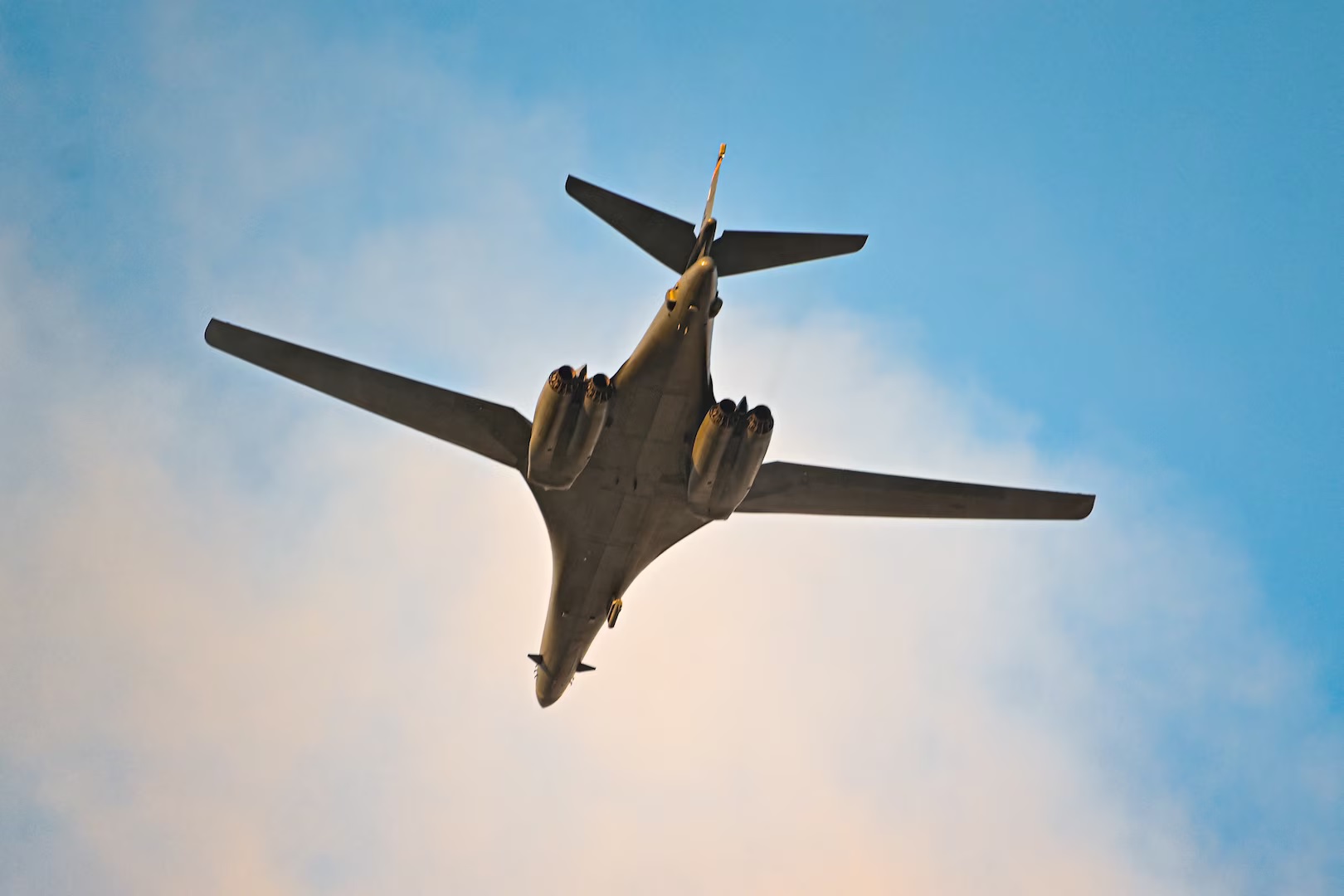
The B-1B Lancer features a variable-sweep wing design that allows pilots to adjust wing geometry during flight. The wings can extend to approximately 15 degrees during takeoff and landing to maximize lift and sweep back to 67.5 degrees during high-speed flight to reduce aerodynamic drag.
This design enables the bomber to achieve speeds of up to Mach 1.25 while carrying heavy payloads. However, the repeated movement of wing structures generates substantial mechanical stress on key components, particularly the trailing edges and wing tips.
These parts play an essential role in maintaining lift, stability, and overall aerodynamic performance. Over time, repeated wing sweeps, environmental exposure, and operational loads can lead to fatigue, corrosion, cracking, and structural wear, requiring periodic replacement to maintain airworthiness.
The challenge is amplified by the aircraft’s size. The B-1B has a maximum takeoff weight of approximately 477,000 pounds (216,000 kilograms), placing considerable loads on wing structures during flight operations.
Aging Fleet Requires Continued Structural Maintenance
The B-1B fleet remains one of the oldest bomber forces in U.S. service. Originally developed by Rockwell International, the aircraft entered operational service during the 1980s. Boeing became the program's primary contractor after acquiring Rockwell’s defense business in 1996.
The final B-1B was delivered in May 1988, making the youngest aircraft in the current inventory approximately 38 years old.
The Air Force originally acquired 100 B-1B bombers, although the active fleet today consists of roughly 45 aircraft following the retirement of 17 heavily worn airframes in 2021. Some aircraft have also undergone extensive structural repairs and restoration efforts to maintain fleet readiness.
Over the past several decades, B-1Bs have supported combat and deterrence missions across multiple theaters, including operations over Iraq, Afghanistan, Libya, and Syria. The high operational tempo and sustained deployments have accelerated structural fatigue beyond what was originally anticipated when the aircraft was designed primarily for Cold War nuclear deterrence missions.
Maintenance efforts have increasingly focused on critical load-bearing structures, including wing pivot assemblies and other major airframe components affected by long-term operational stress.
Air Force Plans to Keep B-1B in Service Through 2037
The U.S. Air Force plans to operate the B-1B fleet through at least 2037 as the next-generation B-21 Raider gradually enters service and assumes a larger share of the long-range strike mission.
To support continued operations, budget documents outline approximately $342 million in modernization funding for the B-1 program between fiscal years 2027 and 2031. In addition, the fiscal year 2026 budget includes $50.26 million for the development of a new External Heavy-Stores Pylon program, which is intended to restore the bomber’s ability to carry modern stand-off and hypersonic weapons on external hardpoints.
Continued Role in U.S. Strike Operations
Despite its age, the B-1B remains a key component of U.S. conventional strike capabilities. The aircraft can carry up to 75,000 pounds (34,000 kilograms) of weapons internally across three bomb bays, making it the Air Force’s largest conventional payload carrier.
The bomber also serves as the operational platform for the Long-Range Anti-Ship Missile (LRASM) and regularly participates in Bomber Task Force deployments across Europe and the Indo-Pacific region.
The contracts awarded to Top Flight Aerostructures are part of ongoing sustainment efforts designed to maintain fleet readiness and ensure the continued availability of critical structural components. By establishing a reliable production source for high-wear wing assemblies, the agreements support the Air Force’s strategy of keeping the B-1B operational until the B-21 Raider is fielded in sufficient numbers to assume its missions.
——— End of Article ———