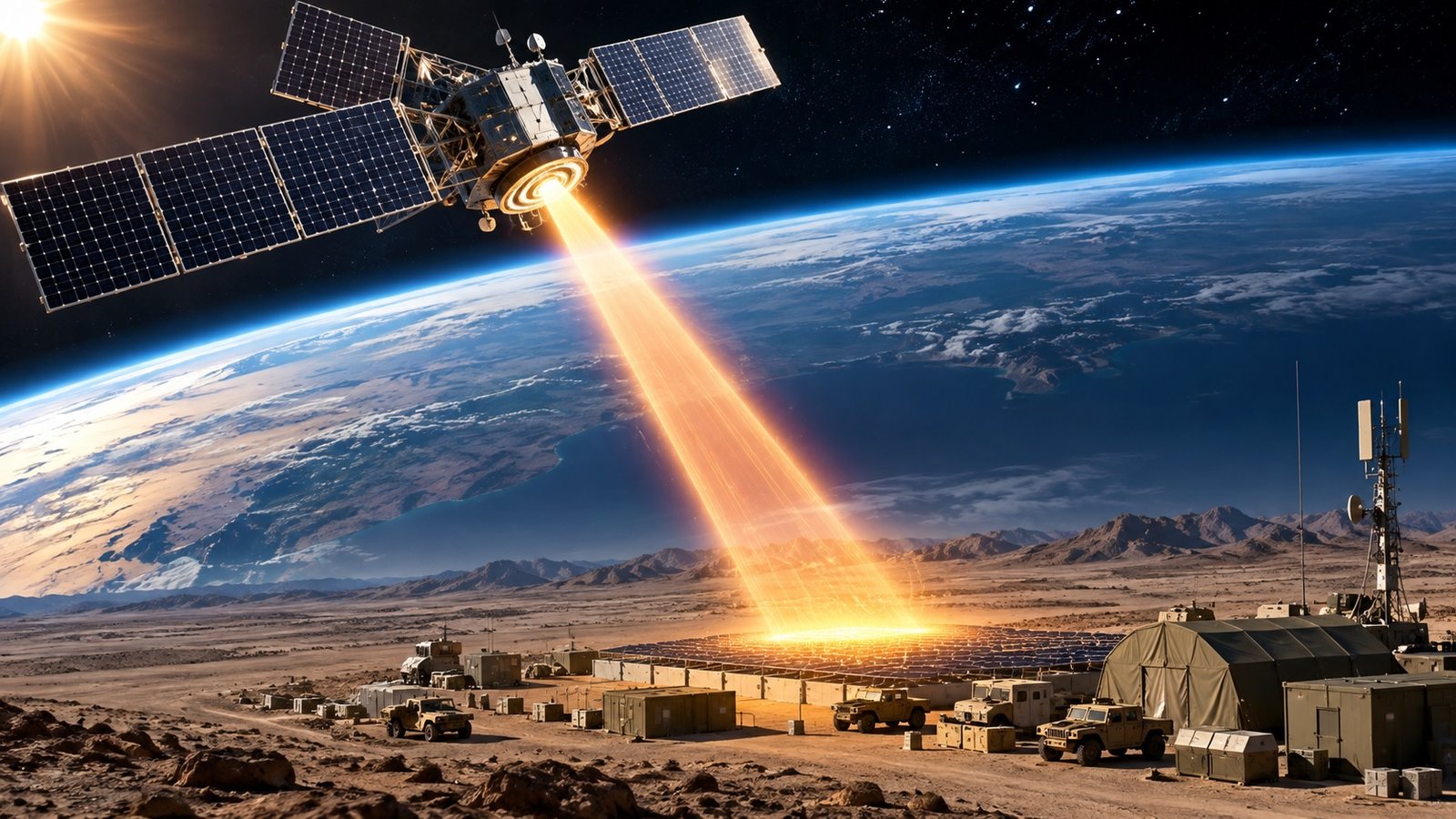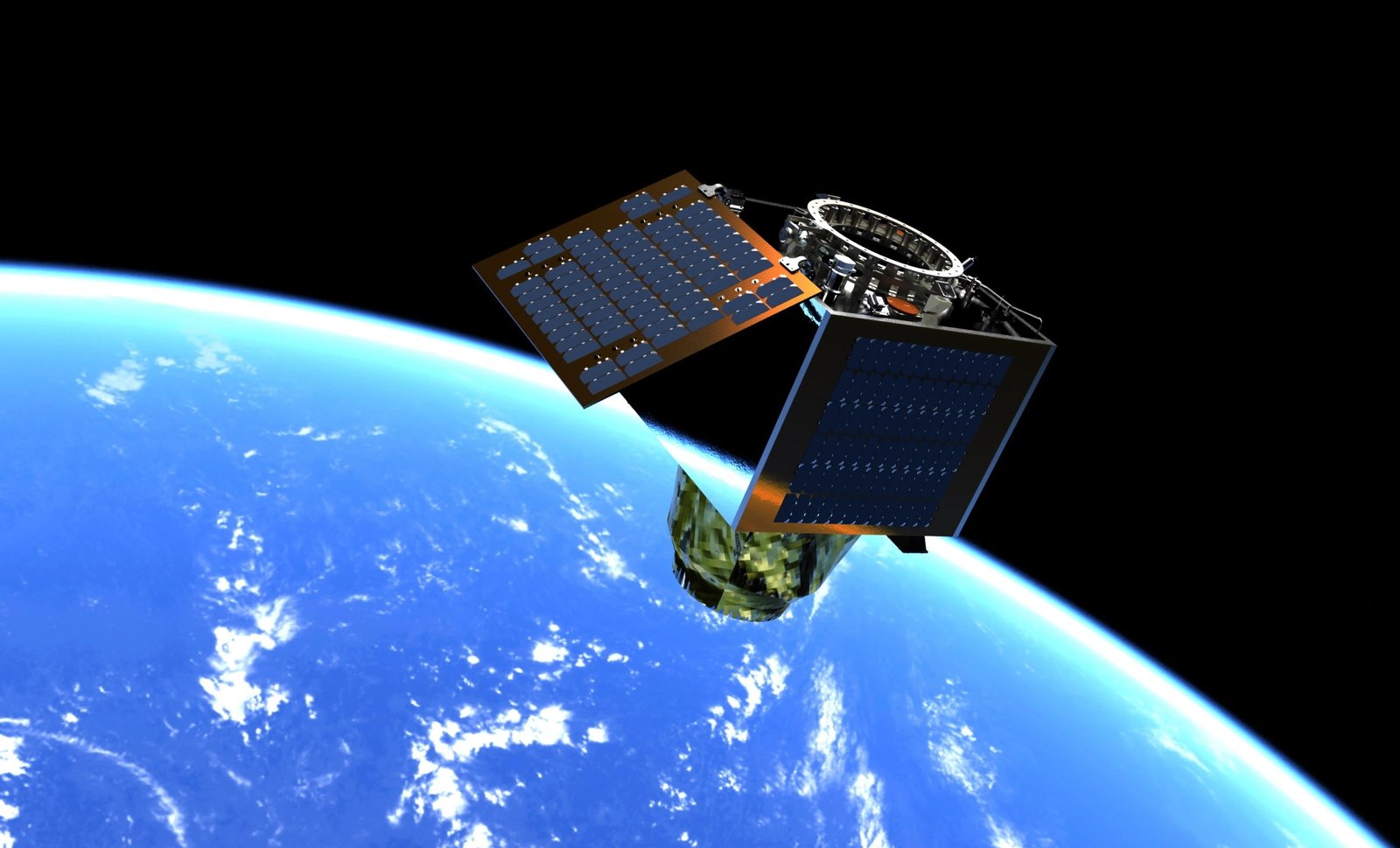
WASHINGTON, — June 18, 2026 : The U.S. Naval Research Laboratory (NRL) has successfully demonstrated a dual-use directed-energy laser system capable of wirelessly transmitting power over long distances while rapidly transitioning to counter unmanned aerial threats without interrupting ongoing operations.
The field test represents a significant advancement in expeditionary energy and defense technologies, demonstrating that a single directed-energy platform can perform both remote power delivery and counter-unmanned aerial systems (C-UAS) missions. The capability could help military forces support remote operations while reducing reliance on traditional fuel-based logistics.
The demonstration was sponsored by the Office of the Under Secretary of Defense for Acquisition and Sustainment (OUSD(A&S)) and funded through the Operational Energy Capability Improvement Fund (OECIF). The effort brought together the U.S. Naval Research Laboratory, Boeing, and the U.S. Army’s DEVCOM Ground Vehicle Systems Center (GVSC), with additional participation from personnel across the Navy, Marine Corps, and Army.
Field Demonstration and System Configuration
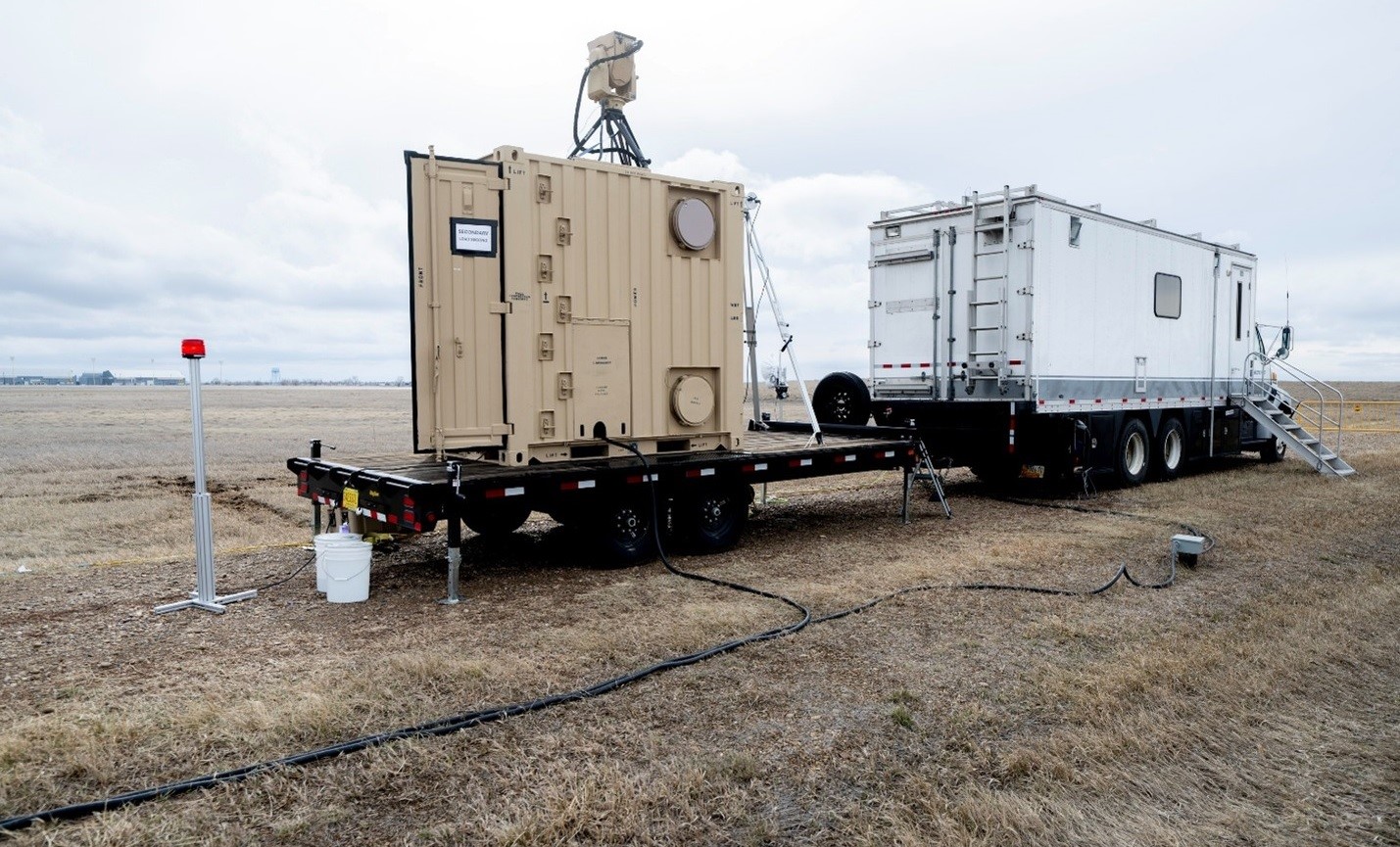
During the evaluation, researchers deployed a trailer-mounted laser system across an airfield to demonstrate both wireless power transmission and counter-drone operations.
The operational setup included:
- Power Source: Standard military vehicle-based power generation.
- Transmission System: A currently fielded U.S. Marine Corps directed-energy laser system.
- Receiving System: High-efficiency solar receivers positioned at a remote site representing a forward operating base.
The system successfully transmitted power from a military vehicle to the remote receivers located miles away. The demonstration showed how future military installations could receive electricity without relying solely on diesel generators or vulnerable fuel supply routes.
Once power transmission was established, the team redirected the same laser beam to engage a simulated aerial drone threat. After successfully completing the counter-UAS engagement, the system returned to wireless power transmission without being taken offline.
“This was not just a laboratory exercise; we were building the pieces for what this capability could actually look like on the battlefield,” said Alex Grede, Ph.D., an electrical engineer at NRL.
“We demonstrated that the same laser used to beam power remotely can immediately transition to counter a drone threat, giving Marines and soldiers greater flexibility without changing their operational footprint.”
Building on Previous Power-Beaming Research
The demonstration builds upon years of research into wireless energy transfer technologies.
NRL scientists previously contributed to the Defense Advanced Research Projects Agency (DARPA) Persistent Optical Wireless Energy Relay (POWER) program, which successfully transmitted more than 800 watts of power over 8.6 kilometers (5.3 miles) at White Sands Missile Range, New Mexico.
However, unlike earlier demonstrations that focused on achieving maximum distance and power-transfer records under controlled conditions, the latest trial prioritized operational performance in realistic environments.
Researchers intentionally conducted testing during high winds, snowfall, and atmospheric interference approaching whiteout conditions to evaluate how the system would perform under conditions likely to be encountered during military operations.
“We wanted to prove this could work where warfighters actually operate, not just in ideal conditions,” said Justin Lorentzen, a research physicist at NRL.
“Testing in wind, snow, and real atmospheric interference gives us the data we need to improve the system and move it toward a true operational capability.”
Reducing Battlefield Logistics Risks
The project was designed with expeditionary military operations in mind, particularly for units operating in remote and contested environments.
Forward-deployed forces often depend on fuel-powered generators that require continuous resupply. These fuel convoys can be vulnerable to attack, increasing operational risks and logistical demands.
Wireless power transmission offers a potential alternative by enabling remote facilities, sensors, vehicles, and future military systems to receive electricity from distant power sources without the need for frequent fuel deliveries.
The ability to combine energy delivery and air-defense functions into a single platform could further reduce the equipment and personnel required to sustain forward operations.
Grede noted that the Army is currently among the services most likely to field the technology first because of its potential value in distributed and expeditionary operations.
“We can take the expertise we’ve built at NRL and help accelerate capability development across the joint force,” he said.
Field Repair and Operational Simplicity
In addition to validating the system’s power-transfer and defensive capabilities, researchers also assessed its maintainability during field deployment.
During the demonstration, engineers successfully repaired a critical system component on-site without requiring a dedicated workshop or specialized maintenance equipment. The repair validated the platform’s ability to remain operational in expeditionary environments where technical support resources may be limited.
“You can’t have a system that takes months to repair or months to train someone to use,” said Lt. Cmdr. Brian Di Salvo, Military Deputy for NRL’s Radar Division.
“This system showed both repairability and simplicity of operation, qualities that matter when you’re talking about real deployment with young operators in the field.”
Next Phase of Development
The dual-use laser system remains a proof-of-concept prototype, and NRL has not announced a timeline for procurement or operational deployment.
The next phase of testing will involve active-duty Marines, Soldiers, and Sailors, who will evaluate the system in realistic operating scenarios and provide direct user feedback. The goal is to ensure future versions of the technology meet operational requirements and can be effectively employed by military personnel in the field.
The demonstration also supports NRL’s broader directed-energy research portfolio, which includes previous wireless power transmission experiments such as the Space Wireless Energy Laser Link (SWELL) conducted aboard the International Space Station.
Strategic Significance
The successful demonstration highlights the potential of directed-energy technologies to address two critical military requirements simultaneously: delivering power to remote locations and defending forces against emerging drone threats.
By enabling a single laser system to transmit energy across long distances while retaining the ability to immediately engage hostile unmanned aircraft, the technology could help improve logistics resilience, reduce dependence on fuel convoys, and enhance operational flexibility for U.S. military forces operating in contested environments.
The mid-June 2026 demonstration marks another step toward the development of future expeditionary energy systems designed to support more resilient, self-sustaining, and adaptable military operations.
——— End of Article ———