LONDON/OTTAWA, — June 17, 2026 : The United Kingdom and Canada have announced extensive new sanctions targeting Russia’s military-industrial complex, maritime logistics network, financial infrastructure, and procurement channels used to support its ongoing military operations in Ukraine.
The coordinated measures were unveiled on the sidelines of the G7 Leaders’ Summit in France and represent one of the most comprehensive sanctions actions taken by the two countries this year. The packages collectively target hundreds of individuals, entities, vessels, financial institutions, and companies involved in supporting Russia’s defense sector, energy exports, and sanctions-evasion mechanisms.
Focus on Russia’s Shadow Fleet and Energy Exports
A key objective of the new sanctions is to disrupt Russia’s so-called shadow fleet, a network of aging oil tankers and liquefied natural gas (LNG) carriers used to transport Russian energy products while bypassing Western restrictions.
The UK government announced sanctions against more than 20 additional oil tankers and several LNG vessels connected to Russia’s sanctioned Arctic LNG 2 project. British officials stated that these vessels play a significant role in exporting millions of tonnes of LNG and generating revenue for the Russian economy.
With the latest additions, the total number of shadow fleet and Russian LNG vessels sanctioned by the UK has surpassed 600 ships.
Among the vessels specifically targeted is the Cameroon-flagged tanker SMYRTOS. British authorities have also recently detained a shadow fleet tanker in the English Channel, with its captain facing charges related to violations of Western sanctions.
Canada introduced similar measures aimed at weakening Russia’s maritime logistics capabilities. The Canadian sanctions package includes vessels involved in transporting Russian oil and LNG to third countries, as well as some ships reportedly linked to arms transfers.
In addition, Canada sanctioned several companies providing maritime services and insurance support to the shadow fleet, including Maritime Mutual, Soglasie Insurance Company, and Nova Shipmanagement.
Financial Networks and Cryptocurrency Systems Targeted
Both countries have expanded sanctions against financial institutions and alternative payment systems that Russia has increasingly relied upon to conduct international transactions outside traditional banking channels.
According to Vladyslav Vlasiuk, Ukraine’s presidential sanctions policy envoy, disrupting banking networks and cryptocurrency payment platforms remains a critical component of efforts to restrict Russia’s ability to finance military operations.
The UK sanctions package targets the A7 Network, a cryptocurrency platform registered in Kyrgyzstan but established with Russian backing through the sanctioned Promsvyazbank. The platform has reportedly been used for cross-border payments outside conventional financial systems. British authorities also sanctioned an entity in Nigeria accused of assisting the network in evading restrictions.
The UK additionally imposed sanctions on Yandex Bank and Wildberries Bank, the financial divisions of major Russian technology companies. Other sanctioned institutions include Rosgosstrakh, Balance Insurance, Eurofinance Mosnarbank, and Vyatich Bank.
Canada’s measures focus on several key components of Russia’s domestic financial system, including the Moscow Exchange, St. Petersburg Stock Exchange, and Absolut Bank.
The Canadian package also targets alternative payment and cryptocurrency-related entities, including Grinex LLC, Old Vector LLC, and TengriCoin CJSC.
Measures Against Military Procurement Networks
A major part of the sanctions campaign is aimed at disrupting the international procurement networks that supply Russia with critical technologies and dual-use goods.
The UK announced sanctions against a covert procurement network allegedly operated by officers from Russia’s Main Directorate of the General Staff (GRU). The network was reportedly centered around a front company known as LLC Neptune Co Ltd, which was involved in acquiring Western technologies and components for Russia’s defense sector.
British authorities sanctioned 10 GRU officers along with several associated companies linked to the procurement network.
The sanctions also extend to suppliers located in third countries that are accused of providing military-related or dual-use equipment to Russia.
Among the companies sanctioned are:
- Shenzhen Huaxin Antenna Technology, a manufacturer of antennas and telecommunications equipment.
- ComNav Technology, a producer of satellite navigation systems.
- SHTRAL Technology and SHTRAL Makine, manufacturers of CNC machine tools.
The UK government stated that these measures are intended to restrict Russia’s access to technologies that can support weapons production and military modernization efforts.
Canada Expands Measures Against Individuals and Organizations
Canada’s sanctions package covers 162 individuals, entities, vessels, and assets connected to Russia’s military activities and sanctions-evasion networks.
The measures also include organizations accused of participating in Russian state-backed disinformation campaigns, broadening the scope beyond military and financial targets.
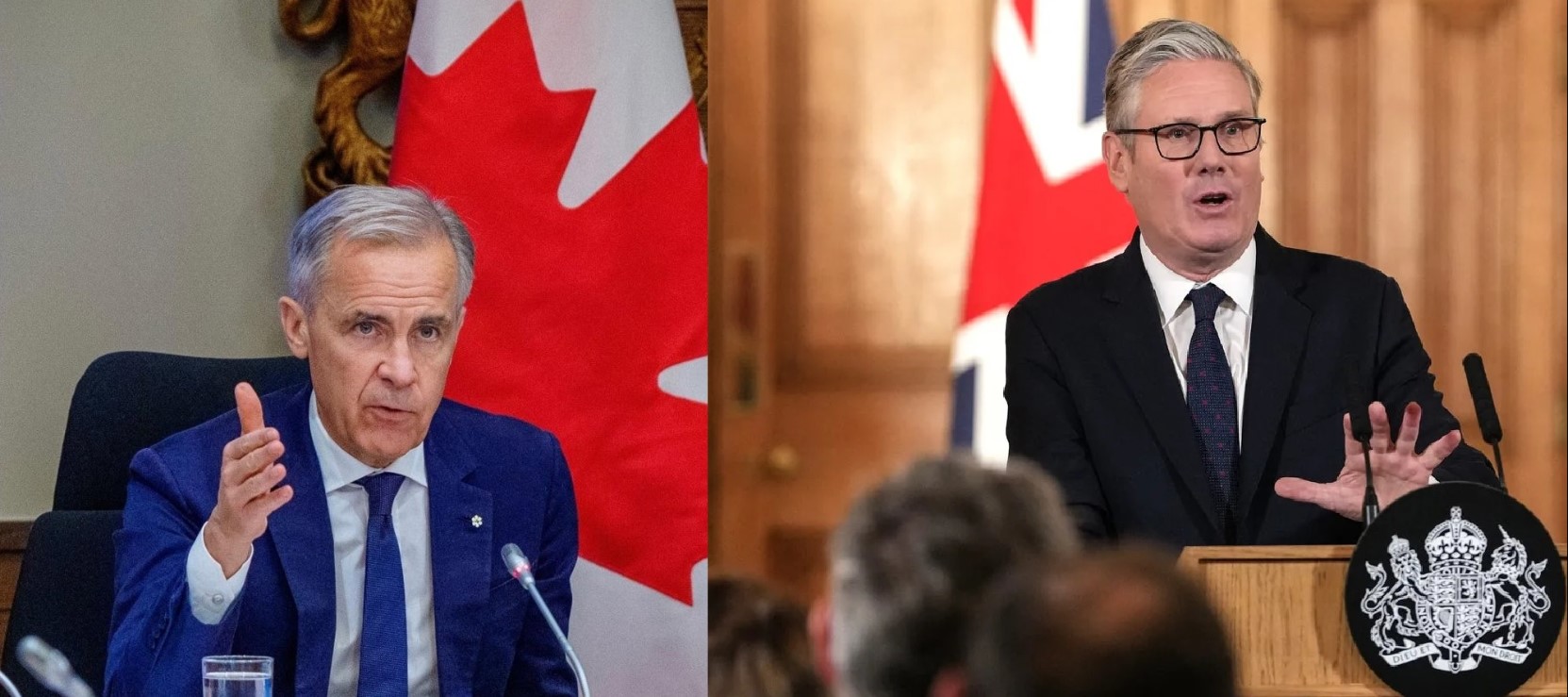
Prime Minister Mark Carney announced the sanctions following a meeting with Ukrainian President Volodymyr Zelenskyy during the G7 summit, reaffirming Canada’s commitment to supporting Ukraine and maintaining pressure on Russia.
Growing International Pressure
The latest sanctions reflect a broader effort by G7 countries and their partners to limit Russia’s ability to generate revenue, obtain critical technologies, and access international financial systems.
The UK package alone adds approximately 70 new sanctions designations, bringing the total number of UK sanctions imposed under its Russia regime in 2026 to nearly 500 individuals and entities.
UK Prime Minister Keir Starmer said the measures are designed to target “the vessels, the money, and the actors” supporting Russia’s war economy. British and Canadian officials stated that continued coordination with G7 partners remains essential to maintaining economic pressure on Moscow.
The sanctions are expected to further complicate Russia’s access to international shipping services, financial networks, insurance providers, and technology supply chains as Western governments continue efforts to support Ukraine and restrict resources available to Russia’s defense sector.
——— End of Article ———