India
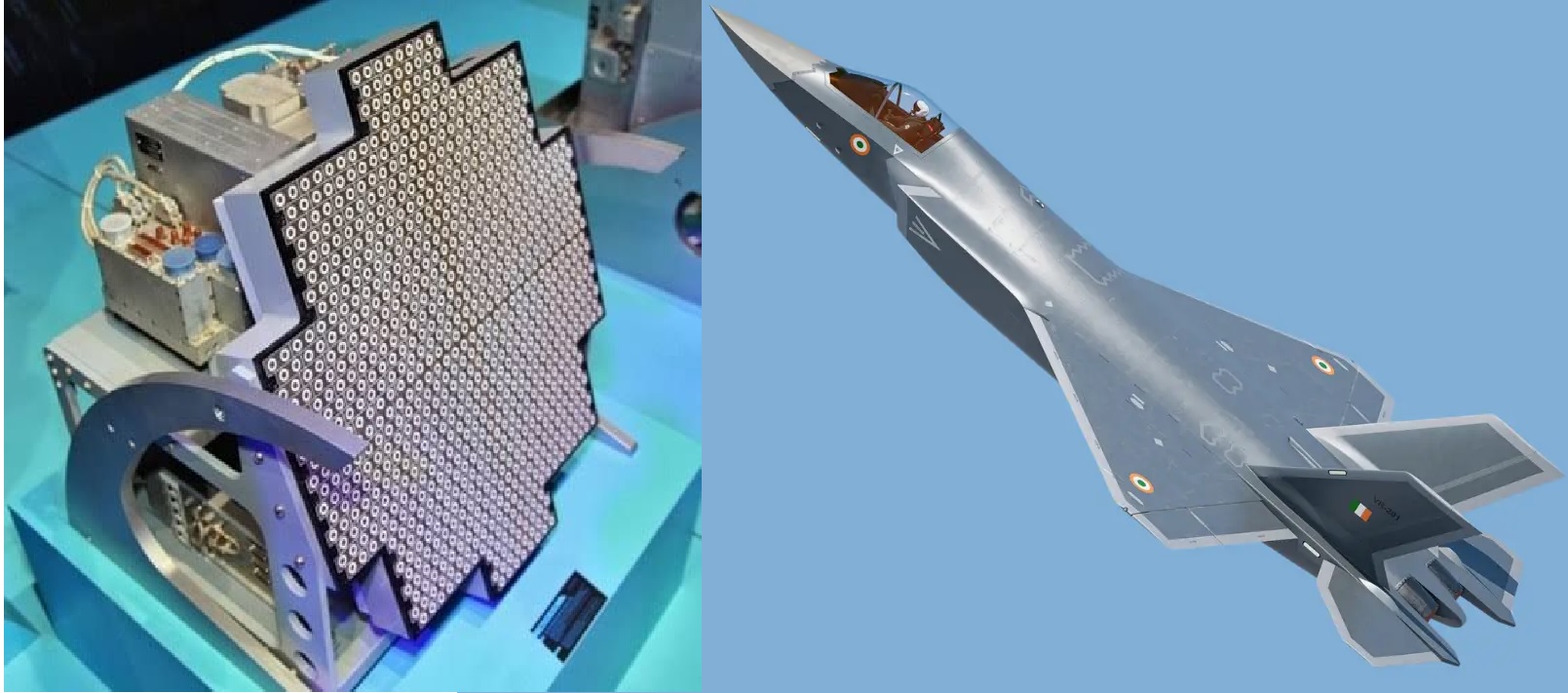
India’s Defence Research and Development Organisation (DRDO) has kicked off work on Photonics-based RF Memories (PRFM), a cutting-edge evolution of traditional Digital Radio Frequency Memory (DRFM) that could significantly sharpen the country’s electronic warfare (EW) capabilities against modern AESA and low-probability-of-intercept (LPI) radars. A recent DRDO tender from New Delhi explicitly seeks industry partners for the “Development of Photonics Based RF Memories (PRFM) for Jammer Systems”, with the project bid window running through December 19, 2025. If successful, PRFM-based jammers would move India from conventional electronics to light-based RF processing, delivering vastly higher bandwidth, ultra-low latency and cleaner signal replay—key ingredients for deception jamming in modern, radar-saturated battlespaces. From DRFM to PRFM: why DRDO is shifting to light Classic DRFM stores incoming radar pulses electronically, then replays modified versions to create false targets, pull tracking gates off the real aircraft (range/velocity gate pull-off), or blind the radar with tailored jamming. DRFM is already at the heart of several advanced jammer pods worldwide and underpins DRDO’s latest Tempest-type EW systems. However, as radars move to: Wideband AESA arrays Rapid frequency hopping LPI waveforms with complex modulation purely electronic DRFM hardware runs into limits in instantaneous bandwidth, dynamic range and latency. This is where Photonics-based RF Memory comes in. Instead of storing and manipulating RF signals in electronic chips, PRFM maps them onto optical carriers and uses fiber-optic or integrated photonic circuits as the storage and processing medium. Academic and industry work over the past decade has demonstrated PRFM architectures with very wide bandwidth, long, reconfigurable storage times and high signal fidelity, using fibre-based recirculating delay lines and microwave-photonics building blocks. DRDO’s new project aims to pull this kind of technology out of research labs and into operational jammer systems. How a photonics-based RF memory jammer works While DRDO has not published the detailed architecture of its PRFM system, open-source PRFM research and existing photonic EW products give a good picture of the likely approach. Signal captureThe aircraft or platform’s wideband receiver and antenna capture hostile radar emissions across a very broad frequency range (potentially tens of GHz). RF-to-optical conversionInstead of digitising directly into electronic memory, the RF signal is impressed onto a laser carrier using ultra-fast electro-optic modulators (for example, Mach–Zehnder modulators). The radar waveform is now encoded in light. Optical storage and delayThis modulated light is fed into optical delay structures—often long fibre loops or integrated waveguide loops. In many PRFM designs, a frequency-shifting recirculating delay line is used: each loop pass slightly shifts the optical frequency to prevent lasing and allows the signal to circulate many times without degrading, keeping a clean copy available for replay. Photonic signal processingWithin the optical domain, the system can: Vary the timing (range gate deception) Adjust phase and Doppler (velocity gate deception) Generate multiple delayed copies to create clouds of false targets in both range and velocity Combine different optical paths to tailor jamming waveforms Recent studies even show programmable PRFM that integrates signal storage and complex jamming pattern generation in the same photonic hardware. Optical-to-RF reconversion and transmissionWhen the jammer decides to fire, the stored optical waveforms are converted back to RF using high-speed photodetectors, amplified by power RF amplifiers, and transmitted back towards the threat radar via the jammer’s antenna. Because almost all the “heavy lifting” happens at the speed of light in passive or low-loss photonic circuits, the resultant jammer has: Nanosecond-level latency Massive instantaneous bandwidth Extremely high linearity and dynamic range —far beyond what most electronic DRFM racks can deliver. Battlefield Advantages: Smarter Deception, Tougher Survivability For Indian combat aircraft, warships and ground-based EW units, a mature PRFM-based jammer could change the electronic order of battle in several ways. 1. Beating modern AESA and LPI radarsAESA radars like those fielded by top-tier air forces use: Agile frequency hopping Randomised pulse repetition intervals Complex LPI modulation schemes to make life difficult for conventional jammers. PRFM’s huge bandwidth and fast, coherent storage means it can capture these exotic waveforms without losing detail, then replay them with surgically precise delays and phase tweaks. That lets the jammer: Generate coherent false targets that look “real” to the radar Execute advanced range / velocity gate pull-off (RGPO / VGPO) Support exotic constructs like range–velocity compound deception using multi-false-target patterns 2. Multi-threat, multi-beam jammingModern fighters may be illuminated simultaneously by: An airborne fire-control radar A ground-based surveillance radar Missile seekers with their own small AESA heads Wideband PRFM, especially when coupled with frequency-comb or multi-wavelength photonic sources, can store and process many channels in parallel, enabling a single jammer pod to handle multiple threats at once with tailored responses to each. 3. Lower size, weight and power (SWaP)Because photonic circuits can integrate many RF functions—filtering, delaying, mixing—into a small optical chip or fibre module, they are inherently attractive for fighter pods and UAVs, where every kilogram and watt matters. Companies already selling photonic-ECM systems highlight short response times in the nanosecond range and compact, modular designs for airborne, naval and ground platforms. 4. Better immunity to electromagnetic stressSince most of the processing occurs in the optical domain, PRFM modules are naturally immune to many forms of electromagnetic interference and can sit closer to high-power RF chains without the same noise floor issues that plague dense electronic systems. Where PRFM could Appear in Indian Service DRDO has not specified which platform will be first to receive PRFM-based jammers, but the agency’s broader roadmap offers hints. The organisation is already testing an airborne EW suite for the Tejas Mk1A, with plans for more sophisticated systems on future variants and the AMCA stealth fighter. India has also made significant progress on a photonic radar for fighters, UAVs and naval vessels, positioning microwave photonics as a strategic technology area. Existing DRFM-based systems, like advanced variants of the Tempest jamming suite, have laid the algorithmic and software groundwork for complex deception jamming. In that context, PRFM is the logical next rung on the ladder: first as a technology demonstrator on ground or naval EW systems with generous space and power budgets, then miniaturised into airborne self-protection pods and internal suites. Yes, I can work that in. I’ll give you a short updated version of the relevant part so you can see clearly which countries are in this game and how to mention it in your article. You don’t need to change the whole article structure — just insert a section like this near the “Battlefield advantages” or “Where PRFM could appear in Indian service” parts: Global Status Photonics-based RF memories are still an emerging technology, and no country is publicly known to have fully fielded, operational PRFM-based jammers yet. What exists today is a mix of advanced prototypes, lab demonstrators, and early military-oriented products in the broader field of microwave photonics and photonic EW building blocks. However, open-source research, patents and industry disclosures strongly suggest that several major powers are actively pursuing similar concepts: United States – U.S. defence labs, DARPA-backed programmes and industry (including major radar/EW houses) have published work on photonic RF delay lines, recirculating optical memories, and microwave–photonics-based deception architectures for next-generation electronic warfare. These are widely seen as precursors to operational PRFM-like systems, even if the final configurations remain classified. European countries (notably France, Germany, and the UK) – European universities and defence-linked research centres have worked extensively on integrated microwave photonics, optical true-time-delay networks and programmable photonic RF processors, many of which are explicitly framed for radar and EW applications. Some of these efforts are funded under EU / ESA / national defence technology programmes and could feed into future jammer suites. China – Chinese institutes and defence universities have published a steady stream of papers on photonic radar, wideband optical delay lines and optical RF storage, often highlighting their value against modern stealth targets. While details of any operational systems are opaque, the breadth of research suggests that China, too, is exploring PRFM-like capabilities for future EW systems. Israel and a few other high-end EW producers – Countries with strong electronic warfare industries (such as Israel) are heavily invested in compact, high-performance self-protection suites and are known to use microwave photonics in some subsystems. Though there is no open confirmation of a named “PRFM jammer”, it is plausible that similar ideas are being prototyped under classified programmes. In short: India is not late to the party – it is entering a small, high-tech club that is racing quietly to turn photonic RF memories from lab experiments into deployable jammers. For now, no country has openly declared an in-service PRFM jammer, but the US, Europe, China and a handful of advanced EW producers are clearly investing in the same family of technologies. DRDO’s project, therefore, is less an isolated experiment and more a bid to ensure that India is not dependent on foreign suppliers for what could become a core technology in future electronic warfare. A Quiet But Transformational Leap The PRFM tender might look like just another DRDO R&D line item, but in RF engineering terms it is a major doctrinal shift: From electronics-dominated EW to microwave photonics–driven EW From limited-band, reactionary jamming to wideband, predictive, programmable deception From platform-specific hardware to more unified, scalable photonic cores that can be reused across aircraft, ships and ground vehicles If DRDO and Indian industry can successfully turn lab-grade photonic RF memories into rugged, fielded hardware, Indian pilots and commanders will gain a far more agile electronic shield—one able to evolve against future generations of smart, networked, and stealthy sensors. For now, the project is at the competitive bid stage. But the direction of travel is clear: in the electronic battlespace over the Indian Ocean and Himalayas, light is slowly taking over from electrons as India’s most secret weapon.
Read More → Posted on 2025-11-23 14:53:16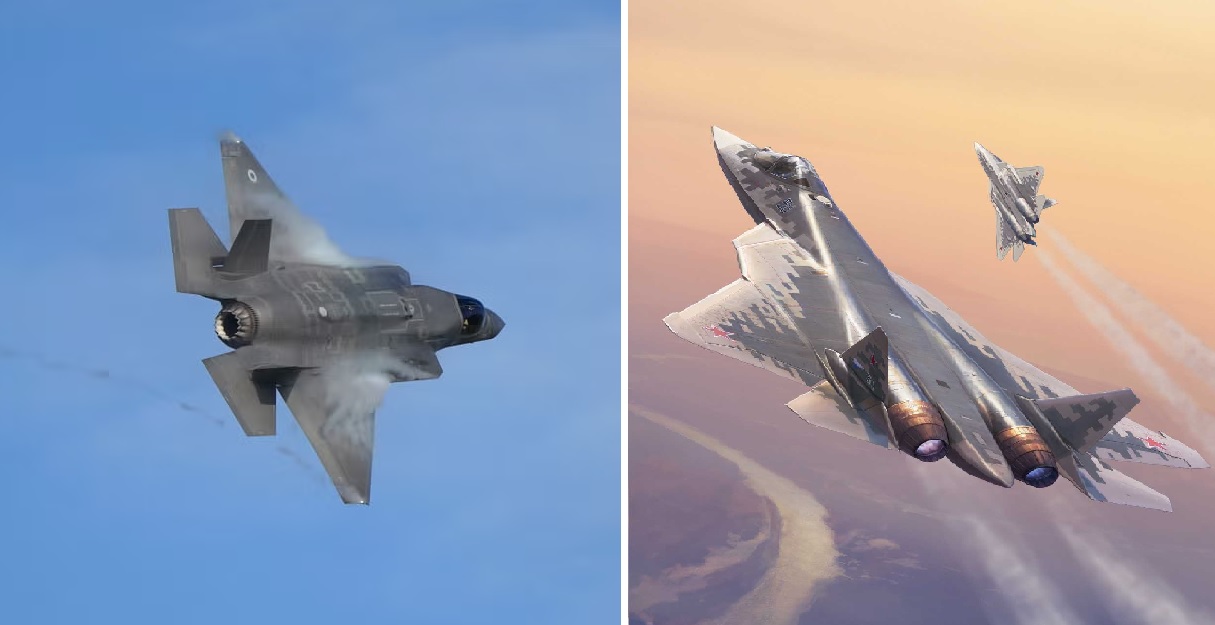
India
A quiet but intense struggle is unfolding behind the scenes as Washington and Moscow compete to sell their most advanced stealth aircraft to India. What began as standard defense proposals has gradually turned into one of the most significant arms races in recent years — not on the battlefield, but in diplomacy, technology offers, and strategic persuasion. For Russia, this is a battle it cannot afford to lose. For the United States, this may be the chance to finally break into a market long dominated by Moscow. And for India, the world’s largest democracy and one of the most important military buyers, the emerging competition presents both an opportunity and a dilemma of historic proportions. Russia’s Extraordinary Offer: A Complete Technology Transfer In the beginning, Moscow’s proposal to India for the Su-57 fifth-generation fighter was like any conventional export pitch — a package of aircraft with partial industrial involvement. But everything changed the moment former President Donald Trump publicly signaled that Washington was willing to offer the F-35 to India, something U.S. policy had avoided for years. The Russian response was immediate and unprecedented. Determined not to lose its biggest arms customer, Moscow dramatically enhanced the proposal. Instead of a basic export deal, it offered India complete control and complete access: 100% Transfer of Technology for the Su-57 airframe 100% ToT for the new AL-51 engine Indian assembly and production rights Freedom to integrate Indian or foreign weapons A joint development roadmap for future upgrades For India, which has long sought deeper industrial access to fighter production, this offer stood out as something Russia had never offered to any country before. In Moscow’s eyes, losing India — a country that operates 70% to 80% Russian-origin weapons — would not just be a commercial setback but a strategic defeat. Washington Under Pressure: F-35 Exports Expand Amid Shrinking Markets On the American side, circumstances were shifting as well. A series of cancellations and delays from European partners had placed new pressure on the F-35 program, forcing Washington to widen its export push. That is why the U.S. took steps that would have been unthinkable a few years ago. It agreed to sell the F-35 to Saudi Arabia, even at the risk of friction with Israel. Soon after, discussions began on the possibility of extending a similar offer to India. This move came not just from the desire to counter China, but from a deeper ambition: to crack open the Indian market and reduce Russian influence once and for all. But India’s demands were unlike anything the U.S. has faced in the past. New Delhi made it clear that it would accept the F-35 only under conditions similar to those granted to Israel: Full operational control The ability to install its own weapons Independence from U.S. remote restrictions Complete sovereignty over mission data Until now, Washington has not signaled whether it would meet these conditions. The S-400 Dilemma: An Obstacle the U.S. Cannot Ignore Even if the U.S. eventually agrees to India’s demands, one problem remains — the S-400 air defense system already deployed by India. American officials have repeatedly maintained that the F-35 cannot operate in airspace where Russian radars collect data. The Turkey crisis serves as the most visible example: once Turkey purchased the S-400, its F-35 deal was halted immediately. For India, this would mean operating the S-400 and the F-35 in completely separate environments, with no shared networks, no common bases, and no integrated operations. Such separation goes directly against India’s long-term integrated command approach. Analysts believe this would remain one of the most difficult barriers for any F-35 deployment in India. India’s Existing Arsenal Tilts Toward Russia Another reality complicates the American offer. India’s weapons ecosystem — missiles, radars, datalinks, EW suites, and air-defense networks — is already deeply connected to Russian-origin systems. Any new fighter must fit into this network. The Su-57, by design, integrates naturally: It can operate comfortably with S-400 batteries. It can carry Indian and Russian weapons with minimal modification. It can link into Indian and Russian command systems. The F-35, on the other hand, is known for its strict digital ecosystem. It cannot simply plug into India’s existing Russian and indigenous networks. Instead, it would function as a standalone bubble, technologically isolated from most Indian systems. For many Indian analysts, this is a decisive factor. Why Washington Is Trying So Hard Inside American strategic circles, the motivation is clear. India represents three long-term objectives: Build a stronger Asian counterweight to China Reduce the dominance of Russian technology in the Indian military Secure a major new customer for the F-35 program In each of these, India plays a central role. That is why Washington is pushing harder than ever before. But the U.S. model of tightly controlled weapon ecosystems conflicts with India’s doctrine of strategic autonomy, making negotiations challenging. Why Moscow’s Proposal Resonates More With India For India, Russia’s upgraded offer presents an exceptionally comfortable fit. The Su-57 package does not come with operational restrictions. It offers deep industrial access, the ability to integrate any weapon, and compatibility with existing systems like S-400, BrahMos, and Indian EW suites. Most importantly, it preserves India’s long-standing principle: no foreign power should dictate how Indian military assets operate. Russian officials have quietly framed their offer as the beginning of a multi-decade partnership where India becomes a co-designer, not just a customer. This vision appeals strongly to India’s aerospace ambitions. What Comes Next: A Strategic Choice for Decades India now faces one of its most consequential defense decisions in recent memory. If Washington agrees to full operational control — a major “if” — India gains access to the world’s most advanced stealth fighter. But it comes wrapped in American restrictions and the requirement to separate it from the S-400 ecosystem. If New Delhi chooses Russia’s Su-57, it gains unmatched industrial freedom, complete compatibility with its existing weapons, and a place as a co-developer in future platforms. Whichever path India takes, the decision will shape not only the Indian Air Force but also the global balance of military influence for decades. And the world is watching closely, as the U.S. and Russia fight their quiet war — not on the battlefield, but for India’s skies.
Read More → Posted on 2025-11-22 17:20:24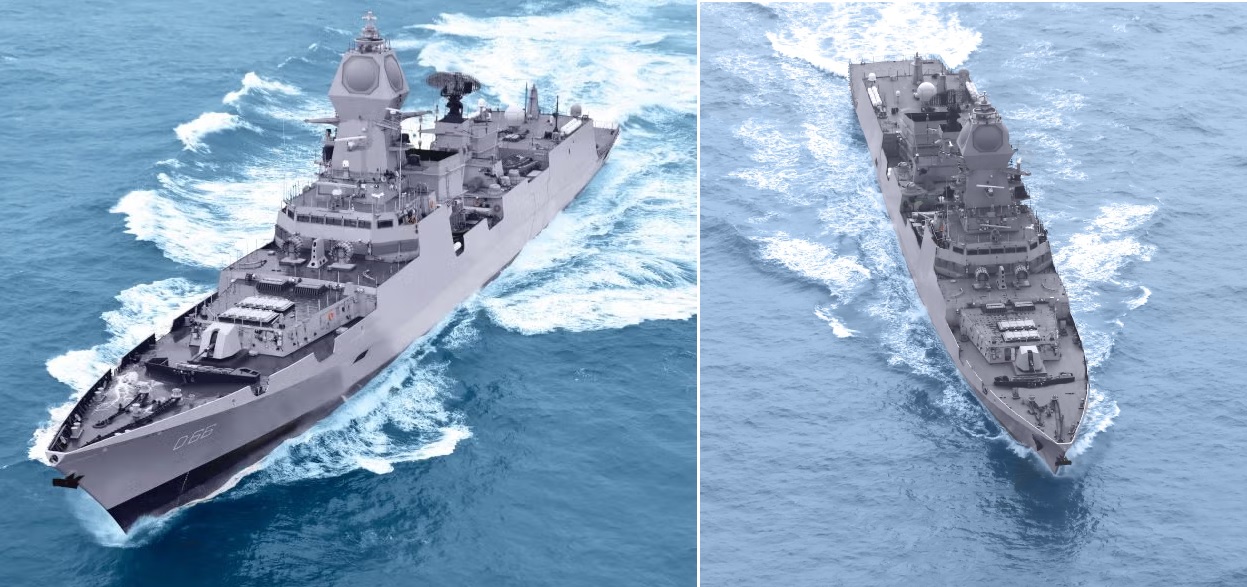
India
The Indian Navy is preparing to take a major leap in surface-combatant capability, with plans to secure Acceptance of Necessity (AoN) for five next-generation, 11,000-tonne destroyers within the current financial year. Vice Admiral Sanjay Vatsayan, Vice-Chief of the Naval Staff, confirmed on Thursday that design work for the new class is complete, and contract awards are expected within the next two years once approvals are in place. A New Generation of Smart, Heavily Armed Warships Although the Navy has not publicly released the full spectrum of upgrades planned for the new destroyers, reports indicate a dramatic jump in capability over the current Visakhapatnam-class (P-15B). The upcoming vessels are expected to feature: Enhanced air-defence systems with larger missile loads Long-range strike weapons, potentially including land-attack options Advanced anti-ship missiles Next-generation sensors and radar suites Higher power generation designed to support future directed-energy weapons Deep integration with autonomous vessels, UAVs, and underwater drones Vice Admiral Vatsayan said that many of these “smart technologies” were evaluated on a trial platform and refined for incorporation into the future class. “We have consolidated the systems needed for smart ships of the future,” he noted. Strategic Context: China’s Rapid Naval Expansion The Navy’s disclosure comes at a time of accelerating naval modernization across Asia, led by China. Days before India’s announcement, the People’s Liberation Army Navy (PLAN) commissioned Fujian, its third and most advanced aircraft carrier and the world’s largest non-nuclear warship. Fujian is widely considered a force multiplier that strengthens China’s growing blue-water operational profile. A recent report to the US Congress underscores the scale of China’s expansion. The PLAN’s battle force: Surpassed 370 ships in 2024 Is expected to rise to 395 ships in 2025 Could reach 435 ships by 2030 China also continues building specialized platforms; in mid-2025, it unveiled an amphibious assault ship designed as a drone carrier, further broadening its naval capabilities. China–Pakistan Naval Nexus and Indian Vigilance China, Pakistan’s largest arms supplier, is simultaneously strengthening Islamabad’s maritime fleet. Eight submarines are on order for the Pakistan Navy, with the first—PNS Hangor—slated for induction in the first half of 2026. Asked about the development, Vice Admiral Vatsayan said:“We are aware that China is supplying ships and submarines to Pakistan. We are monitoring everything closely and working on strengthening the defence. We know what kind of anti-submarine warfare (ASW) capabilities we need to counter such threats.” Building Indian, Buying Foreign Only When “Unavoidable” Reiterating the Navy’s strong push for self-reliance, the Vice Chief said the upcoming destroyers will be more capable than the Visakhapatnam-class and will be built domestically. The Navy, he emphasized, imports platforms or systems “only when absolutely unavoidable.” India’s shipyards are already operating at high capacity. As of now, 52 warships are under construction across Indian shipyards and are expected to be delivered within the next two to three years. A Major Step Toward Maritime Superiority The new destroyer program represents one of the most significant naval developments in recent years. With larger hulls, advanced weapons, and futuristic energy systems, the 11,000-tonne class is set to become the backbone of India’s surface fleet in the 2030s. As regional waters grow more contested—with China expanding aggressively and Pakistan modernizing rapidly—India’s planned destroyers signal a clear intention: to maintain a strong, technologically superior presence across the Indo-Pacific.
Read More → Posted on 2025-11-21 13:07:46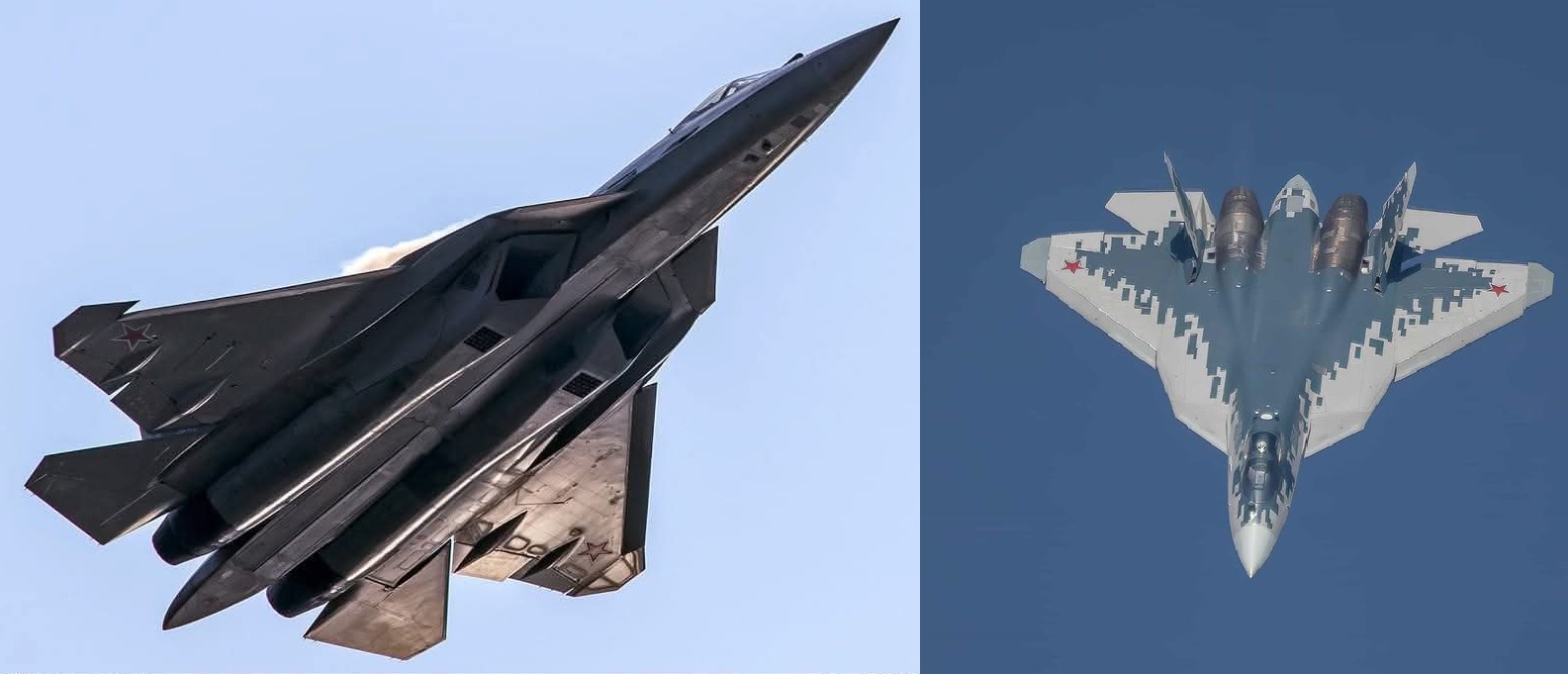
India
In a major proposal that could reshape India’s future combat aviation roadmap, Russia has offered full-scale production of the Su-57 stealth fighter jet in India, including complete technology transfer of the airframe and engine, senior Russian defence officials confirmed ahead of President Vladimir Putin’s upcoming visit to New Delhi. The unprecedented offer — described by Moscow as “without restrictions, without sanctions, and with full sovereignty for India” — signals Russia’s strongest push yet to revive deep defence-industrial partnership with India at a time when New Delhi is diversifying its military imports and accelerating indigenous programs. Rostec Chief: “Russia Is Ready to Supply ANY Weapon India Needs” Rostec CEO Sergei Chemezov stated that Moscow is fully prepared to provide New Delhi with any weapons or platforms necessary for India’s national security, adding that Russia remains committed to long-term defence cooperation. “Including the Su-57E, we are ready for joint work. We can supply India with any systems it requires for security,” Chemezov said, reaffirming that technology transfer for the Su-57 program will be comprehensive, covering airframe, avionics, sensors, and the fighter’s next-generation engine. Russia Pitches Local Production of Su-57 in India Senior representatives of Rosoboronexport, Russia’s state arms exporter, revealed that the formal proposal for Su-57 production has been delivered to Indian authorities. The offer includes: Full technology transfer, including engine technologies Local manufacturing of critical subsystems in India Joint development of a two-seat Su-57 variant, similar to the shelved FGFA concept Long-term upgrade program involving software, weapons, and avionics Complete immunity from Western sanctions, as all technologies originate from Russia “Our technology transfer comes without restrictions and without fear of sanctions,” the Russian official said, in a clear reference to U.S. CAATSA penalties and supply-chain uncertainties that shadow Western defence purchases. He further emphasised that the proposal allows India to manufacture key components domestically, ensuring uninterrupted operational capability even during geopolitical crises. A Revival of the FGFA Vision — With More Control for India After the collapse of the earlier Fifth Generation Fighter Aircraft (FGFA) project, Russia says it is ready to revisit the idea with greater flexibility and much deeper participation for India. This includes: Co-design rights over the two-seat Su-57E variant Greater access to mission systems Collaboration on radar, electronic-warfare suites, and weapons integration India-specific modifications for sensors, cockpit layout, voice/AI assistance, and networking systems Russian representatives stressed that India would retain “full freedom” to integrate its own weapons, including Astra, Rudram, and future long-range air-to-air missiles. Why the Su-57 Offer Matters for India’s Airpower Plans India’s combat aircraft roadmap includes the Tejas Mk1A, Tejas Mk2, the AMCA stealth fighter, and the MRFA tender. However, the AMCA is not expected to enter squadron service before early-to-mid 2030s, creating a potential capability gap. Russian officials argue the Su-57 fills this gap immediately with: 1. High Weapons-Carrying Capacity One area where Russia claims the Su-57 outperforms future AMCA is sheer payload — both internal and external. Internal bays can house heavy air-to-air and strike weapons External hardpoints allow additional missiles when stealth is not required Capacity for hypersonic weapons, long-range AAMs, and large-diameter glide bombs The IAF has long emphasized the need for a high-payload stealth fighter for deep-strike and air-dominance missions — a requirement the Su-57 is uniquely suited to meet. 2. Immediate Availability Compared to AMCA While India’s AMCA program is advancing, it remains several years away from prototype rollout. Russia argues that: Su-57 production in India could start much earlier Joint development of a two-seat version would strengthen India’s design ecosystem Indian industry would gain generational experience in advanced stealth manufacturing 3. Freedom from Sanctions and Supply Chain Disruptions With Western systems often vulnerable to export controls, Moscow highlights that Russian-origin technology ensures uninterrupted access, aligning with India's strategic push for autonomy. The Su-57: Russia’s Most Advanced Stealth Fighter Often compared to the F-22 and F-35, the Su-57 is Russia’s first operational stealth multirole fighter. Key features include: Stealth shaping and radar-absorbent materials 360° sensor fusion with AESA radar systems Supercruise capability (with future Izdeliye 30 engines) High manoeuvrability with thrust-vectoring Internal bays for air-to-air and precision-strike weapons AI-assisted pilot support and target prioritisation Russia has operationally deployed the Su-57 in Syria and Ukraine in standoff and air-defence suppression roles — experience Moscow says it is ready to share with India. Geopolitical Context: Putin’s Visit and India’s Balancing Act The timing of Russia’s offer feels anything but accidental. With President Vladimir Putin preparing to meet Prime Minister Narendra Modi, Moscow clearly wants to put defence cooperation at the forefront. In many ways, this proposal reflects Russia’s attempt to reinforce its position in India’s shifting defence landscape, especially at a moment when New Delhi is exploring diverse partnerships. India has been increasingly purchasing Western equipment, and the Ukraine war has strained Russia’s defence production timelines. At the same time, New Delhi has become far more assertive about demanding full and unrestricted technology transfer for any future high-end system. Against this backdrop, the Su-57 production offer feels like Moscow’s way of signalling that it still sees itself as India’s most reliable long-term defence partner — and is willing to offer technologies others are reluctant to share. In essence, Russia is sending a geopolitical message: regardless of global tensions or shifting alliances, it remains ready to provide India with deep access, strategic autonomy, and sovereign control over advanced fighter technologies. What Happens Next? India’s response will likely be deliberate. The Indian Air Force’s earlier reservations about the FGFA program — particularly concerns about transparency and technology access — still loom large. But this new proposal is different. It promises greater openness, significant Indian control, complete engine technology transfer, and locally established production lines, all of which directly address India’s long-standing requirements. If New Delhi finds this offer credible, it could transform India’s aerospace trajectory. A domestic Su-57 line would not only give India a fifth-generation fighter years before AMCA becomes operational, but it would also build the industrial base and technical expertise needed for India’s own stealth programs. In that sense, accepting the offer would go far beyond buying aircraft. It would mark India’s largest-ever aerospace partnership with Russia and could dramatically accelerate India’s stealth fighter ecosystem, giving the country a major strategic leap in air combat capability. Russia’s offer of complete Su-57 production in India, with unrestricted technology transfer and a co-developed two-seat model, is one of the most ambitious defence proposals New Delhi has received in years. As President Putin prepares for his visit, the pitch signals Moscow’s intent to remain a central pillar of India’s defence modernization. For India, the decision will weigh immediate capability gains, industrial benefits, and strategic autonomy against long-term commitments to its indigenous AMCA program.
Read More → Posted on 2025-11-20 14:24:14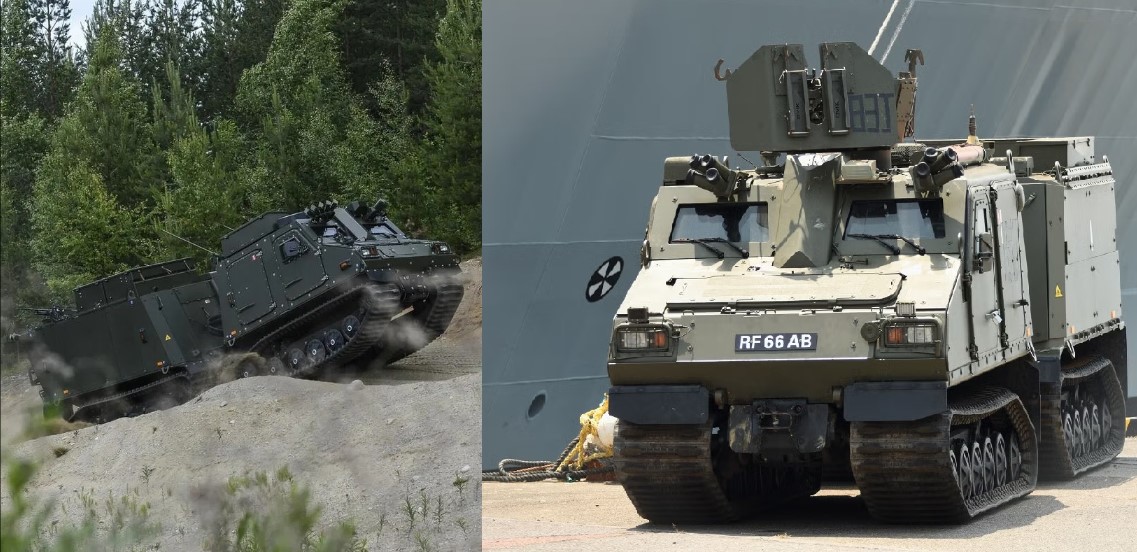
India
In a significant push toward modernising high-altitude mobility, the Indian Army has signed a contract with Larsen & Toubro (L&T) for the procurement and indigenous production of the BvS10 ‘Sindhu’ all-terrain articulated tracked vehicle. The project, executed in collaboration with BAE Systems Hägglunds, marks a major milestone under India’s ongoing emphasis on defence indigenisation. Contract Finalised, Production to Begin in Hazira According to officials, the BvS10 Sindhu vehicles will be manufactured at L&T’s Armoured Systems Complex in Hazira, Gujarat, with full technical and design support from BAE Systems Hägglunds — the original developer of the global BvS10 platform. The model supplied to India will be customised to meet the Army’s specific requirements in snow-bound, high-altitude, marshy, and desert regions. The contract is expected to significantly strengthen the Army’s logistics and operational reach along the Ladakh, Sikkim, and Arunachal Pradesh frontiers, where terrain has remained a persistent challenge. Built for Terrain Where Roads Don’t Exist The BvS10 Sindhu is a fully amphibious, twin-cabin articulated vehicle designed to operate in extreme environments. Its low ground pressure and wide rubber tracks allow it to traverse terrain where conventional wheeled or tracked vehicles struggle. Officials said the platform will be deployed for troop transport, logistics missions, casualty evacuation, and disaster relief, especially in areas where mobility is frequently disrupted by snow, landslides, or floods. Technical Specifications of BvS10 ‘Sindhu’ Defence sources confirm that the Indian variant retains the BvS10’s core architecture while including modifications for Indian terrain. Key specifications include: Configuration: Articulated twin-unit tracked vehicle Engine: ~285 hp diesel engine Crew & Capacity: Up to 12 personnel Top Speed: ~65 km/h on road; ~5 km/h in water Range: 200–400 km depending on terrain Amphibious Capability: Full swim capability for river crossings and floods Protection: STANAG-level ballistic and mine protection Payload Capacity: Up to 5 tonnes across both cabins Roles: Command, ambulance, troop carrier, cargo, and specialised mission modules The Sindhu’s articulated steering joint allows it to negotiate tight turns, steep gradients, and broken ground — a critical advantage in mountainous sectors. Strategic Importance for India’s Northern Borders Analysts note that the induction of the BvS10 Sindhu comes at a time of continued deployment along the Line of Actual Control (LAC). Winter logistics remain a recurring challenge, and the new vehicles are expected to dramatically improve access to posts located in deep snow regions. The platform will also reduce the Army’s dependence on helicopters for routine logistics and evacuation tasks during adverse weather, improving sustainability and safety. Boost for Indigenous Defence Ecosystem The programme will deepen India’s industrial capabilities by building a domestic technology and supply-chain base for extreme-terrain vehicles. L&T’s Hazira complex is expected to support future upgrades, locally manufactured spares, and possible export-oriented variants. Officials described the move as “a forward-looking investment that enhances operational capability while strengthening India’s indigenous manufacturing footprint.” Delivery Timeline While official delivery schedules have not been disclosed, production is expected to start soon, with initial batches likely within the next two to three years. The Indian Army is expected to field the Sindhu across its northern and eastern high-altitude commands once induction begins.
Read More → Posted on 2025-11-19 15:04:51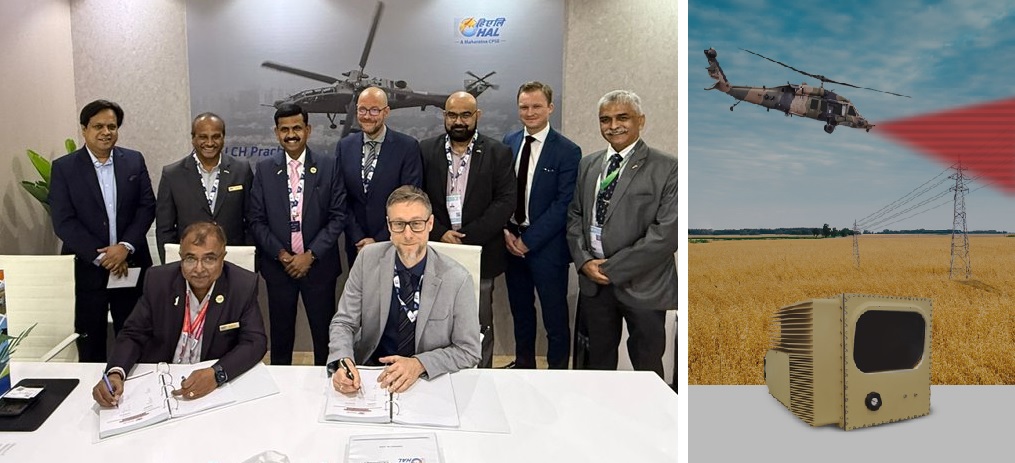
India
On a bright and bustling afternoon at the Dubai Airshow, where defence giants unveiled their most advanced technologies and global delegations shuffled between pavilions, a quieter but far more strategic moment unfolded. Hindustan Aeronautics Limited (HAL), India’s state-owned aerospace leader, signed a landmark contract with HENSOLDT Sensors GmbH of Germany — a deal that many observers would later call one of the most important achievements for India at this year’s show. It wasn’t just another partnership. It was a transfer of power — the full Transfer of Design (ToT), Intellectual Property Rights (IPR), and complete manufacturing and repair capability for two critical helicopter technologies: the Obstacle Avoidance System (OAS) and the Degraded Visual Environment (DVE) solution. For HAL, this moment represented a decisive step into a future where India would no longer simply import cutting-edge helicopter avionics, but build, master, and even export them. A Deal That Shifted the Atmosphere As officials from both sides shook hands, the significance of the moment rippled through the Indian pavilion. HAL had arrived in Dubai seeking partnerships, but it walked away with something far more powerful — ownership. The contract gives HAL not just the right to manufacture the systems, but the authority to modify, upgrade, and evolve them. For an Indian defence company, gaining complete IPR from a major European sensor manufacturer is rare, and it signalled a deep level of trust in HAL’s engineering capabilities. To many experts watching, this wasn’t just a win — it was a statement. HAL was no longer a junior partner in global aerospace discussions. It was now a technology holder. Why These Technologies Matter So Much In the world of helicopter operations, seconds save lives, and visibility decides missions. That is where the two technologies from HENSOLDT come in. The Obstacle Avoidance System is like an extra pair of eyes for a helicopter — spotting power lines, towers, poles, trees, and terrain features long before they become a danger. It is the system that warns before pilots even realize what’s ahead. The Degraded Visual Environment solution is even more vital. In dust storms, fog, snow, heavy rain, or battlefield smoke — moments where pilots often struggle to see the ground — DVE allows them to “see” using sensors and synthetic vision. For platforms like the LCH Prachand, ALH Dhruv, and high-altitude rescue helicopters, DVE can be the difference between a safe landing and a disaster. When HAL gains the technology to build and maintain these systems in-house, every Indian helicopter becomes safer, more modern, and more mission-ready. How HAL Stood Out at Dubai Airshow 2025 The Dubai Airshow is a competitive environment. Companies make noise, display massive aircraft, and sign billion-dollar deals. Yet HAL’s achievement stood out because of its strategic value. Across the exhibition hall, analysts noted how the Indian company had matured — not with flashy announcements, but with purposeful agreements that expand technological sovereignty. This contract showed three things clearly: HAL can negotiate for complete ownership, not partial access. India’s aerospace sector is climbing higher into the global value chain. Foreign defence companies see HAL as a capable, long-term partner. For India, this wasn’t just an international win — it was symbolic of the country’s growing aerospace confidence. A Boost for Atmanirbhar Bharat Back home, the deal aligns seamlessly with India’s push for Atmanirbhar Bharat in the defence sector. Full ToT and IPR mean that upgrades no longer require foreign permissions. Repairs can be done within Indian facilities. Custom versions can be developed for specific missions. Future variants can be modified without waiting for foreign approvals. And perhaps most importantly — HAL now has the authority to export the system. With many Asian, African, and Middle Eastern nations seeking cost-effective helicopter upgrades, HAL’s new capability positions India as a supplier, not just a buyer. The Dubai airshow moment was not loud, but it was decisive. As HAL executives walked out of the pavilion with the signed agreement, they carried more than a contract — they carried a transformation. In the coming years, Indian-made helicopters will fly with advanced German-origin systems built entirely on Indian soil. Pilots landing in dust-filled valleys, rescuing civilians in storms, or flying combat missions at night will rely on technologies that HAL now fully owns. For HAL, this was more than success at a global event.It was a turning point — a moment when India’s aerospace sector took a confident stride towards technological independence. And in the narrative of India’s rising aviation capabilities, the Dubai Airshow 2025 will be remembered as the place where HAL quietly won big.
Read More → Posted on 2025-11-19 14:50:59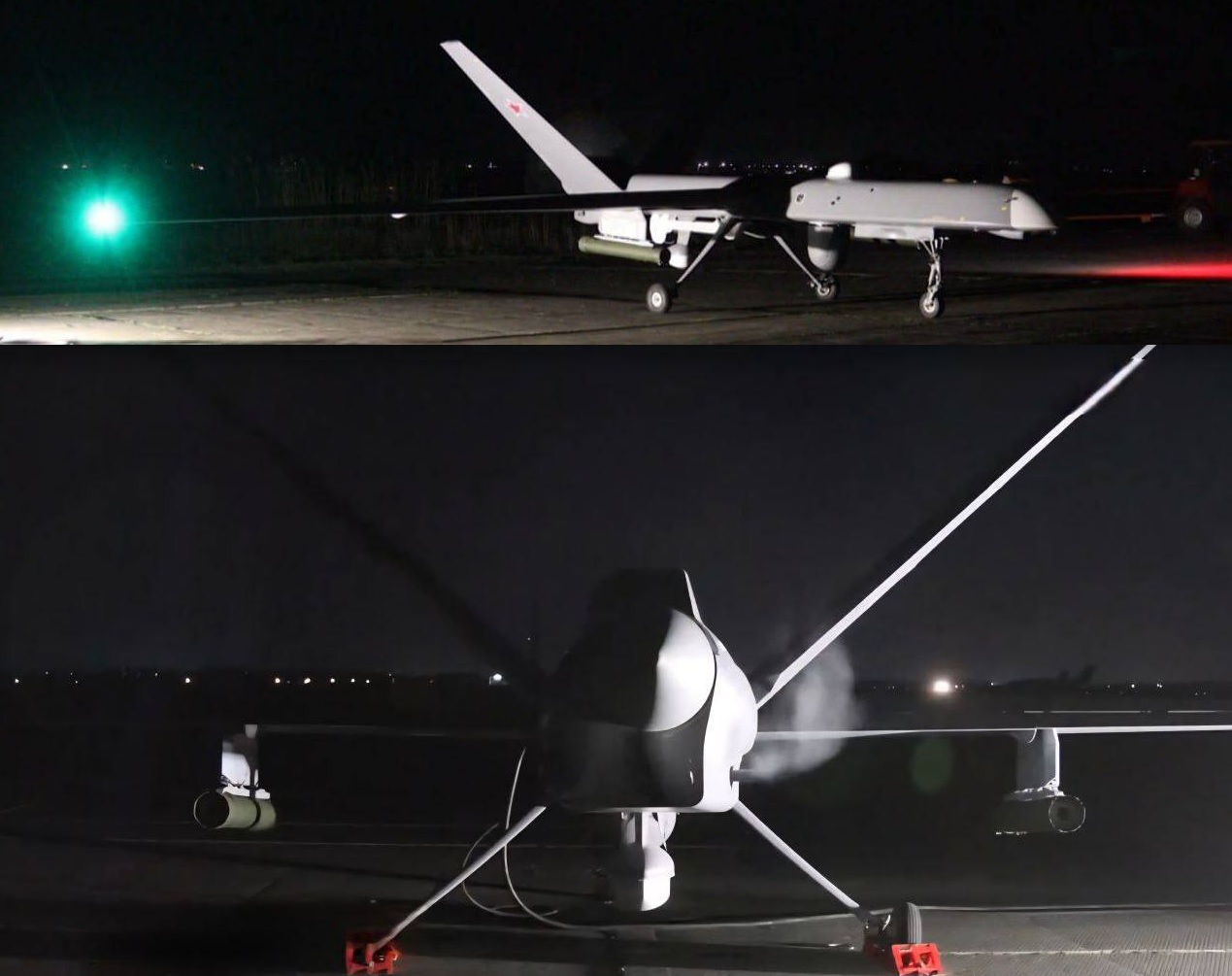
India
Newly surfaced images on Russian social media appear to show the Orion MALE drone fitted with two Kh-BPLA laser-guided missiles, indicating Moscow’s push to enhance its low-signature precision-strike capabilities along the front line in Ukraine. The photos, reposted by OSINT monitors on X, were captured on 18 November and quickly drew attention across defense circles. The release coincides with Russia’s escalating drone-missile campaign and with the Kh-BPLA missile series being publicly showcased at the Dubai Airshow 2025, further suggesting a coordinated effort to highlight the maturation of Russian unmanned combat systems. A Rare Glimpse of a Fully Weaponised Orion The images show an Orion UAV parked on a dim airstrip, carrying a Kh-BPLA missile under each wing. The munitions, identifiable by their cylindrical launch tubes and folding fins, represent the first clear view of a fully armed Orion prepared for operational deployment. Until now, the drone had most often been linked to lighter glide bombs or test-fit weapons. The Kh-BPLA, developed by the KBP Instrument Design Bureau, shares design lineage with the Kornet anti-tank family and Krasnopol laser-guided artillery rounds. The missile weighs 32 kg (42 kg with container), boasts a 6 kg fragmentation warhead, and engages targets between 2–8 km. It is intended to strike vehicles, artillery, radars, and small surface targets, rather than heavily armored tanks. Russian military commentators have also highlighted the missile’s salvo-fire capability, designed to challenge active protection systems, a tactic reflected in the twin-missile load seen on the Orion. A Drone Designed for Endurance, Now Stepping Into a Strike Role Built by the Kronstadt Group, the Orion represents Russia’s first attempt at a homegrown, serially produced MALE reconnaissance-strike UAV. Comparable to the MQ-1 Predator or Bayraktar TB2, the drone carries: A 16-meter wingspan Up to 250 kg payload 24–30 hours endurance A 250 km operational radius, extendable through satellite links It has appeared before—in Syria, and sporadically over Ukraine—but always in small numbers, overshadowed by cheaper loitering munitions like Lancet drones. Downed Orion airframes previously recovered in Ukraine suggested Russia was testing missile integrations, but the new imagery is the clearest indication yet of an operational pairing. The Tactical Value Russia Hopes to Gain Mounting guided missiles rather than glide bombs marks a turning point for Orion’s battlefield utility. With Kh-BPLA, the drone can: Strike moving targets Deliver hits faster, with reduced time-to-target Attack with slightly greater standoff distance Maintain long endurance even while armed It doesn’t put Orion in the same league as heavily armed Western drones, but it does give Russian forces a reusable precision-strike option—one that could threaten artillery, mobile radars, and light vehicles near the frontline. Still, the drone’s 8 km missile range keeps it highly vulnerable to Ukrainian radar-guided systems and fighter patrols, meaning it can only operate safely along the edge of Russian-held airspace. Beyond the Battlefield: A Message for the World The release of these images appears crafted not only for soldiers but for spectators. Russia has been showcasing the Kh-BPLA and its unmanned fleet at trade shows like Army-2024 and Dubai Airshow 2025, promoting itself as a contender in the global drone marketplace alongside Western and Turkish suppliers. Ukrainian intelligence meanwhile warns that Russia’s Orion production line—supported by more than 40 domestic companies—may survive sanctions by maintaining access to critical foreign electronics, often through intermediaries. In this broader context, the imagery becomes part of a narrative Russia wants to project: that despite sanctions and setbacks, it is still advancing its unmanned-strike ecosystem. A Signal of What’s Coming Experts caution that this sighting does not confirm mass fielding of armed Orions. Instead, it reinforces a pattern—Russia slowly transforming its first-generation MALE drone from a reconnaissance platform into a precision-guided strike asset. How far this transformation goes will depend on: Russia’s ability to produce more Orion airframes and Kh-BPLA missiles, and Ukraine’s continued success in denying frontline airspace to Russian drones. For now, the dimly lit photos circulating online are more than just visuals. They serve as a reminder of how, in today’s conflict, images have become weapons of narrative, offering early hints of technologies shifting from prototype halls to active combat missions.
Read More → Posted on 2025-11-19 12:49:25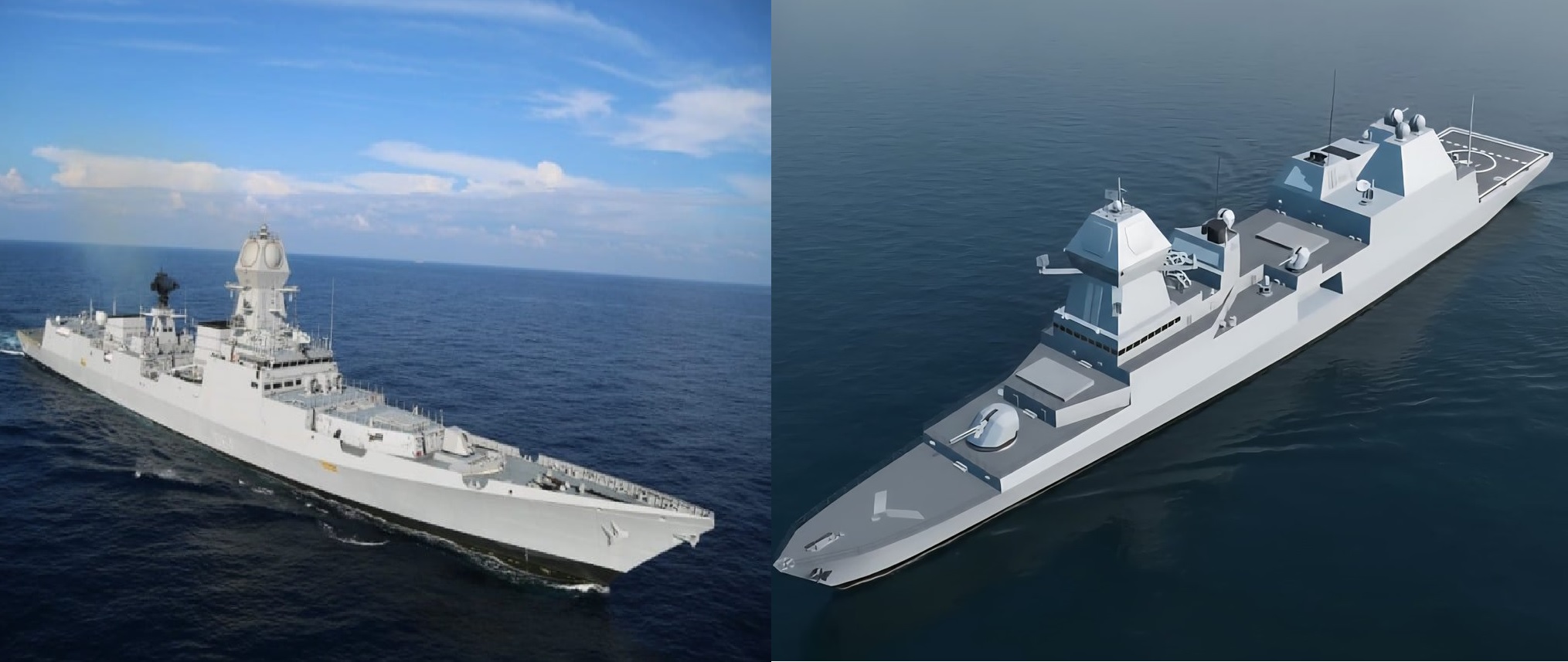
India
India’s naval modernisation drive is poised for a major leap as Mazagon Dock Shipbuilders Limited (MDL) confirmed that the Indian Navy is preparing to issue a new destroyer tender worth ₹70,000–80,000 crores ($8–9 billion). According to senior MDL officials, the long-awaited project could take the shape of either the Next-Generation Destroyer (NGD)—also known as Project-18—or an unexpected Project-15C class, a follow-on to the Visakhapatnam-class destroyers. The revelation marks the first public acknowledgement of a possible Project-15C, a development that could reshape India’s destroyer roadmap. Officials explained that a P-15C class could serve as a technological bridge between today’s Visakhapatnam-class (Project-15B) and the much more complex NGD, helping reduce program risk and accelerate fleet intake. Project-15C Surfaces as New Contender The Project-15 family has defined India’s frontline destroyer capabilities for nearly three decades—beginning with the Delhi-class, followed by the Kolkata-class (P-15A), and the Visakhapatnam-class (P-15B). The newest ships incorporate advanced stealth shaping, long-range AESA radar suites, new-generation sonar, improved survivability, and expanded VLS-based missile firepower. However, the Project-18 NGD aims to be an entirely new design featuring massive jumps in automation, survivability, integrated electric propulsion, multifunction radar masts, directed-energy weapon compatibility, and larger missile loadouts. With such complexity, timelines remain long. A P-15C class, therefore, is emerging as a realistic interim solution. MDL officials said the Navy may pursue this option to maintain construction continuity while mitigating NGD risks. How Project-15C Would Improve Over P-15B Although formal design parameters remain undefined, naval planners and MDL engineers broadly expect P-15C to incorporate: 1. Larger Vertical Launch Capacity Expanded VLS cells for Barak-8ER, BrahMos Block-II/III, and possibly Nirbhay or future Long-Range Land Attack Cruise Missiles (LR-LACMs). Improved configuration for quad-packed short-range interceptors. 2. More Powerful Radar & Combat Systems Upgraded MF-STAR derivative or new AESA radar with extended target tracking range. Enhanced multi-threat processing (ballistic, hypersonic, saturation attacks). Next-gen Combat Management System (CMS) designed to feed into NGD-level network warfare. 3. Better Stealth and Reduced Infra-Red Signature Re-shaped superstructure and exhaust cooling systems based on lessons from NGD modelling. Composite materials for masts and upper deck structures. 4. New-generation Electronic Warfare Suite Indigenous EW/ESM/ECM system capable of countering modern electronic-attack aircraft, drones, and sea-skimming missiles. Integration of DIRCM (Directional Infrared Countermeasures). 5. Multi-layered Anti-Submarine Warfare Upgrades New towed-array sonars with wider bandwidth. AI-aided submarine tracking algorithms. Larger hangar/deck to operate future heavy ASW helicopters or UAVs. 6. Power and Space Margins for Directed-Energy Weapons Higher electrical generation capacity for future: Laser CIWS, High-power jammers, Railgun prototypes (NGD-compatible reserve space). Next-Generation Destroyer (NGD): The End Goal When the NGD is eventually cleared, it is expected to be India’s largest and most advanced surface combatant ever built. Indicative NGD Features (Concept Design): Displacement: 10,000–13,000 tonnes Integrated Electric Propulsion (IEP) Dual-band AESA radars rivaling USN DDG-1000/Arleigh Burke Flight III 128+ VLS cells Laser-based CIWS Autonomous unmanned wing (UAVs + USVs + UUVs) Advanced stealth shaping Bigger flight deck for multiple helicopters A P-15C project thus acts as a stepping stone, proving technologies before NGD’s full-spectrum integration. Why the Navy May Prefer a P-15C Before NGD Shorter delivery timeline — P-15B’s design is mature, enabling rapid adaptation. Lower risk and cost — NGD’s R&D budget and technical complexity are significantly higher. Immediate fleet requirement — China’s naval expansion demands India maintain destroyer strength through the early–2030s. Workforce & yard continuity — Keeps MDL production lines active until NGD is finalised. India–Japan Design Link: Early but Significant Responding to speculation surrounding a possible Indo-Japanese destroyer collaboration, MDL clarified that discussions are currently “very, very early stage.” No MoU has yet been signed for a joint destroyer design. However, India and Japan have already progressed cooperation on the UNICORN integrated mast system, an advanced radar/communication mast installed on Japanese Mogami-class frigates. The agreement may require limited design exchange for future Indian warships, but officials stressed that complete shared destroyer designs remain unlikely. The Warship Design Bureau (WDB)—the Navy's in-house design body—continues to lead Project-18 and all indigenous design lines. Submarine Programs: P-75 and P-75I Move Forward MDL confirmed that commercial negotiations for three additional P-75 Scorpene-class submarines were completed months ago and the project is now awaiting final approval. Meanwhile, negotiations for the ambitious Project-75I air-independent-propulsion submarine series—to be built with Germany’s TKMS—are expected to finish by December, with contract signing targeted for March. P-75I will feature more than 60 percent indigenous content, significantly higher than past submarine programs, paving the way for export opportunities and deep technical transfer. MDL officials said the knowledge gained from P-75I would unlock decades of benefits including regional maintenance contracts and possible Asian and South American export orders. LPD Project: India Eyes Large Amphibious Ships MDL also confirmed an exclusive MoU with Swan Shipyard (SDHI) for the Indian Navy’s ₹40,000-crore Landing Platform Dock (LPD) program. SDHI’s Pipavav shipyard hosts India’s largest drydock—critical for constructing 200-metre-long amphibious assault vessels. The four-ship LPD project is expected to select a winning bid in over 12 months, and the Navy may now drop its earlier mandate for a foreign design partner, favouring indigenous architecture. Frigate Programs: Nilgiri-Class Deliveries Accelerate MDL is preparing to deliver the third Nilgiri-class (P-17A) frigate later this year, with the fourth to follow in the next financial cycle. The remaining three P-17A frigates under GRSE are progressing in parallel. A follow-on Project-17B frigate class is now approaching issuance of its Request for Proposal, likely within months. Mine Countermeasure Vessels and Future Projects The Navy’s long-delayed Mine Counter Measure Vessel (MCMV) program is expected to release an RFP in the next 3 to 4 months. The requirement includes 12 vessels worth ₹40,000 crores, to be constructed across two shipyards. These programs join the ongoing Next-Generation Missile Vessels (NGMV) and Next-Generation Corvettes (NGC) initiative, forming the backbone of the Navy’s expansion under a rapidly evolving maritime security environment dominated by China’s naval rise and Indo-Pacific contestation. A Defining Decade for Indian Naval Power With destroyers, frigates, submarines, and amphibious ships all entering new procurement phases, the Indian Navy is embarking on one of the largest multi-platform expansion cycles in its history. The upcoming decision on P-15C versus NGD will determine the trajectory of India’s surface combatant fleet for the next two decades. For MDL, which leads most major warship programs, the next few years are set to bring both record workloads and historic technological milestones.
Read More → Posted on 2025-11-19 11:58:56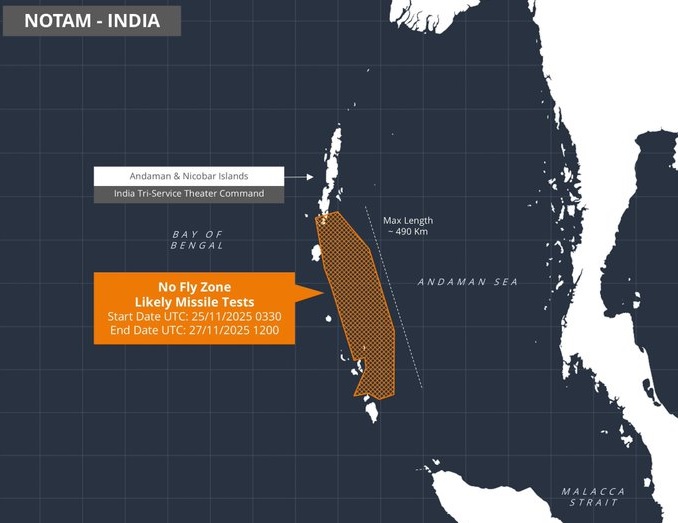
India
India has issued a Notice to Airmen (NOTAM) over the Andaman & Nicobar region, announcing a large no-fly zone from 25 November 2025, 0330 UTC, to 27 November 2025, 1200 UTC, indicating preparations for likely missile tests in the eastern Indian Ocean. The restricted area, mapped southwest of the Andaman Islands, stretches nearly 490 km across the Andaman Sea. Its elongated shape matches previous test corridors used for long-range ballistic or cruise missile trials, suggesting India may be readying a high-range weapon or naval strike system for evaluation. The Andaman & Nicobar Islands hold major strategic importance as home to India’s only Tri-Service Theater Command, giving the military direct reach over the Bay of Bengal and access to the approaches of the Malacca Strait, one of the world’s busiest maritime chokepoints. India has frequently used this region for long-range missile experiments, ship-launched strikes, submarine-launched weapon tests, and joint operations involving the Navy and Air Force. The latest NOTAM aligns with India’s increasing tempo of missile development activities in the Indo-Pacific, where regional military competition continues to intensify. Civilian air traffic transiting between Southeast Asia and mainland India is expected to reroute around the declared danger zone during the 48-hour window. Maritime traffic in the area will also receive navigational advisories, as falling booster stages or debris from missile trials could pose hazards. Such notifications are routine but remain a strong indicator that a live firing or high-altitude test is imminent. While India has not officially confirmed the type of missile to be tested, announcements usually follow after a successful launch. With the NOTAM active until 27 November, defence analysts are watching closely for what may be another significant milestone in India’s expanding long-range strike and strategic deterrence capabilities in the eastern Indian Ocean.
Read More → Posted on 2025-11-18 17:11:13
India
A short video from the Dubai Air Show 2025 triggered a wave of online speculation after viewers noticed water dripping from the Indian Air Force’s LCA Tejas fighter. Some social-media users — including several self-styled “aviation experts” — rushed to claim the aircraft had suffered an oil leak, even suggesting that IAF ground crew used gift bags to plug it. But as aviation engineers confirmed, nothing could be further from the truth. The drip was not oil, not fuel, and not a malfunction — it was simply condensed water draining from the aircraft’s Environmental Control System (ECS), a perfectly normal occurrence for any modern fighter jet on the ground. Condensation, Not Leakage — The Science Behind It Fighter jets use bleed air tapped from the engine compressor to supply the cockpit with breathable, conditioned air. This bleed air is extremely hot, often above 200°C. To make it suitable for the pilot, the ECS rapidly cools and dehumidifies this air through heat exchangers and air cycle machines. This cooling process creates exactly the same effect as an air-conditioner at home: Hot air cools rapidly Moisture in the air condenses Liquid water forms Excess water drains out through designated vents That is all the video showed: condensed water dripping from the ECS drain port. In the warm, humid climate of Dubai, condensation forms even faster. Engineers say the amount of water can increase depending on temperature, humidity, and how long the ECS has been running on the ground. Every modern fighter — whether Rafale, F-16, F/A-18, Eurofighter, Gripen, or Mirage — produces the same effect. Anyone familiar with flight lines has seen the same small puddles beneath aircraft after landing or during static display. It is so normal that technicians barely glance at it. Why the Bag Was Placed Under the Jet At the event venue, the IAF crew placed a bag under the drain point simply to collect the water so it wouldn’t drip onto the exhibition floor or create a puddle where visitors walked. This is standard practice at many international shows. There was no attempt to “plug a leak,” and the bag had nothing to do with maintenance or a technical fault. A Simple Case of Misinterpretation Despite clear engineering explanations, a few commentators — including Pakistan’s ISPR-aligned social-media accounts — circulated claims of “oil leakage,” pointing at the clear liquid under the aircraft. But oil leaks look entirely different: Aviation oil is dark, slick, sticky Fuel evaporates quickly and smells distinct Water is clear and odorless In this case, high-resolution images show that the drip was transparent water, consistent with ECS condensation, not hydraulic fluid or engine oil. Engineering Literacy Gap Fuels Misinformation Experts noted that such misunderstandings are common because many viewers assume any liquid near an aircraft must indicate a malfunction. The opposite is true:Condensed water drainage is a sign that the ECS is functioning exactly as designed. Aircraft technicians emphasize: It is normal to see water dripping after landing It is normal during air shows when aircraft run APU or ECS for hours It is normal in humid climates like Dubai The science is routine — but online speculation often isn’t. Tejas Continues to Impress Despite the Noise Meanwhile, Tejas continued its flying displays confidently, showcasing its agility, precise control, and reliable GE F404 engine performance. Crowds at the air show seemed far more impressed by its sharp turns and compact design than by the misinterpreted condensation drip. Inside the hangars, on the flight line, and in the briefing rooms, the aircraft went about its duties normally — its ECS still humming, still cooling, still producing harmless condensation. The controversy around the LCA Tejas’ “drip” at the Dubai Air Show 2025 highlights a broad challenge: misinformation thrives where technical knowledge is limited. What some called a leak was simple condensation — the same phenomenon behind droplets forming under an air conditioner. No malfunction. No oil leak. No safety issue. Just physics at work. And perhaps a reminder that modern aviation deserves more understanding than knee-jerk speculation.
Read More → Posted on 2025-11-18 13:02:07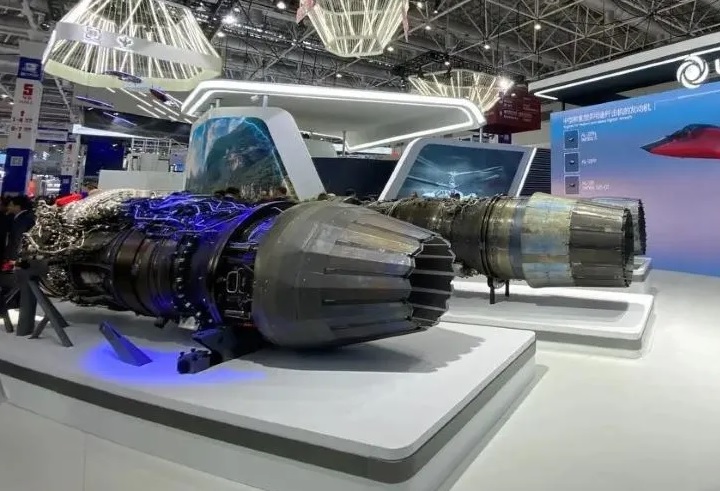
India
When Indian engineers began drafting the Super Sukhoi upgrade blueprint for the Su-30MKI, they expected the engine debate to be simple. Russia’s AL-41F1S, already powering the Su-35 and the Su-30SM2, was the natural choice: proven, available, and familiar. But somewhere inside Russia’s engine archives sat a different machine—one that the Russian Air Force never adopted, one that never made it past the prototype stage, and one that was quietly offered to only one country: India. That engine is the AL-177S, a fifth-generation derivative built from the same technological DNA as the Su-57’s Izdeliye 30 (AL-51). For years, it remained a footnote, an engine intended for export but starved of Russian funding. Now, as India searches for a truly transformational powerplant for its largest fighter fleet, the AL-177S is suddenly back in the conversation. A Fifth-Gen Heart Built for a Fourth-Gen Airframe The AL-177S was designed with a very specific purpose in mind:to give older Flanker-family fighters a fifth-generation engine without a fifth-generation airframe. It matches the AL-31’s inlet diameter, length and weight almost exactly—meaning it can slide into a Su-30MKI without needing to rebuild the aircraft. Yet everything inside it is different. Its dry thrust climbs to 88–90 kN, and with afterburner it punches up to 142 kN, nearly 16% more than the original AL-31F. Engineers who worked on the testbeds quietly noted that the engine could push a Flanker into short bursts of supercruise, something the aircraft was never designed for. Then came the numbers that caught New Delhi’s attention: Service life: 6,000 hours (three times the AL-31, and far above the AL-41’s ~4,000 hours) Fuel burn improvements across the board— 3% in cruise, 6% in max power, 15% in boosted modes For a heavy fighter like the Su-30MKI, this is transformational. Less fuel burned means longer patrol time over the Indian Ocean, more comfortable operations in the Himalayas, and lower lifetime costs for a fleet that India plans to fly well into the 2040s. Why Russia Never Used the AL-177S At first, it may seem odd that Russia developed a fifth-generation engine but never used it. The reason wasn’t performance—it was money and priorities. Russia was fully focused on the Su-57 stealth fighter and its new AL-51 engine. Almost all funding went there. Moscow didn’t want to split its budget between two advanced engines. Because of this, the AL-177S ended up as what one Russian engineer called “a fifth-gen engine waiting for someone to buy it.”That “someone” was meant to be India. Russia’s idea was simple:India would help pay for final testing and certification, become the main customer, and allow Russia to produce the engine in larger numbers for export. For its own Su-30SM upgrades, Russia picked the easier option—the AL-41F1S. It was already in mass production, already tested, and cheaper to adopt. So the AL-177S wasn’t cancelled for technical reasons.It just never received the funding to enter service. India’s Dilemma: The Safe Choice vs. the Leap Forward For India, the AL-41F1S remains the safe option. It doubles the Su-30’s service life, offers more thrust than the AL-31, and requires the least engineering work. It can be delivered quickly, installed quickly, and operated without risk. But the AL-177S tells a different story.It isn’t an upgradeit’s a generational shift. Compare the two: AL-41F1S (117S) Dry thrust: ~8,900 kgf Afterburner: ~14,500 kgf Service life: ~4,000 hours AL-177S (5th Gen) Dry thrust: ~9,500–9,800 kgf Afterburner: ~15,000+ kgf Service life: ~6,000 hours The 177S inherits the metallurgy and digital control systems Russia had designed for its future stealth fighters. It breathes more efficiently, runs cooler, accelerates faster and drinks less fuel. If installed on India’s Su-30MKI, the aircraft would take on a new identity—a heavy fighter with fifth-generation endurance and near-fifth-gen thrust, capable of carrying heavier loads deeper into contested airspace. A New Role for the Super Sukhoi India plans to modernize the Su-30MKI with the Uttam AESA radar, an advanced electronic warfare suite, new mission computers, and a new generation of weapons including Astra Mk3, the Rudram series, and BrahMos-NG. With the AL-41 engine, the aircraft becomes competitive again and returns to the level of a strong 4.5-generation fighter. But with the AL-177S, the Su-30MKI becomes something far more powerful—an Indo-Pacific heavyweight capable of challenging China’s J-16 in altitude performance, acceleration, and combat range. The aircraft gains deeper reach into the Indian Ocean, stronger performance over the Himalayas, and far better fuel economy during long patrol missions. Its higher thrust allows it to carry heavier stand-off weapons, and its longer service life brings down long-term operating costs. In this configuration, the Su-30MKI begins to move into a space between a 4.5-generation fighter and a true fifth-generation platform. The Strategic Question: Will India Fund the Engine Russia Didn’t? The AL-177S can only become a real, operational engine if India decides to fund its development. That decision carries major strategic weight. If New Delhi commits, the country gains a stake in a fifth-generation engine line, shared intellectual property, a role in future production, and stronger export leverage. It also gains independence from the AL-31 and AL-41 supply chains. This would be another BrahMos-style partnership with long-lasting global implications. If India chooses not to proceed, the AL-177S may simply disappear back into Russian archives, becoming another advanced project that never reached its full potential. A Choice Between the Present and the Future The AL-41F1S is the engine India can adopt today.The AL-177S is the engine that would define India’s Su-30 fleet for the next 20 years. Russia built the AL-177S for a customer that could take it farther than Russia ever would. Today, India is that customer. And as the Super Sukhoi program enters its decisive phase, New Delhi stands at a rare crossroads: Upgrade the Su-30MKI to modern standards or transform it into a platform far beyond anything Russia ever imagined. In the shadows of engine test cells in Moscow, the AL-177S still waits for a fighter to call home. India may be the only nation capable of giving it one.
Read More → Posted on 2025-11-18 11:55:14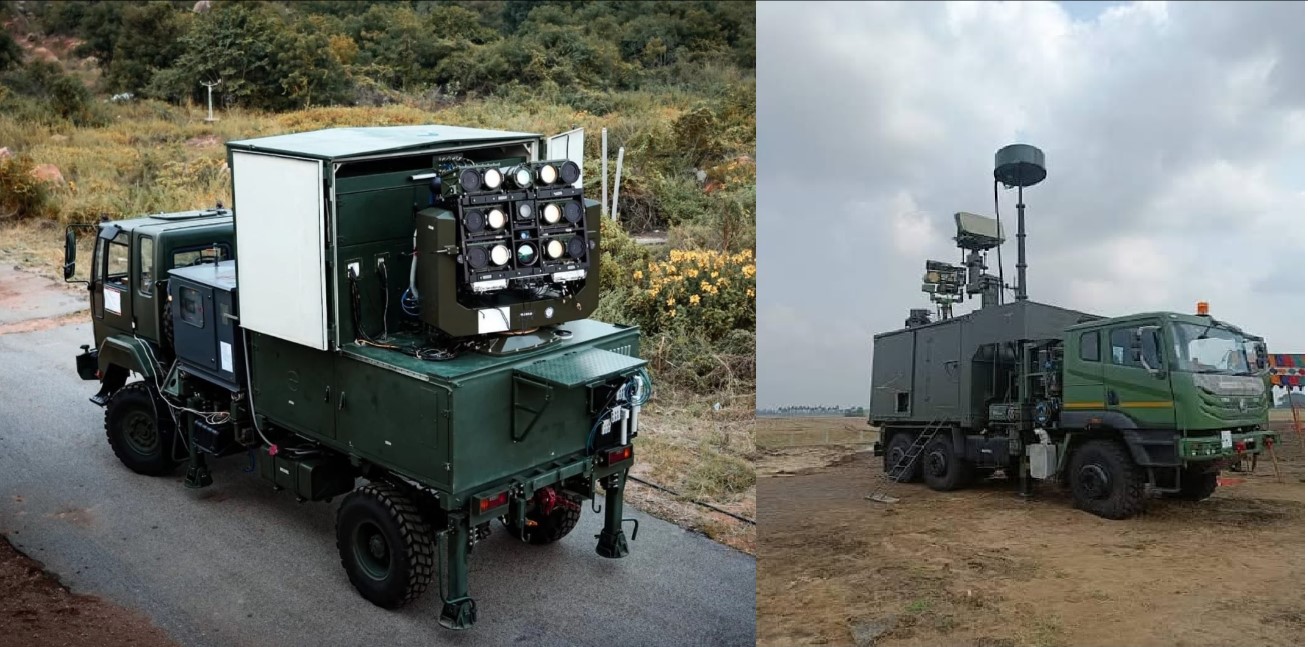
India
The Defence Research and Development Organisation (DRDO) is set to deliver an initial batch of its laser-based counter-drone system to the Indian Army and the Indian Air Force (IAF), marking the first induction of this class of weapon system in India. The system, designated the Integrated Drone Detection & Interdiction System (Mk-2) (IDD&IS Mk-2), boasts a 10 kW directed-energy laser and an engagement range of up to 2 km. Initial Order & Future Plans Details emerging from defence sources indicate that the Army and IAF will place an initial order for 17 units of the IDD&IS Mk-2. The quantity is modest by major procurement standards, but reflects caution: this is a “first series” deployment, ahead of further orders pending full operational satisfaction by the services. According to officials, “once the armed forces are satisfied with system performance, follow-on orders will be placed.” Officials emphasise that, worldwide, very few militaries have field-ed pure laser anti-drone weapons, so the Indian decision to procure initially is seen as prudent. System Specifications & Role The IDD&IS Mk-2 incorporates detection, tracking and hard-kill interdiction of unmanned aerial vehicles (UAVs). It uses a 10 kW laser module capable of focusing sufficient energy to disable or destroy small hostile drones within approximately 2 km. The system integrates radar or electro-optical sensors for detection, and combines ‘soft kill’ methods (signal jamming/spoofing) with the high-power laser for ‘hard kill’. While DRDO has not publicly confirmed all technical details of the Mk-2 version, informed commentary notes the 10 kW figure and ~2 km range as key performance parameters. Strategic Context & Global Landscape Laser-directed energy weapons (DEWs) remain at the cutting edge of air-defence technology. Until recently, only a handful of countries—such as Israel, the United States and China—have publicly deployed or demonstrated such systems. Indian procurement of the IDD&IS Mk-2 is therefore significant: it not only addresses the growing threat of drone proliferation but also marks a step toward future high-energy weaponisation. Defence analysts say that by placing a limited initial order, the Indian services are balancing “early adoption” of advanced technology with risk management: operational reliability, maintainability and cost per engagement still need to be proven in realistic conditions. DRDO’s Higher-Power Laser Programme Parallel to the IDD&IS Mk-2, DRDO is working on laser systems of much higher power. In April 2025 it publicly demonstrated a truck-mounted 30 kW laser weapon system (Mk-II (A)) at the National Open Air Range (NOAR) in Kurnool, capable of engaging drones, helicopter-type aerial threats, sensors and surveillance antennas. The 30 kW system reportedly uses multiple laser modules combined to achieve high output and is aimed at “hard kill” of targets at longer ranges (up to 4 km in some reports). DRDO has also declared that development efforts are ongoing for even higher-power systems (50-100 kW class) to counter cruise missiles, incoming missiles and more resilient airborne threats. Implications & Next Steps For the Army and IAF, the adoption of the IDD&IS Mk-2 provides a new layer of drone defence—one that goes beyond traditional kinetic interceptors or jamming. The laser system offers very rapid engagement, reduced logistical burden, and potentially lower cost per shot. The modest initial order of 17 units suggests that the services will evaluate the system under field conditions—deployment, maintainability, weather/optics challenges, integration with command networks—before larger scale procurement. DRDO and industry partners will likely accelerate work on follow-on lasers and ruggedisation of the system. From a manufacturing perspective, DRDO’s involvement signals that the Indian defence eco-system is moving toward greater self-reliance in directed-energy weapons. Caution & Operational Considerations While the technology is promising, practitioners caution that lasers have practical limitations: weather, line-of-sight constraints, thermal blooming, target coatings, and power-management demands. Field trials and service use will reveal how well the Mk-2 system handles these real-world factors. Also, the fact that very few laser DEWs are deployed in combat means that proof of concept remains emerging. This underlines why India has opted for an incremental procurement trajectory.
Read More → Posted on 2025-11-16 17:27:26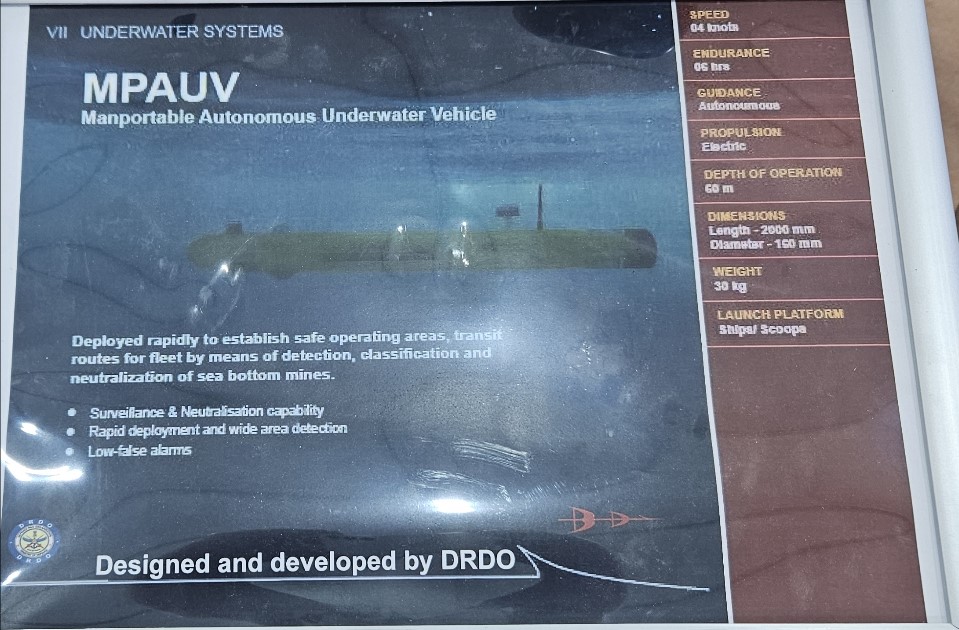
India
India’s Defence Research and Development Organisation (DRDO) has unveiled its latest underwater platform, the Manportable Autonomous Underwater Vehicle (MPAUV), a compact mine-hunting and surveillance system designed for rapid deployment in coastal and littoral zones. Displayed at a recent defence exhibition, the system reflects India’s accelerating push to expand its indigenous autonomous underwater capabilities. Designed for Rapid Underwater Missions According to details released at the venue, the MPAUV is intended to be deployed quickly to secure safe operating areas and transit routes for naval vessels by detecting, classifying and neutralising sea-bottom mines. The vehicle is engineered to support fleets with fast-response underwater reconnaissance in both peacetime and conflict. Despite its man-portable form, the system is built to deliver high underwater performance suited for mine countermeasure (MCM) operations. Capabilities and Mission Role DRDO states that the MPAUV integrates: Surveillance & Neutralisation capability Rapid deployment with wide-area detection Low-false alarms for high mission reliability By combining autonomy with compactness, the platform enables underwater route clearance and area sanitisation without the need for large support vessels. Technical Specifications Key specifications displayed include: Speed: 4 knots Endurance: 6 hours Propulsion: Electric Guidance: Autonomous Operating Depth: 60 metres Dimensions: 2000 mm (length), 160 mm (diameter) Weight: 30 kg Launch Platform: Ship / SCOOPA compatible The MPAUV’s lightweight design allows operators to deploy it swiftly from small boats or larger ships, greatly enhancing flexibility in shallow-water operations. Strengthening Indigenous Underwater Systems The platform—marked “Designed and developed by DRDO”—highlights India’s growing commitment to unmanned underwater systems. As global navies increasingly rely on AUVs for mine warfare, seabed mapping, and coastal surveillance, DRDO’s MPAUV is set to become an essential asset in the Indian Navy’s evolving undersea operations. The system adds to India’s expanding catalogue of indigenous marine robotics intended to bolster maritime security across the Indian Ocean Region.
Read More → Posted on 2025-11-16 15:42:27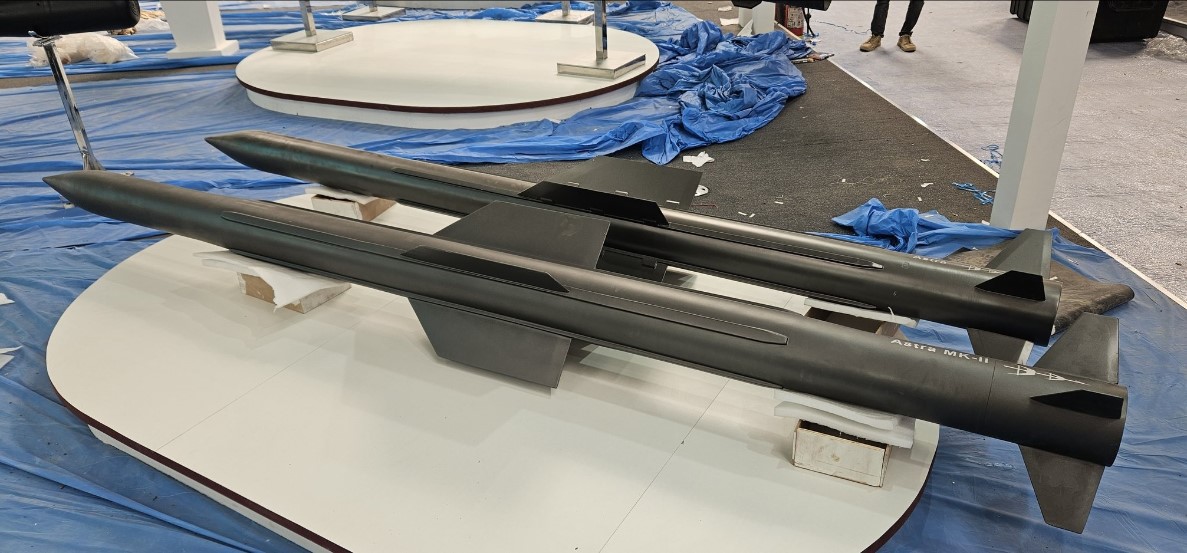
India
Fresh images shared by defence analyst @ReviewVayu have offered the clearest technical confirmation yet that India’s new Astra Mk-II air-to-air missile is a substantially larger and more advanced weapon than the operational Astra Mk-I. The missiles, displayed together at Aero India 2025 and again at the Department of Defence Production pavilion during the India International Trade Fair in New Delhi, have allowed analysts to closely study the structural and propulsion differences between the two variants. Experts observing the latest photographs note that the Astra Mk-II is both longer and wider, signalling a major redesign focused on extending range and terminal performance. The most visible upgrade is its expanded propulsion system: the motor diameter increases from 178 mm in the Mk-I to 190 mm in the Mk-II, confirming additional propellant volume. The images also reveal a distinctive tapered mid-section, a feature absent in Astra Mk-I. Analysts believe this is because the warhead and guidance section on the Mk-II retains the narrower Mk-I diameter, while the motor section has been widened, creating a stepped profile where the two meet. Further study of the display models suggests that the Mk-II incorporates a dual-pulse rocket motor, a major leap from the single-pulse Mk-I. Defence specialists note that both pulse-1 and pulse-2 motors use aft finocyl grain configurations, an advanced grain geometry that supports controlled burn characteristics, improved thrust efficiency, and sustained terminal energy. This allows the missile to re-energise itself mid-flight, enhancing manoeuvrability and kill probability at longer distances. Although the Ministry of Defence has not officially announced the range of Astra Mk-II, the enlarged motor, added fuel volume, and dual-pulse system strongly indicate a range well beyond 150 km, with many analysts estimating up to 200 km in optimal launch conditions. In comparison, the current Astra Mk-I has a maximum range of 110 km. The new imagery also highlights that the Mk-II’s mid-section is not only longer but noticeably wider, reinforcing that the missile carries more propellant than its predecessor. The Astra Mk-II was first unveiled to the public at Aero India 2025, where its expanded dimensions drew significant attention. Its reappearance at the ongoing trade fair has renewed interest among defence observers, who continue to express curiosity about the internal grain geometry of both propulsion pulses—details that remain classified. With a larger airframe, dual-pulse propulsion, and an improved flight profile, the Astra Mk-II marks one of the most significant advancements in India’s air-to-air missile development. The missile is expected to strengthen the Indian Air Force’s long-range engagement capabilities and narrow the gap with global next-generation BVR platforms as testing progresses and induction draws closer.
Read More → Posted on 2025-11-16 14:42:07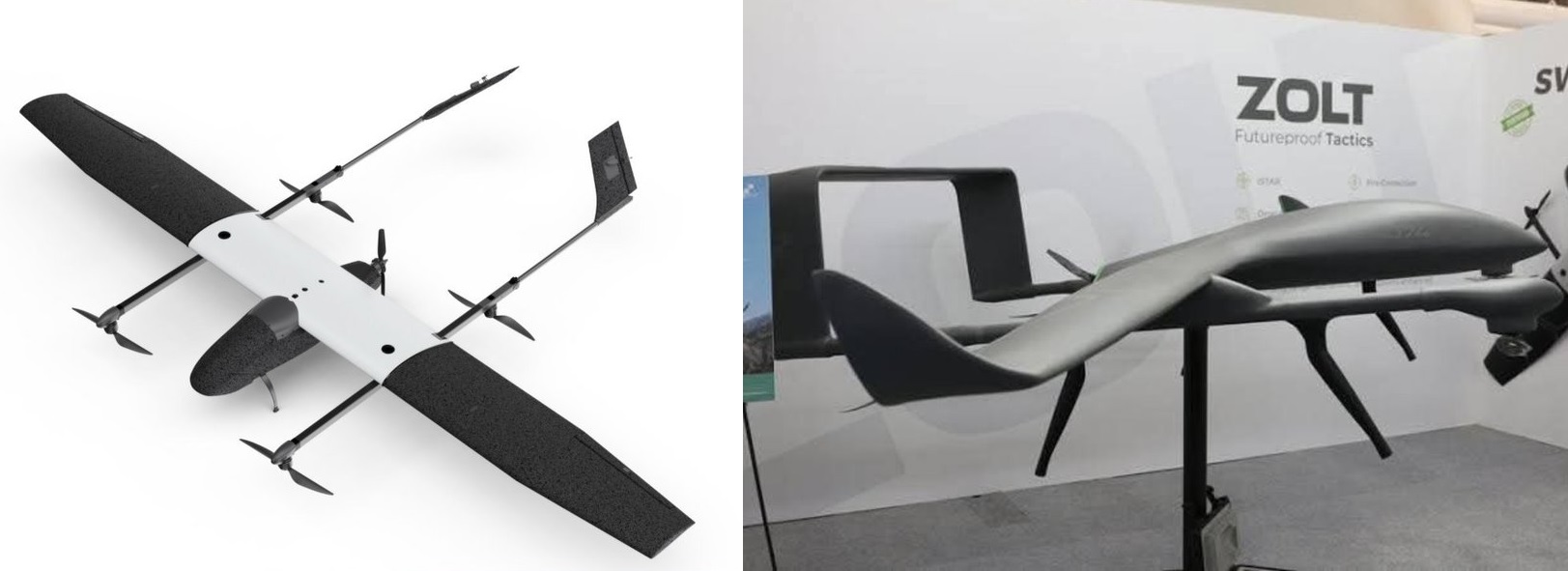
India
In a significant boost to India’s indigenous drone ecosystem, ideaForge Technology Limited has secured a major Capital Emergency Procurement order from the Indian Army, comprising its latest ZOLT Tactical UAV worth ₹75 crore and an additional ₹30-crore order for the high-performance VTOL Hybrid SWITCH V2 unmanned aerial system. The combined value of the contract stands at approximately ₹105 crore, marking one of the largest recent procurements of Indian-made UAVs. The order is the culmination of months of rigorous field evaluations, including Electronic Warfare (EW) trials, performance checks in GNSS-denied scenarios, and stringent assessments of the country of origin — a priority for the Army amid rising demand for trusted and secure platforms. ZOLT: India’s New Multi-Role Tactical Workhorse Unveiled earlier this year at Aero India, the ZOLT Tactical UAV is ideaForge’s newest next-generation platform, designed specifically for modern battlefield requirements. The system is purpose-built for long-range ISR (Intelligence, Surveillance & Reconnaissance), precision payload delivery, and autonomous operations in complex combat zones. The Army’s choice signals growing reliance on platforms that can withstand high-threat, high-altitude, and signal-contested environments, where ZOLT has demonstrated remarkable resilience. Key capabilities include: Advanced Electronic Counter-Countermeasures (ECCM) Autonomous operation in GNSS-denied conditions Robust anti-jamming features High-endurance surveillance payloads Secure communication links for contested battlefields ideaForge describes ZOLT as a “future-ready ISR asset” engineered to operate even under aggressive EW interference, radar exposure, and communication disruption. SWITCH V2: Battle-Tested VTOL UAV Gets Fresh Induction The order also includes the SWITCH V2, a hybrid Vertical Take-Off and Landing (VTOL) drone that has already been deployed in multiple forward areas. Known for its all-terrain versatility, SWITCH V2 combines fixed-wing endurance with rotor-driven mobility, allowing rapid deployment from rugged Himalayan terrain to dense border zones. The platform has been widely appreciated for: High-altitude performance Long-endurance ISR missions Quick setup for frontline deployment Proven combat reliability in active conflict environments Given its operational history, the additional order reflects the Army’s continued confidence in the drone’s battlefield utility. A Milestone for Indian Drone Manufacturing ideaForge co-founder and CEO Ankit Mehta said the procurement reflects the Army’s trust in the company’s innovation-focused ecosystem.“This order underscores our commitment to delivering best-in-class systems to our soldiers and creating long-term value for our shareholders while actively shaping the future of this technology,” he stated. ideaForge has emerged as one of India’s most successful defence UAV manufacturers, with multiple products already inducted into the armed forces and paramilitary services. The company continues to expand its manufacturing footprint and R&D investments, especially in autonomy, secure communication systems, advanced AI-enabled payloads, and EW-resilient navigation technologies. Strategic Impact and Future Outlook The procurement aligns with India’s urgent push for indigenization in defence technologies, especially unmanned systems that can operate in the shadow of electronic warfare threats — a defining feature of modern conflicts from Ukraine to West Asia. With escalating tensions across diverse frontlines, including the northern borders, the Army’s focus is shifting toward persistent ISR, real-time threat monitoring, and precision force protection, areas where platforms like ZOLT and SWITCH V2 offer substantial advantages. The new order not only strengthens the Army’s tactical ISR capabilities but also reinforces India’s ambition to become a global drone technology hub, driven by deep-tech manufacturers like ideaForge.
Read More → Posted on 2025-11-15 16:11:54Search
Top Trending in 24 Hours
-
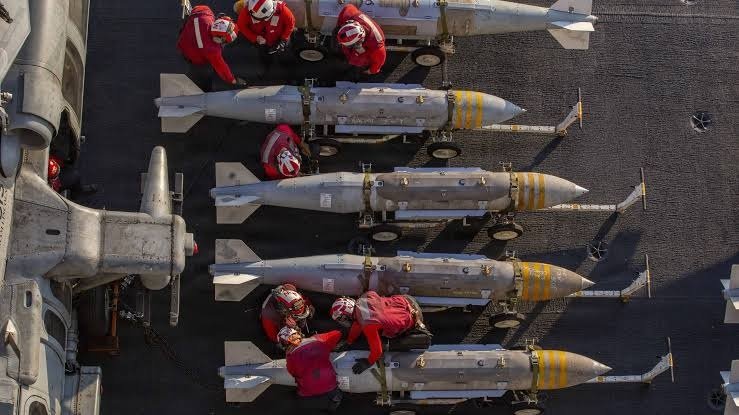 Pentagon Inspector General Report Finds Iran War Caused U.S. Ammunition Shortfalls and Industrial Bottlenecks
-
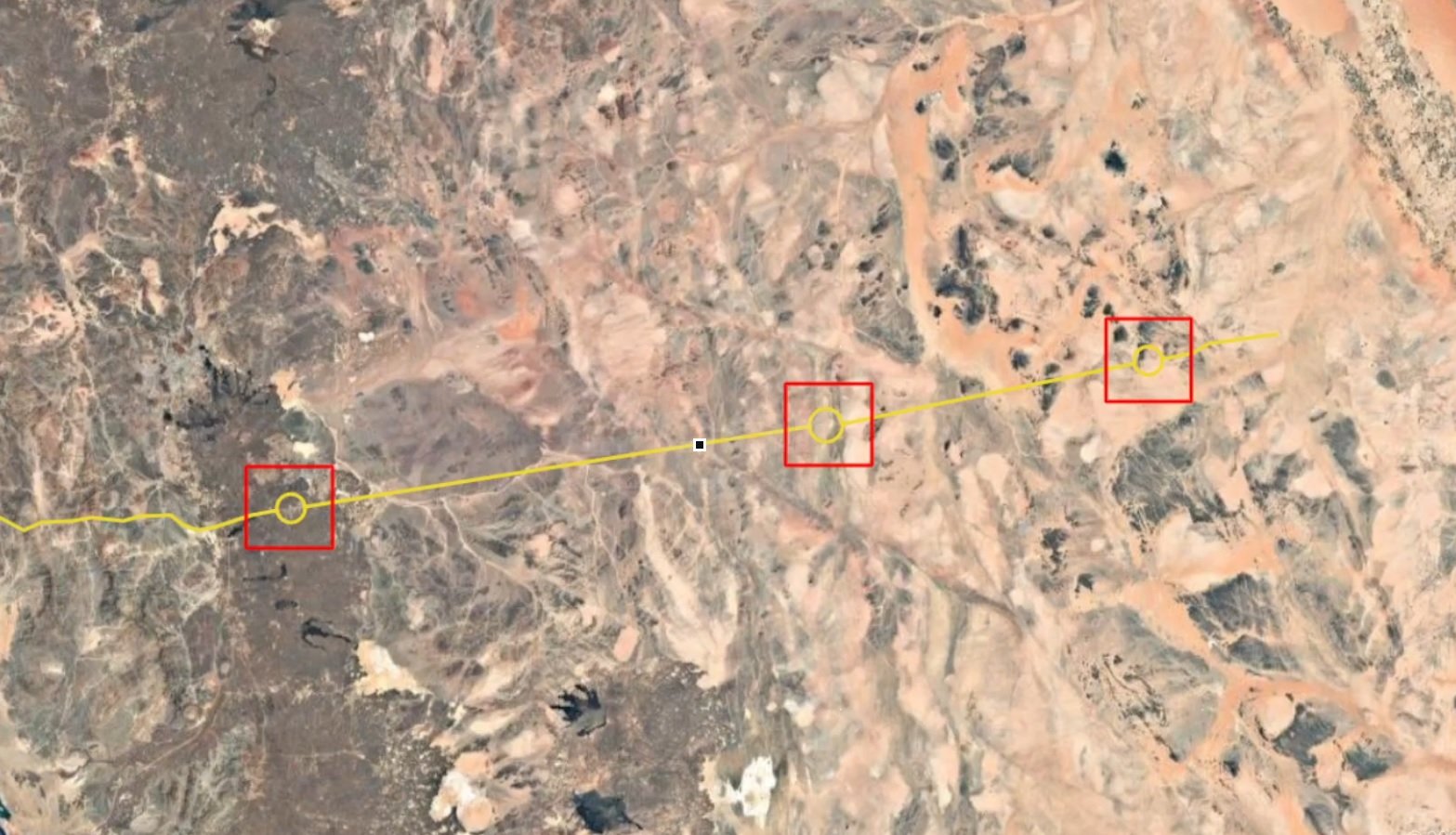 Satellite Imagery Shows Extensive Damage to Saudi Arabia’s East-West Oil Pipeline, Indicating More Than a Single Strike
-
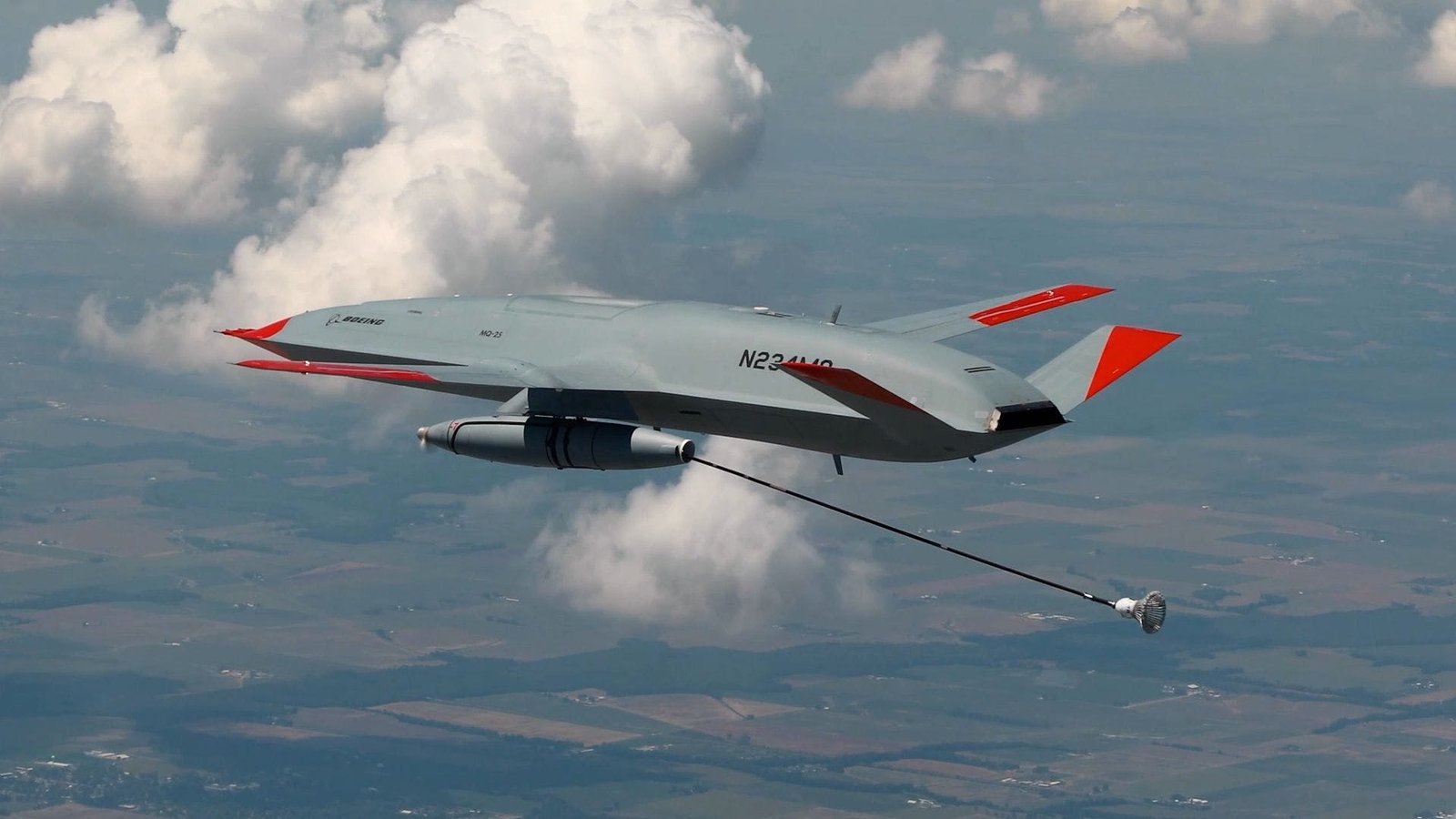 U.S. Navy Awards Boeing $562 Million Contract for First Production MQ-25A Stingray Tanker Drones
-
 Pentagon and Honeywell Complete Four-Hour Pacific Flight Using Quantum Magnetic Navigation Without GPS
-
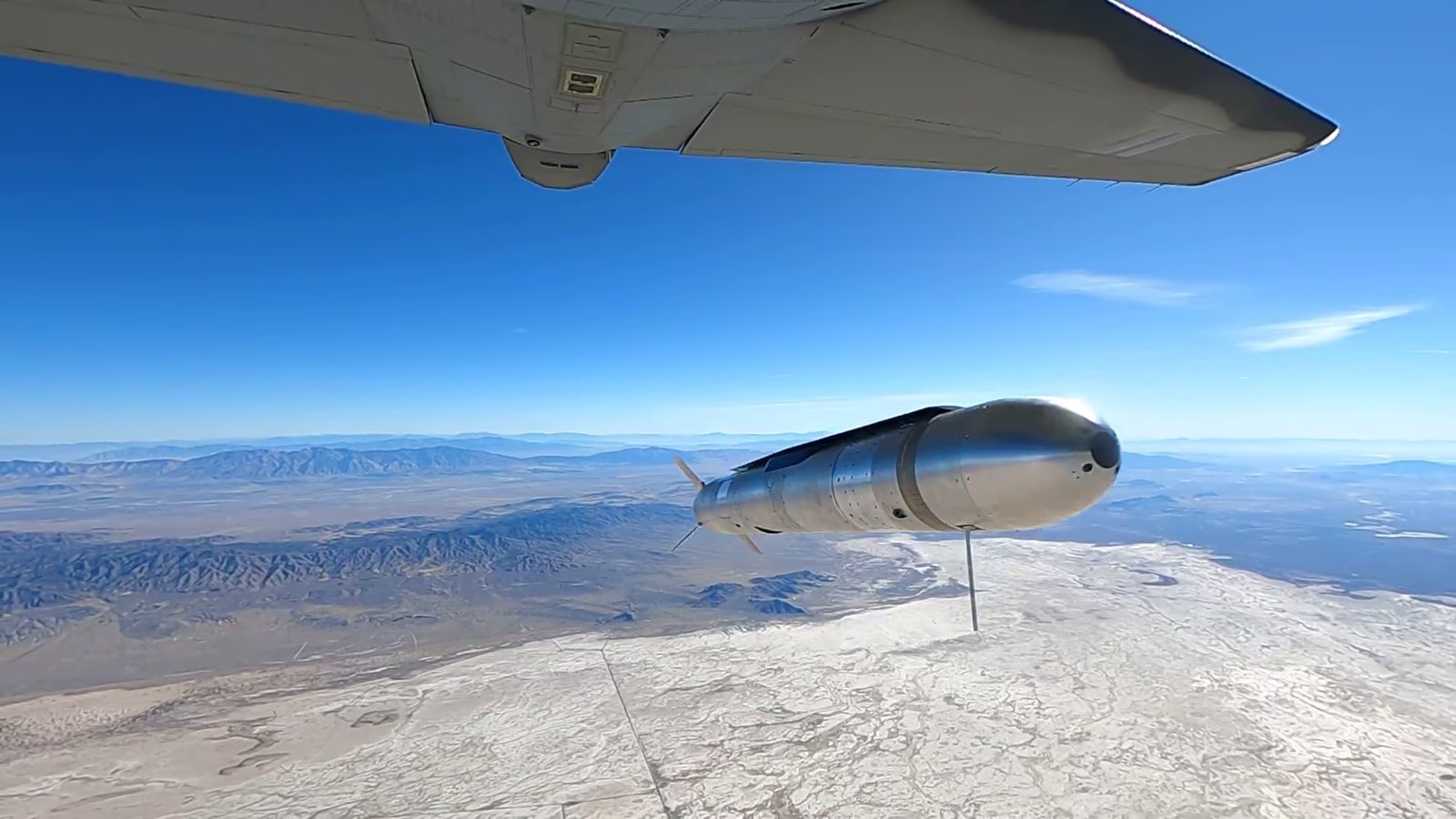 U.S. Air Force Special Operations Command Clears AGM-190A Havoc Spear for Wider Service After Combat Evaluation in Africa
-
 U.S. Confirms Deployment of On-Orbit Space Control Weapons for First Time
-
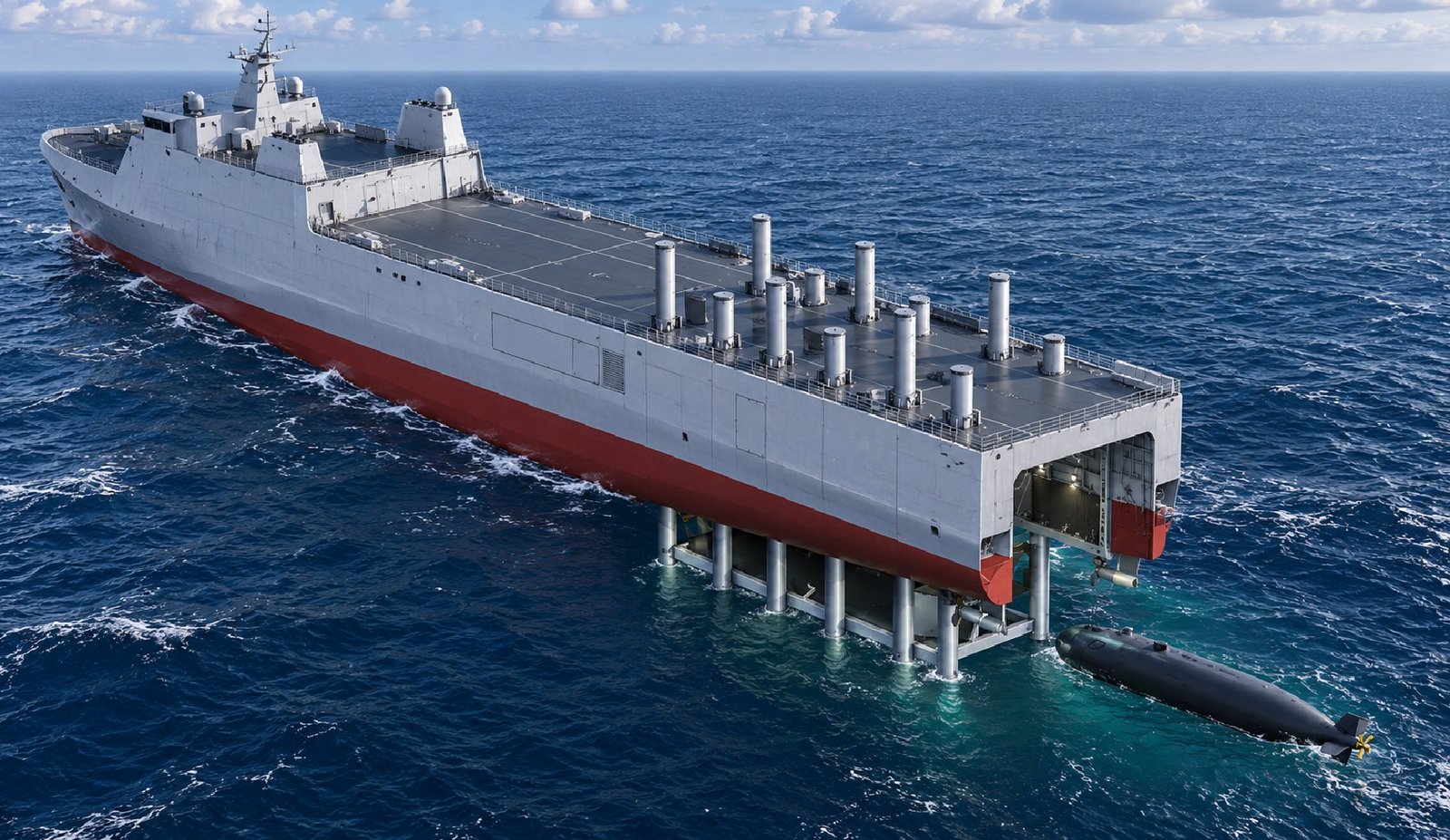 China Builds New Shanghai Vessel to Serve as Mothership for Large Uncrewed Submarines
-
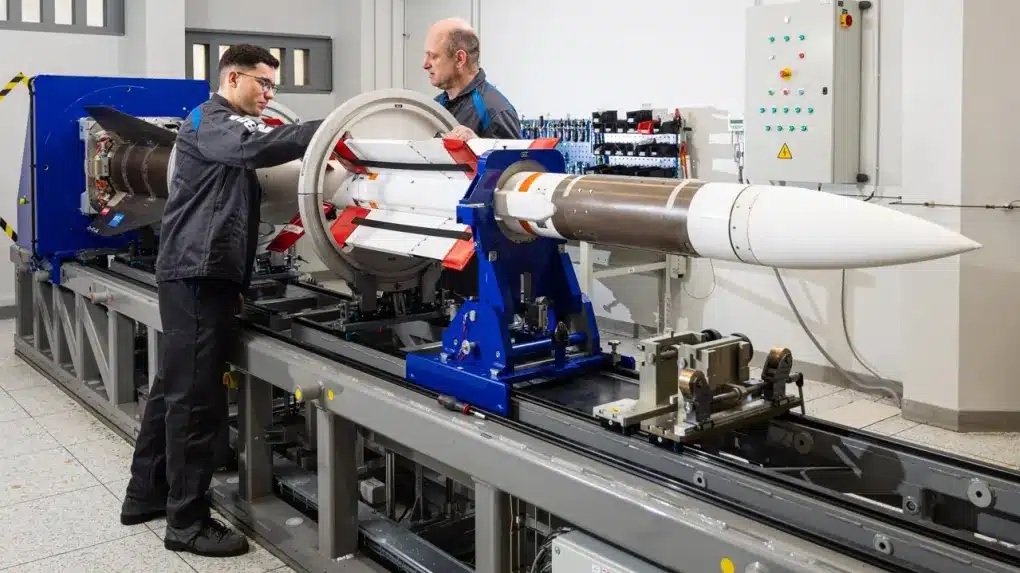 MBDA to Build New Missile Production Plant Near Orleans to Expand Missile Production
Top Trending in 4 Days
-
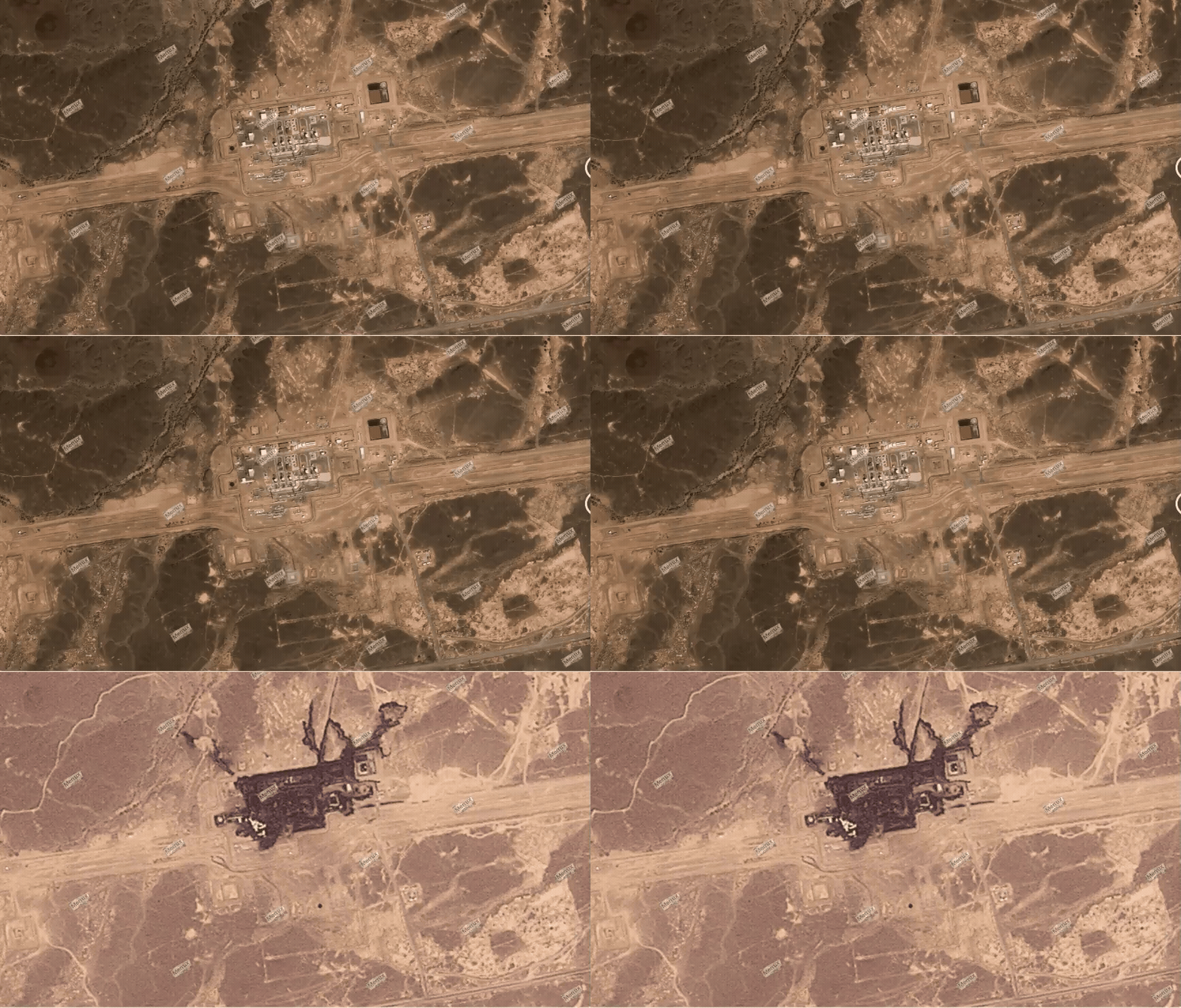 Satellite Imagery Shows Heavy Damage to Saudi East–West Oil Pipeline Pumping Stations
-
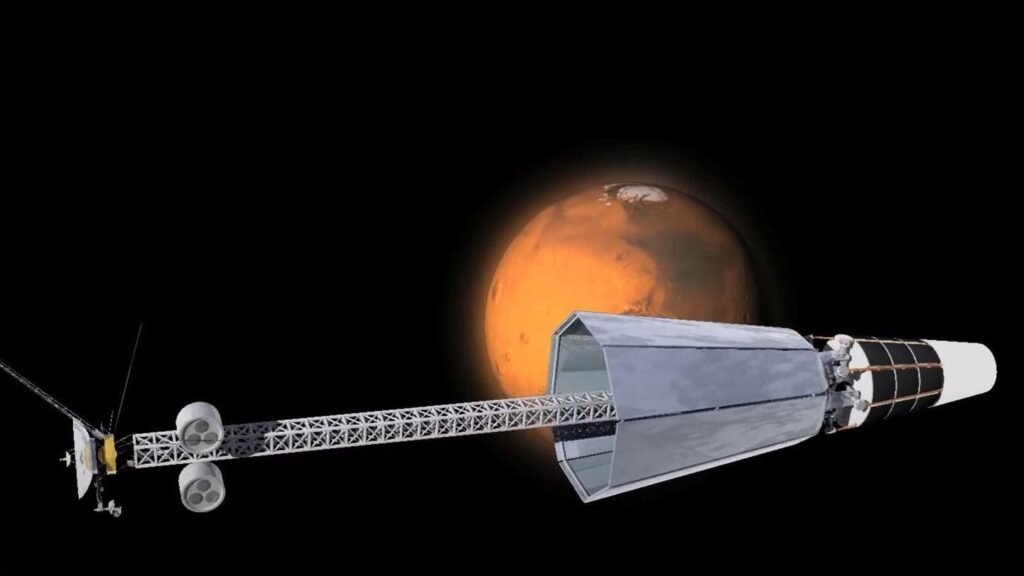 U.S. Air Force Awards Antares $161 Million to Develop Nuclear Reactor for Spacecraft
-
 Pentagon Awards BlueHalo Up to $99.8 Million Contract for Orbital Battlespace R&D Program
-
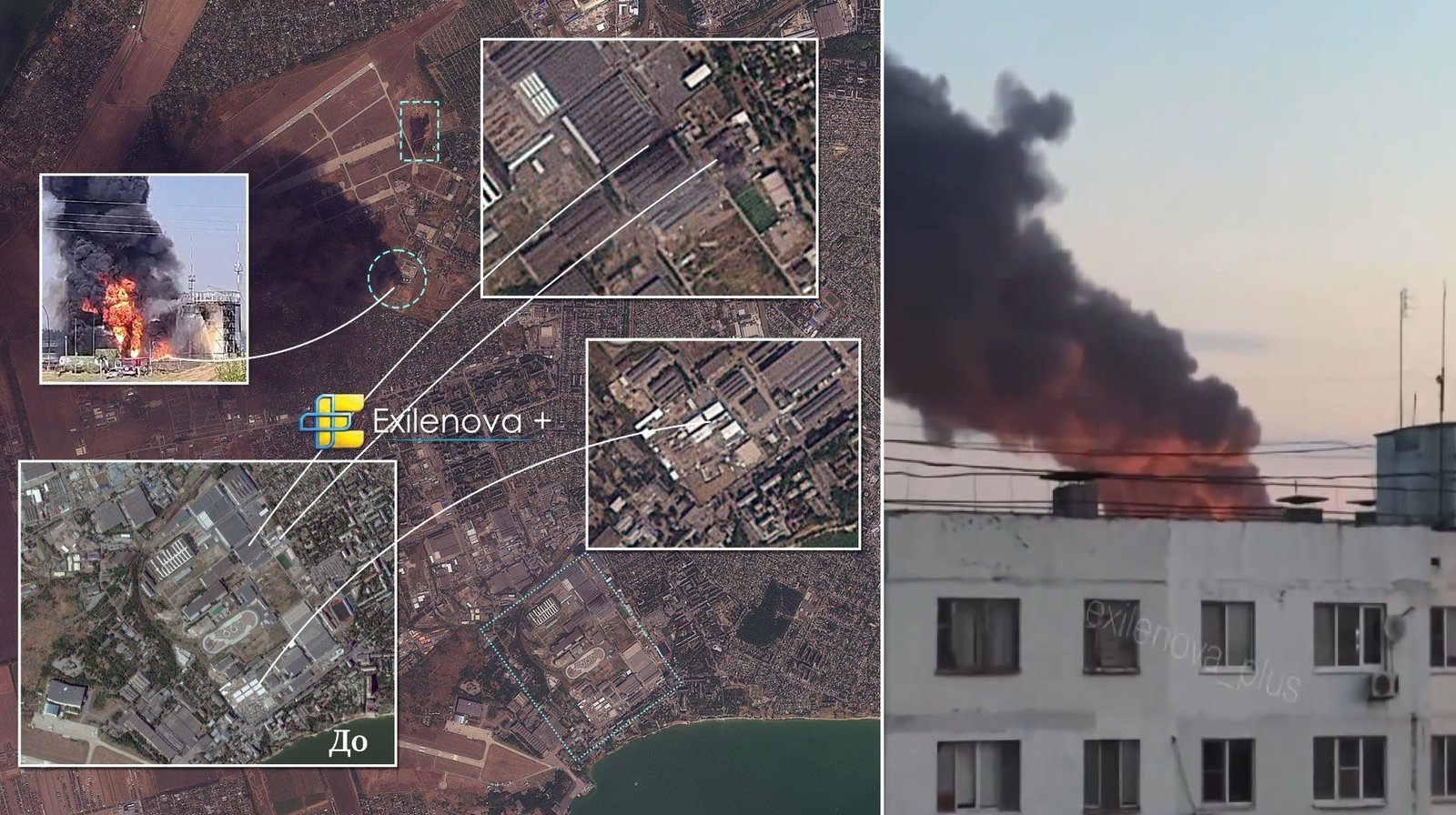 Ukrainian Drones Strike Russian UAV Manufacturer and Chemical Plants in Taganrog and Tolyatti
-
 U.S. Officials Link Chinese Satellite Imagery to Iranian Strike That Killed Three American Soldiers in Jordan
-
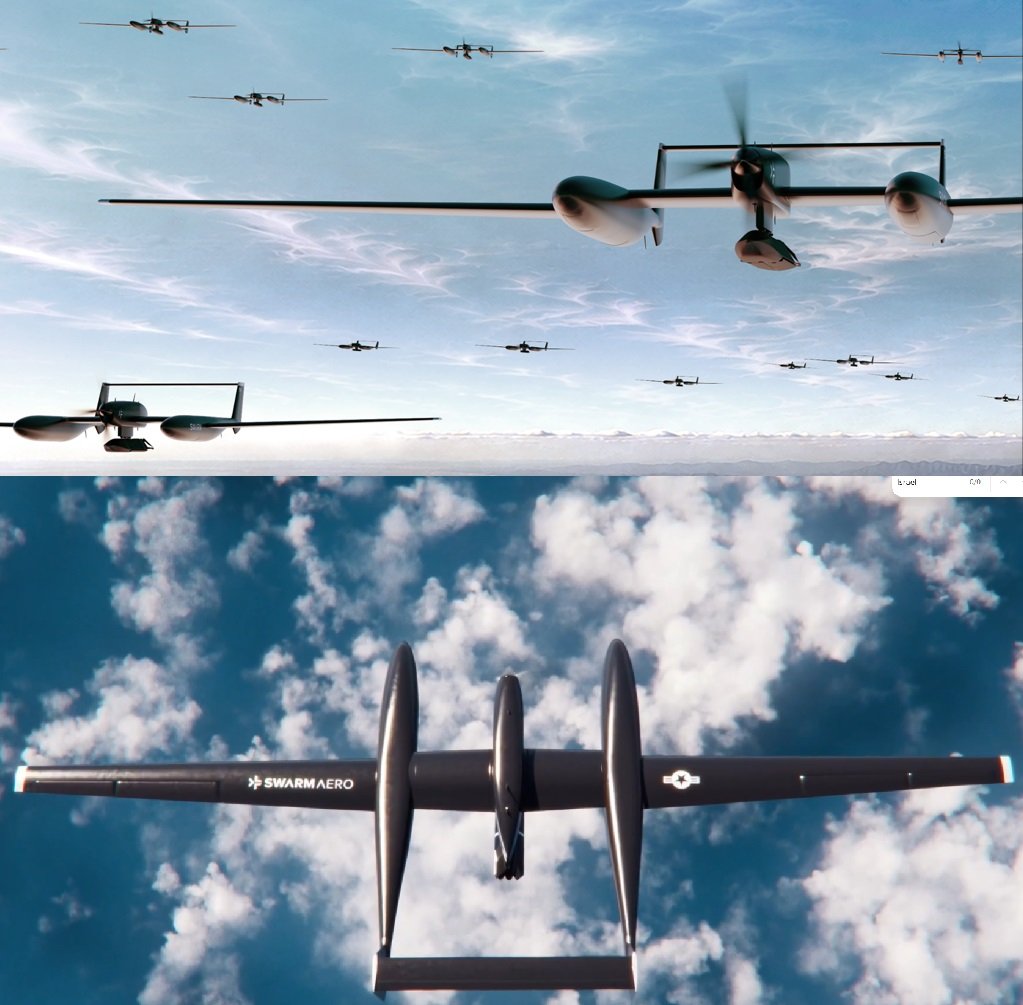 U.S. Firm Swarm Aero Unveils Gamera Group 5 UAS With 9,000-Nautical-Mile Range and Heavy Strike Payload
-
 DRDO Demonstrates Indigenous 3.5×3 mm GaN Chip Delivering 30 Watts for Next-Generation Radars and Electronic Warfare
-
 MBDA and Poland’s WITU Advance Low-Cost Supersonic Interceptor Against Swarm Attacks, Seeker Trials Successfully Completed