
India
Bhairav Robotics has unveiled “Vrishabh” Combat ATV, an advanced unmanned ground platform (UGV) designed to take on some of the most dangerous jobs on the battlefield – from direct combat and intelligence gathering to casualty evacuation and front-line logistics support. The system reflects a growing push within India’s defence ecosystem to field indigenous autonomous and robotic solutions for high-risk, high-tempo operations. Multirole Combat Support Vehicle According to the company, Vrishabh is built on a robust all-terrain vehicle chassis and is engineered to operate in Combat, ISR (Intelligence, Surveillance & Reconnaissance), Casualty Evacuation (Cas Evac) and Logistics roles. The unmanned platform can be tele-operated or used in semi-autonomous modes, allowing troops to push a sensor or weapon forward without exposing personnel to direct fire, ambush, mines or improvised explosive devices. In its ISR configuration, Vrishabh can carry electro-optical and infrared cameras, along with other mission payloads, to provide live video and situational awareness from the forward edge of the battle area. In logistics and Cas Evac roles, the flatbed/utility layout can be adapted to carry ammunition, rations, water, or to mount a stretcher frame for evacuating wounded soldiers from under fire. Integrated with Rakshak Autonomous Weapon Station A key feature of Vrishabh is its seamless integration with Bhairav Robotics’ “Rakshak” Autonomous Weapon Station (AWS), which has already been showcased as a modular, AI-enabled remote weapon system. Rakshak is designed to convert medium machine guns (MMG), assault rifles and other weapons into autonomous or remotely controlled stations, using long-range stereo vision and artificial-intelligence–based detection and tracking. The system offers human recognition ranges of up to 2 km by day and 1 km by night and incorporates in-built ballistic correction for accurate fire. Mounted on Vrishabh, Rakshak can host weapons such as MMGs, automatic grenade systems and heavy machine guns like the NSVT, giving the small unmanned vehicle significant firepower for base defence, convoy escort, perimeter security or urban combat support. The combination effectively turns Vrishabh into a compact unmanned combat vehicle that can move ahead of infantry, detect threats and deliver suppressive fire while the operator remains under cover. Stabilised Fire and On-the-Move Engagement Bhairav Robotics says Vrishabh features two-axis stabilisation, enabling the onboard weapon station or sensor mast to remain steady even when the vehicle is moving over uneven terrain. This stabilisation is critical for accurate firing on the move and for obtaining usable ISR imagery in cross-country conditions, where vibration normally degrades performance. The stabilisation approach draws on the firm’s broader work in motion-compensation platforms like “Dhruv,” a 3-DOF stabilisation system developed for keeping payloads level against vehicle motion and environmental disturbances. This technology base helps Vrishabh maintain weapon or camera alignment, improving first-round hit probability and target tracking. Designed for Indian Terrain and Tactics Though detailed specifications of Vrishabh – such as weight, payload, endurance and range – have not yet been publicly released, the Combat ATV concept is clearly tailored for rugged Indian terrain and high-altitude or desert deployments, where traditional manned patrols face fatigue and exposure. The ATV-style chassis is expected to offer good off-road mobility, while its modular architecture allows commanders to switch between: a combat configuration with Rakshak AWS for fire support, an ISR configuration with mast-mounted sensors, a logistics/Cas Evac configuration with cargo or stretcher fittings. Such flexibility is intended to reduce the logistical footprint: the same unmanned platform can be re-tasked as the tactical situation evolves. Part of a Growing Indigenous Robotics Ecosystem Vrishabh joins a growing portfolio of systems from Bhairav Robotics, which already includes the “Shvana” armed quadruped UGV – a robotic dog equipped with cameras, audio sensors, AI-based perception and options to carry munitions or electronic warfare payloads – and Prabal quasi-direct-drive actuators for legged robots and weapon stations. Together with Rakshak, these products position the company as one of several Indian start-ups trying to offer integrated unmanned and autonomous solutions for defence and homeland security, in line with New Delhi’s emphasis on “Atmanirbhar Bharat” (self-reliant India) in critical defence technologies. Implications for Future Battlefield Operations For the armed forces, systems like Vrishabh could eventually be used to: probe suspected ambush zones or IED-prone stretches before manned vehicles enter, provide 24/7 surveillance around temporary posts and forward bases, act as armed escorts for supply convoys or infantry sections in built-up areas, and perform rapid casualty evacuation from locations where sending a manned vehicle or stretcher party would be too risky. Much will depend on field trials, reliability in harsh conditions, integration with existing communications networks and doctrine development. But the unveiling of Vrishabh underlines how unmanned ground systems are moving from concept to deployable hardware in India’s defence ecosystem. Further technical details and timelines for user trials are expected to emerge as Bhairav Robotics engages with the Indian Army and other security forces for evaluations.
Read More → Posted on 2025-12-09 16:28:09
India
India is set to install a new indigenous Integrated Air Defence Weapon System (IADWS) to protect the Delhi National Capital Region (NCR) from hostile aerial threats, replacing the earlier proposal to procure the American NASAMS-II missile shield. The move marks a major shift toward self-reliance in critical air-defence capability and follows months of internal assessments within the Ministry of Defence and the Indian Air Force. Indigenous Shield for the Capital Senior defence officials say the new system will form a multi-layered defensive bubble around the national capital, combining Quick Reaction Surface-to-Air Missiles (QRSAMS), Very Short Range Air Defence Systems (VSHORADS), and an upgraded network of sensors, radars and command-and-control nodes. The decision to accelerate deployment comes amid heightened concern over the changing nature of aerial threats, including cruise missiles, hostile aircraft, armed drones and swarm UAVs. The responsibility for securing the capital’s airspace remains with the Indian Air Force, which will oversee the integration of all components into a single, rapidly responsive defensive grid. How the Indigenous IADWS Works The new Integrated Air Defence Weapon System is designed to protect key political, strategic and population centres inside Delhi NCR through three core layers: QRSAM: Serving as the primary short-range missile shield, the QRSAM can engage targets out to 30 km, including fighter aircraft, unmanned systems and low-flying cruise missiles. The system includes AESA-based radars, high-mobility launchers, automatic target detection and multi-target engagement capability. DRDO and Indian industry partners have been refining the system over multiple rounds of successful flight tests. VSHORADS: Forming the innermost layer, India’s new-generation VSHORADS uses an infrared imaging seeker and dual-thrust propulsion to intercept low-flying aircraft, helicopters and drones at ranges up to 6 km. The system can be mounted on vehicles, tripods, or used in shoulder-fired mode, giving security forces the flexibility required in dense urban spaces. Anti-Drone Laser Systems: The IADWS also includes a directed-energy element for neutralising small drones and loitering munitions at short ranges. These systems are expected to be deployed around sensitive installations to counter the rapidly rising drone threat without expending missiles. Why NASAMS-II Was Dropped India’s earlier plan to acquire NASAMS-II, a U.S.-made air-defence system already deployed to protect Washington D.C., has effectively been shelved. Officials citing the decision point to the high acquisition cost, long-term dependency, and the government’s stronger push for Atmanirbhar Bharat in major defence programmes. NASAMS-II, which uses AMRAAM interceptors and a network of distributed radars, had been estimated to cost nearly $2 billion if fully configured for India’s capital region. The shift to a domestically built shield is expected to save significant foreign expenditure while strengthening India’s industrial ecosystem. Strengthening the National Air-Defence Grid The Delhi IADWS will fit into India’s broader multi-tiered air-defence architecture, which includes the newly inducted S-400 long-range air defence system, the Barak-8/MRSAM for medium-range coverage, and India’s ongoing efforts toward a future Long-Range Surface-to-Air Missile Shield and ballistic missile defence layers. By focusing on the short-range, high-density protection zone around the capital, the new system aims to close critical gaps that have emerged in recent years due to the proliferation of low-cost drones and precision-guided munitions used in conflicts globally. A Strategic Shift Toward Self-Reliance The deployment of the indigenous system signals India’s growing confidence in homegrown missile and sensor technology. It also reflects a strategic choice: reducing vulnerability that comes with reliance on foreign suppliers at a time when global conflict zones and sanctions regimes increasingly disrupt defence supply chains. Officials expect the Delhi IADWS to act as a template for similar protective bubbles around other strategic regions of the country in the future, creating an interconnected and modernised national air-defence grid. With the capital’s airspace set to receive its most advanced indigenous protection yet, India’s shift from import dependence to a self-reliant defensive posture marks a significant milestone in national security planning.
Read More → Posted on 2025-12-09 16:05:48
India
Bharat Electronics Limited (BEL) has developed and demonstrated the first prototypes of the Tactical Communication System (TCS) for the Indian Army at its Bengaluru complex, a milestone in a programme that has been delayed for more than two decades. Senior Army leadership, including the Signal Officer-in-Chief, recently inspected the prototypes and discussed future battlefield communication needs with BEL’s team. The move brings India closer to fielding a fully indigenous, secure “battlefield internet” that can connect commanders and units from corps level down to the forward-most soldier in real time. What Is the Tactical Communication System (TCS)? In simple terms, TCS is a secure, mobile, digital communication network for the battlefield. It is designed to: Link corps, division, brigade and battalion headquarters with fighting units in the field Carry voice, data and video over encrypted links Remain survivable under electronic warfare, jamming and physical attack Integrate seamlessly with higher-level strategic networks like ASCON and other tri-service systems TCS replaces the old idea of “just radios” with a full IP-based tactical network – effectively a military 4G/5G-style grid that moves with a formation and keeps working even when nodes are damaged or on the move. According to official and industry descriptions, a TCS set typically includes: high-capacity transmission elements (microwave, optical, troposcatter), a field wireless system based on 4G/LTE, routing and switching equipment, mobile communication shelters on vehicles, network management and strong crypto/security subsystems. Its core “work” on the battlefield is to ensure every commander and sensor can talk, share data and see the same tactical picture in real time, enabling network-centric operations. What Has BEL Built Now? Under a Project Sanction Order (PSO) issued by the Indian Army in 2024, two Indian vendors were tasked to design and build TCS prototypes based on state-of-the-art communication technologies. BEL is one of these development agencies. Over the past year and a half, it has: Developed the first TCS prototype configuration, including communication nodes, radios and network management Integrated the system at its Military Communication Strategic Business Unit in Bengaluru Brought the prototype to a stage where the Signal Officer-in-Chief could inspect its readiness, give feedback and outline future requirements Once BEL and the second vendor hand over their complete prototypes, the Army will put them through extensive technical evaluations, field trials and user testing in plains and desert sectors. After trials, one solution (or a hybrid) is expected to be selected for large-scale production, with plans to induct at least seven TCS systems for plains/deserts and later seven more for mountains. Which Systems Is India Still Using Today? While TCS moves into the prototype and trial stage, the Indian Army is still relying on legacy and upgraded systems to meet its tactical communication needs: 1. AREN – Army Radio Engineering Network (legacy tactical backbone) AREN is the current tactical communication network for offensive formations, using radio relay equipment to link brigade HQs with division and corps HQs on the battlefield. It was designed in the 1980s/90s and became operational decades ago; by the late 1990s it was already flagged as outdated. TCS is explicitly intended to replace AREN in these roles. 2. ASCON – Army Static Switched Communication Network (strategic/theatre backbone) ASCON is the Army’s static, high-capacity telecom backbone, providing secure voice, data and video between fixed and semi-mobile headquarters. Phase-IV of ASCON is now being implemented, upgrading older ATM-based infrastructure to IP/MPLS using optical fibre, microwave and satellite links, extending high-bandwidth connectivity deep into forward areas. ASCON will remain the rear-area backbone, while TCS will provide the front-line mobile network that plugs into it. 3. CNR – Combat Net Radio and new Software-Defined Radios (SDRs) For company- and platoon-level communication, the Army still uses Combat Net Radios (CNR) as the primary voice network; these have been the backbone of land operations for years. However, CNRs have limitations in data handling and flexibility, so the Army has started inducting indigenous DRDO-BEL Software Defined Radios (SDRs) under the IRSA architecture to modernise tactical communications, improve encryption and enable data-heavy applications. In short: ASCON + AREN + CNR/SDR currently keep the Army connected. TCS is meant to replace AREN and tightly integrate with ASCON and SDRs, giving India an end-to-end indigenous tactical info-communication network. Why the Tactical Communication System Matters The Tactical Communication System (TCS) is increasingly seen as the backbone of a digitised battlefield for the Indian Army. It delivers the high bandwidth needed for live video from UAVs, surveillance sensors, and forward observers, and its IP-based architecture allows seamless integration of evolving battlefield applications and command-and-control systems. Designed for resilience, TCS uses mesh networking, frequency agility, and strong encryption to function even under cyber threats and intense electronic warfare. Developed under the ‘Make in India’ framework, it strengthens strategic autonomy by relying on indigenous technologies. Within the Army’s broader Tactical Info-communication Network, TCS forms the mobile layer that links forward units with the ASCON backbone, working alongside troposcatter systems and software-defined radios (SDRs) to create a unified and secure communication grid. The Long Road to TCS – and What Comes Next The Army’s Tactical Communication System (TCS) was supposed to be ready around the year 2000, and later expected to finally start moving in 2017, but the project became stuck in bureaucratic delays for many years. It was first planned in the late 1990s as “TCS-2000”, but approvals, repeated tenders, and disagreements between agencies slowed it down. Only in 2016 did the Ministry of Defence take a clearer decision and ask two Indian companies to build prototypes under the Make-II / Make in India programme, with plans for competitive trials later. BEL’s creation of the first prototype is an important step forward. It shows that the technology is now mature enough for the Army to start proper testing. It also means India is getting closer to replacing the old AREN network with a modern, secure battlefield communication system. With TCS, future armoured brigades, integrated battle groups, and mountain strike units will be able to use a real battlefield internet, connecting sensors, drones, artillery, and air-defence systems in real time. Over the next few years, the prototypes will face lab tests, field trials in different terrains, and stress tests against heavy data use and electronic attacks. If everything goes as planned, the first TCS units could enter service later this decade, working with ASCON Phase-IV upgrades and Software-Defined Radios (SDRs) to significantly improve how the Indian Army communicates and fight
Read More → Posted on 2025-12-09 15:14:32
India
The Defence Metallurgical Research Laboratory (DMRL) has officially handed over its newly developed ceramic radomes for the Pralay tactical missile, delivering a crucial breakthrough in India’s indigenous missile technology. The radomes protective nose structures that shield missile sensors are engineered to withstand extreme temperatures, intense aerodynamic loads, and rapid thermal changes encountered during high-speed flight. DMRL scientists developed a niche-grade ceramic material using an innovative process technology that allows the radome to maintain both mechanical strength and electromagnetic transparency, a combination essential for seeker-based guidance systems. The radome enables Pralay’s sensors to function accurately even under severe heating at near-hypersonic speeds. Pralay, a 150–500 km-range quasi-ballistic missile, has recently completed successful user evaluation trials, demonstrating high accuracy across its full flight envelope. The missile is designed for rapid-response conventional strikes against high-value targets such as airbases, command centres and logistics hubs. Its advanced radome is vital for ensuring that its terminal guidance remains precise during manoeuvring and high-temperature stress. To support production, DRDO has already transferred the radome manufacturing technology to BHEL for scaling up industrial output. This ensures a steady supply of high-performance radomes for Pralay and future missile systems. Officials note that the new ceramic radome technology is not limited to Pralay; it is expected to be used in next-generation tactical, anti-ship, air-launched and hypersonic systems, strengthening India’s long-term self-reliance in missile materials. The handover represents a quiet but decisive milestone: a strategic component once heavily restricted by global export controls is now fully developed, tested, and produced within India, supporting the country’s emerging rocket and missile force.
Read More → Posted on 2025-12-08 14:55:49
India
India and Russia’s next-generation hypersonic cruise missile, BrahMos-II, is moving toward a major milestone, with the first flight test planned for 2027–28. Reports indicate that this test will validate the missile’s ability to achieve and sustain Mach 8 cruise, demonstrate high-precision guidance at hypersonic speeds, and test the durability of advanced thermal-resistant materials under extreme conditions. The official BrahMos Aerospace website also confirms that initial groundwork for BrahMos-II has already begun, including material research, propulsion studies, and aerodynamic modelling. The BrahMos-II marks a significant technological leap beyond the current BrahMos supersonic missile. Engineers describe it as a system built around a dual-stage propulsion architecture, where a solid booster accelerates the missile during launch before an air-breathing scramjet engine propels it into sustained hypersonic flight. Achieving Mach 8 requires a specially designed airframe made from high-temperature carbon–carbon composites, along with heat-ablative protective layers capable of surviving temperatures that can exceed 2,000°C. Its navigation system will feature a new-generation guidance suite, integrating upgraded INS, enhanced satellite navigation, and specialized terminal-phase algorithms capable of functioning despite plasma interference created at high speeds. Strategically, the BrahMos-II is expected to deliver a powerful deep-strike capability, with an anticipated range between 1,000 km and 1,500 km, though official numbers remain undisclosed. It is being designed for multi-platform deployment, including land-based launchers, surface warships, submarine vertical tubes, and potentially future air-launch platforms. With its extreme speed and variable flight path, the missile could reduce an adversary’s reaction time to just a few seconds, making it an exceptionally difficult weapon to intercept and significantly enhancing India’s deterrence posture. Momentum behind the programme has grown in recent years. India and Russia have revived detailed technical discussions since 2024, conducting joint design reviews, scramjet component tests, and extensive thermal simulations. This renewed push reflects India’s determination to join the small group of countries working toward operational hypersonic weapons, at a time when global hypersonic competition is accelerating, with the United States, China, and Russia all fielding or developing advanced systems. The planned 2027–28 flight test will be the project’s first real-world validation of the missile’s performance, combining its scramjet propulsion, airframe, thermal shielding, and guidance systems in full atmospheric conditions. Success in this test will lead to additional developmental flights, expanded-range trials, and platform-specific integration. Full operational entry is expected only after several years of refinement, likely in the early 2030s. For now, BrahMos-II stands as one of India’s most ambitious and strategically important defence programmes — a weapon designed to reshape India’s long-range strike capabilities and strengthen its position in the global hypersonic arena.
Read More → Posted on 2025-12-07 16:10:33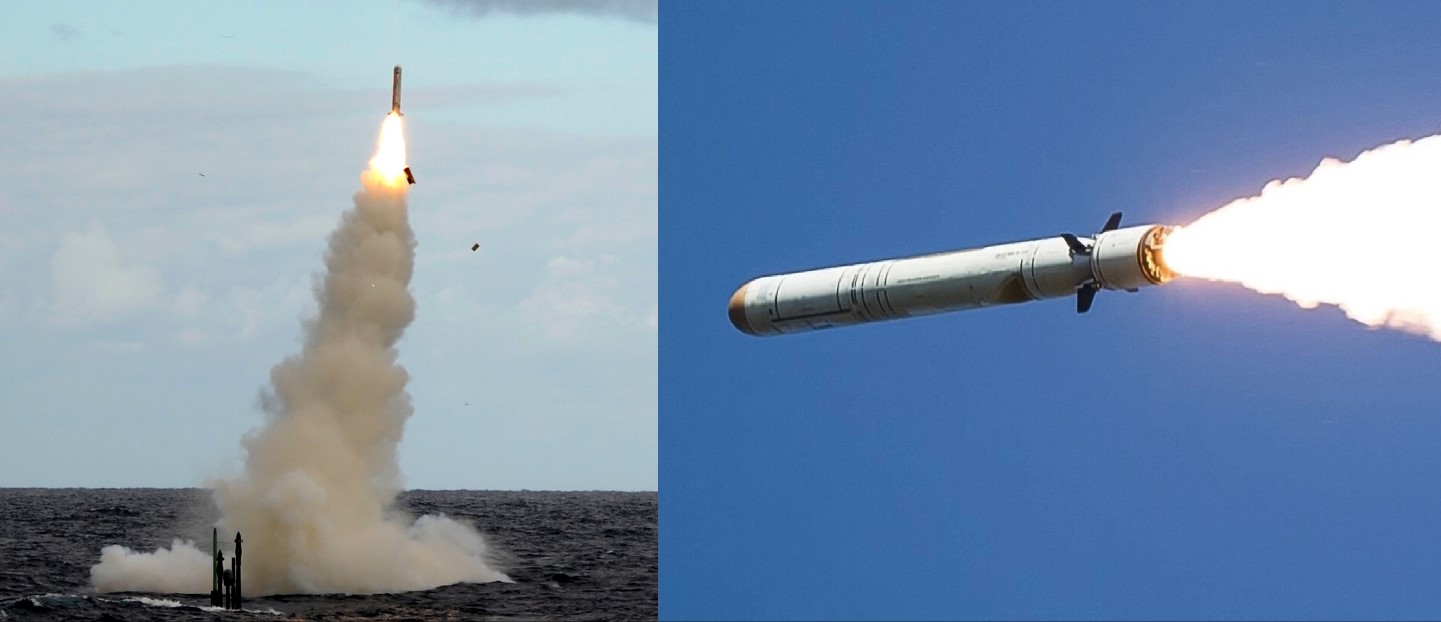
India
Russia has quietly revived a proposal to arm Indian Navy submarines with long-range Kalibr land-attack cruise missiles that can be fired from standard 533 mm torpedo tubes, offering New Delhi a deep-strike option of up to 1,500 km without having to redesign its existing underwater fleet. Indian defence media report that Moscow has recently re-pitched the package as an interim solution while India’s own submarine-launched cruise missile (SLCM) project is still several years away from frontline service. At the heart of the proposal is the 3M14 Kalibr family (exported as Club-S / Kalibr-PL), a sea-launched cruise missile that Russia has used extensively for precision land-attack strikes in Syria and Ukraine. The land-attack variants are credited in open sources with ranges between 1,500 and 2,500 km, carrying a conventional or nuclear warhead of up to 500 kg. Crucially for India, the Kalibr system is designed to launch from existing 533 mm tubes, rather than dedicated vertical launch (VLS) cells, allowing it to be integrated on current and future boats with minimal structural changes. Russian analysts and officials have repeatedly highlighted this “plug-in” compatibility as a key selling point for navies that operate legacy submarines but want long-range land-attack capability. Fits Straight Into India’s Torpedo Tubes The revived offer is aimed squarely at India’s mixed submarine fleet: The Sindhughosh-class (Kilo) boats already carry Russian Klub-S (3M-54E) anti-ship cruise missiles, fired from six 533 mm torpedo tubes that can also launch heavyweight torpedoes. The Kalvari-class (Scorpene) submarines likewise field six 533 mm tubes and currently rely mainly on torpedoes and SM39 Exocet anti-ship missiles, whose range is limited to around 50–70 km. By design, the Kalibr-PL/Club-S family can be fired from these same 533 mm tubes, giving even diesel-electric boats the ability to strike targets deep inside Pakistan or along the Chinese coastline while remaining in safe waters of the Arabian Sea or Bay of Bengal. Russian media and experts have described Kalibr as offering a “menu” of anti-ship, land-attack and even anti-submarine variants that share a common launch interface. The proposal also dovetails with an already-announced project: an upgraded Akula-class nuclear attack submarine leased to India (often referred to as Chakra III) is expected to arrive around 2028, armed with long-range 3M14K Kalibr missiles rated at 1,500–2,000 km. That boat would give India its first nuclear-powered platform with true sea-based conventional deep-strike capability; Moscow now appears keen to extend a similar reach to India’s conventional submarine arm. A Second Track: India Already Buying Shorter-Range Kalibr The renewed long-range offer comes as India is already a Kalibr customer at the shorter end of the spectrum. In early 2025, New Delhi signed a contract with Moscow for Kalibr-PL anti-ship cruise missiles for its Kilo-class fleet, a deal framed as a way to strengthen maritime deterrence in the Indian Ocean Region. Those missiles give the Sindhughosh boats a potent anti-surface punch out to roughly a few hundred kilometres. The new Russian pitch is to add a true land-attack component—effectively converting India’s older submarines from purely sea-denial platforms into strategic conventional strike assets. If accepted, the package would likely include: 3M14 Kalibr land-attack missiles for torpedo-tube launch Software and fire-control integration with Indian combat systems Training, spares and potential upgrade options for future Indian-built submarines Indian analysts note that familiarity with Russian weapons, logistics and training pipelines on the Kilo class would ease the integration curve, though sanctions and payment issues remain a concern. BrahMos, Nirbhay and the “Capability Gap” Russia’s move comes against the backdrop of a complex missile ecosystem in which BrahMos and DRDO’s Nirbhay-based SLCM are already on the table. BrahMos is a supersonic, ramjet-powered cruise missile jointly developed by India and Russia, with current ship- and land-based variants pushing ranges of 800–900 km and speeds of Mach 3. A submarine-launched version has been successfully test-fired from an underwater pontoon, but has not yet been deployed widely on Indian submarines. The submarine version is generally associated with future vertical-launch-capable submarines under programmes like Project 75(I), rather than retrofits for existing 533 mm-tube boats. Parallel to this, DRDO is developing an indigenous SLCM based on the Nirbhay platform, explicitly designed to launch from standard 533 mm torpedo tubes with a projected range of 1,000–1,500 km. The missile has already undergone successful tests from an underwater pontoon, including a 402 km trial in November 2024, but integration on actual submarines and full user trials mean it is unlikely to be operational before around 2030. That multi-year gap has opened space for foreign vendors. A recent Indian defence forum analysis notes that Europe’s MBDA has offered its Naval Cruise Missile (NCM/MdCN) and Russia has pushed Kalibr as competing off-the-shelf solutions to equip the upcoming P-75(I) fleet from day one, while the indigenous SLCM matures. In that context, the revived Kalibr offer is being read in New Delhi as: A way to plug the capability gap between now and the early 2030s A lever for Russia to retain its position in India’s undersea weapons market amid growing European competition A hedge for the Indian Navy, which has signalled it does not want to commission new submarines without a credible land-attack missile onboard from the start Strategic Impact: From Sea Denial to Deep Strike If India were to accept the renewed Russian package and deploy 1,500 km-range Kalibr missiles across even a portion of its submarine fleet, the strategic implications would be significant: From the northern Arabian Sea, Indian boats could hold at risk virtually all major military and industrial centres in Pakistan and parts of western China. From the Bay of Bengal, they could threaten targets across Myanmar and China’s Yunnan/Tibet region, while staying under the cover of India’s own air and naval assets. Combined with India’s ballistic K-4 and future K-6 submarine-launched missiles—primarily nuclear deterrent systems—Kalibr would add a conventional, precision-strike layer to the sea-based arsenal. Supporters of the Russian offer argue that Kalibr is combat-proven, modular and immediately available, and that the Indian Navy already operates related systems on its Kilos and surface ships, lowering integration risk. Sceptics, however, point to: Exposure to sanctions and supply-chain disruptions tied to Russia’s ongoing confrontation with the West The risk of locking in foreign dependence just as India is trying to build an indigenous SLCM and extend the range of BrahMos Budgetary trade-offs at a time when the Navy is also funding new submarines, a carrier programme and next-generation destroyers Decision Point for New Delhi For now, the revived Kalibr proposal remains at the level of defence-industrial outreach and staff-level assessments; there has been no official announcement from India’s Ministry of Defence confirming acceptance or rejection of the offer. The choice before New Delhi is not simply between Kalibr vs BrahMos vs Nirbhay, but between: Immediate, foreign-sourced deep-strike capability from Russia A European alternative in the form of MBDA’s NCM Or a slower but sovereign route centred on DRDO’s Nirbhay-derived SLCM and extended-range BrahMos variants Whichever way India leans, Russia’s renewed Kalibr pitch underlines a simple reality: as the Indo-Pacific becomes more contested and rivals field their own long-range cruise missiles, the Indian Navy no longer sees submarines as just hunters and sea-denial platforms, but as stealthy launchpads for theatre-wide precision strike.
Read More → Posted on 2025-12-06 16:23:19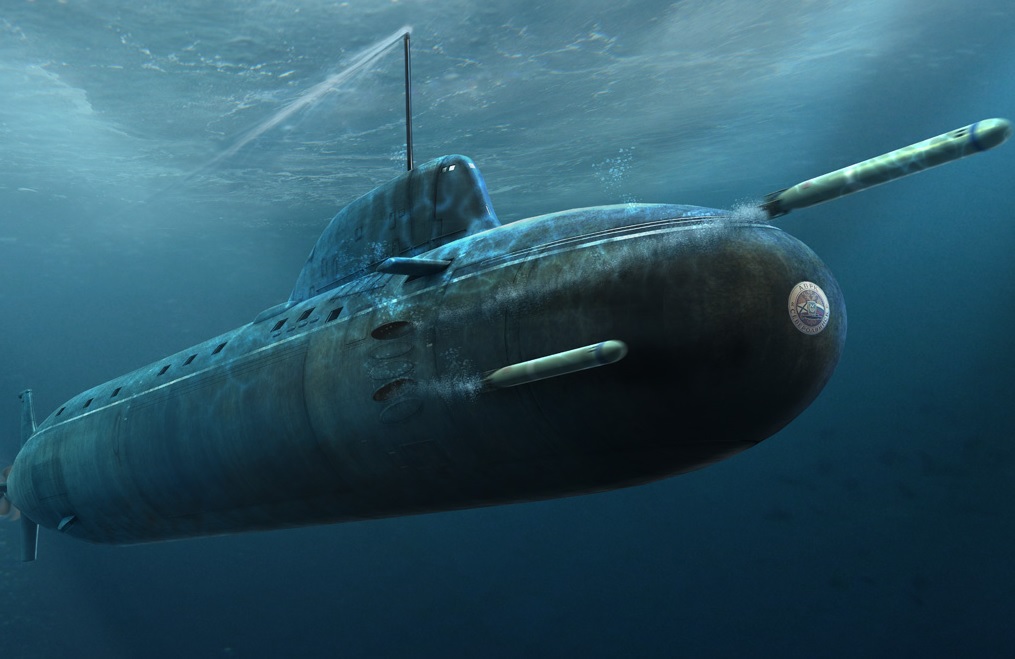
India
Russia is examining a plan to share critical technologies from its Yasen-class nuclear attack submarines with India in support of Project-77, New Delhi’s flagship programme to build a new fleet of indigenous nuclear-powered attack submarines (SSNs). The exploratory proposal, discussed in recent informal and track-II interactions between the two sides, centres on pump-jet propulsion, advanced sonar suites, acoustic-dampening materials, hydrodynamic design features, and potential integration pathways for long-range hypersonic weapons such as the 3M22 Zircon. While neither government has officially confirmed such a package, the reported contours fit both India’s long-term naval plans and Russia’s push to monetise its most advanced underwater technologies for trusted partners. Project-77: India’s Nuclear “Hunter-Killer” Fleet Project-77 is the Indian Navy’s long-planned class of six nuclear-powered attack submarines, intended to give India a true blue-water, continuous under-sea deterrent and sea-denial capability across the Indian Ocean and into the wider Indo-Pacific. The programme, cleared in principle by the Cabinet Committee on Security, envisages large SSNs in the 6,000–10,000-ton class, designed by the Navy’s Warship Design Bureau and built at the Ship Building Centre in Visakhapatnam with very high indigenous content. India plans to equip these submarines with a new generation pressurised light-water reactor being developed by the Bhabha Atomic Research Centre, scaling up experience from the Arihant-class ballistic missile submarines. Navy leaders have publicly stated a target force of six SSNs, with the first hulls expected to enter service in the mid- to late-2030s, and later boats benefiting from incremental design and technology upgrades. Within that roadmap, New Delhi has been looking for “design consultancy” and niche technology inputs—not complete foreign designs—to accelerate work on hydrodynamics, quieting, combat systems and future weapon integration, while keeping core nuclear and structural design sovereign. Russia, India’s long-time undersea partner, remains the most politically feasible source for such assistance. What Russia is Putting on the table According to reports in the Indian defence press and Russian military-watch outlets, Moscow has indicated a willingness to discuss the transfer or co-development of several technologies derived from its Project 885/885M Yasen-class boats. Key elements under exploratory discussion reportedly include: Pump-jet propulsion:Yasen-M boats are widely believed to use a pump-jet rather than a traditional open propeller, dramatically reducing cavitation and broadband noise at higher speeds. Transferring design data or assisting India in developing its own pump-jet would be one of the most sensitive parts of any deal, but also the single biggest acoustic upgrade for Project-77. Next-generation sonar and combat system architecture:The talks are said to cover conformal bow sonars, flank arrays, towed passive arrays and high-speed processing suites, improving detection ranges against quiet submarines and surface ships. Russia could offer algorithms, array layout know-how and integration experience rather than turnkey systems, allowing India to blend them with its own DRDO and BEL hardware. Acoustic-dampening materials and quiet hull design:Yasen-class submarines incorporate advanced anechoic tiles, raft-mounted machinery, and optimised hull forms to cut radiated noise. India is already working with new hull steels and composite structures for deeper-diving, quieter boats; Russian consultancy on tile recipes, machinery foundation design, and hydrodynamic shaping would shorten the trial-and-error cycle. Digital control and automation:Project-77 submarines are planned with digital combat management, integrated platform management systems and high automation to reduce crew size and improve safety. Russian input from Yasen-M’s integrated control architecture could help India refine human–machine interfaces and redundancy concepts. None of these areas involve handing over a complete Yasen blueprint, but even partial access to such design experience would be a significant leap for India’s still-maturing SSN design ecosystem. Zircon and Hypersonic Strike: How Far Could Weapon Integration Go? The most eye-catching aspect of the emerging narrative is the suggestion that Russia could help India integrate long-range weapons, including the 3M22 Zircon hypersonic missile with an advertised range around 1,000–1,500 km, onto future Indian SSNs. Zircon is a Mach 8–9, scramjet-powered, sea-launched hypersonic cruise missile, already in limited operational service with the Russian Navy and used in the Ukraine war, and is designed to launch from standard 3S-14 vertical cells on ships and submarines. However, any talk of direct Zircon export to India remains highly speculative and would run into multiple constraints: Russia has not publicly confirmed export clearance for Zircon to any country. India and Russia are already co-developing BrahMos-II/BrahMos-2K, a hypersonic missile family that is expected to draw heavily on Zircon technologies—airframe design, high-temperature materials and scramjet know-how—rather than being a one-for-one export. Indian officials have signalled a preference for indigenised hypersonic weapons in the long run, including DRDO’s parallel hypersonic cruise missile work. In that context, Russian assistance for Project-77 is more likely to focus on: Designing universal vertical launch systems (VLS) on Indian SSNs that can accommodate future hypersonic cruise missiles and longer-range BrahMos variants in the 1,500–2,000 km class; and Sharing interface standards and launch envelope data so those cells could, in theory, host an exportable derivative of Zircon if and when politics and export rules allow. For India, the strategic draw is obvious: a nuclear-powered, hypersonic-armed SSN able to threaten high-value targets and carrier groups far from home waters would be a major deterrent signal to both China and Pakistan. Why Russia is Courting India with High-End Submarine Tech Moscow’s readiness to talk about Yasen-linked technologies for India sits at the intersection of economics, geopolitics and industrial strategy. First, Russia faces budget and industrial pressures as it ramps up naval and missile production for its own fleet while absorbing heavy costs from the Ukraine conflict. Technology-for-cash deals with long-term partners like India provide both revenue and a way to keep key design bureaus and shipyards funded between domestic orders. Second, India remains one of the few major powers willing to balance Western, Russian and indigenous platforms. New Delhi’s insistence on strategic autonomy and refusal to join sanctions over Ukraine make it a particularly attractive market for high-end Russian offerings—from Su-57E fighter packages with potential Zircon integration to submarine and hypersonic collaborations. Third, by embedding its technology into India’s next-generation systems, Moscow ensures long-term interoperability and dependence on Russian spares, upgrades and consultancy, anchoring the relationship deep into the 2040s. Benefits And Risks for India For India, serious Yasen-derived technology transfer would bring clear advantages: Time savings: Learning curves on quieting, hydrodynamics and propulsion could be compressed by years, if not a decade, compared with a purely solo approach. Capability leap: A Project-77 boat that starts its life with pump-jet propulsion, low-observable design cues and hypersonic-ready VLS would be competitive with the most advanced SSNs in the wider Indo-Pacific. Continuity: India has decades of operating experience with Russian nuclear submarines—from leased Charlie-class and Akula-II boats making crew transition and shore infrastructure adaptation smoother. But there are also risks and constraints: Technology ceilings: Russia is unlikely to part with its very latest or most sensitive design secrets, particularly around reactor physics and core acoustic signatures. Sanctions exposure: Any deal that visibly deepens India–Russia defence integration, especially around hypersonic strike systems, will come under intense scrutiny from the United States and its allies, with potential CAATSA-style sanctions pressure. Indigenous priorities: The Indian Navy and DRDO have repeatedly stressed that foreign help must not derail the goal of a largely indigenous SSN design ecosystem, particularly for future batches beyond the first six boats. The Road Ahead: Exploratory Talks, Cautious Commitments For now, the reported Yasen–Project-77 linkage remains at an exploratory stage—a blend of quiet discussions, industry outreach and signalling through semi-official media in both countries rather than a signed inter-governmental agreement. Over the next few years, several markers will show how serious the proposal really is: The fine print of Project-77 contracts signed by New Delhi—especially the language on “foreign design consultancy” and specific Russian partners involved. Any visible move to standardise Indian SSN launch systems around dimensions compatible with Russian hypersonic weapons or their Indian derivatives. Announcements on BrahMos-II/BrahMos-2K sea-based variants, which would naturally dovetail with the weapon architecture of future SSNs. Even if Zircon itself never sails aboard an Indian hull, the broader package of Russian submarine know-how being offered could shape the design of India’s nuclear “hunter-killer” fleet for decades. For New Delhi, the challenge will be to extract maximum technological value from Moscow, preserve room for Western and indigenous inputs, and still steer Project-77 toward the fully sovereign capability that Indian planners ultimately want.
Read More → Posted on 2025-12-06 16:04:28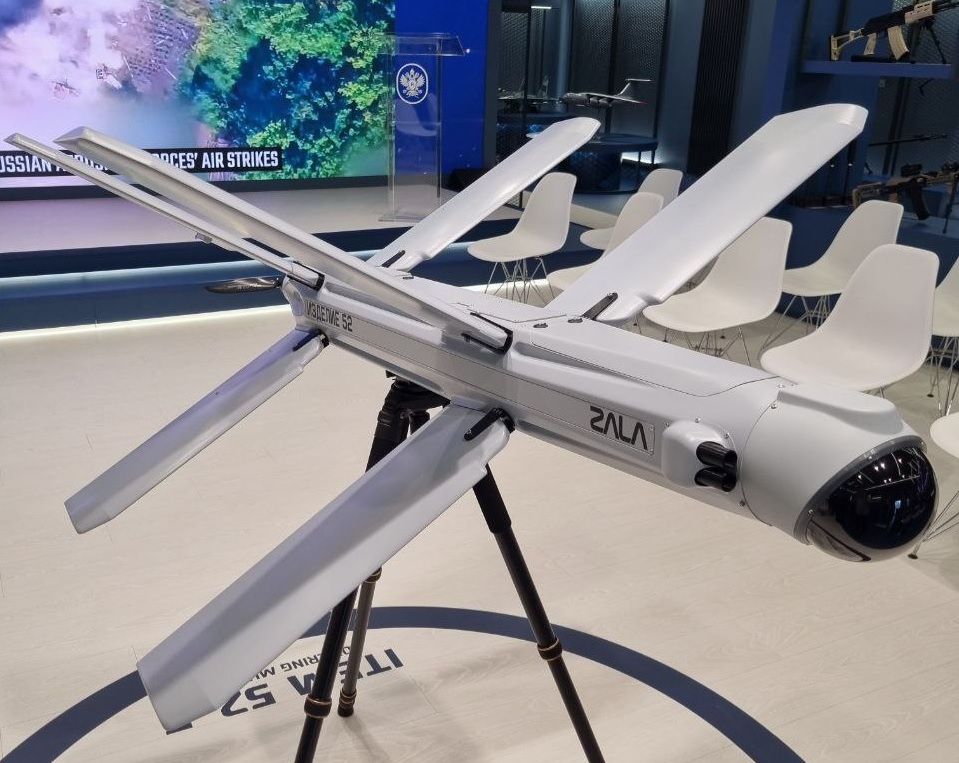
India
Russia has proposed full-cycle technology transfer and licensed production of its Lancet-3 loitering munition, signalling a major push to turn one of its most effective battlefield systems into a global export product. The offer, shared through Russian and Indian defence channels, would allow a partner nation to manufacture the Lancet-3 entirely domestically, including its airframe, electronics, launcher and mission-control software. The proposal comes as the Lancet-3 continues to demonstrate high lethality in Ukraine and Syria, where it has been used to destroy tanks, artillery, radar systems, armoured vehicles, and even HIMARS units. Russian sources claim the munition has maintained over 80% strike accuracy despite strong electronic-warfare interference, making it one of Russia’s most feared precision drones in current conflicts. At the core of the offer is “full-cycle localisation”, which typically includes transfer of design blueprints, production documentation, guidance software architecture, and ground-control systems. Indian reporting suggests the proposal is being studied alongside Russia’s wider offers under Make in India, including potential cooperation on the Su-57 and other UAV technologies. For Moscow, exporting the Lancet-3 through licensed production strengthens sanction-resistant defence ties and expands its global arms footprint. The Lancet-3, produced by ZALA Aero, is a compact but powerful loitering munition. It weighs around 12 kg, carries a 3 kg warhead, and roughly 40 minutes of endurance. Its design features an electric pusher-propeller system and two sets of X-shaped wings, enabling stable manoeuvring during loiter and terminal attack. The drone cruises at 80–110 km/h and can reach nearly 300 km/h in its final dive toward a target. It uses electro-optical guidance and real-time video transmission, allowing operators to precisely steer the munition in the last seconds before impact. On the battlefield, the Lancet-3 has achieved a high volume of verified combat use. More than 1,000 documented strikes have been recorded in Ukraine, with many videos showing successful hits on M777 howitzers, self-propelled guns, radars, and short-range air-defense systems. Its repeated success against Western equipment has forced Ukraine to adopt countermeasures such as decoy howitzers, cope cages, and FPV interceptors, although these have not fully neutralised the threat. Russia has since revealed upgraded versions featuring enhanced EW resistance and extended range, improvements likely to be included in any export variant. A full technology-transfer deal would allow a partner country to customize warheads, integrate national communication systems, develop its own launcher configurations, and even evolve new variants based on the Lancet platform. For potential customers such as India, the offer brings strategic benefits but also introduces challenges, especially the reliance on components that, according to teardown reports, may include Western-origin microelectronics affected by global sanctions regimes. The Lancet-3 has become a hallmark of modern warfare — low-cost, precise, mobile, and disruptive. If Russia succeeds in finalising full-cycle production agreements abroad, the drone that reshaped frontline combat in Ukraine could soon be rolling off assembly lines in partner nations, expanding its role from a Russian battlefield asset to a globally manufactured loitering-attack system.
Read More → Posted on 2025-12-06 14:06:21
India
In a major boost to India’s defence self-reliance drive, the Defence Research and Development Organisation (DRDO) has formally handed over seven indigenously developed technologies to the Indian Armed Forces and domestic industry partners under the Defence Ministry’s Technology Development Fund (TDF) scheme. The move strengthens critical capabilities across the Army, Navy, Air Force and tri-service technical programs, while opening doors for large-scale production by Indian companies. The TDF scheme—managed by DRDO’s Defence Innovation Organisation (DIO)—is designed to support MSMEs, startups and academia in developing cutting-edge systems for the armed forces. Over the past few years, the scheme has accelerated indigenous defence innovation, particularly in niche and high-technology segments traditionally dominated by foreign suppliers. Strengthening Electronic Warfare, Naval Systems & Energy Technologies Among the major systems transferred, the Indigenous High-Voltage Power Supply for Airborne Self-Protection Jammers marks a significant leap in India’s electronic warfare capability. Built to support jammer pods on fighter aircraft, the system provides stable high-voltage output under extreme flight conditions. The capability is essential for modern combat aircraft operating in dense radar and missile environments. For the Indian Navy, two critical technologies were handed over: the Tide-Efficient Gangway for Naval Jetties, designed to improve the stability and safety of personnel movement during varying sea levels; and a fully Indigenous Waterjet Propulsion System for Fast Interceptor Craft, which replaces costly imported propulsion units. Waterjet systems are vital for high-speed coastal security, interception missions, and patrol operations. Subsurface surveillance systems also received a boost with the delivery of VLF–HF Advanced Switching Matrix Systems and VLF Loop Aerials for underwater platforms. These technologies improve secure long-range communication with submarines and underwater assets—an operational area where India has been rapidly enhancing capacity. Breakthroughs in Energy & Recycling Technologies Two of the newly transferred technologies highlight DRDO’s push toward sustainable and long-endurance energy systems. The Long-Life Seawater Battery System, designed for underwater sensors and surveillance nodes, enables persistent, low-maintenance maritime monitoring—critical for anti-submarine warfare and coastal security grids. Equally notable is a Novel Process for Recovery of Lithium Precursors from Used Li-ion Batteries, developed to strengthen India’s lithium recycling ecosystem. With the global scramble for lithium intensifying, this process enables domestic recovery of essential materials used in missiles, drones, communication equipment, vehicles, and space systems. The innovation aligns with India’s strategic goal of reducing dependency on imported rare materials. Strong Industry Partnerships Under TDF DRDO officials emphasized that the technologies were not merely laboratory prototypes but fully developed, evaluated, and transferred to production partners. Under the TDF model, private companies—especially MSMEs—will now scale these systems for operational deployment. Senior officials noted that these technologies address some of the most pressing requirements of the armed forces, ranging from electronic warfare and coastal defence to underwater communications, propulsion systems, and energy security. A Step Forward for Atmanirbhar Bharat in Defence The handover underscores the rapid growth of India’s indigenous defence ecosystem and the government’s push toward Atmanirbhar Bharat. With defence procurement policies increasingly prioritizing Indian content, such technologies will significantly reduce reliance on foreign suppliers and enhance strategic autonomy. As DRDO continues to develop advanced systems under TDF—spanning robotics, space, materials science, AI, propulsion, and maritime systems—the collaboration between innovators, industry partners, and the armed forces is expected to deliver more indigenous breakthroughs in the coming years. India’s defence establishment sees the latest technology transfer as a decisive step toward building a self-sustaining, high-technology defence industrial base, supporting both national security and long-term strategic goals.
Read More → Posted on 2025-12-06 12:40:03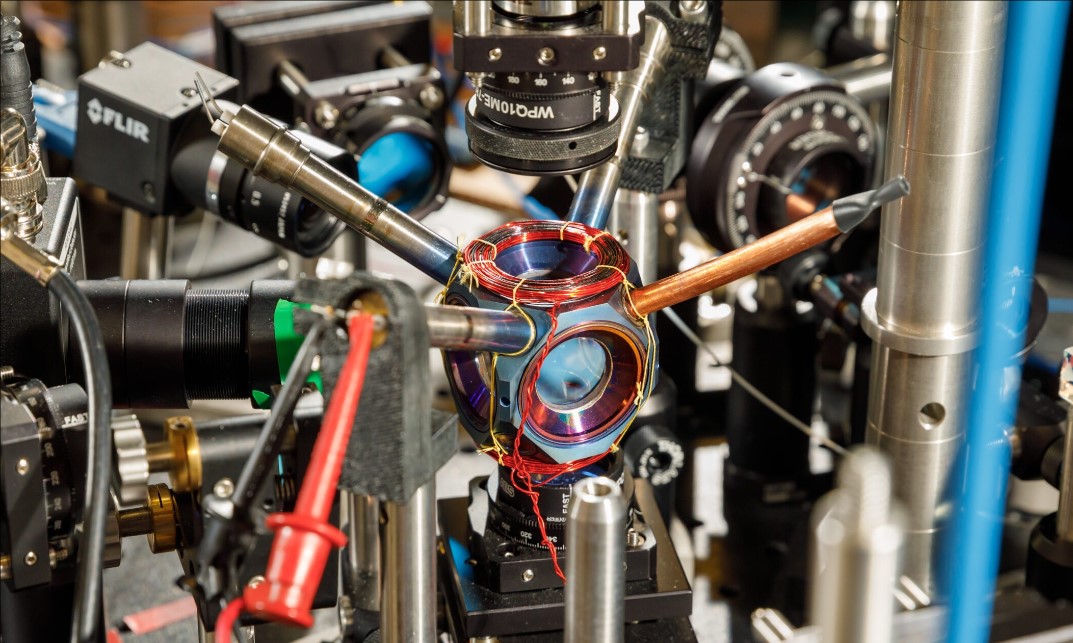
India
India’s Defence Research and Development Organisation (DRDO) has taken a decisive step toward future aerospace warfare with its Research Centre Imarat (RCI) launching development work on Quantum Avionic Sensors, a technology widely regarded as a defining element of sixth-generation aircraft systems. The laboratory has also invited Indian industries and start-ups to collaborate on research and development, signalling an effort to build a domestic ecosystem around advanced quantum technologies. A Leap Toward 6th-Generation Avionics Quantum avionics refers to the application of quantum physics in navigation, sensing, communication and situational awareness. These systems are designed to deliver drastically higher accuracy, improved survivability, and greater resilience against electronic warfare, compared to conventional avionics. In military aviation, sixth-generation aircraft are expected to rely heavily on quantum-enhanced sensors to operate in contested environments where GPS denial, electronic jamming, and counter-stealth warfare are routine threats. RCI’s programme places India among the early movers working to operationalize quantum solutions for future air combat systems. What Quantum Avionic Sensors Can Deliver Quantum sensors use atomic-level interactions, superposition and entanglement to measure physical parameters with extreme precision. RCI’s research is expected to focus on several applications: Quantum accelerometers and gyroscopes: enabling inertial navigation systems that do not depend on GPS, offering unmatched accuracy during long-range missions. Quantum magnetometers: capable of detecting submarines, stealth aircraft or hidden metallic objects by sensing tiny changes in magnetic fields. Quantum clocks: essential for timing-sensitive systems such as secure communication networks, missile guidance and electronic warfare suites. Quantum gravimeters: potentially useful for underground structure detection or terrain mapping during low-visibility missions. Such capabilities collectively enhance an aircraft’s navigation, targeting and survivability — especially crucial for unmanned combat aircraft or loyal wingman drones expected in future Indian Air Force (IAF) fleets. DRDO Pushes for Industry Participation RCI’s announcement explicitly calls for Indian private companies and start-ups to join hands in developing indigenous quantum technologies. This aligns with the government’s broader strategy under Aatmanirbhar Bharat and the National Quantum Mission (NQM), which has earmarked thousands of crores to build quantum research infrastructure across the country. Industry collaboration is expected in key areas such as: high-precision optical and atomic systems cryogenic and vacuum technologies quantum computing algorithms for avionics miniaturization of quantum instruments for airborne platforms Start-ups specialising in photonics, microelectronics, sensor design, or AI-driven avionics could play a major role in transitioning prototypes into deployable systems. India’s Broader Quantum Push India has already initiated work on quantum communication networks, quantum key distribution (QKD), satellite-based quantum encryption tests, and quantum computing testbeds. The addition of quantum avionics marks an expansion of defence-oriented quantum applications. Global defence leaders — including the United States, UK, China and France — are also investing heavily in quantum navigation to counter the growing risk of GPS jamming on the battlefield. India’s entry into this arena suggests an ambition to secure parity with major military powers in emerging airborne technologies. Strategic Impact on India’s Future Air Programmes RCI’s work is expected to eventually integrate into India’s next-gen platforms such as the AMCA (Advanced Medium Combat Aircraft), the Ghatak UCAV, future reconnaissance UAVs, hypersonic systems and long-range precision weapons. By developing quantum avionics domestically, India could reduce reliance on foreign navigation sensors and ensure operational secrecy in critical missions. A Step Toward the Future Battlespace The launch of the Quantum Avionic Sensors initiative represents not only a technological milestone but also a strategic move to empower Indian industry and accelerate breakthroughs in future warfare capabilities. As DRDO opens the doors for collaboration, the programme could become a cornerstone of India’s sixth-generation defence ecosystem. In a battlefield shaped by electronic warfare, stealth platforms and autonomous systems, quantum avionics may well become India’s next major leap — positioning the IAF for the challenges of the mid-21st century.
Read More → Posted on 2025-12-05 17:04:54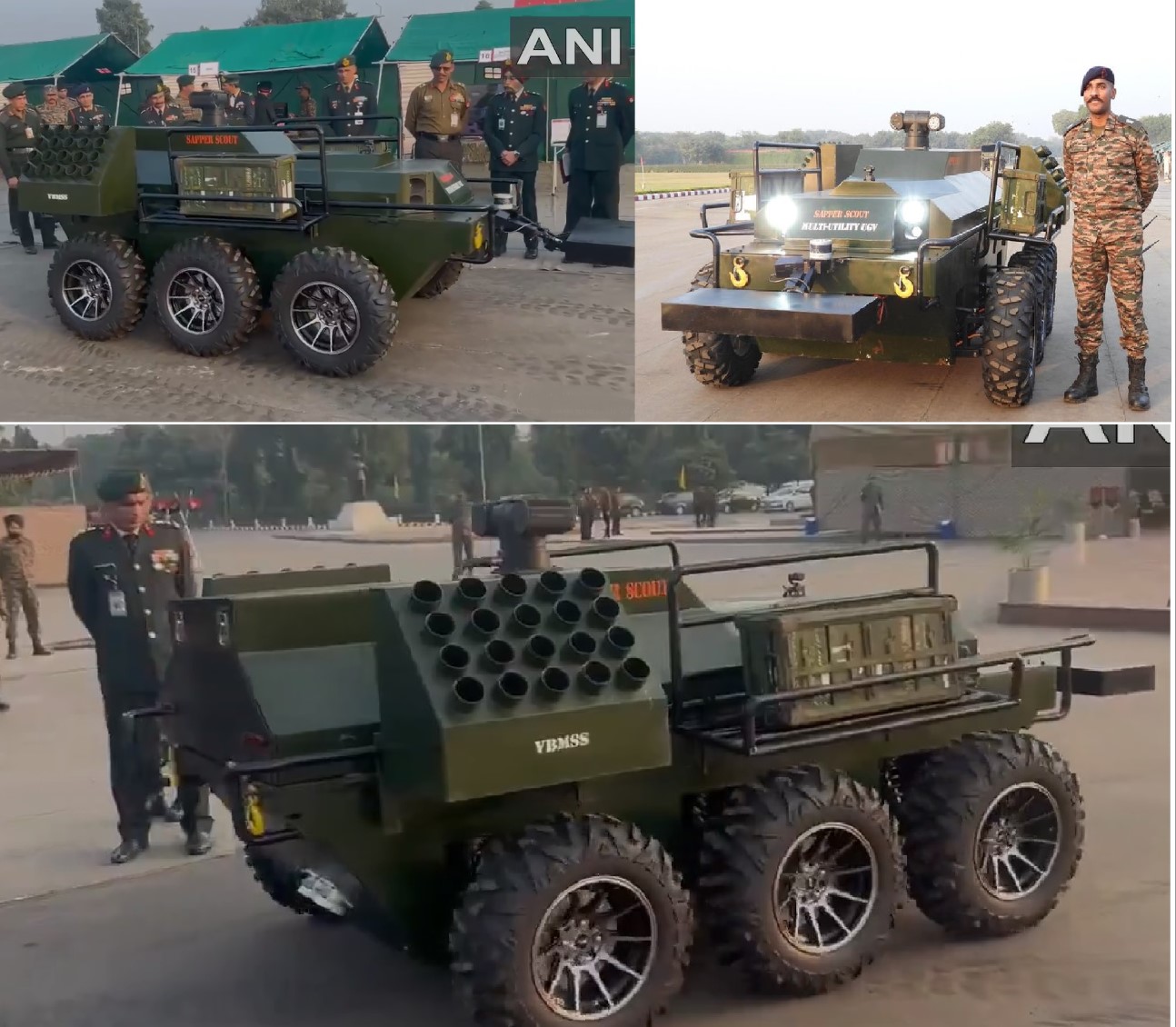
India
In a significant boost to India’s combat engineering and ground operations capability, the Indian Army—working in collaboration with Bharat Electronics Limited (BEL)—has introduced the SapperScout 2.0, an Advanced Unmanned Ground Vehicle (UGV) designed to take on some of the most dangerous battlefield tasks while keeping soldiers out of harm’s way. The platform represents a major leap in the Army’s push toward autonomous and robotic systems for modern warfare. A UGV Built for the Most Dangerous Missions According to early disclosures, SapperScout 2.0 has been engineered primarily for combat engineering, infantry support and operations in hazardous zones where deploying soldiers risks heavy casualties. Its modular, rugged design enables the system to handle multiple mission profiles across terrains that would otherwise be inaccessible or too dangerous for humans. The Army highlights that the UGV is intended to reduce risk to sappers, increase operational mobility, and automate numerous high-risk engineering and reconnaissance activities. Mission Roles and Capabilities SapperScout 2.0 has been built with a wide mission envelope and multi-role flexibility: Mine Detection & Explosive Hazard Identification using GPR, metal detectors and multi-sensor fusion Payload Carriage, including ammunition, sensors, supplies or mine-laying equipment Combat Reconnaissance & ISR with real-time visual intelligence for battlefield commanders Mine Scattering, enabling safe and controlled deployment of mines Casualty Evacuation, transporting wounded personnel from high-threat zones Perimeter Security, including surveillance and intrusion alerts Weaponized or Counter-UAS Variants, supported by plug-and-play modular payloads Defence officials note that the robotics platform can be adapted for border security, urban warfare, counter-terrorism operations, and humanitarian disaster rescues. Rugged 6×6 All-Terrain Mobility The SapperScout 2.0 is built on a 6×6 independent-drive platform with articulated suspension, ensuring that all wheels maintain ground contact even over rocks, rubble, or uneven slopes. High-torque electric motors allow the UGV to climb obstacles and negotiate debris, making it suitable for deserts, high-altitude mountains, semi-urban rubble and muddy fields. Its 100–250 kg payload class allows the system to transport mines, medical stretchers, heavy supplies or detachable weapon modules. Advanced Control & Autonomy The UGV supports multiple levels of control: Remote Teleoperation, providing safe standoff distance for operators Semi-Autonomous Waypoint Navigation, where the vehicle follows preset routes Environmental Sensing, powered by LIDAR, stereo cameras and ultrasonic sensors These features enable the system to autonomously avoid obstacles, scan terrain and perform pre-programmed engineering tasks. Sensor Suite for High-Risk Detection The SapperScout 2.0 is equipped with a sophisticated sensor pack tailored for engineering roles: Ground Penetrating Radar (GPR) Metal Detection Units Multi-Sensor Fusion System for buried object detection Pan-Tilt EO/IR Camera Turret Thermal Imagers for Night Operations 360° Situational Awareness Cameras Encrypted Live Video Relay for commanders and control stations These sensors make it one of the most capable mine and hazard detection UGVs in the region. Additional Details: A Step Toward Indigenous Battlefield Robotics Defence industry sources indicate that the SapperScout 2.0 is part of a broader push toward swarm-enabled, autonomous ground systems, which the Indian Army plans to integrate into future infantry and engineering battalions. BEL is reportedly exploring: AI-based target recognition Improved battery endurance and hybrid power systems Integration of loitering munitions or anti-drone jammers Network-centric connectivity with battlefield command systems Trials for ruggedization, endurance and electromagnetic hardening are expected to continue through 2026, after which the UGV could move toward limited-series production. A New Era for Indian Combat Engineers The SapperScout 2.0 marks a major milestone in the Army’s adoption of unmanned technologies. With its robust design and broad mission range, it promises to enhance operational safety, speed and precision—particularly in minefields, urban combat and counter-insurgency environments. Defence analysts say the platform positions India among countries developing indigenous, modular UGVs capable of performing complex engineering and combat-support operations without risking soldiers’ lives.
Read More → Posted on 2025-12-05 15:06:54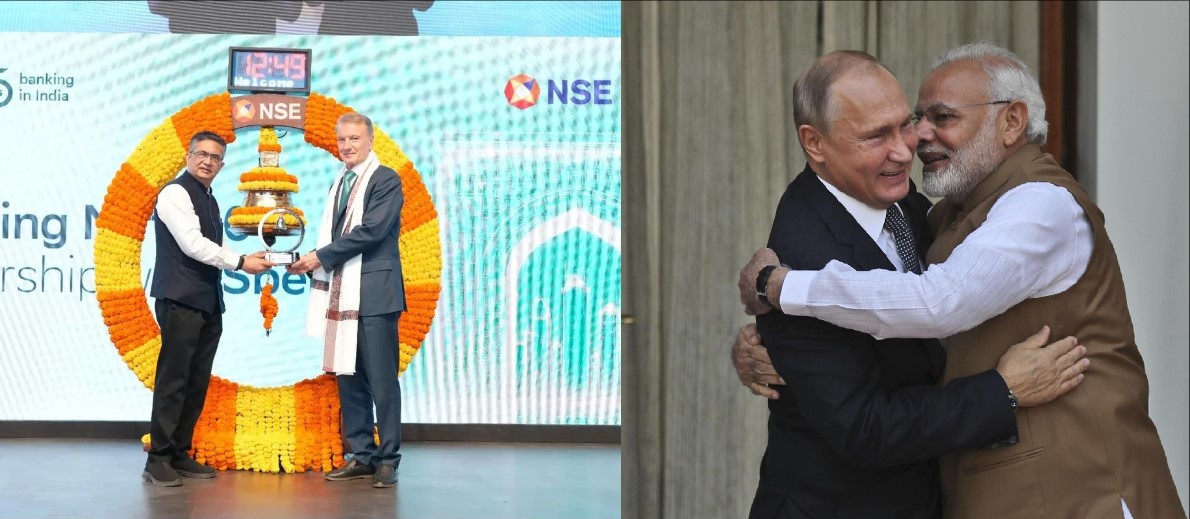
India
Russia’s state-owned lender Sberbank has launched the country’s first India-centric mutual fund, offering everyday Russians direct exposure to the Nifty50, India’s benchmark equity index. The product, called “First-India”, marks a significant expansion of financial ties between Moscow and New Delhi and creates a new mechanism for putting Russia’s surplus Indian rupees to productive use. The fund was unveiled in Mumbai during Sberbank CEO Herman Gref’s visit, coinciding with high-level bilateral meetings between Russian and Indian officials. The bank described the initiative as a milestone that allows Russian retail investors to track the performance of India’s top 50 listed companies through a regulated, ruble-denominated investment product. Gref said the timing aligns with India’s strong macroeconomic performance, noting the country’s status as one of the fastest-growing major economies. India’s large-cap equity market—powered by financials, technology, consumer goods, and energy companies—continues to attract global interest, with the Nifty50 serving as the primary gateway for foreign investors. A New Route for Russian Investors The First-India mutual fund, developed jointly with JSC First Asset Management, gives Russian savers a straightforward investment path that mirrors the Nifty50 index. The fund allows Russian investors to buy units domestically in rubles while gaining exposure to India’s blue-chip stocks—something previously unavailable at the retail level due to capital restrictions and market barriers. By linking directly to a widely tracked index, the product minimizes stock-specific risk and simplifies access to one of the world’s most dynamic equity markets. Recycling Rupee Surpluses Beyond investor convenience, the new fund also addresses a growing financial imbalance. Since 2022, Russia has accumulated large volumes of Indian rupees due to India’s significant purchases of discounted Russian crude and the shift toward non-dollar settlement. These rupees are difficult to repatriate because of currency restrictions. Sberbank—responsible for the largest share of Indo-Russian settlement flows—has been seeking ways to deploy these funds efficiently. The First-India fund offers a solution by channeling rupee-linked investments into Indian financial markets rather than letting the currency sit idle. The bank is also investing a portion of these rupees into Indian government securities, reinforcing its long-term exposure to the local economy. Expanding Sberbank’s Footprint in India The launch of the new fund is part of a broader push by Sberbank to strengthen its presence in India. The bank is examining plans to open up to 10 new branches, build a dedicated data centre, and expand into new sectors, including healthcare and education services. The initiative also reflects a shift in Russia’s global financial alignment. With Western markets largely inaccessible due to sanctions, Russian financial institutions are increasingly turning toward Asia and the Global South. Significance for India For India, the initiative carries several advantages: It brings long-term Russian capital into Indian equity and bond markets. It supports rupee internationalisation, aligning with New Delhi’s broader financial diplomacy goals. It reinforces the stability of the India–Russia economic partnership, even during global geopolitical turbulence. A regulated, foreign-domiciled product tied to the Nifty50 also enhances India’s image as a reliable investment destination for emerging-market partners. A New Chapter in Indo-Russian Financial Relations The First-India fund gives Russian households a simple way to participate in India’s economic expansion while providing Moscow with a practical channel to utilize its rupee holdings. For both countries, the launch marks an evolution from traditional energy and defence cooperation toward deeper financial integration—one that could shape future cross-border investment flows. Sberbank’s entry into India-focused retail investing underscores a broader trend: as Russia looks eastward for growth and stability, India’s capital markets are becoming an increasingly important destination.
Read More → Posted on 2025-12-05 14:44:47
India
The India's Union government on Thursday firmly denied a foreign media report claiming that India and Russia had “clinched” a fresh $2-billion deal to lease a nuclear-powered attack submarine ahead of President Vladimir Putin’s visit to New Delhi. In a post on X tagged #PIBFactCheck, the Press Information Bureau (PIB) called the claim “misleading”, stressing that no new agreement has been signed between the two countries. Instead, the submarine lease referenced in the report — originally carried by Bloomberg — stems from an existing contract signed in March 2019, whose delayed delivery has now been rescheduled for 2028. “The headline of an article by @Bloomberg claims that ‘India Clinches $2 Billion Russia Submarine Deal as Putin Visits,’” PIB Fact Check wrote. “The claim made in this headline is misleading. No new deal has been signed between India and Russia. The submarine lease is based on an old contract that was signed in March 2019. There has been a delay in the delivery, and the new delivery is scheduled for 2028.” The clarification came hours after several Indian and international outlets amplified the Bloomberg report, which said India would pay about $2 billion to lease a nuclear-powered submarine from Russia, finalising delivery after nearly a decade of talks. At the core of the controversy is not a fresh pact, but the long-running lease of an Akula-class nuclear-powered attack submarine, widely referred to as INS Chakra III in Indian defence circles. India and Russia signed that lease contract — valued at roughly $3 billion at the time, including refit and support — in March 2019 after years of negotiations over price and configuration. Under the agreement, Russia is refurbishing and modernising an existing Project 971 Akula-class hull for India. Once delivered, the boat will serve under an Indian name on a 10-year lease, primarily to train crews and refine nuclear-submarine operations as India pursues its own indigenous nuclear-powered attack submarine programme. The boat is typically described as barred from wartime combat deployment and focused on training and operational work-up. Originally, delivery was expected around the mid-2020s, but the schedule slipped amid refit challenges, sanctions pressure on Russia after the Ukraine war, and pandemic disruptions. Indian and Russian sources now converge on 2028 as the revised handover year — the same date cited by the PIB in its fact-check. Talks on leasing a follow-on nuclear submarine to replace INS Chakra (K-152 Nerpa) have been underway since the mid-2010s, effectively leaving the project stuck in negotiation and then in delayed execution for close to a decade. Price disputes slowed progress for several years before the 2019 contract was finally inked. India returned its previous leased Akula-II boat, INS Chakra, to Russia around 2021, creating a temporary gap in nuclear attack submarine capability even as China stepped up submarine patrols in the Indian Ocean. The upcoming Akula lease is meant to plug that gap until India’s own SSNs enter service. The government’s unusually sharp public rebuttal appears aimed at drawing a clear line between an old, already-signed contract and the impression of a new, headline-grabbing “deal” timed to President Putin’s visit. By underlining that no fresh agreement has been concluded, New Delhi is signalling that: The submarine cooperation is part of a long-standing, ongoing programme rather than a sudden escalation in defence ties with Moscow. Any payment or delivery milestones now being discussed are implementation details of the 2019 lease, not evidence of a brand-new procurement decision. At the same time, the PIB’s confirmation of a 2028 delivery date also serves as a rare, public timeline marker for one of India’s most sensitive defence projects, indicating that despite delays and global scrutiny of Russia’s defence exports, the nuclear submarine lease remains on track under the existing contract.
Read More → Posted on 2025-12-04 13:27:55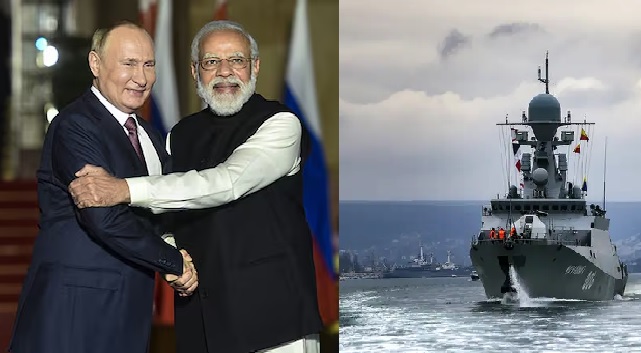
India
Russia’s State Duma has ratified a sweeping new India–Russia defence treaty that, for the first time, permits the deployment of troops, warships and military aircraft on each other’s territory. The breakthrough approval comes alongside the formal ratification of the Reciprocal Exchange of Logistic Support (RELOS) pact, significantly expanding operational cooperation just ahead of President Vladimir Putin’s visit to New Delhi. The treaty authorises both sides to simultaneously deploy up to five warships, ten aircraft and 3,000 troops on the partner country’s soil for an initial five-year period, extendable by mutual consent. Russian lawmakers described the move as a major step toward a more integrated strategic relationship. A Structural Shift in Military Access The new treaty brings long-awaited clarity to military deployments. It replaces case-by-case permissions with a standing legal framework that covers joint exercises, training missions, counter-terror operations, evacuations and humanitarian assistance. The agreement also regularises the use of ports, airfields, training ranges and airspace, allowing for faster, streamlined movement of personnel and equipment. It marks one of the most significant upgrades to India–Russia defence ties since the civil nuclear and energy agreements of the early 2000s. RELOS: The Logistics Backbone Ratified in parallel, the RELOS agreement puts India–Russia military cooperation on par with India’s logistics pacts with the United States, France, Australia and Japan. With RELOS operational, both nations can: Refuel, restock and perform maintenance at each other’s bases. Use ports and airfields without lengthy diplomatic channels. Reduce mission costs for long-distance naval or air deployments. Conduct joint training and humanitarian missions with greater ease. Crucially, RELOS opens up Russian facilities from Vladivostok to Murmansk, giving India unprecedented access to the Arctic and Northern Sea Route, a region gaining geopolitical and economic value. India’s Strategic Gain After the Tajikistan Airbase Setback India previously operated Ayni/Ayni-Farkhor airbase facilities in Tajikistan with Russian support, giving the Indian Air Force a rare presence in Central Asia. However, that arrangement did not progress into a long-term operational basing agreement due to political sensitivities and Tajikistan’s constraints. While India’s direct access weakened after that period, the new India–Russia deployment treaty restores strategic leverage in Central Asia through Moscow’s footprint: Tajikistan hosts Russia’s 201st Military Base, their largest overseas deployment. With India now legally able to operate alongside Russian forces under defined terms, New Delhi gains indirect but credible access pathways into Central Asia for training, evacuations, counter-terror operations and logistical emergencies. Russia’s continued influence in Tajikistan allows India to benefit from coordinated deployments, joint training opportunities and overflight facilitation, even if India does not have an independent base there. In effect, the new treaty reopens Central Asian operating potential for India, something that had stagnated since the decline of the Tajikistan arrangement. Strengthening India’s Reach From the Indian Ocean to the Arctic The combined effect of the troop-deployment treaty and RELOS gives India several advantages: Extended Deployment Range:Indian warships and aircraft can now operate efficiently in the Russian Far East, Arctic, Baltic Sea and Central Asian theatres, backed by Russian logistics hubs. Lower Operational Costs:Standardised logistics support will significantly reduce expenses for long missions, naval task-group deployments and multinational exercises. A Multi-Aligned Approach:The ability to host Russian forces—while maintaining similar agreements with the U.S., France and Australia—underscores India’s independent strategic posture, avoiding alignment with any single bloc. Revived Central Asia Connectivity:The treaty creates operational opportunities in Central Asia that India has lacked since the Tajik base arrangement slowed, giving New Delhi renewed influence in a region critical for counter-terrorism and connectivity. Russia’s Calculated Advantage For Moscow, the agreements offer continued integration with one of the largest defence markets and long-term partners, while also providing direct access to Indian ports across the Indian Ocean Region. The pact serves as clear evidence that Russia retains viable and resilient strategic partnerships in Asia, even as Western sanctions attempt to limit its global engagement. The timing, arriving just ahead of President Putin’s India visit, underscores Moscow’s intent to strengthen its relationship with New Delhi at a moment of broad geopolitical realignment. Ahead of the Modi–Putin Summit With both treaties now ratified, the upcoming summit is expected to concentrate on formalising the implementation of RELOS, alongside reviewing major defence programmes, advancing the bilateral 2030 strategic roadmap, and expanding cooperation in the Russian Far East, energy corridors and emerging Arctic shipping routes. A New Era of India–Russia Military Interoperability Together, the troop-deployment treaty and the RELOS logistics pact signal the beginning of a more operational, flexible and less transactional phase in India–Russia defence relations. For India, the agreements provide global reach from the Indian Ocean to the Arctic, renewed leverage in Central Asia, reduced deployment and operational costs, and broader strategic autonomy across multiple theatres. For Russia, the framework ensures secure access to the Indian Ocean, a strengthened Asian partnership, and a reaffirmation of its continued geopolitical relevance despite international pressures. These agreements are expected to move into active implementation within weeks, marking one of the most consequential upgrades in India–Russia military cooperation in recent decades.
Read More → Posted on 2025-12-04 12:38:18
India
In a move that could redefine India’s heavy-lift space capabilities, President Vladimir Putin’s visit to New Delhi has been marked by a landmark agreement under which Russia will provide 100% technology transfer of its RD-191M semi-cryogenic rocket engine to the Indian Space Research Organisation (ISRO). The engine, to be integrated into future variants of the GSLV Mk3 / LVM3, is expected to boost India’s geostationary transfer orbit (GTO) payload capacity from the current 4.2 tonnes to nearly 6.5–7 tonnes, dramatically expanding the range of missions LVM3 can perform. The announcement comes as Putin begins a two-day visit to India aimed at revitalising defence, energy and high-technology cooperation, including space, amid continuing Western pressure on both Moscow and New Delhi. What Is The RD-191M Engine — And Why It Matters For India The RD-191 family is Russia’s latest generation of high-performance liquid oxygen (LOX) + kerosene semi-cryogenic engines, developed by NPO Energomash. It powers the modular Angara launch vehicle, and is derived from the famous RD-170/180 line that has long been considered among the world’s most advanced kerolox engines. The baseline RD-191 delivers around 196 tonnes of thrust at sea level and over 212 tonnes in vacuum, using an oxygen-rich staged-combustion cycle — a highly efficient but technologically demanding architecture. The upgraded RD-191M variant, developed for Russia’s Angara-A5M/A5V heavy rockets, pushes thrust even higher and has recently completed tune-up tests, paving the way for operational use. For India, the attraction lies in three key aspects: High thrust and efficiency suitable for LVM3 and future heavy-lift rockets. Proven flight heritage on Angara, reducing technical risk. A complete technology transfer package, covering design, materials, turbomachinery, control systems and manufacturing know-how. With full ToT, Indian industry would not merely import engines but build them in India, adapt them to ISRO’s stages, and eventually maintain and upgrade the design independently. India’s Own Semi-Cryogenic Journey: SCE-200 / SE-2000 India is not starting from zero in semi-cryogenic technology. ISRO has been developing its own 2-MN-class semi-cryogenic engine, known as SCE-200 or SE-2000, intended to power upgraded LVM3 and future heavy/super-heavy launch vehicles. Key features of SE-2000 include: LOX + RP-1 kerosene propellant Staged-combustion cycle Around 2,000 kN (≈ 200 tonnes) thrust Throttle range from 60% to 105% Vacuum specific impulse comparable to top global engines ISRO reached a major milestone on 28 March 2025, when it successfully conducted the first hot test of the semi-cryogenic Power Head Test Article (PHTA) at Mahendragiri, validating the core turbopump, pre-burner and feed system design. Follow-up hot tests in April and May 2025 pushed the system to 60% power level, demonstrating stable and controlled operation. Once fully qualified, SE-2000 is expected to replace the current L110 hypergolic core stage on LVM3 and form the backbone of India’s next-generation HLVM3 (human-rated LVM3) and future reusable or cargo launch vehicles. In parallel, ISRO has also been steadily maturing cryogenic technology. Recent tests on the CE20 cryogenic engine — including bootstrap start and in-space restart capability — have expanded the performance and flexibility of LVM3’s upper stage, underlining India’s growing confidence in complex cryogenic systems. If India Has SE-2000, Why Does It Still Need Russia’s RD-191M? At first glance, India’s indigenous SE-2000 and Russia’s RD-191M occupy a similar space: both are high-thrust kerolox staged-combustion engines aimed at heavy-lift rockets. So why pursue full technology transfer of RD-191M when ISRO is already investing heavily in its own design? There are several layered reasons — strategic, technical and programmatic: 1. Time To Orbit: Accelerating Payload Upgrades Even with encouraging test results, SE-2000 is still under development. It must pass a long series of ground tests, integrated stage trials and qualification campaigns before flying on an operational LVM3. That process can easily stretch over several years. By contrast, RD-191-series engines have already flown multiple times on Angara rockets, and the RD-191M is an incremental upgrade of a proven design. Adapting this engine to a modified LVM3 core could allow ISRO to field a higher-performance LVM3 variant much sooner, pushing GTO capacity from 4.2 t to the 6.5–7 t range while SE-2000 continues its own qualification path. This dual-track approach reduces the risk of bottlenecks in India’s commercial and strategic launch schedule, especially as demand grows for heavier communication satellites, space-station modules and deep-space missions. 2. Risk Reduction And Benchmarks For Indigenous Design Semi-cryogenic, oxygen-rich staged-combustion engines are among the most difficult rocket engines to design, demanding cutting-edge metallurgy, turbomachinery and combustion stability control. A full, unredacted transfer of RD-191M design and manufacturing data gives Indian engineers a benchmark: They can compare turbopump layouts, cooling channels, injector design and control algorithms against their own SE-2000 solutions. It provides proven answers to tricky problems like high-pressure oxygen handling, ignition transients and long-duration stability. Lessons from licensed production of RD-191M can feed back into making SE-2000 more reliable and easier to certify. In effect, India gets both a near-term operational engine and a technology school for its own programme. 3. Industrial Upskilling And Export Potential The agreement also fits into New Delhi’s broader “Make in India” strategy. With 100% ToT, Indian public and private firms can master: Precision manufacturing of cryogenic turbopumps High-pressure combustion chambers and nozzles Complex engine health-monitoring and control systems Such capabilities will be invaluable not only for SE-2000 but also for future reusable stages and super-heavy launch concepts. If export restrictions and intellectual-property clauses are handled carefully, India could eventually offer launch services based on RD-191M-powered LVM3 variants to global customers, adding to the commercial appeal of its already competitive PSLV and LVM3 fleets. 4. Strategic Depth In India–Russia Space Ties Space has been a pillar of India–Russia cooperation since the Aryabhata satellite days, and more recently in the Gaganyaan human spaceflight programme, where Russia has trained Indian astronauts and discussed potential joint missions. A full-blown RD-191M technology-transfer deal deepens that partnership at a high-trust, high-technology level, signalling that despite geopolitical turbulence, Moscow and New Delhi are willing to share some of their most sensitive aerospace know-how. Why ISRO Hasn’t “Just Done It” Alone — Yet Critics often ask: India developed its own cryogenic CE-20 after facing Western technology denial. Why not simply do the same for semi-cryogenic engines, without importing any foreign design? The reality is that ISRO is indeed doing it — SE-2000 is exactly that effort — but there are hard constraints: Complexity & learning curve: Oxygen-rich staged-combustion kerolox engines are more demanding than open-cycle or gas-generator designs. They push materials to their limits and require extensive iterative testing. Test infrastructure: India is still expanding high-capacity test stands and long-duration semi-cryogenic facilities. Until these reach full maturity, development pace will be cautious. Mission timelines: Upcoming goals — from heavier GTO satellites to cargo for space stations and potential lunar logistics — demand higher LVM3 performance sooner than SE-2000 alone might deliver. In that context, leveraging a proven foreign engine with full technology transfer is less a sign of dependence and more a strategic shortcut: India buys time and reduces risk while still building its own independent capability in parallel. What Changes On The Rocket: From Today’s LVM3 To A Semi-Cryo Future Today’s LVM3 uses: Two massive S200 solid boosters A hypergolic L110 core stage (two Vikas engines burning UDMH + N₂O₄) A cryogenic C25 upper stage powered by CE-20 This configuration gives about 4.0–4.2 tonnes to GTO, enough for many missions but increasingly tight for heavier satellites. Replacing the L110 core with an RD-191M-based semi-cryogenic stage would bring multiple benefits: Higher specific impulse and thrust, directly translating into more payload Cleaner, non-toxic propellants (kerosene instead of hydrazine) Better throttling and restart options for advanced mission profiles Once India’s SE-2000 is ready, the same semi-cryogenic stage design could simply swap in the indigenous engine, giving ISRO a smooth transition from Russian to Indian powerplants without redesigning the entire vehicle. From Agreement To Flight The real work will begin after the summit handshakes: Finalising the inter-governmental agreement, IP provisions and export-control compliance Establishing joint design review teams between NPO Energomash and ISRO’s LPSC Setting up production lines in India for RD-191M components Designing and testing a new LVM3 semi-cryogenic core stage, followed by structural tests, static fires and eventually flight tests If executed as planned, the RD-191M technology-transfer deal — combined with the steady progress of India’s own SE-2000 — could catapult ISRO into the top tier of heavy-lift launch providers, while ensuring that the underlying know-how ultimately resides in India. For New Delhi, it is a way to buy speed without surrendering sovereignty. For Moscow, it secures a long-term, sanctions-resilient partner for high-end space technology. And for ISRO, it opens the door to a future where 6.5–7-tonne GTO launches from Indian soil become routine rather than exceptional.
Read More → Posted on 2025-12-03 15:28:15Search
Top Trending in 24 Hours
-
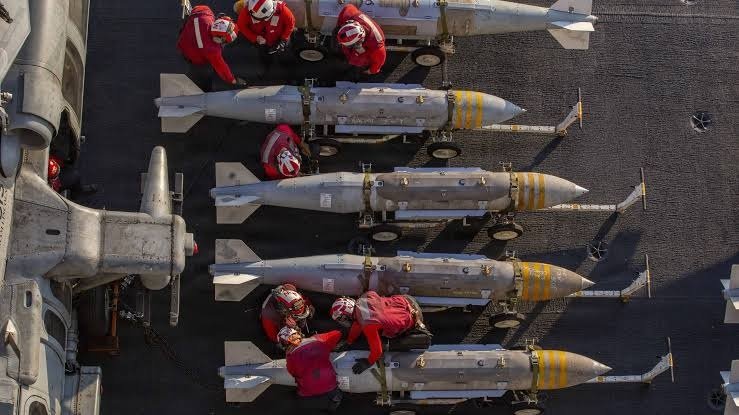 Pentagon Inspector General Report Finds Iran War Caused U.S. Ammunition Shortfalls and Industrial Bottlenecks
-
 Satellite Imagery Shows Extensive Damage to Saudi Arabia’s East-West Oil Pipeline, Indicating More Than a Single Strike
-
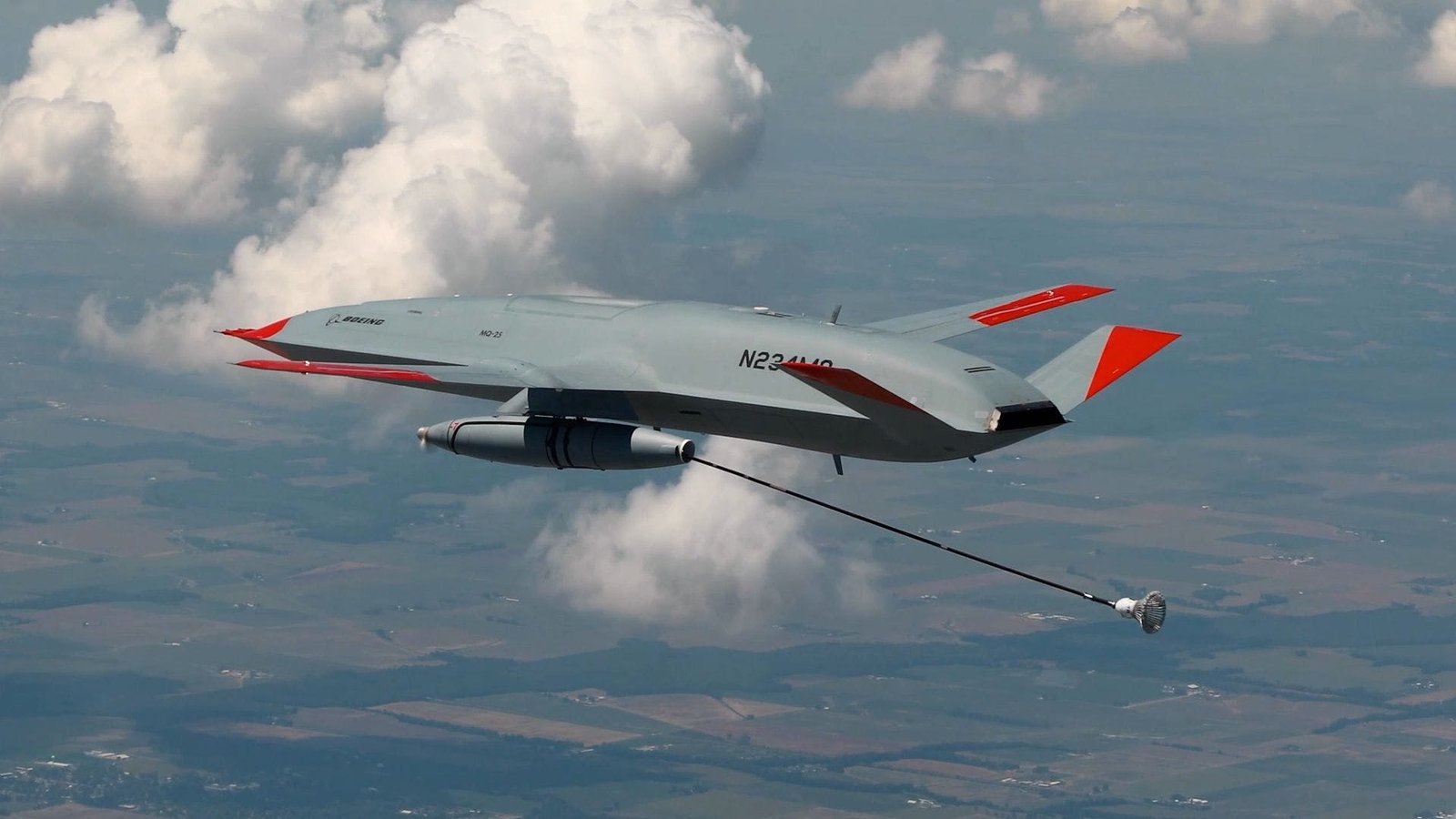 U.S. Navy Awards Boeing $562 Million Contract for First Production MQ-25A Stingray Tanker Drones
-
 Pentagon and Honeywell Complete Four-Hour Pacific Flight Using Quantum Magnetic Navigation Without GPS
-
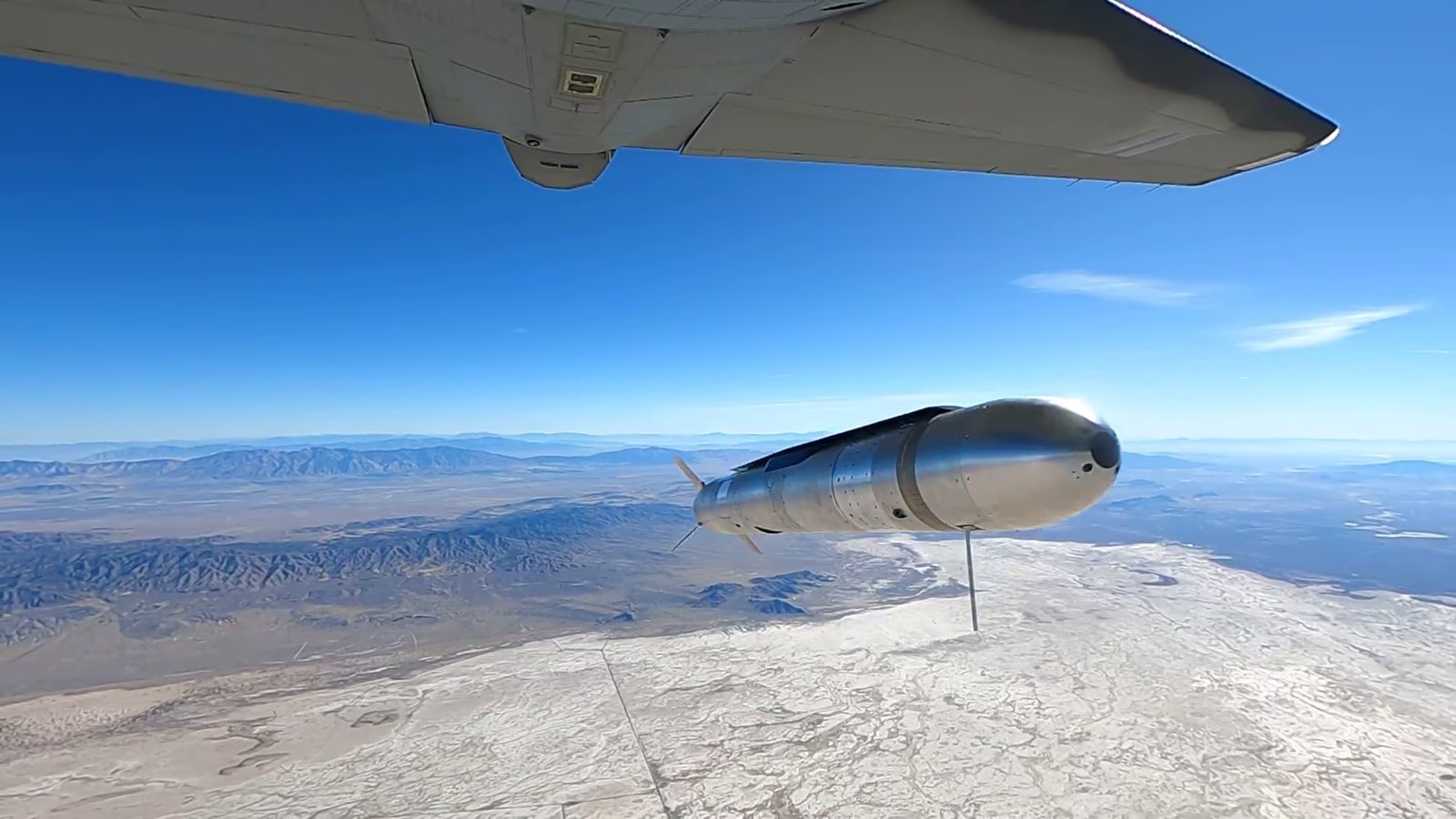 U.S. Air Force Special Operations Command Clears AGM-190A Havoc Spear for Wider Service After Combat Evaluation in Africa
-
 U.S. Confirms Deployment of On-Orbit Space Control Weapons for First Time
-
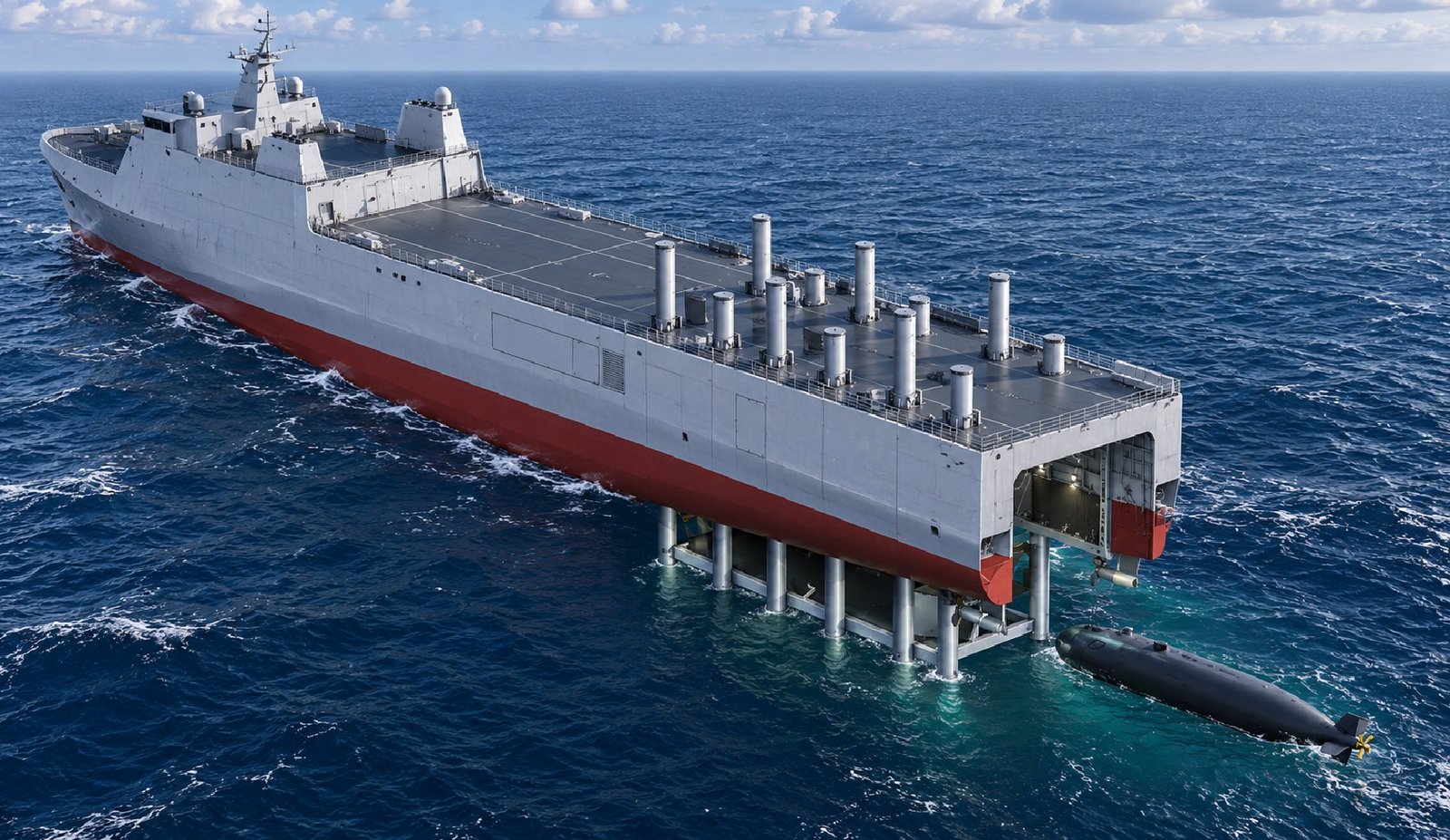 China Builds New Shanghai Vessel to Serve as Mothership for Large Uncrewed Submarines
-
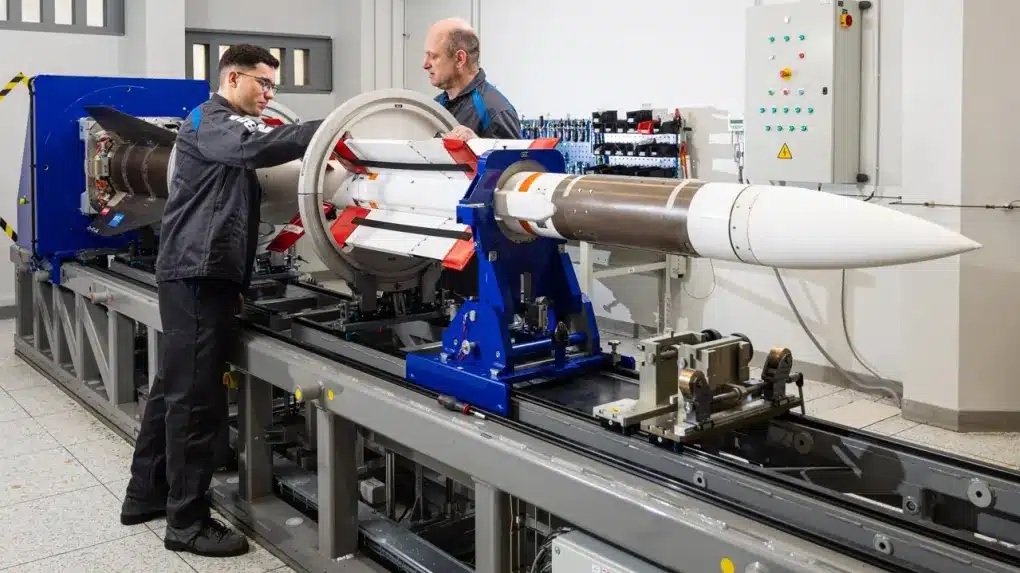 MBDA to Build New Missile Production Plant Near Orleans to Expand Missile Production
Top Trending in 4 Days
-
 Satellite Imagery Shows Heavy Damage to Saudi East–West Oil Pipeline Pumping Stations
-
 U.S. Air Force Awards Antares $161 Million to Develop Nuclear Reactor for Spacecraft
-
 Pentagon Awards BlueHalo Up to $99.8 Million Contract for Orbital Battlespace R&D Program
-
 Ukrainian Drones Strike Russian UAV Manufacturer and Chemical Plants in Taganrog and Tolyatti
-
 U.S. Officials Link Chinese Satellite Imagery to Iranian Strike That Killed Three American Soldiers in Jordan
-
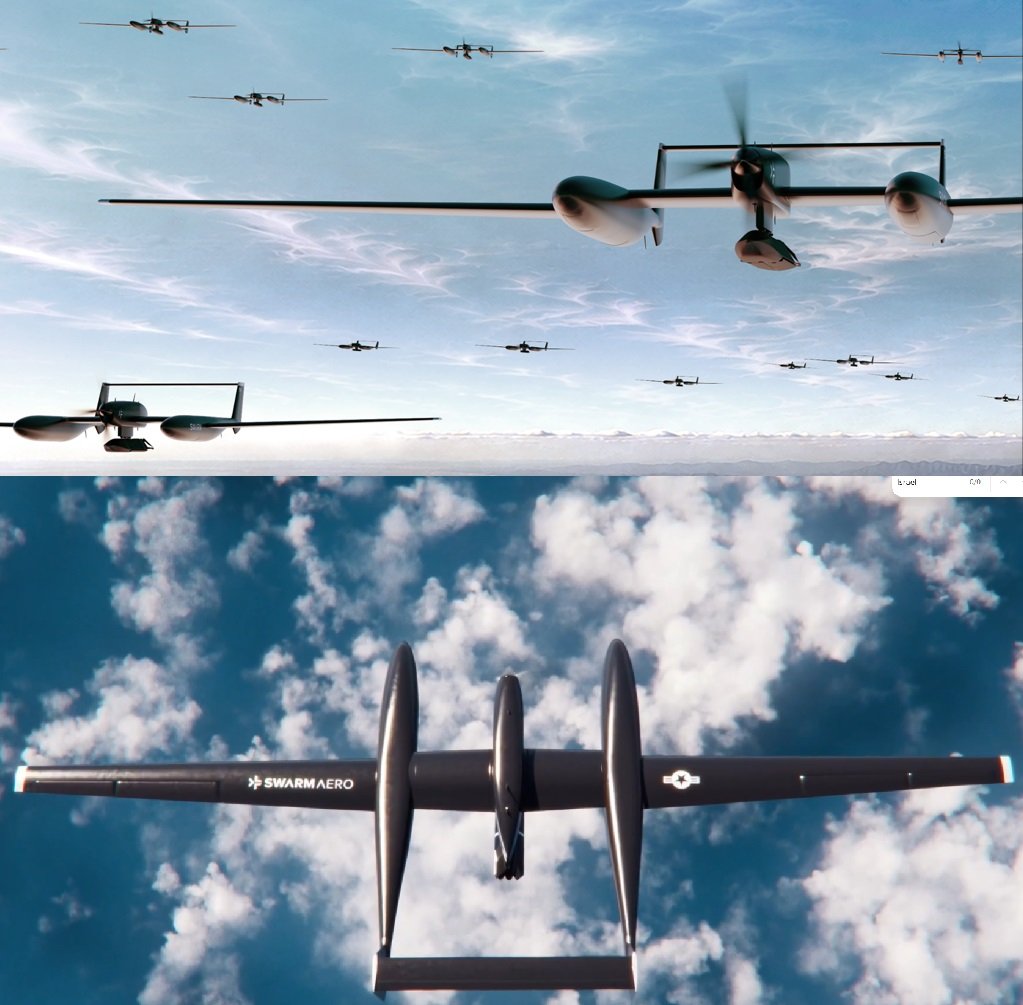 U.S. Firm Swarm Aero Unveils Gamera Group 5 UAS With 9,000-Nautical-Mile Range and Heavy Strike Payload
-
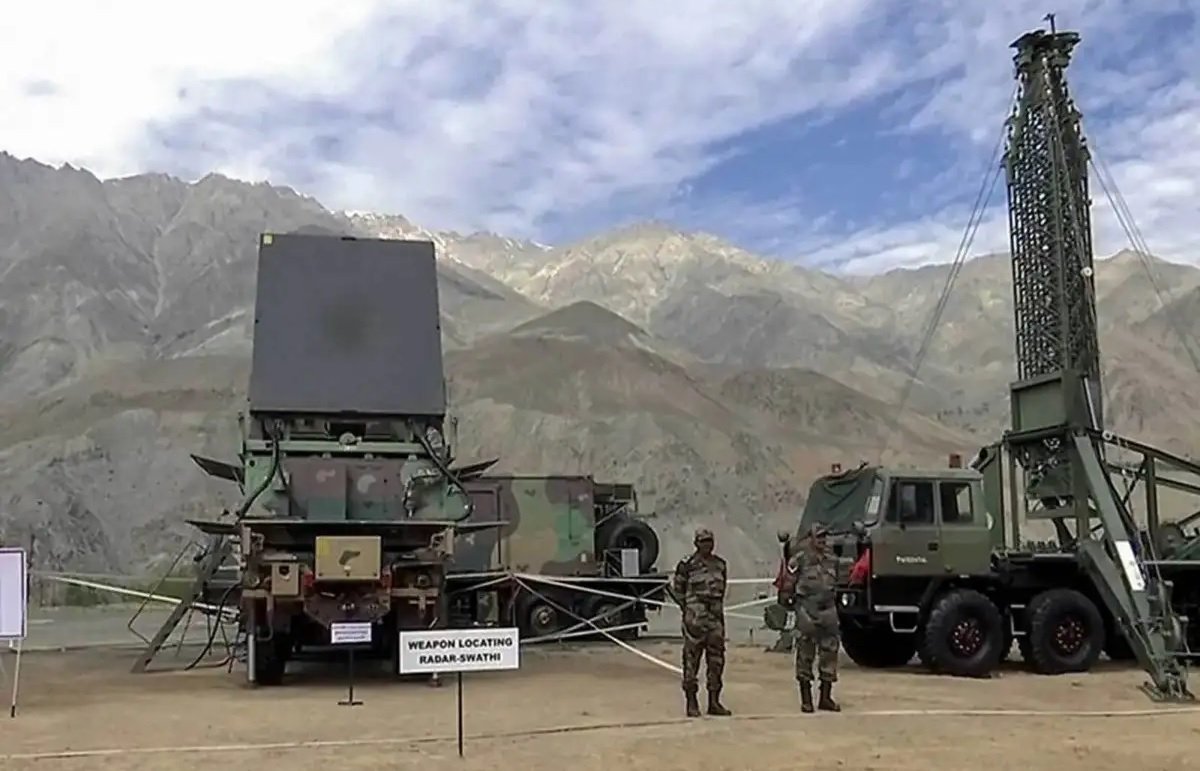 DRDO Demonstrates Indigenous 3.5×3 mm GaN Chip Delivering 30 Watts for Next-Generation Radars and Electronic Warfare
-
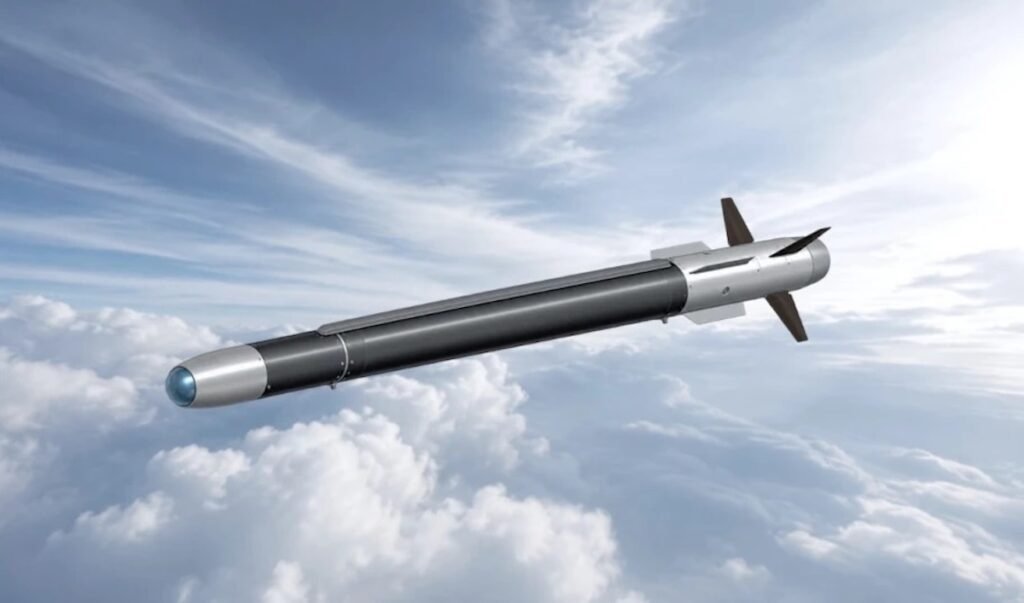 MBDA and Poland’s WITU Advance Low-Cost Supersonic Interceptor Against Swarm Attacks, Seeker Trials Successfully Completed